Fundamentals of Mechanical
Engineering (BME-101/201)
UNIT-2
IC ENGINE & ELECTRIC
VEHICLES
PREPARED BY
ER. PEEYUSH CHAUHAN
ASSISTANT PROFESSOR
DEPARTMENT OF MECHANICAL ENGINEERING
INTRODUCTION
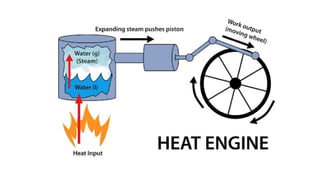
“A heat engine can be defined as a device that is used to convert the
chemical energy of fuel into heat energy & this heat energy convert
into mechanical energy to do the work.” For example, jet engines use
heat energy to convert it into mechanical energy, which thus does the
work.
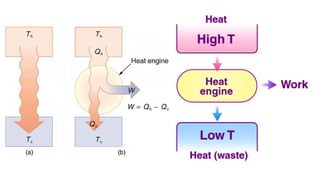
• A heat engine is a system which converts heat into work by taking
heat from the reservoir (hot body) to carry out some work.
• There is a discharge of some heat to the sink (cold body). In this
system, there will also be some waste in the form of heat.
What is Heat?
Heat is the form of energy that transfers due to the temperature
differences between the system and surroundings.
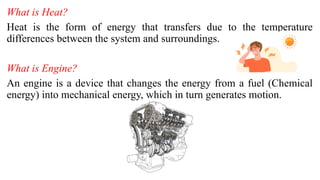
What is Engine?
An engine is a device that changes the energy from a fuel (Chemical
energy) into mechanical energy, which in turn generates motion.
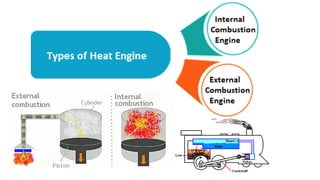
Types of Heat Engine
There are mainly two types of heat engines –
1. External combustion engines
2. Internal combustion engines
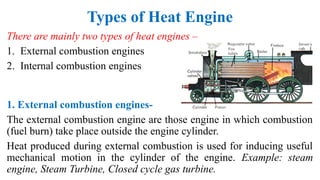
1. External combustion engines-
The external combustion engine are those engine in which combustion
(fuel burn) take place outside the engine cylinder.
Heat produced during external combustion is used for inducing useful
mechanical motion in the cylinder of the engine. Example: steam
engine, Steam Turbine, Closed cycle gas turbine.
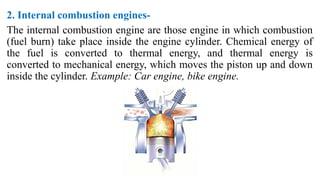
2. Internal combustion engines-
The internal combustion engine are those engine in which combustion
(fuel burn) take place inside the engine cylinder. Chemical energy of
the fuel is converted to thermal energy, and thermal energy is
converted to mechanical energy, which moves the piston up and down
inside the cylinder. Example: Car engine, bike engine.
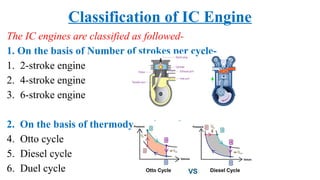
Classification of IC Engine
The IC engines are classified as followed-
1. On the basis of Number of strokes per cycle-
1. 2-stroke engine
2. 4-stroke engine
3. 6-stroke engine
2. On the basis of thermodynamic cycle-
4. Otto cycle
5. Diesel cycle
6. Duel cycle
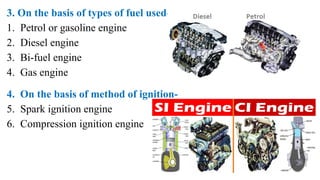
3. On the basis of types of fuel used-
1. Petrol or gasoline engine
2. Diesel engine
3. Bi-fuel engine
4. Gas engine
4. On the basis of method of ignition-
5. Spark ignition engine
6. Compression ignition engine
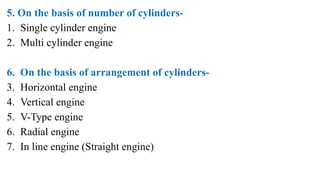
5. On the basis of number of cylinders-
1. Single cylinder engine
2. Multi cylinder engine
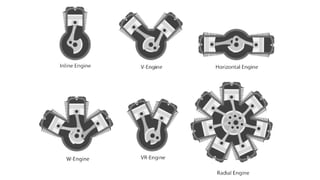
6. On the basis of arrangement of cylinders-
3. Horizontal engine
4. Vertical engine
5. V-Type engine
6. Radial engine
7. In line engine (Straight engine)
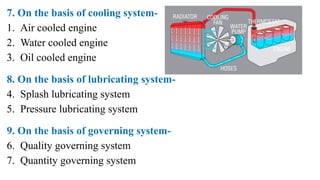
7. On the basis of cooling system-
1. Air cooled engine
2. Water cooled engine
3. Oil cooled engine
8. On the basis of lubricating system-
4. Splash lubricating system
5. Pressure lubricating system
9. On the basis of governing system-
6. Quality governing system
7. Quantity governing system
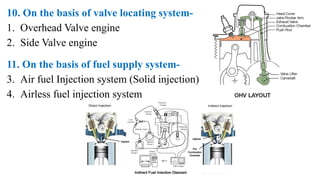
10. On the basis of valve locating system-
1. Overhead Valve engine
2. Side Valve engine
11. On the basis of fuel supply system-
3. Air fuel Injection system (Solid injection)
4. Airless fuel injection system
Advantages of IC Engine-
1. Size of engine is very less compared to external combustion engines.
2. Power to weight ratio is high.
3. Very suitable for small power requirement applications.
4. Usually more portable than their counterpart external combustion
engines.
5. Safer to operate.
6. Starting time is very less.
7. High efficiency than external combustion engine.
8. No chances of leakage of working fluids.
9. Requires less maintenance.
Disadvantages of IC Engine-
1. Variety of fuels that can be used is limited to very fine quality
gaseous and liquid fuel.
2. Fuel used is very costly like gasoline or diesel.
3. Engine emissions are generally high compared to external
combustion engine.
4. Not suitable of large scale power generation.
5. In case of reciprocating internal combustion noise is generated due
to detonation of fuel.
Applications of IC Engine-
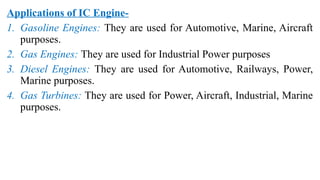
1. Gasoline Engines: They are used for Automotive, Marine, Aircraft
purposes.
2. Gas Engines: They are used for Industrial Power purposes
3. Diesel Engines: They are used for Automotive, Railways, Power,
Marine purposes.
4. Gas Turbines: They are used for Power, Aircraft, Industrial, Marine
purposes.
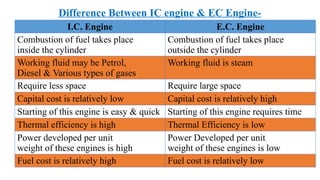
Difference Between IC engine & EC Engine-
I.C. Engine E.C. Engine
Combustion of fuel takes place
inside the cylinder
Combustion of fuel takes place
outside the cylinder
Working fluid may be Petrol,
Diesel & Various types of gases
Working fluid is steam
Require less space Require large space
Capital cost is relatively low Capital cost is relatively high
Starting of this engine is easy & quick Starting of this engine requires time
Thermal efficiency is high Thermal Efficiency is low
Power developed per unit
weight of these engines is high
Power Developed per unit
weight of these engines is low
Fuel cost is relatively high Fuel cost is relatively low
INTRODUCTION OF INTERNAL COMBUSTION ENGINE.pptx

INTRODUCTION OF INTERNAL COMBUSTION ENGINE.pptx

  • 1.
    Fundamentals of Mechanical Engineering(BME-101/201) UNIT-2 IC ENGINE & ELECTRIC VEHICLES PREPARED BY ER. PEEYUSH CHAUHAN ASSISTANT PROFESSOR DEPARTMENT OF MECHANICAL ENGINEERING
  • 2.
    INTRODUCTION “A heat enginecan be defined as a device that is used to convert the chemical energy of fuel into heat energy & this heat energy convert into mechanical energy to do the work.” For example, jet engines use heat energy to convert it into mechanical energy, which thus does the work. • A heat engine is a system which converts heat into work by taking heat from the reservoir (hot body) to carry out some work. • There is a discharge of some heat to the sink (cold body). In this system, there will also be some waste in the form of heat.
  • 5.
    What is Heat? Heatis the form of energy that transfers due to the temperature differences between the system and surroundings. What is Engine? An engine is a device that changes the energy from a fuel (Chemical energy) into mechanical energy, which in turn generates motion.
  • 6.
    Types of HeatEngine There are mainly two types of heat engines – 1. External combustion engines 2. Internal combustion engines 1. External combustion engines- The external combustion engine are those engine in which combustion (fuel burn) take place outside the engine cylinder. Heat produced during external combustion is used for inducing useful mechanical motion in the cylinder of the engine. Example: steam engine, Steam Turbine, Closed cycle gas turbine.
  • 8.
    2. Internal combustionengines- The internal combustion engine are those engine in which combustion (fuel burn) take place inside the engine cylinder. Chemical energy of the fuel is converted to thermal energy, and thermal energy is converted to mechanical energy, which moves the piston up and down inside the cylinder. Example: Car engine, bike engine.
  • 9.
    Classification of ICEngine The IC engines are classified as followed- 1. On the basis of Number of strokes per cycle- 1. 2-stroke engine 2. 4-stroke engine 3. 6-stroke engine 2. On the basis of thermodynamic cycle- 4. Otto cycle 5. Diesel cycle 6. Duel cycle
  • 10.
    3. On thebasis of types of fuel used- 1. Petrol or gasoline engine 2. Diesel engine 3. Bi-fuel engine 4. Gas engine 4. On the basis of method of ignition- 5. Spark ignition engine 6. Compression ignition engine
  • 11.
    5. On thebasis of number of cylinders- 1. Single cylinder engine 2. Multi cylinder engine 6. On the basis of arrangement of cylinders- 3. Horizontal engine 4. Vertical engine 5. V-Type engine 6. Radial engine 7. In line engine (Straight engine)
  • 13.
    7. On thebasis of cooling system- 1. Air cooled engine 2. Water cooled engine 3. Oil cooled engine 8. On the basis of lubricating system- 4. Splash lubricating system 5. Pressure lubricating system 9. On the basis of governing system- 6. Quality governing system 7. Quantity governing system
  • 14.
    10. On thebasis of valve locating system- 1. Overhead Valve engine 2. Side Valve engine 11. On the basis of fuel supply system- 3. Air fuel Injection system (Solid injection) 4. Airless fuel injection system
  • 15.
    Advantages of ICEngine- 1. Size of engine is very less compared to external combustion engines. 2. Power to weight ratio is high. 3. Very suitable for small power requirement applications. 4. Usually more portable than their counterpart external combustion engines. 5. Safer to operate. 6. Starting time is very less. 7. High efficiency than external combustion engine. 8. No chances of leakage of working fluids. 9. Requires less maintenance.
  • 16.
    Disadvantages of ICEngine- 1. Variety of fuels that can be used is limited to very fine quality gaseous and liquid fuel. 2. Fuel used is very costly like gasoline or diesel. 3. Engine emissions are generally high compared to external combustion engine. 4. Not suitable of large scale power generation. 5. In case of reciprocating internal combustion noise is generated due to detonation of fuel.
  • 17.
    Applications of ICEngine- 1. Gasoline Engines: They are used for Automotive, Marine, Aircraft purposes. 2. Gas Engines: They are used for Industrial Power purposes 3. Diesel Engines: They are used for Automotive, Railways, Power, Marine purposes. 4. Gas Turbines: They are used for Power, Aircraft, Industrial, Marine purposes.
  • 18.
    Difference Between ICengine & EC Engine- I.C. Engine E.C. Engine Combustion of fuel takes place inside the cylinder Combustion of fuel takes place outside the cylinder Working fluid may be Petrol, Diesel & Various types of gases Working fluid is steam Require less space Require large space Capital cost is relatively low Capital cost is relatively high Starting of this engine is easy & quick Starting of this engine requires time Thermal efficiency is high Thermal Efficiency is low Power developed per unit weight of these engines is high Power Developed per unit weight of these engines is low Fuel cost is relatively high Fuel cost is relatively low