Computer Organization
and Architecture
Chapter 1
Introduction
Architecture & Organization 1
Difference between computer
organization and architecture
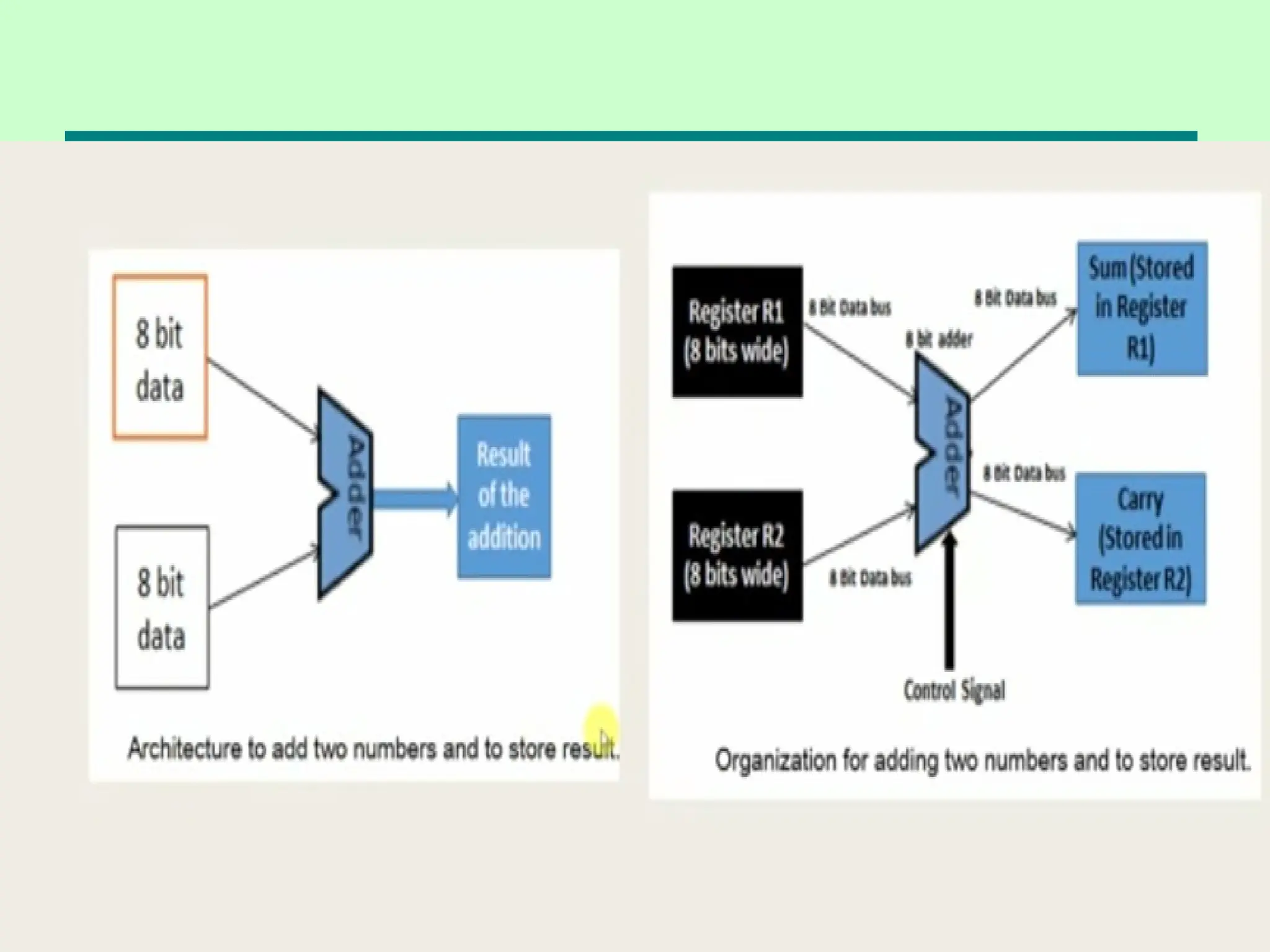
•Computer architecture: is a functional
behaviour of computer system
•Architecture describes what the computer
does .
•Computer organization: deals with
structural relationship
•Organization describes how it does it
Structure & Function
• Structure is the way in which components
relate to each other
• Function is the operation of individual
components as part of the structure
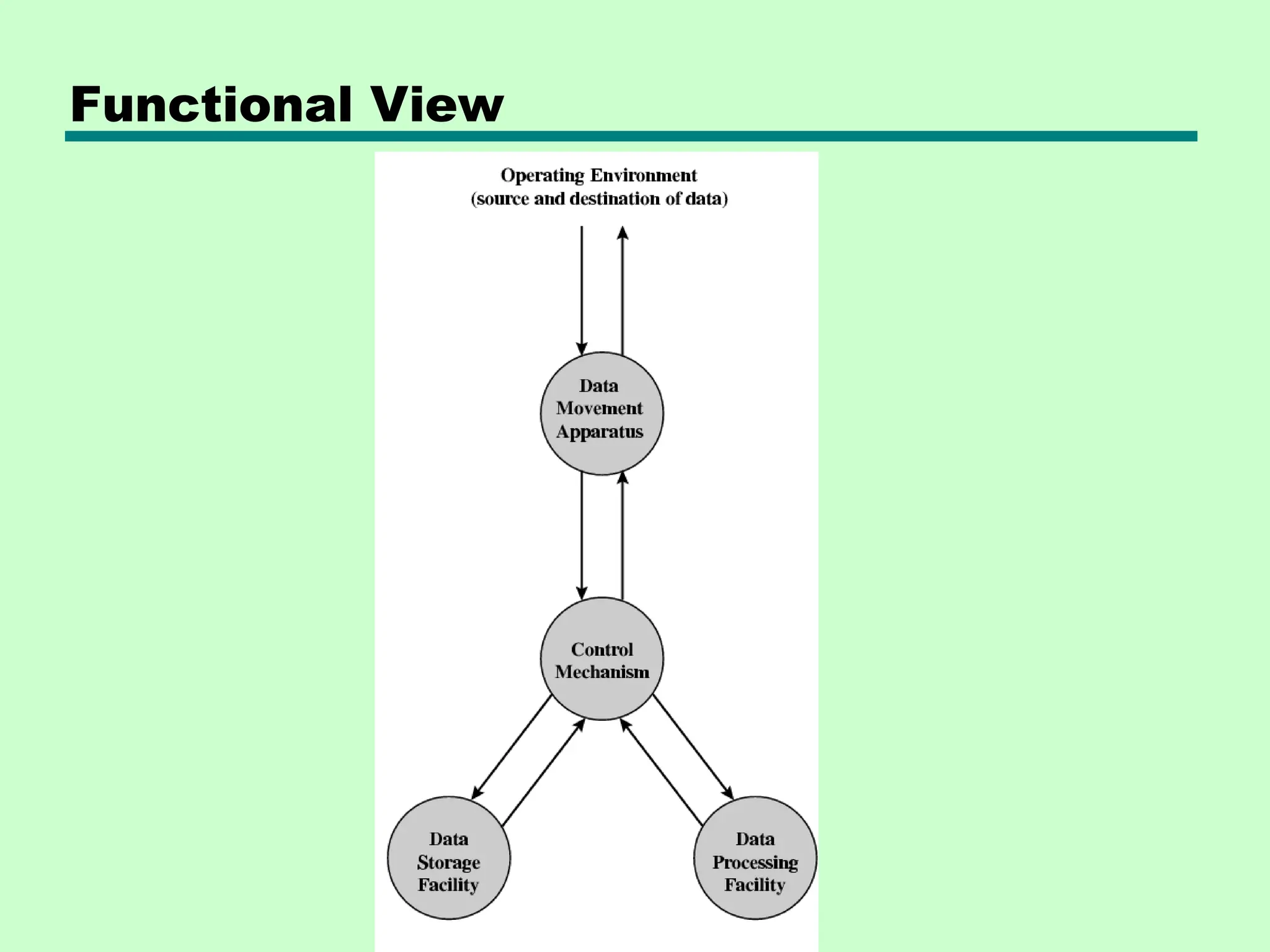
Function
• All computer functions are:
—Data processing
—Data storage
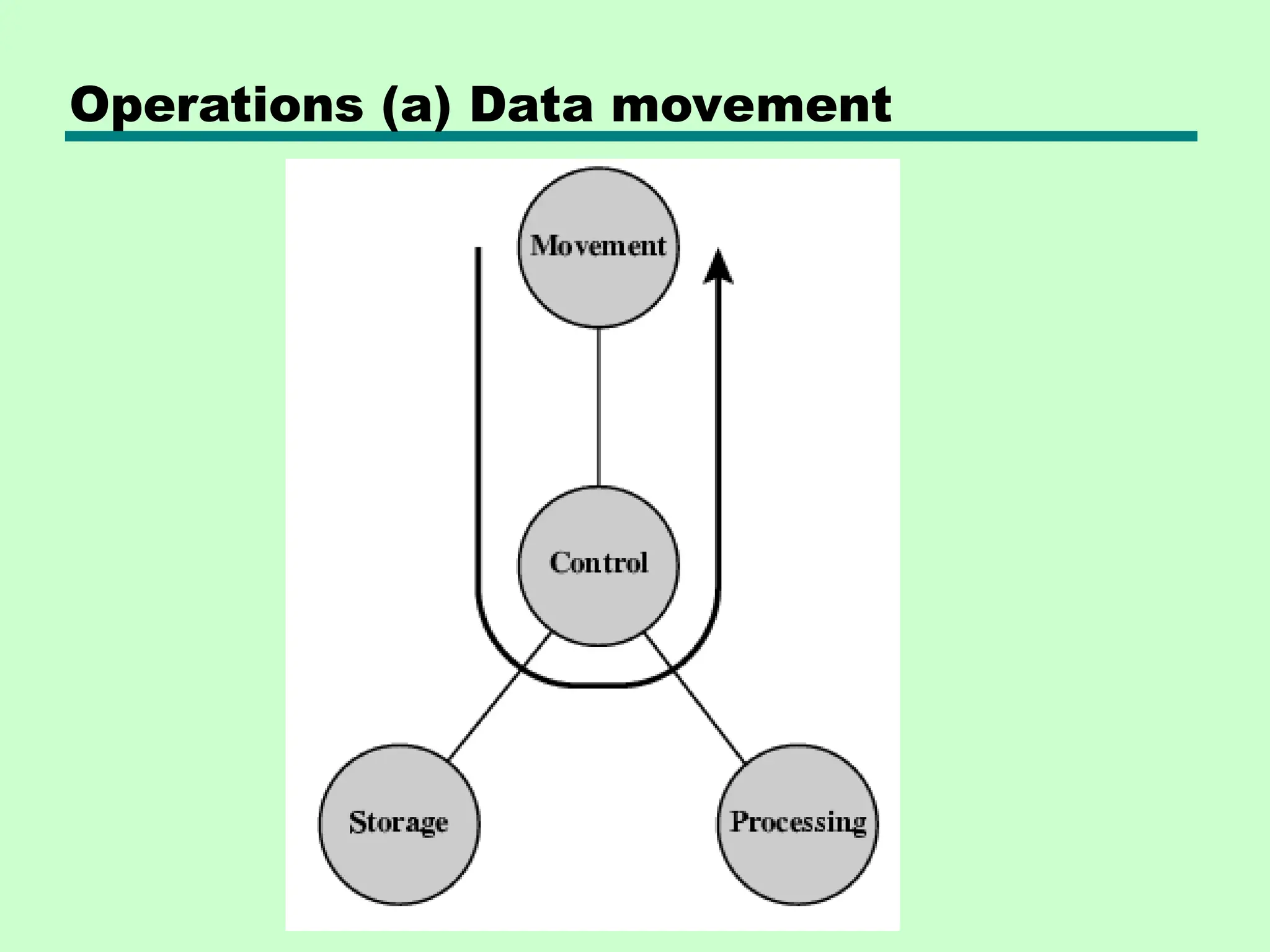
—Data movement
—Control
Functional View
Operations (a) Data movement
Operations (b) Storage
Operation (c) Processing from/to storage
Operation (d)
Processing from storage to I/O
Top Level Structure
• Central processing unit (CPU):
Controls the operation of the computer
and performs its data processing
functions; often simply referred to as
processor.
• Main memory: Stores data.
• I/O: Moves data between the computer
and its external environment.
Top Level Structure
• System interconnection: Some
mechanism that provides for
communication among CPU, main
memory, and I/O. A common example of
system interconnection is by means of a
system bus, consisting of a number of
conducting wires to which all the other
components attach.
CPU Components
• Control unit: Controls the operation of
the CPU and hence the computer
• Arithmetic and logic unit (ALU):
Performs the computer’s data processing
functions
• Registers: Provides storage internal to
the CPU
• CPU interconnection: Some mechanism
that provides for communication among
the control unit,ALU,and registers
Structure - Top Level
Computer
Main
Memory
Input
Output
Systems
Interconnection
Peripherals
Communication
lines
Central
Processing
Unit
Computer
Structure - The CPU
Computer Arithmetic
and
Login Unit
Control
Unit
Internal CPU
Interconnection
Registers
CPU
I/O
Memory
System
Bus
CPU
Structure - The Control Unit
CPU
Control
Memory
Control Unit
Registers and
Decoders
Sequencing
Login
Control
Unit
ALU
Registers
Internal
Bus
Control Unit
•END

Introduction Computer Organization and architecture

  • 1.
  • 2.
    Architecture & Organization1 Difference between computer organization and architecture •Computer architecture: is a functional behaviour of computer system •Architecture describes what the computer does . •Computer organization: deals with structural relationship •Organization describes how it does it
  • 4.
    Structure & Function •Structure is the way in which components relate to each other • Function is the operation of individual components as part of the structure
  • 5.
    Function • All computerfunctions are: —Data processing —Data storage —Data movement —Control
  • 6.
  • 7.
  • 8.
  • 9.
    Operation (c) Processingfrom/to storage
  • 10.
  • 11.
    Top Level Structure •Central processing unit (CPU): Controls the operation of the computer and performs its data processing functions; often simply referred to as processor. • Main memory: Stores data. • I/O: Moves data between the computer and its external environment.
  • 12.
    Top Level Structure •System interconnection: Some mechanism that provides for communication among CPU, main memory, and I/O. A common example of system interconnection is by means of a system bus, consisting of a number of conducting wires to which all the other components attach.
  • 13.
    CPU Components • Controlunit: Controls the operation of the CPU and hence the computer • Arithmetic and logic unit (ALU): Performs the computer’s data processing functions • Registers: Provides storage internal to the CPU • CPU interconnection: Some mechanism that provides for communication among the control unit,ALU,and registers
  • 14.
    Structure - TopLevel Computer Main Memory Input Output Systems Interconnection Peripherals Communication lines Central Processing Unit Computer
  • 15.
    Structure - TheCPU Computer Arithmetic and Login Unit Control Unit Internal CPU Interconnection Registers CPU I/O Memory System Bus CPU
  • 16.
    Structure - TheControl Unit CPU Control Memory Control Unit Registers and Decoders Sequencing Login Control Unit ALU Registers Internal Bus Control Unit
  • 17.