© Instituto Internacional San Telmo, 2012

INTRODUCTION: Why does accounting matter?
E-LEARNING COURSE: ACCOUNTING & FINANCES
Why does accounting matter?
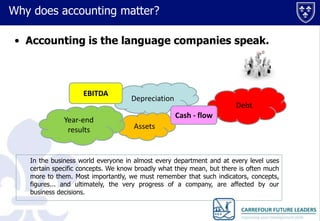
• Accounting is the language companies speak.

EBITDA

Year-end
results

Depreciation

Debt
Cash - flow

Assets

In the business world everyone in almost every department and at every level uses
certain specific concepts. We know broadly what they mean, but there is often much
more to them. Most importantly, we must remember that such indicators, concepts,
figures... and ultimately, the very progress of a company, are affected by our
business decisions.
Why does accounting matter?
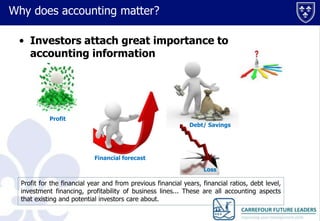
• Investors attach great importance to
accounting information

Profit

Debt/ Savings

Financial forecast
Loss

Profit for the financial year and from previous financial years, financial ratios, debt level,
investment financing, profitability of business lines... These are all accounting aspects
that existing and potential investors care about.
Why does accounting matter?
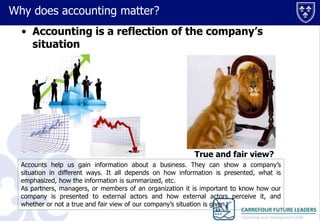
• Accounting is a reflection of the company’s
situation

True and fair view?
Accounts help us gain information about a business. They can show a company’s
situation in different ways. It all depends on how information is presented, what is
emphasized, how the information is summarized, etc.
As partners, managers, or members of an organization it is important to know how our
company is presented to external actors and how external actors perceive it, and
whether or not a true and fair view of our company’s situation is given.
Why does accounting matter?
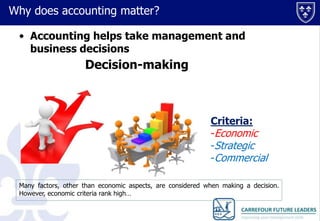
• Accounting helps take management and
business decisions

Decision-making

Criteria:
-Economic
-Strategic
-Commercial
Many factors, other than economic aspects, are considered when making a decision.
However, economic criteria rank high…
Why is accounting useful?

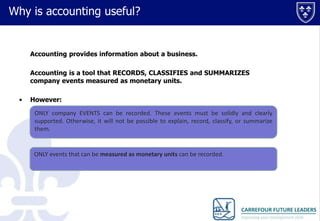
Accounting provides information about a business.
Accounting is a tool that RECORDS, CLASSIFIES and SUMMARIZES
company events measured as monetary units.
•

However:
ONLY company EVENTS can be recorded. These events must be solidly and clearly
supported. Otherwise, it will not be possible to explain, record, classify, or summarize
them.

ONLY events that can be measured as monetary units can be recorded.
The “language” of accounting

•

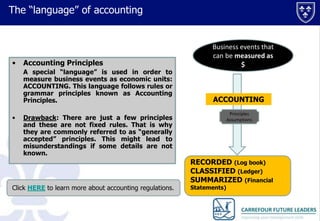
Accounting Principles
A special “language” is used in order to
measure business events as economic units:
ACCOUNTING. This language follows rules or
grammar principles known as Accounting
Principles.

•

Business events that
can be measured as
$

ACCOUNTING
Principles
Assumptions

Drawback: There are just a few principles
and these are not fixed rules. That is why
they are commonly referred to as “generally
accepted” principles. This might lead to
misunderstandings if some details are not
known.

Click HERE to learn more about accounting regulations.

RECORDED (Log book)
CLASSIFIED (Ledger)
SUMMARIZED (Financial
Statements)
Users

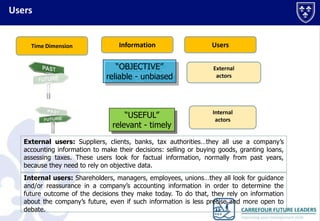
Time Dimension

Information

Users

“OBJECTIVE”
reliable - unbiased

External
actors

“USEFUL”
relevant - timely

Internal
actors

External users: Suppliers, clients, banks, tax authorities…they all use a company’s
accounting information to make their decisions: selling or buying goods, granting loans,
assessing taxes. These users look for factual information, normally from past years,
because they need to rely on objective data.

Internal users: Shareholders, managers, employees, unions…they all look for guidance
and/or reassurance in a company’s accounting information in order to determine the
future outcome of the decisions they make today. To do that, they rely on information
about the company’s future, even if such information is less precise and more open to
debate.
© Instituto Internacional San Telmo, 2012

B1 - Introduction carrefour

  • 1.
    © Instituto InternacionalSan Telmo, 2012 INTRODUCTION: Why does accounting matter? E-LEARNING COURSE: ACCOUNTING & FINANCES
  • 2.
    Why does accountingmatter? • Accounting is the language companies speak. EBITDA Year-end results Depreciation Debt Cash - flow Assets In the business world everyone in almost every department and at every level uses certain specific concepts. We know broadly what they mean, but there is often much more to them. Most importantly, we must remember that such indicators, concepts, figures... and ultimately, the very progress of a company, are affected by our business decisions.
  • 3.
    Why does accountingmatter? • Investors attach great importance to accounting information Profit Debt/ Savings Financial forecast Loss Profit for the financial year and from previous financial years, financial ratios, debt level, investment financing, profitability of business lines... These are all accounting aspects that existing and potential investors care about.
  • 4.
    Why does accountingmatter? • Accounting is a reflection of the company’s situation True and fair view? Accounts help us gain information about a business. They can show a company’s situation in different ways. It all depends on how information is presented, what is emphasized, how the information is summarized, etc. As partners, managers, or members of an organization it is important to know how our company is presented to external actors and how external actors perceive it, and whether or not a true and fair view of our company’s situation is given.
  • 5.
    Why does accountingmatter? • Accounting helps take management and business decisions Decision-making Criteria: -Economic -Strategic -Commercial Many factors, other than economic aspects, are considered when making a decision. However, economic criteria rank high…
  • 6.
    Why is accountinguseful? Accounting provides information about a business. Accounting is a tool that RECORDS, CLASSIFIES and SUMMARIZES company events measured as monetary units. • However: ONLY company EVENTS can be recorded. These events must be solidly and clearly supported. Otherwise, it will not be possible to explain, record, classify, or summarize them. ONLY events that can be measured as monetary units can be recorded.
  • 7.
    The “language” ofaccounting • Accounting Principles A special “language” is used in order to measure business events as economic units: ACCOUNTING. This language follows rules or grammar principles known as Accounting Principles. • Business events that can be measured as $ ACCOUNTING Principles Assumptions Drawback: There are just a few principles and these are not fixed rules. That is why they are commonly referred to as “generally accepted” principles. This might lead to misunderstandings if some details are not known. Click HERE to learn more about accounting regulations. RECORDED (Log book) CLASSIFIED (Ledger) SUMMARIZED (Financial Statements)
  • 8.
    Users Time Dimension Information Users “OBJECTIVE” reliable -unbiased External actors “USEFUL” relevant - timely Internal actors External users: Suppliers, clients, banks, tax authorities…they all use a company’s accounting information to make their decisions: selling or buying goods, granting loans, assessing taxes. These users look for factual information, normally from past years, because they need to rely on objective data. Internal users: Shareholders, managers, employees, unions…they all look for guidance and/or reassurance in a company’s accounting information in order to determine the future outcome of the decisions they make today. To do that, they rely on information about the company’s future, even if such information is less precise and more open to debate.
  • 9.