UNIT 1
INTRODUCTION
CONTENTS
• Definitions: Normal, Shear, Biaxial and Tri axial stresses,
stress tensor, principal stresses.
• Engineering Materials and their mechanical properties
•Stress – strain diagrams
• Stress analysis
•Design considerations: codes and standards
Machine design
• Decision making process.
Ex: Design of a chair: Factors to be considered
1. Purpose
2.Material selection
3.Aesthetics
4.Ergonomics
“Bad decision leads to bad design and
ultimately bad product”.
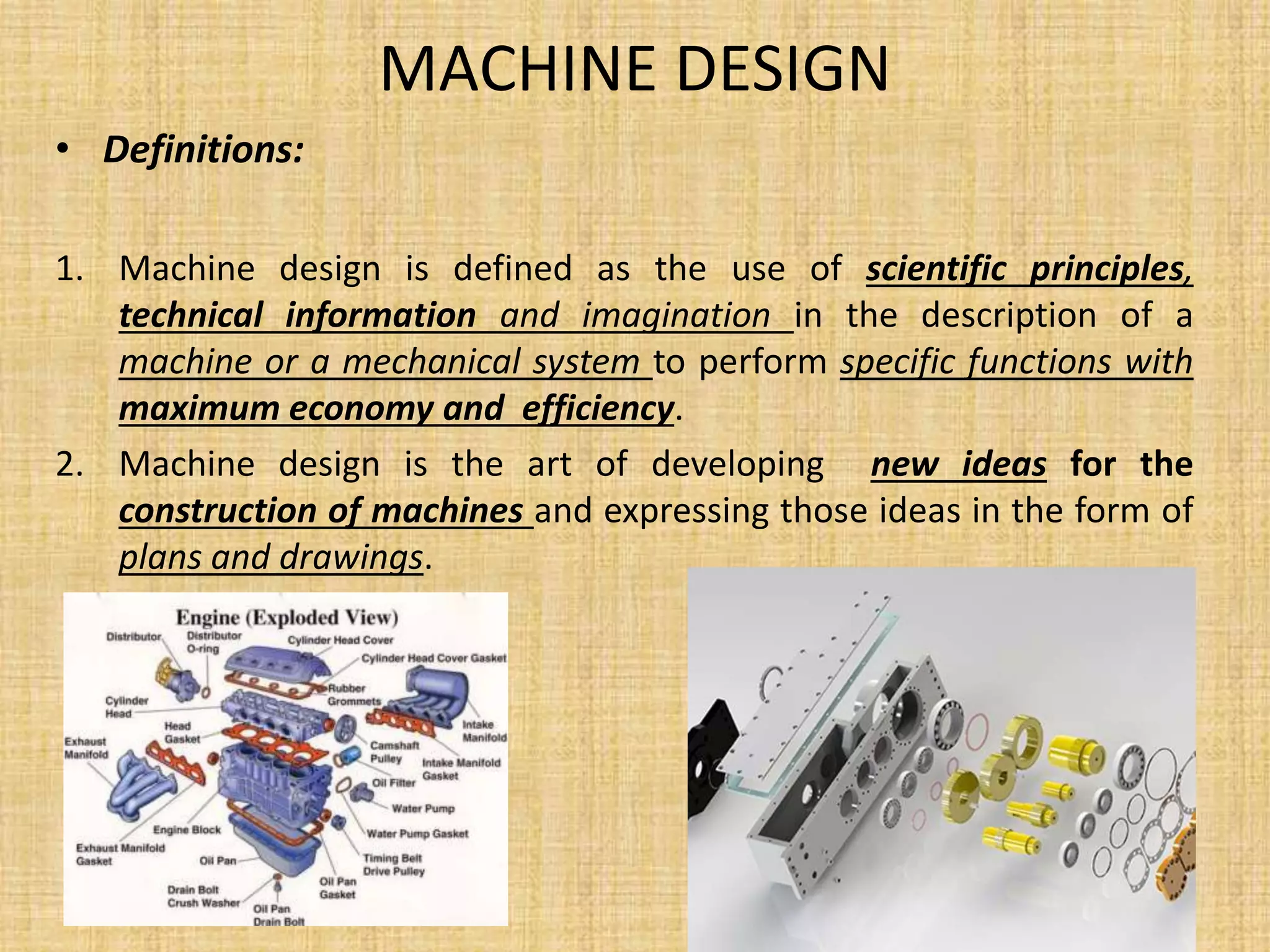
MACHINE DESIGN
• Definitions:
1. Machine design is defined as the use of scientific principles,
technical information and imagination in the description of a
machine or a mechanical system to perform specific functions with
maximum economy and efficiency.
2. Machine design is the art of developing new ideas for the
construction of machines and expressing those ideas in the form of
plans and drawings.
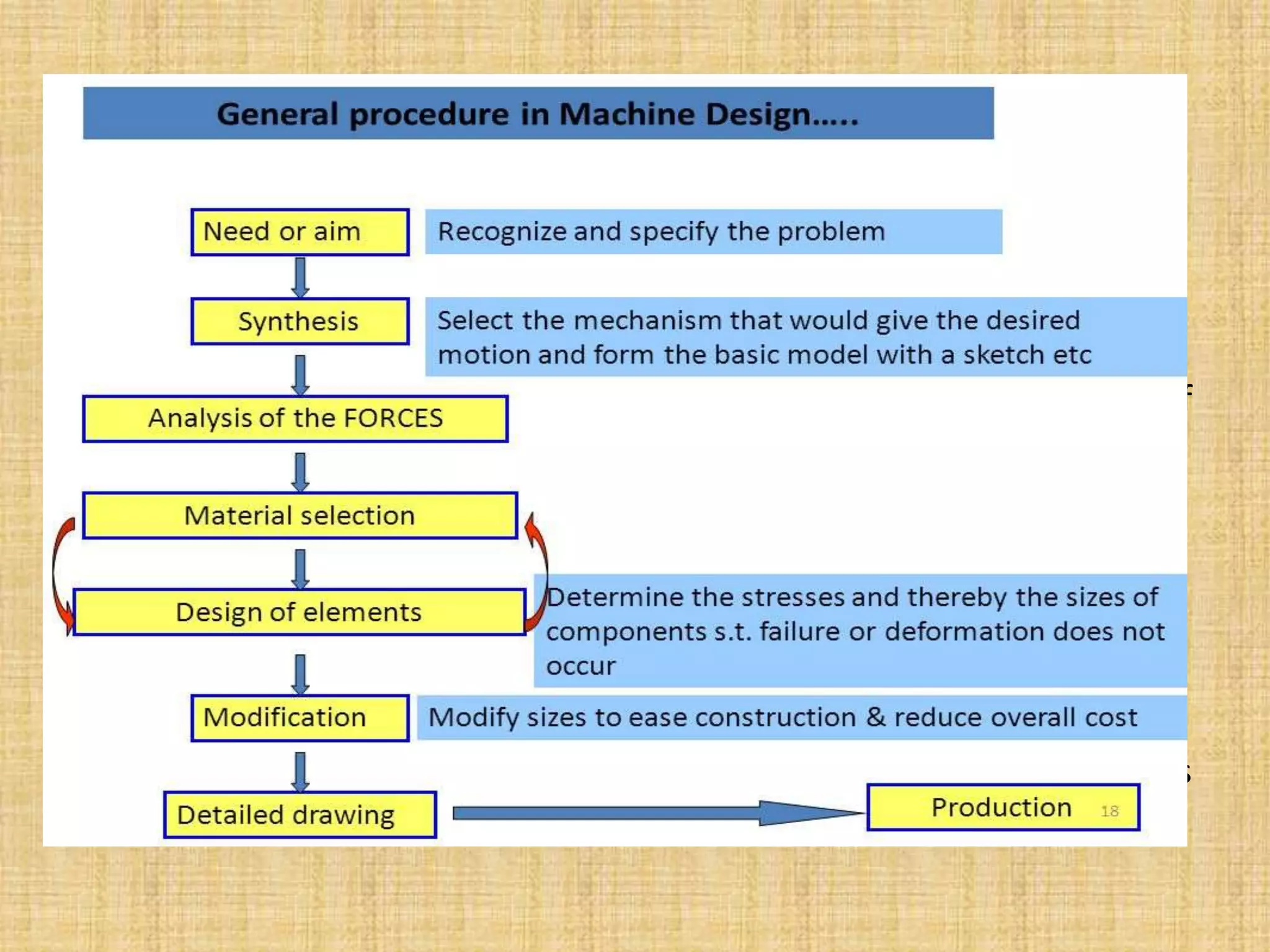
1. Statement of the problem: writing down all the data and also what
is required. This information will indicate the nature of the problem
and purpose of the design.
2. Analysis of the problem: analysis of all internal and external forces
acting on machine part.
Analysis can be done by making assumptions, sketches, direction of
forces, magnitude, point of application of forces etc.
3. Selection of mechanism, material and stresses:
Mechanism: Strength, accuracy of motion, efficiency and cost.
Material: Consideration of Life of various parts, availability, application
and cost.
Stress: selection of proper allowable stress
4. Preparation of preliminary design: probable dimensions of the part is
decided( considering strength, rigidity and resistance to wear)
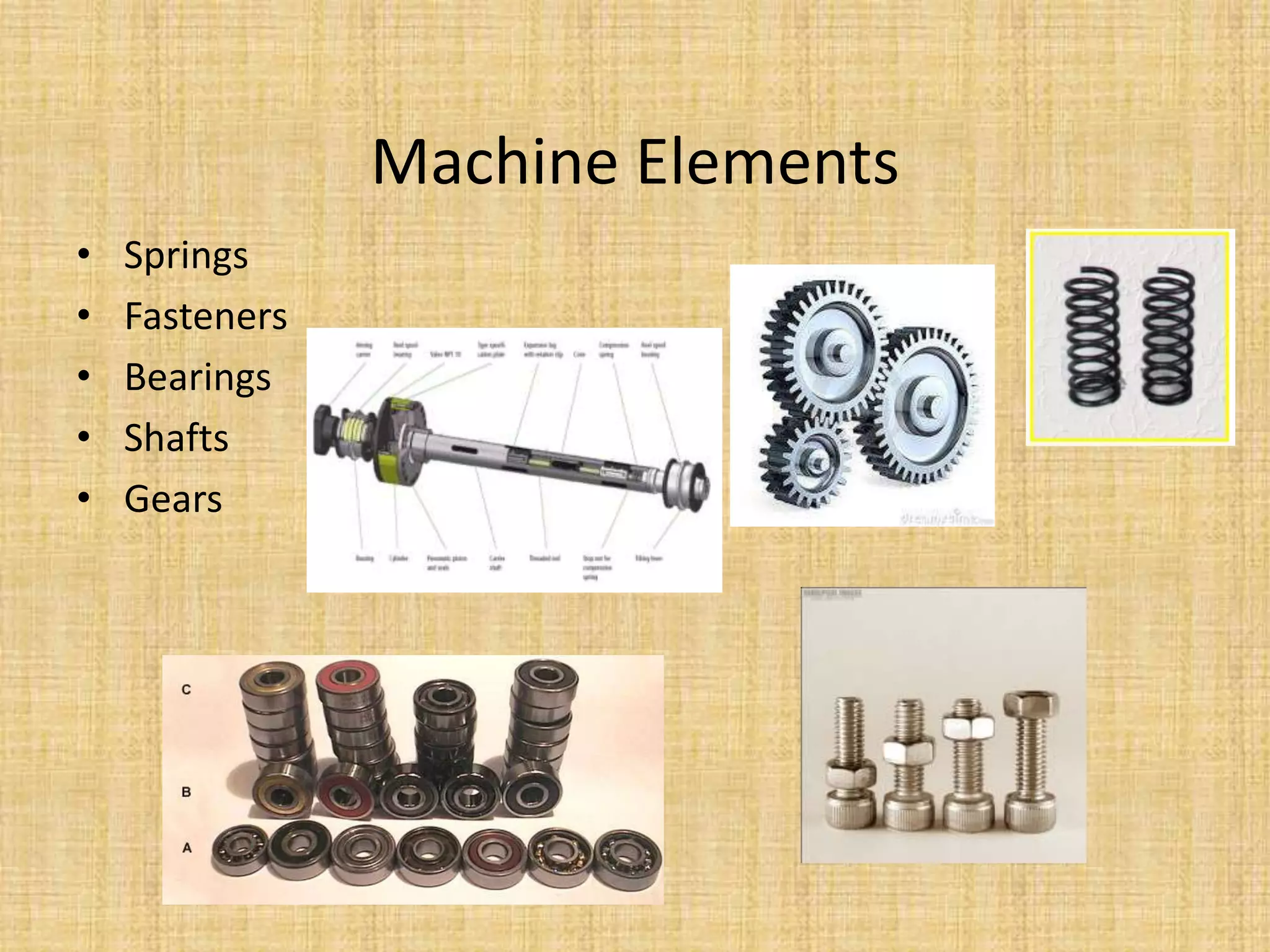
Machine Elements
• Springs
• Fasteners
• Bearings
• Shafts
• Gears
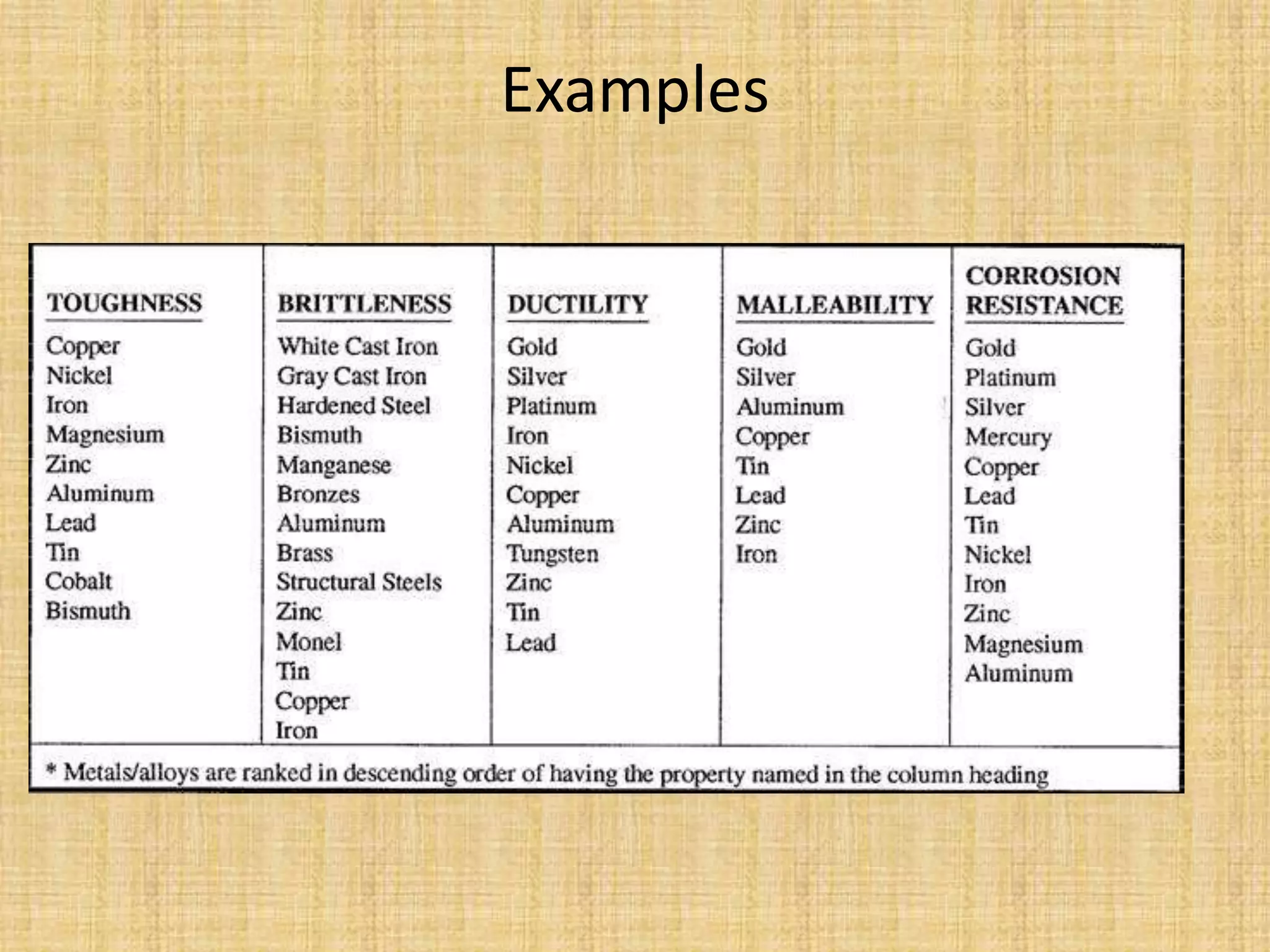
Mechanical properties of
Materials
Examples
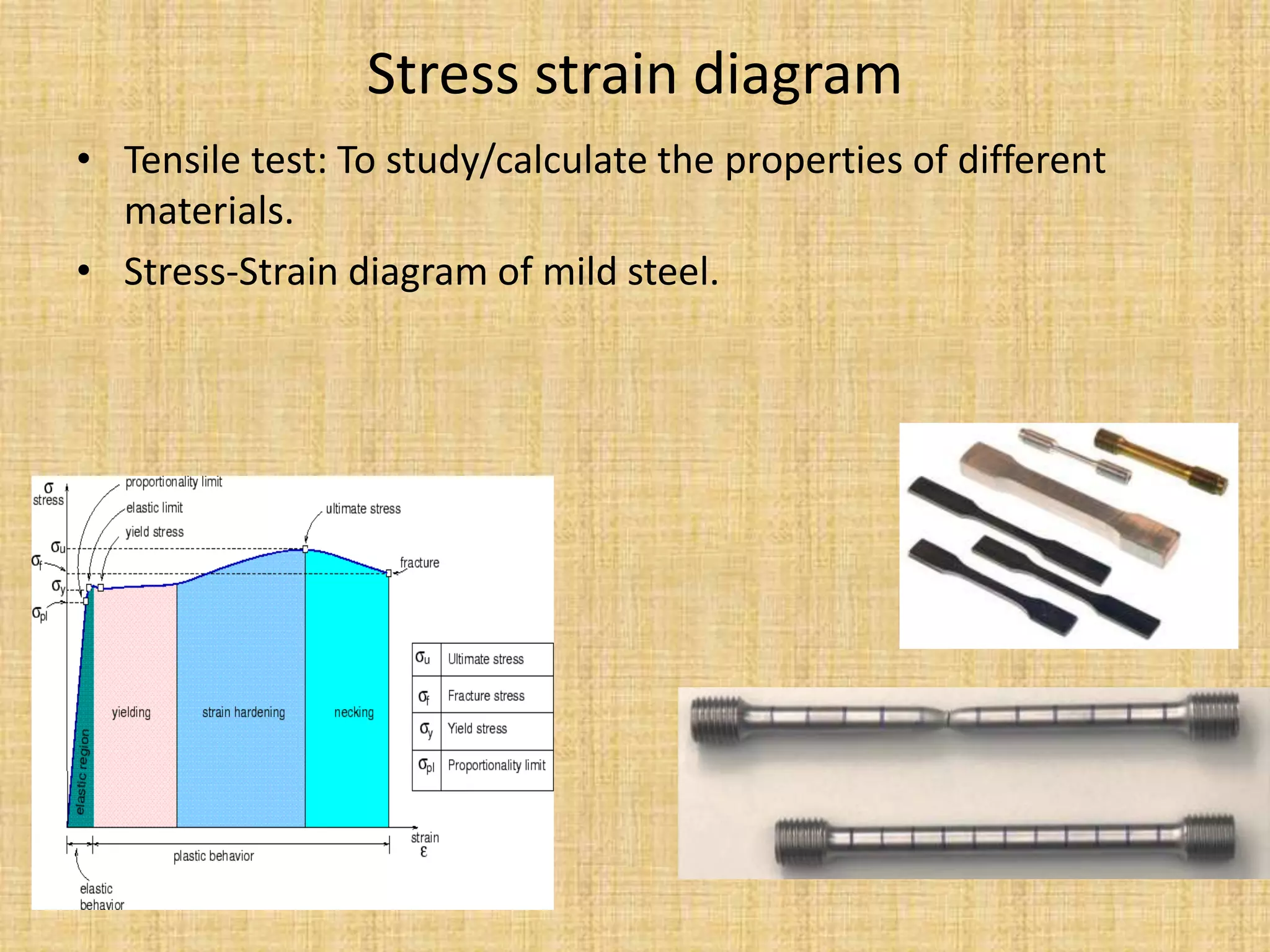
Stress strain diagram
• Tensile test: To study/calculate the properties of different
materials.
• Stress-Strain diagram of mild steel.
9
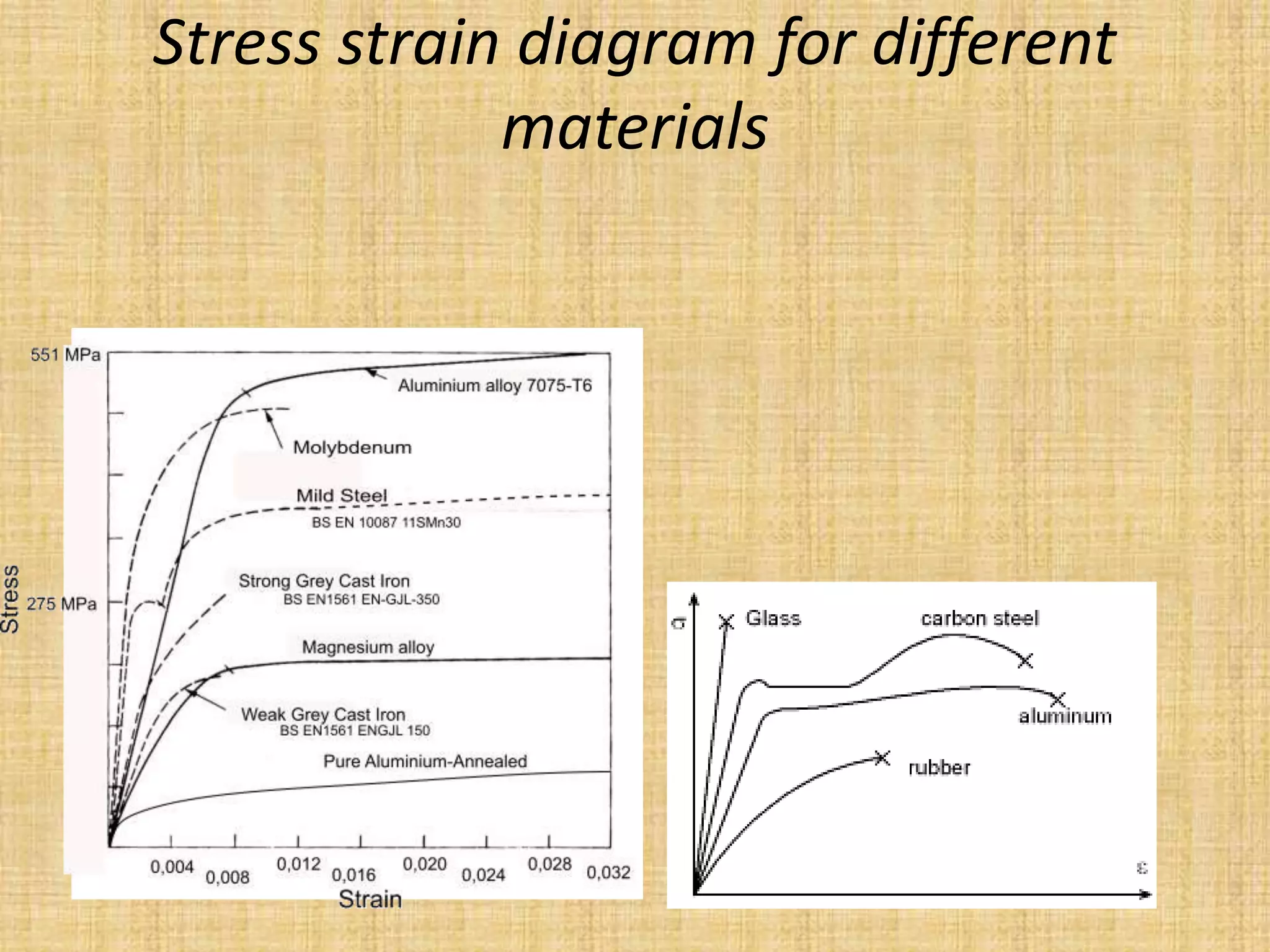
Stress strain diagram for different
materials
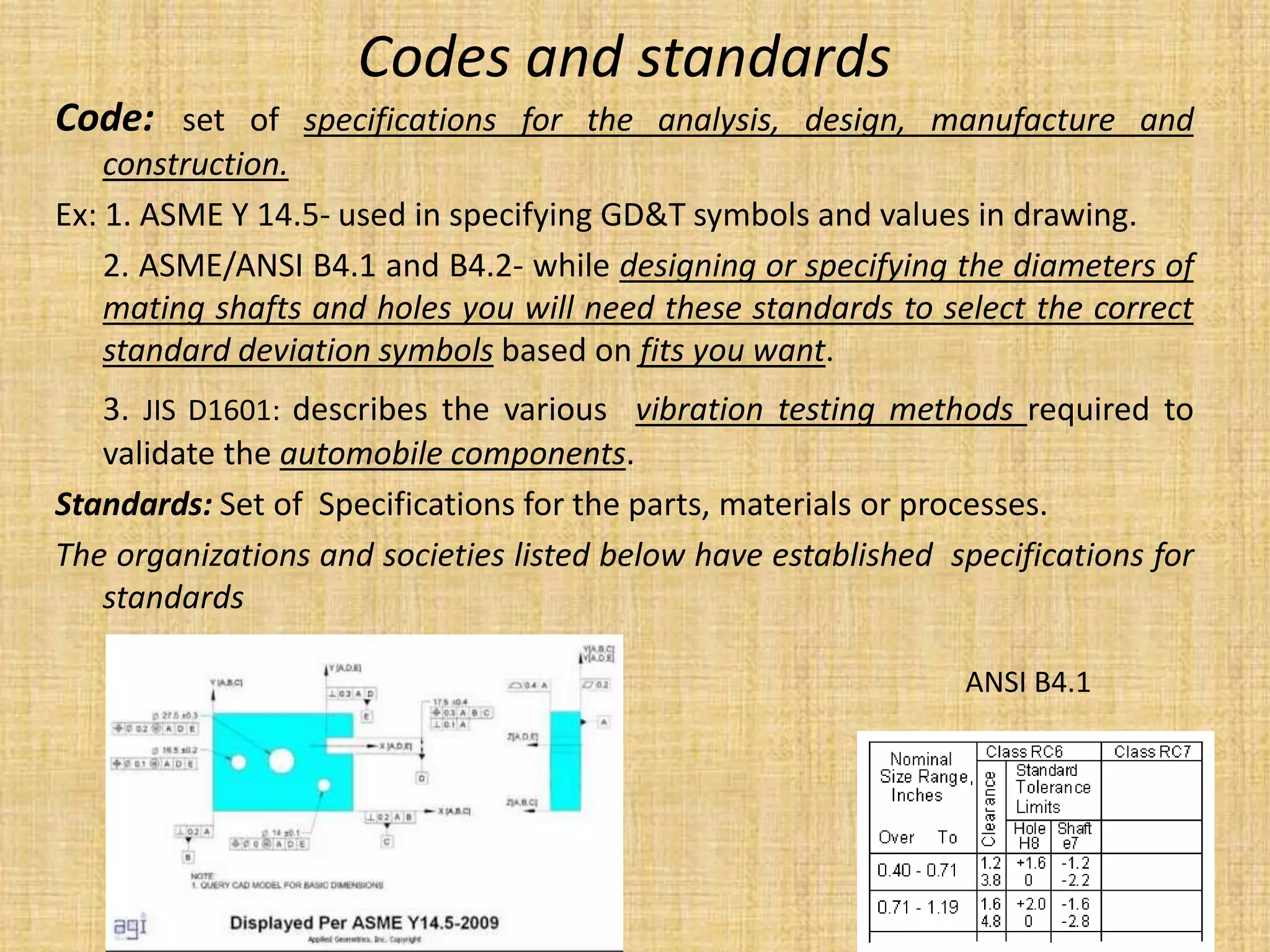
Codes and standards
Code: set of specifications for the analysis, design, manufacture and
construction.
Ex: 1. ASME Y 14.5- used in specifying GD&T symbols and values in drawing.
2. ASME/ANSI B4.1 and B4.2- while designing or specifying the diameters of
mating shafts and holes you will need these standards to select the correct
standard deviation symbols based on fits you want.
3. JIS D1601: describes the various vibration testing methods required to
validate the automobile components.
Standards: Set of Specifications for the parts, materials or processes.
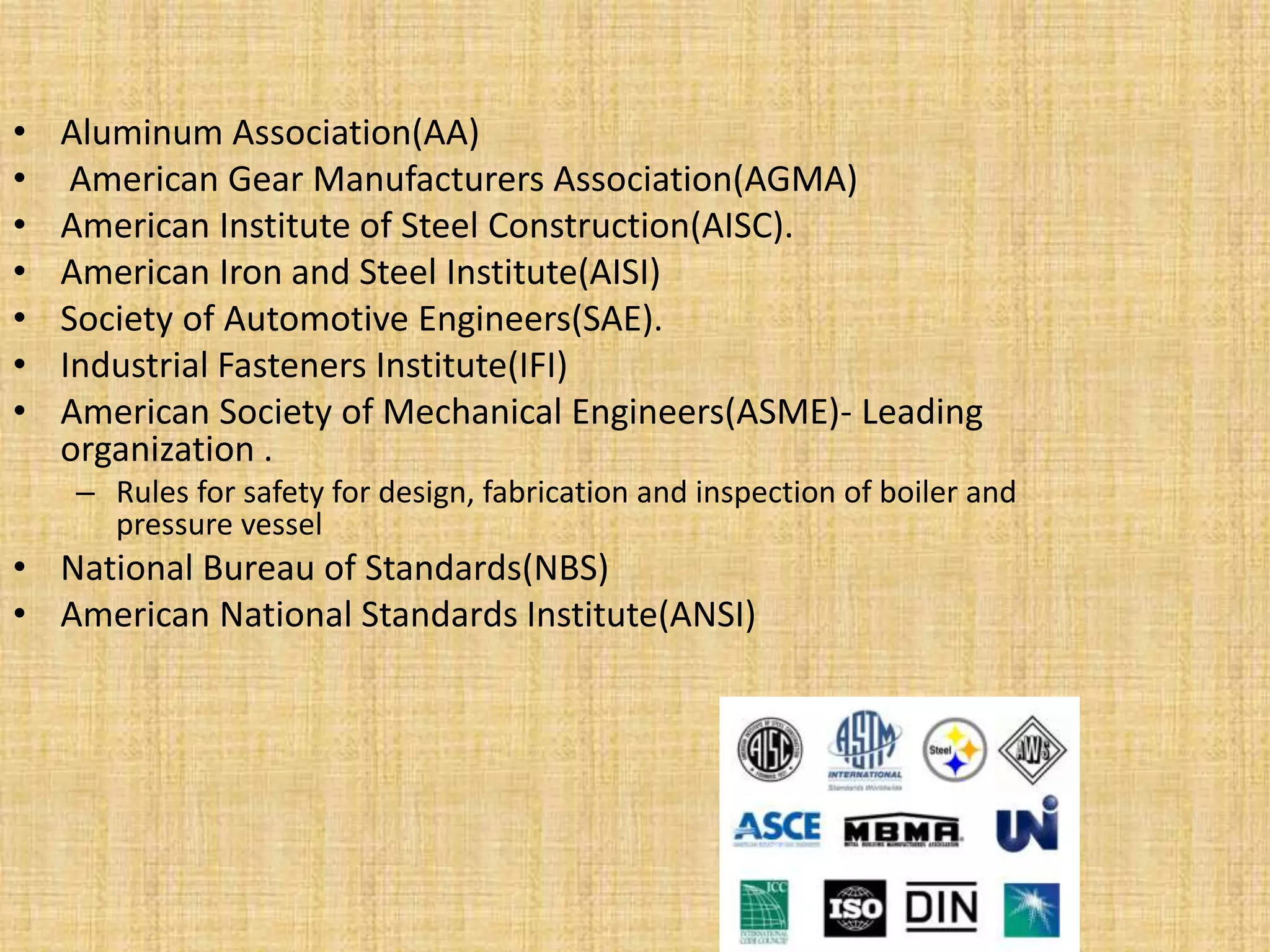
The organizations and societies listed below have established specifications for
standards
ANSI B4.1
• Aluminum Association(AA)
• American Gear Manufacturers Association(AGMA)
• American Institute of Steel Construction(AISC).
• American Iron and Steel Institute(AISI)
• Society of Automotive Engineers(SAE).
• Industrial Fasteners Institute(IFI)
• American Society of Mechanical Engineers(ASME)- Leading
organization .
– Rules for safety for design, fabrication and inspection of boiler and
pressure vessel
• National Bureau of Standards(NBS)
• American National Standards Institute(ANSI)
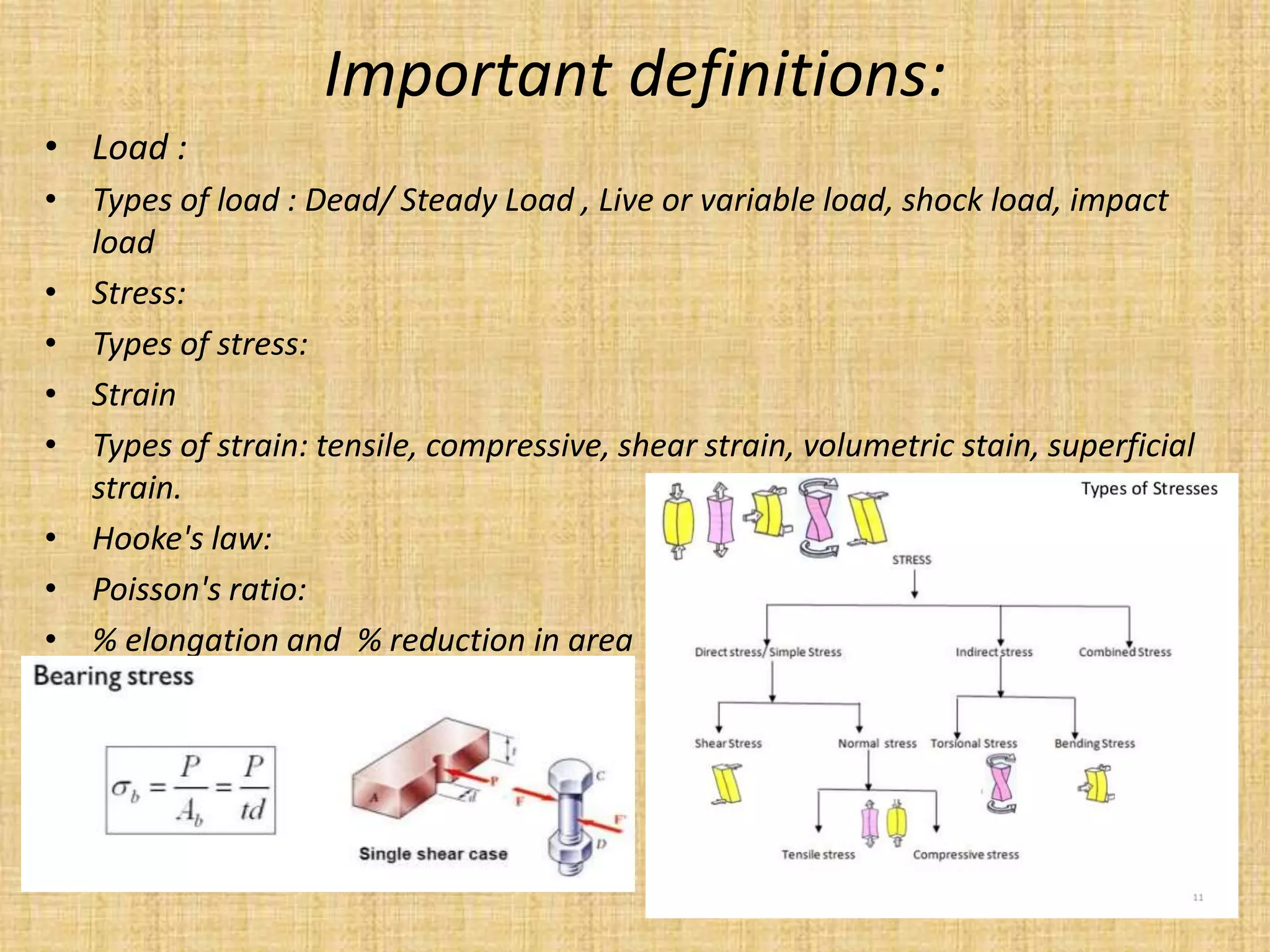
Important definitions:
• Load :
• Types of load : Dead/ Steady Load , Live or variable load, shock load, impact
load
• Stress:
• Types of stress:
• Strain
• Types of strain: tensile, compressive, shear strain, volumetric stain, superficial
strain.
• Hooke's law:
• Poisson's ratio:
• % elongation and % reduction in area
Stresses due to normal and shear load
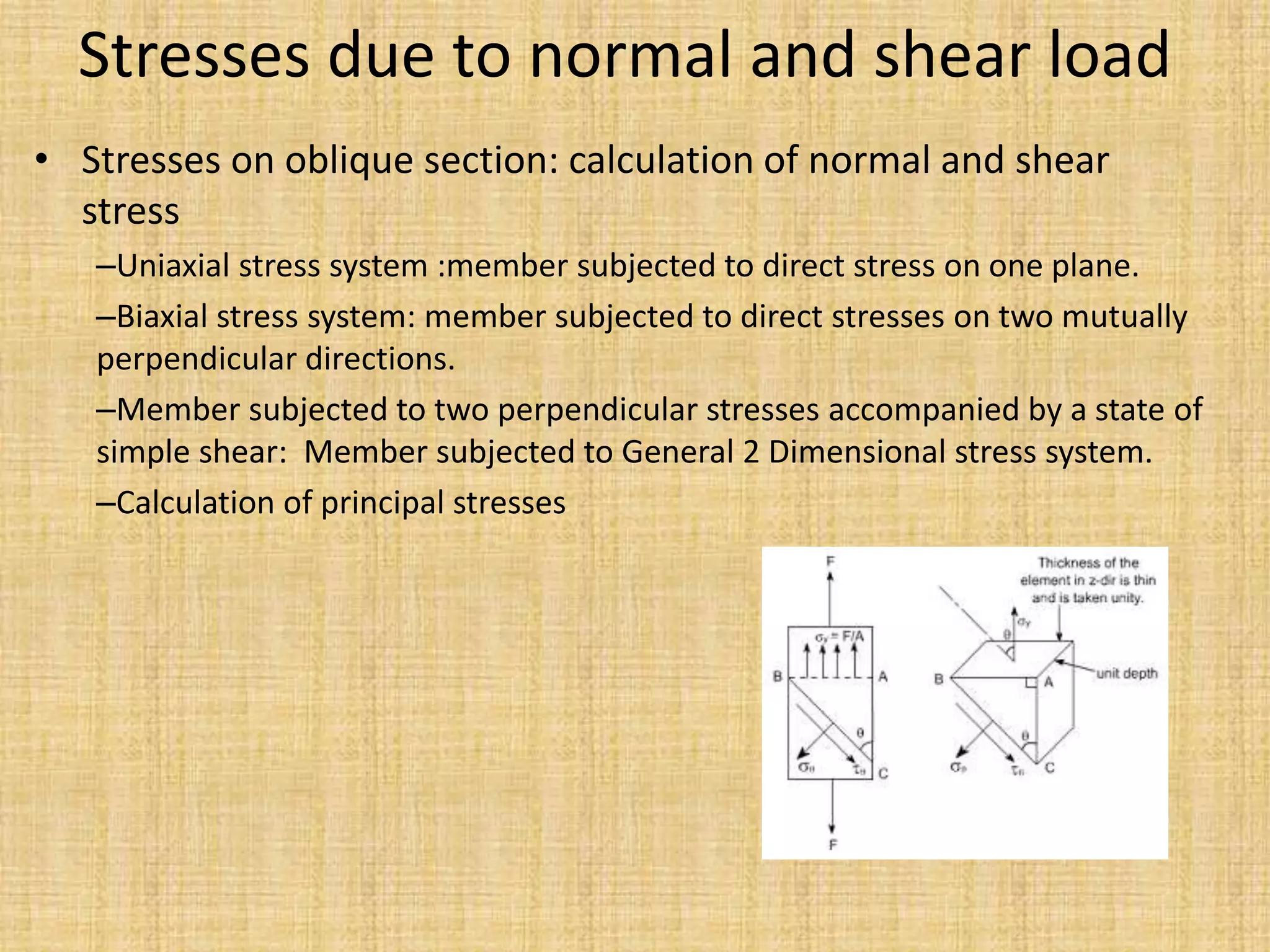
• Stresses on oblique section: calculation of normal and shear
stress
–Uniaxial stress system :member subjected to direct stress on one plane.
–Biaxial stress system: member subjected to direct stresses on two mutually
perpendicular directions.
–Member subjected to two perpendicular stresses accompanied by a state of
simple shear: Member subjected to General 2 Dimensional stress system.
–Calculation of principal stresses

Introduction

  • 1.
    UNIT 1 INTRODUCTION CONTENTS • Definitions:Normal, Shear, Biaxial and Tri axial stresses, stress tensor, principal stresses. • Engineering Materials and their mechanical properties •Stress – strain diagrams • Stress analysis •Design considerations: codes and standards
  • 2.
    Machine design • Decisionmaking process. Ex: Design of a chair: Factors to be considered 1. Purpose 2.Material selection 3.Aesthetics 4.Ergonomics “Bad decision leads to bad design and ultimately bad product”.
  • 3.
    MACHINE DESIGN • Definitions: 1.Machine design is defined as the use of scientific principles, technical information and imagination in the description of a machine or a mechanical system to perform specific functions with maximum economy and efficiency. 2. Machine design is the art of developing new ideas for the construction of machines and expressing those ideas in the form of plans and drawings.
  • 4.
    1. Statement ofthe problem: writing down all the data and also what is required. This information will indicate the nature of the problem and purpose of the design. 2. Analysis of the problem: analysis of all internal and external forces acting on machine part. Analysis can be done by making assumptions, sketches, direction of forces, magnitude, point of application of forces etc. 3. Selection of mechanism, material and stresses: Mechanism: Strength, accuracy of motion, efficiency and cost. Material: Consideration of Life of various parts, availability, application and cost. Stress: selection of proper allowable stress 4. Preparation of preliminary design: probable dimensions of the part is decided( considering strength, rigidity and resistance to wear)
  • 5.
    Machine Elements • Springs •Fasteners • Bearings • Shafts • Gears
  • 6.
  • 7.
  • 8.
    Stress strain diagram •Tensile test: To study/calculate the properties of different materials. • Stress-Strain diagram of mild steel.
  • 9.
  • 10.
    Stress strain diagramfor different materials
  • 11.
    Codes and standards Code:set of specifications for the analysis, design, manufacture and construction. Ex: 1. ASME Y 14.5- used in specifying GD&T symbols and values in drawing. 2. ASME/ANSI B4.1 and B4.2- while designing or specifying the diameters of mating shafts and holes you will need these standards to select the correct standard deviation symbols based on fits you want. 3. JIS D1601: describes the various vibration testing methods required to validate the automobile components. Standards: Set of Specifications for the parts, materials or processes. The organizations and societies listed below have established specifications for standards ANSI B4.1
  • 12.
    • Aluminum Association(AA) •American Gear Manufacturers Association(AGMA) • American Institute of Steel Construction(AISC). • American Iron and Steel Institute(AISI) • Society of Automotive Engineers(SAE). • Industrial Fasteners Institute(IFI) • American Society of Mechanical Engineers(ASME)- Leading organization . – Rules for safety for design, fabrication and inspection of boiler and pressure vessel • National Bureau of Standards(NBS) • American National Standards Institute(ANSI)
  • 13.
    Important definitions: • Load: • Types of load : Dead/ Steady Load , Live or variable load, shock load, impact load • Stress: • Types of stress: • Strain • Types of strain: tensile, compressive, shear strain, volumetric stain, superficial strain. • Hooke's law: • Poisson's ratio: • % elongation and % reduction in area
  • 14.
    Stresses due tonormal and shear load • Stresses on oblique section: calculation of normal and shear stress –Uniaxial stress system :member subjected to direct stress on one plane. –Biaxial stress system: member subjected to direct stresses on two mutually perpendicular directions. –Member subjected to two perpendicular stresses accompanied by a state of simple shear: Member subjected to General 2 Dimensional stress system. –Calculation of principal stresses