Pathophysiology Yu-Hong Jia, Ph.D Department of pathophysiology Dalian medical university
Introduction Concept Goal Status Contents
Ⅰ. Concept Pathophysiology is a subject to explore the rule and mechanism of the origin and evolution of disease.  Applied physiology Clinical physiology Medical physiology Physiology of disease
Ⅱ. Goal, status, contents Explore the general rule and mechanism of occurrence and development of disease Explore the functional and metabolic alterations of sick body and the underlying mechanism 1. Goal
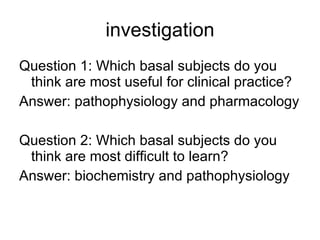
investigation Question 1: Which basal subjects do you think are most useful for clinical practice? Answer: pathophysiology and pharmacology Question 2: Which basal subjects do you think are most difficult to learn? Answer: biochemistry and pathophysiology
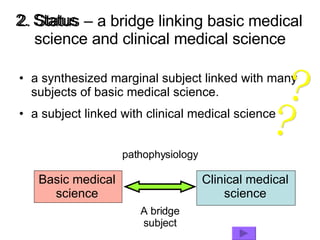
2. Status – a bridge linking basic medical science and clinical medical science a synthesized marginal subject linked with many subjects of basic medical science. a subject linked with clinical medical science ? ? 2. Status Basic medical science Clinical medical science pathophysiology A bridge subject
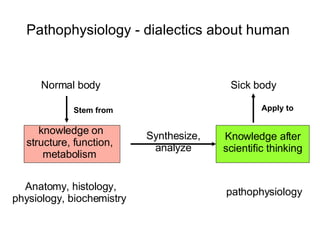
Pathophysiology - dialectics about human  knowledge on structure, function, metabolism Synthesize, analyze Normal body Sick body Knowledge after scientific thinking Stem from Apply to  Anatomy, histology, physiology, biochemistry  pathophysiology
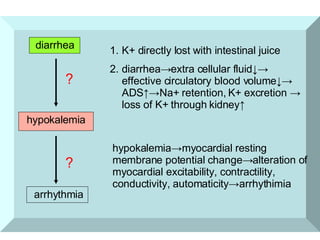
hypokalemia K+ directly lost with intestinal juice  diarrhea->extra cellular fluid↓-> effective circulatory blood volume↓-> ADS↑->Na+ retention, K+ excretion -> loss of K+ through kidney↑ hypokalemia->myocardial resting membrane potential change->alteration of myocardial excitability, contractility, conductivity, automaticity->arrhythimia ? ? diarrhea arrhythmia
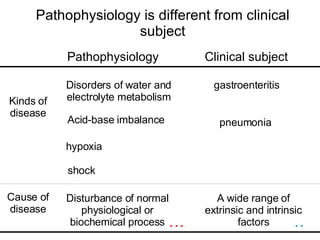
Pathophysiology is different from clinical subject Pathophysiology  Clinical subject  Kinds of disease Disorders of water and electrolyte metabolism Acid-base imbalance hypoxia shock gastroenteritis pneumonia Cause of disease Disturbance of normal physiological or biochemical process A wide range of extrinsic and intrinsic factors … …
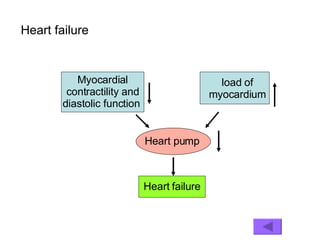
Heart failure Heart pump Myocardial contractility and diastolic function  load of myocardium Heart failure
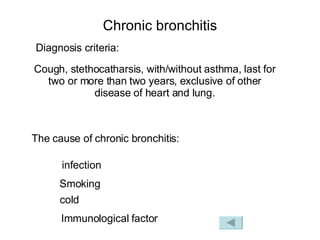
Chronic bronchitis Cough, stethocatharsis, with/without asthma, last for two or more than two years, exclusive of other disease of heart and lung. The cause of chronic bronchitis: infection Smoking  cold Immunological factor Diagnosis criteria:
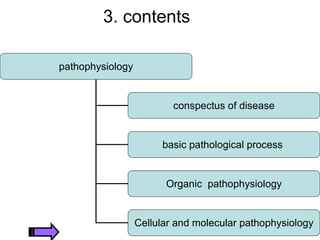
3. contents pathophysiology conspectus of disease basic pathological process  Organic  pathophysiology Cellular and molecular pathophysiology
conspectus of disease Concept of disease Etiology of disease Pathogenesis of disease Outcome of disease
basic pathological process Refers to some common and collective  functional and/or metabolic and/or structural alterations presented in many kinds of disease. e.g. hypoxia, edema, stress, acidosis, fever, and so on
Organic  pathophysiology Mainly discuss the basic processes and mechanisms of the insufficiency or failure of important organs in the body, i. e., heart, lung, liver, kidney and brain.
Cellular and molecular pathophysiology Signal transduction and disease Cell apoptosis in disease
What is pathophysiology? Why is pathophysiology important? What contents are arranged in the book of pathophysiology?
How to Learn Pathophysiology Grasp the major points: causes,  pathogenesis,  alterations in metabolism and functions Use dialectical thinking and methods, such as views of contradictory and unification, transformation, etc.  Selectively review related knowledge learned previously, such as physiology, biochemistry, molecular biology, immunology, pathology, and so on.  Pay attention to the lecture in class.
thank you!

Introduction

  • 1.
    Pathophysiology Yu-Hong Jia,Ph.D Department of pathophysiology Dalian medical university
  • 2.
  • 3.
    Ⅰ. Concept Pathophysiologyis a subject to explore the rule and mechanism of the origin and evolution of disease. Applied physiology Clinical physiology Medical physiology Physiology of disease
  • 4.
    Ⅱ. Goal, status,contents Explore the general rule and mechanism of occurrence and development of disease Explore the functional and metabolic alterations of sick body and the underlying mechanism 1. Goal
  • 5.
    investigation Question 1:Which basal subjects do you think are most useful for clinical practice? Answer: pathophysiology and pharmacology Question 2: Which basal subjects do you think are most difficult to learn? Answer: biochemistry and pathophysiology
  • 6.
    2. Status –a bridge linking basic medical science and clinical medical science a synthesized marginal subject linked with many subjects of basic medical science. a subject linked with clinical medical science ? ? 2. Status Basic medical science Clinical medical science pathophysiology A bridge subject
  • 7.
    Pathophysiology - dialecticsabout human knowledge on structure, function, metabolism Synthesize, analyze Normal body Sick body Knowledge after scientific thinking Stem from Apply to Anatomy, histology, physiology, biochemistry pathophysiology
  • 8.
    hypokalemia K+ directlylost with intestinal juice diarrhea->extra cellular fluid↓-> effective circulatory blood volume↓-> ADS↑->Na+ retention, K+ excretion -> loss of K+ through kidney↑ hypokalemia->myocardial resting membrane potential change->alteration of myocardial excitability, contractility, conductivity, automaticity->arrhythimia ? ? diarrhea arrhythmia
  • 9.
    Pathophysiology is differentfrom clinical subject Pathophysiology Clinical subject Kinds of disease Disorders of water and electrolyte metabolism Acid-base imbalance hypoxia shock gastroenteritis pneumonia Cause of disease Disturbance of normal physiological or biochemical process A wide range of extrinsic and intrinsic factors … …
  • 10.
    Heart failure Heartpump Myocardial contractility and diastolic function load of myocardium Heart failure
  • 11.
    Chronic bronchitis Cough,stethocatharsis, with/without asthma, last for two or more than two years, exclusive of other disease of heart and lung. The cause of chronic bronchitis: infection Smoking cold Immunological factor Diagnosis criteria:
  • 12.
    3. contents pathophysiologyconspectus of disease basic pathological process Organic pathophysiology Cellular and molecular pathophysiology
  • 13.
    conspectus of diseaseConcept of disease Etiology of disease Pathogenesis of disease Outcome of disease
  • 14.
    basic pathological processRefers to some common and collective functional and/or metabolic and/or structural alterations presented in many kinds of disease. e.g. hypoxia, edema, stress, acidosis, fever, and so on
  • 15.
    Organic pathophysiologyMainly discuss the basic processes and mechanisms of the insufficiency or failure of important organs in the body, i. e., heart, lung, liver, kidney and brain.
  • 16.
    Cellular and molecularpathophysiology Signal transduction and disease Cell apoptosis in disease
  • 17.
    What is pathophysiology?Why is pathophysiology important? What contents are arranged in the book of pathophysiology?
  • 18.
    How to LearnPathophysiology Grasp the major points: causes, pathogenesis, alterations in metabolism and functions Use dialectical thinking and methods, such as views of contradictory and unification, transformation, etc. Selectively review related knowledge learned previously, such as physiology, biochemistry, molecular biology, immunology, pathology, and so on. Pay attention to the lecture in class.
  • 19.