Evaluation and Control
E.Kushan,
Master of Public Administration
School of Postgraduate Studies
Sri Lanka Institute of Development Administration
Colombo
Sri Lanka
"We want to change the competitive
landscape by being not just better
than our competitors, but by taking
quality to a whole new level.”
-Jack Welch-
The Basic Performance Pyramid
Mission
Vision
Goals/Objectives
Strategies
Success Drivers
Where are we going?
What are we in business for?
What do we want to achieve?
How will you achieve your
goals/objectives?
What do you need to do
well?
How will you measure
how well you are doing?Performance Measures
Measuring Performance
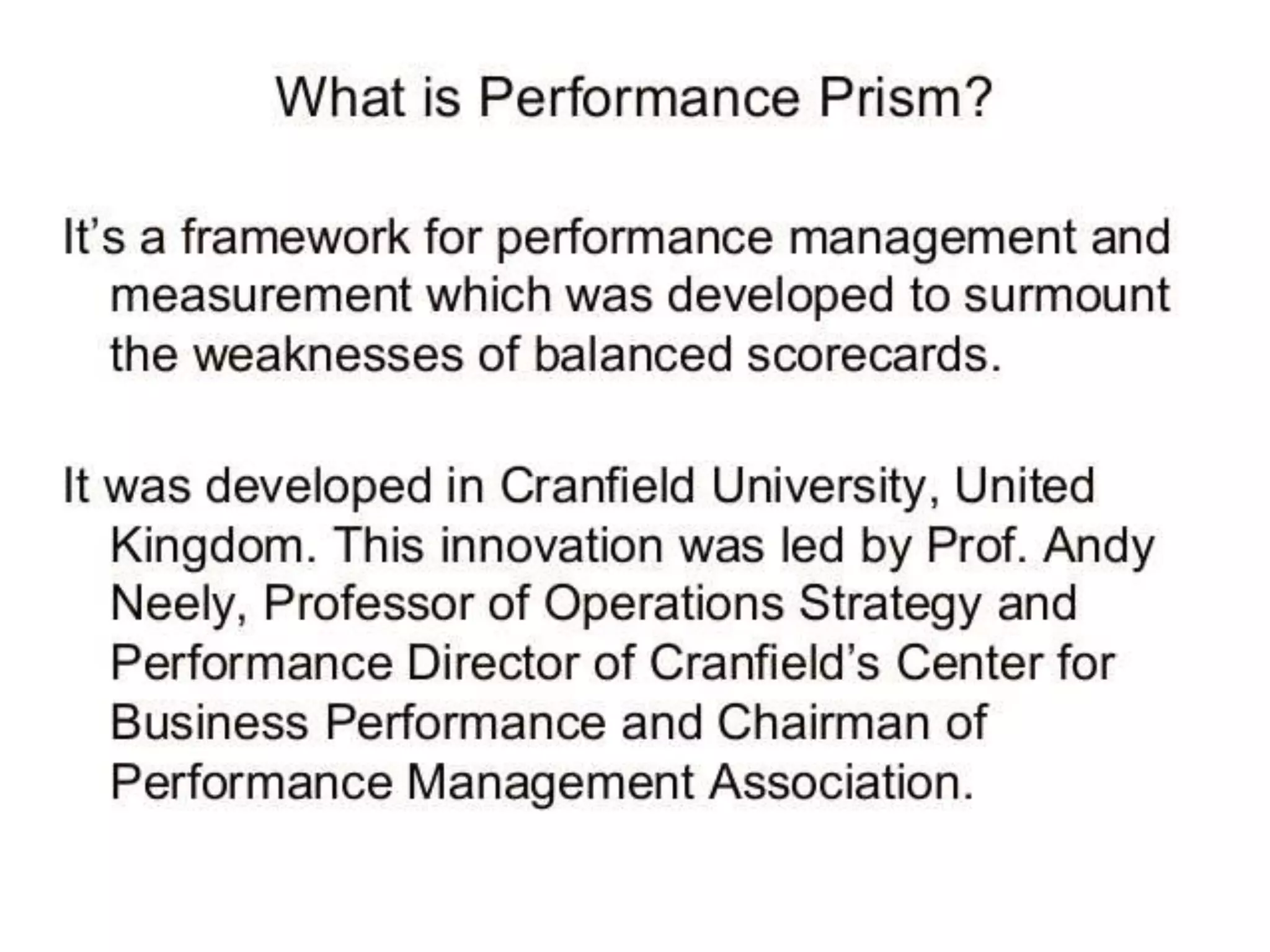
 Performance measuring means a systematic defining and
selecting (quantitative and qualitative)measurable indicators, as
well as obtaining their measures in some time intervals, and
checking them during the time.
 Performance measures should aim at the long-term.
 Should be forward-thinking.
 Initiative designed to fundamentally change the way
corporations do business.
It is not a post-mortem of what happened but a step
towards how we do better in the future.
It enables monitoring (and prediction) of changes
important for the purpose of strategic
management.
It provides the base for decision-making in
formulating strategic planning and contributes to
connecting the vision and strategies with the goals
and standards of the group and individual
performance.
Why measure performance?
 Objectives for-profit organizations.
Measure changes to stakeholders,
wealth;
put in simple terms, the value of a firm.
 Reward an employee for contributing to increase in firm
value.
Most organization measure performance
by using the;
 accounting measures – Net profits, gross
margin, ROA, ROE, etc.
The value concept (Results control)
 The performance measurement concept indicates
that employees can increase the value of the firm by:
 -Increasing the size of a firm’s future cash flows,
 -By accelerating the receipt of those cash flows, or
 -By making them more certain or less risky.
Measure the right things
 An ideal performance management system is one that
energizes the people in an organization to focus effort on:
 Improving things that really matter
 One that gives people the information and freedom that
they need to realize.
 Their potential within their own roles and that aligns their
contribution with the success of the enterprise.
Keep it simple
 Performance Measures must be
 - simple to operate
 - simple to understand
 - simple to action
 system must be simple, to operate, data collection
must be easy, distribution must be timely, and the
information should be easy to manipulate.
Why do organizations choose accounting
data as measures of performance?
Accounting profits and returns can be measured on a
timely basis relatively precisely and objectively.
Because they are timely, precise, and objective,
employees would react positively.
The short term measures keep employees on check.
The reason of accounting measures of
performance are not adequate?
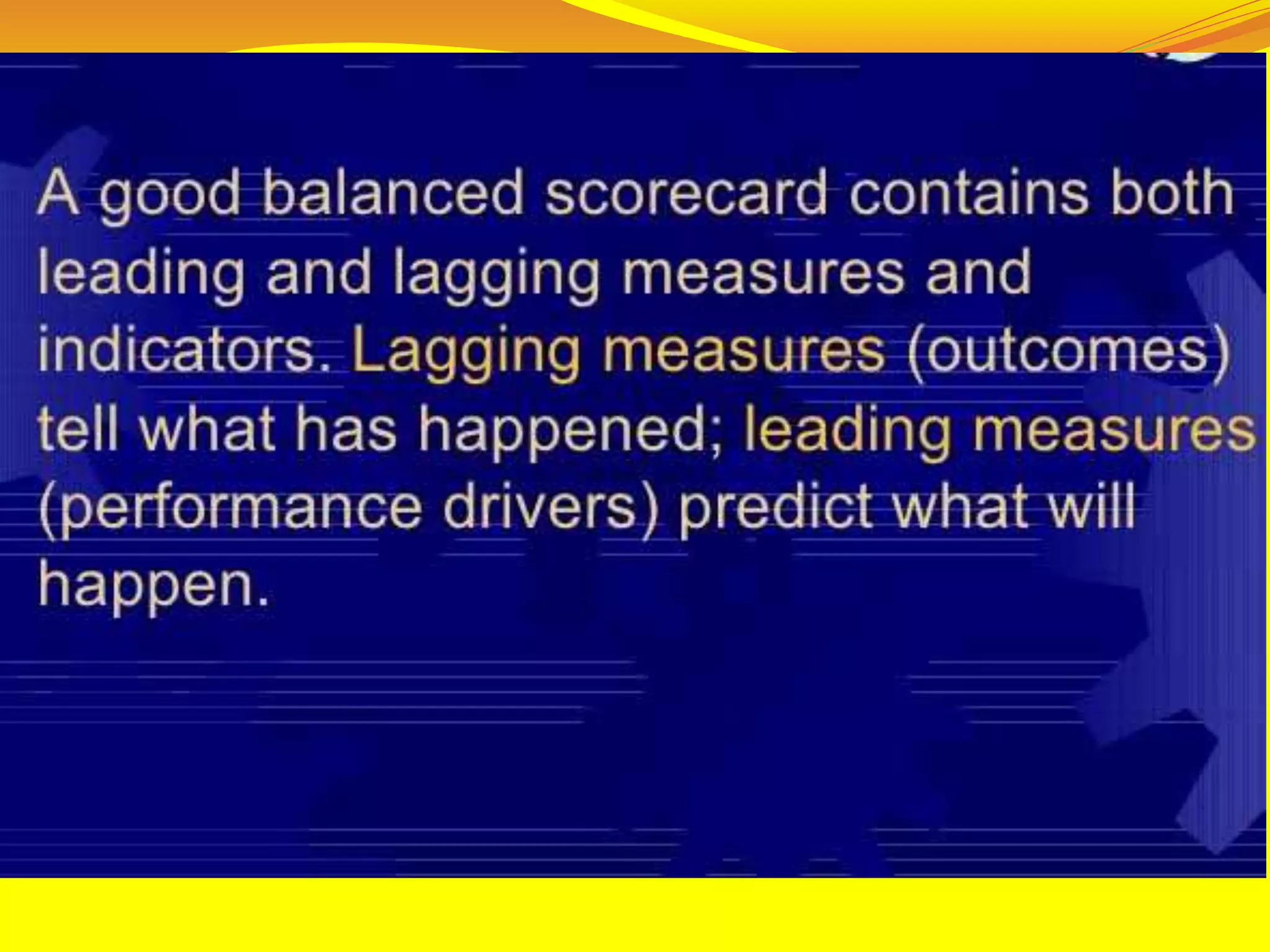
 Accounting measures are lagged indicators.
 Dependent on the choice of measurement method.
 Accounting can create management myopia.
-Accounting is short term earnings or returns.
-Why focusing on the short term is inappropriate?
- Why would this short-term focus affect long-term
relationships ?
Performance Measurements for the new era
 In the global, technology-driven, decentralize
environment, measuring.
 Financial performance, while important, is not
adequate.
 Even if less than precise, other measures of performance
are required.
 These measures should be capable of measuring
multiple attributes of an organization.
Lead indicators as value drivers
 Many non-financial indicators can serve as lead
indicators in certain settings.
 Common examples are:
 Market share
 backlog (book-to-bill ratio)
 new product introductions
 new product development lead times
 product quality, customer satisfaction
 employee morale
 personnel development,
 inventory turnover,
 bad debt ratio, or safety.
Lag Indicators
 In contrast to lead indicators, lag indicators are measures
that point to earlier plans and their execution.
 Financial performances are lag indicators.
 Many times, financial performances are too late to affect
future products and services.
 Therefore, we need multiple measures that include both
financial and non-financial measures.
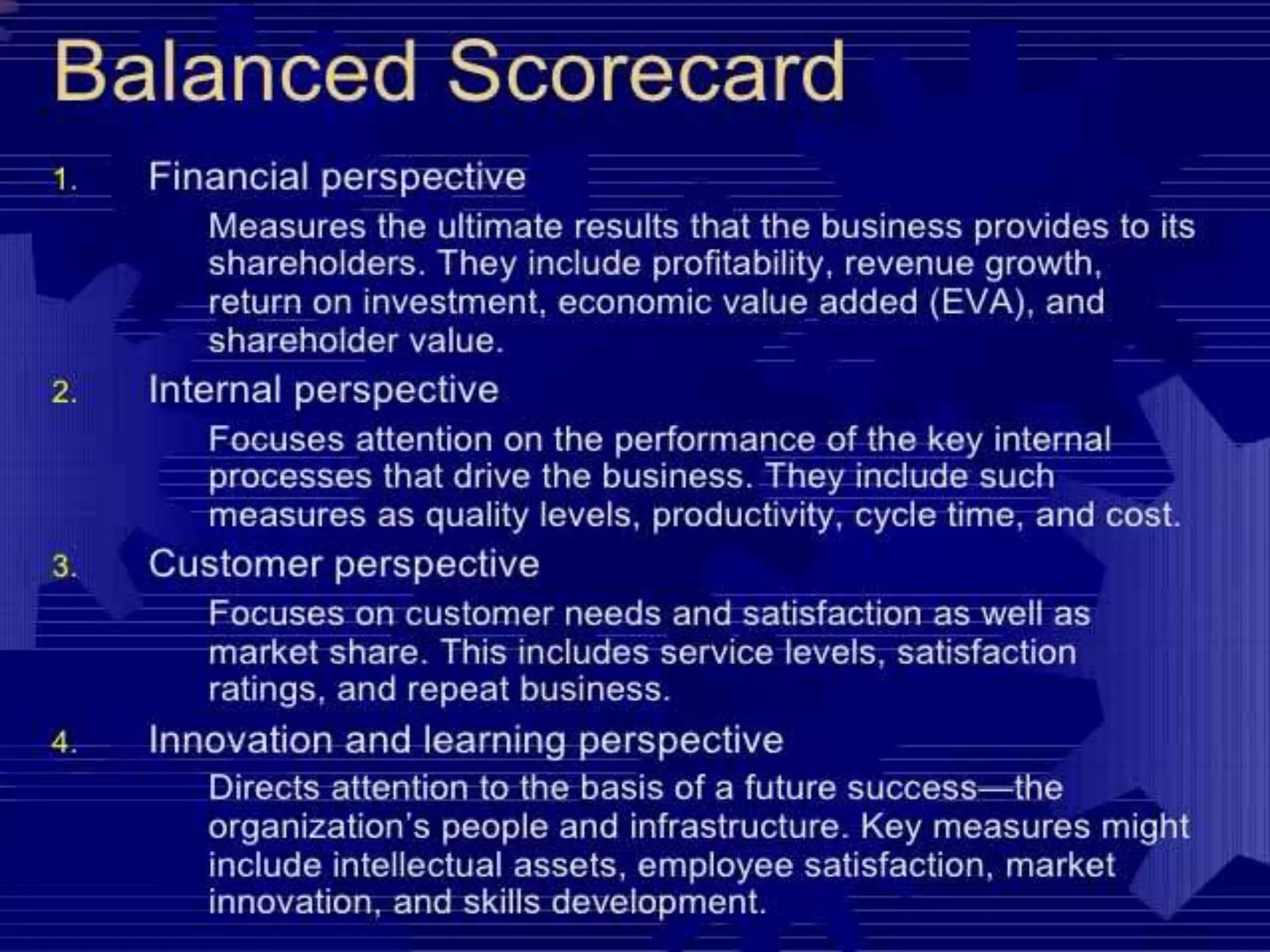
Comprehensive Performance Measures
must address..
1 Financial performance.
2 Customer satisfaction.
3. Internal business process developments.
4. Allow an organization to learn and grow.
Appropriate measures.
Financial Performance can be measured by
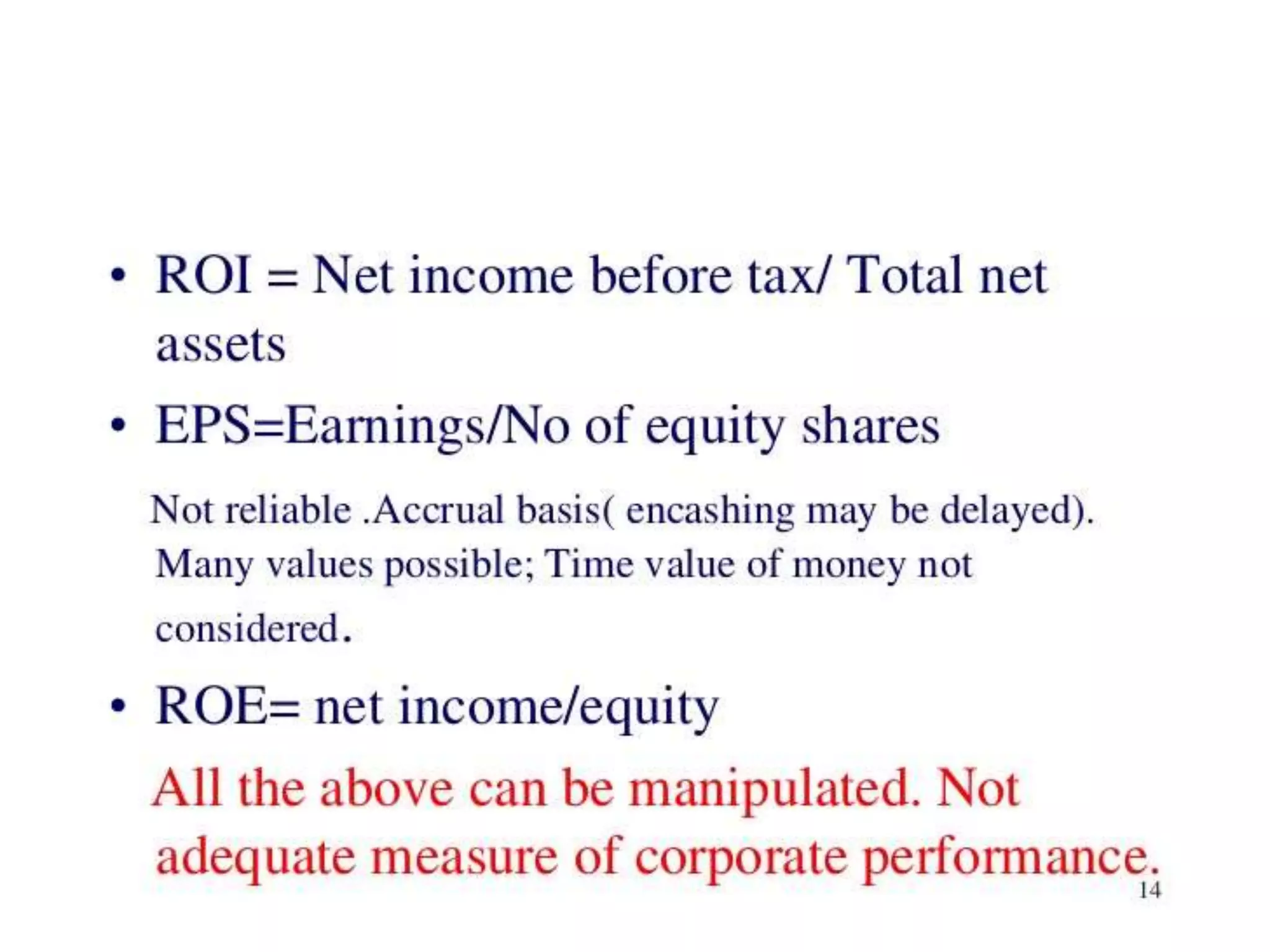
 ROA- Return on assets
 ROE- Return On Equity
 ROE- Earnings Per Share, ect,.
 These measure are essential to summarize the
economic consequences of strategy.
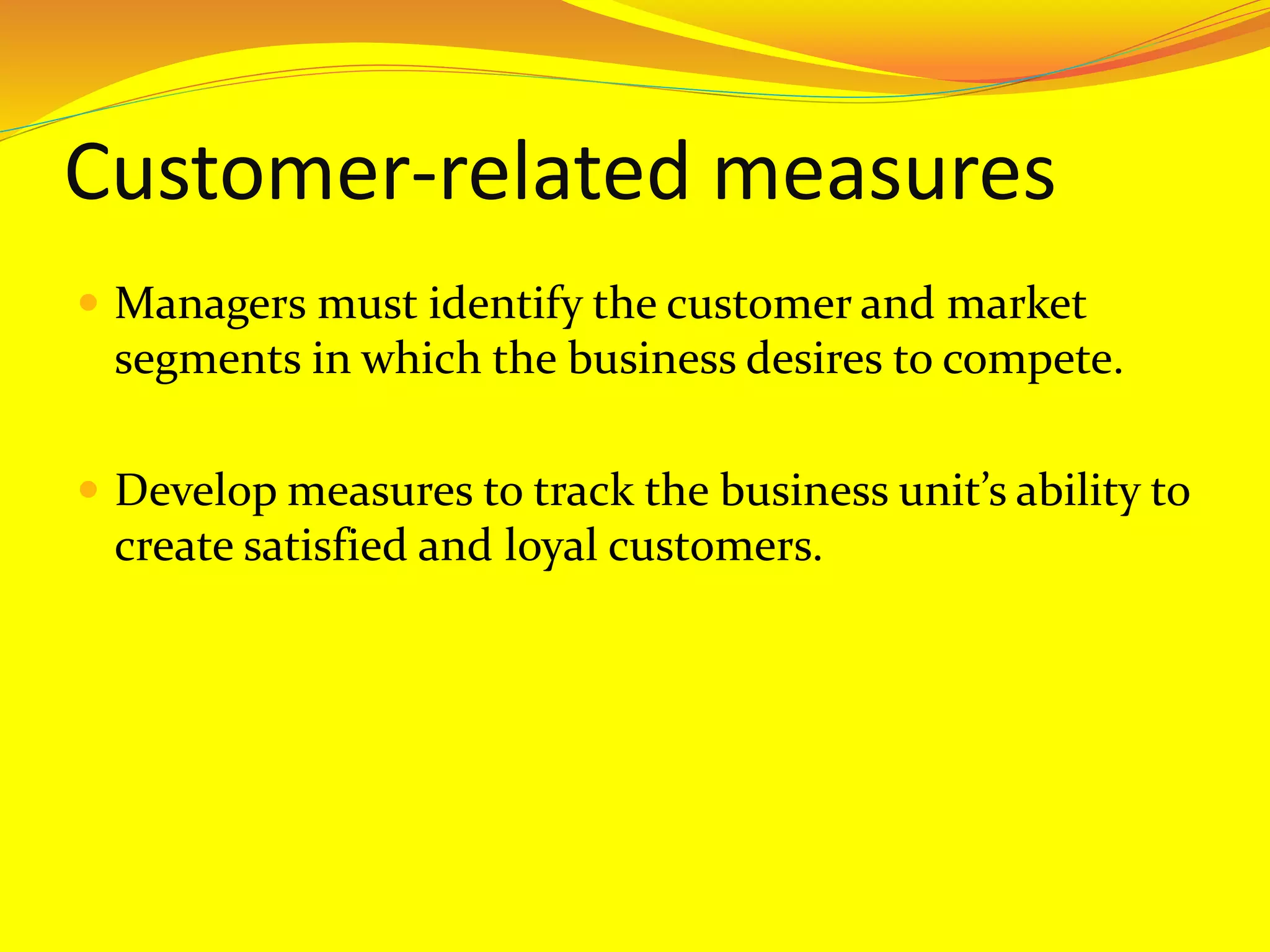
Customer-related measures
 Managers must identify the customer and market
segments in which the business desires to compete.
 Develop measures to track the business unit’s ability to
create satisfied and loyal customers.
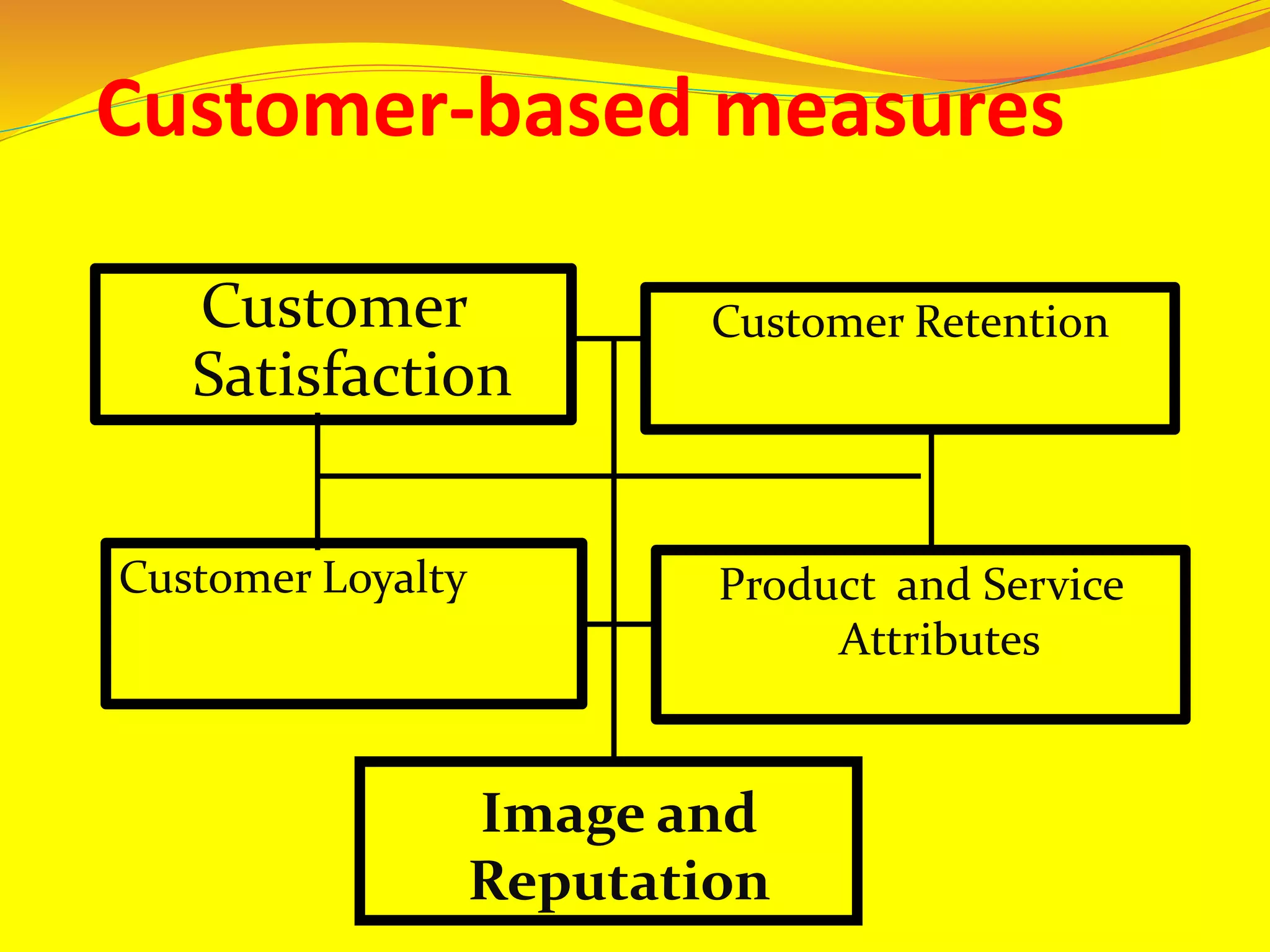
Customer-based measures
Customer
Satisfaction
Customer Retention
Customer Loyalty Product and Service
Attributes
Image and
Reputation
Internal Business Process Measures
 Identify the critical internal processes for which the
organization must excel in implementing its strategy.
 IBP dimension enable the business unit to
 deliver the value propositions that will attract and retain
customers in targeted market segments, and
 satisfy shareholder expectations regarding financial
returns
Internal Business Process Measures
Innovation
processes
Operation Processes
Quality Measures Cycle Time Measures
Cost Measures
Learning and Growth measures
1. Learning and growth identifies the infrastructure an
organization must build to create long-term
growth and improvement.
2. Growth comes from:
people,
systems and
organizational procedures.
Thank You!
Ex:

Strategic management

  • 1.
    Evaluation and Control E.Kushan, Masterof Public Administration School of Postgraduate Studies Sri Lanka Institute of Development Administration Colombo Sri Lanka
  • 2.
    "We want tochange the competitive landscape by being not just better than our competitors, but by taking quality to a whole new level.” -Jack Welch-
  • 3.
    The Basic PerformancePyramid Mission Vision Goals/Objectives Strategies Success Drivers Where are we going? What are we in business for? What do we want to achieve? How will you achieve your goals/objectives? What do you need to do well? How will you measure how well you are doing?Performance Measures
  • 4.
    Measuring Performance  Performancemeasuring means a systematic defining and selecting (quantitative and qualitative)measurable indicators, as well as obtaining their measures in some time intervals, and checking them during the time.  Performance measures should aim at the long-term.  Should be forward-thinking.  Initiative designed to fundamentally change the way corporations do business.
  • 5.
    It is nota post-mortem of what happened but a step towards how we do better in the future. It enables monitoring (and prediction) of changes important for the purpose of strategic management. It provides the base for decision-making in formulating strategic planning and contributes to connecting the vision and strategies with the goals and standards of the group and individual performance.
  • 6.
    Why measure performance? Objectives for-profit organizations. Measure changes to stakeholders, wealth; put in simple terms, the value of a firm.  Reward an employee for contributing to increase in firm value.
  • 7.
    Most organization measureperformance by using the;  accounting measures – Net profits, gross margin, ROA, ROE, etc.
  • 10.
    The value concept(Results control)  The performance measurement concept indicates that employees can increase the value of the firm by:  -Increasing the size of a firm’s future cash flows,  -By accelerating the receipt of those cash flows, or  -By making them more certain or less risky.
  • 11.
    Measure the rightthings  An ideal performance management system is one that energizes the people in an organization to focus effort on:  Improving things that really matter  One that gives people the information and freedom that they need to realize.  Their potential within their own roles and that aligns their contribution with the success of the enterprise.
  • 12.
    Keep it simple Performance Measures must be  - simple to operate  - simple to understand  - simple to action  system must be simple, to operate, data collection must be easy, distribution must be timely, and the information should be easy to manipulate.
  • 13.
    Why do organizationschoose accounting data as measures of performance? Accounting profits and returns can be measured on a timely basis relatively precisely and objectively. Because they are timely, precise, and objective, employees would react positively. The short term measures keep employees on check.
  • 14.
    The reason ofaccounting measures of performance are not adequate?  Accounting measures are lagged indicators.  Dependent on the choice of measurement method.  Accounting can create management myopia. -Accounting is short term earnings or returns. -Why focusing on the short term is inappropriate? - Why would this short-term focus affect long-term relationships ?
  • 15.
    Performance Measurements forthe new era  In the global, technology-driven, decentralize environment, measuring.  Financial performance, while important, is not adequate.  Even if less than precise, other measures of performance are required.  These measures should be capable of measuring multiple attributes of an organization.
  • 16.
    Lead indicators asvalue drivers  Many non-financial indicators can serve as lead indicators in certain settings.  Common examples are:  Market share  backlog (book-to-bill ratio)  new product introductions  new product development lead times  product quality, customer satisfaction  employee morale  personnel development,  inventory turnover,  bad debt ratio, or safety.
  • 17.
    Lag Indicators  Incontrast to lead indicators, lag indicators are measures that point to earlier plans and their execution.  Financial performances are lag indicators.  Many times, financial performances are too late to affect future products and services.  Therefore, we need multiple measures that include both financial and non-financial measures.
  • 18.
    Comprehensive Performance Measures mustaddress.. 1 Financial performance. 2 Customer satisfaction. 3. Internal business process developments. 4. Allow an organization to learn and grow.
  • 19.
  • 27.
    Financial Performance canbe measured by  ROA- Return on assets  ROE- Return On Equity  ROE- Earnings Per Share, ect,.  These measure are essential to summarize the economic consequences of strategy.
  • 28.
    Customer-related measures  Managersmust identify the customer and market segments in which the business desires to compete.  Develop measures to track the business unit’s ability to create satisfied and loyal customers.
  • 29.
    Customer-based measures Customer Satisfaction Customer Retention CustomerLoyalty Product and Service Attributes Image and Reputation
  • 30.
    Internal Business ProcessMeasures  Identify the critical internal processes for which the organization must excel in implementing its strategy.  IBP dimension enable the business unit to  deliver the value propositions that will attract and retain customers in targeted market segments, and  satisfy shareholder expectations regarding financial returns
  • 31.
    Internal Business ProcessMeasures Innovation processes Operation Processes Quality Measures Cycle Time Measures Cost Measures
  • 32.
    Learning and Growthmeasures 1. Learning and growth identifies the infrastructure an organization must build to create long-term growth and improvement. 2. Growth comes from: people, systems and organizational procedures.
  • 35.
  • 57.