The
intersectionality
of the Self
(Race, Gender, Class in Identity Formation)
Presented by: BSHM-1 (Group 1)
Intersectionality
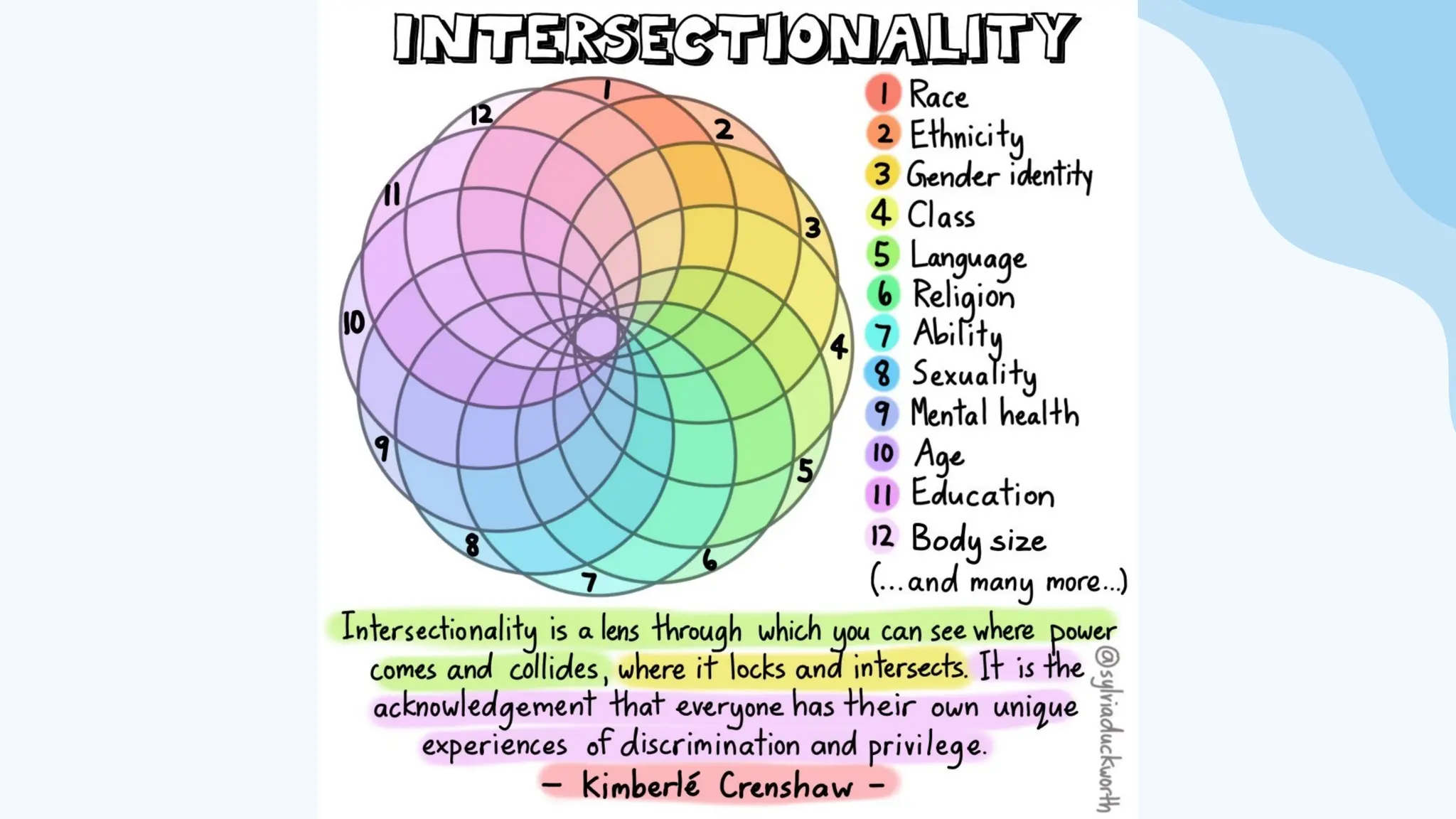
Intersectionality is a term first coined in 1989 by
American civil rights advocate and leading scholar of critical
race theory, Kimberlé Williams Crenshaw. It is the study of
overlapping or intersecting social identities and related
systems of oppression, domination, or discrimination.
In other words, intersectional asserts that people are
often disadvantaged by multiple sources of oppression: their
race, class, gender identity, sexual orientation, religion, and
other identity markers.
Intersectionality: Race
Term race or racial group refers to dividing the
human species into groups. The most widely used human
racial types are those based on visual traits (such as skin
color, cranial, facial features, or type of hair).
Examples: "White", "Black or African American",
"Asian", "Hispanic"
Intersectionality: Race
Race/color discrimination can involve treating
someone unfavorably because the person is a certain race or
color.
This may involve:
Prejudice and overt bias
Stereotyping
Racial profiling
Bullying
Intersectionality: Gender
Gender refers to the characteristics of women, men,
girls and boys that are socially constructed. This includes
norms, behaviors and roles associated with being a woman,
man, girl or boy, as well as relationships with each other.
-World Health Organization (WHO)
Intersectionality: Gender
• Women: Expected to be nurturing, take care of the
household, raise children, and support their husband
emotionally and domestically. feminine ways and be polite,
accommodating, and nurturing
• Men: Expected to be the primary breadwinner,
display strength, protect the family, and avoid showing
vulnerability or emotion. expected to be strong,
aggressive, and bold
Intersectionality: Gender
Sexism is prejudice or discrimination based on a
person’s sex or gender.
Examples for Women:
Catcalling
lack of opportunities in work
judging base on their clothes, behavior
Viewing women as inferior to men
Examples for Men:
More likely to be convicted of a crime
Intersectionality: Class in Identity
Formation
Class in identity formation refers to how social class
influences an individual’s sense of self, values, experiences,
and opportunities.
This concept encompasses various aspects:
Socioeconomic Status: Class often dictates access to
resources like education, healthcare, and social networks,
shaping personal aspirations and identity
Cultural Norms: Different classes may have distinct cultural
practices, beliefs, and lifestyles, which can impact how
individuals see themselves and relate to others.
Intersectionality: Class in Identity
Formation
Socialization: The environment in which a person is raised—
often linked to class—affects their worldview and self-
concept. This includes family dynamics, peer influences, and
community expectations.
Intersectionality: Class interacts with other identity factors
such as race, gender, and sexuality, complicating how
individuals navigate their identities in diverse contexts
Stigma and Privilege: Individuals may experience stigma
associated with lower socioeconomic status or privilege
associated with higher status, both of which can significantly
shape identity
Thank You For
Listening!!!

UTS_Intersectionality of the human._pptx

  • 1.
    The intersectionality of the Self (Race,Gender, Class in Identity Formation) Presented by: BSHM-1 (Group 1)
  • 2.
    Intersectionality Intersectionality is aterm first coined in 1989 by American civil rights advocate and leading scholar of critical race theory, Kimberlé Williams Crenshaw. It is the study of overlapping or intersecting social identities and related systems of oppression, domination, or discrimination. In other words, intersectional asserts that people are often disadvantaged by multiple sources of oppression: their race, class, gender identity, sexual orientation, religion, and other identity markers.
  • 4.
    Intersectionality: Race Term raceor racial group refers to dividing the human species into groups. The most widely used human racial types are those based on visual traits (such as skin color, cranial, facial features, or type of hair). Examples: "White", "Black or African American", "Asian", "Hispanic"
  • 5.
    Intersectionality: Race Race/color discriminationcan involve treating someone unfavorably because the person is a certain race or color. This may involve: Prejudice and overt bias Stereotyping Racial profiling Bullying
  • 6.
    Intersectionality: Gender Gender refersto the characteristics of women, men, girls and boys that are socially constructed. This includes norms, behaviors and roles associated with being a woman, man, girl or boy, as well as relationships with each other. -World Health Organization (WHO)
  • 7.
    Intersectionality: Gender • Women:Expected to be nurturing, take care of the household, raise children, and support their husband emotionally and domestically. feminine ways and be polite, accommodating, and nurturing • Men: Expected to be the primary breadwinner, display strength, protect the family, and avoid showing vulnerability or emotion. expected to be strong, aggressive, and bold
  • 8.
    Intersectionality: Gender Sexism isprejudice or discrimination based on a person’s sex or gender. Examples for Women: Catcalling lack of opportunities in work judging base on their clothes, behavior Viewing women as inferior to men Examples for Men: More likely to be convicted of a crime
  • 9.
    Intersectionality: Class inIdentity Formation Class in identity formation refers to how social class influences an individual’s sense of self, values, experiences, and opportunities. This concept encompasses various aspects: Socioeconomic Status: Class often dictates access to resources like education, healthcare, and social networks, shaping personal aspirations and identity Cultural Norms: Different classes may have distinct cultural practices, beliefs, and lifestyles, which can impact how individuals see themselves and relate to others.
  • 10.
    Intersectionality: Class inIdentity Formation Socialization: The environment in which a person is raised— often linked to class—affects their worldview and self- concept. This includes family dynamics, peer influences, and community expectations. Intersectionality: Class interacts with other identity factors such as race, gender, and sexuality, complicating how individuals navigate their identities in diverse contexts Stigma and Privilege: Individuals may experience stigma associated with lower socioeconomic status or privilege associated with higher status, both of which can significantly shape identity
  • 11.