PSYCHOIMMUNOLOGY
PRESENTED BY-
Miss. Mahima Eliazer
M.Sc Nursing 1st Year
TMCON
1
POINT TO DISCUSS TODAY ARE :
 History
 Definition of psychoimmunology
 Types , factor of immunity
 Factor affecting immune response
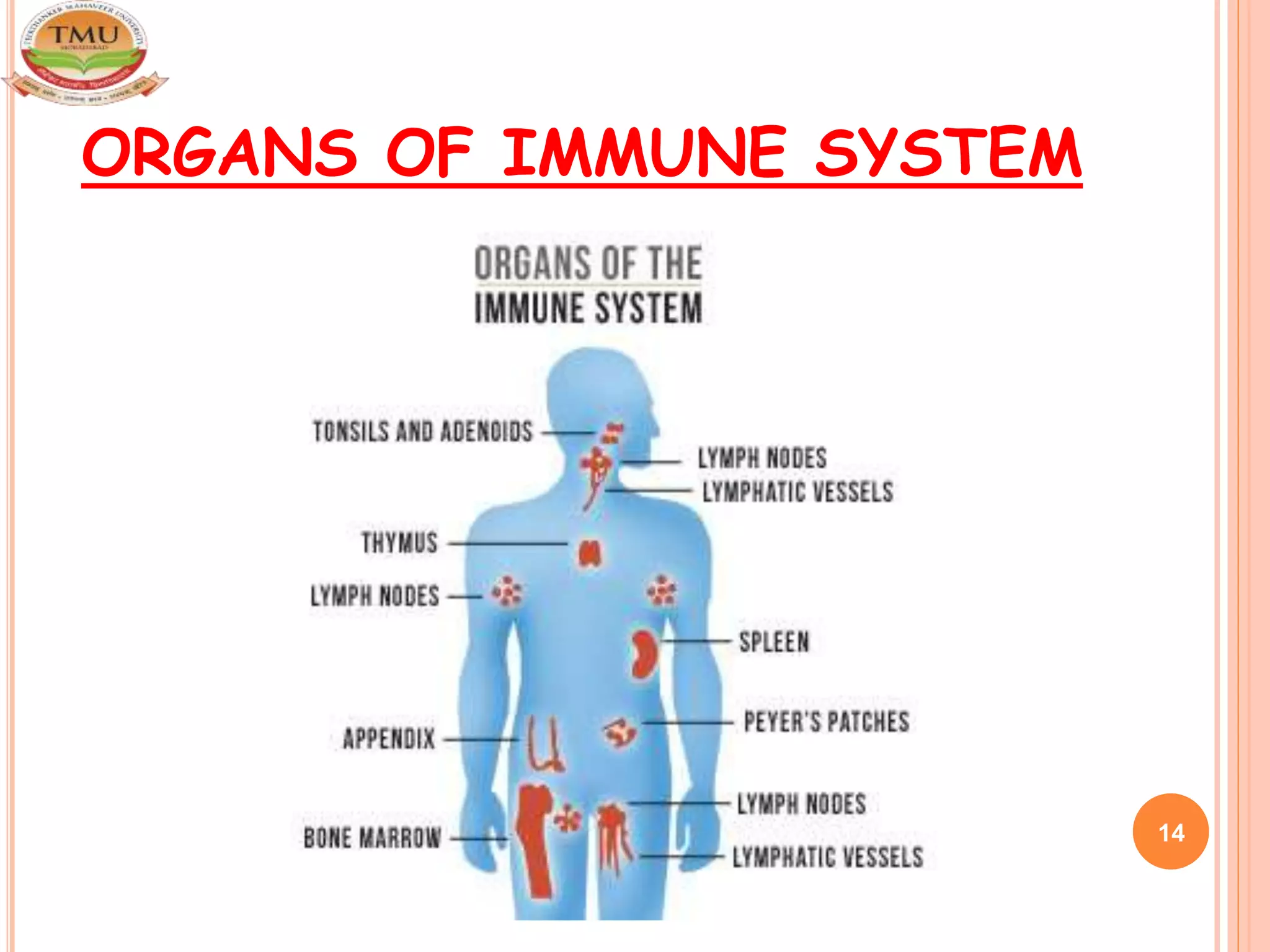
 Organ of immune system
 Implication of immune system in psychiatric illness
2
GENERAL OBJECTIVE :
 From student point of view: All the students
will be able to explain about
Psychoimmunology.
 From teacher point of view: The student
teacher will be able to conduct and control the
class confidently and also to enhance the
teaching skills.
3
SPECIFIC OBJECTIVES:
 Student will be able to:
1. History of Psychoimmunology
2. Definition
3. List down the types of immunity
4. What are the factor affecting immune response
5. What are the organ of immune system
6. Explain the implication of immune system in
psychiatric illness
4
5
6
INTRODUCTION
 Psycho immunology is relatively new field of study ,
examines the effect of psychosocial stressors on the
body’s immune system.
 Nervous system and the immune system represent two
networks within the body.
7
HISTORY
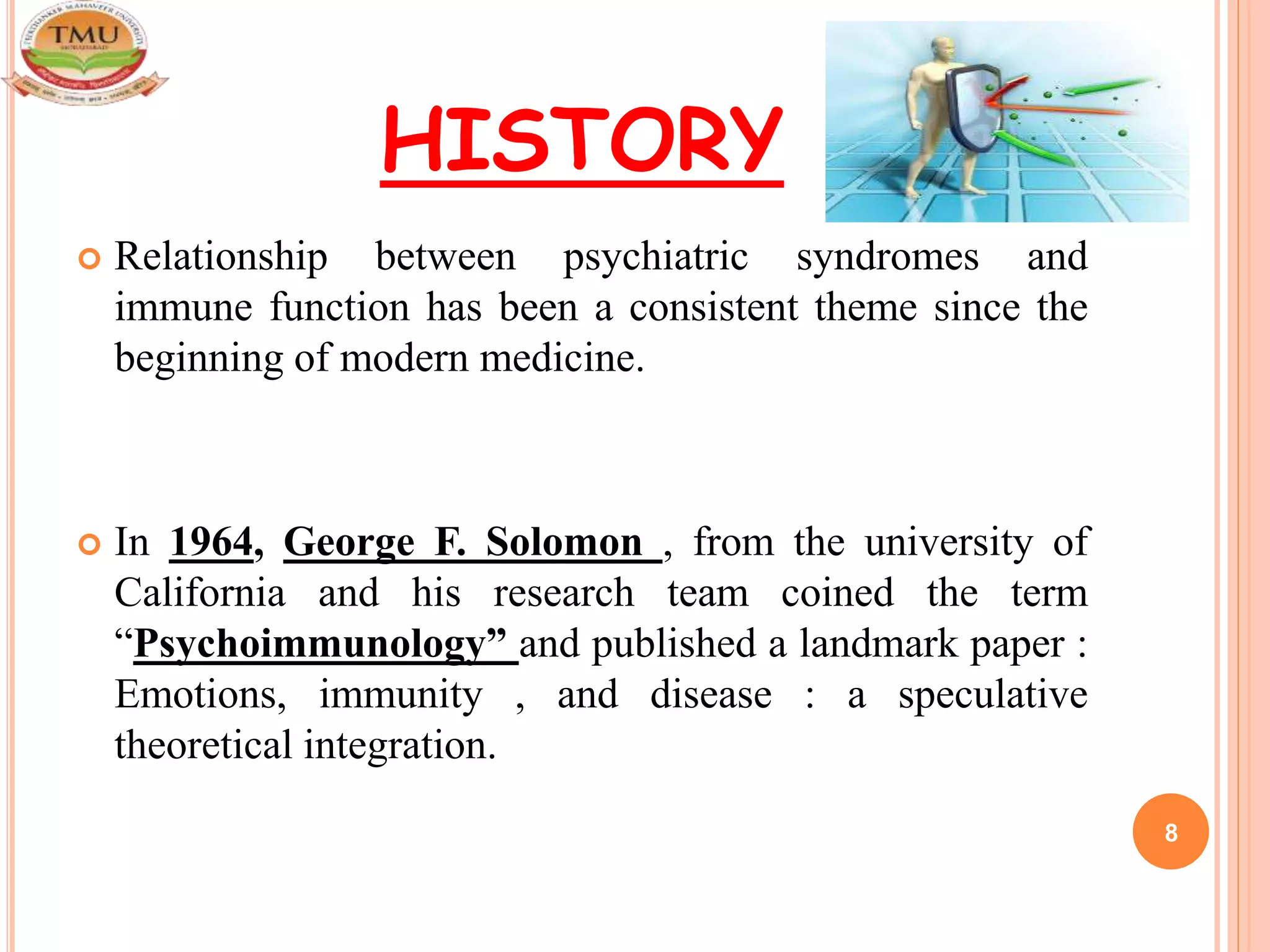
 Relationship between psychiatric syndromes and
immune function has been a consistent theme since the
beginning of modern medicine.
 In 1964, George F. Solomon , from the university of
California and his research team coined the term
“Psychoimmunology” and published a landmark paper :
Emotions, immunity , and disease : a speculative
theoretical integration.
8
DEFINITION
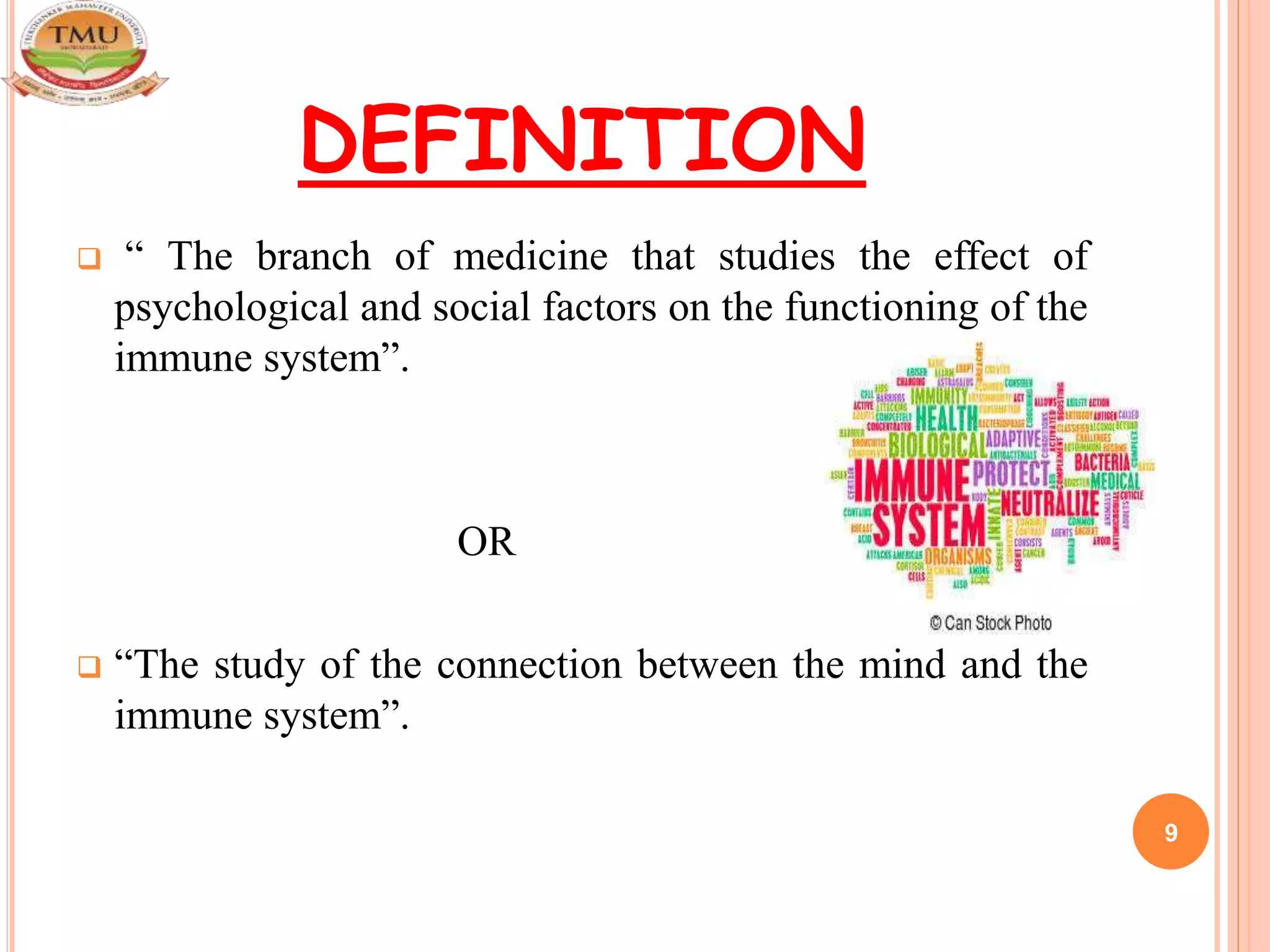
 “ The branch of medicine that studies the effect of
psychological and social factors on the functioning of the
immune system”.
OR
 “The study of the connection between the mind and the
immune system”.
9
IMMUNITY
 Immunity is the state of having sufficient biological
defenses to avoid infection, diseases , or other unwanted
biological invasion .It is the capability of the body to
resist harmful microbes from entering it.
10
TYPES OF IMMUNITY
11
12
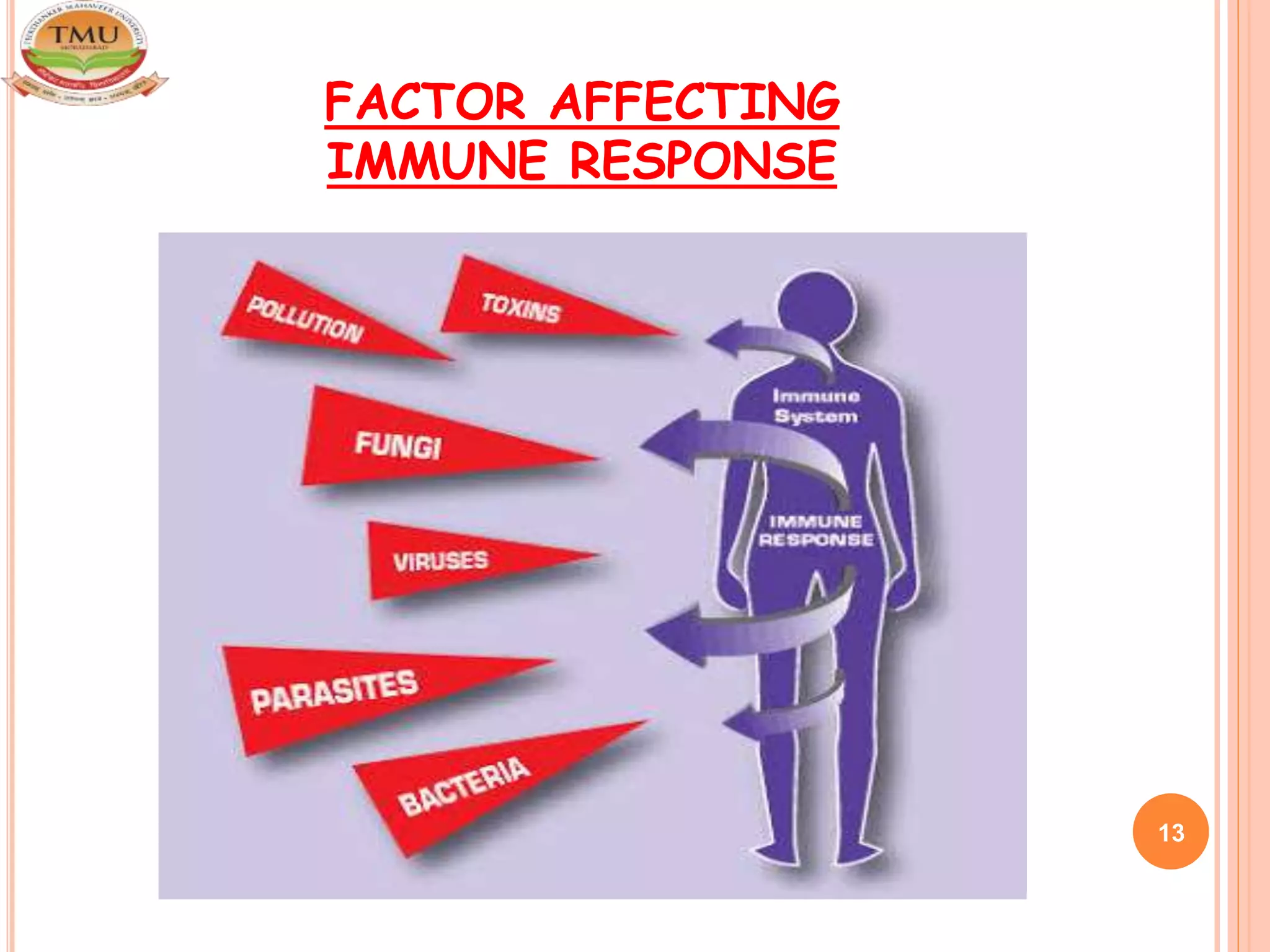
FACTOR AFFECTING
IMMUNE RESPONSE
13
ORGANS OF IMMUNE SYSTEM
14
15
NORMAL IMMUNE RESPONSE
16
IMPLICATIONS OF THE IMMUNE
SYSTEM IN PSYCHIATRIC
ILLNESS
 Individual become more susceptible to physical illness
when exposured to a stressful stimulus or life events.
This response is thought to be due to the effect of
increased glucocorticoid release from the adrenal cortex
following stimulation from the hypothalamic-pituitary-
adernal axis during stressful situations.
17
 Increased production of epinephrine and norepinephrine
occurs in response to stress, and may decrease immunity.
 Serotonin has demonstrated both enhancing and
inhibitory effects on immunity.
18
o Studies have correlated a decrease in lymphocyte functioning
with periods of grief, bereavement and depression, associating
the degree of altered immunity with severity of the depression.
o Evidence exists to support a correlation between psychosocial
stress and the onset of illness. Research is still required to
determine the specific processes involved in stress-induced
modulation of the immune system.
19
oday we have discussed about the history,
definition, concept and implication of psychiatric nursing
for psychoimmunology .
20
 Psychoimmunology is relatively new field of study ,
examines the effect of psychosocial stressors on
the body’s immune system .
 It explore endocrine-immune modulation, neuro-
immune modulation, the relationship between
stress, contextual changes and disease as well as
infection , allergy, immune activity and immune
function enhancement. 21
BIBLIOGRAPHY
 Mary C. Townsend ,Psychiatric Mental Health Nursing,
6th Edition , Page No. 66-69 .
 Sheila L. Videbeck ,Psychiatric Mental Health Nursing,
5th Edition, Page No. 24-25.
 https://www.fmhs.auckland.ac.nz/en/sms/about/our-
departments/mmp/our-research/psychoimmunology.html
 http://www.medicinenet.com/script/main/art.asp?articlek
ey=18957
22
23
24

Psychoimmunology

  • 1.
    PSYCHOIMMUNOLOGY PRESENTED BY- Miss. MahimaEliazer M.Sc Nursing 1st Year TMCON 1
  • 2.
    POINT TO DISCUSSTODAY ARE :  History  Definition of psychoimmunology  Types , factor of immunity  Factor affecting immune response  Organ of immune system  Implication of immune system in psychiatric illness 2
  • 3.
    GENERAL OBJECTIVE : From student point of view: All the students will be able to explain about Psychoimmunology.  From teacher point of view: The student teacher will be able to conduct and control the class confidently and also to enhance the teaching skills. 3
  • 4.
    SPECIFIC OBJECTIVES:  Studentwill be able to: 1. History of Psychoimmunology 2. Definition 3. List down the types of immunity 4. What are the factor affecting immune response 5. What are the organ of immune system 6. Explain the implication of immune system in psychiatric illness 4
  • 5.
  • 6.
  • 7.
    INTRODUCTION  Psycho immunologyis relatively new field of study , examines the effect of psychosocial stressors on the body’s immune system.  Nervous system and the immune system represent two networks within the body. 7
  • 8.
    HISTORY  Relationship betweenpsychiatric syndromes and immune function has been a consistent theme since the beginning of modern medicine.  In 1964, George F. Solomon , from the university of California and his research team coined the term “Psychoimmunology” and published a landmark paper : Emotions, immunity , and disease : a speculative theoretical integration. 8
  • 9.
    DEFINITION  “ Thebranch of medicine that studies the effect of psychological and social factors on the functioning of the immune system”. OR  “The study of the connection between the mind and the immune system”. 9
  • 10.
    IMMUNITY  Immunity isthe state of having sufficient biological defenses to avoid infection, diseases , or other unwanted biological invasion .It is the capability of the body to resist harmful microbes from entering it. 10
  • 11.
  • 12.
  • 13.
  • 14.
  • 15.
  • 16.
  • 17.
    IMPLICATIONS OF THEIMMUNE SYSTEM IN PSYCHIATRIC ILLNESS  Individual become more susceptible to physical illness when exposured to a stressful stimulus or life events. This response is thought to be due to the effect of increased glucocorticoid release from the adrenal cortex following stimulation from the hypothalamic-pituitary- adernal axis during stressful situations. 17
  • 18.
     Increased productionof epinephrine and norepinephrine occurs in response to stress, and may decrease immunity.  Serotonin has demonstrated both enhancing and inhibitory effects on immunity. 18
  • 19.
    o Studies havecorrelated a decrease in lymphocyte functioning with periods of grief, bereavement and depression, associating the degree of altered immunity with severity of the depression. o Evidence exists to support a correlation between psychosocial stress and the onset of illness. Research is still required to determine the specific processes involved in stress-induced modulation of the immune system. 19
  • 20.
    oday we havediscussed about the history, definition, concept and implication of psychiatric nursing for psychoimmunology . 20
  • 21.
     Psychoimmunology isrelatively new field of study , examines the effect of psychosocial stressors on the body’s immune system .  It explore endocrine-immune modulation, neuro- immune modulation, the relationship between stress, contextual changes and disease as well as infection , allergy, immune activity and immune function enhancement. 21
  • 22.
    BIBLIOGRAPHY  Mary C.Townsend ,Psychiatric Mental Health Nursing, 6th Edition , Page No. 66-69 .  Sheila L. Videbeck ,Psychiatric Mental Health Nursing, 5th Edition, Page No. 24-25.  https://www.fmhs.auckland.ac.nz/en/sms/about/our- departments/mmp/our-research/psychoimmunology.html  http://www.medicinenet.com/script/main/art.asp?articlek ey=18957 22
  • 23.
  • 24.