Download to read offline

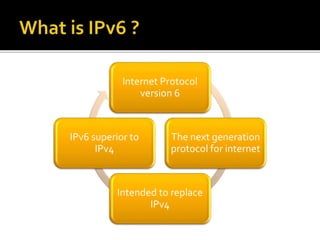
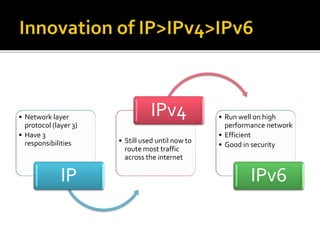
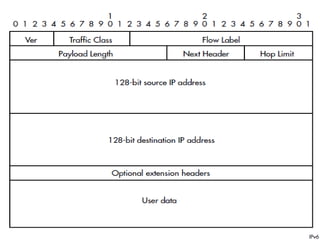
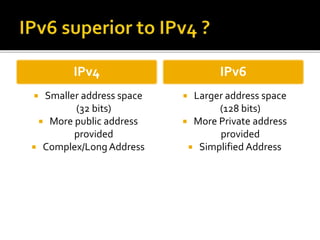
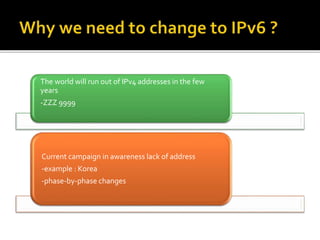

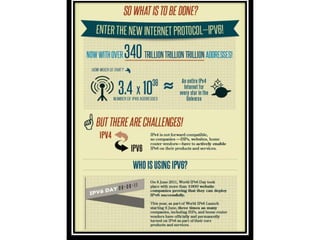

IPv6 was created to replace IPv4 as the next generation internet protocol due to IPv4 having a limited 32-bit address space that was running out, while IPv6 uses a 128-bit address space providing vastly more addresses. As an internet layer protocol, IPv6 and IPv4 are responsible for addressing, routing traffic across networks, and transferring data via packets. While IPv4 is still widely used, the transition to IPv6 is occurring gradually through awareness campaigns of the impending lack of IPv4 addresses.


