



International
health
Organizations
Introduction
 "Nothing on earth is more
international than disease",said Paul
Russel.
Health and disease have no political or
geographical boundaries.
Disease in any part of the world is a
constant threat to other parts.
History is replete with examples of the
spread of pestilences - particularly of
plague and cholera, along trade routes.
Contd.
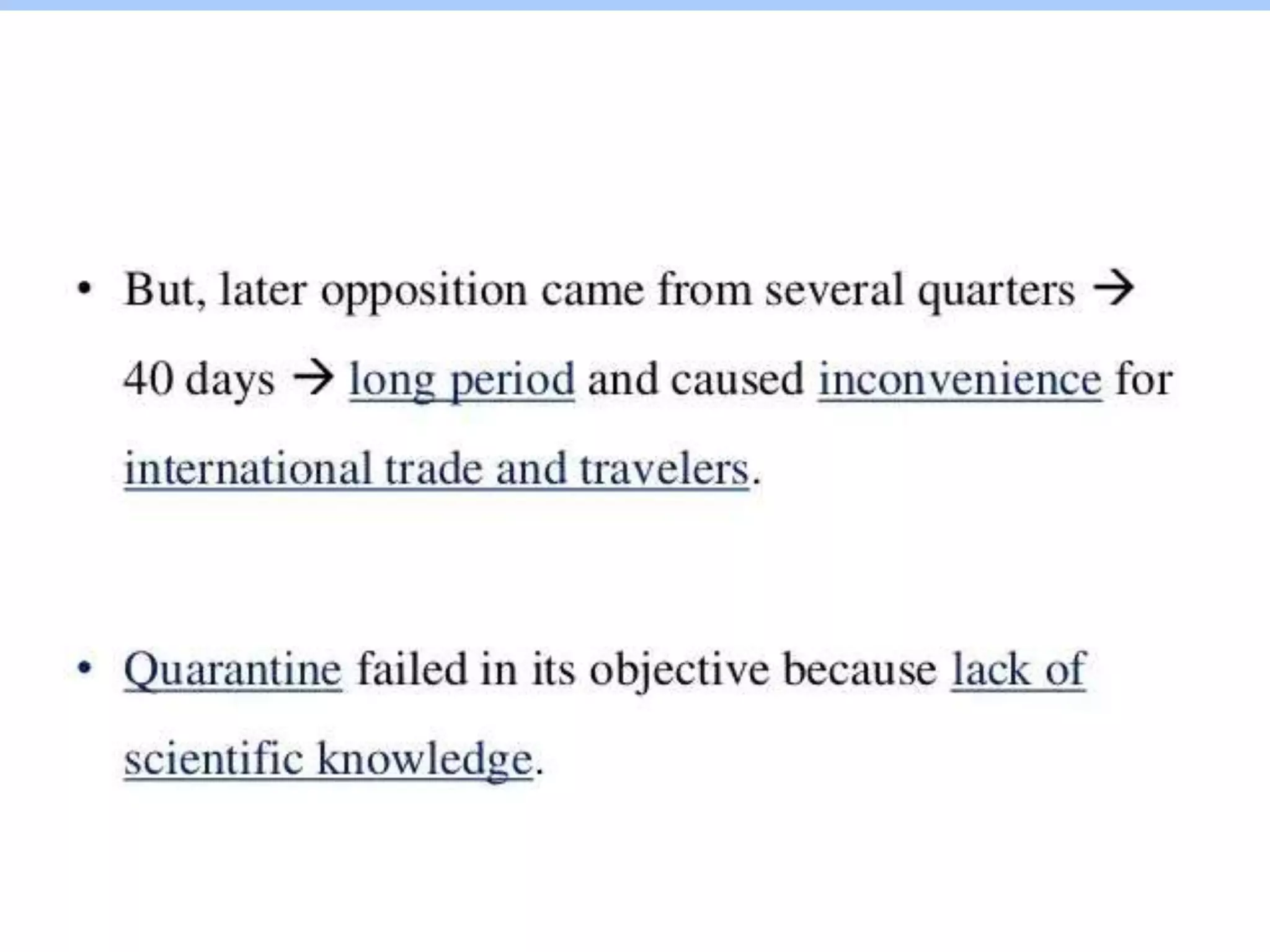
 In order to protect against the spread of
disease from one country to another, many
attempts were made in the past by
individual rulers and States to place
barriers against infection by detection and
isolation of incoming travellers.
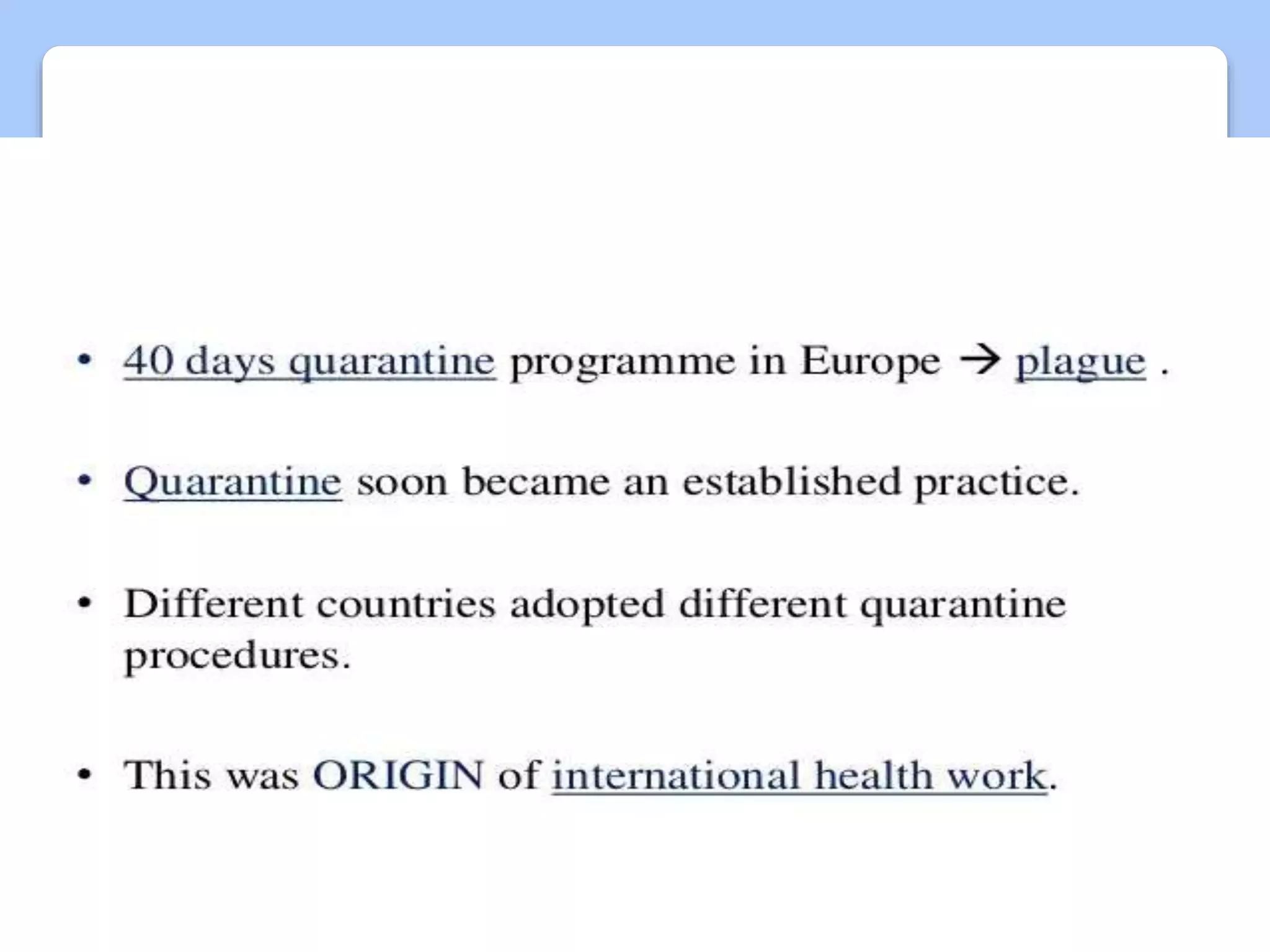
 # In the 14th century, a procedure known
as "quarantine" was introduced in Europe
to protect against the importation of
plague. Ships, crews,travellers and cargoes,
suspected of harbouring infection,were
detained for a 40-day period.
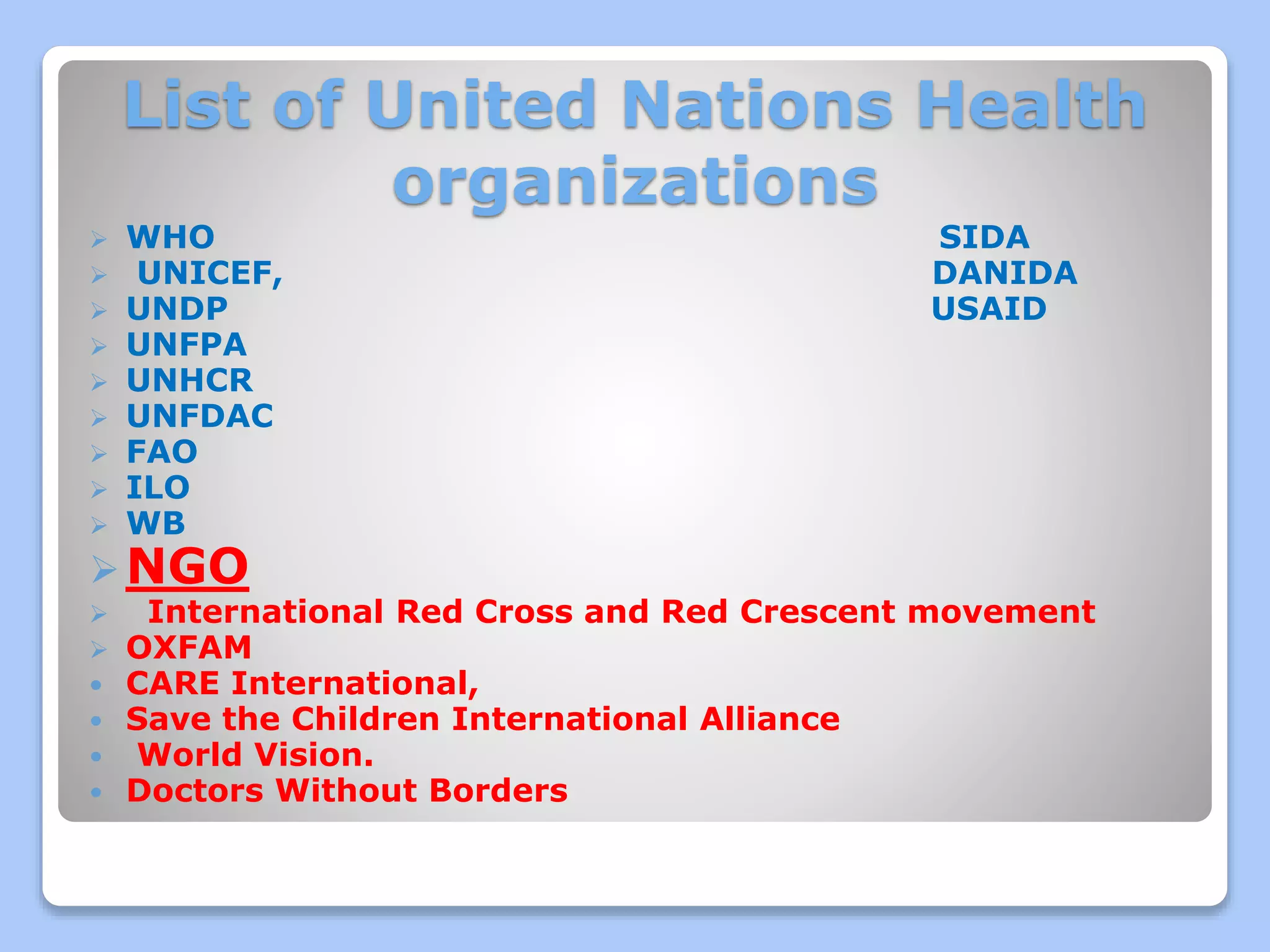
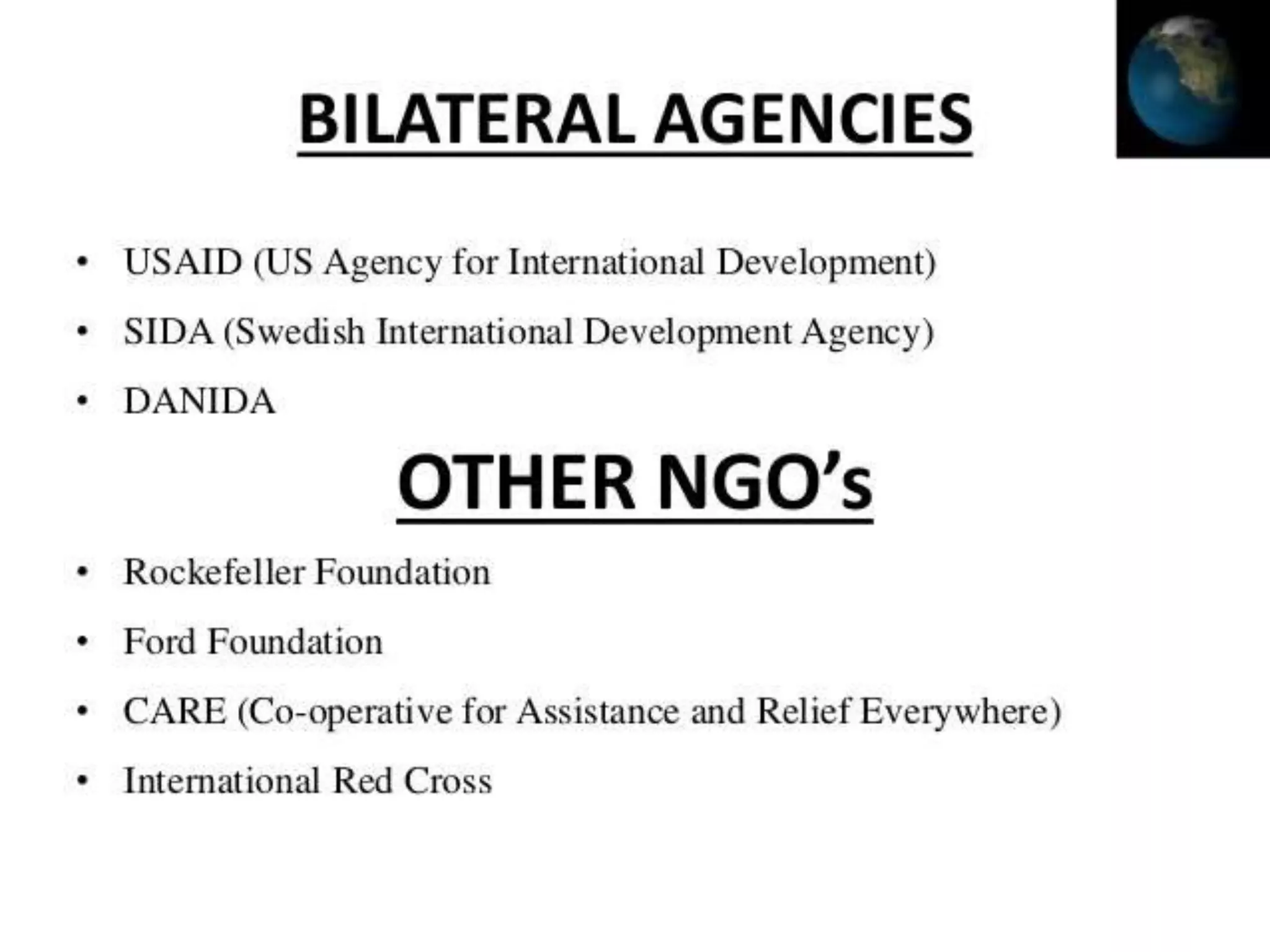
List of United Nations Health
organizations
 WHO SIDA
 UNICEF, DANIDA
 UNDP USAID
 UNFPA
 UNHCR
 UNFDAC
 FAO
 ILO
 WB
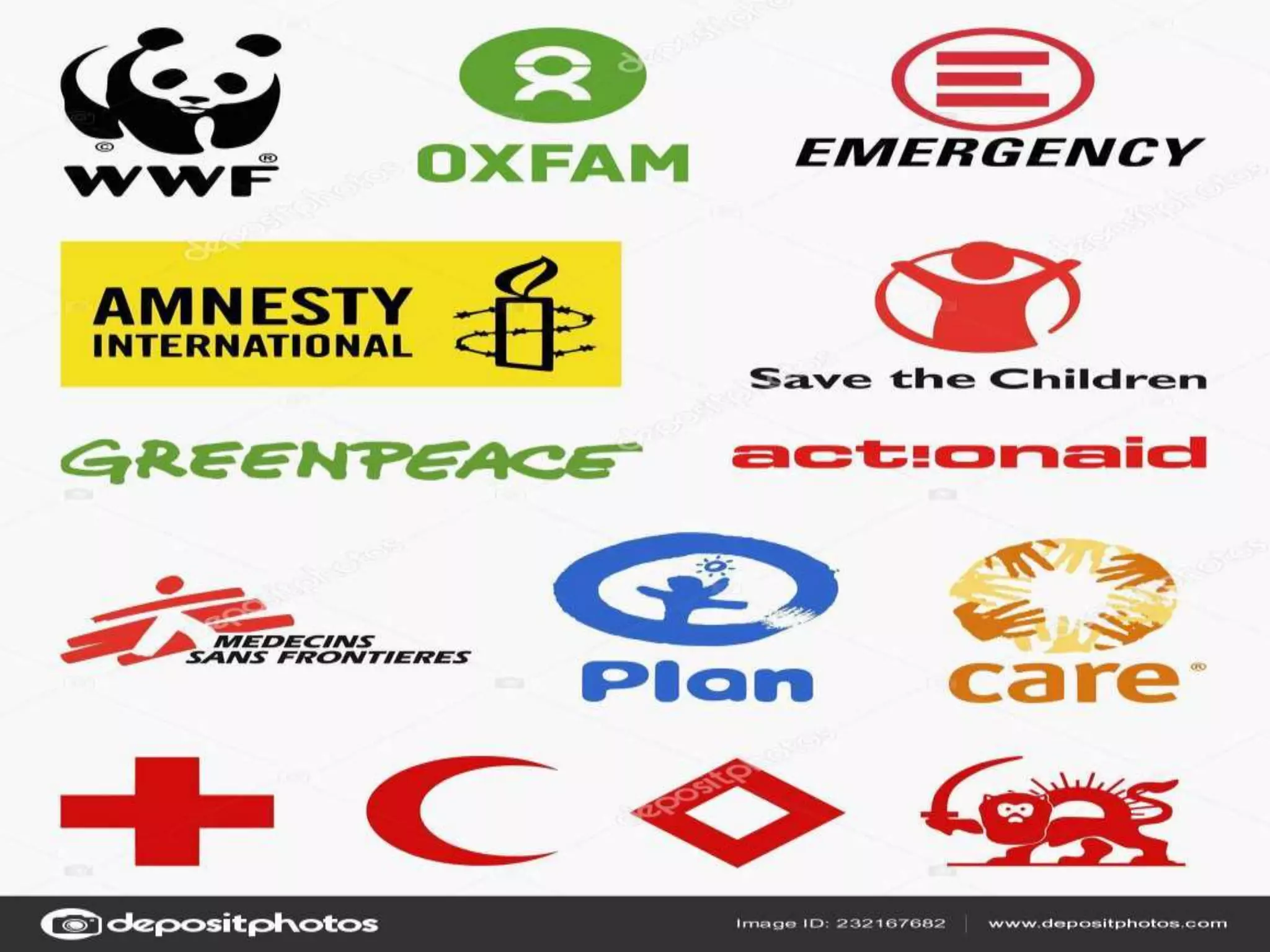
NGO
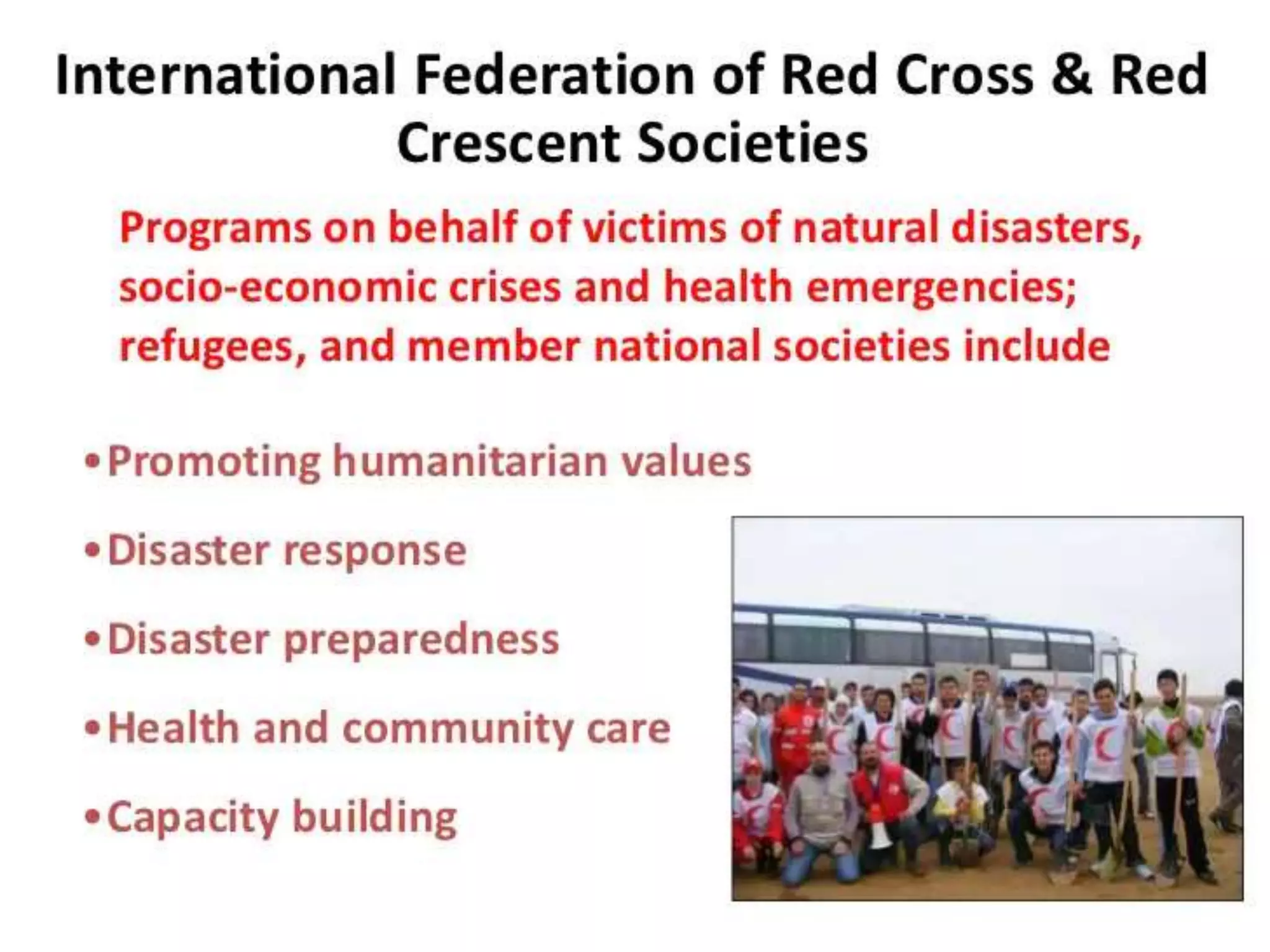
 International Red Cross and Red Crescent movement
 OXFAM
 CARE International,
 Save the Children International Alliance
 World Vision.
 Doctors Without Borders
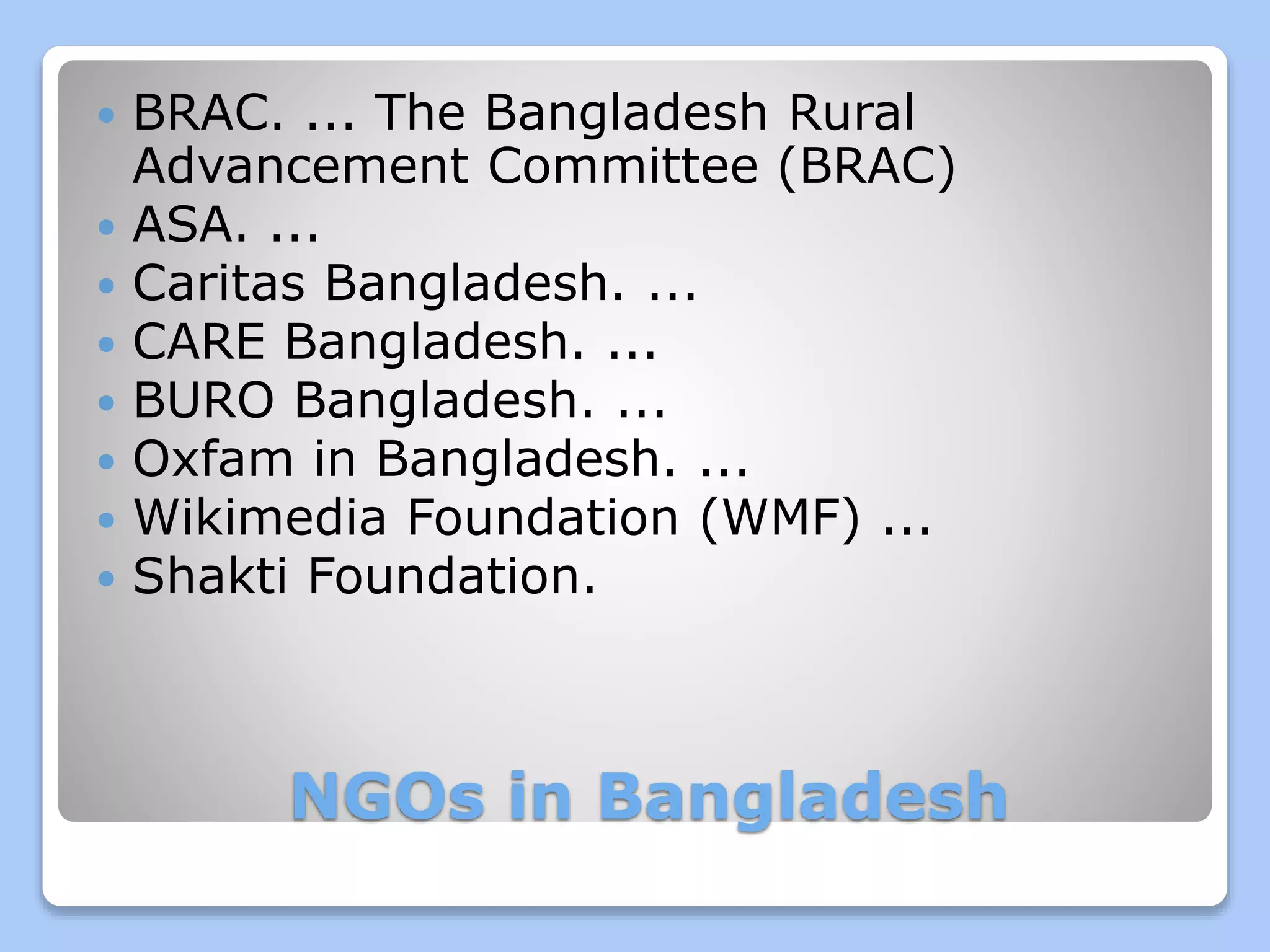
NGOs in Bangladesh
 BRAC. ... The Bangladesh Rural
Advancement Committee (BRAC)
 ASA. ...
 Caritas Bangladesh. ...
 CARE Bangladesh. ...
 BURO Bangladesh. ...
 Oxfam in Bangladesh. ...
 Wikimedia Foundation (WMF) ...
 Shakti Foundation.
International
Health
Regulations
IHR-
The International Health Regulations (IHR) are an
international legal instrument that is binding on 194
countries across the globe, including all member states
of the World Health Organization (WHO).
The United States is one of these member states.
IHR are intended to:
help prevent the spread of disease across
borders
outline the minimum requirements for
functional public health system that allows
countries to quickly detect and respond to
disease outbreaks in their communities
Countries are required to quickly notify
WHO of severe disease events that could
spread internationally, also referred to as
public health emergencies of international
concern.
This rapid notification allows WHO to
quickly guide a coordinated global
response to such an event and minimize
unnecessary interference on travel or
trade.
IHR entered into force in June 2007.
Since June 2007, WHO has assessed
and posted 28 public health events
from the United States on a secure
website accessible by other WHO
Member States, including:
2009 influenza pandemic
other novel influenza
several outbreaks associated with
contaminated food items
A public health emergency of international concern
is defined as an extraordinary event that may
constitute a public health risk to other countries
through international spread of disease and may
require an international coordinated response.
Four decision criteria are used to assess public
health events:
Is the public health impact of this event potentially
serious?
Is this event unusual or unexpected?
Is there the potential for international spread?
Is there the potential for travel and trade
restrictions?
If 2 of the 4 criteria are met, countries are required
to notify WHO within 24 hours.
4 diseases always need to be reported to
WHO:
Severe acute respiratory syndrome or SARS
Smallpox
New influenza viruses
Wild-type polio
The Director-General of WHO determines if
the event is a public health emergency of
international concern.
The role of countries is to assess the
magnitude and potential risk involved with
an event, and WHO’s role is to make the
decision.
International health organizations lecture ppt

International health organizations lecture ppt

  • 1.
  • 2.
    Introduction  "Nothing onearth is more international than disease",said Paul Russel. Health and disease have no political or geographical boundaries. Disease in any part of the world is a constant threat to other parts. History is replete with examples of the spread of pestilences - particularly of plague and cholera, along trade routes.
  • 3.
    Contd.  In orderto protect against the spread of disease from one country to another, many attempts were made in the past by individual rulers and States to place barriers against infection by detection and isolation of incoming travellers.  # In the 14th century, a procedure known as "quarantine" was introduced in Europe to protect against the importation of plague. Ships, crews,travellers and cargoes, suspected of harbouring infection,were detained for a 40-day period.
  • 19.
    List of UnitedNations Health organizations  WHO SIDA  UNICEF, DANIDA  UNDP USAID  UNFPA  UNHCR  UNFDAC  FAO  ILO  WB NGO  International Red Cross and Red Crescent movement  OXFAM  CARE International,  Save the Children International Alliance  World Vision.  Doctors Without Borders
  • 54.
    NGOs in Bangladesh BRAC. ... The Bangladesh Rural Advancement Committee (BRAC)  ASA. ...  Caritas Bangladesh. ...  CARE Bangladesh. ...  BURO Bangladesh. ...  Oxfam in Bangladesh. ...  Wikimedia Foundation (WMF) ...  Shakti Foundation.
  • 55.
  • 56.
    IHR- The International HealthRegulations (IHR) are an international legal instrument that is binding on 194 countries across the globe, including all member states of the World Health Organization (WHO). The United States is one of these member states. IHR are intended to: help prevent the spread of disease across borders outline the minimum requirements for functional public health system that allows countries to quickly detect and respond to disease outbreaks in their communities
  • 57.
    Countries are requiredto quickly notify WHO of severe disease events that could spread internationally, also referred to as public health emergencies of international concern. This rapid notification allows WHO to quickly guide a coordinated global response to such an event and minimize unnecessary interference on travel or trade. IHR entered into force in June 2007.
  • 58.
    Since June 2007,WHO has assessed and posted 28 public health events from the United States on a secure website accessible by other WHO Member States, including: 2009 influenza pandemic other novel influenza several outbreaks associated with contaminated food items
  • 59.
    A public healthemergency of international concern is defined as an extraordinary event that may constitute a public health risk to other countries through international spread of disease and may require an international coordinated response. Four decision criteria are used to assess public health events: Is the public health impact of this event potentially serious? Is this event unusual or unexpected? Is there the potential for international spread? Is there the potential for travel and trade restrictions? If 2 of the 4 criteria are met, countries are required to notify WHO within 24 hours.
  • 60.
    4 diseases alwaysneed to be reported to WHO: Severe acute respiratory syndrome or SARS Smallpox New influenza viruses Wild-type polio The Director-General of WHO determines if the event is a public health emergency of international concern. The role of countries is to assess the magnitude and potential risk involved with an event, and WHO’s role is to make the decision.