• Think of it as a movie trailer. Get the
  reader’s attention so that they will want to
  read more.

• Consider using an interesting fact or quote
  in your first sentence.
• Use a formal tone.

• Avoid slang:
  • “tons,” “stuff,” “like,” “things,” “cool,” etc.

• Spell out contractions. “didn’t”  “did not”

• Use 8th grade-level words! A thesaurus can help
  (or visit www.thesaurus.com)
• Make it vary! Have short and long
  sentences.

 Avoid choppiness by combining sentences
 with semicolons or FANBOYS.

• Try to rearrange the order you naturally
  say things:
  • He became famous after posting a YouTube
    video.
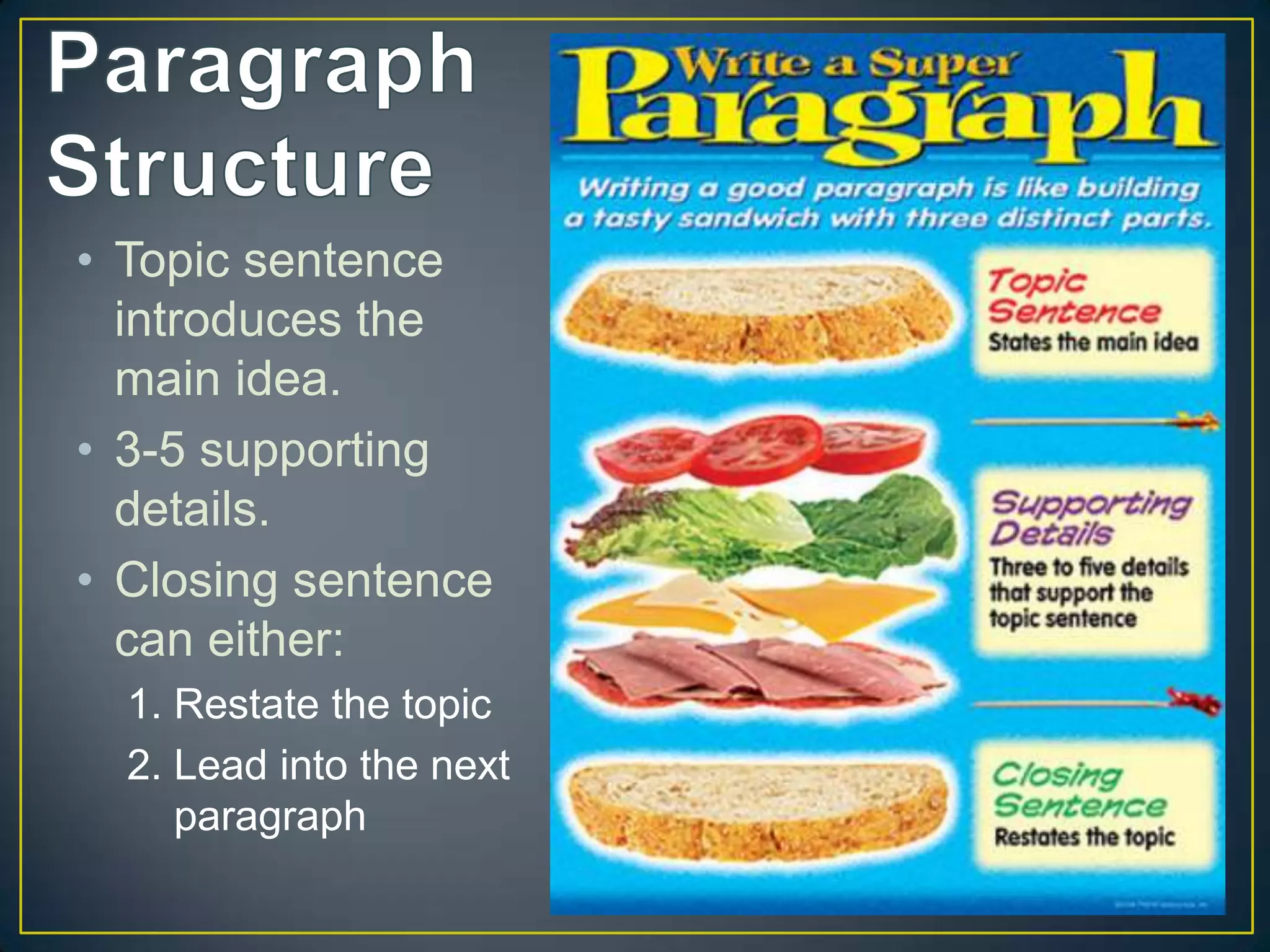
• Topic sentence
  introduces the
  main idea.
• 3-5 supporting
  details.
• Closing sentence
  can either:
  1. Restate the topic
  2. Lead into the next
     paragraph
• Typically, new information is NOT introduced
  here.

• Conclusions restate the main points from
  each body paragraph.

• The last sentence should leave the reader
  with a lingering thought.

• This is a good place to restate how this
  person impacted today’s world or society.
• Rough draft – Monday, December 10
  • 2-4 pages typed or 3-5 pages handwritten
• Final draft – Wednesday, December 19
  • 2-4 pages typed. No handwritten essays will be accepted!
                      DISCLAIMER:
This biography essay was introduced on November 19. By
the time your final essay is due, you will have had exactly
one month to work on it. Because of this, late essays will
lose one letter grade per day.

Failure to turn in this essay on time = nearly guaranteed
failure in class.

Plagiarism = NO credit and NO chance to rewrite.
You will lose ALL CREDIT if you:
• Copy someone else’s words exactly, without giving credit.

You will lose points if you:
• Don’t include a Works Cited page
• Paraphrase poorly (sounds too close to the original text)
• Use quotes to fill space
  • Quotes should be no more than a sentence or two.

Essay-Writing Tips

  • 2.
    • Think ofit as a movie trailer. Get the reader’s attention so that they will want to read more. • Consider using an interesting fact or quote in your first sentence.
  • 3.
    • Use aformal tone. • Avoid slang: • “tons,” “stuff,” “like,” “things,” “cool,” etc. • Spell out contractions. “didn’t”  “did not” • Use 8th grade-level words! A thesaurus can help (or visit www.thesaurus.com)
  • 4.
    • Make itvary! Have short and long sentences. Avoid choppiness by combining sentences with semicolons or FANBOYS. • Try to rearrange the order you naturally say things: • He became famous after posting a YouTube video.
  • 5.
    • Topic sentence introduces the main idea. • 3-5 supporting details. • Closing sentence can either: 1. Restate the topic 2. Lead into the next paragraph
  • 6.
    • Typically, newinformation is NOT introduced here. • Conclusions restate the main points from each body paragraph. • The last sentence should leave the reader with a lingering thought. • This is a good place to restate how this person impacted today’s world or society.
  • 7.
    • Rough draft– Monday, December 10 • 2-4 pages typed or 3-5 pages handwritten • Final draft – Wednesday, December 19 • 2-4 pages typed. No handwritten essays will be accepted! DISCLAIMER: This biography essay was introduced on November 19. By the time your final essay is due, you will have had exactly one month to work on it. Because of this, late essays will lose one letter grade per day. Failure to turn in this essay on time = nearly guaranteed failure in class. Plagiarism = NO credit and NO chance to rewrite.
  • 8.
    You will loseALL CREDIT if you: • Copy someone else’s words exactly, without giving credit. You will lose points if you: • Don’t include a Works Cited page • Paraphrase poorly (sounds too close to the original text) • Use quotes to fill space • Quotes should be no more than a sentence or two.