Internet Safety and
      Security
 Some things to think
        about
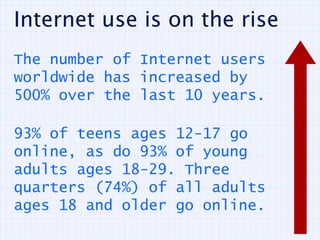
Internet use is on the rise
The number of Internet users
worldwide has increased by
500% over the last 10 years.

93% of teens ages 12-17 go
online, as do 93% of young
adults ages 18-29. Three
quarters (74%) of all adults
ages 18 and older go online.
There are risks!
•   Users run the risk of being exposed
    to racist, pornographic, or illegal
    material
•   They also run the risk of giving
    out too much personal information
•   Additionally, they run the risk of
    cyberbullying, cyberstalking, and
    contact with online predators
Some basic Internet safety tips
Don't give out personal information.
Such as: name, date of birth, address, phone
numbers, school, schedule, email


Don't make contact with strangers.
People may not be who they say they are; online predators
surf the Internet all day


Don't put anything online
that you don't want others to see.
Once it is online you lose control of it;
you can never take it down
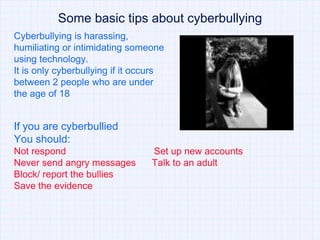
Some basic tips about cyberbullying
Cyberbullying is harassing,
humiliating or intimidating someone
using technology.
It is only cyberbullying if it occurs
between 2 people who are under
the age of 18


If you are cyberbullied
You should:
Not respond                      Set up new accounts
Never send angry messages        Talk to an adult
Block/ report the bullies
Save the evidence
Some other good advice
Only accept "friends" that you know in real life.


Never post your feelings or insecurities online


If it is online,
it is NOT PRIVATE,
and it can hurt you.
Always talk to your parents
if you feel uncomfortable

Inter safety 2011

  • 1.
    Internet Safety and Security Some things to think about
  • 2.
    Internet use ison the rise The number of Internet users worldwide has increased by 500% over the last 10 years. 93% of teens ages 12-17 go online, as do 93% of young adults ages 18-29. Three quarters (74%) of all adults ages 18 and older go online.
  • 3.
    There are risks! • Users run the risk of being exposed to racist, pornographic, or illegal material • They also run the risk of giving out too much personal information • Additionally, they run the risk of cyberbullying, cyberstalking, and contact with online predators
  • 4.
    Some basic Internetsafety tips Don't give out personal information. Such as: name, date of birth, address, phone numbers, school, schedule, email Don't make contact with strangers. People may not be who they say they are; online predators surf the Internet all day Don't put anything online that you don't want others to see. Once it is online you lose control of it; you can never take it down
  • 5.
    Some basic tipsabout cyberbullying Cyberbullying is harassing, humiliating or intimidating someone using technology. It is only cyberbullying if it occurs between 2 people who are under the age of 18 If you are cyberbullied You should: Not respond Set up new accounts Never send angry messages Talk to an adult Block/ report the bullies Save the evidence
  • 6.
    Some other goodadvice Only accept "friends" that you know in real life. Never post your feelings or insecurities online If it is online, it is NOT PRIVATE, and it can hurt you. Always talk to your parents if you feel uncomfortable