









Cyber Safety
Welcome to
CYBERSPACE
POPPULATION: 1,700,000,000 AND GROWING
We all have been acquainted with one of the
greatest inventions of mankind, the Internet.
The Internet is an astounding place.
It contains information about every topic the human brain can
fathom.
The amount of data it holds is leagues beyond the imagination of the
mind.
BUT
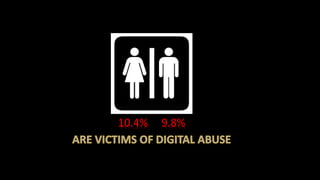
10.4% 9.8%
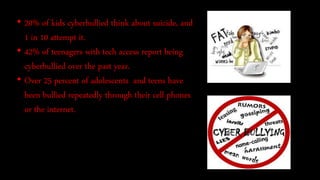
• 20% of kids cyberbullied think about suicide, and
1 in 10 attempt it.
• 42% of teenagers with tech access report being
cyberbullied over the past year.
• Over 25 percent of adolescents and teens have
been bullied repeatedly through their cell phones
or the internet.
What is cyber bullying?
• Sending mean messages or threats to a person’s email account or
cell phone.
• Spreading rumours online or through texts.
• Posting hurtful or threatening messages on social networking
sites or web pages.
• Stealing a person’s account information to break into their
account and send damaging messages.
• Pretending to be someone else online to hurt another
person.
• Taking unflattering pictures of a person and spreading them
through cell phones or the Internet
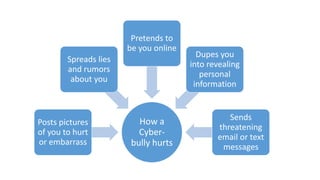
How a
Cyber-
bully hurts
Posts pictures
of you to hurt
or embarrass
Spreads lies
and rumors
about you
Pretends to
be you online
Dupes you
into revealing
personal
information
Sends
threatening
email or text
messages
As the quote goes, “Prevention is better
than cure” so we will as well make an
attempt to go cybersafe so that we don’t
end up opening the ‘Pandora’s Box of the
digital world’.
It’s time we bridge the
digital divide.
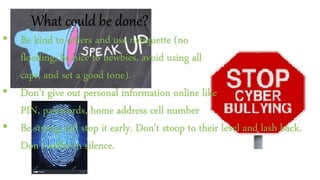
What could be done?
• Be kind to others and use netiquette (no
flooding, be nice to newbies, avoid using all
caps, and set a good tone).
• Don’t give out personal information online like
PIN, passwords, home address cell number
• Be strong and stop it early. Don’t stoop to their level and lash back.
Don’t suffer in silence.
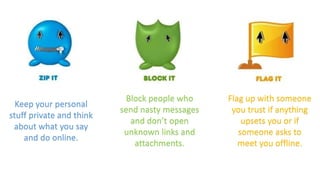
Keep your personal
stuff private and think
about what you say
and do online.
Block people who
send nasty messages
and don’t open
unknown links and
attachments.
Flag up with someone
you trust if anything
upsets you or if
someone asks to
meet you offline.
•Contact your Internet service provider abuse
department. If the problem continues, alert
the local police department.
•If anything makes you feel uncomfortable
online, while gaming or when using your cell
phone, talk with your parents or guardian
right away.
Cyberspace has a Dark Side
Please Turn a Light On!
•Avoid exchanging pictures or giving out e-
mail addresses and personal information to
people you meet online.
•Never post your personal information, such
as a cell phone number, home number, home
address, or your location on any social
networking site or through mobile apps like
Snapchat or Instagram.
•Don’t always trust your newfound online friends.
Remember, the predator waits patiently.
•Make password long and strong. Use a combination
of lower and uppercase letters along with symbols.
•Links in email, tweets, posts, and online advertising
our often the way cybercriminals compromise your
computer. If it looks suspicious even if you know the
source it’s best to delete or if appropriate mark as
junk email.
The internet has eased out our
lives remarkably but at the same
time, has also opened a few doors
to malice.
So it’s our duty to keep those
doors locked.
Cyber safety

Cyber safety

  • 1.
  • 2.
  • 3.
    We all havebeen acquainted with one of the greatest inventions of mankind, the Internet. The Internet is an astounding place. It contains information about every topic the human brain can fathom. The amount of data it holds is leagues beyond the imagination of the mind.
  • 4.
  • 5.
  • 6.
    • 20% ofkids cyberbullied think about suicide, and 1 in 10 attempt it. • 42% of teenagers with tech access report being cyberbullied over the past year. • Over 25 percent of adolescents and teens have been bullied repeatedly through their cell phones or the internet.
  • 7.
    What is cyberbullying? • Sending mean messages or threats to a person’s email account or cell phone. • Spreading rumours online or through texts. • Posting hurtful or threatening messages on social networking sites or web pages. • Stealing a person’s account information to break into their account and send damaging messages. • Pretending to be someone else online to hurt another person. • Taking unflattering pictures of a person and spreading them through cell phones or the Internet
  • 8.
    How a Cyber- bully hurts Postspictures of you to hurt or embarrass Spreads lies and rumors about you Pretends to be you online Dupes you into revealing personal information Sends threatening email or text messages
  • 9.
    As the quotegoes, “Prevention is better than cure” so we will as well make an attempt to go cybersafe so that we don’t end up opening the ‘Pandora’s Box of the digital world’.
  • 10.
    It’s time webridge the digital divide.
  • 12.
    What could bedone? • Be kind to others and use netiquette (no flooding, be nice to newbies, avoid using all caps, and set a good tone). • Don’t give out personal information online like PIN, passwords, home address cell number • Be strong and stop it early. Don’t stoop to their level and lash back. Don’t suffer in silence.
  • 13.
    Keep your personal stuffprivate and think about what you say and do online. Block people who send nasty messages and don’t open unknown links and attachments. Flag up with someone you trust if anything upsets you or if someone asks to meet you offline.
  • 14.
    •Contact your Internetservice provider abuse department. If the problem continues, alert the local police department. •If anything makes you feel uncomfortable online, while gaming or when using your cell phone, talk with your parents or guardian right away.
  • 16.
    Cyberspace has aDark Side Please Turn a Light On!
  • 19.
    •Avoid exchanging picturesor giving out e- mail addresses and personal information to people you meet online. •Never post your personal information, such as a cell phone number, home number, home address, or your location on any social networking site or through mobile apps like Snapchat or Instagram.
  • 20.
    •Don’t always trustyour newfound online friends. Remember, the predator waits patiently. •Make password long and strong. Use a combination of lower and uppercase letters along with symbols. •Links in email, tweets, posts, and online advertising our often the way cybercriminals compromise your computer. If it looks suspicious even if you know the source it’s best to delete or if appropriate mark as junk email.
  • 24.
    The internet haseased out our lives remarkably but at the same time, has also opened a few doors to malice. So it’s our duty to keep those doors locked.