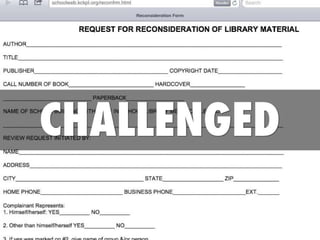
A challenge is an attempt to
remove or restrict materials,
based upon the objections of
     a person or group.
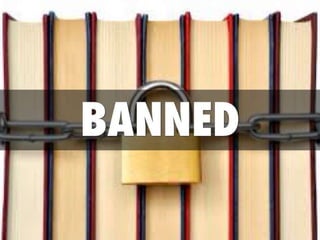
A banning is the
  removal of those
challenged materials.
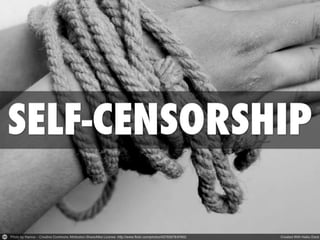
• Self-censorship is when materials
  aren’t added to the library collection
  due to the controversial nature of
  the book and fear they will be
  challenged.
• Self-censorship is also when a
  librarian chooses not to add
  materials to the collection based on
  personal bias.
• When ordering books for your collection it is
  important you maintain a balance.
• Just because you don’t like a topic or genre
  doesn’t mean you can leave those out of your
  orders.
• You can’t let your bias influence your
  purchasing.
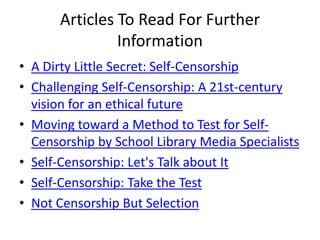
Articles To Read For Further
                Information
• A Dirty Little Secret: Self-Censorship
• Challenging Self-Censorship: A 21st-century
  vision for an ethical future
• Moving toward a Method to Test for Self-
  Censorship by School Library Media Specialists
• Self-Censorship: Let's Talk about It
• Self-Censorship: Take the Test
• Not Censorship But Selection
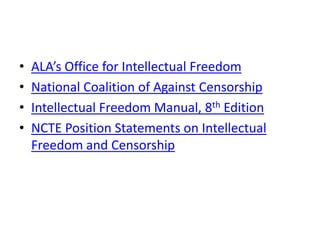
•   ALA’s Office for Intellectual Freedom
•   National Coalition of Against Censorship
•   Intellectual Freedom Manual, 8th Edition
•   NCTE Position Statements on Intellectual
    Freedom and Censorship
There are people and organizations helping
possible censors prepare their complaints.

•   PABBIS (Parents Against Bad Books in Schools)
•   SafeLibraries.org
•   Facts on Fiction
•   Parents Aware
•   Citizens for Literary Standards in Schools
•   Citizens for Academic Responsibility
What if someone challenges a book in
          your collection?
• You should have a Selection Policy and
  Reconsideration Policy in place. REFER to your
  policies.
• Steps to Follow During a Challenge
• ALA Tips for Schools
• How to Write a Rationale (NCTE)
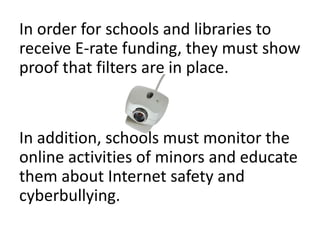
In order for schools and libraries to
receive E-rate funding, they must show
proof that filters are in place.


In addition, schools must monitor the
online activities of minors and educate
them about Internet safety and
cyberbullying.
The Law
• CIPA (Children’s Internet Protection Act)
PRO Filtering Organzations
• InternetFilters.org
• Plan2Succeed
• Plan2Succeed Examples
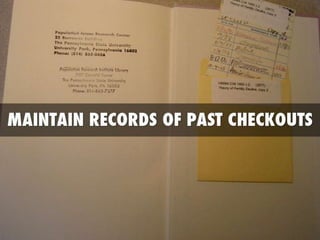
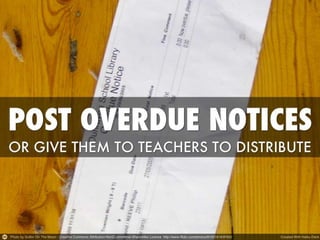
Students have the same rights as adults. They
should be able to check out materials without the
fear of being scrutinized. They have the right to
check out materials and expect the information to
remain confidential.
• AASL Essential Links: Ethical Issues
• ALA Guidelines for Developing a Library Privacy
  Policy
• ALA Privacy and Confidentiality
• FERPA (Family Education Rights and Privacy Act
  (1974)
Articles
• The Privacy Problem: Although school
  librarians seldom discuss it, students’ privacy
  rights are under attack
• Confidentiality
• Protecting Students’ Rights and Keeping Your
  Job
• ALA 2010: Privacy in the School Library
Want To Discuss Intellectual Freedom?
•   Visit the discussion board.
•   http://shsulibsci.proboards.com
•   Choose the Intellectual Freedom thread.
•   Click New Thread in the top right corner.

Intellectual Freedom

  • 4.
    A challenge isan attempt to remove or restrict materials, based upon the objections of a person or group.
  • 6.
    A banning isthe removal of those challenged materials.
  • 8.
    • Self-censorship iswhen materials aren’t added to the library collection due to the controversial nature of the book and fear they will be challenged. • Self-censorship is also when a librarian chooses not to add materials to the collection based on personal bias.
  • 9.
    • When orderingbooks for your collection it is important you maintain a balance. • Just because you don’t like a topic or genre doesn’t mean you can leave those out of your orders. • You can’t let your bias influence your purchasing.
  • 14.
    Articles To ReadFor Further Information • A Dirty Little Secret: Self-Censorship • Challenging Self-Censorship: A 21st-century vision for an ethical future • Moving toward a Method to Test for Self- Censorship by School Library Media Specialists • Self-Censorship: Let's Talk about It • Self-Censorship: Take the Test • Not Censorship But Selection
  • 16.
    ALA’s Office for Intellectual Freedom • National Coalition of Against Censorship • Intellectual Freedom Manual, 8th Edition • NCTE Position Statements on Intellectual Freedom and Censorship
  • 18.
    There are peopleand organizations helping possible censors prepare their complaints. • PABBIS (Parents Against Bad Books in Schools) • SafeLibraries.org • Facts on Fiction • Parents Aware • Citizens for Literary Standards in Schools • Citizens for Academic Responsibility
  • 19.
    What if someonechallenges a book in your collection? • You should have a Selection Policy and Reconsideration Policy in place. REFER to your policies. • Steps to Follow During a Challenge • ALA Tips for Schools • How to Write a Rationale (NCTE)
  • 21.
    In order forschools and libraries to receive E-rate funding, they must show proof that filters are in place. In addition, schools must monitor the online activities of minors and educate them about Internet safety and cyberbullying.
  • 22.
    The Law • CIPA(Children’s Internet Protection Act) PRO Filtering Organzations • InternetFilters.org • Plan2Succeed • Plan2Succeed Examples
  • 24.
    Students have thesame rights as adults. They should be able to check out materials without the fear of being scrutinized. They have the right to check out materials and expect the information to remain confidential. • AASL Essential Links: Ethical Issues • ALA Guidelines for Developing a Library Privacy Policy • ALA Privacy and Confidentiality • FERPA (Family Education Rights and Privacy Act (1974)
  • 25.
    Articles • The PrivacyProblem: Although school librarians seldom discuss it, students’ privacy rights are under attack • Confidentiality • Protecting Students’ Rights and Keeping Your Job • ALA 2010: Privacy in the School Library
  • 29.
    Want To DiscussIntellectual Freedom? • Visit the discussion board. • http://shsulibsci.proboards.com • Choose the Intellectual Freedom thread. • Click New Thread in the top right corner.