Integrating Technology Into 
Schools 
Michael J. Forte
Manville High School 
• School Type: Public 
• Grades: 9-12 
• Student Enrollment: 385 
• Student Teacher Ratio - 12:1
Purpose 
The goal of this presentation is 
to analyze the integration of 
technology into the modern 
education system.
Outline 
• Slide 5 – How and Why Our Current System Needs Change – 
Sir Ken Robinson 
• Slide 6 – Computer Based Leaning: The Wave of the Future 
• Slide 7 - Small Schools Problems 
• Slide 8 - Effective Learning Online 
• Slide 9 - State Programs 
• Slide 10 - Home Schooling 
• Slide 11 - Online Enrollment 
• Slide 12 - Pitfalls of Online Learning 
• Slide 13- Why we still need schools 
• Slide 14 - Changing Role of Teachers 
• Slide 15 - Obsoleteness of Textbooks 
• Slide 16 - Achieve 3000 
• Slide 17 - Benefits Five-Step Literacy Routine 
• Slide 18 - More Benefits
How and Why Our Current System 
Needs Change – Sir Ken Robinson 
Click on the picture for a video
Small Schools Problems 
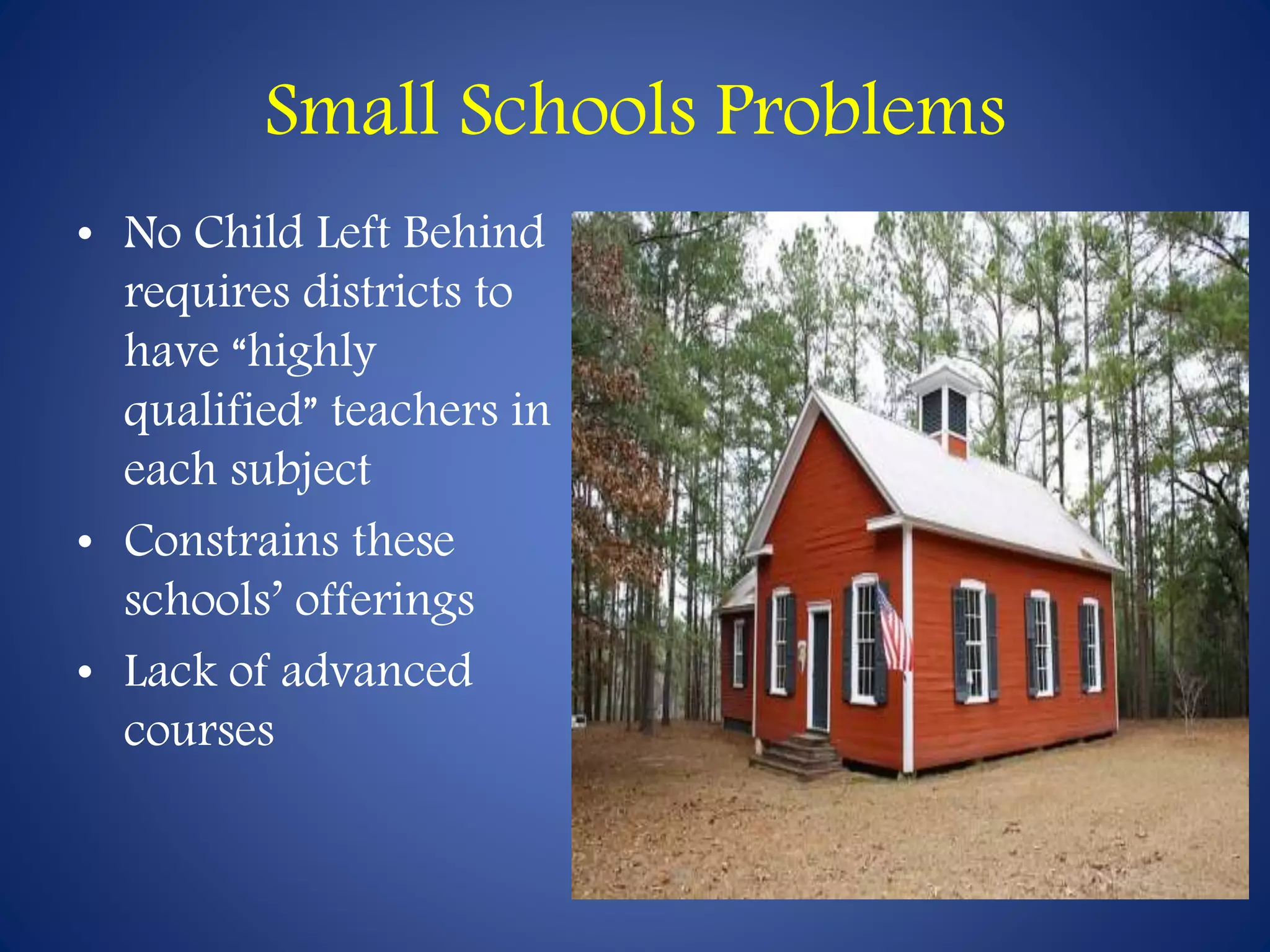
• No Child Left Behind 
requires districts to 
have “highly 
qualified” teachers in 
each subject 
• Constrains these 
schools’ offerings 
• Lack of advanced 
courses
Effective Learning Online 
Apex Learning 
– In 2003–04: 8,400 
enrollments in AP 
courses 
– In 2006–07: up to 
30,200, 
• growth rate of over 50 
percent. 
– Apex has had more 
than 1 million 
enrollments in over 
4,000 school districts.
State Programs 
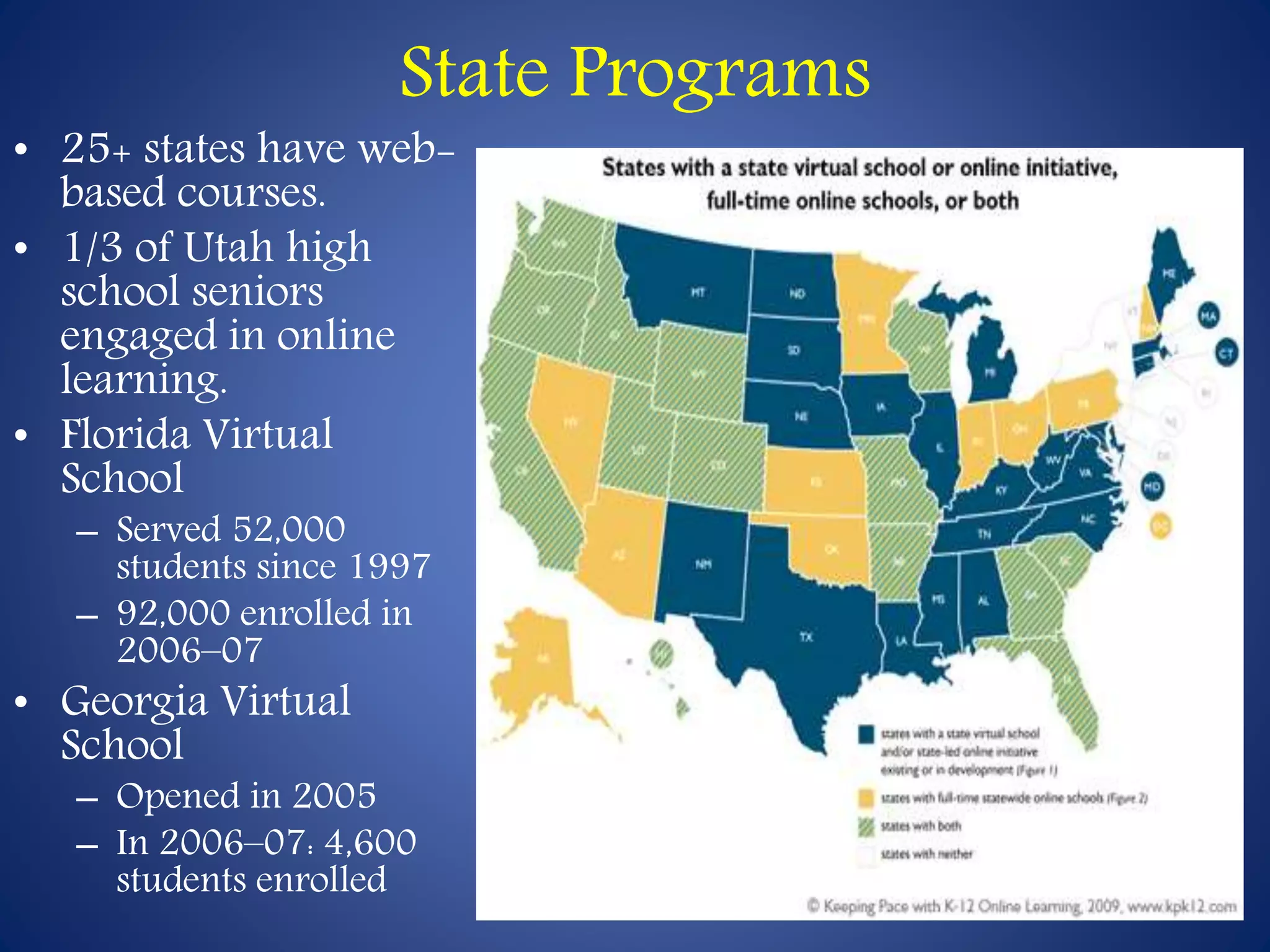
• 25+ states have web-based 
courses. 
• 1/3 of Utah high 
school seniors 
engaged in online 
learning. 
• Florida Virtual 
School 
– Served 52,000 
students since 1997 
– 92,000 enrolled in 
2006–07 
• Georgia Virtual 
School 
– Opened in 2005 
– In 2006–07: 4,600 
students enrolled
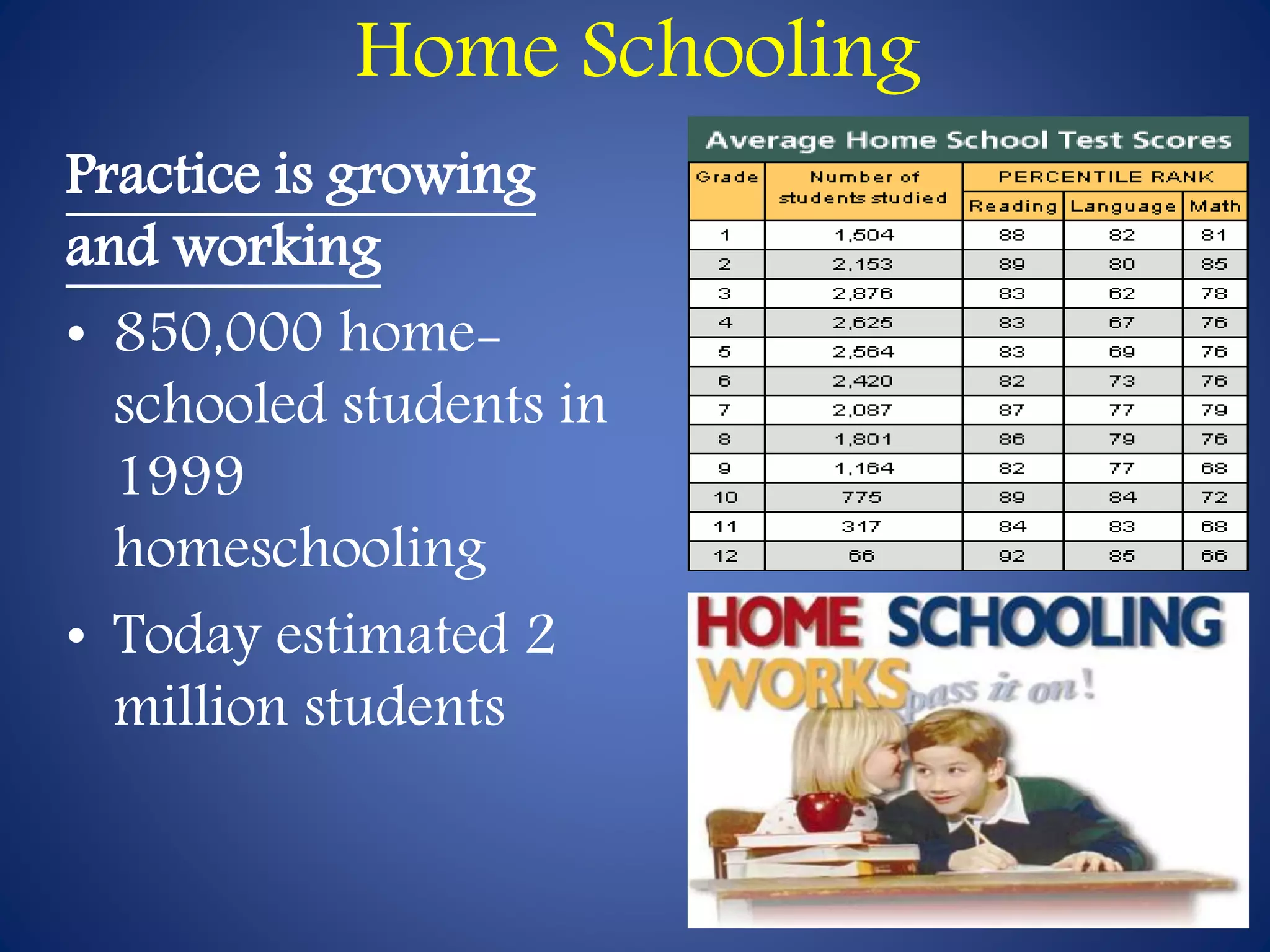
Home Schooling 
Practice is growing 
and working 
• 850,000 home-schooled 
students in 
1999 
homeschooling 
• Today estimated 2 
million students
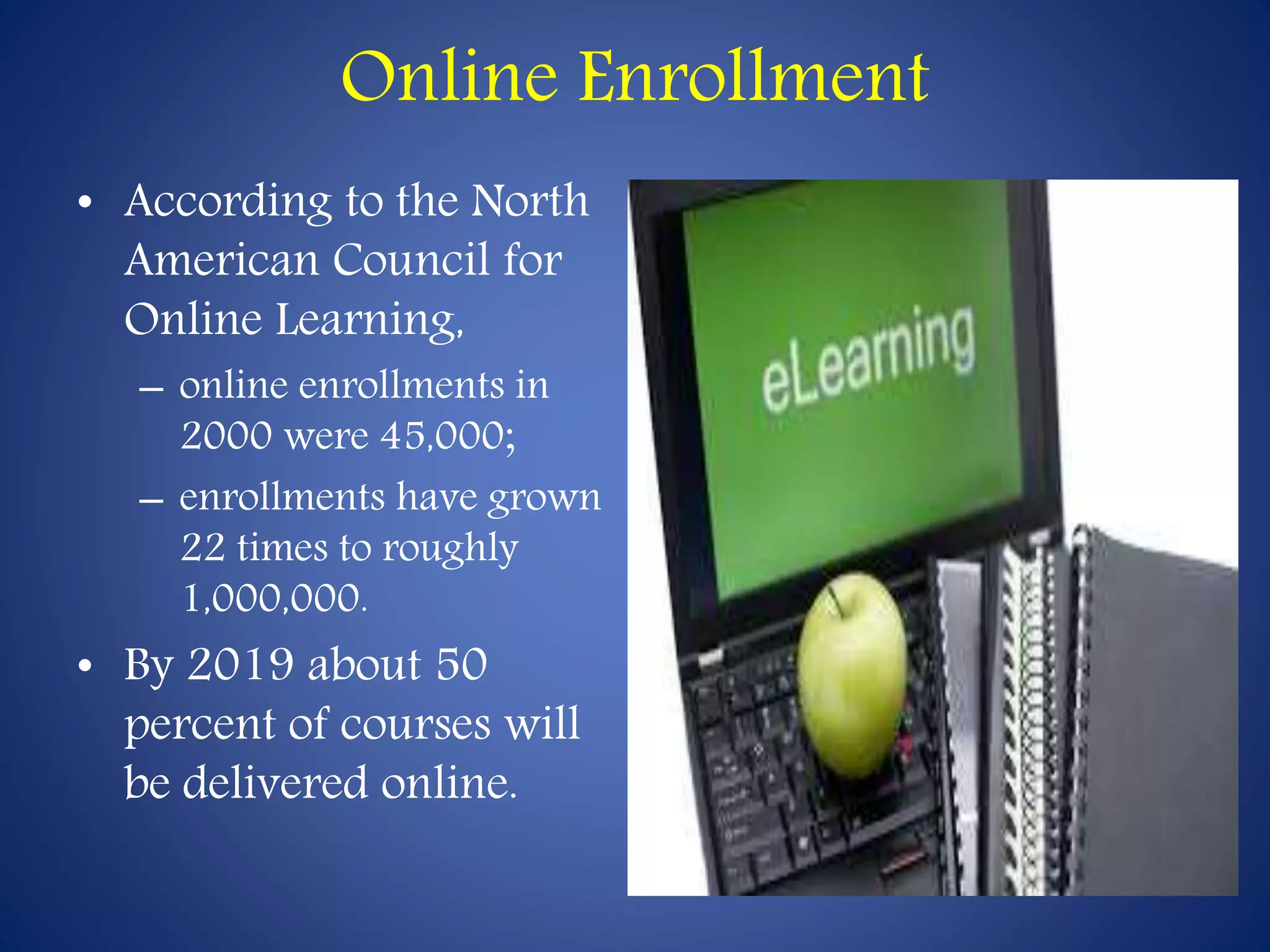
Online Enrollment 
• According to the North 
American Council for 
Online Learning, 
– online enrollments in 
2000 were 45,000; 
– enrollments have grown 
22 times to roughly 
1,000,000. 
• By 2019 about 50 
percent of courses will 
be delivered online.
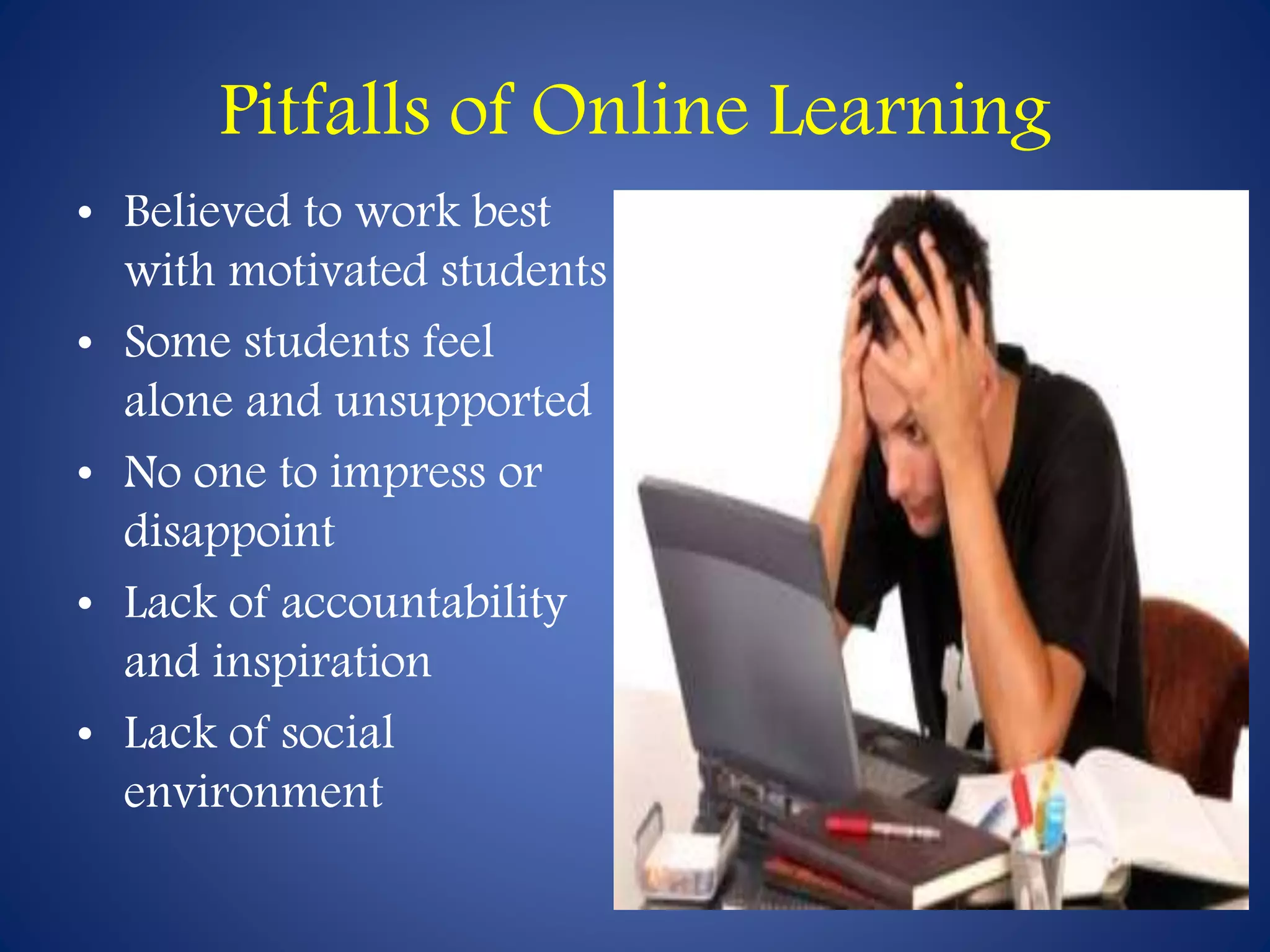
Pitfalls of Online Learning 
• Believed to work best 
with motivated students 
• Some students feel 
alone and unsupported 
• No one to impress or 
disappoint 
• Lack of accountability 
and inspiration 
• Lack of social 
environment
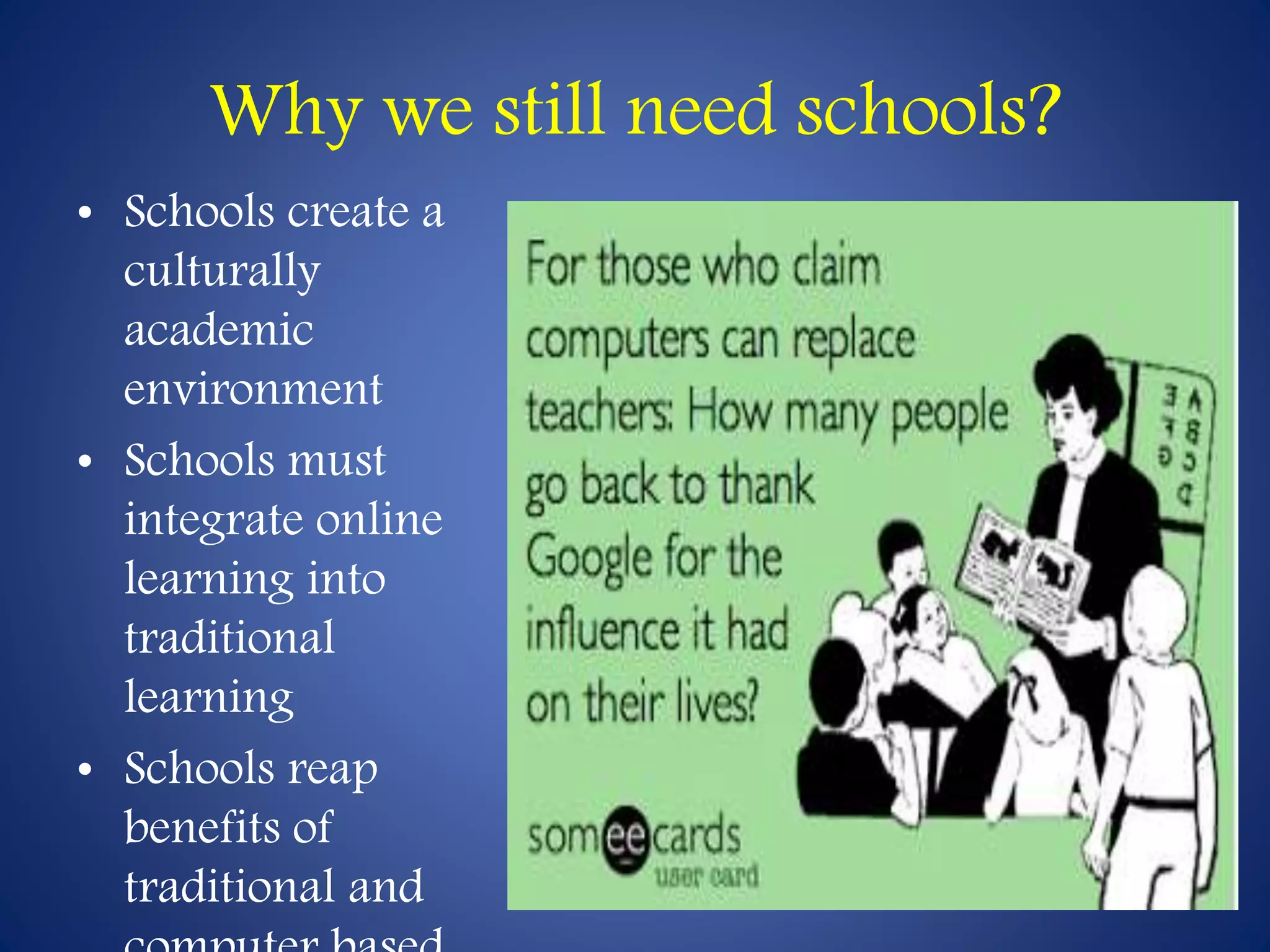
Why we still need schools? 
• Schools create a 
culturally 
academic 
environment 
• Schools must 
integrate online 
learning into 
traditional 
learning 
• Schools reap 
benefits of 
traditional and 
computer based
Changing Role of Teachers 
1900s: “Sage on the Stage” 2014: “Guide on the Side”
Obsoleteness of Textbooks 
Economics of the textbook 
business are scale 
intensive: 
• fixed costs are the same, 
selling to 1,000 or 1 
million 
• textbook companies sell 
to large, monolithic 
audience 
• customization is not 
desirable
Achieve 3000 
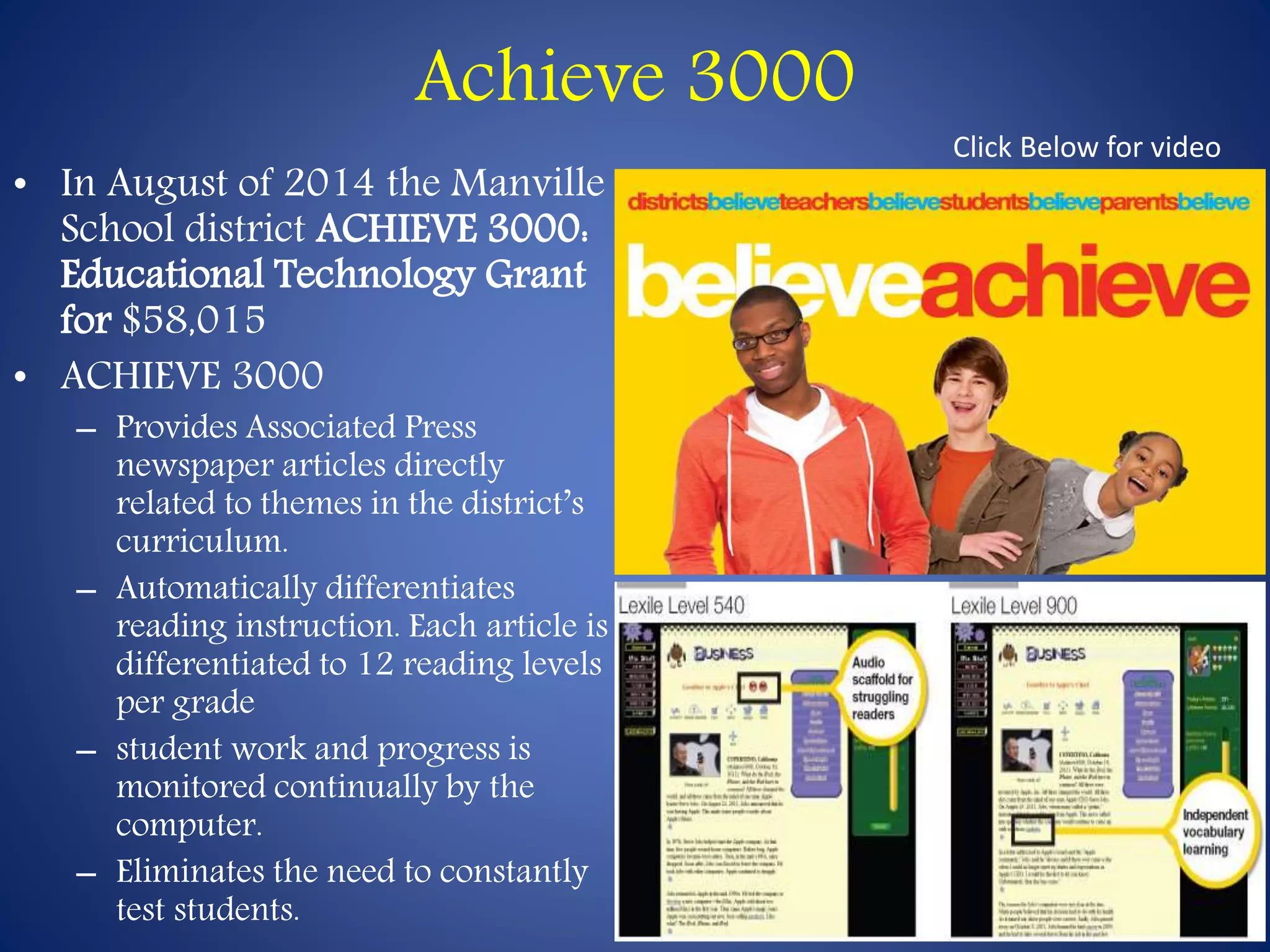
• In August of 2014 the Manville 
School district ACHIEVE 3000: 
Educational Technology Grant 
for $58,015 
• ACHIEVE 3000 
– Provides Associated Press 
newspaper articles directly 
related to themes in the district’s 
curriculum. 
– Automatically differentiates 
reading instruction. Each article is 
differentiated to 12 reading levels 
per grade 
– student work and progress is 
monitored continually by the 
computer. 
– Eliminates the need to constantly 
test students. 
Click Below for video
Benefits 
• Delivers differentiated 
assignments at 12 
different reading levels 
• Reports real-time 
diagnostic data to 
teachers and 
administrators 
• The College/Career 
Readiness Report 
forecasts students' 
ability
Five-Step Literacy Routine 
1. Acquire knowledge from 
informational text 
2. Develop strong content knowledge, 
3. Uses higher order thinking skills 
4. Helps students argue effectively with 
supporting evidence 
5. Helps students communicate 
effectively
More Benefits 
Get parents involved 
too: 
• Reinforce literacy 
skills 
• Follow their child's 
progress 
• Access daily article 
topic along guided 
questions 
• Parent tutorials show 
how to work to 
increase student 
achievement
Call to Action 
Achieve 3000 is great opportunity for Manville 
High School to become more integrated with 
educational technology. In order to facilitate this 
change school administrators should: 
1. Create a sense of urgency to integrate 
technology 
2. Provide sufficient professional development 
3. Develop a strategy to efficiently allocate current 
technological resource and acquire more 
resources
Resources 
Clayton M. Christensen and Michael B. Horn. “How Do We 
Transform Our Schools?” Education Next. 2008. 
Zimmerman, Judith. “Why Some Teachers Resist Change and 
What Principals Can Do About It”. NASSP Bulletin, Vol. 90 No. 
3 September 2006 238-249 
Achieve 3000 
– http://www.achieve3000.com/ 
Chandler, Adam D. “Learning in Classrooms Versus Online”. 
NyTimes. July 20, 2012 
HSDLA: Advocates for Homeschooling 
– http://www.hslda.org/docs/study/rudner1999/rudner2.asp

Integrating technology into schools

  • 1.
    Integrating Technology Into Schools Michael J. Forte
  • 2.
    Manville High School • School Type: Public • Grades: 9-12 • Student Enrollment: 385 • Student Teacher Ratio - 12:1
  • 3.
    Purpose The goalof this presentation is to analyze the integration of technology into the modern education system.
  • 4.
    Outline • Slide5 – How and Why Our Current System Needs Change – Sir Ken Robinson • Slide 6 – Computer Based Leaning: The Wave of the Future • Slide 7 - Small Schools Problems • Slide 8 - Effective Learning Online • Slide 9 - State Programs • Slide 10 - Home Schooling • Slide 11 - Online Enrollment • Slide 12 - Pitfalls of Online Learning • Slide 13- Why we still need schools • Slide 14 - Changing Role of Teachers • Slide 15 - Obsoleteness of Textbooks • Slide 16 - Achieve 3000 • Slide 17 - Benefits Five-Step Literacy Routine • Slide 18 - More Benefits
  • 5.
    How and WhyOur Current System Needs Change – Sir Ken Robinson Click on the picture for a video
  • 6.
    Small Schools Problems • No Child Left Behind requires districts to have “highly qualified” teachers in each subject • Constrains these schools’ offerings • Lack of advanced courses
  • 7.
    Effective Learning Online Apex Learning – In 2003–04: 8,400 enrollments in AP courses – In 2006–07: up to 30,200, • growth rate of over 50 percent. – Apex has had more than 1 million enrollments in over 4,000 school districts.
  • 8.
    State Programs •25+ states have web-based courses. • 1/3 of Utah high school seniors engaged in online learning. • Florida Virtual School – Served 52,000 students since 1997 – 92,000 enrolled in 2006–07 • Georgia Virtual School – Opened in 2005 – In 2006–07: 4,600 students enrolled
  • 9.
    Home Schooling Practiceis growing and working • 850,000 home-schooled students in 1999 homeschooling • Today estimated 2 million students
  • 10.
    Online Enrollment •According to the North American Council for Online Learning, – online enrollments in 2000 were 45,000; – enrollments have grown 22 times to roughly 1,000,000. • By 2019 about 50 percent of courses will be delivered online.
  • 11.
    Pitfalls of OnlineLearning • Believed to work best with motivated students • Some students feel alone and unsupported • No one to impress or disappoint • Lack of accountability and inspiration • Lack of social environment
  • 12.
    Why we stillneed schools? • Schools create a culturally academic environment • Schools must integrate online learning into traditional learning • Schools reap benefits of traditional and computer based
  • 13.
    Changing Role ofTeachers 1900s: “Sage on the Stage” 2014: “Guide on the Side”
  • 14.
    Obsoleteness of Textbooks Economics of the textbook business are scale intensive: • fixed costs are the same, selling to 1,000 or 1 million • textbook companies sell to large, monolithic audience • customization is not desirable
  • 15.
    Achieve 3000 •In August of 2014 the Manville School district ACHIEVE 3000: Educational Technology Grant for $58,015 • ACHIEVE 3000 – Provides Associated Press newspaper articles directly related to themes in the district’s curriculum. – Automatically differentiates reading instruction. Each article is differentiated to 12 reading levels per grade – student work and progress is monitored continually by the computer. – Eliminates the need to constantly test students. Click Below for video
  • 16.
    Benefits • Deliversdifferentiated assignments at 12 different reading levels • Reports real-time diagnostic data to teachers and administrators • The College/Career Readiness Report forecasts students' ability
  • 17.
    Five-Step Literacy Routine 1. Acquire knowledge from informational text 2. Develop strong content knowledge, 3. Uses higher order thinking skills 4. Helps students argue effectively with supporting evidence 5. Helps students communicate effectively
  • 18.
    More Benefits Getparents involved too: • Reinforce literacy skills • Follow their child's progress • Access daily article topic along guided questions • Parent tutorials show how to work to increase student achievement
  • 19.
    Call to Action Achieve 3000 is great opportunity for Manville High School to become more integrated with educational technology. In order to facilitate this change school administrators should: 1. Create a sense of urgency to integrate technology 2. Provide sufficient professional development 3. Develop a strategy to efficiently allocate current technological resource and acquire more resources
  • 20.
    Resources Clayton M.Christensen and Michael B. Horn. “How Do We Transform Our Schools?” Education Next. 2008. Zimmerman, Judith. “Why Some Teachers Resist Change and What Principals Can Do About It”. NASSP Bulletin, Vol. 90 No. 3 September 2006 238-249 Achieve 3000 – http://www.achieve3000.com/ Chandler, Adam D. “Learning in Classrooms Versus Online”. NyTimes. July 20, 2012 HSDLA: Advocates for Homeschooling – http://www.hslda.org/docs/study/rudner1999/rudner2.asp

Editor's Notes

  • #3 http://high-schools.com/directory/nj/cities/manville/manville-high-school/340963005238/
  • #6 https://www.youtube.com/watch?v=zDZFcDGpL4U
  • #9 http://education-portal.com/articles/Support_Grows_for_K-12_Online_Learning.html
  • #10 http://www.hslda.org/docs/study/rudner1999/rudner2.asp
  • #12 http://www.nytimes.com/2012/07/26/opinion/learning-in-classrooms-versus-online.html?_r=0