Why Now?
-The use of Technology in all
professions is exploding.
-Employers expect employees to be
competent with computers,
regardless of profession.
-Employers want trained employees,
they don’t want to train the
employees on company time.
Implications for Education
Resources, both financial and human capital, must
be invested in.
Educator professional development will be key in
developing competency in instruction.
Inexperienced teachers will “start small” and do just a
few things well.
Benefits to ACIT
School will experience several residual benefits from
the use and investment of technology.
Students should adapt and adjust accordingly
because of previous familiarity with technology.
Access to Information
Information in the form of encyclopedias, scholarly
journals and publications, and internet resources
have never been more readily accessible.
Teacher must institute a policy of control (when cell
phones and other electronic devices are
permissible).
Environmental Benefits
Increased electronic submission of assignments and
tests reduces the need for paper, ink, writing utensils,
and other costly supplies.
Investment in educational technology will pay
dividends in financial terms and in terms of
educational outcomes.
Distance Learning
Students will have the ability to experience
educational opportunities that never before existed
without travel.
Visits to Presidential museums, historical landmarks,
and other places of interest are now possible through
the use of technology.
Efficiency in Teaching &
Instruction
Teacher can now more easily monitor the progress of
students through automated grade books and
snapshot learning activities that are monitored
electronically.
Students can work independently or in pairs or
groups to complete collaborative assignments.
Student Engagement
Educators must acknowledge that the delivery of
education has changed with the advent of new
resources.
Students in the 21st century are much more likely to
be engaged in technological activities as opposed to
paper/pencil/drill & kill methods.
STEM Education
Students who are preparing to enter the STEM fields
will require strong technological background and
knowledge.
Integration of technology will expose these students
to new ways of learning and creative thinking for
problem solving.
Support for ESL & Classified
Students
Differentiated programs allow students to learn at their
own pace and rate.
Digital programs allow English Language Learners to
excel by learning in a progression that ensures mastery
prior to advancement in material.
Many programs (Read 180 being most prominent) can be
implemented to provide struggling learners the
opportunity for remediation.
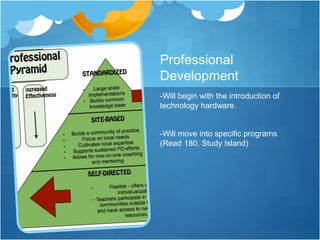
Professional
Development
-Will begin with the introduction of
technology hardware.
-Will move into specific programs
(Read 180, Study Island)
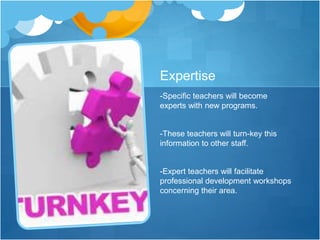
Expertise
-Specific teachers will become
experts with new programs.
-These teachers will turn-key this
information to other staff.
-Expert teachers will facilitate
professional development workshops
concerning their area.
Implications for Assessment
Curriculum will evolve to include digitized
assessments.
Essay writing, open-ended responses, and
constructed response items should be included.
Preparation for PARCC, Core Curriculum aligned
assessments.
One-to-One Initiative
Beginning with the Class of 2019, all students will
receive a laptop computer.
Transition will take place to phase out paper
assignments.
All assignments will be completed electronically by
the time Class of 2019 graduates.
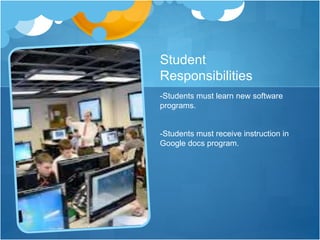
Student
Responsibilities
-Students must learn new software
programs.
-Students must receive instruction in
Google docs program.
Google Docs
Enables students to submit work electronically.
Enables students to work collaboratively on projects
and assignments.
Enables teacher to monitor student progress on
work.
Read 180
Provides targeted assistance to readers who need
remediation.
Contains periodic snapshot assessments to capture
student growth.
Adjusts program level to the reading level of the
student.
Study Island
English and Mathematics program.
Can be set to align with common core standards.
Programs consist of grade level learning activities.
Student Achievement
Impacted
Value of these programs is they meet the learner
where they are.
These programs can be adjusted for group work.
Allow the teacher to monitor student progress.
School Policy
Revisions
-Technology for educational
purposes, including cell phones, are
permitted.
-Access of information, including
school library databases and
information.
Conclusion
Change is necessary in curriculum and policy to enhance
technological learning experiences.
Curriculum changes and professional development is
necessary for student advancement and achievement.
School will begin slow and work toward full scale
integration of technology to prepare students for the 21st
century global economy and employment.
References
Chuong, Carolyn (2014). A Policy Playbook for Personalized Learning. Ideas for State and Local
Policymakers.
Clements, Margret (2015). Online Course Use for High Schools in New York. Regional Education
Laboratory, Notheast & Islands.
Gallagher, James (2015). Political Issues in Gifted Education. Journal for the Education for the Gifted.
Plomp, T.J (2003). Cross National Information and Communication in Technology and Practices. Research
in Education Policy. ebook.
Voce, Julie (2015). Reviewing Institutional Policy for Electronic Management Assessment. International
Journal for Higher Education Assessment.

Digital resources 8 20-15

  • 2.
    Why Now? -The useof Technology in all professions is exploding. -Employers expect employees to be competent with computers, regardless of profession. -Employers want trained employees, they don’t want to train the employees on company time.
  • 3.
    Implications for Education Resources,both financial and human capital, must be invested in. Educator professional development will be key in developing competency in instruction. Inexperienced teachers will “start small” and do just a few things well.
  • 4.
    Benefits to ACIT Schoolwill experience several residual benefits from the use and investment of technology. Students should adapt and adjust accordingly because of previous familiarity with technology.
  • 5.
    Access to Information Informationin the form of encyclopedias, scholarly journals and publications, and internet resources have never been more readily accessible. Teacher must institute a policy of control (when cell phones and other electronic devices are permissible).
  • 6.
    Environmental Benefits Increased electronicsubmission of assignments and tests reduces the need for paper, ink, writing utensils, and other costly supplies. Investment in educational technology will pay dividends in financial terms and in terms of educational outcomes.
  • 7.
    Distance Learning Students willhave the ability to experience educational opportunities that never before existed without travel. Visits to Presidential museums, historical landmarks, and other places of interest are now possible through the use of technology.
  • 8.
    Efficiency in Teaching& Instruction Teacher can now more easily monitor the progress of students through automated grade books and snapshot learning activities that are monitored electronically. Students can work independently or in pairs or groups to complete collaborative assignments.
  • 9.
    Student Engagement Educators mustacknowledge that the delivery of education has changed with the advent of new resources. Students in the 21st century are much more likely to be engaged in technological activities as opposed to paper/pencil/drill & kill methods.
  • 10.
    STEM Education Students whoare preparing to enter the STEM fields will require strong technological background and knowledge. Integration of technology will expose these students to new ways of learning and creative thinking for problem solving.
  • 11.
    Support for ESL& Classified Students Differentiated programs allow students to learn at their own pace and rate. Digital programs allow English Language Learners to excel by learning in a progression that ensures mastery prior to advancement in material. Many programs (Read 180 being most prominent) can be implemented to provide struggling learners the opportunity for remediation.
  • 12.
    Professional Development -Will begin withthe introduction of technology hardware. -Will move into specific programs (Read 180, Study Island)
  • 13.
    Expertise -Specific teachers willbecome experts with new programs. -These teachers will turn-key this information to other staff. -Expert teachers will facilitate professional development workshops concerning their area.
  • 14.
    Implications for Assessment Curriculumwill evolve to include digitized assessments. Essay writing, open-ended responses, and constructed response items should be included. Preparation for PARCC, Core Curriculum aligned assessments.
  • 15.
    One-to-One Initiative Beginning withthe Class of 2019, all students will receive a laptop computer. Transition will take place to phase out paper assignments. All assignments will be completed electronically by the time Class of 2019 graduates.
  • 16.
    Student Responsibilities -Students must learnnew software programs. -Students must receive instruction in Google docs program.
  • 17.
    Google Docs Enables studentsto submit work electronically. Enables students to work collaboratively on projects and assignments. Enables teacher to monitor student progress on work.
  • 18.
    Read 180 Provides targetedassistance to readers who need remediation. Contains periodic snapshot assessments to capture student growth. Adjusts program level to the reading level of the student.
  • 19.
    Study Island English andMathematics program. Can be set to align with common core standards. Programs consist of grade level learning activities.
  • 20.
    Student Achievement Impacted Value ofthese programs is they meet the learner where they are. These programs can be adjusted for group work. Allow the teacher to monitor student progress.
  • 21.
    School Policy Revisions -Technology foreducational purposes, including cell phones, are permitted. -Access of information, including school library databases and information.
  • 22.
    Conclusion Change is necessaryin curriculum and policy to enhance technological learning experiences. Curriculum changes and professional development is necessary for student advancement and achievement. School will begin slow and work toward full scale integration of technology to prepare students for the 21st century global economy and employment.
  • 23.
    References Chuong, Carolyn (2014).A Policy Playbook for Personalized Learning. Ideas for State and Local Policymakers. Clements, Margret (2015). Online Course Use for High Schools in New York. Regional Education Laboratory, Notheast & Islands. Gallagher, James (2015). Political Issues in Gifted Education. Journal for the Education for the Gifted. Plomp, T.J (2003). Cross National Information and Communication in Technology and Practices. Research in Education Policy. ebook. Voce, Julie (2015). Reviewing Institutional Policy for Electronic Management Assessment. International Journal for Higher Education Assessment.