Rajshahi University
Insulin Production
Speaker:
Ananda Kumar Saha
Department of Zoology, R.U.
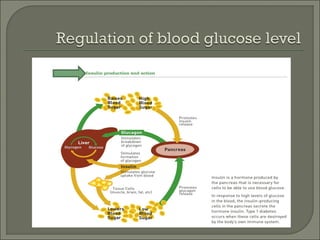
 Insulin is a hormone central regulating
carbohydrate and fat metabolism in the body.
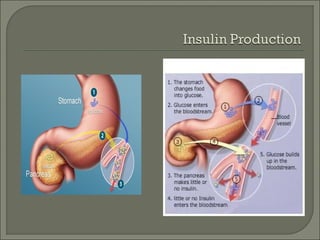
 Insulin is secreted by the Islets of Langerhans
of pancreas which catabolizes glucose in
blood.
 Insulin causes liver cells, muscle cells and fat
tissue to take up glucose from the blood and
store it as glycogen in the liver and muscle.
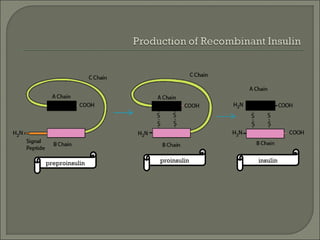
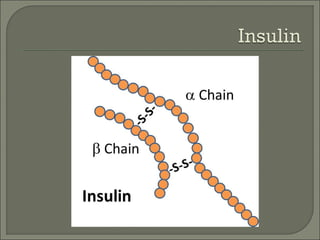
 Insulin consists of two polypeptide
chains, Chain A ( 21 amino acid long) and
B ( 30 amino acid long). Its precursor is
proinsulin which also contains two
polypeptide chains, A and B, and is
connected with a third peptide chain –C
(35 amino acid long).
 In the Islets of Langerhans, insulin accumulates in secretary
vesicles as a single polypeptide chain called proinsulin.
 Before secretion into the bloodstream the third C chain of the
proinsulin molecule is excised, leaving the A and B chains
joined by disulphide bridges as the active insulin.
 E. coli is not capable of removing the C chain.
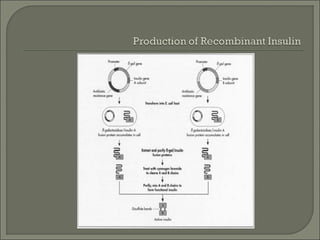
 There are several strategies for producing insulin from
bacteria, but the most successful is to synthesize the A and B
separetly and then join them together.
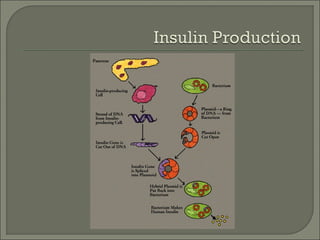
 The gene sequence of determining the A chain has been fused
to the B-galactosidase gene (lac Z) of E.coli. The whole lac-Z-
A chain fusion is cloned into pBR322. Bacteria with this
plasmid synthesize B-galactosidase with the insulin A chain.
 The B chain is produced in an identical manner.
 After purification of the two chains they are mixed , oxidized
and then reduced which allows the disulphide bridges to form
and active insulin to be produced.
preproinsulin proinsulin insulin
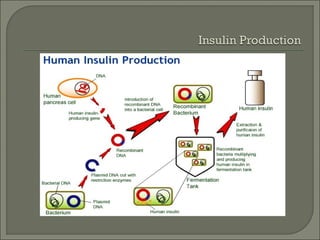
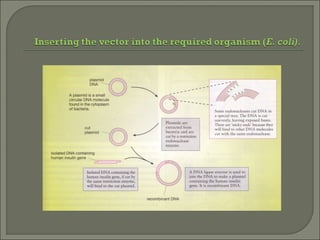
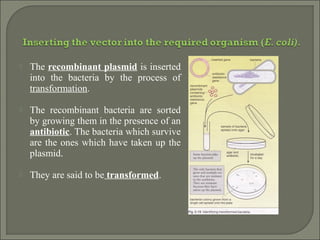
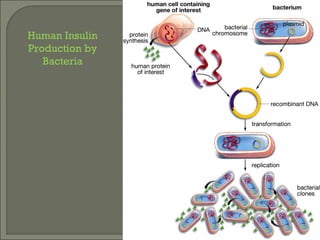
 The recombinant plasmid is inserted
into the bacteria by the process of
transformation.
 The recombinant bacteria are sorted
by growing them in the presence of an
antibiotic. The bacteria which survive
are the ones which have taken up the
plasmid.
 They are said to be transformed.
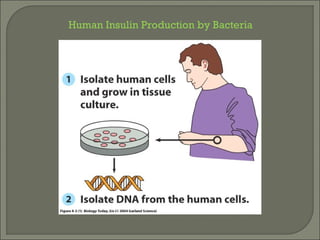
Human Insulin Production by Bacteria
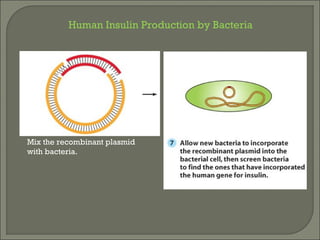
Mix the recombinant plasmid
with bacteria.
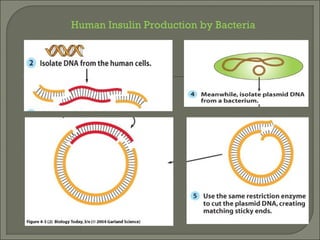
Human Insulin Production by Bacteria
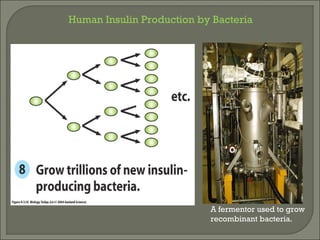
A fermentor used to grow
recombinant bacteria.
One cell with the
recombinant plasmid
Human Insulin Production by Bacteria
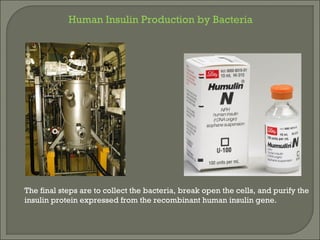
The final steps are to collect the bacteria, break open the cells, and purify the
insulin protein expressed from the recombinant human insulin gene.
Human Insulin Production by Bacteria
Human Insulin
Production by
Bacteria
Insulin production prof.a.k.saha

Insulin production prof.a.k.saha

  • 1.
  • 2.
    Insulin Production Speaker: Ananda KumarSaha Department of Zoology, R.U.
  • 3.
     Insulin isa hormone central regulating carbohydrate and fat metabolism in the body.  Insulin is secreted by the Islets of Langerhans of pancreas which catabolizes glucose in blood.  Insulin causes liver cells, muscle cells and fat tissue to take up glucose from the blood and store it as glycogen in the liver and muscle.
  • 7.
     Insulin consistsof two polypeptide chains, Chain A ( 21 amino acid long) and B ( 30 amino acid long). Its precursor is proinsulin which also contains two polypeptide chains, A and B, and is connected with a third peptide chain –C (35 amino acid long).
  • 8.
     In theIslets of Langerhans, insulin accumulates in secretary vesicles as a single polypeptide chain called proinsulin.  Before secretion into the bloodstream the third C chain of the proinsulin molecule is excised, leaving the A and B chains joined by disulphide bridges as the active insulin.  E. coli is not capable of removing the C chain.  There are several strategies for producing insulin from bacteria, but the most successful is to synthesize the A and B separetly and then join them together.
  • 9.
     The genesequence of determining the A chain has been fused to the B-galactosidase gene (lac Z) of E.coli. The whole lac-Z- A chain fusion is cloned into pBR322. Bacteria with this plasmid synthesize B-galactosidase with the insulin A chain.  The B chain is produced in an identical manner.  After purification of the two chains they are mixed , oxidized and then reduced which allows the disulphide bridges to form and active insulin to be produced.
  • 11.
  • 14.
     The recombinantplasmid is inserted into the bacteria by the process of transformation.  The recombinant bacteria are sorted by growing them in the presence of an antibiotic. The bacteria which survive are the ones which have taken up the plasmid.  They are said to be transformed.
  • 15.
  • 16.
  • 17.
    Mix the recombinantplasmid with bacteria. Human Insulin Production by Bacteria
  • 18.
    A fermentor usedto grow recombinant bacteria. One cell with the recombinant plasmid Human Insulin Production by Bacteria
  • 19.
    The final stepsare to collect the bacteria, break open the cells, and purify the insulin protein expressed from the recombinant human insulin gene. Human Insulin Production by Bacteria
  • 20.