

Creating an
Innovation
Framework
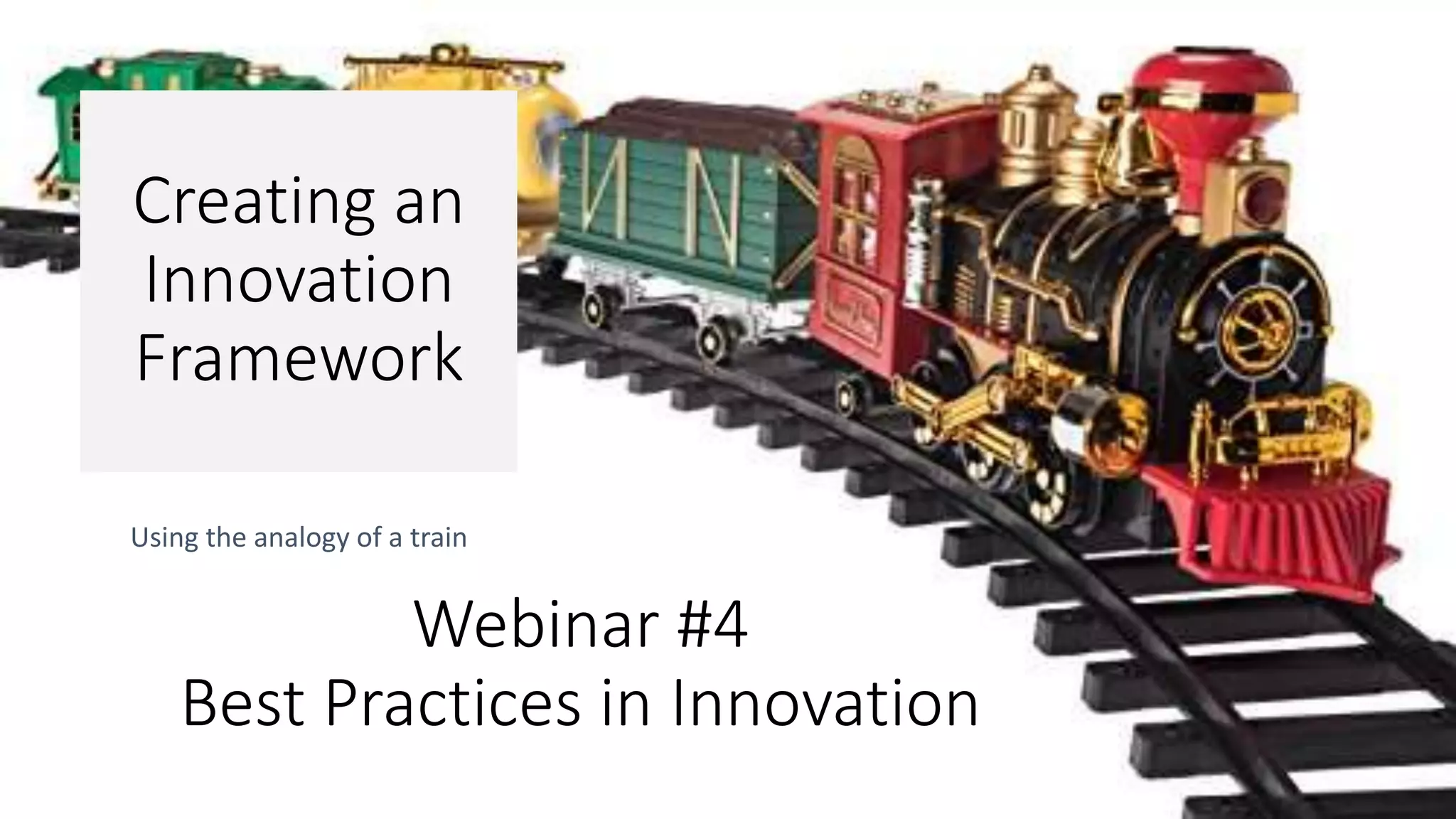
Using the analogy of a train
Webinar #4
Best Practices in Innovation
Defining
Innovation
“Fresh thinking that
creates value.”
Richard Lyons
“Significant positive
change.”
Scott Berkun
What is a
framework?
A basic structure underlying a system,
concept, or text.
Source: https://jooinn.com/abstract-framework-background-3.html
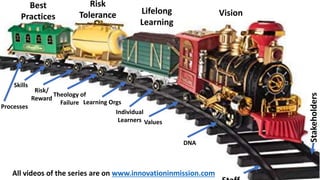
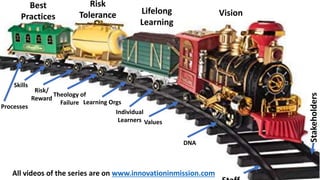
Stakeholders
Vision
Risk
Tolerance Lifelong
Learning
Best
Practices
DNA
Values
Individual
Learners
Learning Orgs
All videos of the series are on www.innovationinmission.com
Risk
Tolerance
Theology of
Failure
Risk/
Reward
Skills
Processes
We Were
Made to Seek
Wisdom
Wisdom Calls out . . .
To teach us truth (vs. 7)
To give us understanding (v. 9)
To enable us to create new things (vs. 30-32)
To deliver rewards for right motives and priorities (vs. 35)
Proverbs 8
The Caboose:
Best Practices
• Who’s on Your Team?
• Types of Innovation
• Core Tools
• Activities to Drive Results
Activities - Innovation
Personalities
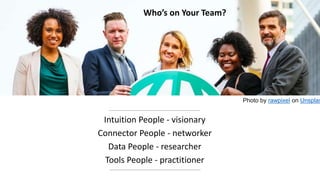
Intuition People - visionary
Connector People - networker
Data People - researcher
Tools People - practitioner
Photo by rawpixel on Unsplas
Who’s on Your Team?
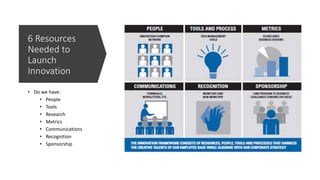
6 Resources
Needed to
Launch
Innovation
• Do we have:
• People
• Tools
• Research
• Metrics
• Communications
• Recognition
• Sponsorship
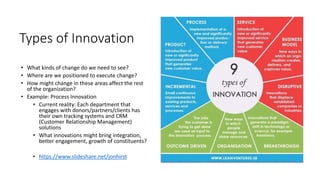
Types of Innovation
• What kinds of change do we need to see?
• Where are we positioned to execute change?
• How might change in these areas affect the rest
of the organization?
• Example: Process Innovation
• Current reality: Each department that
engages with donors/partners/clients has
their own tracking systems and CRM
(Customer Relationship Management)
solutions
• What innovations might bring integration,
better engagement, growth of constituents?
• https://www.slideshare.net/jonhirst
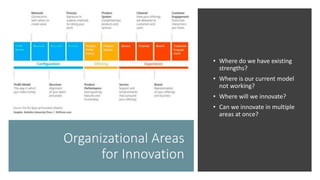
Organizational Areas
for Innovation
• Where do we have existing
strengths?
• Where is our current model
not working?
• Where will we innovate?
• Can we innovate in multiple
areas at once?
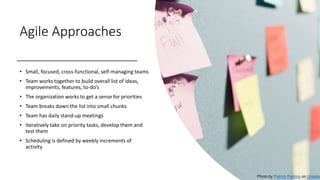
Agile Approaches
• Small, focused, cross-functional, self-managing teams
• Team works together to build overall list of ideas,
improvements, features, to-do’s
• The organization works to get a sense for priorities
• Team breaks down the list into small chunks
• Team has daily stand-up meetings
• Iteratively take on priority tasks, develop them and
test them
• Scheduling is defined by weekly increments of
activity
Photo by Patrick Perkins on Unsplas
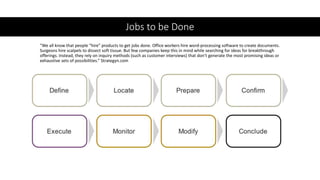
Jobs to be Done
“We all know that people “hire” products to get jobs done. Office workers hire word-processing software to create documents.
Surgeons hire scalpels to dissect soft tissue. But few companies keep this in mind while searching for ideas for breakthrough
offerings. Instead, they rely on inquiry methods (such as customer interviews) that don’t generate the most promising ideas or
exhaustive sets of possibilities.” Strategyn.com
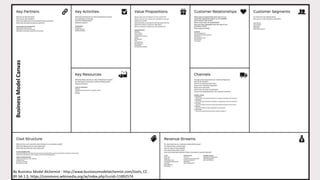
By Business Model Alchemist - http://www.businessmodelalchemist.com/tools, CC
BY-SA 1.0, https://commons.wikimedia.org/w/index.php?curid=11892574
BusinessModelCanvas
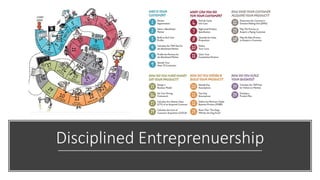
Disciplined Entreprenuership
Defining Your
Target Market
• Who needs your innovation?
• Define 6-12 markets of people
• Big enough to matter - small enough to engage
• Ask these questions:
• What are their needs?
• How will they use your product/service?
• Where are they geographically?
• What assumptions are they bringing to your interaction?
• How will they make the decision to use your resource?
Photo by davide ragusa on Unsplash
Barrier Busters
1. Pick a barrier to discuss
2. How have you seen this barrier
hinder ministry?
3. How did you respond to this
barrier?
4. Did you find a key to unlock it?
Photo by Matteo Catanese on Unsplash
Activities - Soft Thinking/Hard
Thinking
Photo by JD Mason on Unsplash
Photo by rawpixel on Unsplash
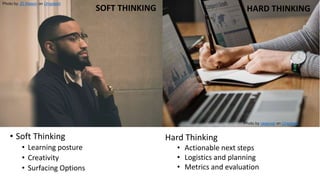
SOFT THINKING HARD THINKING
• Soft Thinking
• Learning posture
• Creativity
• Surfacing Options
Hard Thinking
• Actionable next steps
• Logistics and planning
• Metrics and evaluation
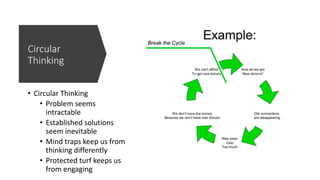
Circular
Thinking
• Circular Thinking
• Problem seems
intractable
• Established solutions
seem inevitable
• Mind traps keep us from
thinking differently
• Protected turf keeps us
from engaging
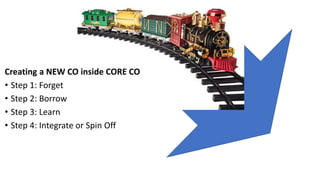
Creating a NEW CO inside CORE CO
• Step 1: Forget
• Step 2: Borrow
• Step 3: Learn
• Step 4: Integrate or Spin Off
Stakeholders
Vision
Risk
Tolerance Lifelong
Learning
Best
Practices
DNA
Values
Individual
Learners
Learning Orgs
All videos of the series are on www.innovationinmission.com
Risk
Tolerance
Theology of
Failure
Risk/
Reward
Skills
Processes

Innovation Framework Best Practices #4

  • 1.
    Creating an Innovation Framework Using theanalogy of a train Webinar #4 Best Practices in Innovation
  • 2.
    Defining Innovation “Fresh thinking that createsvalue.” Richard Lyons “Significant positive change.” Scott Berkun
  • 3.
    What is a framework? Abasic structure underlying a system, concept, or text. Source: https://jooinn.com/abstract-framework-background-3.html
  • 4.
    Stakeholders Vision Risk Tolerance Lifelong Learning Best Practices DNA Values Individual Learners Learning Orgs Allvideos of the series are on www.innovationinmission.com Risk Tolerance Theology of Failure Risk/ Reward Skills Processes
  • 5.
    We Were Made toSeek Wisdom Wisdom Calls out . . . To teach us truth (vs. 7) To give us understanding (v. 9) To enable us to create new things (vs. 30-32) To deliver rewards for right motives and priorities (vs. 35) Proverbs 8
  • 6.
    The Caboose: Best Practices •Who’s on Your Team? • Types of Innovation • Core Tools • Activities to Drive Results
  • 7.
    Activities - Innovation Personalities IntuitionPeople - visionary Connector People - networker Data People - researcher Tools People - practitioner Photo by rawpixel on Unsplas Who’s on Your Team?
  • 8.
    6 Resources Needed to Launch Innovation •Do we have: • People • Tools • Research • Metrics • Communications • Recognition • Sponsorship
  • 9.
    Types of Innovation •What kinds of change do we need to see? • Where are we positioned to execute change? • How might change in these areas affect the rest of the organization? • Example: Process Innovation • Current reality: Each department that engages with donors/partners/clients has their own tracking systems and CRM (Customer Relationship Management) solutions • What innovations might bring integration, better engagement, growth of constituents? • https://www.slideshare.net/jonhirst
  • 10.
    Organizational Areas for Innovation •Where do we have existing strengths? • Where is our current model not working? • Where will we innovate? • Can we innovate in multiple areas at once?
  • 11.
    Agile Approaches • Small,focused, cross-functional, self-managing teams • Team works together to build overall list of ideas, improvements, features, to-do’s • The organization works to get a sense for priorities • Team breaks down the list into small chunks • Team has daily stand-up meetings • Iteratively take on priority tasks, develop them and test them • Scheduling is defined by weekly increments of activity Photo by Patrick Perkins on Unsplas
  • 12.
    Jobs to beDone “We all know that people “hire” products to get jobs done. Office workers hire word-processing software to create documents. Surgeons hire scalpels to dissect soft tissue. But few companies keep this in mind while searching for ideas for breakthrough offerings. Instead, they rely on inquiry methods (such as customer interviews) that don’t generate the most promising ideas or exhaustive sets of possibilities.” Strategyn.com
  • 13.
    By Business ModelAlchemist - http://www.businessmodelalchemist.com/tools, CC BY-SA 1.0, https://commons.wikimedia.org/w/index.php?curid=11892574 BusinessModelCanvas
  • 14.
  • 15.
    Defining Your Target Market •Who needs your innovation? • Define 6-12 markets of people • Big enough to matter - small enough to engage • Ask these questions: • What are their needs? • How will they use your product/service? • Where are they geographically? • What assumptions are they bringing to your interaction? • How will they make the decision to use your resource? Photo by davide ragusa on Unsplash
  • 16.
    Barrier Busters 1. Picka barrier to discuss 2. How have you seen this barrier hinder ministry? 3. How did you respond to this barrier? 4. Did you find a key to unlock it? Photo by Matteo Catanese on Unsplash
  • 17.
    Activities - SoftThinking/Hard Thinking Photo by JD Mason on Unsplash Photo by rawpixel on Unsplash SOFT THINKING HARD THINKING • Soft Thinking • Learning posture • Creativity • Surfacing Options Hard Thinking • Actionable next steps • Logistics and planning • Metrics and evaluation
  • 18.
    Circular Thinking • Circular Thinking •Problem seems intractable • Established solutions seem inevitable • Mind traps keep us from thinking differently • Protected turf keeps us from engaging
  • 19.
    Creating a NEWCO inside CORE CO • Step 1: Forget • Step 2: Borrow • Step 3: Learn • Step 4: Integrate or Spin Off
  • 20.
    Stakeholders Vision Risk Tolerance Lifelong Learning Best Practices DNA Values Individual Learners Learning Orgs Allvideos of the series are on www.innovationinmission.com Risk Tolerance Theology of Failure Risk/ Reward Skills Processes

Editor's Notes

  • #8 Intuition People (visionary) Knows what needs to happen but not why Relies on gut instinct Connector People (networker) Knows the people who have the vision and info Gets life from bringing the pieces together Data People (researcher) Knows the info but not the implications Enjoys data and nuance Tools People (practitioner) Has a tool for every problem Likes to prototype and test
  • #9 Source: http://www.innovationmanagement.se/2014/01/27/seven-steps-to-creating-a-successful-innovation-framework/
  • #10 Know the game you are playing so that you understand the rules you are working with.
  • #11 https://blog.hypeinnovation.com/using-the-ten-types-of-innovation-framework
  • #12 https://www.bain.com/insights/agile-innovation/ Helpful Diagnostic tool: http://www2.bain.com/bainweb/media/interactive/agile-diagnostic/index.html
  • #13 https://strategyn.com/customer-centered-innovation-map/ https://hbr.org/2008/05/the-customer-centered-innovation-map https://www.youtube.com/watch?v=Q63PZR7mG70
  • #14 https://en.wikipedia.org/wiki/Business_Model_Canvas
  • #15 https://www.leadershipinstituteforentrepreneurs.com/disciplined-entrepreneurship/
  • #17 Barrier - Racism - Devalued us and those we serve - Seen as not strategic - Not in areas of focus - Wasting our time - Response? - Defensive, dejected, disappointed - defeatism - Keys? - True understanding of the great commission - disciples not converts - Speaking at conferences - Consult with churches - Hispanic community engagement - Partner with other organizations Hispanic Community Engagement - A panel of 4 hispanic pastors with an anglo audience - hear more, develop relationships, connecting - Draws attention to their needs in the neighborhood - you need our experience in this - Consulting group - Two ways: What are the major need / what are the opportunities - Midsized opportunities
  • #20 https://hbr.org/2005/05/building-breakthrough-businesses-within-established-organizations