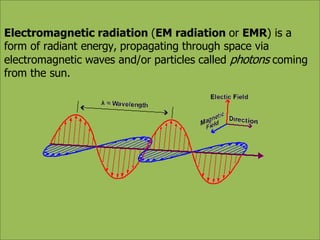
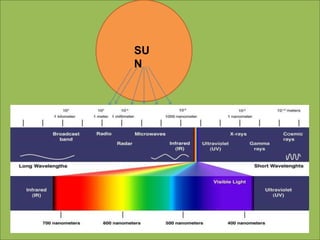
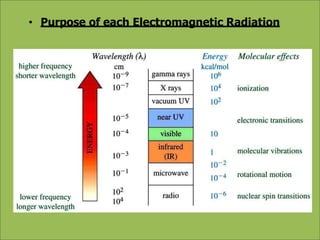
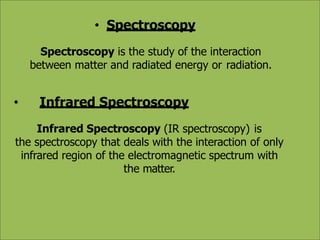
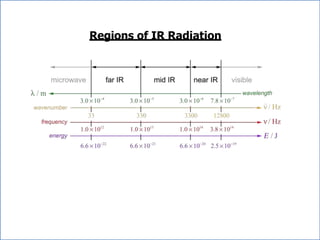
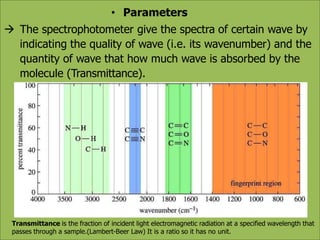
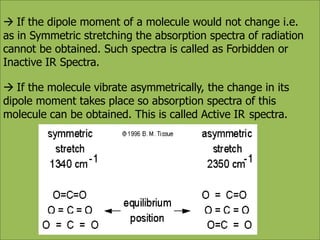
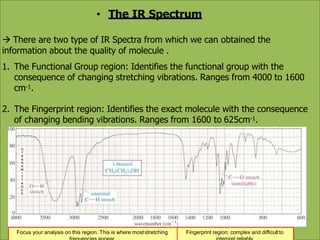
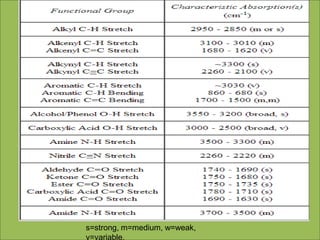
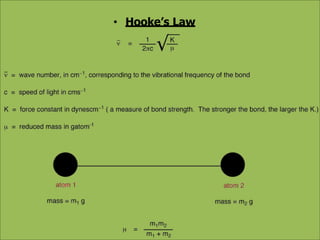
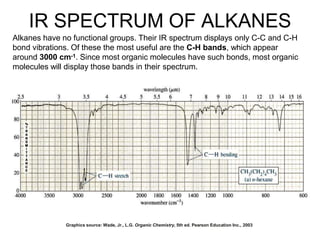
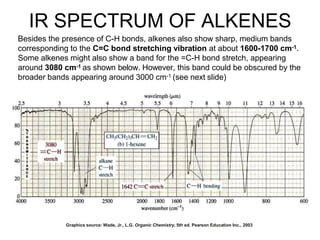
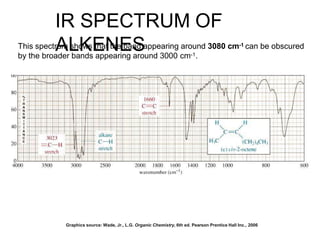
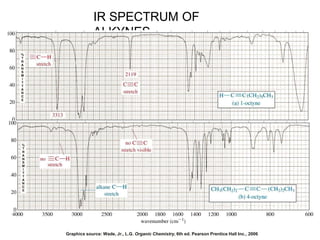
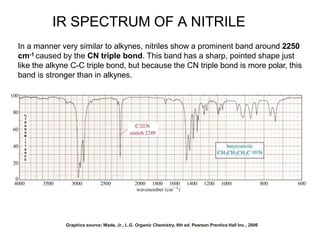
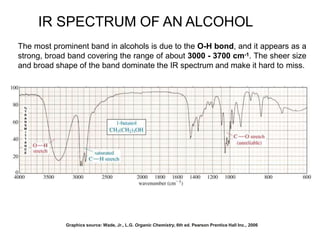
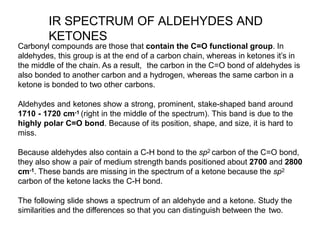
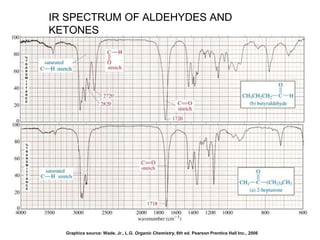
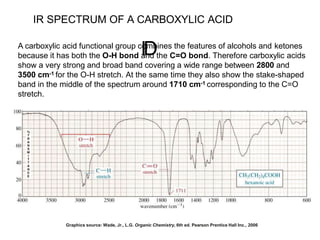
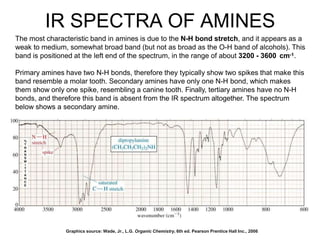
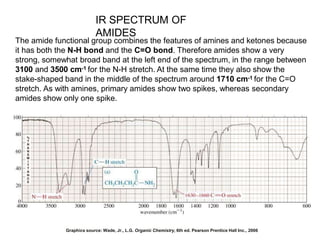
The document provides an overview of infrared (IR) spectroscopy. It discusses the electromagnetic spectrum and how IR spectroscopy works by exciting molecular vibrations. The key types of molecular vibrations that absorb IR light are stretching and bending vibrations. The document outlines the functional group and fingerprint regions of IR spectra and how they can be used to identify functional groups and determine molecular structure. It also discusses how a molecule must have a change in dipole moment upon vibration to absorb IR light. Finally, Hooke's law for calculating vibrational frequencies is presented along with examples of IR spectra for common functional groups like alkenes, alkynes, alcohols, and carboxylic acids.