Department of management

Presented by:
ARSHAD ALAM
MBA
1503010336
Life Insurance
corporation of
india
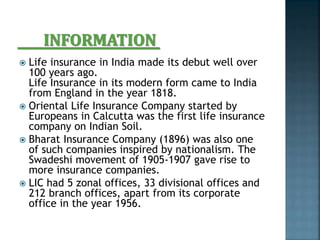
 Life insurance in India made its debut well over
100 years ago.
Life Insurance in its modern form came to India
from England in the year 1818.
 Oriental Life Insurance Company started by
Europeans in Calcutta was the first life insurance
company on Indian Soil.
 Bharat Insurance Company (1896) was also one
of such companies inspired by nationalism. The
Swadeshi movement of 1905-1907 gave rise to
more insurance companies.
 LIC had 5 zonal offices, 33 divisional offices and
212 branch offices, apart from its corporate
office in the year 1956.
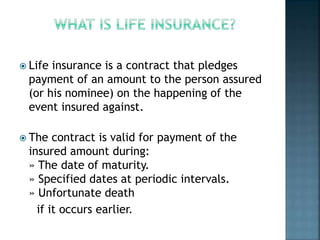
 Life insurance is a contract that pledges
payment of an amount to the person assured
(or his nominee) on the happening of the
event insured against.
 The contract is valid for payment of the
insured amount during:
» The date of maturity.
» Specified dates at periodic intervals.
» Unfortunate death
if it occurs earlier.
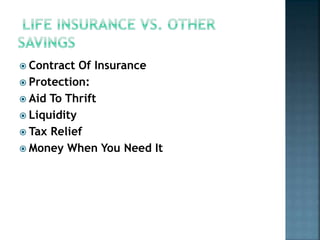
 Contract Of Insurance
 Protection:
 Aid To Thrift
 Liquidity
 Tax Relief
 Money When You Need It
 Any person who has attained majority and is
eligible to enter into a valid contract can insure
himself/herself and those in whom he/she has
insurable interest.
 Policies can also be taken
 subject to certain conditions, on the life of one's
spouse or children.
 While underwriting proposals, certain factors
such as the policyholder’s state of health,
 the proponent's income and other relevant
factors are considered by the Corporation
 Prior to nationalisation (1956), many private
insurance companies would offer insurance
to female lives with some extra premium or
on restrictive conditions.
 However, after nationalisation of life
insurance, the terms under which life
insurance is granted to female lives have
been reviewed from time-to-time.
Medical And Non-Medical Schemes
 Life insurance is normally offered after a
medical examination of the life to be
assured. However, to facilitate greater
spread of insurance and also to avoid
inconvenience, LIC has been extending
insurance cover without any medical
examination, subject to certain conditions.
 With Profit And Without Profit Plans
 An insurance policy can be 'with' or 'without'
profit. In the former, bonuses disclosed, if any,
after periodical valuations are allotted to the
policy and are payable along with the
contracted amount.
In 'without' profit plan the contracted amount is
paid without any addition. The premium rate
charged for a 'with' profit policy is therefore
higher than for a 'without' profit policy.
 Keyman insurance is taken by a business firm
on the life of key employee(s) to protect the
firm against financial losses, which may
occur due to the premature demise of the
Keyman.
 Aam Aadmi Bima Yojna
Information Technology for Business

Information Technology for Business

  • 1.
  • 2.
  • 3.
  • 4.
     Life insurancein India made its debut well over 100 years ago. Life Insurance in its modern form came to India from England in the year 1818.  Oriental Life Insurance Company started by Europeans in Calcutta was the first life insurance company on Indian Soil.  Bharat Insurance Company (1896) was also one of such companies inspired by nationalism. The Swadeshi movement of 1905-1907 gave rise to more insurance companies.  LIC had 5 zonal offices, 33 divisional offices and 212 branch offices, apart from its corporate office in the year 1956.
  • 5.
     Life insuranceis a contract that pledges payment of an amount to the person assured (or his nominee) on the happening of the event insured against.  The contract is valid for payment of the insured amount during: » The date of maturity. » Specified dates at periodic intervals. » Unfortunate death if it occurs earlier.
  • 6.
     Contract OfInsurance  Protection:  Aid To Thrift  Liquidity  Tax Relief  Money When You Need It
  • 7.
     Any personwho has attained majority and is eligible to enter into a valid contract can insure himself/herself and those in whom he/she has insurable interest.  Policies can also be taken  subject to certain conditions, on the life of one's spouse or children.  While underwriting proposals, certain factors such as the policyholder’s state of health,  the proponent's income and other relevant factors are considered by the Corporation
  • 8.
     Prior tonationalisation (1956), many private insurance companies would offer insurance to female lives with some extra premium or on restrictive conditions.  However, after nationalisation of life insurance, the terms under which life insurance is granted to female lives have been reviewed from time-to-time.
  • 9.
    Medical And Non-MedicalSchemes  Life insurance is normally offered after a medical examination of the life to be assured. However, to facilitate greater spread of insurance and also to avoid inconvenience, LIC has been extending insurance cover without any medical examination, subject to certain conditions.
  • 10.
     With ProfitAnd Without Profit Plans  An insurance policy can be 'with' or 'without' profit. In the former, bonuses disclosed, if any, after periodical valuations are allotted to the policy and are payable along with the contracted amount. In 'without' profit plan the contracted amount is paid without any addition. The premium rate charged for a 'with' profit policy is therefore higher than for a 'without' profit policy.
  • 11.
     Keyman insuranceis taken by a business firm on the life of key employee(s) to protect the firm against financial losses, which may occur due to the premature demise of the Keyman.
  • 12.
     Aam AadmiBima Yojna