Information Storage
& Retrieval System
Information storage and retrieval
 Systematic process of collecting and cataloging data so that
they can be located and displayed on request. Computers and
data processing techniques have made possible to access the
high-speed and large amounts of information for government,
commercial, and academic purposes.
 A branch of computer or library science relating to storage,
locating, searching and Selecting, upon demand, relevant data
on a given subject.
(Encyclopedia of Medical concept)
Basic concept of information
storage
It can refer to a place like a storage room
where paper records are kept. It can also
refer to a Storage device such as a
computer hard disk, CD, DVD, or similar
device which can hold data.
Types of Information storage media
Storage keeps data and information for use in the
future. Common storage mediums are:
1.Hard Drive
2.Floppy Disk
3.CD & DVD
4.USB Flash Drive
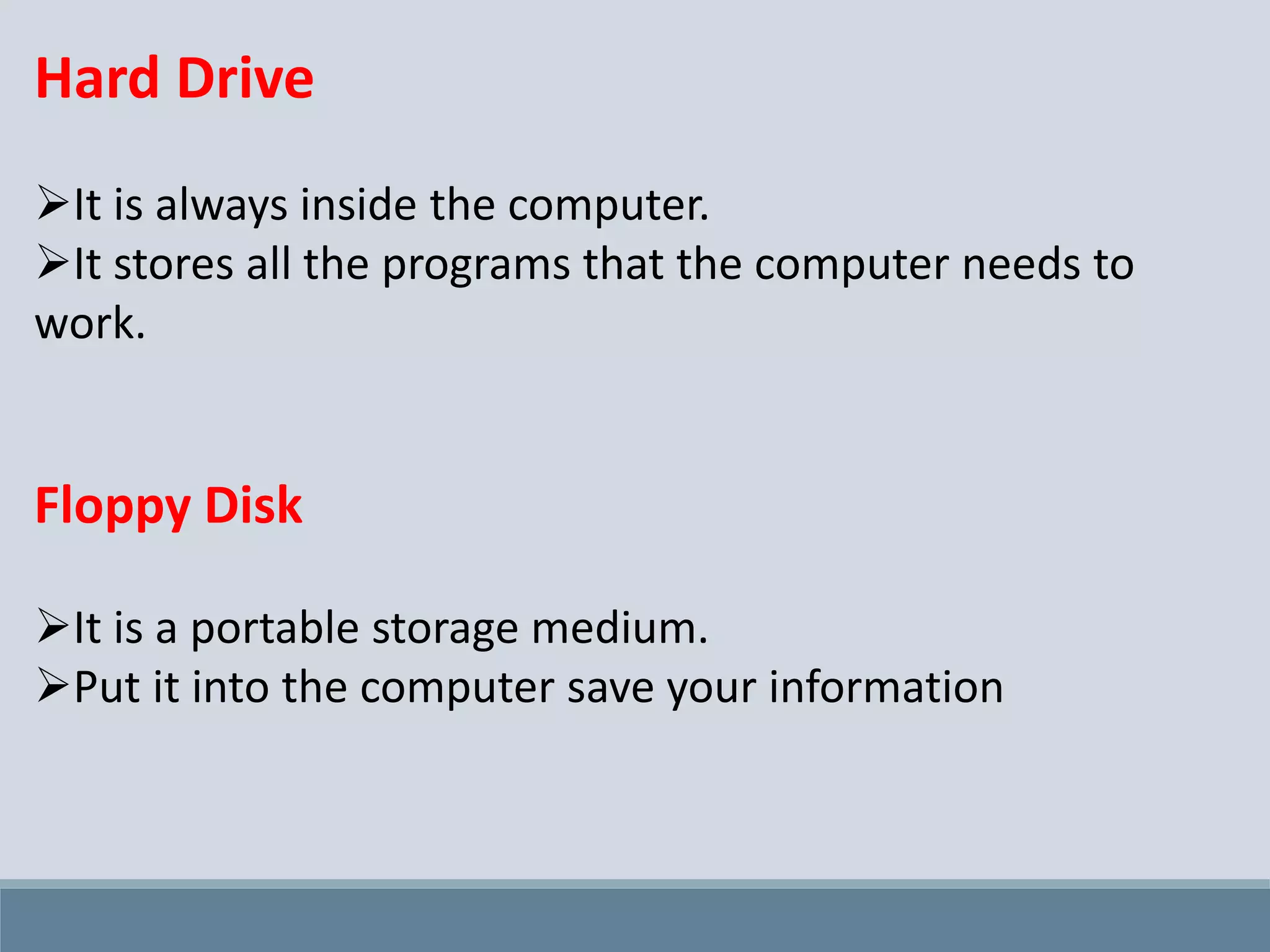
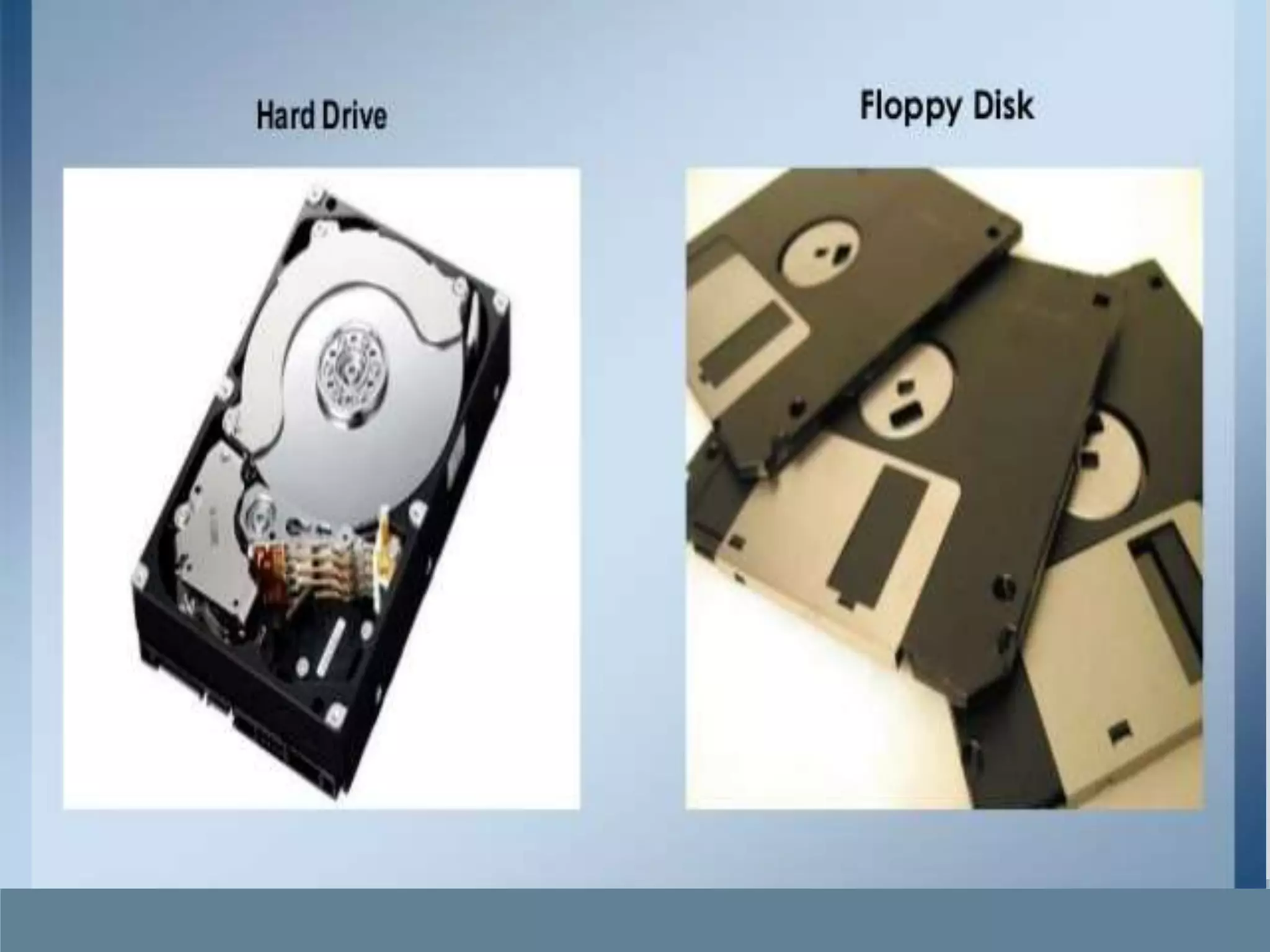
Hard Drive
It is always inside the computer.
It stores all the programs that the computer needs to
work.
Floppy Disk
It is a portable storage medium.
Put it into the computer save your information
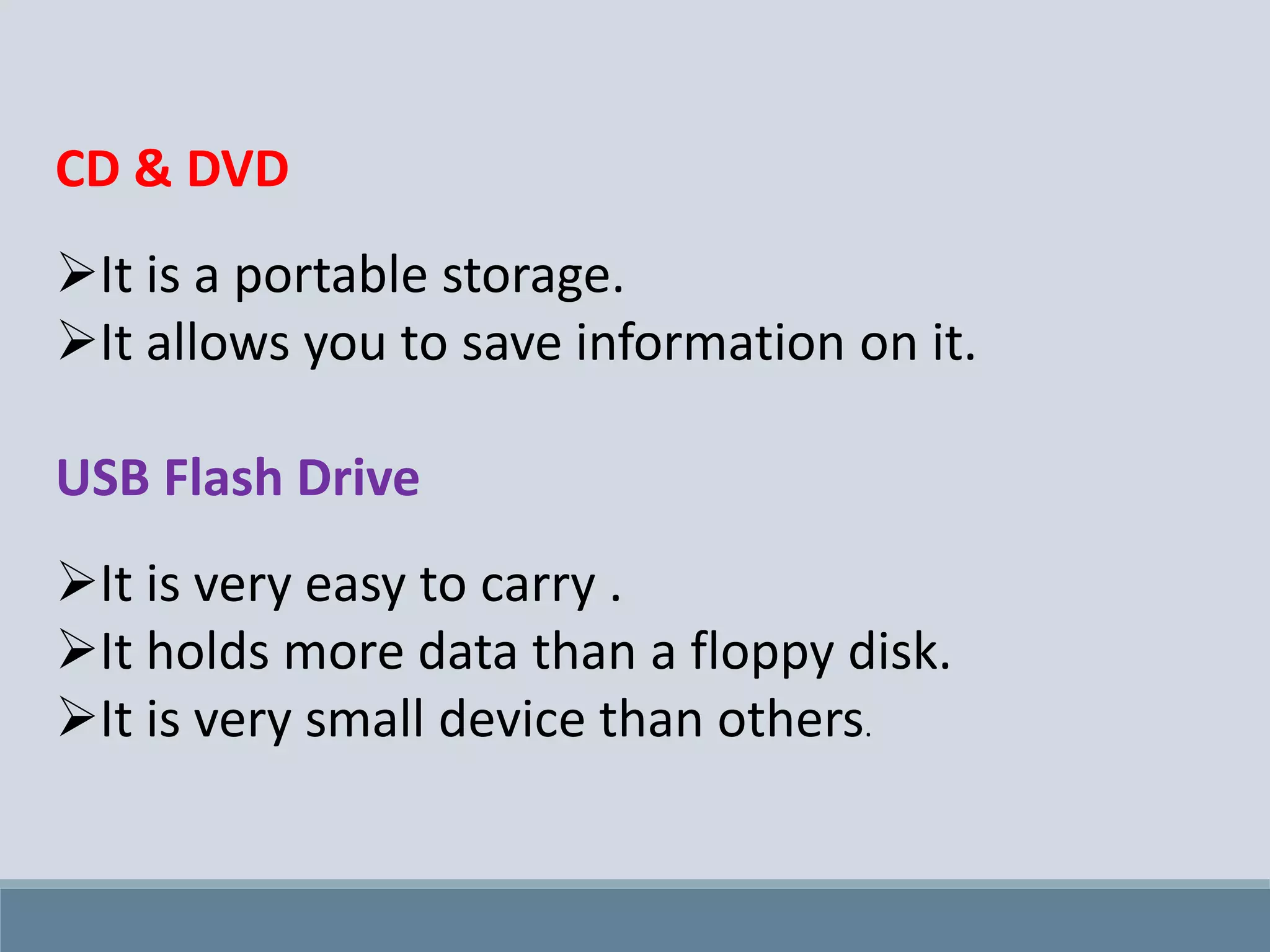
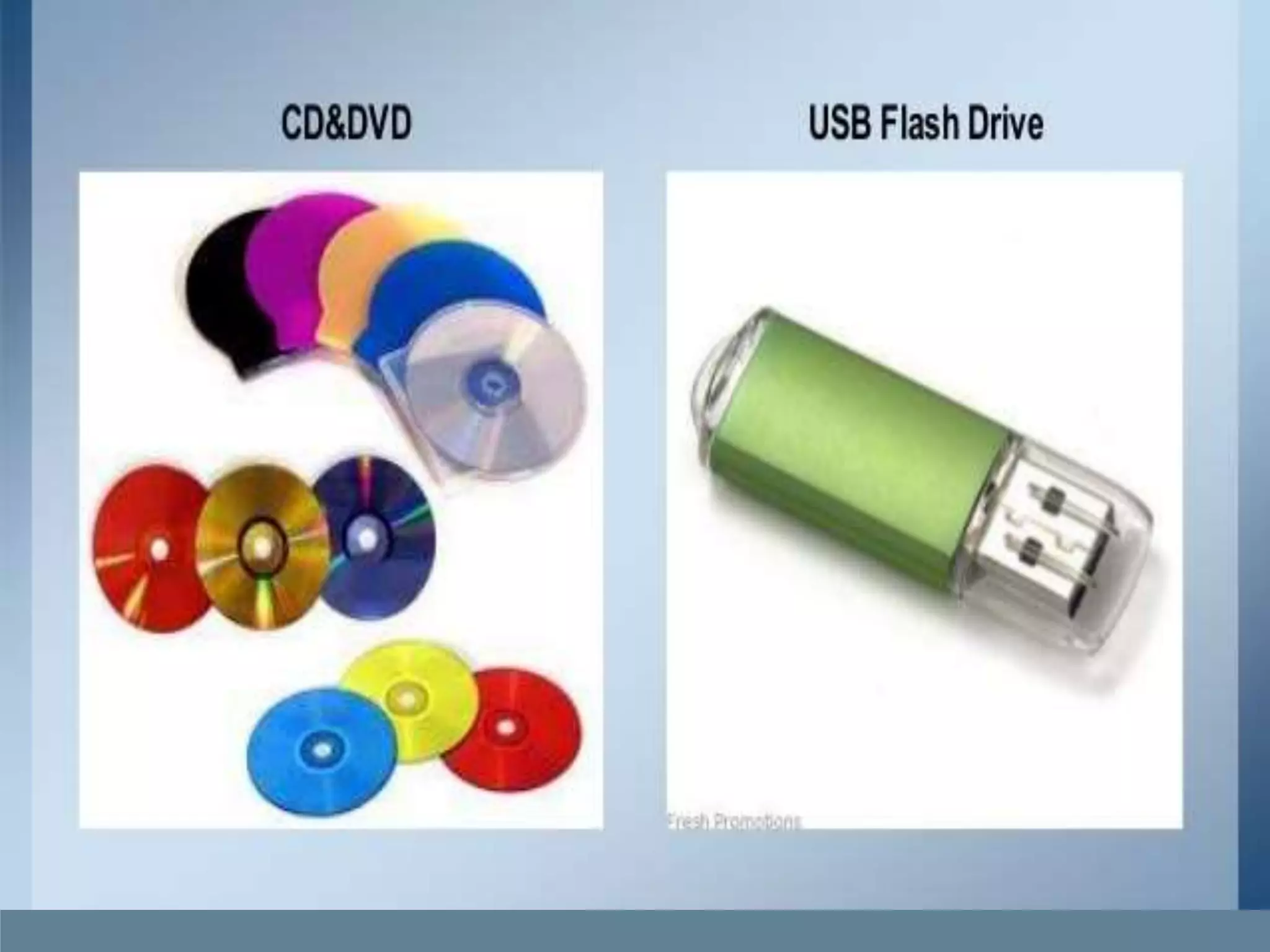
CD & DVD
It is a portable storage.
It allows you to save information on it.
USB Flash Drive
It is very easy to carry .
It holds more data than a floppy disk.
It is very small device than others.
Basic concept of Information Retrieval
“An information retrieval system is an
information system, that is a system used to
store Items of information that need to be
processed, searched, retrieved, and
disseminated to various user populations”
(Salton, 1983)
Major Components of IR
Information retrieval can be divided into several
major constitutes which include:
Database
Search mechanism
Language
Interface
Database
A system whose base, whose key concept is simply a particular way
of handling data and Its objective is to record and maintain
information.
Search mechanism
Information organized systematically that can be searched and
retrieved when a corresponding search mechanism is provided.
Search procedure can be categorized as basic or advance search
procedure.
Capacity of search mechanism determines what retrieval
techniques will be available to users and how information stored in
databases can be retrieved.
Language
 Information relies on language when being processed, transferred
or communicated.
 Language can be identified as natural language and controlled
vocabulary.
Interface
 Interface regularly considered whether or not an information
retrieval system is user Friendly. Quality of interface checked by
interaction mode.
 Determines the ultimate success of a system for information
retrieval.
Retrieval techniques
Major retrieval techniques are:
 Basic Retrieval Techniques
 Advanced Retrieval techniques
Boolean Searching
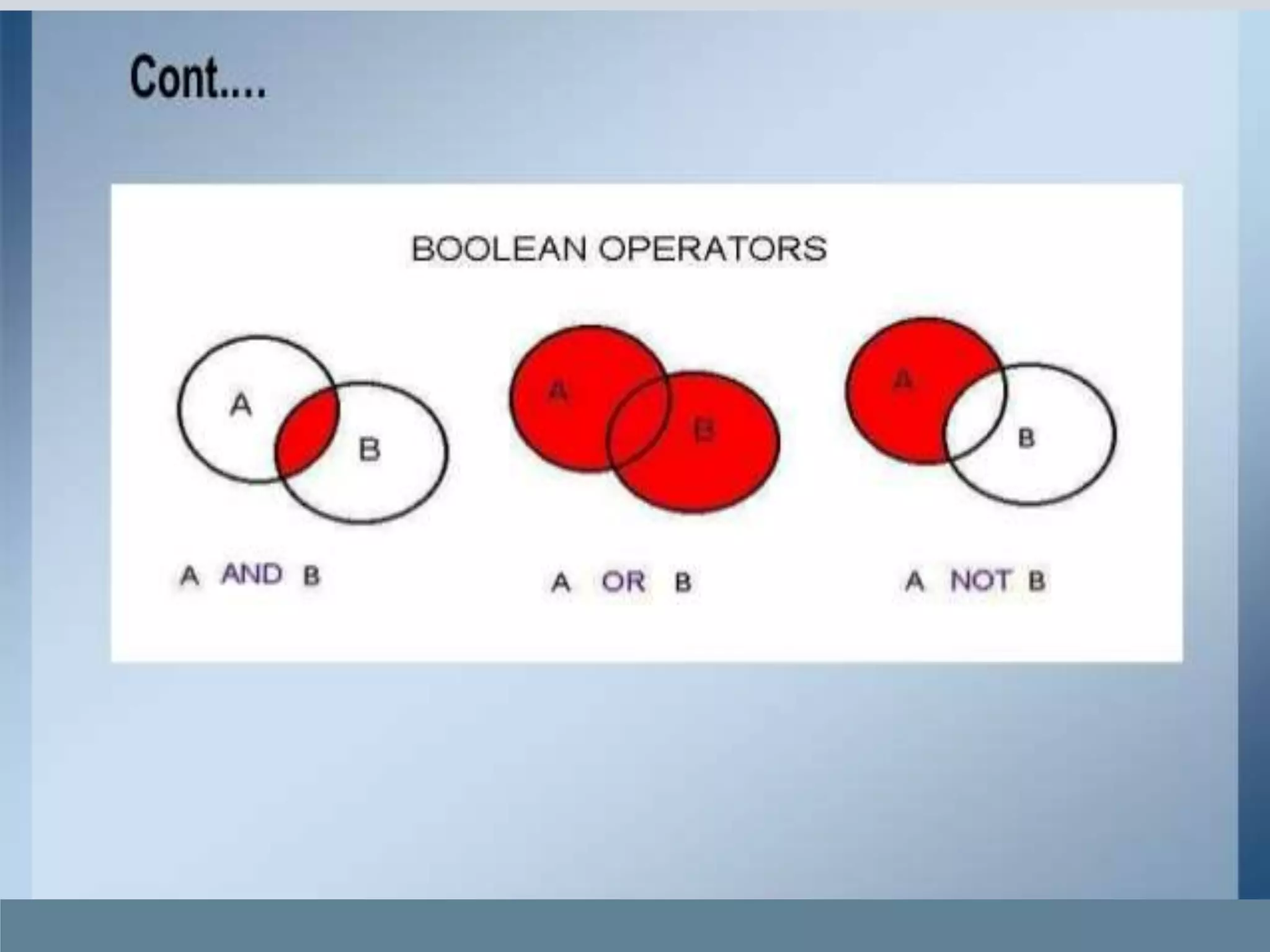
Logical operations are also known as Boolean operators.
 The AND operate for narrowing down a search
The OR operate for broadening a search
The NOT operator for excluding unwanted results
Proximity searching
A proximity search allows you to specify how close two (or
more) words must be to each other in order to register a
match.
There are three types of proximity searches:
Word proximity
Sentence proximity
Paragraph proximity
Range searching
It is most useful with numerical information. The following
options are usually available for range searching.
Greater than (>) less than (<)
Equal to (=)
Not equal to (/=or 0)
Greater than equal to (>=)
Less than or equal to (<=)
Advanced Retrieval Techniques
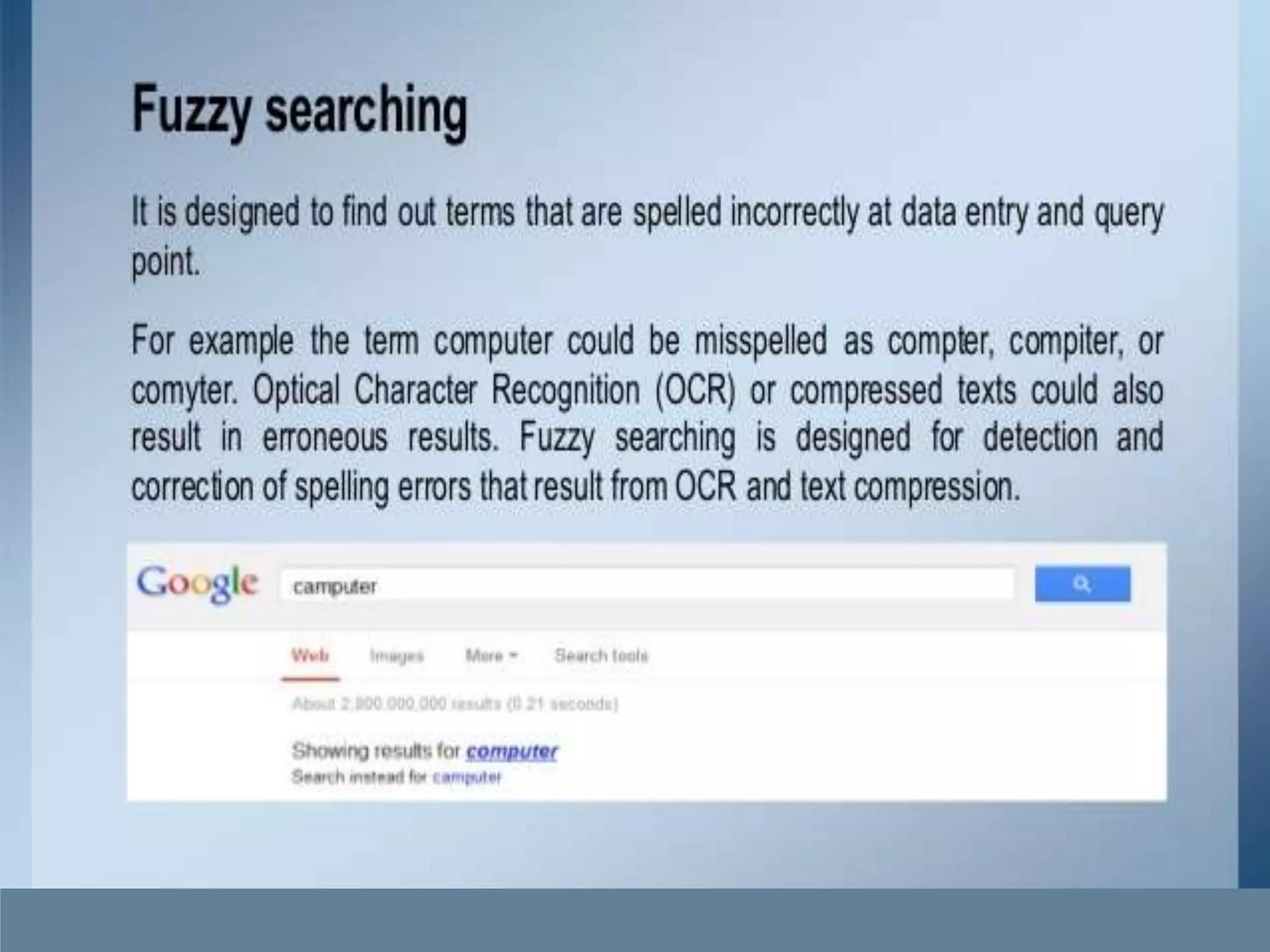
Fuzzy searching
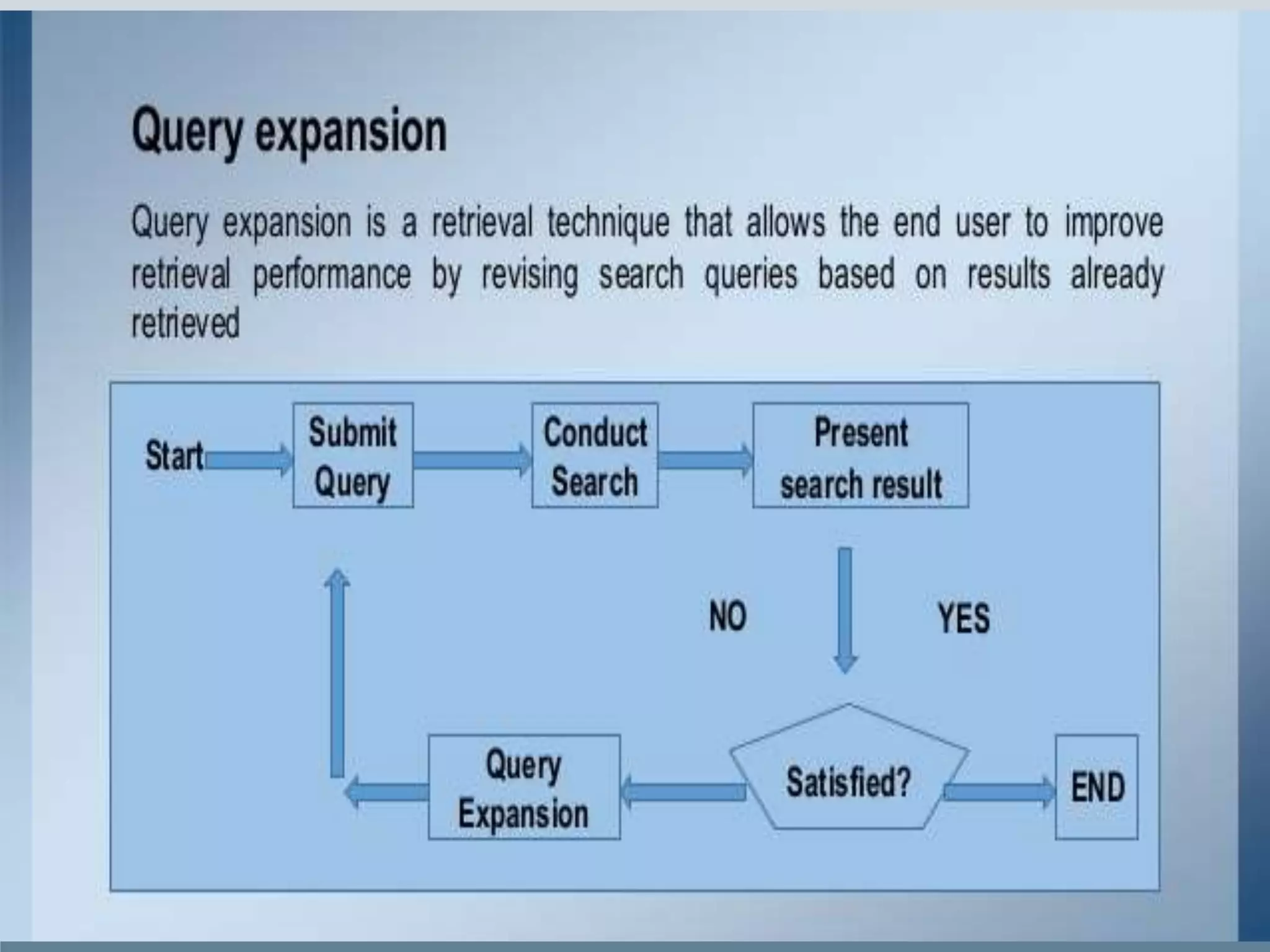
Query expansion
Multiple database searching
•Information Retrieval Systems
• Online systems
• CD-ROM systems
• OPAC
• Web information Retrieval Systems
Online systems
Online information retrieval systems allow the user to search
databases located remotely with the help of the computer and
telecommunication technology.
• Basic searching techniques
•Advanced retrieval techniques
Examples:
Library of congress, University of Punjab Library
Future Trends in Online Information Retrieval
Systems
A great increase in the number of information services that can
be accessed from around the world.

Specialized systems will be more “user oriented,” easily
accessible.
They should be oriented to natural language rathar than
controlled vocabularies.
Computer aided instruction should be incorporated into
systems.
Future of online systems must require less effort to use. They
should adapt to the user rathar than expecting the user to adapt
them. `
Conclusion
Internet and web developments have brought significant
changes to the economics of the information industry,
from which end-users benefits. Through the information
to rage and retrieval system, users can freely or on
payment of a fee access the relevant information.
Sumit Kumar Gupta
M.Lib.I.Sc.
2016-17

Information Storage and Retrieval system (ISRS)

  • 1.
  • 2.
    Information storage andretrieval  Systematic process of collecting and cataloging data so that they can be located and displayed on request. Computers and data processing techniques have made possible to access the high-speed and large amounts of information for government, commercial, and academic purposes.  A branch of computer or library science relating to storage, locating, searching and Selecting, upon demand, relevant data on a given subject. (Encyclopedia of Medical concept)
  • 3.
    Basic concept ofinformation storage It can refer to a place like a storage room where paper records are kept. It can also refer to a Storage device such as a computer hard disk, CD, DVD, or similar device which can hold data.
  • 4.
    Types of Informationstorage media Storage keeps data and information for use in the future. Common storage mediums are: 1.Hard Drive 2.Floppy Disk 3.CD & DVD 4.USB Flash Drive
  • 5.
    Hard Drive It isalways inside the computer. It stores all the programs that the computer needs to work. Floppy Disk It is a portable storage medium. Put it into the computer save your information
  • 7.
    CD & DVD Itis a portable storage. It allows you to save information on it. USB Flash Drive It is very easy to carry . It holds more data than a floppy disk. It is very small device than others.
  • 9.
    Basic concept ofInformation Retrieval “An information retrieval system is an information system, that is a system used to store Items of information that need to be processed, searched, retrieved, and disseminated to various user populations” (Salton, 1983)
  • 10.
    Major Components ofIR Information retrieval can be divided into several major constitutes which include: Database Search mechanism Language Interface
  • 11.
    Database A system whosebase, whose key concept is simply a particular way of handling data and Its objective is to record and maintain information. Search mechanism Information organized systematically that can be searched and retrieved when a corresponding search mechanism is provided. Search procedure can be categorized as basic or advance search procedure. Capacity of search mechanism determines what retrieval techniques will be available to users and how information stored in databases can be retrieved.
  • 12.
    Language  Information relieson language when being processed, transferred or communicated.  Language can be identified as natural language and controlled vocabulary. Interface  Interface regularly considered whether or not an information retrieval system is user Friendly. Quality of interface checked by interaction mode.  Determines the ultimate success of a system for information retrieval.
  • 13.
    Retrieval techniques Major retrievaltechniques are:  Basic Retrieval Techniques  Advanced Retrieval techniques Boolean Searching Logical operations are also known as Boolean operators.  The AND operate for narrowing down a search The OR operate for broadening a search The NOT operator for excluding unwanted results
  • 15.
    Proximity searching A proximitysearch allows you to specify how close two (or more) words must be to each other in order to register a match. There are three types of proximity searches: Word proximity Sentence proximity Paragraph proximity
  • 16.
    Range searching It ismost useful with numerical information. The following options are usually available for range searching. Greater than (>) less than (<) Equal to (=) Not equal to (/=or 0) Greater than equal to (>=) Less than or equal to (<=) Advanced Retrieval Techniques Fuzzy searching Query expansion Multiple database searching
  • 19.
    •Information Retrieval Systems •Online systems • CD-ROM systems • OPAC • Web information Retrieval Systems Online systems Online information retrieval systems allow the user to search databases located remotely with the help of the computer and telecommunication technology. • Basic searching techniques •Advanced retrieval techniques Examples: Library of congress, University of Punjab Library
  • 20.
    Future Trends inOnline Information Retrieval Systems A great increase in the number of information services that can be accessed from around the world. Specialized systems will be more “user oriented,” easily accessible. They should be oriented to natural language rathar than controlled vocabularies. Computer aided instruction should be incorporated into systems. Future of online systems must require less effort to use. They should adapt to the user rathar than expecting the user to adapt them. `
  • 21.
    Conclusion Internet and webdevelopments have brought significant changes to the economics of the information industry, from which end-users benefits. Through the information to rage and retrieval system, users can freely or on payment of a fee access the relevant information.
  • 22.