Information Age
Six Networks that changed our world
Our messages from the mundane to the
memorable_ can be counted, compressed and
reduced to fundamental ‘bits’. This is information.
Information Age tells the story of 200 years of
information and telecommunication networks.
Across six networks, it reveals the hidden
infrastructure and devices that have allowed us to
send more information further and faster than ever
before.
Through 21 transforming moments, it presents the
extraordinary people who have created, used and
been affected by each new wave of technology
o The CABLE network
o The BROADCAST network
o The EXCHANGE network
o The CONSTELLATION network
o The CELL network
o The WEB network
I. The cable network
by Joris and Arthur
It was created in 1835.
Telegraph networks send information from
point to point in the form of electrical
pulses.
Pulses sent from Morse keys travel throught
cables and are received by Morse sounders.
The science museum think this object is
important because this one began the era of
the network.
 The telegraph is the transmitter in the
communication network :
Transmitter
Signal
Receiver
 This invention has changed people’s lives because this
one enable to send a message and receive it quite
quickly.
 … And to communicate faster on long distances.
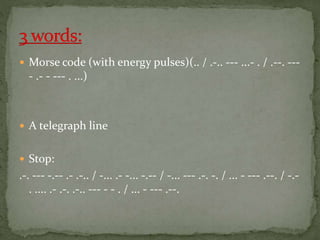
 Morse code (with energy pulses)(.. / .-.. --- ...- . / .--. ---
- .- - --- . ...)
 A telegraph line
 Stop:
.-. --- -.-- .- .-.. / -... .- -... -.-- / -... --- .-. -. / ... - --- .--. / -.-
. .... .- .-. .-.. --- - - . / ... - --- .--.
 The limits on our messages are the way we
communicate because we must give the essential
information.
 But we can’t make or maintain human relationships.
II. The broadcast network
by Mathis and Virgile
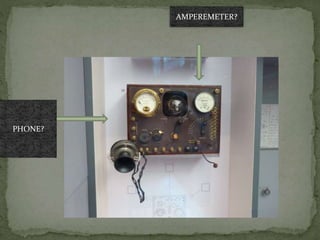
AMPEREMETER?
PHONE?
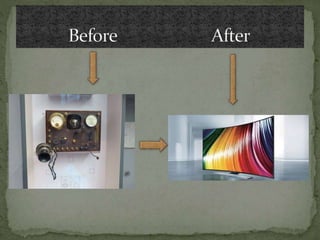
Information
is carried by
electromagnetic signals.
Signals sent out from
transmitters travel
through the air and
are picked up by
many different
receivers
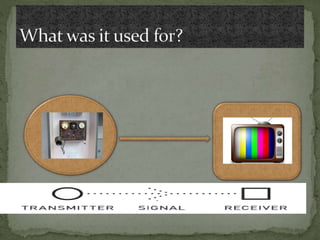
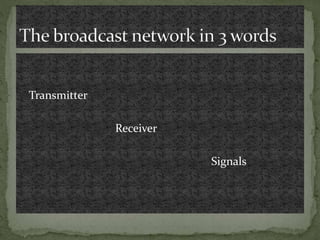
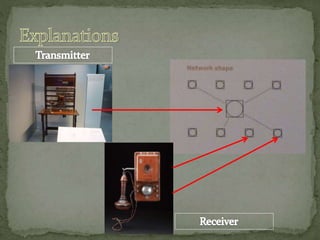
Transmitter
Receiver: lke TV
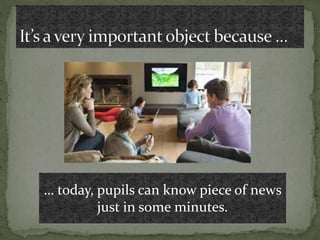
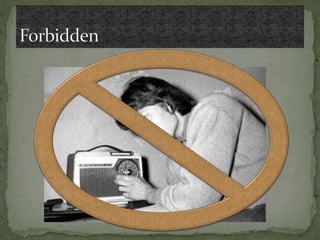
… today, pupils can know piece of news
just in some minutes.
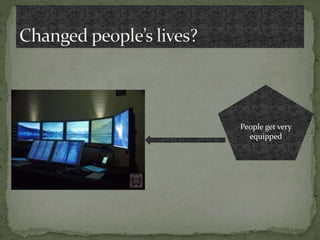
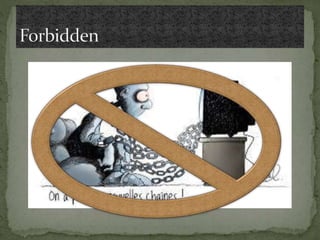
People get very
equipped
Transmitter
Receiver
Signals
People became…….
PEOPLE
BECAME
DEPENDANT!!
!!
III. The exchange network
by Jennyfer and Milaan
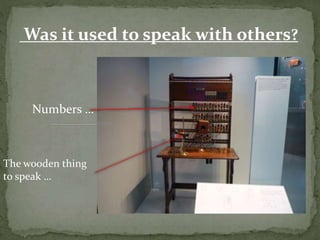
Was it used to speak with others?
The wooden thing
to speak …
Numbers …
- System used to connect telephone calls
with many separate phone.
- One of the oldest switchboards still in
existence
- Beginning of the exchange network and
people being connected together.
 Communication networks need three elements:
…………………………………………..
TRANSMITTER
SIGNAL
RECEIVER
IV. The constellation network
by Bertille and Mathilde
-A satellite ?
- a model ?
- a UFO ?
The satellite Telsar 1
Used to
share the
television
between
Europe and
the USA.
It is the first time a television program could be
directly transmitted in Europe and in the United
States at the same time.
Communication
Signal
Transmitter Receiver
Teslar 1 is a Receiver and a
Transmitter.
People’s lives
Telsar has changed people’s lives
because the information can go faster
with it and they can receive the
pictures.
Now the whole planet could distribute
pictures everywhere in real time.
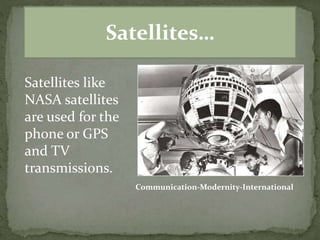
Satellites…
Satellites like
NASA satellites
are used for the
phone or GPS
and TV
transmissions.
Communication-Modernity-International
If all the satellites
disappeared…?
The world will plunges into a
total black, nobody being able
to communicate with nobody.
GPS, television, telephones , the
maritime radars and the control
towers of airports would not be
usable, engendering numerous
dangers.
V. The cell network
by Sacha, Lothaire and Gautier
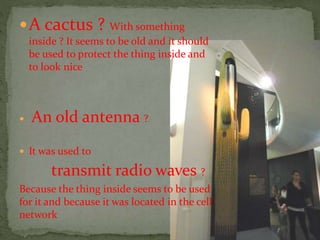
A cactus ? With something
inside ? It seems to be old and it should
be used to protect the thing inside and
to look nice
 An old antenna ?
 It was used to
transmit radio waves ?
Because the thing inside seems to be used
for it and because it was located in the cell
network
 This objet is an antenna like I thought
 It was used to transmit radio waves like I thought
 It is important because it’s beautiful to see and
difficult to differentiate from other cactus and it allows
peoples to phone.
 I think this is both an transmitter and a receiver
 This object has changed people’s life because they
could phone to other people, even if they were in very
foreign countries. All the very interessant things that
happens in town could be transmited to them.
 Three words could be picked up : phone, transmittion,
cact
Phone
Transmission
Cactus
 We don’t think that communication
technology spoils the environnement
because communication is the base of
the human society.
 We must consider gradualy the
environnement
VI. The web network
by Eulalie, Alexandre, Simon
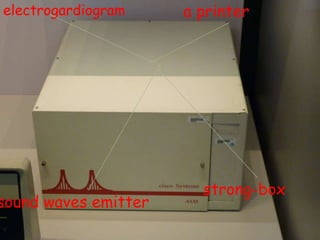
electrogardiogram a printer
sound waves emitter
strong-box
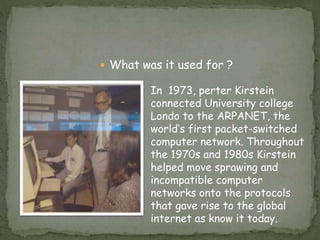
 What was it used for ?
In 1973, perter Kirstein
connected University college
Londo to the ARPANET, the
world’s first packet-switched
computer network. Throughout
the 1970s and 1980s Kirstein
helped move sprawing and
incompatible computer
networks onto the protocols
that gave rise to the global
internet as know it today.
 Information was transmitted faster
Revolution
Speed
Information
The Internet can make us smarter
because it can be useful to learn more and
more things about life and lessons.

Information age

  • 2.
    Information Age Six Networksthat changed our world Our messages from the mundane to the memorable_ can be counted, compressed and reduced to fundamental ‘bits’. This is information. Information Age tells the story of 200 years of information and telecommunication networks. Across six networks, it reveals the hidden infrastructure and devices that have allowed us to send more information further and faster than ever before. Through 21 transforming moments, it presents the extraordinary people who have created, used and been affected by each new wave of technology
  • 3.
    o The CABLEnetwork o The BROADCAST network o The EXCHANGE network o The CONSTELLATION network o The CELL network o The WEB network
  • 4.
    I. The cablenetwork by Joris and Arthur
  • 6.
    It was createdin 1835. Telegraph networks send information from point to point in the form of electrical pulses. Pulses sent from Morse keys travel throught cables and are received by Morse sounders. The science museum think this object is important because this one began the era of the network.
  • 7.
     The telegraphis the transmitter in the communication network : Transmitter Signal Receiver
  • 8.
     This inventionhas changed people’s lives because this one enable to send a message and receive it quite quickly.  … And to communicate faster on long distances.
  • 9.
     Morse code(with energy pulses)(.. / .-.. --- ...- . / .--. --- - .- - --- . ...)  A telegraph line  Stop: .-. --- -.-- .- .-.. / -... .- -... -.-- / -... --- .-. -. / ... - --- .--. / -.- . .... .- .-. .-.. --- - - . / ... - --- .--.
  • 10.
     The limitson our messages are the way we communicate because we must give the essential information.  But we can’t make or maintain human relationships.
  • 11.
    II. The broadcastnetwork by Mathis and Virgile
  • 12.
  • 13.
  • 14.
    Signals sent outfrom transmitters travel through the air and are picked up by many different receivers
  • 15.
  • 16.
    … today, pupilscan know piece of news just in some minutes.
  • 19.
  • 20.
  • 21.
  • 24.
  • 25.
    III. The exchangenetwork by Jennyfer and Milaan
  • 26.
    Was it usedto speak with others? The wooden thing to speak … Numbers …
  • 27.
    - System usedto connect telephone calls with many separate phone. - One of the oldest switchboards still in existence - Beginning of the exchange network and people being connected together.
  • 28.
     Communication networksneed three elements: ………………………………………….. TRANSMITTER SIGNAL RECEIVER
  • 30.
    IV. The constellationnetwork by Bertille and Mathilde
  • 31.
    -A satellite ? -a model ? - a UFO ?
  • 32.
    The satellite Telsar1 Used to share the television between Europe and the USA. It is the first time a television program could be directly transmitted in Europe and in the United States at the same time.
  • 33.
  • 34.
    People’s lives Telsar haschanged people’s lives because the information can go faster with it and they can receive the pictures. Now the whole planet could distribute pictures everywhere in real time.
  • 35.
    Satellites… Satellites like NASA satellites areused for the phone or GPS and TV transmissions. Communication-Modernity-International
  • 36.
    If all thesatellites disappeared…? The world will plunges into a total black, nobody being able to communicate with nobody. GPS, television, telephones , the maritime radars and the control towers of airports would not be usable, engendering numerous dangers.
  • 37.
    V. The cellnetwork by Sacha, Lothaire and Gautier
  • 38.
    A cactus ?With something inside ? It seems to be old and it should be used to protect the thing inside and to look nice  An old antenna ?  It was used to transmit radio waves ? Because the thing inside seems to be used for it and because it was located in the cell network
  • 39.
     This objetis an antenna like I thought  It was used to transmit radio waves like I thought  It is important because it’s beautiful to see and difficult to differentiate from other cactus and it allows peoples to phone.
  • 40.
     I thinkthis is both an transmitter and a receiver
  • 41.
     This objecthas changed people’s life because they could phone to other people, even if they were in very foreign countries. All the very interessant things that happens in town could be transmited to them.
  • 42.
     Three wordscould be picked up : phone, transmittion, cact
  • 43.
  • 44.
     We don’tthink that communication technology spoils the environnement because communication is the base of the human society.  We must consider gradualy the environnement
  • 45.
    VI. The webnetwork by Eulalie, Alexandre, Simon
  • 46.
    electrogardiogram a printer soundwaves emitter strong-box
  • 47.
     What wasit used for ? In 1973, perter Kirstein connected University college Londo to the ARPANET, the world’s first packet-switched computer network. Throughout the 1970s and 1980s Kirstein helped move sprawing and incompatible computer networks onto the protocols that gave rise to the global internet as know it today.
  • 50.
     Information wastransmitted faster
  • 51.
  • 52.
    The Internet canmake us smarter because it can be useful to learn more and more things about life and lessons.