Fundamentals of Human Geography
36
Unit-III
Chapter-5
Secondary Activities
All economic activities namely primary,
secondary, tertiary and quaternary, revolve
around obtaining and utilising resources
necessary for survival.
Secondary activities add value to natural
resources by transforming raw materials into
valuable products. Cotton in the boll has limited
use but after it is transformed into yarn,
becomes more valuable and can be used for
making clothes. Iron ore, cannot be used;
directly from the mines, but after being
converted into steel it gets its value and can be
used for making many valuable machines,
tools, etc. The same is true of most of the
materials from the farm, forest, mine and the
sea. Secondary activities, therefore, are
concerned with manufacturing, processing and
construction (infrastructure) industries.
MANUF
MANUF
MANUF
MANUF
MANUFA
A
A
A
ACTURING
CTURING
CTURING
CTURING
CTURING
Manufacturing involves a full array of
production from handicrafts to moulding iron
and steel and stamping out plastic toys to
assembling delicate computer components or
space vehicles. In each of these processes, the
common characteristics are the application of
power, mass production of identical products
and specialised labour in factory settings for
the production of standardised commodities.
Manufacturing may be done with modern
power and machinery or it may still be very
primitive. Most of the Third World countries still
‘manufacture’ in the literal sense of the term. It
is difficult to present a full picture of all the
manufacturers in these countries. More
emphasis is given to the kind of ‘industrial’
activity which involves less complicated systems
of production.
Characteristics of Modern Large Scale
Manufacturing
Modern large scale manufacturing has the
following characteristics:
Specialisation of Skills/Methods of
Production
Under the ‘craft’ method factories produce only
a few pieces which are made-to-order. So the
costs are high. On the other hand, mass
Reprint 2025-26
Secondary Activities
Secondary Activities 37
37
37
37
37
production involves production of large
quantities of standardised parts by each worker
performing only one task repeatedly.
‘Manufacturing’ Industry and
‘Manufacturing Industry’
Manufacturing literally means ‘
‘‘
‘
‘to
make by hand’. However, now it
includes goods ‘made by machines’.
It is essentially a process which
involves transforming raw materials
into finished goods of higher value
for sale in local or distant markets.
Conceptually, an industry is a
geographically located manufacturing
unit maintaining books of accounts
and, records under a management
system. As the term industry is
comprehensive, it is also used as
synonymous with ‘manufacturing’
When one uses terms like ‘steel
industry’ and ‘chemical industry’ one
thinks of factories and processes.
But there are many secondary
activities which are not carried on in
factories such as what is now called
the ‘entertainment industry’ and
Tourism industry, etc. So for clarity
the longer expression ‘manufacturing
industry’ is used.
Mechanisation
Mechanisation
Mechanisation
Mechanisation
Mechanisation
Mechanisation refers to using gadgets which
accomplish tasks. Automation (without aid of
human thinking during the manufacturing
process) is the advanced stage of mechanisation.
Automatic factories with feedback and closed-
loop computer control systems where machines
are developed to ‘think’, have sprung up all over
the world.
Technological Innovation
Technological innovations through research
and development strategy are an important
aspect of modern manufacturing for quality
control, eliminating waste and inefficiency, and
combating pollution.
Organisational Structure and Stratification
Modern manufacturing is characterised by a
complex machine technology and extreme
specialisation and division of labour for
producing more goods with less efforts and low
costs. It also requires vast capital, large
organisations and executive bureaucracy for a
large scale manufacturing industry.
Uneven Geographic Distribution
Major concentrations of modern manufacturing
have flourished in a few number of places. These
cover less than 10 per cent of the world’s land
area. These nations have become the centres of
economic and political power. However, in terms
of the total area covered, manufacturing sites
are much less conspicuous and concentrated
on much smaller areas than that of agriculture
due to greater intensity of processes. For
example, 2.5 sq km of the American corn belt
usually includes about four large farms
employing about 10-20 workers supporting
50-100 persons. But this same area could
contain several large integrated factories and
employ thousands of workers.
Why do Large-scale Industries choose
different locations?
Industries maximise profits by reducing
costs. Therefore, industries should be located
at points where the production costs are
minimum. Some of the factors influencing
industrial locations are as under:
Access to Market
Access to Market
Access to Market
Access to Market
Access to Market
The existence of a market for manufactured
goods is the most important factor in the location
of industries. ‘Market’ means people who have a
demand for these goods and also have the
purchasing power (ability to purchase) to be able
to purchase from the sellers at a place. Remote
areas inhabited by a few people offer small
markets. The developed regions of Europe, North
America, Japan and Australia provide large
global markets as the purchasing power of the
people is very high. The densely populated
regions of South and South-east Asia also
Reprint 2025-26
Fundamentals of Human Geography
38
provide large markets. Some industries, such
as aircraft manufacturing, have a global market.
The arms industry also has global markets.
Access to Raw Material
Raw material used by industries should be
cheap and easy to transport. Industries based
on cheap, bulky and weight-losing material
(ores) are located close to the sources of raw
material such as steel, sugar, and cement
industries. Perishability is a vital factor for the
industry to be located closer to the source of
the raw material. Agro-processing and dairy
products are processed close to the sources of
farm produce or milk supply respectively.
Access to Labour Supply
Labour supply is an important factor in the
location of industries. Some types of
manufacturing still require skilled labour.
Increasing mechanisation, automation and
flexibility of industrial processes have reduced
the dependence of industry upon the labours.
Access to Sources of Energy
Industries which use more power are located
close to the source of the energy supply such
as the aluminium industry.
Earlier coal was the main source of energy,
today hydroelectricity and petroleum are also
important sources of energy for many
industries.
Access to Transportation and
Communication Facilities
Speedy and efficient transport facilities to carry
raw materials to the factory and to move finished
goods to the market are essential for the
development of industries. The cost of transport
plays an important role in the location of
industrial units. Western Europe and eastern
North America have a highly developed transport
system which has always induced the
concentrationofindustriesintheseareas.Modern
industry is inseparably tied to transportation
systems. Improvements in transportation led to
integrated economic development and regional
specialisation of manufacturing.
Communication is also an important need
for industries for the exchange and
management of information.
Government Policy
Governments adopt ‘regional policies’ to
promote ‘balanced’ economic development and
hence set up industries in particular areas.
Access to Agglomeration Economies/
Links between Industries
Many industries benefit from nearness to a
leader-industry and other industries. These
benefits are termed as agglomeration
economies. Savings are derived from the
linkages which exist between different
industries.
These factors operate together to determine
industrial location.
Foot Loose Industries
Foot loose industries can be located
in a wide variety of places. They are
not dependent on any specific raw
material, weight losing or otherwise.
They largely depend on component
parts which can be obtained
anywhere. They produce in small
quantity and also employ a small
labour force. These are generally not
polluting industries. The important
factor in their location is accessibility
by road network.
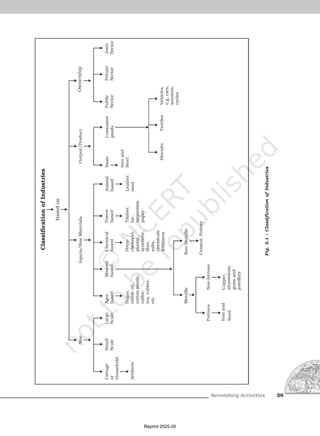
Classification of Manufacturing Industries
Manufacturing industries are classified on the
basis of their size, inputs/raw materials,
output/products and ownership (Fig. 5.1).
Industries based on Size
The amount of capital invested, number of
workers employed and volume of production
determine the size of industry. Accordingly,
industries may be classified into household or
cottage, small-scale and large-scale.
Reprint 2025-26
Secondary Activities 39
Fig.
5.1
:
Classification
of
Industries
Reprint 2025-26
Fundamentals of Human Geography
40
HOUSEHOLD INDUSTRIES OR
CO
CO
CO
CO
COTT
TT
TT
TT
TTA
A
A
A
AGE MANUF
GE MANUF
GE MANUF
GE MANUF
GE MANUFA
A
A
A
ACTURING
CTURING
CTURING
CTURING
CTURING
It is the smallest manufacturing unit. The
artisans use local raw materials and simple
tools to produce everyday goods in their homes
with the help of their family members or part-
time labour. Finished products may be for
consumption in the same household or, for sale
in local (village) markets, or, for barter. Capital
and transportation do not wield much influence
as this type of manufacturing has low
commercial significance and most of the tools
are devised locally.
Some common everyday products
produced in this sector of manufacturing
include foodstuffs, fabrics, mats, containers,
tools, furniture, shoes, and figurines from wood
lotandforest,shoes,thongsandotherarticlesfrom
leather; pottery and bricks from clays and stones.
Goldsmiths make jewellery of gold, silver and
bronze. Some artefacts and crafts are made out of
bamboo, wood obtained locally from the forests.
Small Scale Manufacturing
Small scale manufacturing is distinguished
from household industries by its production
techniques and place of manufacture (a
workshop outside the home/cottage of the
producer). This type of manufacturing uses
local raw material, simple power-driven
machines and semi-skilled labour. It provides
employment and raises local purchasing power.
Therefore, countries like India, China, Indonesia
and Brazil, etc. have developed labour-intensive
small scale manufacturing in order to provide
employment to their population.
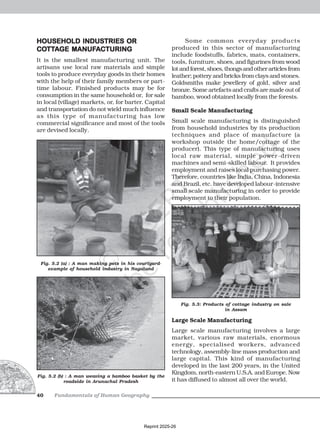
Fig. 5.2 (a) : A man making pots in his courtyard-
example of household industry in Nagaland
Fig. 5.2 (b) : A man weaving a bamboo basket by the
roadside in Arunachal Pradesh
Fig. 5.3: Products of cottage industry on sale
in Assam
Large Scale Manufacturing
Large scale manufacturing involves a large
market, various raw materials, enormous
energy, specialised workers, advanced
technology, assembly-line mass production and
large capital. This kind of manufacturing
developed in the last 200 years, in the United
Kingdom, north-eastern U.S.A. and Europe. Now
it has diffused to almost all over the world.
Reprint 2025-26
Secondary Activities 41
On the basis of the system of large scale
manufacturing, the world’s major industrial
regions may be grouped under two broad types,
namely
(i) traditional large-scale industrial regions
which are thickly clustered in a few more
developed countries.
(ii) high-technology large scale industrial
regions which have diffused to less
developed countries.
Industries based on Inputs/Raw Materials
On the basis of the raw materials used, the
industries are classified as: (a) agro-based; (b)
mineral based; (c) chemical based; (d) forest
based: and (e) animal based.
(a) Agro based Industries
Agro processing involves the processing of raw
materials from the field and the farm into finished
products for rural and urban markets. Major
agro-processing industries are food processing,
sugar, pickles, fruits juices, beverages (tea, coffee
and cocoa), spices and oils fats and textiles
(cotton, jute, silk), rubber, etc.
Food Processing
Agro processing includes canning, producing
cream, fruit processing and confectionery. While
some preserving techniques, such as drying,
fermenting and pickling, have been known since
ancient times, these had limited applications to
cater to the pre-Industrial Revolution demands.
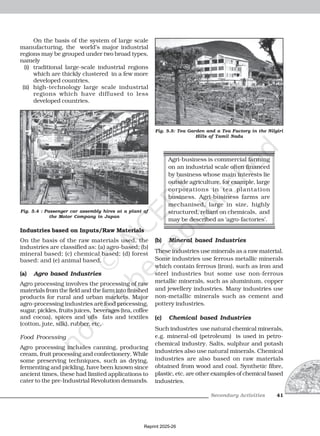
Fig. 5.4 : Passenger car assembly hires at a plant of
the Motor Company in Japan
Agri-business is commercial farming
on an industrial scale often financed
by business whose main interests lie
outside agriculture, for example, large
corporations in tea plantation
business. Agri-business farms are
mechanised, large in size, highly
structured, reliant on chemicals, and
may be described as ‘agro-factories’.
(b) Mineral based Industries
These industries use minerals as a raw material.
Some industries use ferrous metallic minerals
which contain ferrous (iron), such as iron and
steel industries but some use non-ferrous
metallic minerals, such as aluminium, copper
and jewellery industries. Many industries use
non-metallic minerals such as cement and
pottery industries.
(c) Chemical based Industries
Such industries use natural chemical minerals,
e.g. mineral-oil (petroleum) is used in petro-
chemical industry. Salts, sulphur and potash
industries also use natural minerals. Chemical
industries are also based on raw materials
obtained from wood and coal. Synthetic fibre,
plastic, etc. are other examples of chemical based
industries.
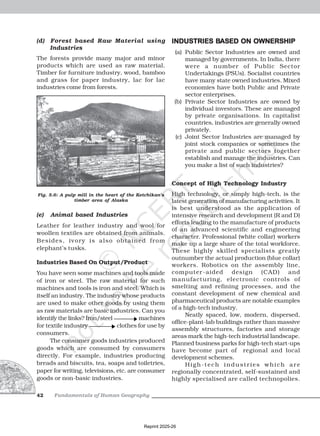
Fig. 5.5: Tea Garden and a Tea Factory in the Nilgiri
Hills of Tamil Nadu
Reprint 2025-26
Fundamentals of Human Geography
42
(d) Forest based Raw Material using
Industries
The forests provide many major and minor
products which are used as raw material.
Timber for furniture industry, wood, bamboo
and grass for paper industry, lac for lac
industries come from forests.
INDUSTRIES B
INDUSTRIES B
INDUSTRIES B
INDUSTRIES B
INDUSTRIES BASED ON OWNERSHIP
ASED ON OWNERSHIP
ASED ON OWNERSHIP
ASED ON OWNERSHIP
ASED ON OWNERSHIP
(a) Public Sector Industries are owned and
managed by governments. In India, there
were a number of Public Sector
Undertakings (PSUs). Socialist countries
have many state owned industries. Mixed
economies have both Public and Private
sector enterprises.
(b) Private Sector Industries are owned by
individual investors. These are managed
by private organisations. In capitalist
countries, industries are generally owned
privately.
(c) Joint Sector Industries are managed by
joint stock companies or sometimes the
private and public sectors together
establish and manage the industries. Can
you make a list of such industries?
Concept of High Technology Industry
High technology, or simply high-tech, is the
latest generation of manufacturing activities. It
is best understood as the application of
intensive research and development (R and D)
efforts leading to the manufacture of products
of an advanced scientific and engineering
character. Professional (white collar) workers
make up a large share of the total workforce.
These highly skilled specialists greatly
outnumber the actual production (blue collar)
workers. Robotics on the assembly line,
computer-aided design (CAD) and
manufacturing, electronic controls of
smelting and refining processes, and the
constant development of new chemical and
pharmaceutical products are notable examples
of a high-tech industry.
Neatly spaced, low, modern, dispersed,
office-plant-lab buildings rather than massive
assembly structures, factories and storage
areas mark the high-tech industrial landscape.
Planned business parks for high-tech start-ups
have become part of regional and local
development schemes.
High-tech industries which are
regionally concentrated, self-sustained and
highly specialised are called technopolies.
(e) Animal based Industries
Leather for leather industry and wool for
woollen textiles are obtained from animals.
Besides, ivory is also obtained from
elephant’s tusks.
Industries Based On Output/Product
You have seen some machines and tools made
of iron or steel. The raw material for such
machines and tools is iron and steel. Which is
itself an industry. The industry whose products
are used to make other goods by using them
as raw materials are basic industries. Can you
identify the links? Iron/steel machines
for textile industry clothes for use by
consumers.
The consumer goods industries produced
goods which are consumed by consumers
directly. For example, industries producing
breads and biscuits, tea, soaps and toiletries,
paper for writing, televisions, etc. are consumer
goods or non-basic industries.
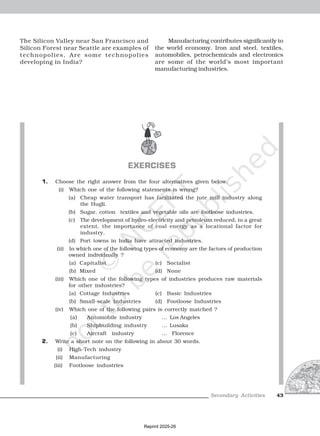
Fig. 5.6: A pulp mill in the heart of the Ketchikan’s
timber area of Alaska
Reprint 2025-26
Secondary Activities
Secondary Activities 43
EXERCISES
1. Choose the right answer from the four alternatives given below.
(i) Which one of the following statements is wrong?
(a) Cheap water transport has facilitated the jute mill industry along
the Hugli.
(b) Sugar, cotton textiles and vegetable oils are footloose industries.
(c) The development of hydro-electricity and petroleum reduced, to a great
extent, the importance of coal energy as a locational factor for
industry.
(d) Port towns in India have attracted industries.
(ii) In which one of the following types of economy are the factors of production
owned individually ?
(a) Capitalist (c) Socialist
(b) Mixed (d) None
(iii) Which one of the following types of industries produces raw materials
for other industries?
(a) Cottage Industries (c) Basic Industries
(b) Small-scale Industries (d) Footloose Industries
(iv) Which one of the following pairs is correctly matched ?
(a) Automobile industry … Los Angeles
(b) Shipbuilding industry … Lusaka
(c) Aircraft industry … Florence
2. Write a short note on the following in about 30 words.
(i) High-Tech industry
(ii) Manufacturing
(iii) Footloose industries
The Silicon Valley near San Francisco and
Silicon Forest near Seattle are examples of
technopolies. Are some technopolies
developing in India?
Manufacturing contributes significantly to
the world economy. Iron and steel, textiles,
automobiles, petrochemicals and electronics
are some of the world’s most important
manufacturing industries.
Reprint 2025-26
Fundamentals of Human Geography
44
3. Answer the following in not more than 150 words.
(i) Differentiate between primary and secondary activities.
(ii) Discuss the major trends of modern industrial activities especially in
the developed countries of the world.
(iii) Explain why high-tech industries in many countries are being attracted
to the peripheral areas of major metropolitan centres.
(iv) Africa has immense natural resources and yet it is industrially the most
backward continent. Comment.
Project/Activity
(i) Carry out a survey in your school premises of the factory-made goods
used by students and the staff.
(ii) Find out the meaning of the terms bio-degradable and non-
biodegradable. Which kind of material is better to use? Why?
(iii) Look around and make a list of the global brands, their logos and
products.
Reprint 2025-26

Humans do not die they live happily without

  • 1.
    Fundamentals of HumanGeography 36 Unit-III Chapter-5 Secondary Activities All economic activities namely primary, secondary, tertiary and quaternary, revolve around obtaining and utilising resources necessary for survival. Secondary activities add value to natural resources by transforming raw materials into valuable products. Cotton in the boll has limited use but after it is transformed into yarn, becomes more valuable and can be used for making clothes. Iron ore, cannot be used; directly from the mines, but after being converted into steel it gets its value and can be used for making many valuable machines, tools, etc. The same is true of most of the materials from the farm, forest, mine and the sea. Secondary activities, therefore, are concerned with manufacturing, processing and construction (infrastructure) industries. MANUF MANUF MANUF MANUF MANUFA A A A ACTURING CTURING CTURING CTURING CTURING Manufacturing involves a full array of production from handicrafts to moulding iron and steel and stamping out plastic toys to assembling delicate computer components or space vehicles. In each of these processes, the common characteristics are the application of power, mass production of identical products and specialised labour in factory settings for the production of standardised commodities. Manufacturing may be done with modern power and machinery or it may still be very primitive. Most of the Third World countries still ‘manufacture’ in the literal sense of the term. It is difficult to present a full picture of all the manufacturers in these countries. More emphasis is given to the kind of ‘industrial’ activity which involves less complicated systems of production. Characteristics of Modern Large Scale Manufacturing Modern large scale manufacturing has the following characteristics: Specialisation of Skills/Methods of Production Under the ‘craft’ method factories produce only a few pieces which are made-to-order. So the costs are high. On the other hand, mass Reprint 2025-26
  • 2.
    Secondary Activities Secondary Activities SecondaryActivities Secondary Activities Secondary Activities 37 37 37 37 37 production involves production of large quantities of standardised parts by each worker performing only one task repeatedly. ‘Manufacturing’ Industry and ‘Manufacturing Industry’ Manufacturing literally means ‘ ‘‘ ‘ ‘to make by hand’. However, now it includes goods ‘made by machines’. It is essentially a process which involves transforming raw materials into finished goods of higher value for sale in local or distant markets. Conceptually, an industry is a geographically located manufacturing unit maintaining books of accounts and, records under a management system. As the term industry is comprehensive, it is also used as synonymous with ‘manufacturing’ When one uses terms like ‘steel industry’ and ‘chemical industry’ one thinks of factories and processes. But there are many secondary activities which are not carried on in factories such as what is now called the ‘entertainment industry’ and Tourism industry, etc. So for clarity the longer expression ‘manufacturing industry’ is used. Mechanisation Mechanisation Mechanisation Mechanisation Mechanisation Mechanisation refers to using gadgets which accomplish tasks. Automation (without aid of human thinking during the manufacturing process) is the advanced stage of mechanisation. Automatic factories with feedback and closed- loop computer control systems where machines are developed to ‘think’, have sprung up all over the world. Technological Innovation Technological Innovation Technological Innovation Technological Innovation Technological Innovation Technological innovations through research and development strategy are an important aspect of modern manufacturing for quality control, eliminating waste and inefficiency, and combating pollution. Organisational Structure and Stratification Organisational Structure and Stratification Organisational Structure and Stratification Organisational Structure and Stratification Organisational Structure and Stratification Modern manufacturing is characterised by a complex machine technology and extreme specialisation and division of labour for producing more goods with less efforts and low costs. It also requires vast capital, large organisations and executive bureaucracy for a large scale manufacturing industry. Uneven Geographic Distribution Uneven Geographic Distribution Uneven Geographic Distribution Uneven Geographic Distribution Uneven Geographic Distribution Major concentrations of modern manufacturing have flourished in a few number of places. These cover less than 10 per cent of the world’s land area. These nations have become the centres of economic and political power. However, in terms of the total area covered, manufacturing sites are much less conspicuous and concentrated on much smaller areas than that of agriculture due to greater intensity of processes. For example, 2.5 sq km of the American corn belt usually includes about four large farms employing about 10-20 workers supporting 50-100 persons. But this same area could contain several large integrated factories and employ thousands of workers. Why do Large-scale Industries choose different locations? Industries maximise profits by reducing costs. Therefore, industries should be located at points where the production costs are minimum. Some of the factors influencing industrial locations are as under: Access to Market Access to Market Access to Market Access to Market Access to Market The existence of a market for manufactured goods is the most important factor in the location of industries. ‘Market’ means people who have a demand for these goods and also have the purchasing power (ability to purchase) to be able to purchase from the sellers at a place. Remote areas inhabited by a few people offer small markets. The developed regions of Europe, North America, Japan and Australia provide large global markets as the purchasing power of the people is very high. The densely populated regions of South and South-east Asia also Reprint 2025-26
  • 3.
    Fundamentals of HumanGeography 38 provide large markets. Some industries, such as aircraft manufacturing, have a global market. The arms industry also has global markets. Access to Raw Material Raw material used by industries should be cheap and easy to transport. Industries based on cheap, bulky and weight-losing material (ores) are located close to the sources of raw material such as steel, sugar, and cement industries. Perishability is a vital factor for the industry to be located closer to the source of the raw material. Agro-processing and dairy products are processed close to the sources of farm produce or milk supply respectively. Access to Labour Supply Labour supply is an important factor in the location of industries. Some types of manufacturing still require skilled labour. Increasing mechanisation, automation and flexibility of industrial processes have reduced the dependence of industry upon the labours. Access to Sources of Energy Industries which use more power are located close to the source of the energy supply such as the aluminium industry. Earlier coal was the main source of energy, today hydroelectricity and petroleum are also important sources of energy for many industries. Access to Transportation and Communication Facilities Speedy and efficient transport facilities to carry raw materials to the factory and to move finished goods to the market are essential for the development of industries. The cost of transport plays an important role in the location of industrial units. Western Europe and eastern North America have a highly developed transport system which has always induced the concentrationofindustriesintheseareas.Modern industry is inseparably tied to transportation systems. Improvements in transportation led to integrated economic development and regional specialisation of manufacturing. Communication is also an important need for industries for the exchange and management of information. Government Policy Governments adopt ‘regional policies’ to promote ‘balanced’ economic development and hence set up industries in particular areas. Access to Agglomeration Economies/ Links between Industries Many industries benefit from nearness to a leader-industry and other industries. These benefits are termed as agglomeration economies. Savings are derived from the linkages which exist between different industries. These factors operate together to determine industrial location. Foot Loose Industries Foot loose industries can be located in a wide variety of places. They are not dependent on any specific raw material, weight losing or otherwise. They largely depend on component parts which can be obtained anywhere. They produce in small quantity and also employ a small labour force. These are generally not polluting industries. The important factor in their location is accessibility by road network. Classification of Manufacturing Industries Manufacturing industries are classified on the basis of their size, inputs/raw materials, output/products and ownership (Fig. 5.1). Industries based on Size The amount of capital invested, number of workers employed and volume of production determine the size of industry. Accordingly, industries may be classified into household or cottage, small-scale and large-scale. Reprint 2025-26
  • 4.
  • 5.
    Fundamentals of HumanGeography 40 HOUSEHOLD INDUSTRIES OR HOUSEHOLD INDUSTRIES OR HOUSEHOLD INDUSTRIES OR HOUSEHOLD INDUSTRIES OR HOUSEHOLD INDUSTRIES OR CO CO CO CO COTT TT TT TT TTA A A A AGE MANUF GE MANUF GE MANUF GE MANUF GE MANUFA A A A ACTURING CTURING CTURING CTURING CTURING It is the smallest manufacturing unit. The artisans use local raw materials and simple tools to produce everyday goods in their homes with the help of their family members or part- time labour. Finished products may be for consumption in the same household or, for sale in local (village) markets, or, for barter. Capital and transportation do not wield much influence as this type of manufacturing has low commercial significance and most of the tools are devised locally. Some common everyday products produced in this sector of manufacturing include foodstuffs, fabrics, mats, containers, tools, furniture, shoes, and figurines from wood lotandforest,shoes,thongsandotherarticlesfrom leather; pottery and bricks from clays and stones. Goldsmiths make jewellery of gold, silver and bronze. Some artefacts and crafts are made out of bamboo, wood obtained locally from the forests. Small Scale Manufacturing Small scale manufacturing is distinguished from household industries by its production techniques and place of manufacture (a workshop outside the home/cottage of the producer). This type of manufacturing uses local raw material, simple power-driven machines and semi-skilled labour. It provides employment and raises local purchasing power. Therefore, countries like India, China, Indonesia and Brazil, etc. have developed labour-intensive small scale manufacturing in order to provide employment to their population. Fig. 5.2 (a) : A man making pots in his courtyard- example of household industry in Nagaland Fig. 5.2 (b) : A man weaving a bamboo basket by the roadside in Arunachal Pradesh Fig. 5.3: Products of cottage industry on sale in Assam Large Scale Manufacturing Large scale manufacturing involves a large market, various raw materials, enormous energy, specialised workers, advanced technology, assembly-line mass production and large capital. This kind of manufacturing developed in the last 200 years, in the United Kingdom, north-eastern U.S.A. and Europe. Now it has diffused to almost all over the world. Reprint 2025-26
  • 6.
    Secondary Activities 41 Onthe basis of the system of large scale manufacturing, the world’s major industrial regions may be grouped under two broad types, namely (i) traditional large-scale industrial regions which are thickly clustered in a few more developed countries. (ii) high-technology large scale industrial regions which have diffused to less developed countries. Industries based on Inputs/Raw Materials On the basis of the raw materials used, the industries are classified as: (a) agro-based; (b) mineral based; (c) chemical based; (d) forest based: and (e) animal based. (a) Agro based Industries Agro processing involves the processing of raw materials from the field and the farm into finished products for rural and urban markets. Major agro-processing industries are food processing, sugar, pickles, fruits juices, beverages (tea, coffee and cocoa), spices and oils fats and textiles (cotton, jute, silk), rubber, etc. Food Processing Agro processing includes canning, producing cream, fruit processing and confectionery. While some preserving techniques, such as drying, fermenting and pickling, have been known since ancient times, these had limited applications to cater to the pre-Industrial Revolution demands. Fig. 5.4 : Passenger car assembly hires at a plant of the Motor Company in Japan Agri-business is commercial farming on an industrial scale often financed by business whose main interests lie outside agriculture, for example, large corporations in tea plantation business. Agri-business farms are mechanised, large in size, highly structured, reliant on chemicals, and may be described as ‘agro-factories’. (b) Mineral based Industries These industries use minerals as a raw material. Some industries use ferrous metallic minerals which contain ferrous (iron), such as iron and steel industries but some use non-ferrous metallic minerals, such as aluminium, copper and jewellery industries. Many industries use non-metallic minerals such as cement and pottery industries. (c) Chemical based Industries Such industries use natural chemical minerals, e.g. mineral-oil (petroleum) is used in petro- chemical industry. Salts, sulphur and potash industries also use natural minerals. Chemical industries are also based on raw materials obtained from wood and coal. Synthetic fibre, plastic, etc. are other examples of chemical based industries. Fig. 5.5: Tea Garden and a Tea Factory in the Nilgiri Hills of Tamil Nadu Reprint 2025-26
  • 7.
    Fundamentals of HumanGeography 42 (d) Forest based Raw Material using Industries The forests provide many major and minor products which are used as raw material. Timber for furniture industry, wood, bamboo and grass for paper industry, lac for lac industries come from forests. INDUSTRIES B INDUSTRIES B INDUSTRIES B INDUSTRIES B INDUSTRIES BASED ON OWNERSHIP ASED ON OWNERSHIP ASED ON OWNERSHIP ASED ON OWNERSHIP ASED ON OWNERSHIP (a) Public Sector Industries are owned and managed by governments. In India, there were a number of Public Sector Undertakings (PSUs). Socialist countries have many state owned industries. Mixed economies have both Public and Private sector enterprises. (b) Private Sector Industries are owned by individual investors. These are managed by private organisations. In capitalist countries, industries are generally owned privately. (c) Joint Sector Industries are managed by joint stock companies or sometimes the private and public sectors together establish and manage the industries. Can you make a list of such industries? Concept of High Technology Industry High technology, or simply high-tech, is the latest generation of manufacturing activities. It is best understood as the application of intensive research and development (R and D) efforts leading to the manufacture of products of an advanced scientific and engineering character. Professional (white collar) workers make up a large share of the total workforce. These highly skilled specialists greatly outnumber the actual production (blue collar) workers. Robotics on the assembly line, computer-aided design (CAD) and manufacturing, electronic controls of smelting and refining processes, and the constant development of new chemical and pharmaceutical products are notable examples of a high-tech industry. Neatly spaced, low, modern, dispersed, office-plant-lab buildings rather than massive assembly structures, factories and storage areas mark the high-tech industrial landscape. Planned business parks for high-tech start-ups have become part of regional and local development schemes. High-tech industries which are regionally concentrated, self-sustained and highly specialised are called technopolies. (e) Animal based Industries Leather for leather industry and wool for woollen textiles are obtained from animals. Besides, ivory is also obtained from elephant’s tusks. Industries Based On Output/Product You have seen some machines and tools made of iron or steel. The raw material for such machines and tools is iron and steel. Which is itself an industry. The industry whose products are used to make other goods by using them as raw materials are basic industries. Can you identify the links? Iron/steel machines for textile industry clothes for use by consumers. The consumer goods industries produced goods which are consumed by consumers directly. For example, industries producing breads and biscuits, tea, soaps and toiletries, paper for writing, televisions, etc. are consumer goods or non-basic industries. Fig. 5.6: A pulp mill in the heart of the Ketchikan’s timber area of Alaska Reprint 2025-26
  • 8.
    Secondary Activities Secondary Activities SecondaryActivities Secondary Activities Secondary Activities 43 EXERCISES 1. Choose the right answer from the four alternatives given below. (i) Which one of the following statements is wrong? (a) Cheap water transport has facilitated the jute mill industry along the Hugli. (b) Sugar, cotton textiles and vegetable oils are footloose industries. (c) The development of hydro-electricity and petroleum reduced, to a great extent, the importance of coal energy as a locational factor for industry. (d) Port towns in India have attracted industries. (ii) In which one of the following types of economy are the factors of production owned individually ? (a) Capitalist (c) Socialist (b) Mixed (d) None (iii) Which one of the following types of industries produces raw materials for other industries? (a) Cottage Industries (c) Basic Industries (b) Small-scale Industries (d) Footloose Industries (iv) Which one of the following pairs is correctly matched ? (a) Automobile industry … Los Angeles (b) Shipbuilding industry … Lusaka (c) Aircraft industry … Florence 2. Write a short note on the following in about 30 words. (i) High-Tech industry (ii) Manufacturing (iii) Footloose industries The Silicon Valley near San Francisco and Silicon Forest near Seattle are examples of technopolies. Are some technopolies developing in India? Manufacturing contributes significantly to the world economy. Iron and steel, textiles, automobiles, petrochemicals and electronics are some of the world’s most important manufacturing industries. Reprint 2025-26
  • 9.
    Fundamentals of HumanGeography 44 3. Answer the following in not more than 150 words. (i) Differentiate between primary and secondary activities. (ii) Discuss the major trends of modern industrial activities especially in the developed countries of the world. (iii) Explain why high-tech industries in many countries are being attracted to the peripheral areas of major metropolitan centres. (iv) Africa has immense natural resources and yet it is industrially the most backward continent. Comment. Project/Activity (i) Carry out a survey in your school premises of the factory-made goods used by students and the staff. (ii) Find out the meaning of the terms bio-degradable and non- biodegradable. Which kind of material is better to use? Why? (iii) Look around and make a list of the global brands, their logos and products. Reprint 2025-26