MANAGERIAL HIERARCHY
HUMAN RESOURCE DEPARTMENTS
DISPUTE RESOLUTION


      By
PRATIBHA TRIVEDI
HISTORY
• J.R.D. Tata was the father of Civil Aviation in India and
  founder of Air India.

• Air India was earlier known as Tata Airlines.

• Tata Airlines was converted into a Public Company under the
  name of Air India in August 1946.

• On March 8, 1948, Air India International Limited was formed
  to start Air India’s international operations.

• From March 1, 1994, the airline has been functioning as Air
  India Limited.
PROJECT SCOPE


• To study about function in various Division in
  HRD
• To stud y about different system used by them.
• To study about legal matter,
• To study about union, & dispute raised by
  employee or union.
• To study the situation which lead to Legal and
  illegal strike.
• To study the Conflict Judiciary Machinery
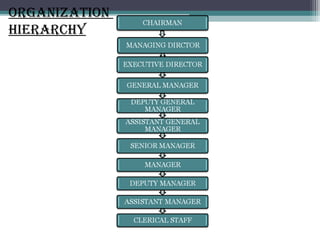
ORGANIZATION
HIERARCHy
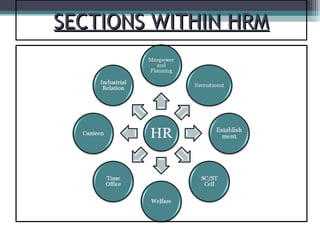
SECTIONS WITHIN HRM
HUMAN RESOURCE DEPARTMENTS

  MANPOWER AND PLANNING
  Assessment and review of staff requirement in various categories
  for the entire company.


  RECRUITMENT
  The recruitment process in Air-India has been decentralized, with
  the individual departments handling their own recruitment
ESTABLISHMENT

    The establishment section deals with record keeping of all
    employees of the organization. Its functions are:
•   Creation and Maintenance of Personal Files
•   Verification of previous employment and character and antecedents
•   Probation and Confirmation for new recruits
•   Releasing annual Increments
•   Raising Performance Appraisal Reports
•   Maintenance of seniority of non-technical categories
•   Final Settlement of Accounts
SC/ST CELL
    A special cell for SC/ST has been set up in AIR INDIA to safeguards
    the interests of SC/STs and lately OBCs also.


     Functions of SC/ST Cell:
•   Implementing the Government orders related to the reservations for
    SC/ST /OBCs
•   Keeping a check on whether other departments of the company are
    following the reservation schedule
•   Looking into the grievances of SC/ST employees.
•   Conducting the ‘De-reservation’ process in the case of non-
    availability of suitable reserved category candidates.
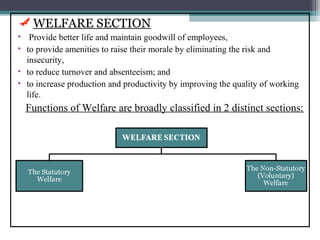
WELFARE SECTION
• Provide better life and maintain goodwill of employees,
• to provide amenities to raise their morale by eliminating the risk and
  insecurity,
• to reduce turnover and absenteeism; and
• to increase production and productivity by improving the quality of working
  life.
  Functions of Welfare are broadly classified in 2 distinct sections:
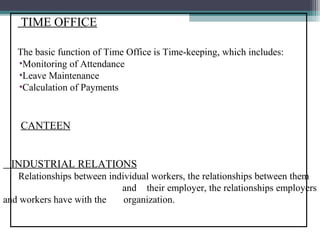
TIME OFFICE

   The basic function of Time Office is Time-keeping, which includes:
   •Monitoring of Attendance
   •Leave Maintenance
   •Calculation of Payments


    CANTEEN


 INDUSTRIAL RELATIONS
   Relationships between individual workers, the relationships between them
                          a and their employer, the relationships employers
and workers have with the o organization.
Dispute Resolution Through
       Adjudication
Globalization and IR

•   Economic development
•   Market change
•   Scope of competition
•   Pace of business
•   Key technology drivers
•   Leadership
•   Employment
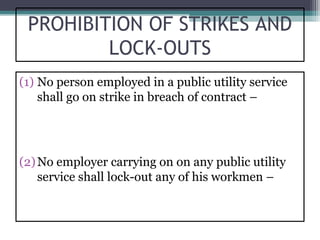
PROHIBITION OF STRIKES AND
         LOCK-OUTS
(1) No person employed in a public utility service
    shall go on strike in breach of contract –


(2) No employer carrying on on any public utility
    service shall lock-out any of his workmen –
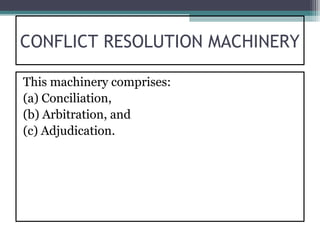
CONFLICT RESOLUTION MACHINERY

This machinery comprises:
(a) Conciliation,
(b) Arbitration, and
(c) Adjudication.
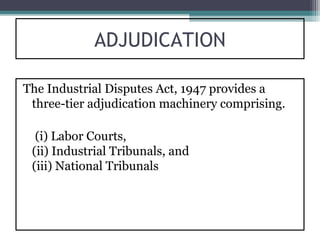
ADJUDICATION

The Industrial Disputes Act, 1947 provides a
 three-tier adjudication machinery comprising.

  (i) Labor Courts,
 (ii) Industrial Tribunals, and
 (iii) National Tribunals
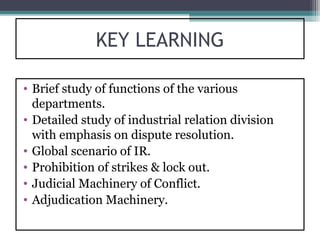
KEY LEARNING

• Brief study of functions of the various
  departments.
• Detailed study of industrial relation division
  with emphasis on dispute resolution.
• Global scenario of IR.
• Prohibition of strikes & lock out.
• Judicial Machinery of Conflict.
• Adjudication Machinery.
RECOMMENDATION
• Repetition of work will be avoided.
• Data management and information storage will
  become manageable. (Due to RTI act data
  storage and maintenance has become difficult).
• Passage distribution will be easy.
Bibliography


References:
•   Certified standing orders of AIR-INDIA for workmen.
•   AIR-INDIA employees services regulations for officers.
•   Performance appraisal manuals of AIR-INDIA
•   The Industrial Dispute Act, 1947
•   The Industrial Tribunal Procedure Rules,1949
•   The section 2 of The Industrial Dispute Act, 1947

Websites:
•   www.airindia.com
•   www.martin-wagner.org (Images)
•   www.wikipedia.org
•   www.scribd.com
•   www.ignou.ac.in
Dispute Resoltuion Through Adjudication

Dispute Resoltuion Through Adjudication

  • 1.
    MANAGERIAL HIERARCHY HUMAN RESOURCEDEPARTMENTS DISPUTE RESOLUTION By PRATIBHA TRIVEDI
  • 2.
    HISTORY • J.R.D. Tatawas the father of Civil Aviation in India and founder of Air India. • Air India was earlier known as Tata Airlines. • Tata Airlines was converted into a Public Company under the name of Air India in August 1946. • On March 8, 1948, Air India International Limited was formed to start Air India’s international operations. • From March 1, 1994, the airline has been functioning as Air India Limited.
  • 3.
    PROJECT SCOPE • Tostudy about function in various Division in HRD • To stud y about different system used by them. • To study about legal matter, • To study about union, & dispute raised by employee or union. • To study the situation which lead to Legal and illegal strike. • To study the Conflict Judiciary Machinery
  • 4.
  • 5.
  • 6.
    HUMAN RESOURCE DEPARTMENTS MANPOWER AND PLANNING Assessment and review of staff requirement in various categories for the entire company. RECRUITMENT The recruitment process in Air-India has been decentralized, with the individual departments handling their own recruitment
  • 7.
    ESTABLISHMENT The establishment section deals with record keeping of all employees of the organization. Its functions are: • Creation and Maintenance of Personal Files • Verification of previous employment and character and antecedents • Probation and Confirmation for new recruits • Releasing annual Increments • Raising Performance Appraisal Reports • Maintenance of seniority of non-technical categories • Final Settlement of Accounts
  • 8.
    SC/ST CELL A special cell for SC/ST has been set up in AIR INDIA to safeguards the interests of SC/STs and lately OBCs also. Functions of SC/ST Cell: • Implementing the Government orders related to the reservations for SC/ST /OBCs • Keeping a check on whether other departments of the company are following the reservation schedule • Looking into the grievances of SC/ST employees. • Conducting the ‘De-reservation’ process in the case of non- availability of suitable reserved category candidates.
  • 9.
    WELFARE SECTION • Providebetter life and maintain goodwill of employees, • to provide amenities to raise their morale by eliminating the risk and insecurity, • to reduce turnover and absenteeism; and • to increase production and productivity by improving the quality of working life. Functions of Welfare are broadly classified in 2 distinct sections:
  • 10.
    TIME OFFICE The basic function of Time Office is Time-keeping, which includes: •Monitoring of Attendance •Leave Maintenance •Calculation of Payments CANTEEN INDUSTRIAL RELATIONS Relationships between individual workers, the relationships between them a and their employer, the relationships employers and workers have with the o organization.
  • 11.
  • 12.
    Globalization and IR • Economic development • Market change • Scope of competition • Pace of business • Key technology drivers • Leadership • Employment
  • 13.
    PROHIBITION OF STRIKESAND LOCK-OUTS (1) No person employed in a public utility service shall go on strike in breach of contract – (2) No employer carrying on on any public utility service shall lock-out any of his workmen –
  • 14.
    CONFLICT RESOLUTION MACHINERY Thismachinery comprises: (a) Conciliation, (b) Arbitration, and (c) Adjudication.
  • 15.
    ADJUDICATION The Industrial DisputesAct, 1947 provides a three-tier adjudication machinery comprising. (i) Labor Courts, (ii) Industrial Tribunals, and (iii) National Tribunals
  • 16.
    KEY LEARNING • Briefstudy of functions of the various departments. • Detailed study of industrial relation division with emphasis on dispute resolution. • Global scenario of IR. • Prohibition of strikes & lock out. • Judicial Machinery of Conflict. • Adjudication Machinery.
  • 17.
    RECOMMENDATION • Repetition ofwork will be avoided. • Data management and information storage will become manageable. (Due to RTI act data storage and maintenance has become difficult). • Passage distribution will be easy.
  • 18.
    Bibliography References: • Certified standing orders of AIR-INDIA for workmen. • AIR-INDIA employees services regulations for officers. • Performance appraisal manuals of AIR-INDIA • The Industrial Dispute Act, 1947 • The Industrial Tribunal Procedure Rules,1949 • The section 2 of The Industrial Dispute Act, 1947 Websites: • www.airindia.com • www.martin-wagner.org (Images) • www.wikipedia.org • www.scribd.com • www.ignou.ac.in