HISTORY OF ARTS
INTRODUCTION
 The Indus Valley Civilization(IVC) was a Bronze Age
  civilization(3300–1300 BCE; mature period 2600–
  1900 BCE) that was located in the north-western
  region of the Indian subcontinent
 Flourishing around the Indus River basin, the
  civilization primarily centred along the Indus and
  the Punjab region, extending into the Ghaggar-Hakra
  River valley and the Ganges-Yamuna Doab
 The Indus Valley Civilization is also known as
  the Harappa Civilization
DISCOVERY AND EXCAVATION
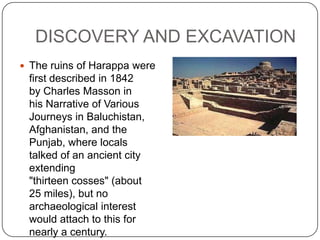
 The ruins of Harappa were
 first described in 1842
 by Charles Masson in
 his Narrative of Various
 Journeys in Baluchistan,
 Afghanistan, and the
 Punjab, where locals
 talked of an ancient city
 extending
 "thirteen cosses" (about
 25 miles), but no
 archaeological interest
 would attach to this for
 nearly a century.
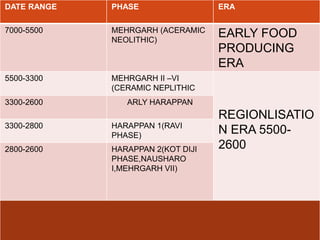
DATE RANGE   PHASE                 ERA

7000-5500    MEHRGARH (ACERAMIC
             NEOLITHIC)
                                   EARLY FOOD
                                   PRODUCING
                                   ERA
5500-3300    MEHRGARH II –VI
             (CERAMIC NEPLITHIC
3300-2600       ARLY HARAPPAN
                                   REGIONLISATIO
3300-2800    HARAPPAN 1(RAVI
             PHASE)
                                   N ERA 5500-
2800-2600    HARAPPAN 2(KOT DIJI   2600
             PHASE,NAUSHARO
             I,MEHRGARH VII)
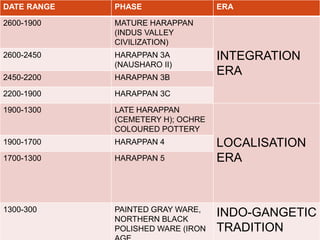
DATE RANGE   PHASE                 ERA

2600-1900    MATURE HARAPPAN
             (INDUS VALLEY
             CIVILIZATION)
2600-2450    HARAPPAN 3A           INTEGRATION
             (NAUSHARO II)
2450-2200    HARAPPAN 3B
                                   ERA
2200-1900    HARAPPAN 3C

1900-1300    LATE HARAPPAN
             (CEMETERY H); OCHRE
             COLOURED POTTERY
1900-1700    HARAPPAN 4            LOCALISATION
1700-1300    HARAPPAN 5            ERA


1300-300     PAINTED GRAY WARE,
             NORTHERN BLACK
                                   INDO-GANGETIC
             POLISHED WARE (IRON   TRADITION
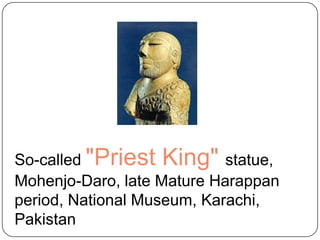
So-called "Priest King" statue,
Mohenjo-Daro, late Mature Harappan
period, National Museum, Karachi,
Pakistan
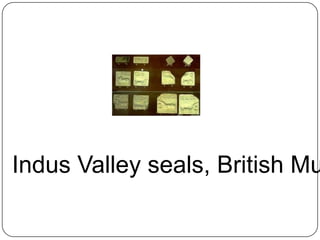
Indus Valley seals, British Mu
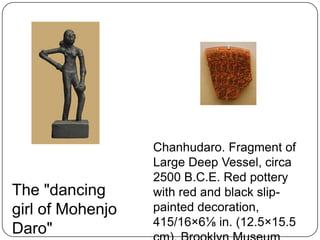
Chanhudaro. Fragment of
                  Large Deep Vessel, circa
                  2500 B.C.E. Red pottery
The "dancing      with red and black slip-
girl of Mohenjo   painted decoration,
                  415/16×6⅛ in. (12.5×15.5
Daro"
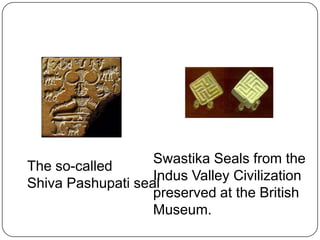
Swastika Seals from the
The so-called
                   Indus Valley Civilization
Shiva Pashupati seal
                   preserved at the British
                   Museum.
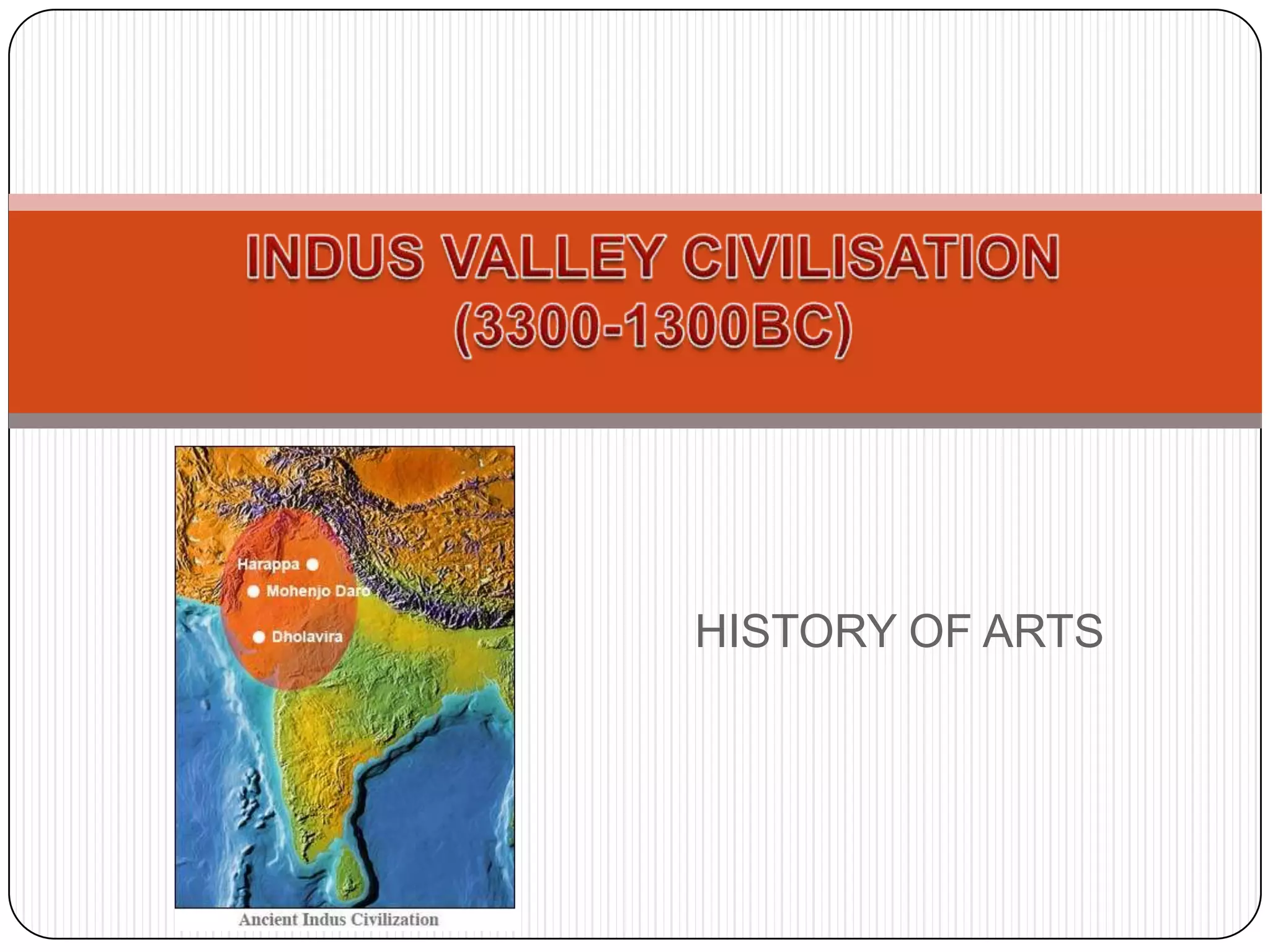
INDUS VALLEY CIVILISATION  (3300-1300BC)

INDUS VALLEY CIVILISATION (3300-1300BC)

  • 1.
  • 2.
    INTRODUCTION  The IndusValley Civilization(IVC) was a Bronze Age civilization(3300–1300 BCE; mature period 2600– 1900 BCE) that was located in the north-western region of the Indian subcontinent  Flourishing around the Indus River basin, the civilization primarily centred along the Indus and the Punjab region, extending into the Ghaggar-Hakra River valley and the Ganges-Yamuna Doab  The Indus Valley Civilization is also known as the Harappa Civilization
  • 3.
    DISCOVERY AND EXCAVATION The ruins of Harappa were first described in 1842 by Charles Masson in his Narrative of Various Journeys in Baluchistan, Afghanistan, and the Punjab, where locals talked of an ancient city extending "thirteen cosses" (about 25 miles), but no archaeological interest would attach to this for nearly a century.
  • 4.
    DATE RANGE PHASE ERA 7000-5500 MEHRGARH (ACERAMIC NEOLITHIC) EARLY FOOD PRODUCING ERA 5500-3300 MEHRGARH II –VI (CERAMIC NEPLITHIC 3300-2600 ARLY HARAPPAN REGIONLISATIO 3300-2800 HARAPPAN 1(RAVI PHASE) N ERA 5500- 2800-2600 HARAPPAN 2(KOT DIJI 2600 PHASE,NAUSHARO I,MEHRGARH VII)
  • 5.
    DATE RANGE PHASE ERA 2600-1900 MATURE HARAPPAN (INDUS VALLEY CIVILIZATION) 2600-2450 HARAPPAN 3A INTEGRATION (NAUSHARO II) 2450-2200 HARAPPAN 3B ERA 2200-1900 HARAPPAN 3C 1900-1300 LATE HARAPPAN (CEMETERY H); OCHRE COLOURED POTTERY 1900-1700 HARAPPAN 4 LOCALISATION 1700-1300 HARAPPAN 5 ERA 1300-300 PAINTED GRAY WARE, NORTHERN BLACK INDO-GANGETIC POLISHED WARE (IRON TRADITION
  • 6.
    So-called "Priest King"statue, Mohenjo-Daro, late Mature Harappan period, National Museum, Karachi, Pakistan
  • 7.
  • 8.
    Chanhudaro. Fragment of Large Deep Vessel, circa 2500 B.C.E. Red pottery The "dancing with red and black slip- girl of Mohenjo painted decoration, 415/16×6⅛ in. (12.5×15.5 Daro"
  • 9.
    Swastika Seals fromthe The so-called Indus Valley Civilization Shiva Pashupati seal preserved at the British Museum.