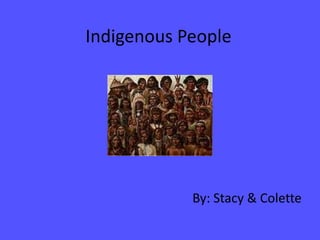
Indigenous PeopleBy: Stacy & Colette
Peopling the landHow did the Indigenous people get here?The Beringia Land Bridge is now under waterSplitting into multiple groups
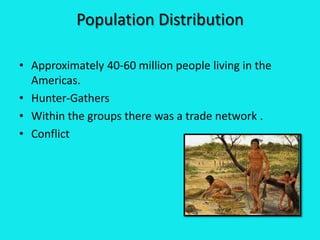
Population DistributionApproximately 40-60 million people living in the Americas.Hunter-GathersWithin the groups there was a trade network . Conflict
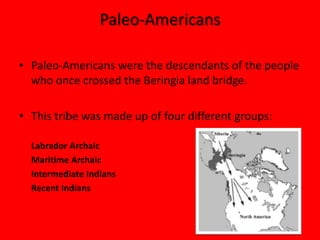
Paleo-AmericansPaleo-Americans were the descendants of the people who once crossed the Beringia land bridge. This tribe was made up of four different groups:Labrador Archaic	Maritime Archaic	Intermediate Indians	Recent Indians
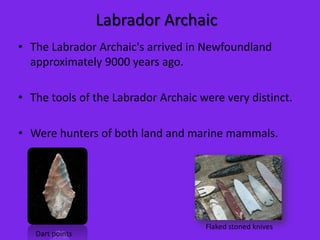
Labrador ArchaicThe Labrador Archaic's arrived in Newfoundland approximately 9000 years ago.The tools of the Labrador Archaic were very distinct.Were hunters of both land and marine mammals.Flaked stoned knivesDart points
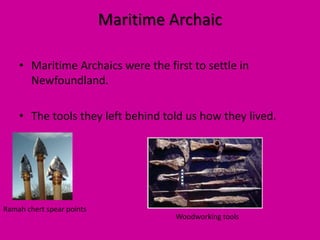
Maritime ArchaicMaritime Archaics were the first to settle in Newfoundland.The tools they left behind told us how they lived.Ramah chert spear pointsWoodworking tools
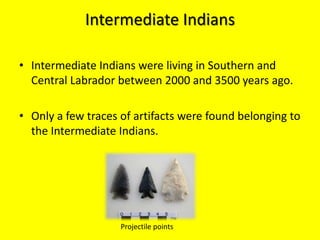
Intermediate IndiansIntermediate Indians were living in Southern and Central Labrador between 2000 and 3500 years ago.Only a few traces of artifacts were found belonging to the Intermediate Indians.Projectile points
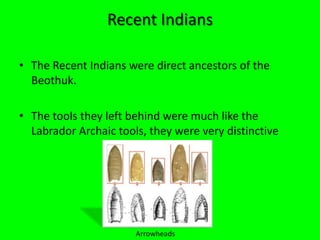
Recent IndiansThe Recent Indians were direct ancestors of the Beothuk. The tools they left behind were much like the Labrador Archaic tools, they were very distinctiveArrowheads
Paleo-Eskimos The Paleo-Eskimos moved to Newfoundland around 2100 BCEThe Paleo-Eskimos lived in sheltered inner-areas along the Northern Labrador Coast.This tribe was made up of two different groups:      Pre-Dorset      Groswater Paleo-Eskimos
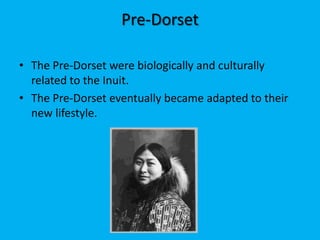
Pre-DorsetThe Pre-Dorset were biologically and culturally related to the Inuit.The Pre-Dorset eventually became adapted to their new lifestyle.
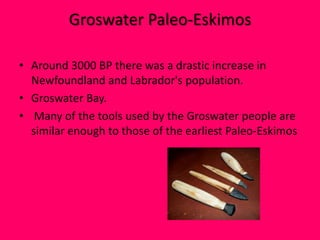
Groswater Paleo-EskimosAround 3000 BP there was a drastic increase in Newfoundland and Labrador's population.Groswater Bay. Many of the tools used by the Groswater people are similar enough to those of the earliest Paleo-Eskimos

Indigenous people[1]

  • 1.
  • 2.
    Peopling the landHowdid the Indigenous people get here?The Beringia Land Bridge is now under waterSplitting into multiple groups
  • 3.
    Population DistributionApproximately 40-60million people living in the Americas.Hunter-GathersWithin the groups there was a trade network . Conflict
  • 4.
    Paleo-AmericansPaleo-Americans were thedescendants of the people who once crossed the Beringia land bridge. This tribe was made up of four different groups:Labrador Archaic Maritime Archaic Intermediate Indians Recent Indians
  • 5.
    Labrador ArchaicThe LabradorArchaic's arrived in Newfoundland approximately 9000 years ago.The tools of the Labrador Archaic were very distinct.Were hunters of both land and marine mammals.Flaked stoned knivesDart points
  • 6.
    Maritime ArchaicMaritime Archaicswere the first to settle in Newfoundland.The tools they left behind told us how they lived.Ramah chert spear pointsWoodworking tools
  • 7.
    Intermediate IndiansIntermediate Indianswere living in Southern and Central Labrador between 2000 and 3500 years ago.Only a few traces of artifacts were found belonging to the Intermediate Indians.Projectile points
  • 8.
    Recent IndiansThe RecentIndians were direct ancestors of the Beothuk. The tools they left behind were much like the Labrador Archaic tools, they were very distinctiveArrowheads
  • 9.
    Paleo-Eskimos The Paleo-Eskimosmoved to Newfoundland around 2100 BCEThe Paleo-Eskimos lived in sheltered inner-areas along the Northern Labrador Coast.This tribe was made up of two different groups: Pre-Dorset Groswater Paleo-Eskimos
  • 10.
    Pre-DorsetThe Pre-Dorset werebiologically and culturally related to the Inuit.The Pre-Dorset eventually became adapted to their new lifestyle.
  • 11.
    Groswater Paleo-EskimosAround 3000BP there was a drastic increase in Newfoundland and Labrador's population.Groswater Bay. Many of the tools used by the Groswater people are similar enough to those of the earliest Paleo-Eskimos