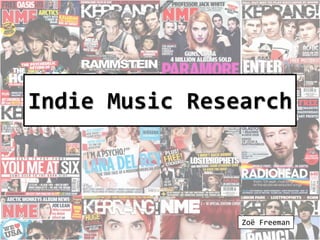
Indie Music Research
Zoë Freeman
• In terms of music, the term ‘indie’ is short for
independent
• Indie artists have a very particular style, much
their music not conforming to the ‘bubblegum pop’
that is seen in the charts
• Indie music was created in the 1950s-60s but was
very ‘underground’ in this era, meaning bands
usually played in small venues and went practically
unnoticed
• It wasn’t likely in this time for them to be
signed to major labels either, often viewing their
music as a piece of ‘artwork’ which shouldn’t be
sold to make profit that goes to anyone but
themselves
• Interest eventually rose in the 1980s
• Indie music now still isn’t as popular as the more
prominent music genres (pop, R&B)
• Most indie bands start off small, playing in
venues in order to gain recognition
• The introduction of festivals such as Leeds,
Reading and Glastonbury have allowed the genre to
grow significantly, people exploring different
music tastes in an environment that reflects the
carefree message most indie bands have
• The UK Indie Chart was first compiled in 1980, and
independent distribution became better organized
from the late 1970s onwards
• The advance in technology influenced the
distribution of indie music greatly; Youtube and
iTunes have allowed popularity to grow due to
accessibility
• Indie music is often targeted at adolescences and
young adults
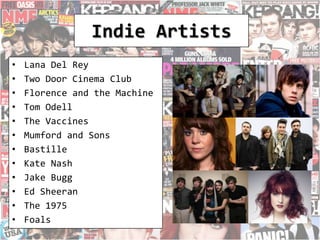
Indie Artists
• Lana Del Rey
• Two Door Cinema Club
• Florence and the Machine
• Tom Odell
• The Vaccines
• Mumford and Sons
• Bastille
• Kate Nash
• Jake Bugg
• Ed Sheeran
• The 1975
• Foals

Indie Music Research

  • 1.
  • 2.
    • In termsof music, the term ‘indie’ is short for independent • Indie artists have a very particular style, much their music not conforming to the ‘bubblegum pop’ that is seen in the charts • Indie music was created in the 1950s-60s but was very ‘underground’ in this era, meaning bands usually played in small venues and went practically unnoticed • It wasn’t likely in this time for them to be signed to major labels either, often viewing their music as a piece of ‘artwork’ which shouldn’t be sold to make profit that goes to anyone but themselves • Interest eventually rose in the 1980s • Indie music now still isn’t as popular as the more prominent music genres (pop, R&B)
  • 3.
    • Most indiebands start off small, playing in venues in order to gain recognition • The introduction of festivals such as Leeds, Reading and Glastonbury have allowed the genre to grow significantly, people exploring different music tastes in an environment that reflects the carefree message most indie bands have • The UK Indie Chart was first compiled in 1980, and independent distribution became better organized from the late 1970s onwards • The advance in technology influenced the distribution of indie music greatly; Youtube and iTunes have allowed popularity to grow due to accessibility • Indie music is often targeted at adolescences and young adults
  • 4.
    Indie Artists • LanaDel Rey • Two Door Cinema Club • Florence and the Machine • Tom Odell • The Vaccines • Mumford and Sons • Bastille • Kate Nash • Jake Bugg • Ed Sheeran • The 1975 • Foals