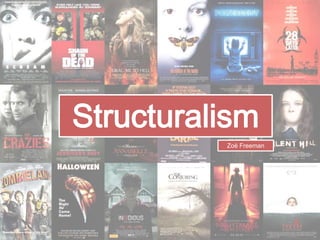
Structuralism 
Zoë Freeman
• Foucault and Lacan (1960s-70s) – developed the theory of 
structuralism suggesting that structure exists in all texts and art-forms 
• Meaning is cultural – the way we understand things is reliant on what we 
know culturally, this differs depending on the audience’s context 
Key terms for this theory: 
• Paradigms – codes and conventions of the genre – audience recognise 
paradigms and bring expectations to their reading of the text 
• Iconography – main signs/symbols (characters, props, setting) 
• Structure – narrative, the way the story is put together (structure = plot) 
• Denotation – what it is 
• Connotation – what is culturally constructed 
• Microelements include: camera angles, mis-en-scene, lighting, sound, and 
editing

Structuralism

  • 1.
  • 2.
    • Foucault andLacan (1960s-70s) – developed the theory of structuralism suggesting that structure exists in all texts and art-forms • Meaning is cultural – the way we understand things is reliant on what we know culturally, this differs depending on the audience’s context Key terms for this theory: • Paradigms – codes and conventions of the genre – audience recognise paradigms and bring expectations to their reading of the text • Iconography – main signs/symbols (characters, props, setting) • Structure – narrative, the way the story is put together (structure = plot) • Denotation – what it is • Connotation – what is culturally constructed • Microelements include: camera angles, mis-en-scene, lighting, sound, and editing