
history, theories, performers & genres
popular music:
MAC351
From the module guide:
• This module draws upon student’s skills and knowledge of
popular culture studied at level 1.
• Theories of popular culture are further developed and related
to the consumption, production and enjoyment of popular
music.
• These theories are related to socio-political changes in
society.
• Furthermore specific musical genres and performers are
examined with these concepts and theories in mind.
Weekly sessions
1. Intro/Why study pop
music?
2. Rock’n’roll  counter-
culture
3. Soul music
4. Reggae and afrobeat
5. Prog rock  art rock
6. Blank generation: punk
7. Post-punk
8. Reading week
9. Electric dreams
10. Pop bands
11. Moral panics and rave
12. Film and music
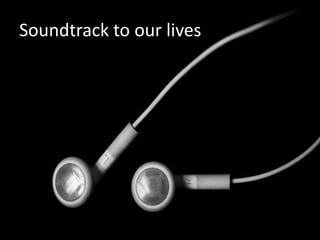
Soundtrack to our lives
Popular culture
1. Well-liked by many
2. The opposite of high culture
3. Mass culture (commercial)
4. Of the people
5. Hegemonic (a site of struggle)
6. Postmodern culture (blurring boundaries
between commercial and authentic)
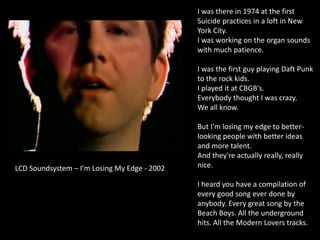
I was there in 1974 at the first
Suicide practices in a loft in New
York City.
I was working on the organ sounds
with much patience.
I was the first guy playing Daft Punk
to the rock kids.
I played it at CBGB's.
Everybody thought I was crazy.
We all know.
But I'm losing my edge to better-
looking people with better ideas
and more talent.
And they're actually really, really
nice.
I heard you have a compilation of
every good song ever done by
anybody. Every great song by the
Beach Boys. All the underground
hits. All the Modern Lovers tracks.
LCD Soundsystem – I’m Losing My Edge - 2002
Why Study Popular Music?
• researching facts and existing theories
• using theories to develop tools for analysing
texts and cultural practices
• apply the theories to understand the facts and
using the facts to test the theories
• developing ideas/theories of your own
Putting the ‘disco’ in discourse
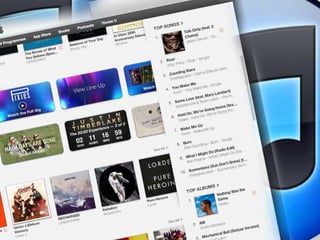
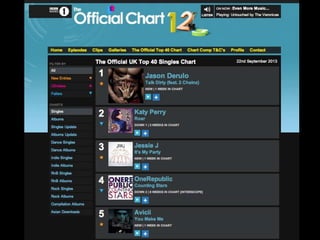
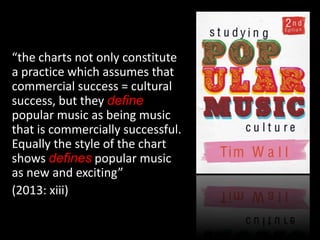
“the charts not only constitute
a practice which assumes that
commercial success = cultural
success, but they define
popular music as being music
that is commercially successful.
Equally the style of the chart
shows defines popular music
as new and exciting”
(2013: xiii)
• ‘music’ Phil Hilfiker
• ‘Music in my ears’ Rob Ellis
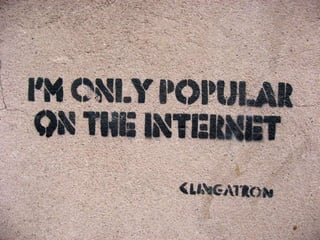
• ‘ I’m only popular on the internet’ duncan c
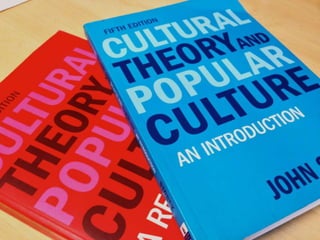
• ‘Cultural theory and popular culture’ Rob Jewitt
• ‘Music’ Sameer Vasta
• ‘Disco Ball’ Rosie Rogers
• ‘creative commons -Franz Patzig-’ A. Diez Herrero
20

Mac351 module intro - why study popular music?

  • 1.
    history, theories, performers& genres popular music: MAC351
  • 2.
    From the moduleguide: • This module draws upon student’s skills and knowledge of popular culture studied at level 1. • Theories of popular culture are further developed and related to the consumption, production and enjoyment of popular music. • These theories are related to socio-political changes in society. • Furthermore specific musical genres and performers are examined with these concepts and theories in mind.
  • 3.
    Weekly sessions 1. Intro/Whystudy pop music? 2. Rock’n’roll  counter- culture 3. Soul music 4. Reggae and afrobeat 5. Prog rock  art rock 6. Blank generation: punk 7. Post-punk 8. Reading week 9. Electric dreams 10. Pop bands 11. Moral panics and rave 12. Film and music
  • 4.
  • 10.
    Popular culture 1. Well-likedby many 2. The opposite of high culture 3. Mass culture (commercial) 4. Of the people 5. Hegemonic (a site of struggle) 6. Postmodern culture (blurring boundaries between commercial and authentic)
  • 11.
    I was therein 1974 at the first Suicide practices in a loft in New York City. I was working on the organ sounds with much patience. I was the first guy playing Daft Punk to the rock kids. I played it at CBGB's. Everybody thought I was crazy. We all know. But I'm losing my edge to better- looking people with better ideas and more talent. And they're actually really, really nice. I heard you have a compilation of every good song ever done by anybody. Every great song by the Beach Boys. All the underground hits. All the Modern Lovers tracks. LCD Soundsystem – I’m Losing My Edge - 2002
  • 12.
  • 13.
    Why Study PopularMusic? • researching facts and existing theories • using theories to develop tools for analysing texts and cultural practices • apply the theories to understand the facts and using the facts to test the theories • developing ideas/theories of your own
  • 14.
  • 19.
    “the charts notonly constitute a practice which assumes that commercial success = cultural success, but they define popular music as being music that is commercially successful. Equally the style of the chart shows defines popular music as new and exciting” (2013: xiii)
  • 20.
    • ‘music’ PhilHilfiker • ‘Music in my ears’ Rob Ellis • ‘ I’m only popular on the internet’ duncan c • ‘Cultural theory and popular culture’ Rob Jewitt • ‘Music’ Sameer Vasta • ‘Disco Ball’ Rosie Rogers • ‘creative commons -Franz Patzig-’ A. Diez Herrero 20

Editor's Notes

  • #12 But have you seen my records? This Heat, Pere Ubu, Outsiders, Nation of Ulysses, Mars, The Trojans, The Black Dice, Todd Terry, the Germs, Section 25, Althea and Donna, Sexual Harrassment, a-ha, Pere Ubu, Dorothy Ashby, PIL, the Fania All-Stars, the Bar-Kays, the Human League, the Normal, Lou Reed, Scott Walker, Monks, Niagra, Joy Division, Lower 48, the Association, Sun Ra, Scientists, Royal Trux, 10cc, Eric B. and Rakim, Index, Basic Channel, Soulsonic Force ("just hit me"!), Juan Atkins, David Axelrod, Electric Prunes, Gil! Scott! Heron!, the Slits, Faust, Mantronix, Pharaoh Sanders and the Fire Engines, the Swans, the Soft Cell, the Sonics, the Sonics, the Sonics, the Sonics.