Presentation on Tourist Behaviour
INDIAN TOURISTS
Prepared by:
Rajendra K.C Rajendra Timilsina
Santosh Khadka Santosh Pokhrel
Sarbottam Silwal
Something to know about
INDIA
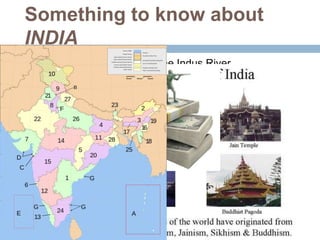
 Name ―India‖ comes from the Indus River,
 It is the 7th largest country by area
 The 2nd most populated country with over 1.2 billion
people
 4 world religions Hinduism, Buddhism, Jainism &
Sikhism were originated here
 Indian economy is world's 10th largest by nominal GDP
and 3rd largest by Purchasing power parity (PPP)
 It has the 3rd largest army in the world and ranks 7th in
military expenditure
 India is a federation composed of 28 states and 7 union
territories
Something to know about
INDIA
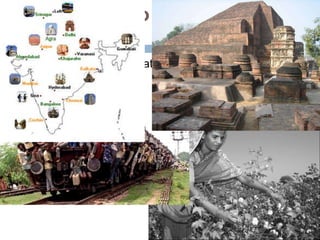
 Cotton was domesticated in India by 4000 B.C
 There are over a million Indian millionaires and
more poor people
 India has the world’s second largest train network,
and it is the largest civilian employer.
 1st university is said to have been started in
Takshila in 700 B.C
 World’s largest road network is in India—over 1.9
million miles of roads cover the country.
 Indian cultural history spans more than 4,500 years
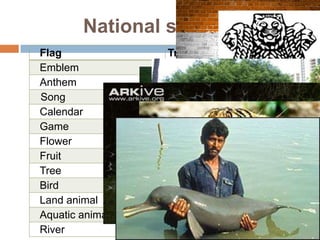
National symbols
Flag Tricolor
Emblem Sarnath Lion Capital
Anthem Jana Gana Mana
Song Vande Mataram
Calendar Saka
Game Hockey
Flower Lotus
Fruit Mango
Tree Banyan
Bird Indian Peafowl
Land animal Royal Bengal Tiger
Aquatic animal River Dolphin
River Ganga
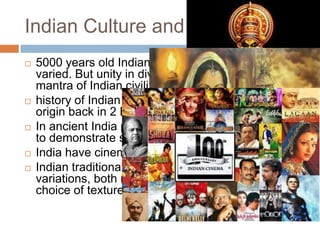
Indian Culture and Tradition
 5000 years old Indian culture is both ancient and
varied. But unity in diversity which is the main
mantra of Indian civilization.
 history of Indian traditional dance which traces its
origin back in 2 BC
 In ancient India paintings has been used as a tool
to demonstrate someones religious beliefs.
 India have cinema culture from last 100 years
 Indian traditional way of dressing is marked by
variations, both religious and regional with a wide
choice of textures and styles
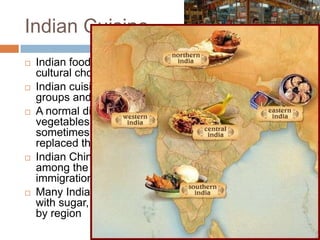
Indian Cuisine
 Indian food is heavily influenced by religious and
cultural choices.
 Indian cuisine reflects a 5000-year history of various
groups and cultures interacting with the subcontinent
 A normal diet in early India consisted of fruit,
vegetables, grain, eggs, dairy products, honey, and
sometimes meat but now many fast food have
replaced them.
 Indian Chinese cuisine originated in the 19th century
among the Chinese community of Calcutta, during the
immigration of Hakka Chinese from Canton
 Many Indian sweets, or mithai, are fried foods made
with sugar, milk or condensed milk. Ingredients vary
by region
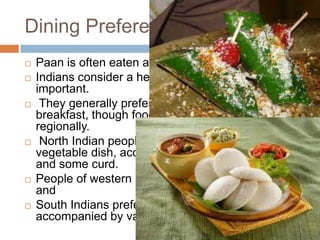
Dining Preferences in India
 Paan is often eaten after dinner.
 Indians consider a healthy breakfast ( nashta)
important.
 They generally prefer to drink tea or coffee with
breakfast, though food preferences vary
regionally.
 North Indian people prefer roti, parathas, and a
vegetable dish, accompanied by achar (pickles)
and some curd.
 People of western India prefer dhokla and milk
and
 South Indians prefer idlis and dosas, generally
accompanied by various chutneys.
Dining Preferences in India
 Lunch in India usually consists of a main dish of
rice in the south and east, or whole wheat rotis in
the north and west.
 It typically includes two or three kinds of
vegetables, and sometimes items such as
kulcha, naan, or parathas.
 Indian families often gather for "evening
breakfast," similar to tea time to talk, drink tea and
eat snacks.
 Dinner is considered as the main meal of the day.
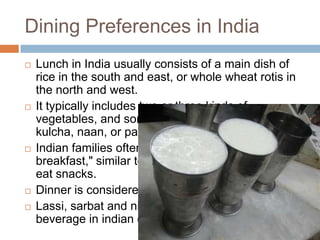
 Lassi, sarbat and nimbu pani are most famous
beverage in indian cuisine
Indian Market
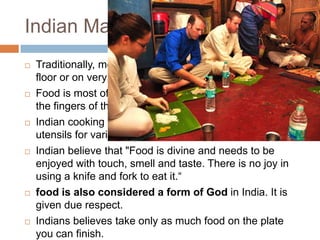
 Traditionally, meals are eaten while seated either on the
floor or on very low stools or cushions.
 Food is most often eaten without cutlery, using instead
the fingers of the right hand.
 Indian cooking uses an extensive array of specialized
utensils for various purposes,
 Indian believe that "Food is divine and needs to be
enjoyed with touch, smell and taste. There is no joy in
using a knife and fork to eat it.―
 food is also considered a form of God in India. It is
given due respect.
 Indians believes take only as much food on the plate
you can finish.
Accommodation
 Accommodation in India provides good value for
money
 Delhi and Mumbai hotels are the most expensive
ones. There are many inexpensive hotels and
hostels here as well.
 Tourist bungalows and youth hostels are also
offering less expensive dorms.
 Hostels are spread out throughout the whole
country.
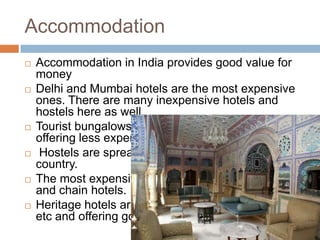
 The most expensive hotels in India are Heritage
and chain hotels.
 Heritage hotels are occupying old palaces, forts
etc and offering good service.
Accommodation
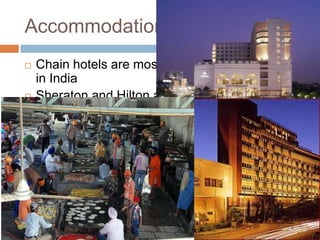
 Chain hotels are mostly located in large cities
in India
 Sheraton and Hilton are the world famous
ones
 Also there are Indian Taj and Oberoi groups.
 It is possible to rent a room in people’s homes.
 Many railway stations have retiring rooms with
a bed and bathroom and they are very
reasonable.
 Religious institutions especially Sikh
Gurudwaras offer accommodation for religious
tourist.
Tourist Behavioral
 Superiority Complex- Superior than others
 Hum Malik hain –must be treated as boss
 Single Indian is a quite person but groups are
most noisy
 Hum Saath-Saath Hai -want to stay together
 Indians are not punctual of time
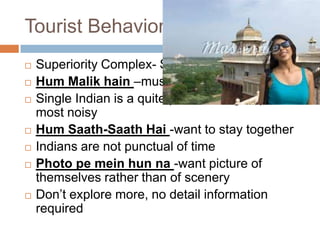
 Photo pe mein hun na -want picture of
themselves rather than of scenery
 Don’t explore more, no detail information
required
Tourist Behavioral
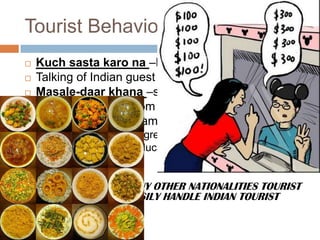
 Kuch sasta karo na –high bargain capacity
 Talking of Indian guest feels like shouting
 Masale-daar khana –spicy and oily food lovers
 Don’t expect Tips from Indian Tourist
 All Indians are not same, as
 North Indians are aggressive, rude and are greedy
 South Indians are educated, polite and very gentle
ITS EASY TO GUIDE ANY OTHER NATIONALITIES TOURIST
IF ONE CAN EASILY HANDLE INDIAN TOURIST
Indian tourist behaviour

Indian tourist behaviour

  • 1.
    Presentation on TouristBehaviour INDIAN TOURISTS Prepared by: Rajendra K.C Rajendra Timilsina Santosh Khadka Santosh Pokhrel Sarbottam Silwal
  • 2.
    Something to knowabout INDIA  Name ―India‖ comes from the Indus River,  It is the 7th largest country by area  The 2nd most populated country with over 1.2 billion people  4 world religions Hinduism, Buddhism, Jainism & Sikhism were originated here  Indian economy is world's 10th largest by nominal GDP and 3rd largest by Purchasing power parity (PPP)  It has the 3rd largest army in the world and ranks 7th in military expenditure  India is a federation composed of 28 states and 7 union territories
  • 3.
    Something to knowabout INDIA  Cotton was domesticated in India by 4000 B.C  There are over a million Indian millionaires and more poor people  India has the world’s second largest train network, and it is the largest civilian employer.  1st university is said to have been started in Takshila in 700 B.C  World’s largest road network is in India—over 1.9 million miles of roads cover the country.  Indian cultural history spans more than 4,500 years
  • 4.
    National symbols Flag Tricolor EmblemSarnath Lion Capital Anthem Jana Gana Mana Song Vande Mataram Calendar Saka Game Hockey Flower Lotus Fruit Mango Tree Banyan Bird Indian Peafowl Land animal Royal Bengal Tiger Aquatic animal River Dolphin River Ganga
  • 5.
    Indian Culture andTradition  5000 years old Indian culture is both ancient and varied. But unity in diversity which is the main mantra of Indian civilization.  history of Indian traditional dance which traces its origin back in 2 BC  In ancient India paintings has been used as a tool to demonstrate someones religious beliefs.  India have cinema culture from last 100 years  Indian traditional way of dressing is marked by variations, both religious and regional with a wide choice of textures and styles
  • 6.
    Indian Cuisine  Indianfood is heavily influenced by religious and cultural choices.  Indian cuisine reflects a 5000-year history of various groups and cultures interacting with the subcontinent  A normal diet in early India consisted of fruit, vegetables, grain, eggs, dairy products, honey, and sometimes meat but now many fast food have replaced them.  Indian Chinese cuisine originated in the 19th century among the Chinese community of Calcutta, during the immigration of Hakka Chinese from Canton  Many Indian sweets, or mithai, are fried foods made with sugar, milk or condensed milk. Ingredients vary by region
  • 7.
    Dining Preferences inIndia  Paan is often eaten after dinner.  Indians consider a healthy breakfast ( nashta) important.  They generally prefer to drink tea or coffee with breakfast, though food preferences vary regionally.  North Indian people prefer roti, parathas, and a vegetable dish, accompanied by achar (pickles) and some curd.  People of western India prefer dhokla and milk and  South Indians prefer idlis and dosas, generally accompanied by various chutneys.
  • 8.
    Dining Preferences inIndia  Lunch in India usually consists of a main dish of rice in the south and east, or whole wheat rotis in the north and west.  It typically includes two or three kinds of vegetables, and sometimes items such as kulcha, naan, or parathas.  Indian families often gather for "evening breakfast," similar to tea time to talk, drink tea and eat snacks.  Dinner is considered as the main meal of the day.  Lassi, sarbat and nimbu pani are most famous beverage in indian cuisine
  • 9.
    Indian Market  Traditionally,meals are eaten while seated either on the floor or on very low stools or cushions.  Food is most often eaten without cutlery, using instead the fingers of the right hand.  Indian cooking uses an extensive array of specialized utensils for various purposes,  Indian believe that "Food is divine and needs to be enjoyed with touch, smell and taste. There is no joy in using a knife and fork to eat it.―  food is also considered a form of God in India. It is given due respect.  Indians believes take only as much food on the plate you can finish.
  • 10.
    Accommodation  Accommodation inIndia provides good value for money  Delhi and Mumbai hotels are the most expensive ones. There are many inexpensive hotels and hostels here as well.  Tourist bungalows and youth hostels are also offering less expensive dorms.  Hostels are spread out throughout the whole country.  The most expensive hotels in India are Heritage and chain hotels.  Heritage hotels are occupying old palaces, forts etc and offering good service.
  • 11.
    Accommodation  Chain hotelsare mostly located in large cities in India  Sheraton and Hilton are the world famous ones  Also there are Indian Taj and Oberoi groups.  It is possible to rent a room in people’s homes.  Many railway stations have retiring rooms with a bed and bathroom and they are very reasonable.  Religious institutions especially Sikh Gurudwaras offer accommodation for religious tourist.
  • 12.
    Tourist Behavioral  SuperiorityComplex- Superior than others  Hum Malik hain –must be treated as boss  Single Indian is a quite person but groups are most noisy  Hum Saath-Saath Hai -want to stay together  Indians are not punctual of time  Photo pe mein hun na -want picture of themselves rather than of scenery  Don’t explore more, no detail information required
  • 13.
    Tourist Behavioral  Kuchsasta karo na –high bargain capacity  Talking of Indian guest feels like shouting  Masale-daar khana –spicy and oily food lovers  Don’t expect Tips from Indian Tourist  All Indians are not same, as  North Indians are aggressive, rude and are greedy  South Indians are educated, polite and very gentle ITS EASY TO GUIDE ANY OTHER NATIONALITIES TOURIST IF ONE CAN EASILY HANDLE INDIAN TOURIST