Silke Hubert
Pre-Sales Consultant Digital Payments
Increase conversion, convenience and security
in e-commerce checkouts
Tokenization and Secure Remote Commerce as key technologies
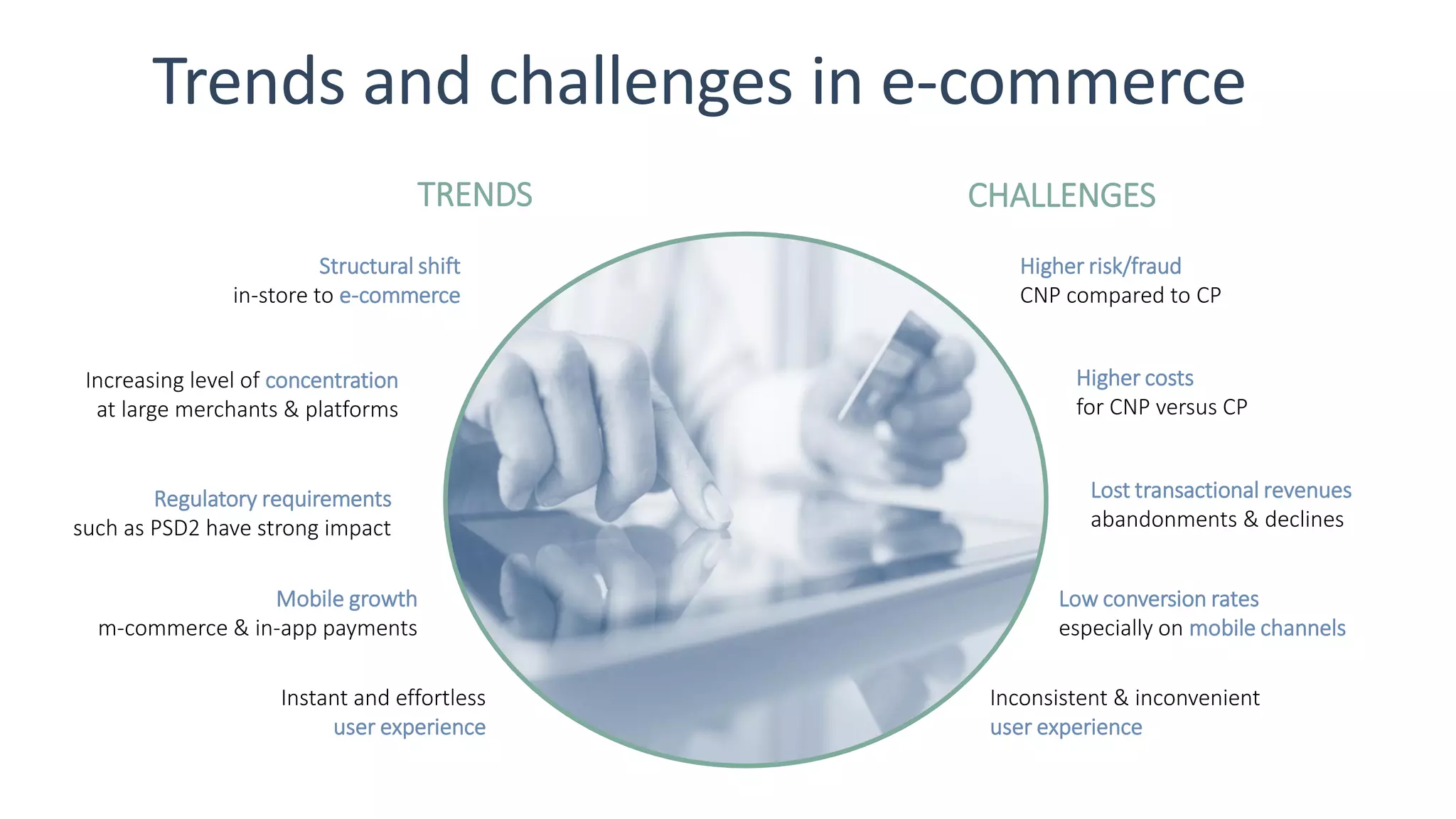
Trends and challenges in e-commerce
Structural shift
in-store to e-commerce
Increasing level of concentration
at large merchants & platforms
Regulatory requirements
such as PSD2 have strong impact
Mobile growth
m-commerce & in-app payments
Instant and effortless
user experience
Higher risk/fraud
CNP compared to CP
Lost transactional revenues
abandonments & declines
Higher costs
for CNP versus CP
Low conversion rates
especially on mobile channels
Inconsistent & inconvenient
user experience
TRENDS CHALLENGES
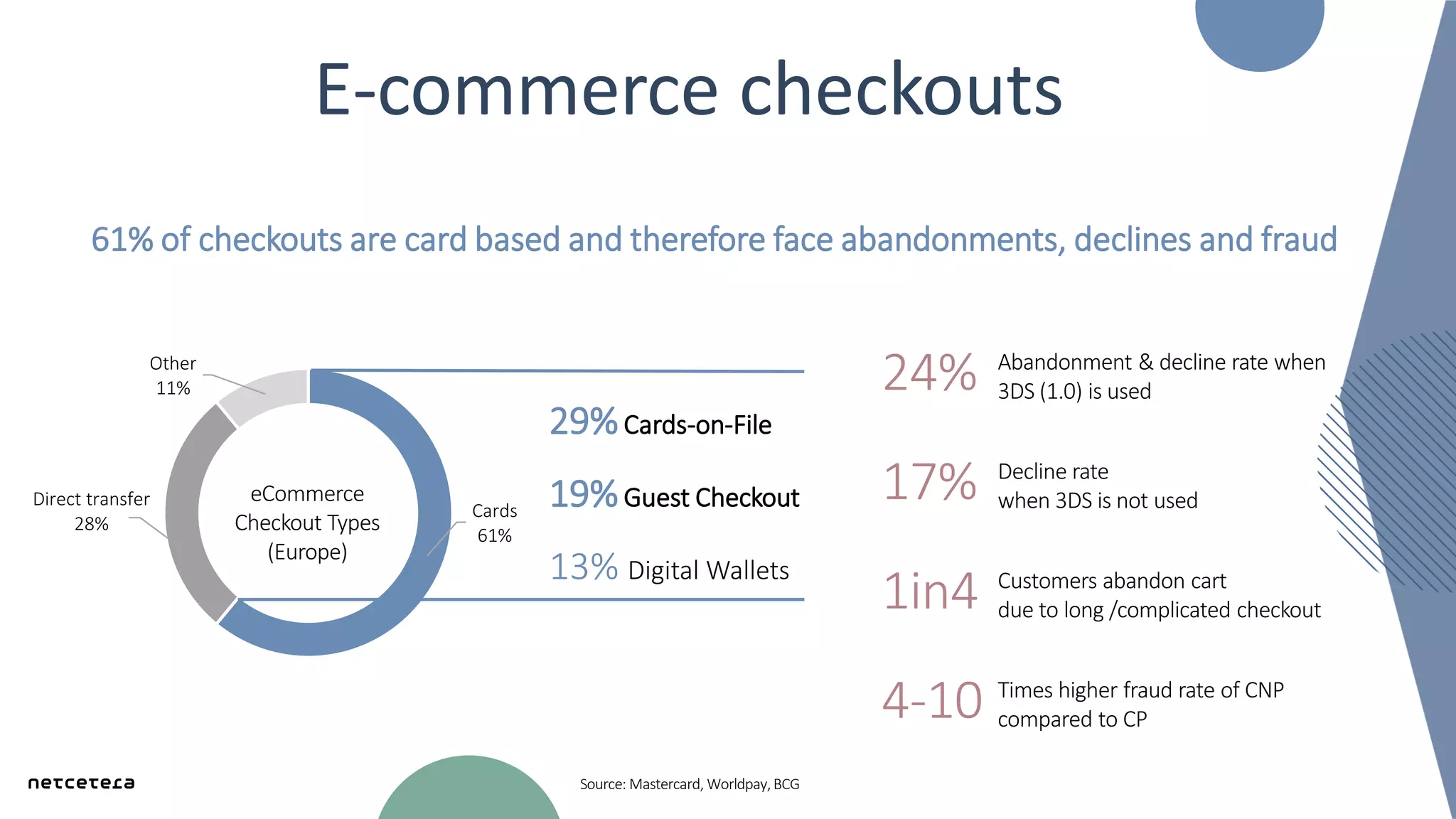
61% of checkouts are card based and therefore face abandonments, declines and fraud
Cards
61%
Direct transfer
28%
Other
11%
29%Cards-on-File
19%Guest Checkout
13% Digital Wallets
eCommerce
Checkout Types
(Europe)
Source: Mastercard, Worldpay,BCG
Abandonment & decline rate when
3DS (1.0) is used24%
Decline rate
when 3DS is not used17%
Times higher fraud rate of CNP
compared to CP4-10
Customers abandon cart
due to long /complicated checkout1in4
E-commerce checkouts
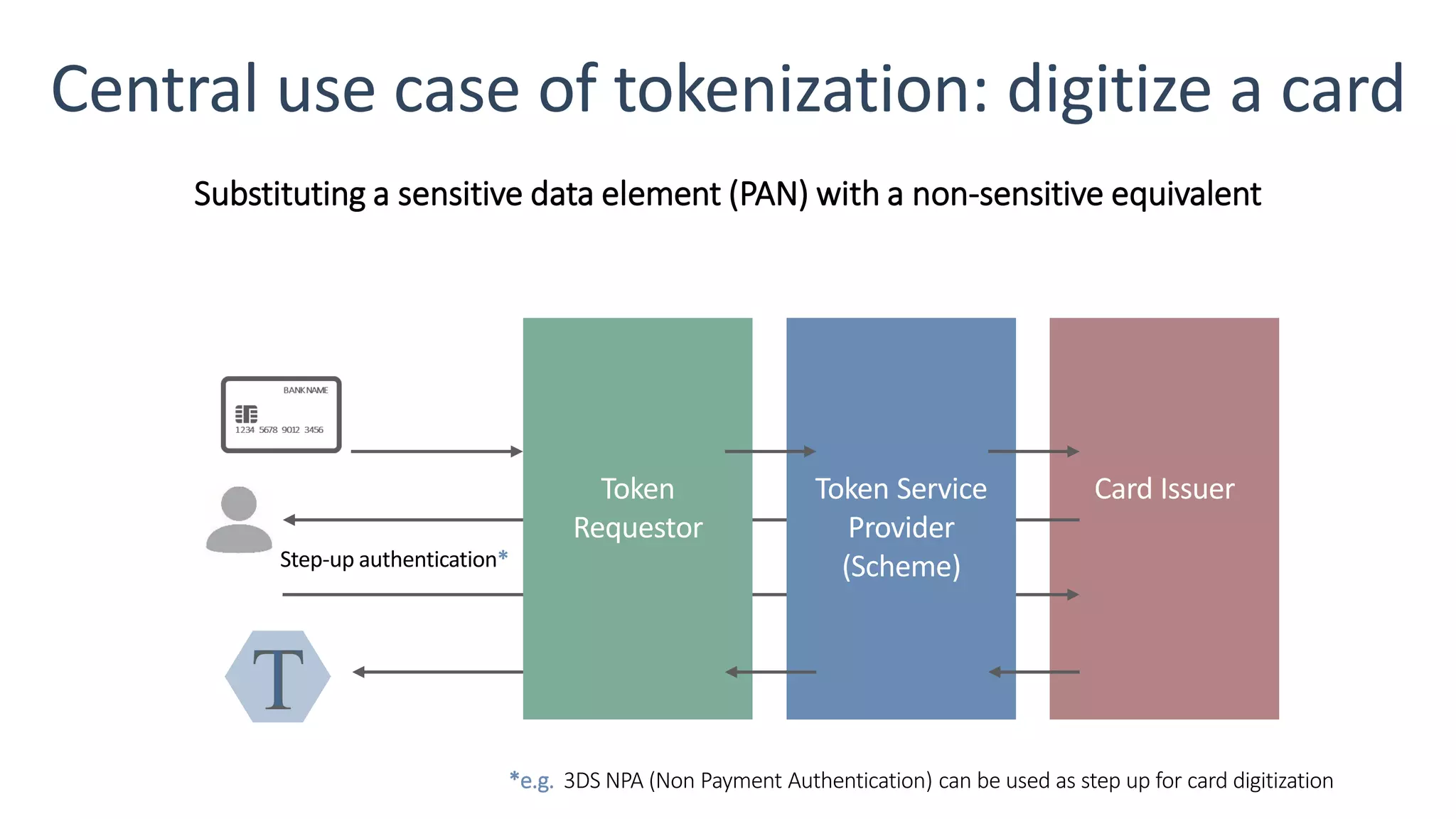
Central use case of tokenization: digitize a card
Card Issuer
Substituting a sensitive data element (PAN) with a non-sensitive equivalent
Step-up authentication*
T
Token
Requestor
Token Service
Provider
(Scheme)
*e.g. 3DS NPA (Non Payment Authentication) can be used as step up for card digitization
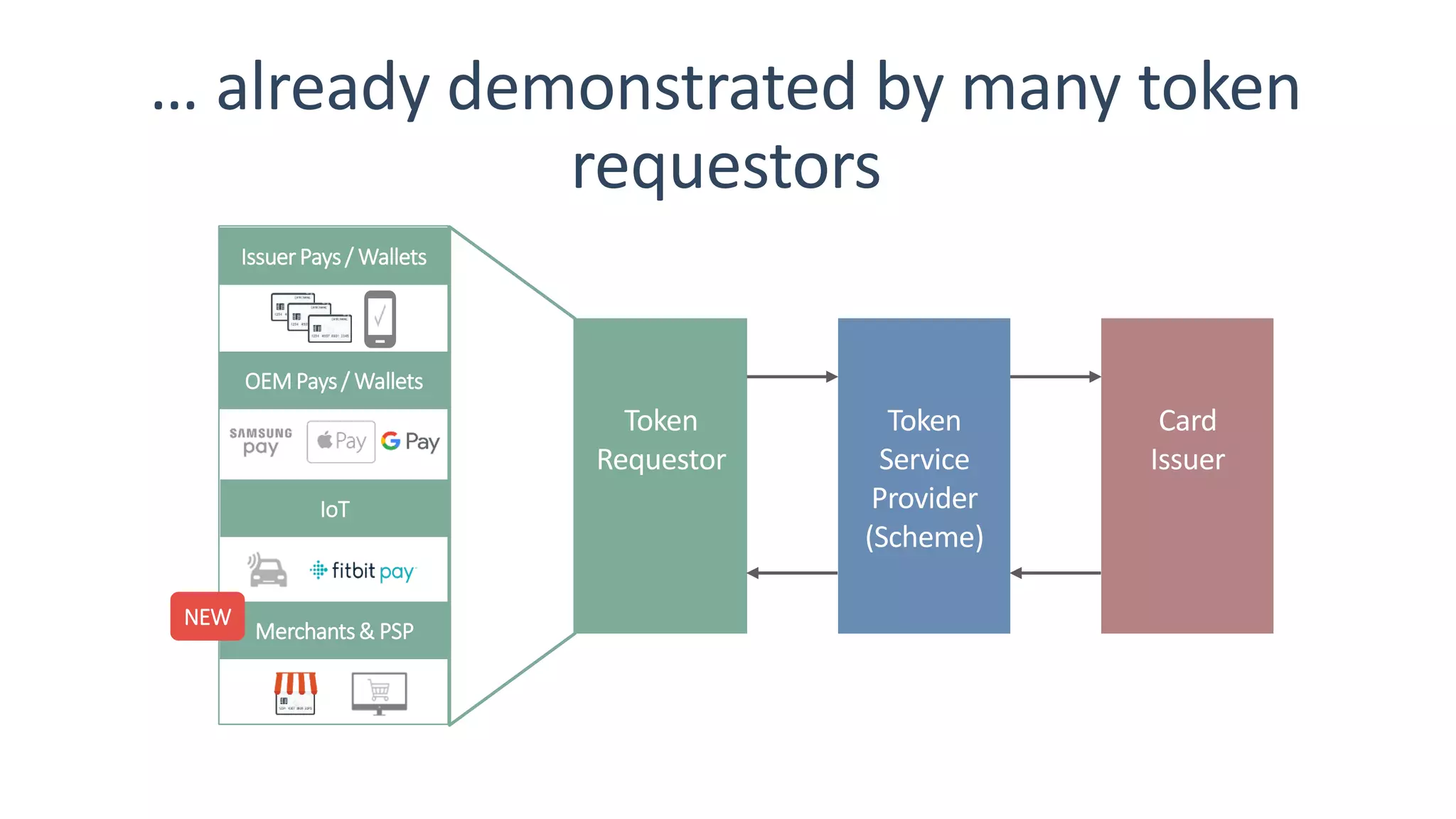
… already demonstrated by many token
requestors
Token
Requestor
Token
Service
Provider
(Scheme)
Card
Issuer
OEM Pays/ Wallets
Merchants& PSP
IoT
IssuerPays/ Wallets
NEW
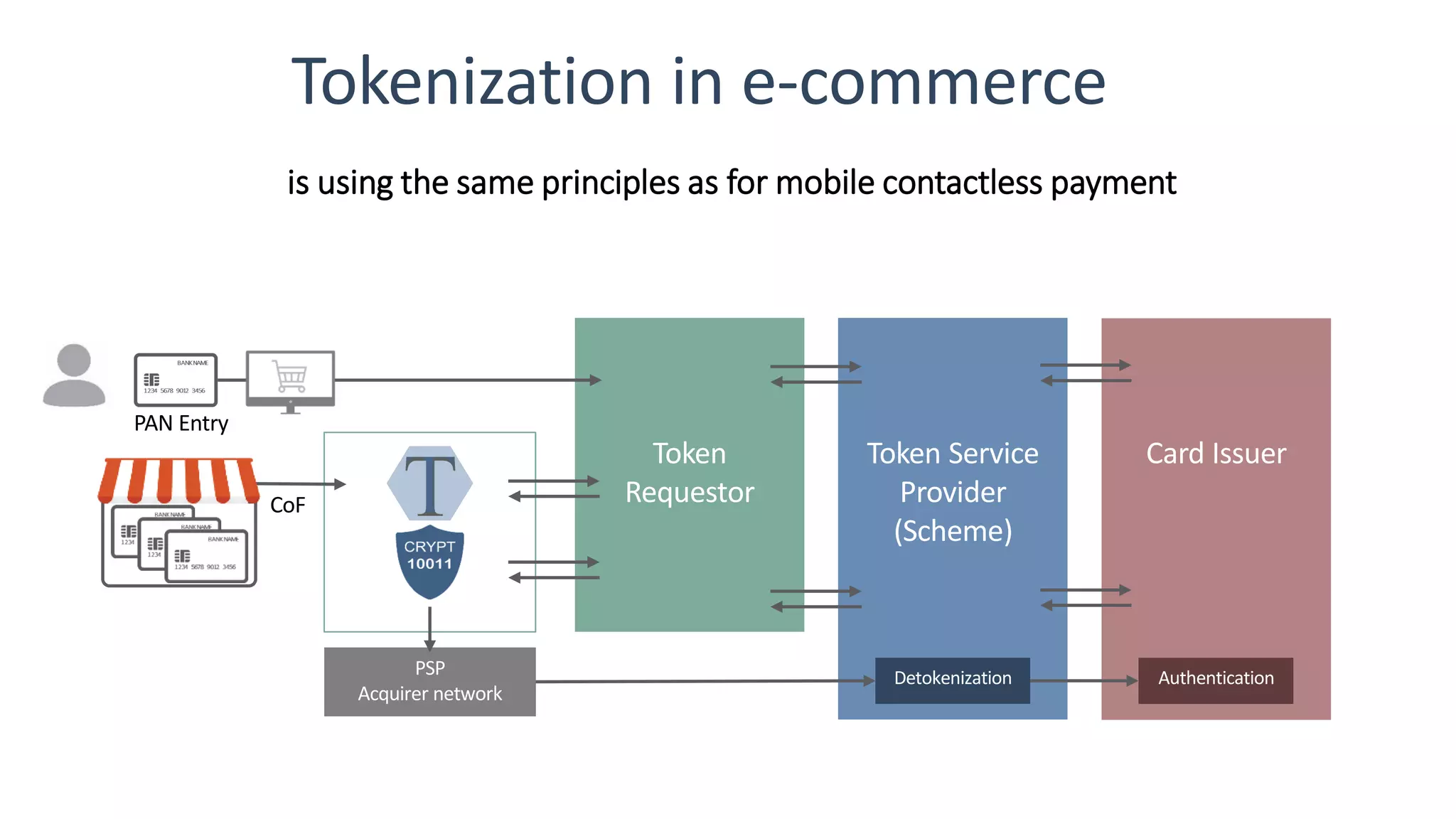
Tokenization in e-commerce
is using the same principles as for mobile contactless payment
PSP
Acquirer network
T
AuthenticationDetokenization
PAN Entry
CoF
Card IssuerToken
Requestor
Token Service
Provider
(Scheme)
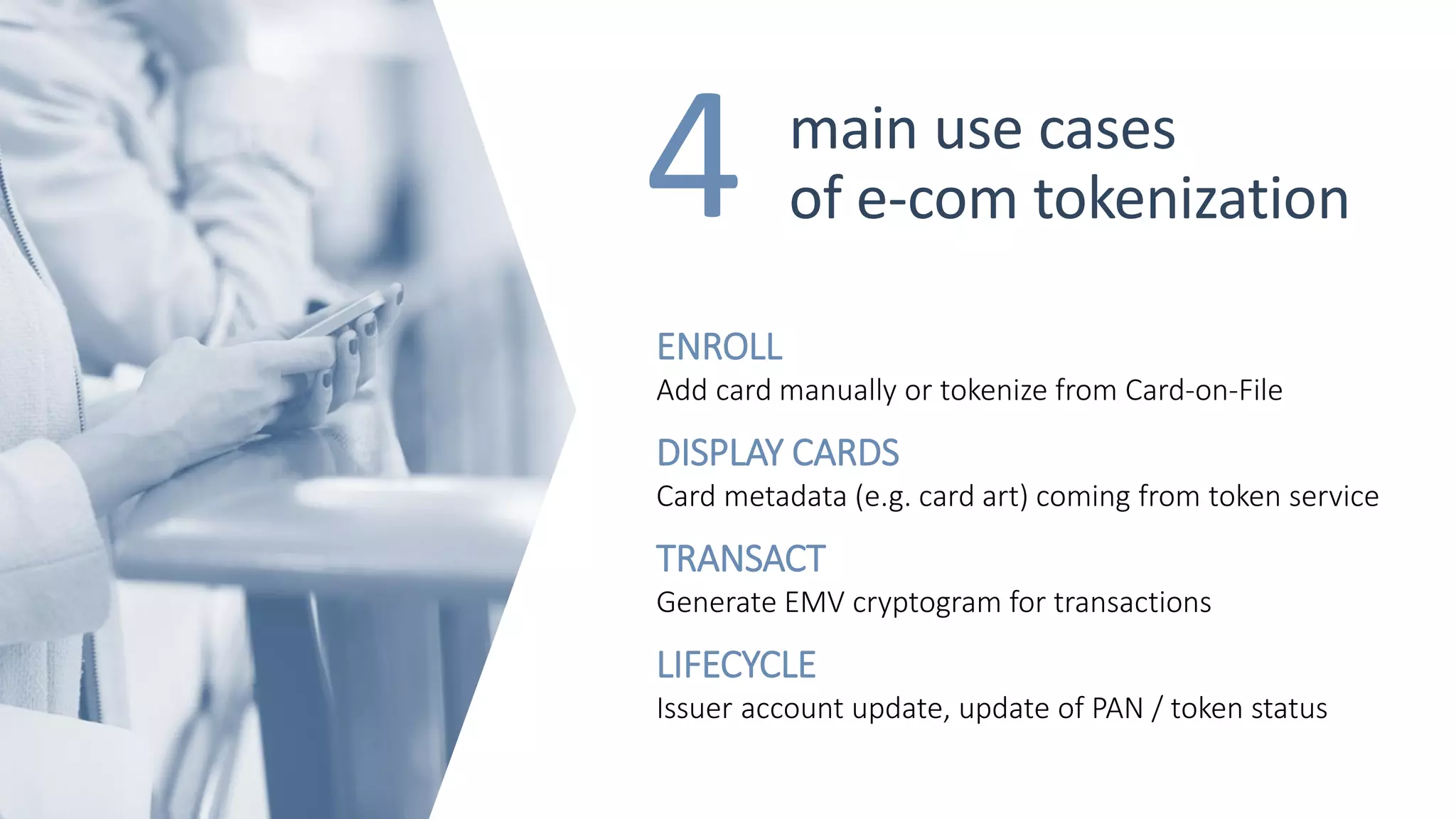
main use cases
of e-com tokenization4
ENROLL
Add card manually or tokenize from Card-on-File
DISPLAY CARDS
Card metadata (e.g. card art) coming from token service
TRANSACT
Generate EMV cryptogram for transactions
LIFECYCLE
Issuer account update, update of PAN / token status
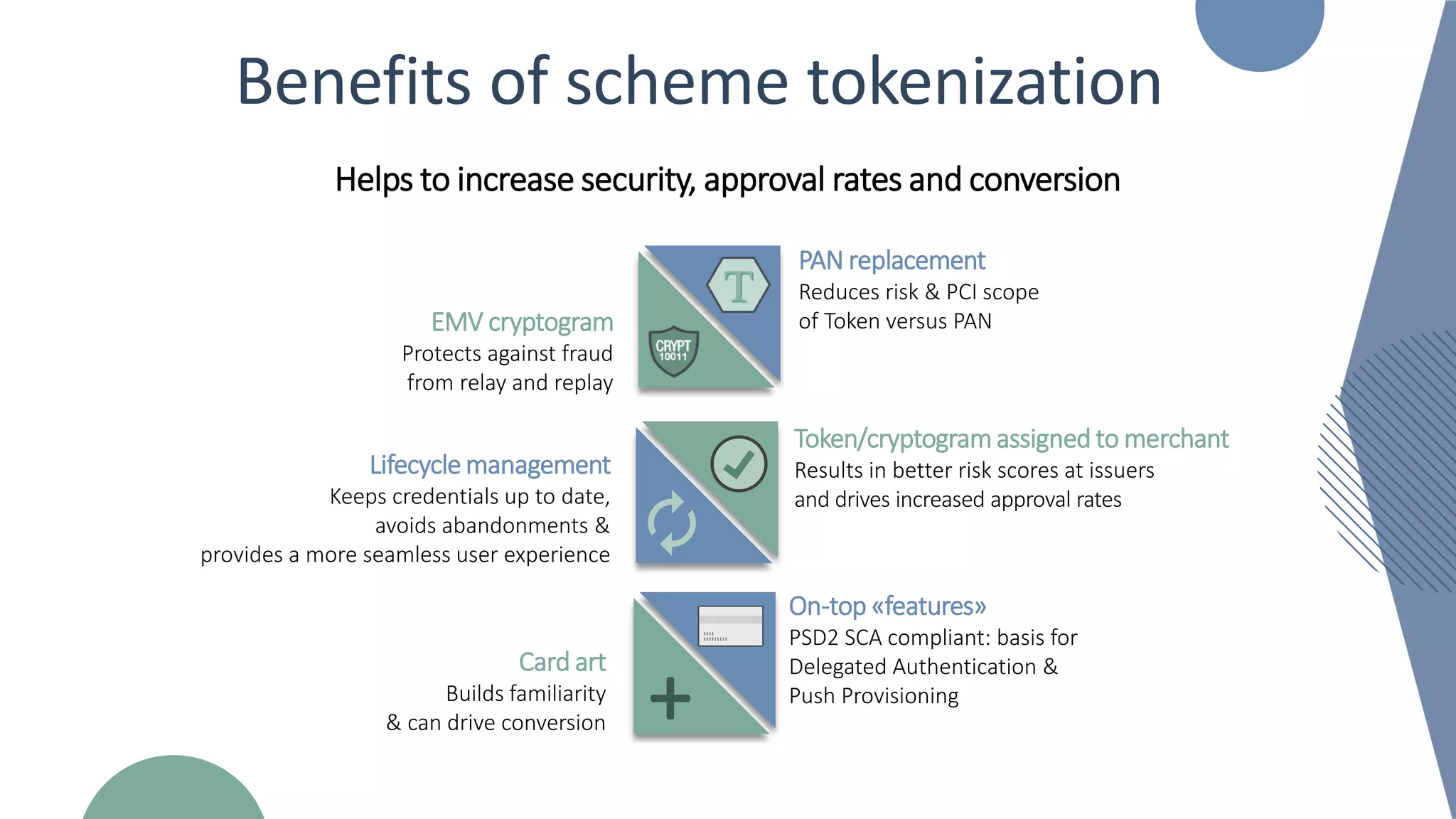
Benefits of scheme tokenization
Helps to increase security, approval rates and conversion
PAN replacement
Reduces risk & PCI scope
of Token versus PAN
Token/cryptogramassigned to merchant
Results in better risk scores at issuers
and drives increased approval rates
On-top «features»
PSD2 SCA compliant: basis for
Delegated Authentication &
Push Provisioning
EMV cryptogram
Protects against fraud
from relay and replay
Lifecycle management
Keeps credentials up to date,
avoids abandonments &
provides a more seamless user experience
Card art
Builds familiarity
& can drive conversion +
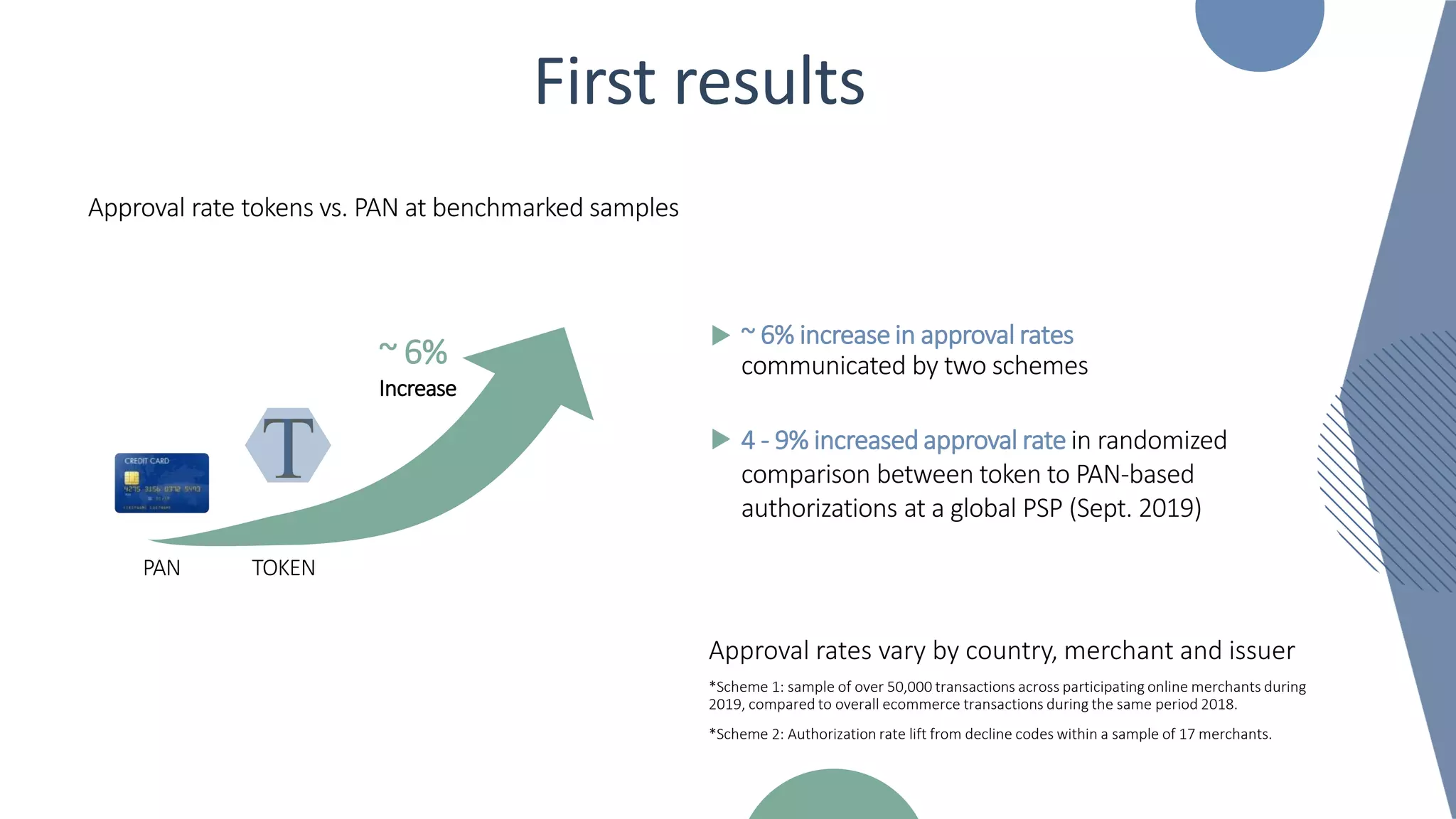
First results
~ 6% increase in approval rates
communicated by two schemes
Approval rate tokens vs. PAN at benchmarked samples
Approval rates vary by country, merchant and issuer
*Scheme 1: sample of over 50,000 transactions across participating online merchants during
2019, compared to overall ecommerce transactions during the same period 2018.
*Scheme 2: Authorization rate lift from decline codes within a sample of 17 merchants.
4 - 9% increased approval rate in randomized
comparison between token to PAN-based
authorizations at a global PSP (Sept. 2019)
PAN TOKEN
~ 6%
Increase
T
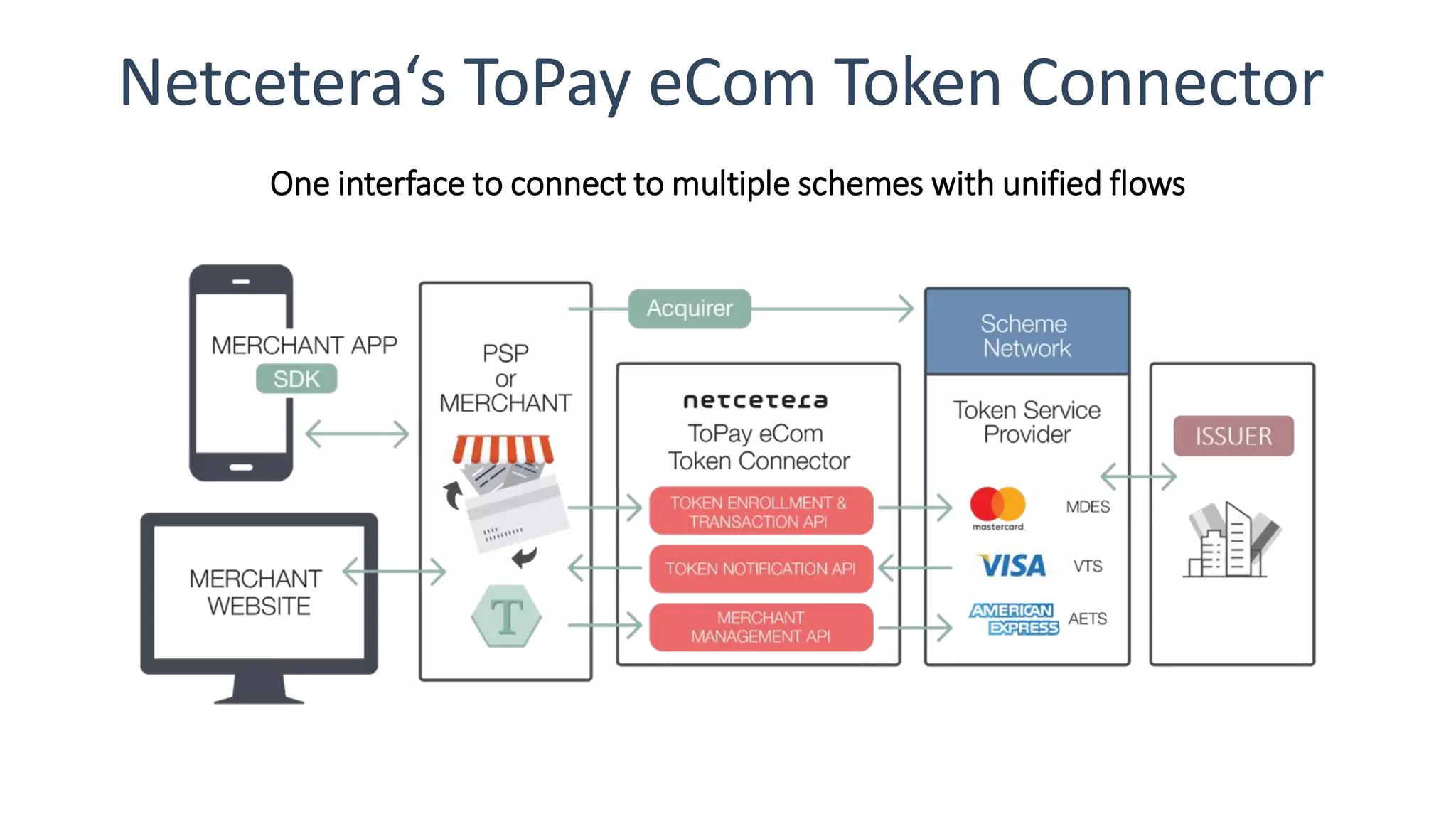
Netcetera‘s ToPay eCom Token Connector
One interface to connect to multiple schemes with unified flows
EMV® Secure Remote Commerce:
Key points of EMV SRC framework
Future standard to make card based e-commerce
checkouts more seamless and secure
Pay securely via single, consistent SRC checkout
button
Scheme neutral (EMVCo) successor of Masterpass
& Visa Checkout to help interoperability
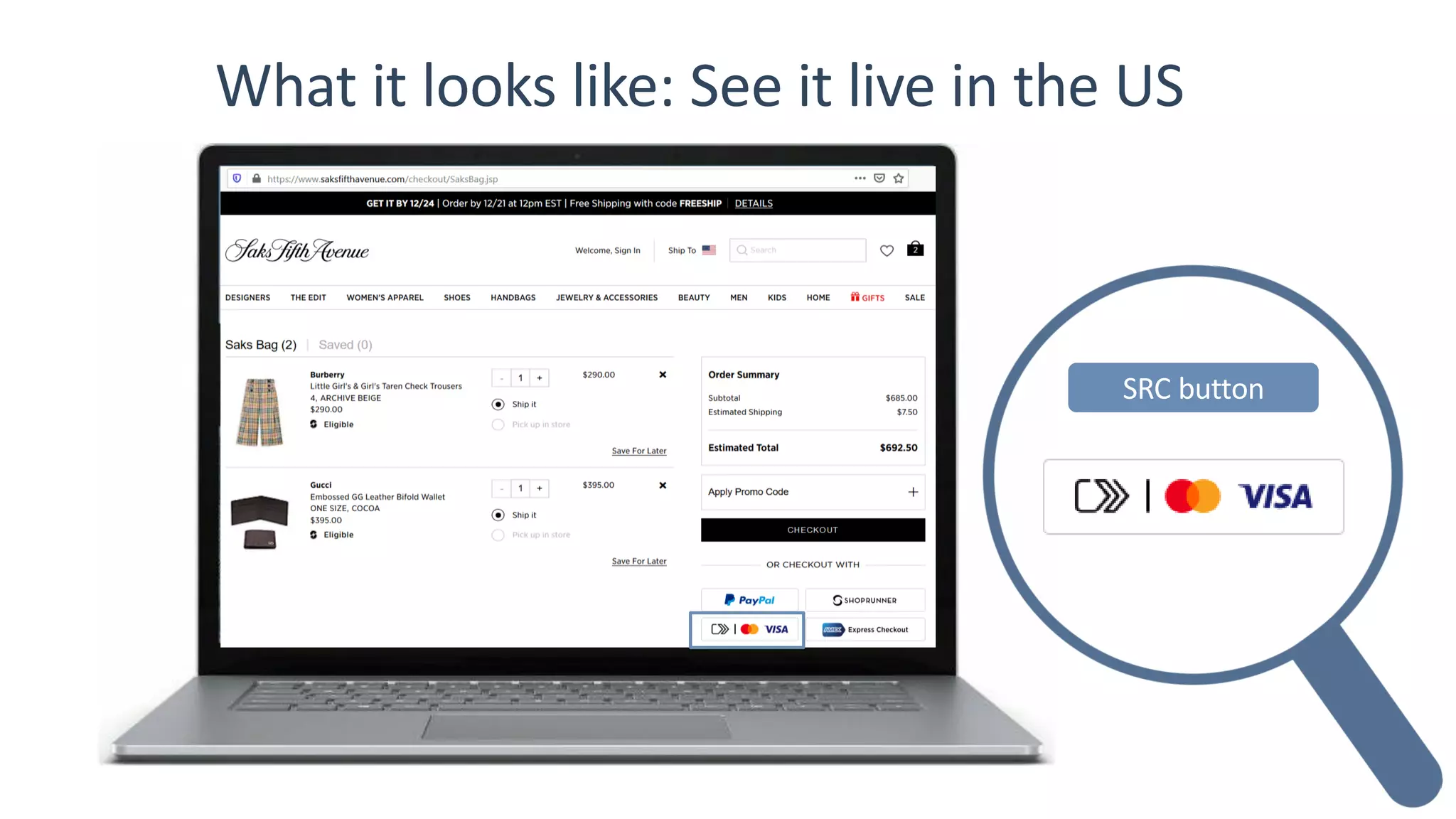
What it looks like: See it live in the US
SRC button
What it looks like: See it live in the US
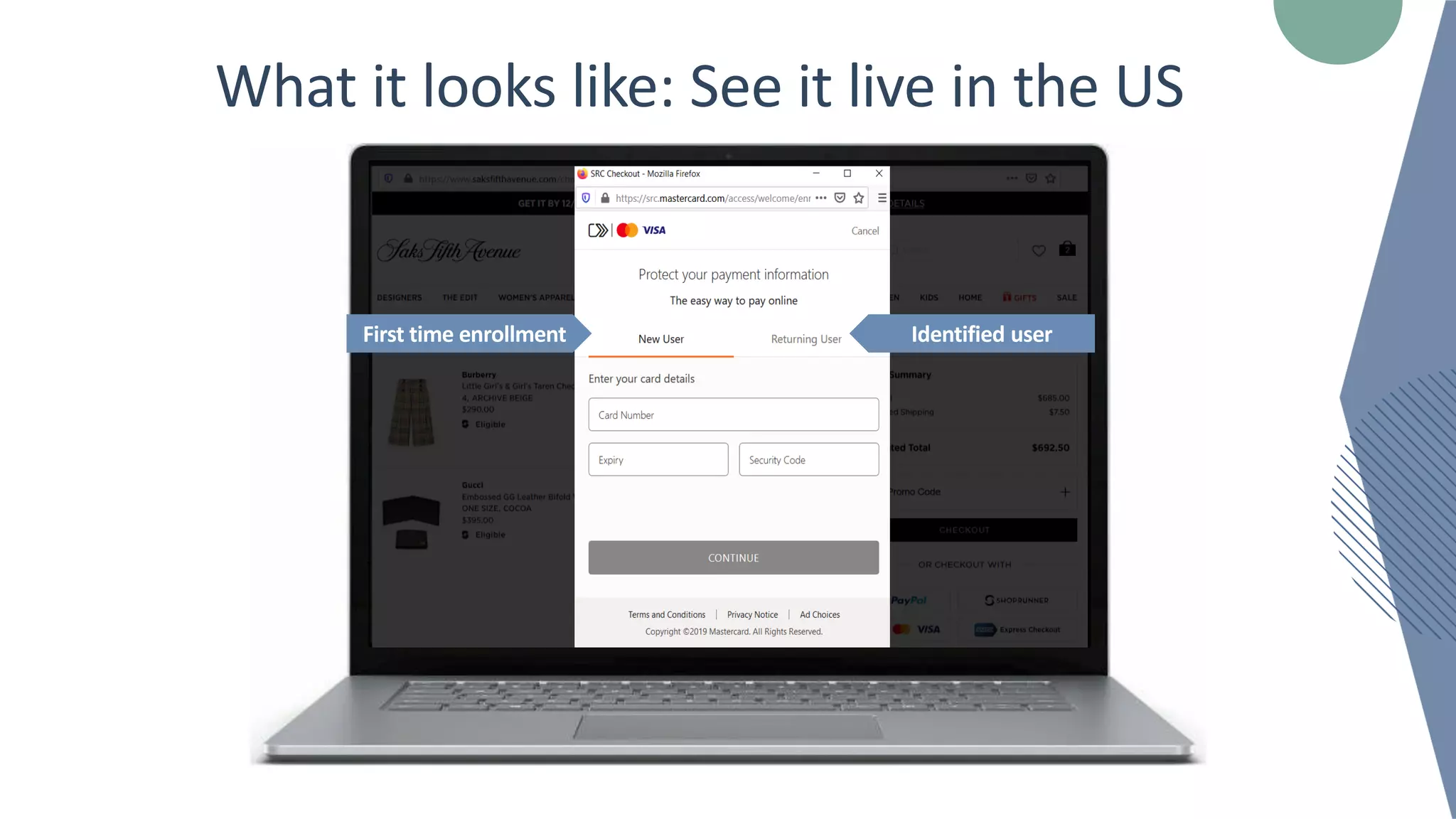
First time enrollment Identified user
What it looks like: See it live in the US
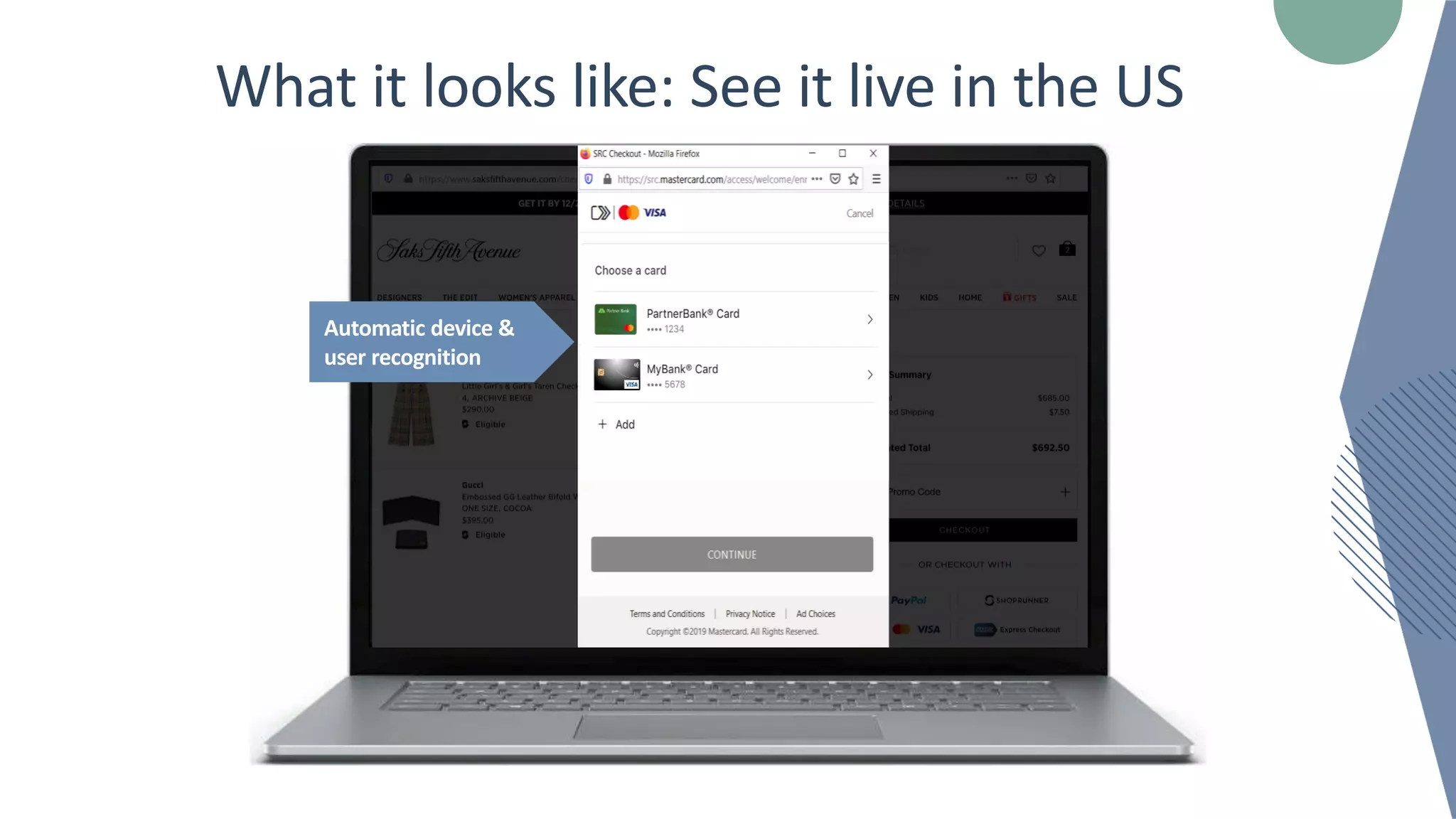
Automatic device &
user recognition
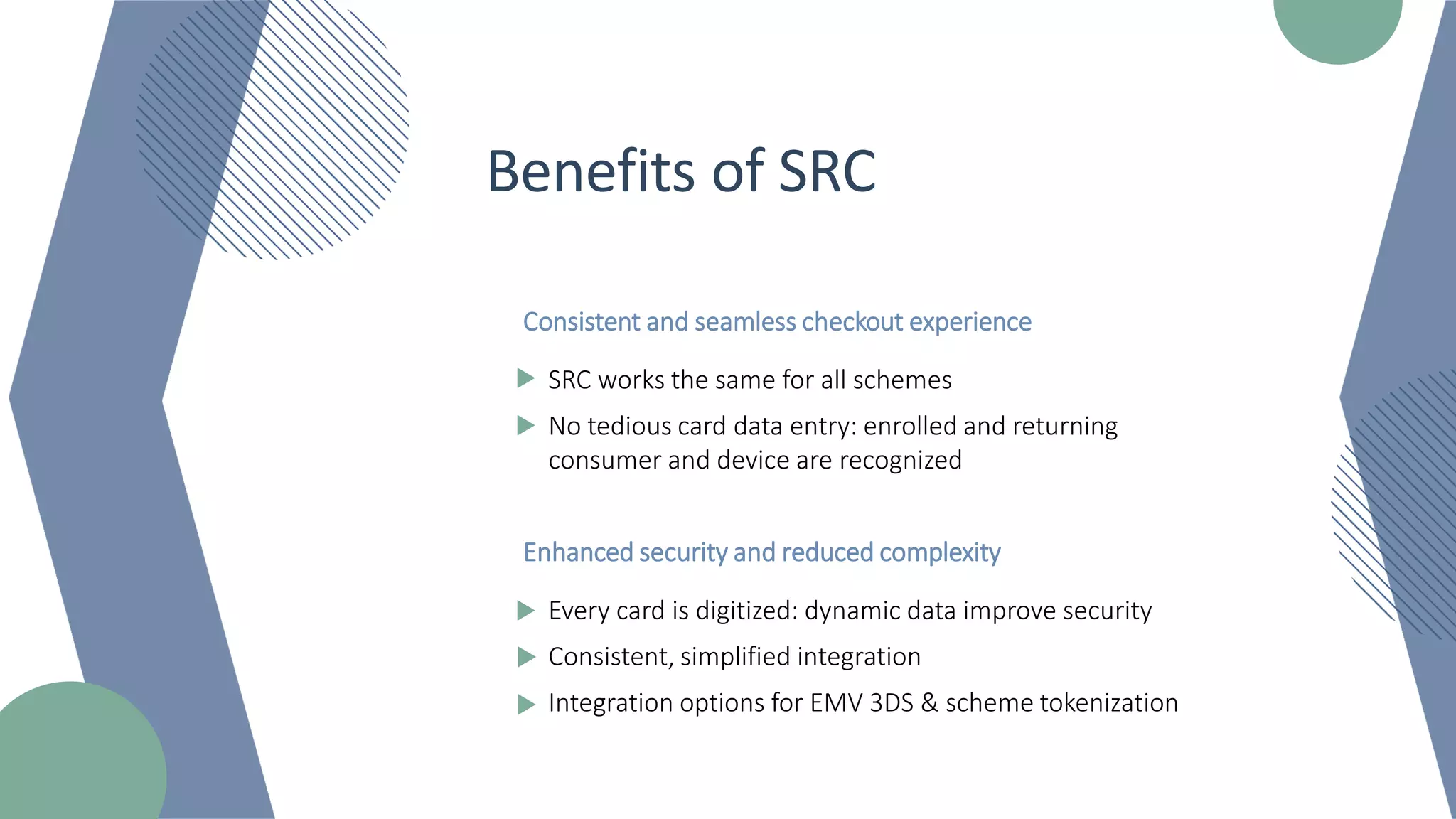
Benefits of SRC
Consistent and seamless checkout experience
SRC works the same for all schemes
No tedious card data entry: enrolled and returning
consumer and device are recognized
Enhanced security and reduced complexity
Every card is digitized: dynamic data improve security
Consistent, simplified integration
Integration options for EMV 3DS & scheme tokenization
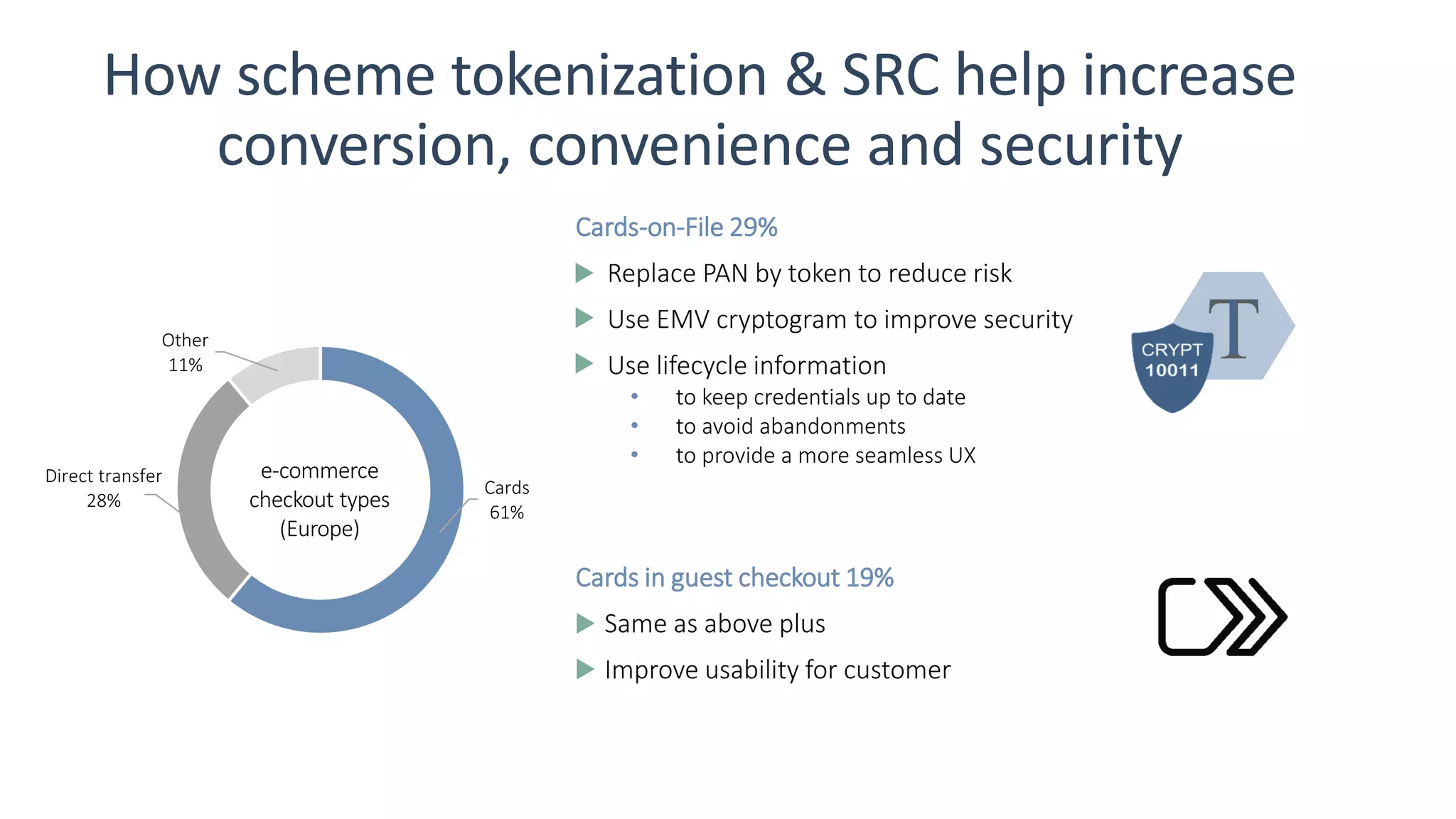
Cards-on-File 29%
Replace PAN by token to reduce risk
Use EMV cryptogram to improve security
Use lifecycle information
• to keep credentials up to date
• to avoid abandonments
• to provide a more seamless UX
Cards in guest checkout 19%
Same as above plus
Improve usability for customer
Cards
61%
Direct transfer
28%
Other
11%
e-commerce
checkout types
(Europe)
How scheme tokenization & SRC help increase
conversion, convenience and security
T
Silke Hubert
Pre-Sales Consultant Digital Payments
silke.hubert@netcetera.com
Visit us at booth P12
Thank you
www.netcetera.com

Increase conversion, convenience and security in e-commerce checkouts - Silke Hubert, Netcetera

  • 1.
    Silke Hubert Pre-Sales ConsultantDigital Payments Increase conversion, convenience and security in e-commerce checkouts Tokenization and Secure Remote Commerce as key technologies
  • 2.
    Trends and challengesin e-commerce Structural shift in-store to e-commerce Increasing level of concentration at large merchants & platforms Regulatory requirements such as PSD2 have strong impact Mobile growth m-commerce & in-app payments Instant and effortless user experience Higher risk/fraud CNP compared to CP Lost transactional revenues abandonments & declines Higher costs for CNP versus CP Low conversion rates especially on mobile channels Inconsistent & inconvenient user experience TRENDS CHALLENGES
  • 3.
    61% of checkoutsare card based and therefore face abandonments, declines and fraud Cards 61% Direct transfer 28% Other 11% 29%Cards-on-File 19%Guest Checkout 13% Digital Wallets eCommerce Checkout Types (Europe) Source: Mastercard, Worldpay,BCG Abandonment & decline rate when 3DS (1.0) is used24% Decline rate when 3DS is not used17% Times higher fraud rate of CNP compared to CP4-10 Customers abandon cart due to long /complicated checkout1in4 E-commerce checkouts
  • 4.
    Central use caseof tokenization: digitize a card Card Issuer Substituting a sensitive data element (PAN) with a non-sensitive equivalent Step-up authentication* T Token Requestor Token Service Provider (Scheme) *e.g. 3DS NPA (Non Payment Authentication) can be used as step up for card digitization
  • 5.
    … already demonstratedby many token requestors Token Requestor Token Service Provider (Scheme) Card Issuer OEM Pays/ Wallets Merchants& PSP IoT IssuerPays/ Wallets NEW
  • 6.
    Tokenization in e-commerce isusing the same principles as for mobile contactless payment PSP Acquirer network T AuthenticationDetokenization PAN Entry CoF Card IssuerToken Requestor Token Service Provider (Scheme)
  • 7.
    main use cases ofe-com tokenization4 ENROLL Add card manually or tokenize from Card-on-File DISPLAY CARDS Card metadata (e.g. card art) coming from token service TRANSACT Generate EMV cryptogram for transactions LIFECYCLE Issuer account update, update of PAN / token status
  • 8.
    Benefits of schemetokenization Helps to increase security, approval rates and conversion PAN replacement Reduces risk & PCI scope of Token versus PAN Token/cryptogramassigned to merchant Results in better risk scores at issuers and drives increased approval rates On-top «features» PSD2 SCA compliant: basis for Delegated Authentication & Push Provisioning EMV cryptogram Protects against fraud from relay and replay Lifecycle management Keeps credentials up to date, avoids abandonments & provides a more seamless user experience Card art Builds familiarity & can drive conversion +
  • 9.
    First results ~ 6%increase in approval rates communicated by two schemes Approval rate tokens vs. PAN at benchmarked samples Approval rates vary by country, merchant and issuer *Scheme 1: sample of over 50,000 transactions across participating online merchants during 2019, compared to overall ecommerce transactions during the same period 2018. *Scheme 2: Authorization rate lift from decline codes within a sample of 17 merchants. 4 - 9% increased approval rate in randomized comparison between token to PAN-based authorizations at a global PSP (Sept. 2019) PAN TOKEN ~ 6% Increase T
  • 10.
    Netcetera‘s ToPay eComToken Connector One interface to connect to multiple schemes with unified flows
  • 11.
    EMV® Secure RemoteCommerce: Key points of EMV SRC framework Future standard to make card based e-commerce checkouts more seamless and secure Pay securely via single, consistent SRC checkout button Scheme neutral (EMVCo) successor of Masterpass & Visa Checkout to help interoperability
  • 12.
    What it lookslike: See it live in the US SRC button
  • 13.
    What it lookslike: See it live in the US First time enrollment Identified user
  • 14.
    What it lookslike: See it live in the US Automatic device & user recognition
  • 15.
    Benefits of SRC Consistentand seamless checkout experience SRC works the same for all schemes No tedious card data entry: enrolled and returning consumer and device are recognized Enhanced security and reduced complexity Every card is digitized: dynamic data improve security Consistent, simplified integration Integration options for EMV 3DS & scheme tokenization
  • 16.
    Cards-on-File 29% Replace PANby token to reduce risk Use EMV cryptogram to improve security Use lifecycle information • to keep credentials up to date • to avoid abandonments • to provide a more seamless UX Cards in guest checkout 19% Same as above plus Improve usability for customer Cards 61% Direct transfer 28% Other 11% e-commerce checkout types (Europe) How scheme tokenization & SRC help increase conversion, convenience and security T
  • 17.
    Silke Hubert Pre-Sales ConsultantDigital Payments silke.hubert@netcetera.com Visit us at booth P12 Thank you www.netcetera.com