Incorporating Multimedia
        in Differentiated
              Instruction


                      Eric Walter
                         AET 545
                    Carrie Lewis
                   July 30, 2012
Instructional Goal
   Given the task of incorporating
    multimedia usage in differentiated
    instruction, teachers should be able to
    incorporate media such as
    video, audio, and visual graphics into their
    instruction
Objectives
   The instructor will be able to effectively use
    compute based game for kinesthetic learners
   The teacher will have a working knowledge of
    how to incorporate audio media in their
    lessons for auditory learners
   The teacher will know how to integrate
    videos and other visual aids in their
    instruction in order to accommodate visual
    learners
The Importance of Differentiated
Instruction
   The major purpose of differentiated
    instruction is to maximize each student’s
    educational growth by reaching each pupil on
    an individual level (Logan, 2011)
   Reaching students on an individual level
    means adapting to each student’s learning
    style
    ◦ Visual learners are able to retain information more
      effectively through the use of images or videos
    ◦ Auditory learners acquire information through
      listening
    ◦ Kinesthetic/Tactile learners are better able to
      remember lessons that involve physical activities
The Importance of Differentiated
Instruction (Cont.)
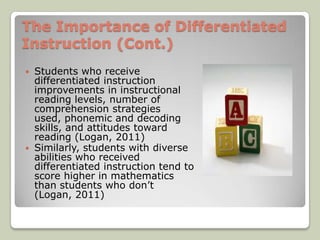
 Students who receive
  differentiated instruction
  improvements in instructional
  reading levels, number of
  comprehension strategies
  used, phonemic and decoding
  skills, and attitudes toward
  reading (Logan, 2011)
 Similarly, students with diverse
  abilities who received
  differentiated instruction tend to
  score higher in mathematics
  than students who don’t
  (Logan, 2011)
Meeting the Needs of the
Individual

   Using audio narratives is relatively simple
    and easy to use for auditory learners (Clark &
    Mayer, 2008)
    ◦ Using podcasts in the classroom can help teachers
      reach auditory learners and be used for future
      lessons
    ◦ Podcasts can also be created by the students so
      that they can have a sense of vested interest in the
      lesson
    ◦ Instructors can incorporate audio players to be
      used in read along instruction at listening centers
Meeting the Needs of the
Individual (Cont.)

   Graphics, pictures, and visually appealing
    text can help learners who are visual
   Videos can also prove to be an invaluable
    source of multimedia that can be used in the
    classroom and allows an instructor to bring
    the real world into his or her classroom
    ◦ Instructors can utilize video media by showing
      theatrical versions of literature readings
    ◦ Pictures can also aid visual learners by giving them
      a visual idea of a goal that should be achieved
Meeting the Needs of the
Individual (Cont.)
           Through proper use of
            technology, kinesthetic learners can
            be reached on the educational level
            ◦ Though kinesthetic learners absorb
              knowledge best through physical
              activities, they are also able to learn via
              computer games and similar activities
            ◦ Many websites offer free online
              educational games that can aid these
              learners
               Starfall.com
               Prongo.com
               Learninggamesforkids.com
The Pitfalls of Multimedia Usage
   Overreliance on one form of differentiated instruction
    leading to neglect of students of different learning
    styles
    ◦ Graphics, pictures, and visually appealing text can
      possibility cause the non-visual learners to become
      distracted
    ◦ Using a style of instruction based solely on audio narration
      may alienate students who are not audio learners
   It is important for instructors to keep media usage
    relevant to the subject matter
    ◦ It is very easy for instructors to utilize technology solely for
      the sake of using it; with little relevance to the subject
      matter causing students to become distracted (Tajima
      2010)
Conclusion
   Differentiated learning techniques are
    designed to reach students based on their
    individual learning styles
   Learning is improved by the use of relevant
    media combined with words to present
    meaningful instructional content (Clark &
    Mayer, 2008)
   Multimedia usage should remain relevant to
    the subject material
    ◦ If not, the media runs the risk of serving only as a
      distraction
References
   Clark, R. C., & Mayer, R. E. (2008). e-Learning
    and the Science of Instruction. Proven Guidelines
    for Consumers and Designers of Multimedia
    Learning, Second Edition
   Logan, B. (2011, October). Examining
    differentiated instruction: Teachers respond. .
    Research in Higher Education Journal, 13(), 14p.
   Tajima, T. (2003). Multimedia and e-Learning: A
    New Direction for Productivity Promotion and
    Enhancement. Hirakawacho, Chiyoda-ku, Tokyo:
    Asian Productivity Organization

Incorporating multimedia in differentiated instruction

  • 1.
    Incorporating Multimedia in Differentiated Instruction Eric Walter AET 545 Carrie Lewis July 30, 2012
  • 2.
    Instructional Goal  Given the task of incorporating multimedia usage in differentiated instruction, teachers should be able to incorporate media such as video, audio, and visual graphics into their instruction
  • 3.
    Objectives  The instructor will be able to effectively use compute based game for kinesthetic learners  The teacher will have a working knowledge of how to incorporate audio media in their lessons for auditory learners  The teacher will know how to integrate videos and other visual aids in their instruction in order to accommodate visual learners
  • 4.
    The Importance ofDifferentiated Instruction  The major purpose of differentiated instruction is to maximize each student’s educational growth by reaching each pupil on an individual level (Logan, 2011)  Reaching students on an individual level means adapting to each student’s learning style ◦ Visual learners are able to retain information more effectively through the use of images or videos ◦ Auditory learners acquire information through listening ◦ Kinesthetic/Tactile learners are better able to remember lessons that involve physical activities
  • 5.
    The Importance ofDifferentiated Instruction (Cont.)  Students who receive differentiated instruction improvements in instructional reading levels, number of comprehension strategies used, phonemic and decoding skills, and attitudes toward reading (Logan, 2011)  Similarly, students with diverse abilities who received differentiated instruction tend to score higher in mathematics than students who don’t (Logan, 2011)
  • 6.
    Meeting the Needsof the Individual  Using audio narratives is relatively simple and easy to use for auditory learners (Clark & Mayer, 2008) ◦ Using podcasts in the classroom can help teachers reach auditory learners and be used for future lessons ◦ Podcasts can also be created by the students so that they can have a sense of vested interest in the lesson ◦ Instructors can incorporate audio players to be used in read along instruction at listening centers
  • 7.
    Meeting the Needsof the Individual (Cont.)  Graphics, pictures, and visually appealing text can help learners who are visual  Videos can also prove to be an invaluable source of multimedia that can be used in the classroom and allows an instructor to bring the real world into his or her classroom ◦ Instructors can utilize video media by showing theatrical versions of literature readings ◦ Pictures can also aid visual learners by giving them a visual idea of a goal that should be achieved
  • 8.
    Meeting the Needsof the Individual (Cont.)  Through proper use of technology, kinesthetic learners can be reached on the educational level ◦ Though kinesthetic learners absorb knowledge best through physical activities, they are also able to learn via computer games and similar activities ◦ Many websites offer free online educational games that can aid these learners  Starfall.com  Prongo.com  Learninggamesforkids.com
  • 9.
    The Pitfalls ofMultimedia Usage  Overreliance on one form of differentiated instruction leading to neglect of students of different learning styles ◦ Graphics, pictures, and visually appealing text can possibility cause the non-visual learners to become distracted ◦ Using a style of instruction based solely on audio narration may alienate students who are not audio learners  It is important for instructors to keep media usage relevant to the subject matter ◦ It is very easy for instructors to utilize technology solely for the sake of using it; with little relevance to the subject matter causing students to become distracted (Tajima 2010)
  • 10.
    Conclusion  Differentiated learning techniques are designed to reach students based on their individual learning styles  Learning is improved by the use of relevant media combined with words to present meaningful instructional content (Clark & Mayer, 2008)  Multimedia usage should remain relevant to the subject material ◦ If not, the media runs the risk of serving only as a distraction
  • 11.
    References  Clark, R. C., & Mayer, R. E. (2008). e-Learning and the Science of Instruction. Proven Guidelines for Consumers and Designers of Multimedia Learning, Second Edition  Logan, B. (2011, October). Examining differentiated instruction: Teachers respond. . Research in Higher Education Journal, 13(), 14p.  Tajima, T. (2003). Multimedia and e-Learning: A New Direction for Productivity Promotion and Enhancement. Hirakawacho, Chiyoda-ku, Tokyo: Asian Productivity Organization

Editor's Notes

  • #5 At this point, participants should be given examples of activities that reach each individual learner.For example, letter blocks should be given to participants as they are told to create words using the blocks.Learners may also be given a short text to read as audio narration is played in the background.
  • #6 Participants should be asked why they feel the data turned out in such a way.
  • #7 Participants can be shown examples of podcasts designed by teachers. As well, participants can listen to podcasts that are generated by students. Lastly, participants can record and play their own podcast of a pre-designated topic.
  • #8 Participants should be shown a picture of a colored block arrangement, then given instructions on how to form said arrangement. Then, ask the participants if viewing the arrangement beforehand helped them to achieve their goal and why.
  • #9 A learning game from one of the mentioned websites can be previewed and played by participants at this point.
  • #11 Questions, comments, concerns.