Diversity and
Developing
Cultural
Competency in
the Workplace
Definition of Diversity
 The concept of diversity encompasses
 acceptance and respect. It means
 understanding that each individual is
 unique, and recognizes our individual
 differences. These can be along the
 dimensions of
 race, ethnicity, gender, sexual
 orientation, socio-economic
 status, age, physical abilities, religious
 beliefs, political beliefs, or other
 ideologies.
Definition of Workforce
Diversity
 According   to Daft (2005) “workforce
 diversity is made up of people with
 difference human qualities or who belong
 to various cultural groups (p.431).”
Why is diversity important?
 Diversity is important because we live in
  an ever growing global society and as
  leaders we need to have an
  understanding and appreciation for
  cultural differences and backgrounds to
  build the best teams and be competitive
  in the global market.
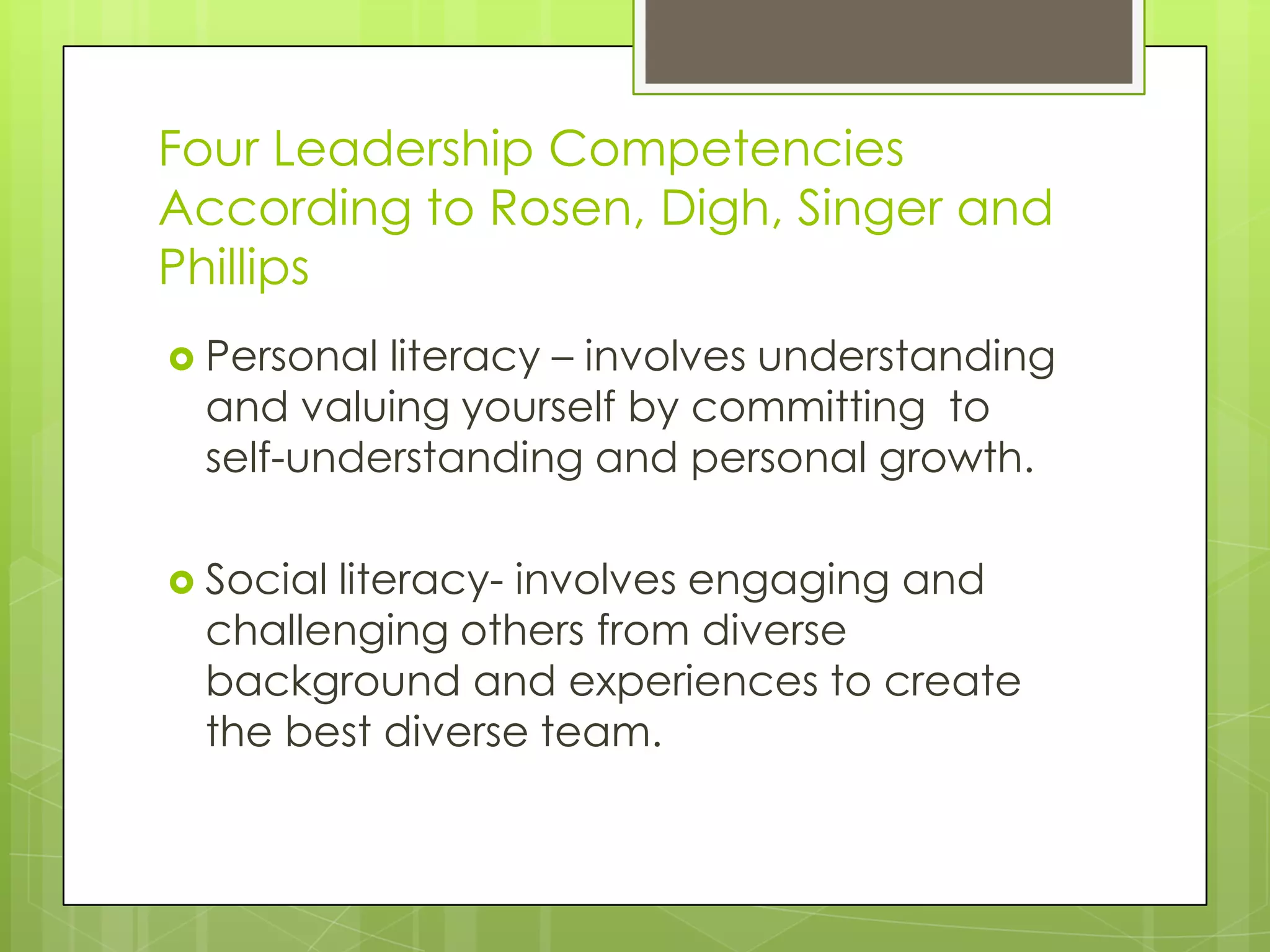
Four Leadership Competencies
According to Rosen, Digh, Singer and
Phillips
 Personalliteracy – involves understanding
 and valuing yourself by committing to
 self-understanding and personal growth.

 Social
       literacy- involves engaging and
 challenging others from diverse
 background and experiences to create
 the best diverse team.
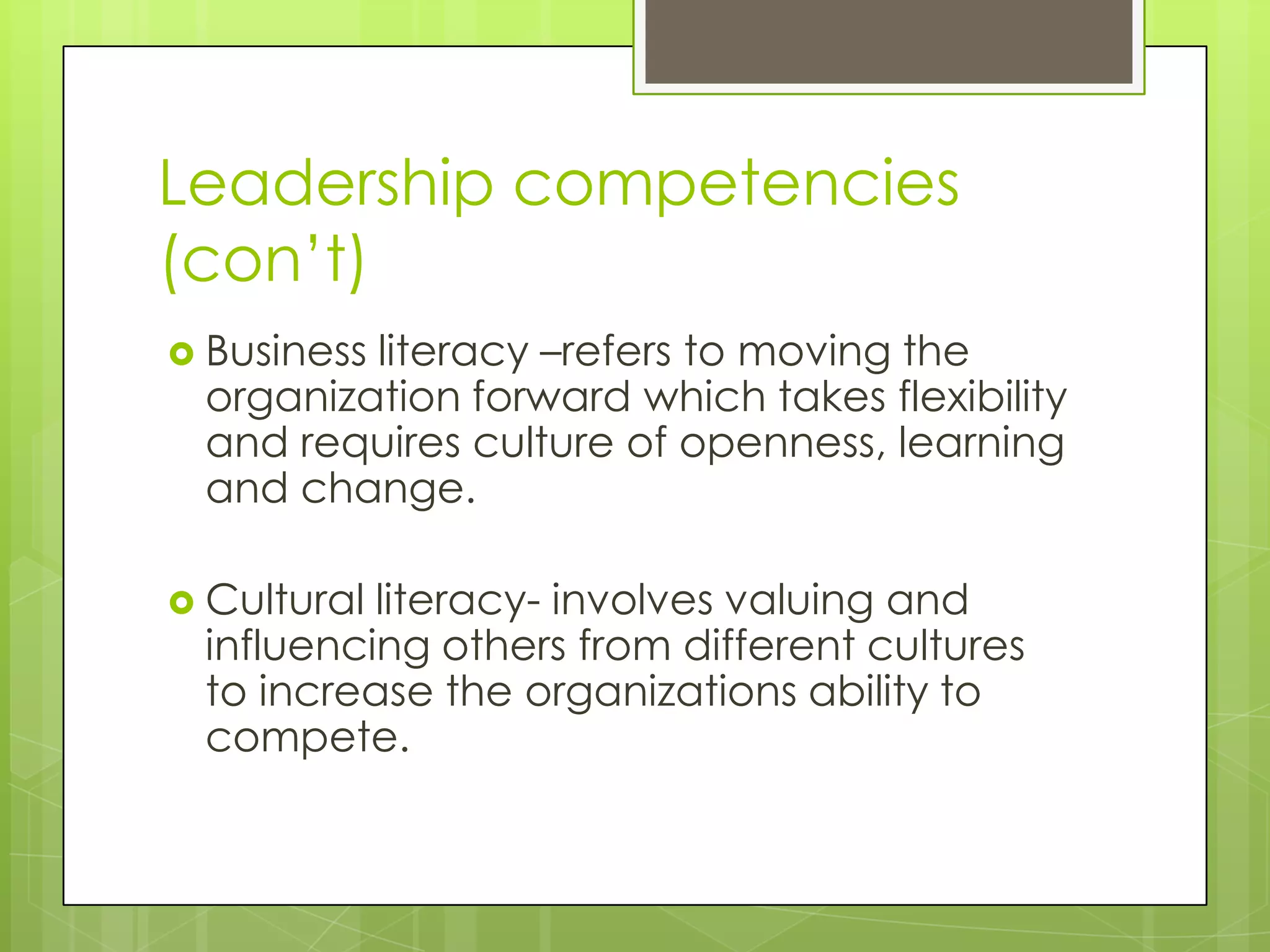
Leadership competencies
(con’t)
 Business
         literacy –refers to moving the
 organization forward which takes flexibility
 and requires culture of openness, learning
 and change.

 Culturalliteracy- involves valuing and
 influencing others from different cultures
 to increase the organizations ability to
 compete.
Reflection
 Pleasetake time to reflect on how you
 can improve your cultural competency
 and what it means to live and work in a
 global society.

 Remember    it is not in the “doing” where
 we grow personally and professionally, it is
 in the reflection of the activity.
References

 Daft,R.L. (2005). The leadership
     experience. Canada: South-western.
 Rosen, R., Digh, P., Singer, M. &Phillips,
     C. (2000). Global literacies: Lessons on
     business leadership. New York: Simon
     and Schuster

Importance of diversity in

  • 1.
  • 2.
    Definition of Diversity The concept of diversity encompasses acceptance and respect. It means understanding that each individual is unique, and recognizes our individual differences. These can be along the dimensions of race, ethnicity, gender, sexual orientation, socio-economic status, age, physical abilities, religious beliefs, political beliefs, or other ideologies.
  • 3.
    Definition of Workforce Diversity According to Daft (2005) “workforce diversity is made up of people with difference human qualities or who belong to various cultural groups (p.431).”
  • 4.
    Why is diversityimportant?  Diversity is important because we live in an ever growing global society and as leaders we need to have an understanding and appreciation for cultural differences and backgrounds to build the best teams and be competitive in the global market.
  • 5.
    Four Leadership Competencies Accordingto Rosen, Digh, Singer and Phillips  Personalliteracy – involves understanding and valuing yourself by committing to self-understanding and personal growth.  Social literacy- involves engaging and challenging others from diverse background and experiences to create the best diverse team.
  • 6.
    Leadership competencies (con’t)  Business literacy –refers to moving the organization forward which takes flexibility and requires culture of openness, learning and change.  Culturalliteracy- involves valuing and influencing others from different cultures to increase the organizations ability to compete.
  • 7.
    Reflection  Pleasetake timeto reflect on how you can improve your cultural competency and what it means to live and work in a global society.  Remember it is not in the “doing” where we grow personally and professionally, it is in the reflection of the activity.
  • 8.
    References  Daft,R.L. (2005).The leadership experience. Canada: South-western.  Rosen, R., Digh, P., Singer, M. &Phillips, C. (2000). Global literacies: Lessons on business leadership. New York: Simon and Schuster