Why they must be rapid for successful non-
invasive PAD treatment
►An effective arterial
pump is not modeled
after lymphedema
pumps or DVT
prophylaxes.
►This is because an
effective arterial pump
is designed specifically
to treat arterial disease
– not venous or
lymphatic diseases.
The ArtAssist® device uses a uniquely
optimized intermittent pneumatic
compression technique to maximize
blood flow to the legs and feet.
►Patient in a sitting position
►Sequential foot & calf compression
►Cuff inflation pressure of 120 mmHg
 Cuff inflation & deflation rates well
under 0.5 seconds
Effective arterial pumps will meet each of
these four standards without compromise.
• Rapid inflation & deflation rates are absolutely essential to
successful PAD treatment with an arterial pump.
• It all has to do with a phenomenon called arteriogenesis,
the growth of small collateral bypass arteries around a
blockage after continued compression therapy.
Before
arterial
pump
therapy
After 4
months of
arterial
pump
therapy
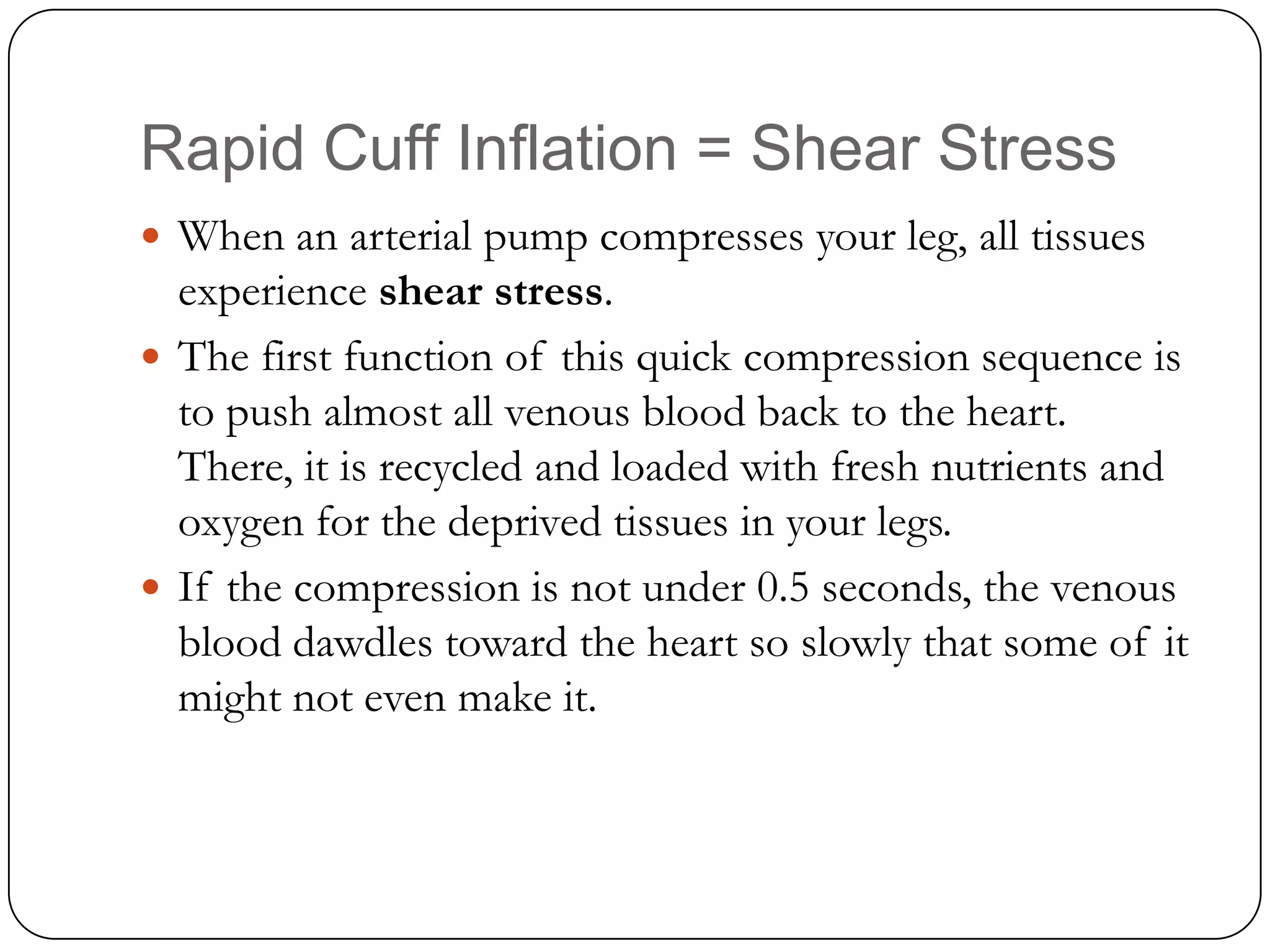
►When an arterial pump rapidly compresses your
leg, all tissues experience shear stress.
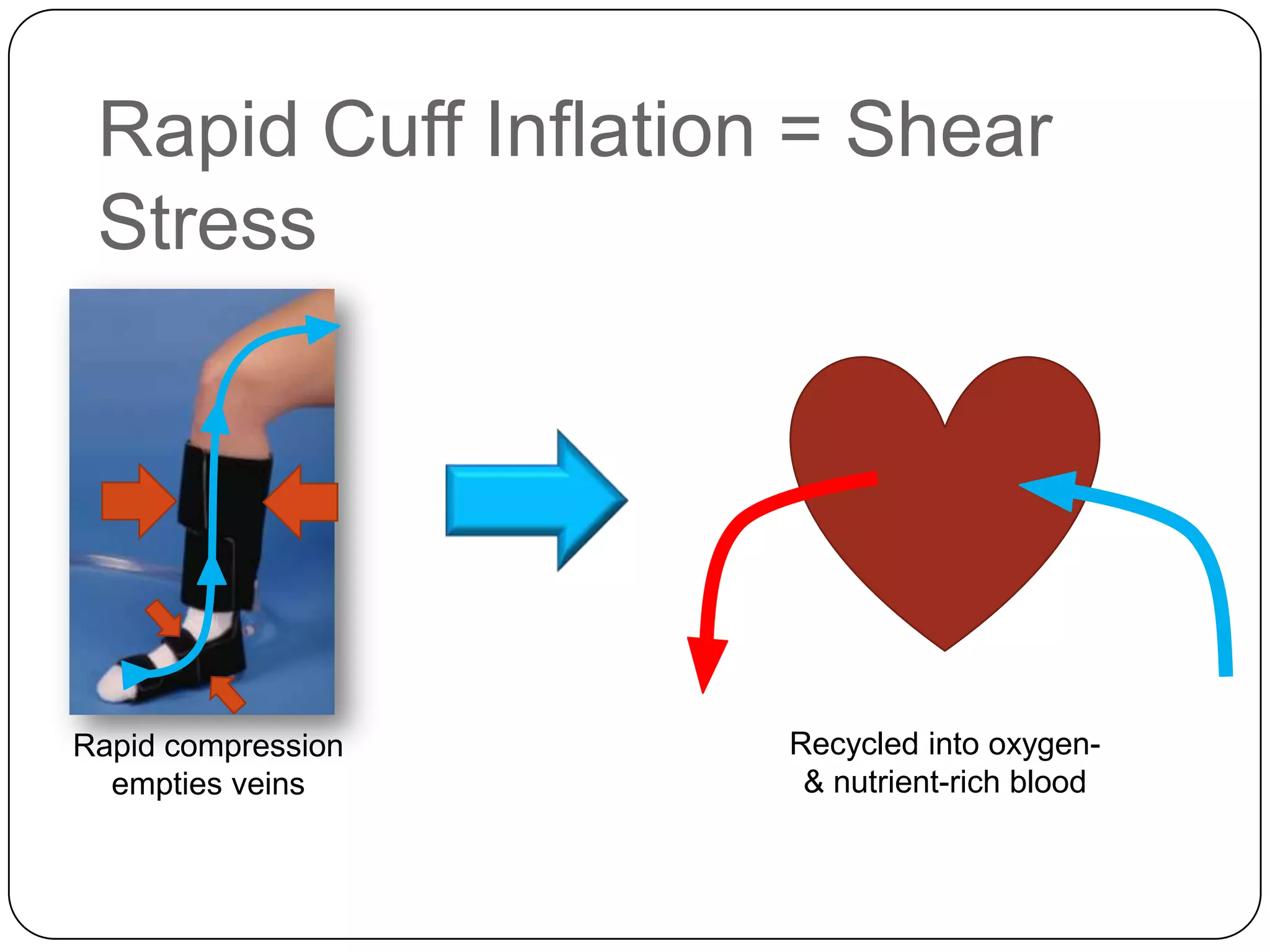
►The first function of this quick compression
sequence is to push almost all venous blood back
to the heart. There, it is recycled and loaded with
fresh nutrients and oxygen for the deprived tissues
in your legs.
►If the compression is not under 0.5 seconds, the
venous blood dawdles toward the heart so slowly
that some of it might not even make it.
Rapid
compression
empties veins
Recycled into
oxygen- &
nutrient-rich
blood
Rapid Cuff Inflation =
Shear Stress
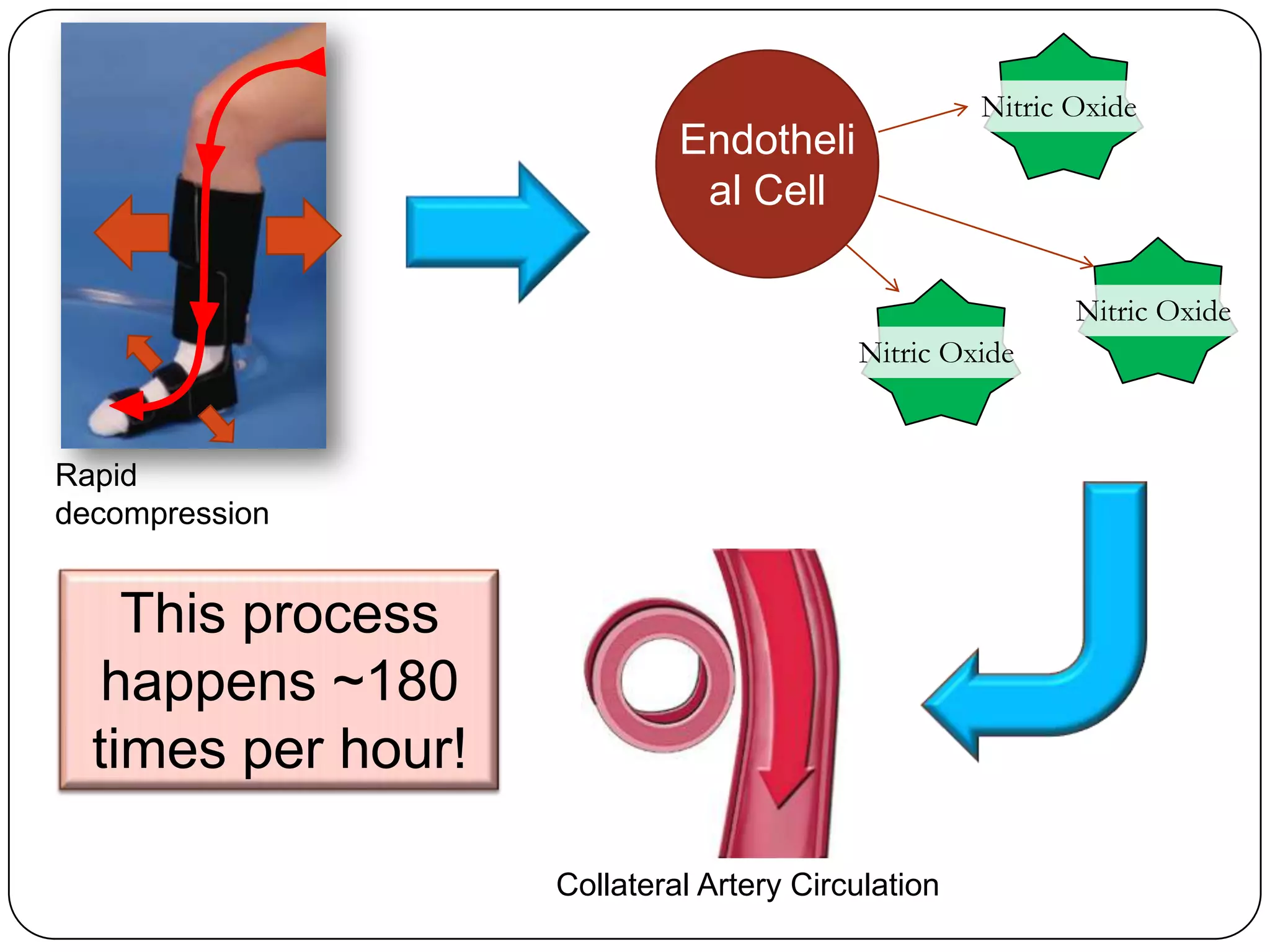
►When the cuffs rapidly deflate under 0.5 seconds,
they let an important flood of oxygen- and nutrient-
rich blood through to your entire leg (slower deflation
would let a weaker stream through).
►When blood rushes past, cells that line the arteries
(endothelium) naturally produce a chemical called
Nitric Oxide (vasodilator), a muscle relaxant, and
other substances.
►This muscle relaxant temporarily opens the small
collateral vessels.
►The arterial pump compresses your leg 3 times per
minute so that the small collateral vessels are
constantly opened.
Rapid
decompression
Endothe
lial Cell
Nitric Oxide
Nitric Oxide
Nitric Oxide
Collateral Artery Circulation
This process
happens ~180
times per hour!
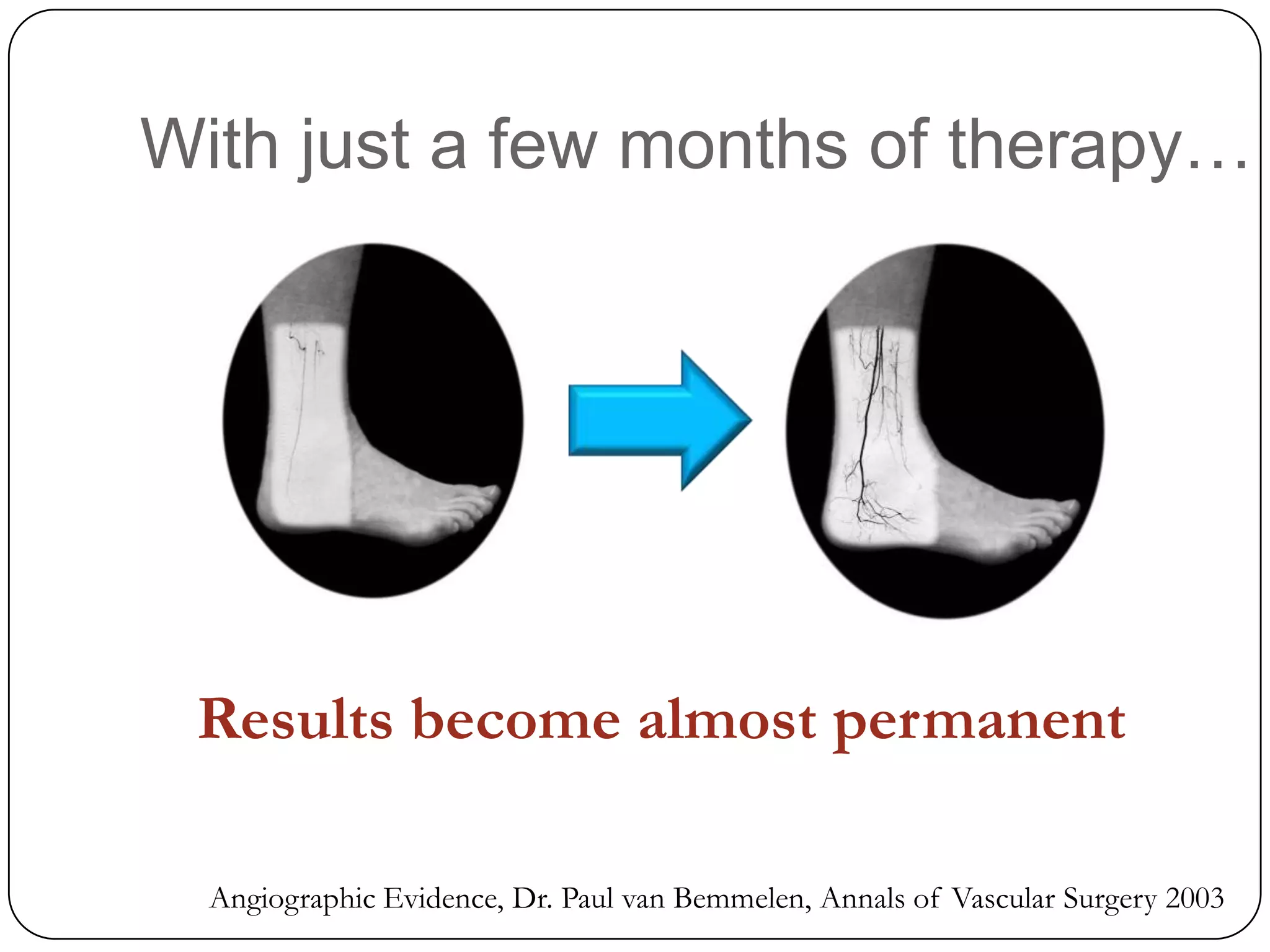
Results become long-term
Angiographic Evidence, Dr. Paul van Bemmelen, Annals of Vascular Surgery 2003
Optimized to treat
PAD
25+ published
clinical studies
86% - 94% limb
salvage rates in
studies performed at
multiple centers
The only device…
(888) 4 LEG FLO
ArtAssist.com
Developer, manufacturer & distributor of
ArtAssist®…The Arterial Assist Device®
San Marcos, California
Prescribing
 Recommended regimen: 1 hour T.I.D. for 90
days
 Provide patient’s name and phone number
 Fax to (760) 744-4401 or email to
info@acimedical.com
 Let ACI Medical handle the rest
 Delivery, training & full customer support

Importance of Arterial Pump Compression & Decompression Rates

  • 1.
    Why they mustbe rapid for successful non- invasive PAD treatment
  • 2.
    ►An effective arterial pumpis not modeled after lymphedema pumps or DVT prophylaxes. ►This is because an effective arterial pump is designed specifically to treat arterial disease – not venous or lymphatic diseases. The ArtAssist® device uses a uniquely optimized intermittent pneumatic compression technique to maximize blood flow to the legs and feet.
  • 3.
    ►Patient in asitting position ►Sequential foot & calf compression ►Cuff inflation pressure of 120 mmHg  Cuff inflation & deflation rates well under 0.5 seconds Effective arterial pumps will meet each of these four standards without compromise.
  • 4.
    • Rapid inflation& deflation rates are absolutely essential to successful PAD treatment with an arterial pump. • It all has to do with a phenomenon called arteriogenesis, the growth of small collateral bypass arteries around a blockage after continued compression therapy. Before arterial pump therapy After 4 months of arterial pump therapy
  • 5.
    ►When an arterialpump rapidly compresses your leg, all tissues experience shear stress. ►The first function of this quick compression sequence is to push almost all venous blood back to the heart. There, it is recycled and loaded with fresh nutrients and oxygen for the deprived tissues in your legs. ►If the compression is not under 0.5 seconds, the venous blood dawdles toward the heart so slowly that some of it might not even make it.
  • 6.
    Rapid compression empties veins Recycled into oxygen-& nutrient-rich blood Rapid Cuff Inflation = Shear Stress
  • 7.
    ►When the cuffsrapidly deflate under 0.5 seconds, they let an important flood of oxygen- and nutrient- rich blood through to your entire leg (slower deflation would let a weaker stream through). ►When blood rushes past, cells that line the arteries (endothelium) naturally produce a chemical called Nitric Oxide (vasodilator), a muscle relaxant, and other substances. ►This muscle relaxant temporarily opens the small collateral vessels. ►The arterial pump compresses your leg 3 times per minute so that the small collateral vessels are constantly opened.
  • 8.
    Rapid decompression Endothe lial Cell Nitric Oxide NitricOxide Nitric Oxide Collateral Artery Circulation This process happens ~180 times per hour!
  • 9.
    Results become long-term AngiographicEvidence, Dr. Paul van Bemmelen, Annals of Vascular Surgery 2003
  • 10.
    Optimized to treat PAD 25+published clinical studies 86% - 94% limb salvage rates in studies performed at multiple centers The only device… (888) 4 LEG FLO ArtAssist.com
  • 11.
    Developer, manufacturer &distributor of ArtAssist®…The Arterial Assist Device® San Marcos, California Prescribing  Recommended regimen: 1 hour T.I.D. for 90 days  Provide patient’s name and phone number  Fax to (760) 744-4401 or email to info@acimedical.com  Let ACI Medical handle the rest  Delivery, training & full customer support

Editor's Notes

  • #4 Foot, ankle & calf?
  • #6 Nitric oxide?
  • #7 Add NO?
  • #8 The cells that line blood vessels