Journal of Research and Reflections in Education
June 2010, Vol.4, No.1, pp 14 -26
http://www.ue.edu.pk/jrre
Impact of Parental Support on the Academic Performance and
Self Concept of the Student
Ms Bushra Iqbal Chohan and Rehana Masrur Khan
Abstract: This study examines the impact of educational support given
by the parents on the academic achievement and on the self concept of
grade 4 public school students. The aims of this study were (a) to
examine the linkage between academic achievement and educational
support provided to the child at home and, (b) to determine whether this
support directly or indirectly effects child's self concept. The data
regarding parental support, its effects on the academic achievement and
the self concept were collected from a sample (N =305) of grade 4
students in the urban primary and elementary public schools. The
sample students who have or have not parental support were compared
on two measures, (a) the annual school result report and, (b) the self
concept scale. The self concept was measured twice i.e. before one
month of annual school examination and after one month of
announcement of annual results. The findings of the study revealed that
parents’ contribution to their children's education has a consistent and
positive effect on academic achievement and on the self-concept.
Keywords: parental support, self concept, academic achievement
Introduction
Over the past several decades, scholars are concerned with the poor academic
performance of children. The research studies revealed that various factors are
responsible for scholastic failure of students, such as low socio-economic background,
student’s cognitive abilities, school related factors, environment of the home, or the
support given by the parents and other family members (Khan & Malik, 1999; Fan, 2001;
Gonzalez- Pienda, Nunez, Gonzalez- Pumariega, Alvarez, Roces and Garcia, 2002)
Generally, schools are considered as places which provide appropriate learning
environment for a child, but importance of parents and community cannot be ignored.
Parents, adult family members, and siblings contribute significantly to various
components of personality of the child particularly and in improving his/her academic
performance.
JRRE Vol.4, No.1, 2010
15
The pivotal role of parents still continues as it has been recognized by the
teachers and parents themselves that they are essential for complete development of the
personality and career of their children. Gonzalez- Pienda, et al.,(2002) indicated that
“without the children's parental support, it is hard for teachers to devise academic
experiences to help students learn meaningful content” (p.281). In home settings, the
learning processes occur explicitly or consciously, often in an informal way. Parents
teach and train children early in their lives, the fundamental skills, attitudes and values
necessary for day-to-day living (UNESCO, 1992). The unwritten knowledge being
conveyed by parents to their children, is specific and to a certain degree, specialized, i.e.
that which would enable the children to cope successfully with the requirements of the
immediate confines of homes and the community.
Parental Support and Academic Achievement
Fan (2001) demonstrated that parents' educational aspiration for their children
proved to be strongly related to students' academic growth. Research studies have found
that parental educational level has a significant impact on child’s learning, (Khan &
Malik, 1999). Similarly, Schneider and Lee (1990) linked the academic success of the
East Asian students to the values and aspirations they share with their parents, and also to
the home learning activities in which their parents involve with them. In fact, all parents
have desired to do something better for their children according to their available
resources. But the extent and effectiveness of parental support depends on a variety of
reasons, such as, ethnicity, family income, and home environment and their awareness
about the importance of education.
Research studies indicated that socio economic status is correlated strongly with
parents' educational ambition for their children. Khan, Khan and Zubairi (1999) stated
that “interacting with and sharing the child’s activities is affected by level of parents’
education and income” (p.92). In the families with low socioeconomic status, majority of
the illiterate parents do not have understanding of the requirements of their children’s
education. Some poor parents make some arrangements for helping their children in
studies and to do their home assignments, while others rely on school for the education of
their children, as they do not have enough resources to spend extra money on home
tuitions etc. This results poor performance in academic achievement of their children.
Chohan, Khan
16
The findings of the study conducted by Okpala, Okpala, and Smith (2001) also supports
the view that economic circumstances are significantly correlated with academic
achievement.
Research studies indicated that the nature of the parental support change at
different age levels of children. Gonzalez-Pienda et al. (2002) have found that parental
support is likely to decrease as children move from primary to middle and then to high
school grades. Similarly, a research study by Fan, (2001) showed that children also
develop sense of responsibility and perform better as they grow older. The study
indicated that those students whose parents had higher expectations for their children's
academic achievement performed better from the beginning of their academic career and
accelerated faster in their academic progress during the transition period of middle to
high grades.
The children also seek emotional support from parents when they face some
academic problems at school. Educated and sensible parents always encourage their
children and give proper guidance in school related matters, but illiterate and
economically deprived parents may act violently and thus upset their child more. A study
by Repetti,(1996) indicated that
“children described themselves as more demanding and
difficult with their parents on days in which they had earlier perceived
more problems with peers, such as being teased by another child or
feeling excluded by friends, or more academic problems, such as
receiving a poor grade or having difficulty with schoolwork”,(p.1477).
Parental Support and Self Concept
The “self” is considered as a fundamental concept from the very beginning in
personality theories of psychology. It is used generally in two different ways, I and Me.
William James (1890 as cited in Funder,2007), has explained a significant division
between these two aspects. The self ‘I” as an agent, conducts basic functions, as self
regulation, self evaluation etc. “me” as an object, represented in self concepts, in how we
see over selves. During the course of development, “the child attains gradually richer
concept of himself or herself as an active agent, “I” separate from other people and
JRRE Vol.4, No.1, 2010
17
objects, and “me” that has defining features and qualities reflected in multiple self-
concepts” (Mischel, Shoda, & Smith, 2004, p.293). Thus, the self-concept is said to be a
set of planned self-attitudes that are relatively established and "characteristic" of an
individual (Demo,1992, p.303).
Research studies have indicated that parental support factors have significant
contribution in the development of positive self regard that is statistically related to
academic achievement of the students (Franco and Levitt, 1998; Mahaffy, 2004;
Gonzalez-Pienda et al., 2002). Similarly, McMartin, (1995) indicated that failure in
school plays a significant role in formation of child’s negative self-image.
Generally, parents are not directly involved in the teaching-learning activities in
school. They are only expected to provide the financial and other material support for the
children’s schooling. The interactions among parents and their children are influenced by
the socioeconomic and cultural factors of that particular society in which they survive.
For instance, the way a family manages the learning activities of its children at home is
dependent upon parents’ socioeconomic position and their resources in term of money
and time.
Parental support is a multidimensional construct, (Fan 2001). Research studies
have presented some theoretical frameworks for parental support, ( Gonzalez-Pienda et
al. (2002); Fan, 2001). Researchers have reported that some dimensions of parental
support may have more visible effects on students' academic achievement than others.
Gonzalez-Pienda et al. (2002) stated that parental support criteria were developed
according to six dimensions that are strongly associated to students' behavior at school
and the attitude towards learning.
“The six dimensions are (a) parents' expectations about their
children's achievement, (b) parents' expectations about their children's
capacity to achieve important goals, (c) parents' behaviors that reveal
interest in their children's school work, (d) parents' degree of
satisfaction or dissatisfaction with their children's level of school
achievement, (e) parents' level and type of help provided when their
children do homework, and (f) parents' reinforcement behaviors of their
children's achievements. Research studies have pointed out that some
dimensions of parental involvement may have more noticeable effects
Chohan, Khan
18
on students' academic achievement than others” (p.259).
Out of six dimensions that are discussed above, this study focuses on 5th
one that
is “parents’ level and type of help provided when their children do the homework”.
Homework can be defined as “tasks that are assigned to students by teachers and
are meant to be performed during nonschool hours” (Cooper, 1989a as cited in
Eilam,2001, p. 692). A student is supposed to complete his/her homework at home,
parents or other family members may be involved in the process of helping or guiding the
child. They either help the child in doing the home task assigned by the teacher or
facilitate him/her in relation to difficulties in syllabus. Research studies indicated that
parental support in doing home tasks has significant effects in students’ achievement,
(Singh, Granville, Sandra, & Dika, 2002; Eilam,2001).
According to Pakistan Social and Living Measurement (PSLM) Survey (2007-
08), the overall literacy rate (age 10 years and above) is 56% (67% for male and 44% for
female) in 2006-071
. In a country where nearly half of the population is still illiterate, it is
very hard for children to seek proper guidance in academic matters after the school hours.
When parents have not themselves been to school and remain illiterate and innumerate,
the school cannot expect that they will understand its aims or activities. The lack of
parental support creates major problem for school and the child also.
In the context of Pakistan, where the majority of the parents is illiterate, and the
teacher is also psychologically distressed due to a number of financial and job related
problems, the lack of proper parental support to child create big hurdles in improving the
quality of education. If parents are educated, and have better understanding of how to
break a problem into parts, or know more effective motivational techniques, then they
can help their children more effectively. A study conducted by Voorhis (2003)
demonstrated that those students who reported more parental involvement in connection
with daily homework, doing their homework assignments more regularly. The findings
of this study support the effects of family involvement in student accomplishments in the
1
Source: Economic Survey 2008-09, Finance Division, Economic Advisor
Wing, Islamabad
JRRE Vol.4, No.1, 2010
19
middle grades.
The general purpose of this study was to examine the effect of parental support the
children received during their late childhood in relation to academic growth and self
concept. On the basis of the review of the relevant literature, the specific research
objectives of this study were to: (a) see the impact of parental support in helping the child
in studies and doing homework on the academic performance of the grade 4 students, (b)
explore the relationship of parental support with the self concept of the grade 4 students,
(c) assess the indirect effect of parental support on the self concept of the grade 4 students
after failure. The period of late childhood (9-11) was selected for study because children
of this age group judge themselves on abilities and achievements and academic
performances are of particular concern at this age, (Demo,1992, p.310). Furthermore,
this period corresponds to the time when various components of the child's self-concept
coalesce to yield the general affective sense of self-worth referred to as self-esteem
(Harter, 1983 as cited in Franco & Levitt,1998, p.316).
Method
The study was descriptive in nature and quantitative methodology was applied
to achieve the study objectives. This study examined the effects of parental support on
the academic outcomes and self concept of the students (N =305) enrolled in grade four
of the forty two, urban, public primary and elementary schools in Rawalpindi city. Public
schools in Rawalpindi city serve majority of economically deprived population, because
those having better socio-economic status, living in this area send their children to private
schools.
Annual school result record of the sample students was taken as a measure of
academic performance. The result record of annual examination held in March 2009 of
the grade four in the sample schools was taken for this purpose. For the study of self
concept of the students, Beck Youth inventory2
for self concept (BSCI-Y) was adapted.
2
The Beck Youth Inventories of Emotional and Social Impairment included five
self-report inventories used to assess anxiety, depression, anger, disruptive behavior, and
self concepts in children between the ages of 7 and 14 years old. These inventories may
Chohan, Khan
20
The Urdu translation of the scale with an addendum containing questions about parental
support was administered to the sample students. Three questions were asked from the
students to gauge levels of parental support in relation to do the homework and resolve
the academic problems. Students were asked whether their parents help them in doing the
homework and facilitate them in case of any difficulty in studies. In case of response in
negative they were asked about any help arranged for these studies. The self concept
scale was administered to the sample before one month of annual school examination in
February of 2009. The same students were reassessed by the same scale after one month
of the announcement of their annual school results in May 2009.
Analysis
Following the collection of data and coding of completed surveys, the statistical
analysis was performed using SPSS 13.0 (Statistical Package for the Social Sciences).
t-test and bivariate statistical analyses were carried out to demonstrate how the family
support effects the academic achievement and self concept of students of grade four.
There were total 305 cases taken from the grade four of the public elementary
and primary schools of Rawalpindi city, 185 students reported that their parents have
made some arrangements for helping them in studies. Among these, 98(53%) students
have informed that their parents have arranged some kind of tuitions for their help in
studies, 54(29%) have told that their parents compel their elder siblings to help them in
studies, whereas, only 33(18%) students reported that their parents themselves are
educated and guide them in academic matters. The other group of students (N= 120)
reported that they have not any kind of support from parents or other family members.
The report of the annual school examination has revealed the significant
differences among the two groups i.e. those who have support and those who have not
any support from parents or other family members.
be used, separately or in combinations.
JRRE Vol.4, No.1, 2010
21
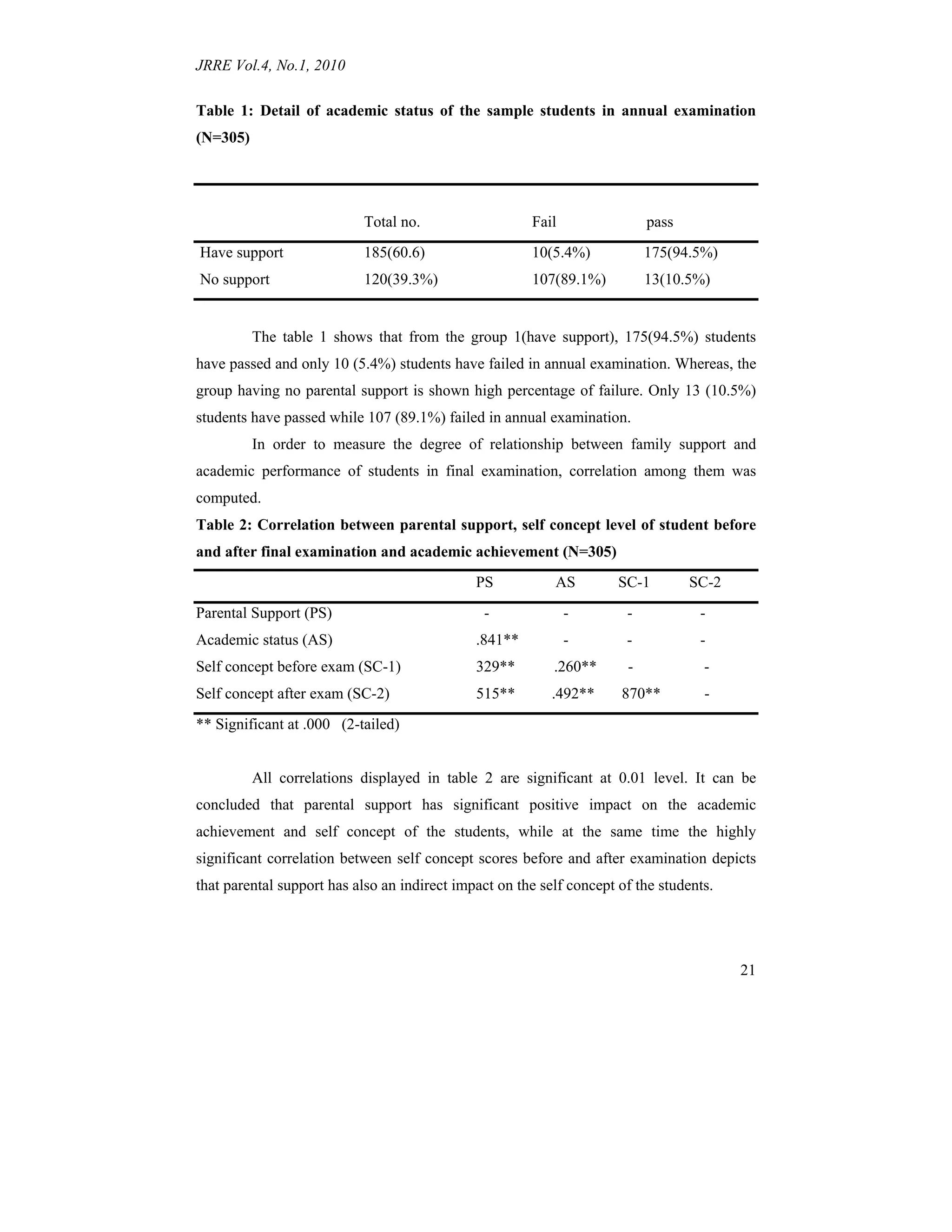
Table 1: Detail of academic status of the sample students in annual examination
(N=305)
Total no. Fail pass
Have support 185(60.6) 10(5.4%) 175(94.5%)
No support 120(39.3%) 107(89.1%) 13(10.5%)
The table 1 shows that from the group 1(have support), 175(94.5%) students
have passed and only 10 (5.4%) students have failed in annual examination. Whereas, the
group having no parental support is shown high percentage of failure. Only 13 (10.5%)
students have passed while 107 (89.1%) failed in annual examination.
In order to measure the degree of relationship between family support and
academic performance of students in final examination, correlation among them was
computed.
Table 2: Correlation between parental support, self concept level of student before
and after final examination and academic achievement (N=305)
PS AS SC-1 SC-2
Parental Support (PS) - - - -
Academic status (AS) .841** - - -
Self concept before exam (SC-1) 329** .260** - -
Self concept after exam (SC-2) 515** .492** 870** -
** Significant at .000 (2-tailed)
All correlations displayed in table 2 are significant at 0.01 level. It can be
concluded that parental support has significant positive impact on the academic
achievement and self concept of the students, while at the same time the highly
significant correlation between self concept scores before and after examination depicts
that parental support has also an indirect impact on the self concept of the students.
Chohan, Khan
22
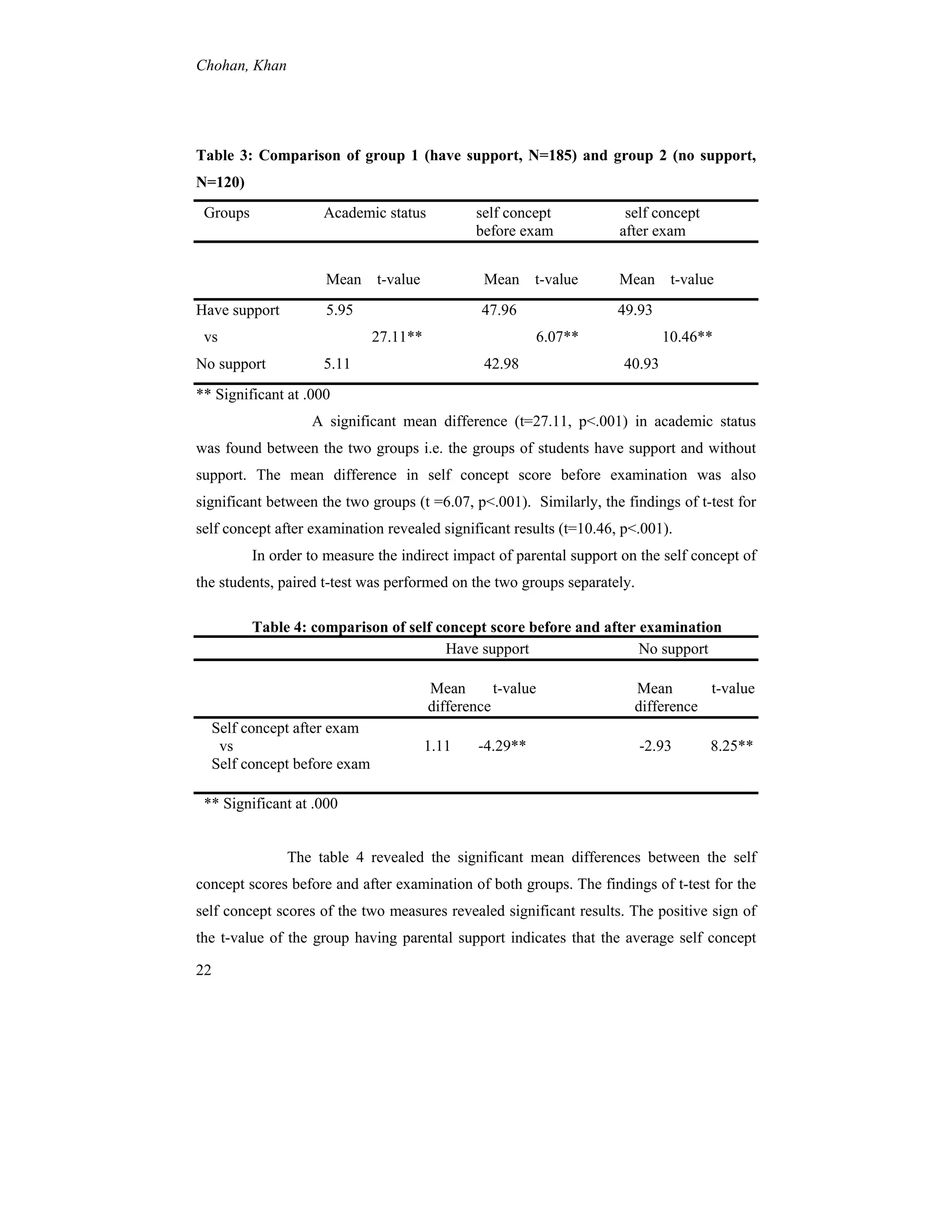
Table 3: Comparison of group 1 (have support, N=185) and group 2 (no support,
N=120)
Groups Academic status self concept self concept
before exam after exam
Mean t-value Mean t-value Mean t-value
Have support 5.95 47.96 49.93
vs 27.11** 6.07** 10.46**
No support 5.11 42.98 40.93
** Significant at .000
A significant mean difference (t=27.11, p<.001) in academic status
was found between the two groups i.e. the groups of students have support and without
support. The mean difference in self concept score before examination was also
significant between the two groups (t =6.07, p<.001). Similarly, the findings of t-test for
self concept after examination revealed significant results (t=10.46, p<.001).
In order to measure the indirect impact of parental support on the self concept of
the students, paired t-test was performed on the two groups separately.
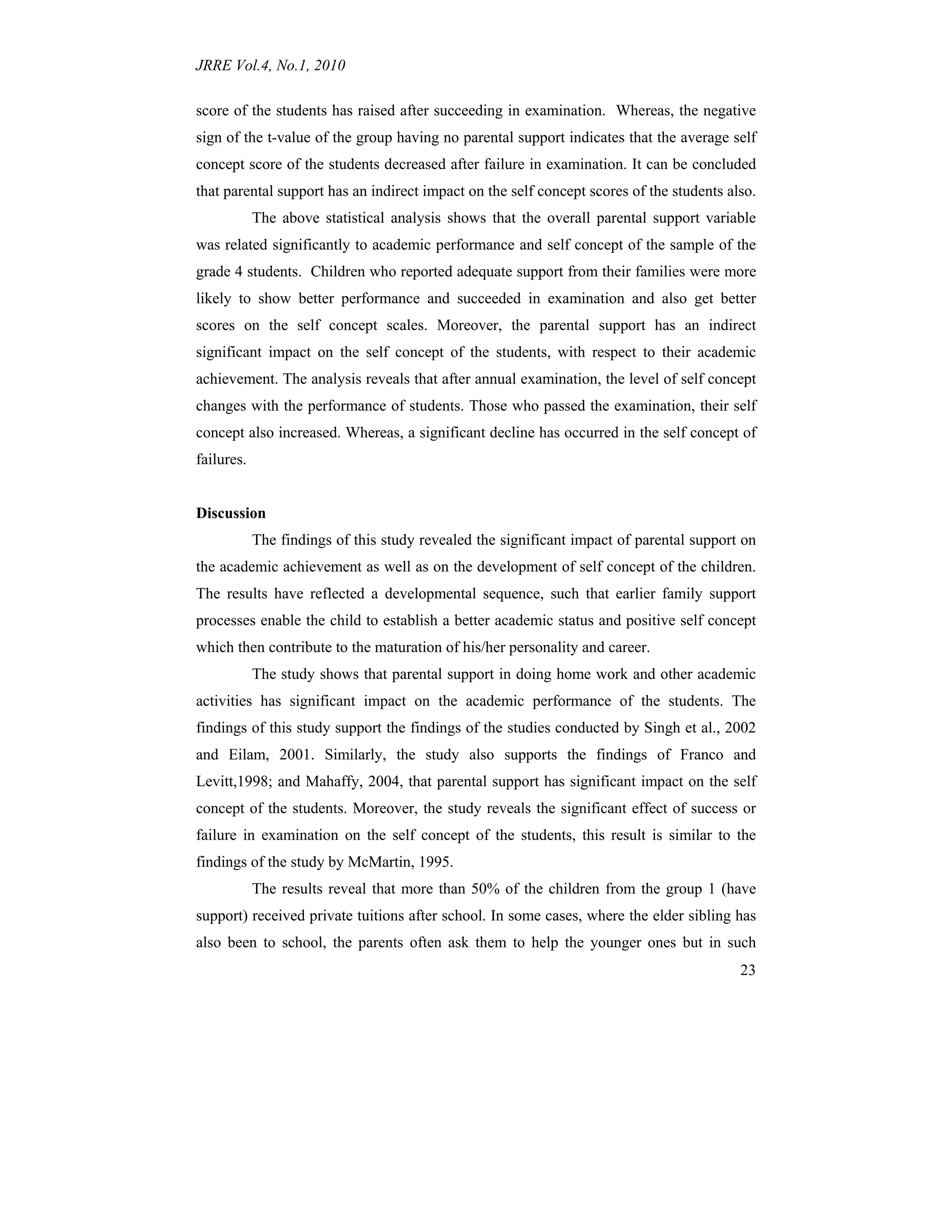
Table 4: comparison of self concept score before and after examination
Have support No support
Mean t-value Mean t-value
difference difference
Self concept after exam
vs 1.11 -4.29** -2.93 8.25**
Self concept before exam
** Significant at .000
The table 4 revealed the significant mean differences between the self
concept scores before and after examination of both groups. The findings of t-test for the
self concept scores of the two measures revealed significant results. The positive sign of
the t-value of the group having parental support indicates that the average self concept
JRRE Vol.4, No.1, 2010
23
score of the students has raised after succeeding in examination. Whereas, the negative
sign of the t-value of the group having no parental support indicates that the average self
concept score of the students decreased after failure in examination. It can be concluded
that parental support has an indirect impact on the self concept scores of the students also.
The above statistical analysis shows that the overall parental support variable
was related significantly to academic performance and self concept of the sample of the
grade 4 students. Children who reported adequate support from their families were more
likely to show better performance and succeeded in examination and also get better
scores on the self concept scales. Moreover, the parental support has an indirect
significant impact on the self concept of the students, with respect to their academic
achievement. The analysis reveals that after annual examination, the level of self concept
changes with the performance of students. Those who passed the examination, their self
concept also increased. Whereas, a significant decline has occurred in the self concept of
failures.
Discussion
The findings of this study revealed the significant impact of parental support on
the academic achievement as well as on the development of self concept of the children.
The results have reflected a developmental sequence, such that earlier family support
processes enable the child to establish a better academic status and positive self concept
which then contribute to the maturation of his/her personality and career.
The study shows that parental support in doing home work and other academic
activities has significant impact on the academic performance of the students. The
findings of this study support the findings of the studies conducted by Singh et al., 2002
and Eilam, 2001. Similarly, the study also supports the findings of Franco and
Levitt,1998; and Mahaffy, 2004, that parental support has significant impact on the self
concept of the students. Moreover, the study reveals the significant effect of success or
failure in examination on the self concept of the students, this result is similar to the
findings of the study by McMartin, 1995.
The results reveal that more than 50% of the children from the group 1 (have
support) received private tuitions after school. In some cases, where the elder sibling has
also been to school, the parents often ask them to help the younger ones but in such
Chohan, Khan
24
circumstances the elder child bears sense of double responsibility as he/she has to
concentrate on his/her own studies along with guiding the siblings.
Nearly 40 % children reported that they do not have any support from parents.
This finding reveals that many parents believe only the school is responsible for teaching
their children and they cannot be of any help for their children’s education, or it may be
because of their limited financial resources as the entire sample schools located in the
economically deprived areas of Rawalpindi city.
On the other side the findings of the study also portray the ineffective role of
public school teacher. Majority of the teachers of our public schools especially at primary
level is not very serious and committed to their duties. The parents, who wish to educate
their children, cannot just rely on school learning. They have to make some additional
arrangements for their children to achieve success. As majority of our population is
illiterate and cannot provide proper coaching at home to their children, it is a matter of
great concern for them to arrange some additional source for their children within their
limited income.
In a situation, where the majority of the parents is illiterate and economically
depressed, the responsibilities of the school and the teacher increases more than the
normal situation. The teachers should be more caring and consider their students' needs
and interests and should help them in defining their personal goals. They should have the
missionary zeal in performing their duties. Moreover, they should encourage students in a
manner that they perceive themselves as efficient individuals through their own effort and
responsibility for the learning process.
As with many other studies in the context of parental support, this study also had
some limitations. The first one is concerned with the focus of the study; only one
dimension of parental support was taken for study purpose, i.e. parents’ level and type of
help provided when their children do homework. One must therefore be careful in
generalizing the findings of this study to the general concept of parental involvement.
Moreover, the precise definition and measurement of different dimensions of support
provided by the parents are still not in agreement and questionable. Research studies are
not very clear about the construct of parental involvement, and the measurement of this
construct has often been inconsistent and disputed,( Fan, 2001). Further, the study has
JRRE Vol.4, No.1, 2010
25
been conducted with local convenience sample. The external validity of the findings from
the convenience sample is largely unknown. Researchers often inquired the extent to
which results based on the small convenience samples can be readily generalized to the
broad student population. But the large scale studies have their own implications. For
instance, in such studies, some data about disadvantaged groups were deliberately
exaggerated so that more stable estimates could be obtained for these minorities.
The literature review demonstrated that socioeconomic status of the parents and
the age of the students are main contributing factors in the extent of support provided by
the parents. Further research in this area could explore the significant role of these
factors.
References
Cast, A.D. & Burke, P.J. (2002). A Theory of Self-Esteem, Social Forces, 80(3), pp.
1041-1068
Demo, D.H. (1992). The Self-Concept Over Time: Research Issues and Directions,
Annual Review of Sociology, 18, pp. 303-326
Economic Survey 2008-09, Finance Division, Economic Advisor Wing, Islamabad
Eilam, B. (2001). Primary Strategies for Promoting Homework Performance, American
Educational Research Journal, 38( 3), pp. 691-725
Fan, X. (2001). Parental Involvement and Students' Academic Achievement: A Growth
Modeling Analysis. The Journal of Experimental Education, 70(1), pp. 27-61
Franco, N. & Levitt, M.J. (1998) The Social Ecology of Middle Childhood: Family
Support, Friendship Quality, and Self-Esteem. Family Relations, 47( 4),pp.
315-321
Funder, D C. (2007), The Personality Puzzle, fourth ed. W.W. Norton Company,Inc., 500
Fifth Avenue, New York,
Gonzalez-Pienda, J.A, Nunez, J.C., Gonzalez-Pumariega, S., Alvarez, L., Roces, C. &
Garcia, M. (2002). A Structural Equation Model of Parental Involvement,
Motivational and Aptitudinal Characteristics, and Academic Achievement. The
Journal of Experimental Education, 70(3), pp. 257-287
Khan, R.M.; Khan, M. A &Zubairi, N. (1999). Parental Involvement and reading
Attainment: A Study of 4th
Grade Pakistani Children, Journal Pendidikan,20,
pp. 83-94, Fakulti Pedidikan University, Malaya,
Chohan, Khan
26
Khan, R.M. & Malik, K. (1999). Effectiveness of Parents’ involvement in reading,
child’s overt behavior at home, mothers’ educational level on children’s reading
comprehension. Journal of Elementary Education. Institution of Education and
Research, Punjab University, Lahore.
Mahaffy , K. A. (2004). Girls' Low Self-Esteem: How Is It Related to Later
Socioeconomic Achievements? Gender and Society, 18 (3), pp. 309-327
Mischel, W., Shoda, Y. & Smith, R.E. (2004), Introduction to Personality , Toward an
Integration 7th
. ed ,John Wiley &Sons, Inc, USA
Okpala, C.O., Okpala, A.O, & Smith, F.E. (2001). Parental Involvement, Instructional
Expenditures, Family Socioeconomic Attributes, and Student Achievement. The
Journal of Educational Research, 95( 2), pp. 110-115
Repetti, R.L.(1996). The Effects of Perceived Daily Social and Academic Failure
Experiences on School-Age Children's Subsequent Interactions with Parents.
Child Development, 67( 4), pp. 1467-1482
Schneider, B. & Lee, Y. (1990). A Model for Academic Success: The School and Home
Environment of East Asian Students. Anthropology & Education Quarterly, 21(
4), pp. 358-377
Singh, K., Granville, M., & Dika, S. (2002). Mathematics and Science Achievement:
Effects of Motivation, Interest, and Academic Engagement, The Journal of
Educational Research, 95 (6) pp. 323-332:
UNESCO-IIEP (1992), Increasing and improving the quality of basic education.
International Institute of Educational Planning, UNESCO, Paris
Van Voorhis, F.L. (2003). Interactive Homework in Middle School: Effects on Family
Involvement and Science Achievement. The Journal of Educational Research,
96 (6),pp. 323-338
Correspondence
Name: Ms Bushra Iqbal Chohan, Rehana Masrur Khan
Email: rehamasrur@yahoo.com

Impact Of Parental Support On The Academic Performance And Self Concept Of The Student

  • 1.
    Journal of Researchand Reflections in Education June 2010, Vol.4, No.1, pp 14 -26 http://www.ue.edu.pk/jrre Impact of Parental Support on the Academic Performance and Self Concept of the Student Ms Bushra Iqbal Chohan and Rehana Masrur Khan Abstract: This study examines the impact of educational support given by the parents on the academic achievement and on the self concept of grade 4 public school students. The aims of this study were (a) to examine the linkage between academic achievement and educational support provided to the child at home and, (b) to determine whether this support directly or indirectly effects child's self concept. The data regarding parental support, its effects on the academic achievement and the self concept were collected from a sample (N =305) of grade 4 students in the urban primary and elementary public schools. The sample students who have or have not parental support were compared on two measures, (a) the annual school result report and, (b) the self concept scale. The self concept was measured twice i.e. before one month of annual school examination and after one month of announcement of annual results. The findings of the study revealed that parents’ contribution to their children's education has a consistent and positive effect on academic achievement and on the self-concept. Keywords: parental support, self concept, academic achievement Introduction Over the past several decades, scholars are concerned with the poor academic performance of children. The research studies revealed that various factors are responsible for scholastic failure of students, such as low socio-economic background, student’s cognitive abilities, school related factors, environment of the home, or the support given by the parents and other family members (Khan & Malik, 1999; Fan, 2001; Gonzalez- Pienda, Nunez, Gonzalez- Pumariega, Alvarez, Roces and Garcia, 2002) Generally, schools are considered as places which provide appropriate learning environment for a child, but importance of parents and community cannot be ignored. Parents, adult family members, and siblings contribute significantly to various components of personality of the child particularly and in improving his/her academic performance.
  • 2.
    JRRE Vol.4, No.1,2010 15 The pivotal role of parents still continues as it has been recognized by the teachers and parents themselves that they are essential for complete development of the personality and career of their children. Gonzalez- Pienda, et al.,(2002) indicated that “without the children's parental support, it is hard for teachers to devise academic experiences to help students learn meaningful content” (p.281). In home settings, the learning processes occur explicitly or consciously, often in an informal way. Parents teach and train children early in their lives, the fundamental skills, attitudes and values necessary for day-to-day living (UNESCO, 1992). The unwritten knowledge being conveyed by parents to their children, is specific and to a certain degree, specialized, i.e. that which would enable the children to cope successfully with the requirements of the immediate confines of homes and the community. Parental Support and Academic Achievement Fan (2001) demonstrated that parents' educational aspiration for their children proved to be strongly related to students' academic growth. Research studies have found that parental educational level has a significant impact on child’s learning, (Khan & Malik, 1999). Similarly, Schneider and Lee (1990) linked the academic success of the East Asian students to the values and aspirations they share with their parents, and also to the home learning activities in which their parents involve with them. In fact, all parents have desired to do something better for their children according to their available resources. But the extent and effectiveness of parental support depends on a variety of reasons, such as, ethnicity, family income, and home environment and their awareness about the importance of education. Research studies indicated that socio economic status is correlated strongly with parents' educational ambition for their children. Khan, Khan and Zubairi (1999) stated that “interacting with and sharing the child’s activities is affected by level of parents’ education and income” (p.92). In the families with low socioeconomic status, majority of the illiterate parents do not have understanding of the requirements of their children’s education. Some poor parents make some arrangements for helping their children in studies and to do their home assignments, while others rely on school for the education of their children, as they do not have enough resources to spend extra money on home tuitions etc. This results poor performance in academic achievement of their children.
  • 3.
    Chohan, Khan 16 The findingsof the study conducted by Okpala, Okpala, and Smith (2001) also supports the view that economic circumstances are significantly correlated with academic achievement. Research studies indicated that the nature of the parental support change at different age levels of children. Gonzalez-Pienda et al. (2002) have found that parental support is likely to decrease as children move from primary to middle and then to high school grades. Similarly, a research study by Fan, (2001) showed that children also develop sense of responsibility and perform better as they grow older. The study indicated that those students whose parents had higher expectations for their children's academic achievement performed better from the beginning of their academic career and accelerated faster in their academic progress during the transition period of middle to high grades. The children also seek emotional support from parents when they face some academic problems at school. Educated and sensible parents always encourage their children and give proper guidance in school related matters, but illiterate and economically deprived parents may act violently and thus upset their child more. A study by Repetti,(1996) indicated that “children described themselves as more demanding and difficult with their parents on days in which they had earlier perceived more problems with peers, such as being teased by another child or feeling excluded by friends, or more academic problems, such as receiving a poor grade or having difficulty with schoolwork”,(p.1477). Parental Support and Self Concept The “self” is considered as a fundamental concept from the very beginning in personality theories of psychology. It is used generally in two different ways, I and Me. William James (1890 as cited in Funder,2007), has explained a significant division between these two aspects. The self ‘I” as an agent, conducts basic functions, as self regulation, self evaluation etc. “me” as an object, represented in self concepts, in how we see over selves. During the course of development, “the child attains gradually richer concept of himself or herself as an active agent, “I” separate from other people and
  • 4.
    JRRE Vol.4, No.1,2010 17 objects, and “me” that has defining features and qualities reflected in multiple self- concepts” (Mischel, Shoda, & Smith, 2004, p.293). Thus, the self-concept is said to be a set of planned self-attitudes that are relatively established and "characteristic" of an individual (Demo,1992, p.303). Research studies have indicated that parental support factors have significant contribution in the development of positive self regard that is statistically related to academic achievement of the students (Franco and Levitt, 1998; Mahaffy, 2004; Gonzalez-Pienda et al., 2002). Similarly, McMartin, (1995) indicated that failure in school plays a significant role in formation of child’s negative self-image. Generally, parents are not directly involved in the teaching-learning activities in school. They are only expected to provide the financial and other material support for the children’s schooling. The interactions among parents and their children are influenced by the socioeconomic and cultural factors of that particular society in which they survive. For instance, the way a family manages the learning activities of its children at home is dependent upon parents’ socioeconomic position and their resources in term of money and time. Parental support is a multidimensional construct, (Fan 2001). Research studies have presented some theoretical frameworks for parental support, ( Gonzalez-Pienda et al. (2002); Fan, 2001). Researchers have reported that some dimensions of parental support may have more visible effects on students' academic achievement than others. Gonzalez-Pienda et al. (2002) stated that parental support criteria were developed according to six dimensions that are strongly associated to students' behavior at school and the attitude towards learning. “The six dimensions are (a) parents' expectations about their children's achievement, (b) parents' expectations about their children's capacity to achieve important goals, (c) parents' behaviors that reveal interest in their children's school work, (d) parents' degree of satisfaction or dissatisfaction with their children's level of school achievement, (e) parents' level and type of help provided when their children do homework, and (f) parents' reinforcement behaviors of their children's achievements. Research studies have pointed out that some dimensions of parental involvement may have more noticeable effects
  • 5.
    Chohan, Khan 18 on students'academic achievement than others” (p.259). Out of six dimensions that are discussed above, this study focuses on 5th one that is “parents’ level and type of help provided when their children do the homework”. Homework can be defined as “tasks that are assigned to students by teachers and are meant to be performed during nonschool hours” (Cooper, 1989a as cited in Eilam,2001, p. 692). A student is supposed to complete his/her homework at home, parents or other family members may be involved in the process of helping or guiding the child. They either help the child in doing the home task assigned by the teacher or facilitate him/her in relation to difficulties in syllabus. Research studies indicated that parental support in doing home tasks has significant effects in students’ achievement, (Singh, Granville, Sandra, & Dika, 2002; Eilam,2001). According to Pakistan Social and Living Measurement (PSLM) Survey (2007- 08), the overall literacy rate (age 10 years and above) is 56% (67% for male and 44% for female) in 2006-071 . In a country where nearly half of the population is still illiterate, it is very hard for children to seek proper guidance in academic matters after the school hours. When parents have not themselves been to school and remain illiterate and innumerate, the school cannot expect that they will understand its aims or activities. The lack of parental support creates major problem for school and the child also. In the context of Pakistan, where the majority of the parents is illiterate, and the teacher is also psychologically distressed due to a number of financial and job related problems, the lack of proper parental support to child create big hurdles in improving the quality of education. If parents are educated, and have better understanding of how to break a problem into parts, or know more effective motivational techniques, then they can help their children more effectively. A study conducted by Voorhis (2003) demonstrated that those students who reported more parental involvement in connection with daily homework, doing their homework assignments more regularly. The findings of this study support the effects of family involvement in student accomplishments in the 1 Source: Economic Survey 2008-09, Finance Division, Economic Advisor Wing, Islamabad
  • 6.
    JRRE Vol.4, No.1,2010 19 middle grades. The general purpose of this study was to examine the effect of parental support the children received during their late childhood in relation to academic growth and self concept. On the basis of the review of the relevant literature, the specific research objectives of this study were to: (a) see the impact of parental support in helping the child in studies and doing homework on the academic performance of the grade 4 students, (b) explore the relationship of parental support with the self concept of the grade 4 students, (c) assess the indirect effect of parental support on the self concept of the grade 4 students after failure. The period of late childhood (9-11) was selected for study because children of this age group judge themselves on abilities and achievements and academic performances are of particular concern at this age, (Demo,1992, p.310). Furthermore, this period corresponds to the time when various components of the child's self-concept coalesce to yield the general affective sense of self-worth referred to as self-esteem (Harter, 1983 as cited in Franco & Levitt,1998, p.316). Method The study was descriptive in nature and quantitative methodology was applied to achieve the study objectives. This study examined the effects of parental support on the academic outcomes and self concept of the students (N =305) enrolled in grade four of the forty two, urban, public primary and elementary schools in Rawalpindi city. Public schools in Rawalpindi city serve majority of economically deprived population, because those having better socio-economic status, living in this area send their children to private schools. Annual school result record of the sample students was taken as a measure of academic performance. The result record of annual examination held in March 2009 of the grade four in the sample schools was taken for this purpose. For the study of self concept of the students, Beck Youth inventory2 for self concept (BSCI-Y) was adapted. 2 The Beck Youth Inventories of Emotional and Social Impairment included five self-report inventories used to assess anxiety, depression, anger, disruptive behavior, and self concepts in children between the ages of 7 and 14 years old. These inventories may
  • 7.
    Chohan, Khan 20 The Urdutranslation of the scale with an addendum containing questions about parental support was administered to the sample students. Three questions were asked from the students to gauge levels of parental support in relation to do the homework and resolve the academic problems. Students were asked whether their parents help them in doing the homework and facilitate them in case of any difficulty in studies. In case of response in negative they were asked about any help arranged for these studies. The self concept scale was administered to the sample before one month of annual school examination in February of 2009. The same students were reassessed by the same scale after one month of the announcement of their annual school results in May 2009. Analysis Following the collection of data and coding of completed surveys, the statistical analysis was performed using SPSS 13.0 (Statistical Package for the Social Sciences). t-test and bivariate statistical analyses were carried out to demonstrate how the family support effects the academic achievement and self concept of students of grade four. There were total 305 cases taken from the grade four of the public elementary and primary schools of Rawalpindi city, 185 students reported that their parents have made some arrangements for helping them in studies. Among these, 98(53%) students have informed that their parents have arranged some kind of tuitions for their help in studies, 54(29%) have told that their parents compel their elder siblings to help them in studies, whereas, only 33(18%) students reported that their parents themselves are educated and guide them in academic matters. The other group of students (N= 120) reported that they have not any kind of support from parents or other family members. The report of the annual school examination has revealed the significant differences among the two groups i.e. those who have support and those who have not any support from parents or other family members. be used, separately or in combinations.
  • 8.
    JRRE Vol.4, No.1,2010 21 Table 1: Detail of academic status of the sample students in annual examination (N=305) Total no. Fail pass Have support 185(60.6) 10(5.4%) 175(94.5%) No support 120(39.3%) 107(89.1%) 13(10.5%) The table 1 shows that from the group 1(have support), 175(94.5%) students have passed and only 10 (5.4%) students have failed in annual examination. Whereas, the group having no parental support is shown high percentage of failure. Only 13 (10.5%) students have passed while 107 (89.1%) failed in annual examination. In order to measure the degree of relationship between family support and academic performance of students in final examination, correlation among them was computed. Table 2: Correlation between parental support, self concept level of student before and after final examination and academic achievement (N=305) PS AS SC-1 SC-2 Parental Support (PS) - - - - Academic status (AS) .841** - - - Self concept before exam (SC-1) 329** .260** - - Self concept after exam (SC-2) 515** .492** 870** - ** Significant at .000 (2-tailed) All correlations displayed in table 2 are significant at 0.01 level. It can be concluded that parental support has significant positive impact on the academic achievement and self concept of the students, while at the same time the highly significant correlation between self concept scores before and after examination depicts that parental support has also an indirect impact on the self concept of the students.
  • 9.
    Chohan, Khan 22 Table 3:Comparison of group 1 (have support, N=185) and group 2 (no support, N=120) Groups Academic status self concept self concept before exam after exam Mean t-value Mean t-value Mean t-value Have support 5.95 47.96 49.93 vs 27.11** 6.07** 10.46** No support 5.11 42.98 40.93 ** Significant at .000 A significant mean difference (t=27.11, p<.001) in academic status was found between the two groups i.e. the groups of students have support and without support. The mean difference in self concept score before examination was also significant between the two groups (t =6.07, p<.001). Similarly, the findings of t-test for self concept after examination revealed significant results (t=10.46, p<.001). In order to measure the indirect impact of parental support on the self concept of the students, paired t-test was performed on the two groups separately. Table 4: comparison of self concept score before and after examination Have support No support Mean t-value Mean t-value difference difference Self concept after exam vs 1.11 -4.29** -2.93 8.25** Self concept before exam ** Significant at .000 The table 4 revealed the significant mean differences between the self concept scores before and after examination of both groups. The findings of t-test for the self concept scores of the two measures revealed significant results. The positive sign of the t-value of the group having parental support indicates that the average self concept
  • 10.
    JRRE Vol.4, No.1,2010 23 score of the students has raised after succeeding in examination. Whereas, the negative sign of the t-value of the group having no parental support indicates that the average self concept score of the students decreased after failure in examination. It can be concluded that parental support has an indirect impact on the self concept scores of the students also. The above statistical analysis shows that the overall parental support variable was related significantly to academic performance and self concept of the sample of the grade 4 students. Children who reported adequate support from their families were more likely to show better performance and succeeded in examination and also get better scores on the self concept scales. Moreover, the parental support has an indirect significant impact on the self concept of the students, with respect to their academic achievement. The analysis reveals that after annual examination, the level of self concept changes with the performance of students. Those who passed the examination, their self concept also increased. Whereas, a significant decline has occurred in the self concept of failures. Discussion The findings of this study revealed the significant impact of parental support on the academic achievement as well as on the development of self concept of the children. The results have reflected a developmental sequence, such that earlier family support processes enable the child to establish a better academic status and positive self concept which then contribute to the maturation of his/her personality and career. The study shows that parental support in doing home work and other academic activities has significant impact on the academic performance of the students. The findings of this study support the findings of the studies conducted by Singh et al., 2002 and Eilam, 2001. Similarly, the study also supports the findings of Franco and Levitt,1998; and Mahaffy, 2004, that parental support has significant impact on the self concept of the students. Moreover, the study reveals the significant effect of success or failure in examination on the self concept of the students, this result is similar to the findings of the study by McMartin, 1995. The results reveal that more than 50% of the children from the group 1 (have support) received private tuitions after school. In some cases, where the elder sibling has also been to school, the parents often ask them to help the younger ones but in such
  • 11.
    Chohan, Khan 24 circumstances theelder child bears sense of double responsibility as he/she has to concentrate on his/her own studies along with guiding the siblings. Nearly 40 % children reported that they do not have any support from parents. This finding reveals that many parents believe only the school is responsible for teaching their children and they cannot be of any help for their children’s education, or it may be because of their limited financial resources as the entire sample schools located in the economically deprived areas of Rawalpindi city. On the other side the findings of the study also portray the ineffective role of public school teacher. Majority of the teachers of our public schools especially at primary level is not very serious and committed to their duties. The parents, who wish to educate their children, cannot just rely on school learning. They have to make some additional arrangements for their children to achieve success. As majority of our population is illiterate and cannot provide proper coaching at home to their children, it is a matter of great concern for them to arrange some additional source for their children within their limited income. In a situation, where the majority of the parents is illiterate and economically depressed, the responsibilities of the school and the teacher increases more than the normal situation. The teachers should be more caring and consider their students' needs and interests and should help them in defining their personal goals. They should have the missionary zeal in performing their duties. Moreover, they should encourage students in a manner that they perceive themselves as efficient individuals through their own effort and responsibility for the learning process. As with many other studies in the context of parental support, this study also had some limitations. The first one is concerned with the focus of the study; only one dimension of parental support was taken for study purpose, i.e. parents’ level and type of help provided when their children do homework. One must therefore be careful in generalizing the findings of this study to the general concept of parental involvement. Moreover, the precise definition and measurement of different dimensions of support provided by the parents are still not in agreement and questionable. Research studies are not very clear about the construct of parental involvement, and the measurement of this construct has often been inconsistent and disputed,( Fan, 2001). Further, the study has
  • 12.
    JRRE Vol.4, No.1,2010 25 been conducted with local convenience sample. The external validity of the findings from the convenience sample is largely unknown. Researchers often inquired the extent to which results based on the small convenience samples can be readily generalized to the broad student population. But the large scale studies have their own implications. For instance, in such studies, some data about disadvantaged groups were deliberately exaggerated so that more stable estimates could be obtained for these minorities. The literature review demonstrated that socioeconomic status of the parents and the age of the students are main contributing factors in the extent of support provided by the parents. Further research in this area could explore the significant role of these factors. References Cast, A.D. & Burke, P.J. (2002). A Theory of Self-Esteem, Social Forces, 80(3), pp. 1041-1068 Demo, D.H. (1992). The Self-Concept Over Time: Research Issues and Directions, Annual Review of Sociology, 18, pp. 303-326 Economic Survey 2008-09, Finance Division, Economic Advisor Wing, Islamabad Eilam, B. (2001). Primary Strategies for Promoting Homework Performance, American Educational Research Journal, 38( 3), pp. 691-725 Fan, X. (2001). Parental Involvement and Students' Academic Achievement: A Growth Modeling Analysis. The Journal of Experimental Education, 70(1), pp. 27-61 Franco, N. & Levitt, M.J. (1998) The Social Ecology of Middle Childhood: Family Support, Friendship Quality, and Self-Esteem. Family Relations, 47( 4),pp. 315-321 Funder, D C. (2007), The Personality Puzzle, fourth ed. W.W. Norton Company,Inc., 500 Fifth Avenue, New York, Gonzalez-Pienda, J.A, Nunez, J.C., Gonzalez-Pumariega, S., Alvarez, L., Roces, C. & Garcia, M. (2002). A Structural Equation Model of Parental Involvement, Motivational and Aptitudinal Characteristics, and Academic Achievement. The Journal of Experimental Education, 70(3), pp. 257-287 Khan, R.M.; Khan, M. A &Zubairi, N. (1999). Parental Involvement and reading Attainment: A Study of 4th Grade Pakistani Children, Journal Pendidikan,20, pp. 83-94, Fakulti Pedidikan University, Malaya,
  • 13.
    Chohan, Khan 26 Khan, R.M.& Malik, K. (1999). Effectiveness of Parents’ involvement in reading, child’s overt behavior at home, mothers’ educational level on children’s reading comprehension. Journal of Elementary Education. Institution of Education and Research, Punjab University, Lahore. Mahaffy , K. A. (2004). Girls' Low Self-Esteem: How Is It Related to Later Socioeconomic Achievements? Gender and Society, 18 (3), pp. 309-327 Mischel, W., Shoda, Y. & Smith, R.E. (2004), Introduction to Personality , Toward an Integration 7th . ed ,John Wiley &Sons, Inc, USA Okpala, C.O., Okpala, A.O, & Smith, F.E. (2001). Parental Involvement, Instructional Expenditures, Family Socioeconomic Attributes, and Student Achievement. The Journal of Educational Research, 95( 2), pp. 110-115 Repetti, R.L.(1996). The Effects of Perceived Daily Social and Academic Failure Experiences on School-Age Children's Subsequent Interactions with Parents. Child Development, 67( 4), pp. 1467-1482 Schneider, B. & Lee, Y. (1990). A Model for Academic Success: The School and Home Environment of East Asian Students. Anthropology & Education Quarterly, 21( 4), pp. 358-377 Singh, K., Granville, M., & Dika, S. (2002). Mathematics and Science Achievement: Effects of Motivation, Interest, and Academic Engagement, The Journal of Educational Research, 95 (6) pp. 323-332: UNESCO-IIEP (1992), Increasing and improving the quality of basic education. International Institute of Educational Planning, UNESCO, Paris Van Voorhis, F.L. (2003). Interactive Homework in Middle School: Effects on Family Involvement and Science Achievement. The Journal of Educational Research, 96 (6),pp. 323-338 Correspondence Name: Ms Bushra Iqbal Chohan, Rehana Masrur Khan Email: rehamasrur@yahoo.com