EFFECTS OF HOME ENVIRONMENT ON
STUDENT LEARNING


                            Vincent Liu
The limitation of School

 "School age children spend 70% of their
  waking hours (including weekends and
  holidays) outside of school." (Michigan
  Department of Education, 2002).
 Schools cannot provide a complete and
  overall care and education that children
  need.
 Their first skills are learned within the nuclear
  and sometimes extended family.
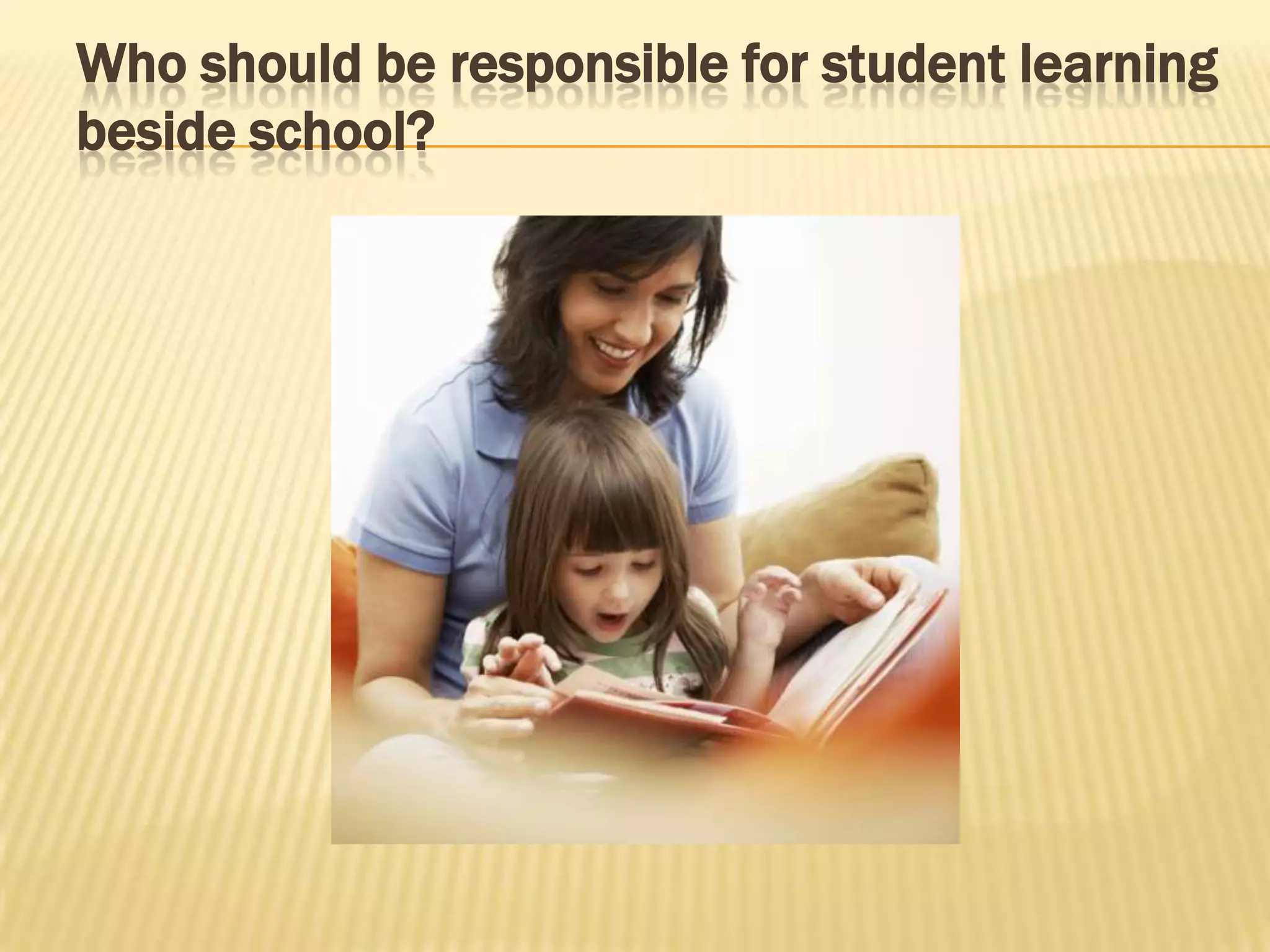
Who should be responsible for student learning
beside school?
The answer is parents.

 "86% of the general public believes that
  support from parents is the most important
  way to improve schools."(Michigan
  Department of Education).
 Students spend much more of their time
  connected with their parents than what they
  spend with their teachers.
The involvement of parents
   “Family level supports in the first two years of
    life help predict achievement years later, in
    elementary school”(Ferguson, 2009)
   “Students who achieve the highest test scores
    among blacks, Hispanics and whites had
    parents who were both responsive and
    demanding” (Ferguson, 2009)
   Future success in education relies on a positive
    home environment, and parental attitudes are a
    key factor for children to develop good learning
    skills.
The involvement of parents

   The videos “Parental Involvement”
    demonstrate that many students’
    achievement are a direct result of parental
    support.
Benefits for student learning

   The article posted by BirtMums on Twitter
    suggests that research has demonstrated
    that the more parents participate in their
    child’s education, the more success their
    child will achieve at every level.
Benefits for student learning

 Better attitudes towards school and
  educators
 Higher grades and test scores

 Creating a learning culture and helping skills
  and confidence

          (UK Department for Education, 2012)
Benefits for school

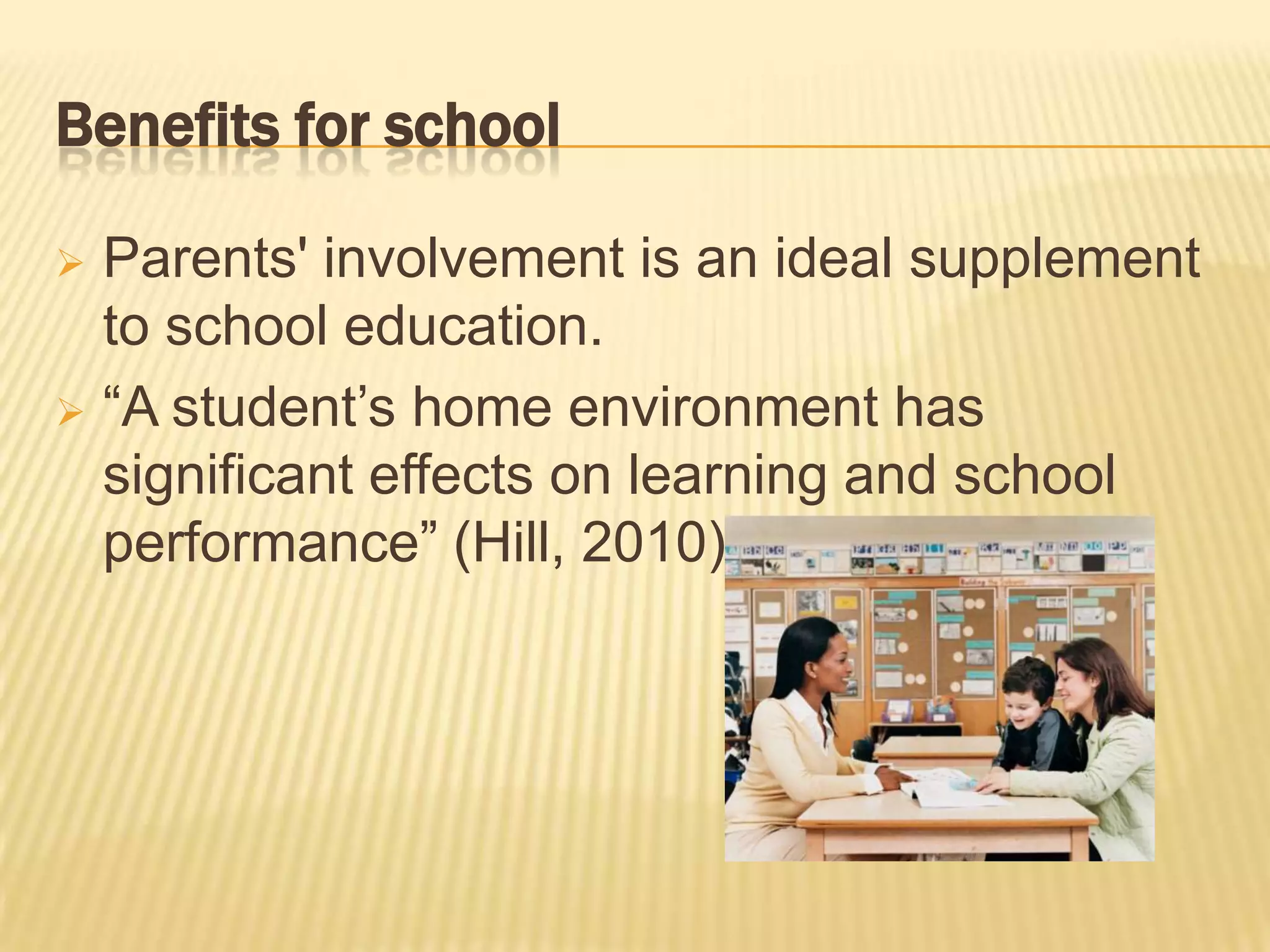
 Parents' involvement is an ideal supplement
  to school education.
 “A student’s home environment has
  significant effects on learning and school
  performance” (Hill, 2010).
Questions

 Some people believe that the role of parents
  in the education is overestimated. Do you
  agree or disagree? Why?
 Do you think that parents have more power
  and influence over students compared to the
  influence of school education systems or do
  you think they just supplement school
  education systems?
Questions
 What are conflicts that you think may exist in
  the involvement of parents in student
  learning?
 Do you agree that governments should pay
  attention to the home environment and
  student learning rather than focusing on the
  development of the school education
  system?
 What are ways the government could
  support and supplement the involvement of
  parents in the children’s learning?
The summary
   We cannot understate the importance of parents
    on education.
   Parents who participate whole-heartedly in the
    education and development of their children
    experience less discipline issues with their
    children and, as a result, the children become
    self-motivated to learn. It is important that
    parents realize how positive the impact will be
    when they provide strong supportive interaction
    with their children.

Education100 effects of home environment

  • 1.
    EFFECTS OF HOMEENVIRONMENT ON STUDENT LEARNING Vincent Liu
  • 2.
    The limitation ofSchool  "School age children spend 70% of their waking hours (including weekends and holidays) outside of school." (Michigan Department of Education, 2002).  Schools cannot provide a complete and overall care and education that children need.  Their first skills are learned within the nuclear and sometimes extended family.
  • 3.
    Who should beresponsible for student learning beside school?
  • 4.
    The answer isparents.  "86% of the general public believes that support from parents is the most important way to improve schools."(Michigan Department of Education).  Students spend much more of their time connected with their parents than what they spend with their teachers.
  • 5.
    The involvement ofparents  “Family level supports in the first two years of life help predict achievement years later, in elementary school”(Ferguson, 2009)  “Students who achieve the highest test scores among blacks, Hispanics and whites had parents who were both responsive and demanding” (Ferguson, 2009)  Future success in education relies on a positive home environment, and parental attitudes are a key factor for children to develop good learning skills.
  • 6.
    The involvement ofparents  The videos “Parental Involvement” demonstrate that many students’ achievement are a direct result of parental support.
  • 7.
    Benefits for studentlearning  The article posted by BirtMums on Twitter suggests that research has demonstrated that the more parents participate in their child’s education, the more success their child will achieve at every level.
  • 8.
    Benefits for studentlearning  Better attitudes towards school and educators  Higher grades and test scores  Creating a learning culture and helping skills and confidence (UK Department for Education, 2012)
  • 9.
    Benefits for school Parents' involvement is an ideal supplement to school education.  “A student’s home environment has significant effects on learning and school performance” (Hill, 2010).
  • 10.
    Questions  Some peoplebelieve that the role of parents in the education is overestimated. Do you agree or disagree? Why?  Do you think that parents have more power and influence over students compared to the influence of school education systems or do you think they just supplement school education systems?
  • 11.
    Questions  What areconflicts that you think may exist in the involvement of parents in student learning?  Do you agree that governments should pay attention to the home environment and student learning rather than focusing on the development of the school education system?  What are ways the government could support and supplement the involvement of parents in the children’s learning?
  • 12.
    The summary  We cannot understate the importance of parents on education.  Parents who participate whole-heartedly in the education and development of their children experience less discipline issues with their children and, as a result, the children become self-motivated to learn. It is important that parents realize how positive the impact will be when they provide strong supportive interaction with their children.