Drains in surgery
MANGLEMBA SINGH
Objectives
 Definition
 Principle & Types of drain
 Advantages & Disadvantages
 Specialist use of drains
 Drain removal - Principles
Definition
 A drain is a tube to allow fluid or air that might
collect at an operation site or in a wound to drain
freely to the surface.
 The fluid to be drained may include –
Blood, serum, pus, urine, faeces, bile or lymph.
 It can be used for longer or short periods.
Why to Drain ?
 To allow wound irrigation in certain specific
circumstances. ( reduce - haematoma formation )
 To prevent an excessive amount of blood and
fluid that collects in the cavities of the body, and
around organs that may delay wound healing.
 To consider it as prophylaxis – ES & therapeutic –
ES.
Principles of Drains
 Open drains that utilise the principle of gravity.
 Semi-open drains that work on the principle of
the capillary effect.
 Closed drains systems that utilise suction.
Criteria
 Septic wounds should be
drained
 Aseptic wounds those having
oozing vessels or large area
 Wounds with chances of more
fluid collection inside
 Leaking wounds from
anastomosis
Advantages
 Removal of any intraperitoneal or wound
collection of ascites, serum, bile, chyle,
pancreatic or intestinal secretions.
 Act as a signal for any post-op. hge or
anastomotic leakage.
 Provides a track for later drainage.
Disadvantages
 Presence of a drain increases the risk of
infection ( intra -abdominal & wound )
 Drains may induce an anastomotic leak
 Increase abdominal pain
 Increase hospital stay
 Decrease pulmonary function.
Drainage Tubes – Types
 Open or closed
 Active or passive
 Tube drains
 Corrugated
drains
Types
Open drains
 Include corrugated
rubber or plastic
sheets
 Drain fluid collects in
gauze pad or stoma
bag
 They increase the risk
of infection
Closed drains
 Consist of tubes
draining into a bag or
bottle
 They include chest
and abdominal drains
 The risk of infection is
reduced
Types
Active drains
 Active drains are
maintained under
suction
 They can be under
low or high pressure
Passive drains
 Passive drains have
no suction
 Function by the
differential pressure
between body cavities
and the exterior
Types
Active drains Passive drains
Types of drainage systems
* The closed drainage system - is a system of tubing or
other apparatus that is attached to the body to remove
fluids in an airtight circuit that prevents any type of
environmental contaminants from entering the wound or
area being drained.
* The open drainage system - is a tube or apparatus that
is inserted into the body and drains out onto a dressing.
* The suction drainage system - uses a pump or
mechanical device to help pull the excessive fluid from
the body.
Special Drains
 Chest drains
 T- Tube drains
 Guided drainage
Chest drains
 Indications –
pneumothorax, pleural
effusion, haemothorax,
or to prevent collection
of fluid or air after
thoracotomy.
 Nelaton catheters
 Malecot catheters
T-Tube drains
 T-Tube drain is used
for patients who have
undergone gallbladder
surgery.
 After exploration of the
CBD, a “T-TUBE” is
inserted into the duct
to drain the bile.
 It resembles a T and
drains into a collection
bag.
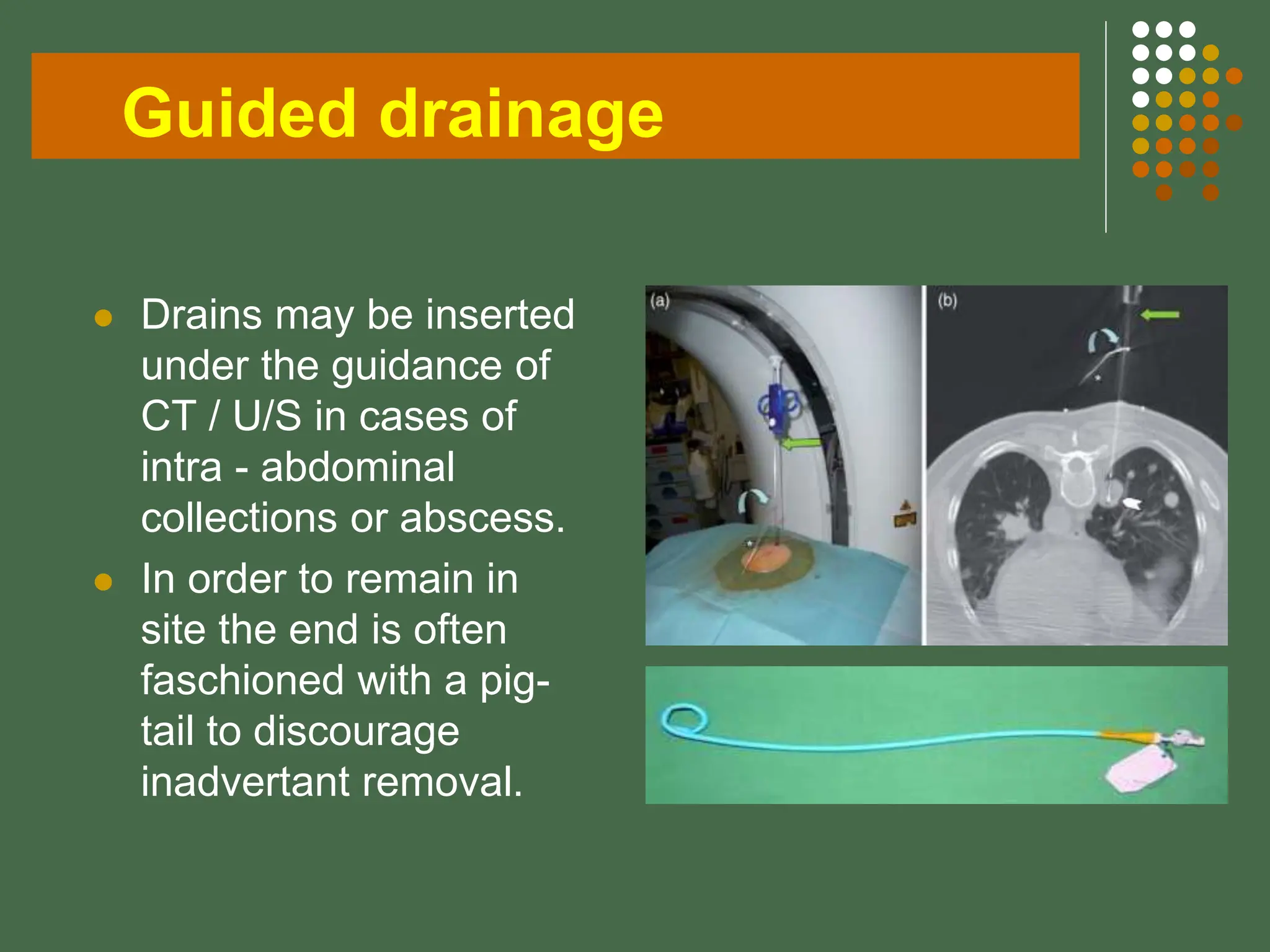
Guided drainage
 Drains may be inserted
under the guidance of
CT / U/S in cases of
intra - abdominal
collections or abscess.
 In order to remain in
site the end is often
faschioned with a pig-
tail to discourage
inadvertant removal.
Drain – Removal
 A Drain should be
removed as soon as it
is no longer required.
 By 7 days only 20% of
drain are still
functioning.
Principles – Drain Removal
 To cover peri-operative bleeding – removed after
24 hrs. – Thyroidectomy
 To Drain serous collection – after 5 days – e.g.
Mastectomy.
 Put in because of infecion – left until infection is
subsided or drainage is minimal.
 To cover colo-rectal anastomosis – removed at 5-
7days.
 T- Tubes in cases to drain CBD should be removed
after 10 days.
Different types of drains in surgery.ppt

Different types of drains in surgery.ppt

  • 1.
  • 2.
    Objectives  Definition  Principle& Types of drain  Advantages & Disadvantages  Specialist use of drains  Drain removal - Principles
  • 3.
    Definition  A drainis a tube to allow fluid or air that might collect at an operation site or in a wound to drain freely to the surface.  The fluid to be drained may include – Blood, serum, pus, urine, faeces, bile or lymph.  It can be used for longer or short periods.
  • 4.
    Why to Drain?  To allow wound irrigation in certain specific circumstances. ( reduce - haematoma formation )  To prevent an excessive amount of blood and fluid that collects in the cavities of the body, and around organs that may delay wound healing.  To consider it as prophylaxis – ES & therapeutic – ES.
  • 5.
    Principles of Drains Open drains that utilise the principle of gravity.  Semi-open drains that work on the principle of the capillary effect.  Closed drains systems that utilise suction.
  • 6.
    Criteria  Septic woundsshould be drained  Aseptic wounds those having oozing vessels or large area  Wounds with chances of more fluid collection inside  Leaking wounds from anastomosis
  • 7.
    Advantages  Removal ofany intraperitoneal or wound collection of ascites, serum, bile, chyle, pancreatic or intestinal secretions.  Act as a signal for any post-op. hge or anastomotic leakage.  Provides a track for later drainage.
  • 8.
    Disadvantages  Presence ofa drain increases the risk of infection ( intra -abdominal & wound )  Drains may induce an anastomotic leak  Increase abdominal pain  Increase hospital stay  Decrease pulmonary function.
  • 9.
    Drainage Tubes –Types  Open or closed  Active or passive  Tube drains  Corrugated drains
  • 10.
    Types Open drains  Includecorrugated rubber or plastic sheets  Drain fluid collects in gauze pad or stoma bag  They increase the risk of infection Closed drains  Consist of tubes draining into a bag or bottle  They include chest and abdominal drains  The risk of infection is reduced
  • 11.
    Types Active drains  Activedrains are maintained under suction  They can be under low or high pressure Passive drains  Passive drains have no suction  Function by the differential pressure between body cavities and the exterior
  • 12.
  • 13.
    Types of drainagesystems * The closed drainage system - is a system of tubing or other apparatus that is attached to the body to remove fluids in an airtight circuit that prevents any type of environmental contaminants from entering the wound or area being drained. * The open drainage system - is a tube or apparatus that is inserted into the body and drains out onto a dressing. * The suction drainage system - uses a pump or mechanical device to help pull the excessive fluid from the body.
  • 14.
    Special Drains  Chestdrains  T- Tube drains  Guided drainage
  • 15.
    Chest drains  Indications– pneumothorax, pleural effusion, haemothorax, or to prevent collection of fluid or air after thoracotomy.  Nelaton catheters  Malecot catheters
  • 16.
    T-Tube drains  T-Tubedrain is used for patients who have undergone gallbladder surgery.  After exploration of the CBD, a “T-TUBE” is inserted into the duct to drain the bile.  It resembles a T and drains into a collection bag.
  • 17.
    Guided drainage  Drainsmay be inserted under the guidance of CT / U/S in cases of intra - abdominal collections or abscess.  In order to remain in site the end is often faschioned with a pig- tail to discourage inadvertant removal.
  • 18.
    Drain – Removal A Drain should be removed as soon as it is no longer required.  By 7 days only 20% of drain are still functioning.
  • 19.
    Principles – DrainRemoval  To cover peri-operative bleeding – removed after 24 hrs. – Thyroidectomy  To Drain serous collection – after 5 days – e.g. Mastectomy.  Put in because of infecion – left until infection is subsided or drainage is minimal.  To cover colo-rectal anastomosis – removed at 5- 7days.  T- Tubes in cases to drain CBD should be removed after 10 days.