IMMEDIATE CARE
OF NEWBORN
DEFINE A HEALTHY NEWBORN
The healthy newborn infant is born at term, cries almost
immediately after delivery and establishes satisfactory rhythmic
pulmonary respiration
IMPORTANCE OF IMMEDIATE CARE
 Period of transition from intrauterine to extrauterine condition
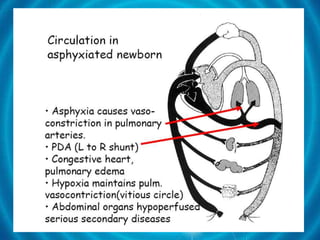
 Changes in the CVS and respiratory system
 Immaturity of the body in thermoregulation
 Loss of heat through conduction, convection, radiation and
evaporation
 Check for bleeding
CLEARING THE AIR PASSAGES
 It is an urgent duty that must be performed without delay
 Mucus should be suctioned from the mouth as soon as the
head is born.
 As soon as the body is born the body should be held for a
few seconds with the head slightly dependent for the
drainage.
 Some hold the baby upside down.
 Mucus must be removed before the first breath to prevent
aspiration.
 If the body cries immediately there should be no need to use
suctioning.
 If the infant continues to have an accumulation of mucus in
the mouth or nose do suction again.
SUCTIONING
 Use a bulb syringe or a soft, small catheter for suctioning
 Do suction first in the mouth followed by nose.
 Avoid vigourous suctioning
 If the bulb syringe is used for suctioning it should be
decompressed before being inserted the infant’s mouth or
nose.
 In case of asphyxiated baby endotracheal suctioning has to be
done.
 Keep ready resuscitation equipments and medications
 Baby laryngoscope
 Endotracheal tube
 Suction tubes
 Mucus extractors
 Paediatric I.V administration set
MEDICATIONS
 Inj. Sodium bicarbonate
 Inj. Calcium gluconate
 Sodium chloride
 Glucose 10%
 Neonatal nalaxon (Narcan)
APGAR SCORING
Signs Score
0 1 2
Colour Blue pale Body pink
limbs blue
Completely
pink
Respiratory
effort
Absent Slow, irregular
weak cry
Strong cry
Heart beat Absent Slow, less than
100
Over 100
Muscle tone Limp Some flexion of
limbs
Active
movement
Response to
flicking foot
Absent Fascial grimace Crying
Severe 0 -2 Moderate 3-4 Mild 5-7
No asphyxia 8-10
THERMOREGULATION
 Maintain the room temperature 21C (70 F)
 Loss of heat through conduction, convection, radiation and
evaporation.
 Dry the body and wrap the baby with a warm sterile blanket.
 Cover the head
 Keep the baby under radiant warmer
 Immediate bath is not permitted
 Re-assess the temperature after one hour.
 If the temperature is 98.6 F and stable, bath can be given
 Keep the baby warm
 Hot water bottles are potentially dangerous in providing
warmth.
ATTENTION TO THE UMBILICAL CORD
 Time of clamping and cutting the cord.
 Where do you clamp the cord?
 Type of scissors used for cutting the cord
 How did you cut the cord?
 Examination of the cord for arteries and veins
 Types of clamps
Plastic cord clamps (disposible)
Rubber bands
Pieces of compression tubing
 Assess cord haemorrhage
OTHER NURSING MEASURES
 Case of the eyes
 Rest after the trauma of birth
 Bonding of mother and baby
- Initiation of breast feeding within half an hour
- By administering sedatives during labor
- By encouraging fathers to be present
 By ascertaining and complying with the mother’s wishes
regarding the bonding process.
 By allowing the mother to cuddle here whapped baby
 By practising rooming in
NURSING DIAGNOSIS
1. Risk for ineffective airway clearance related to presence of
mucus in mouth and nose at birth.
2. Risk for ineffective thermo regulation related to newborn’s
transition to extra uterine environment.
3. Risk for infection related to newly clamped umbilical cord and
exposure of eyes to vaginal secrtens.
immediate-care-of-newborn.ppt

immediate-care-of-newborn.ppt

  • 1.
  • 3.
    DEFINE A HEALTHYNEWBORN The healthy newborn infant is born at term, cries almost immediately after delivery and establishes satisfactory rhythmic pulmonary respiration
  • 4.
    IMPORTANCE OF IMMEDIATECARE  Period of transition from intrauterine to extrauterine condition  Changes in the CVS and respiratory system  Immaturity of the body in thermoregulation  Loss of heat through conduction, convection, radiation and evaporation  Check for bleeding
  • 5.
    CLEARING THE AIRPASSAGES  It is an urgent duty that must be performed without delay  Mucus should be suctioned from the mouth as soon as the head is born.  As soon as the body is born the body should be held for a few seconds with the head slightly dependent for the drainage.  Some hold the baby upside down.  Mucus must be removed before the first breath to prevent aspiration.  If the body cries immediately there should be no need to use suctioning.  If the infant continues to have an accumulation of mucus in the mouth or nose do suction again.
  • 12.
    SUCTIONING  Use abulb syringe or a soft, small catheter for suctioning  Do suction first in the mouth followed by nose.  Avoid vigourous suctioning  If the bulb syringe is used for suctioning it should be decompressed before being inserted the infant’s mouth or nose.  In case of asphyxiated baby endotracheal suctioning has to be done.  Keep ready resuscitation equipments and medications
  • 13.
     Baby laryngoscope Endotracheal tube  Suction tubes  Mucus extractors  Paediatric I.V administration set
  • 14.
    MEDICATIONS  Inj. Sodiumbicarbonate  Inj. Calcium gluconate  Sodium chloride  Glucose 10%  Neonatal nalaxon (Narcan)
  • 15.
    APGAR SCORING Signs Score 01 2 Colour Blue pale Body pink limbs blue Completely pink Respiratory effort Absent Slow, irregular weak cry Strong cry Heart beat Absent Slow, less than 100 Over 100 Muscle tone Limp Some flexion of limbs Active movement Response to flicking foot Absent Fascial grimace Crying Severe 0 -2 Moderate 3-4 Mild 5-7 No asphyxia 8-10
  • 17.
    THERMOREGULATION  Maintain theroom temperature 21C (70 F)  Loss of heat through conduction, convection, radiation and evaporation.  Dry the body and wrap the baby with a warm sterile blanket.  Cover the head  Keep the baby under radiant warmer  Immediate bath is not permitted  Re-assess the temperature after one hour.  If the temperature is 98.6 F and stable, bath can be given  Keep the baby warm  Hot water bottles are potentially dangerous in providing warmth.
  • 19.
    ATTENTION TO THEUMBILICAL CORD  Time of clamping and cutting the cord.  Where do you clamp the cord?  Type of scissors used for cutting the cord  How did you cut the cord?  Examination of the cord for arteries and veins  Types of clamps Plastic cord clamps (disposible) Rubber bands Pieces of compression tubing  Assess cord haemorrhage
  • 21.
    OTHER NURSING MEASURES Case of the eyes  Rest after the trauma of birth  Bonding of mother and baby - Initiation of breast feeding within half an hour - By administering sedatives during labor - By encouraging fathers to be present  By ascertaining and complying with the mother’s wishes regarding the bonding process.  By allowing the mother to cuddle here whapped baby  By practising rooming in
  • 22.
    NURSING DIAGNOSIS 1. Riskfor ineffective airway clearance related to presence of mucus in mouth and nose at birth. 2. Risk for ineffective thermo regulation related to newborn’s transition to extra uterine environment. 3. Risk for infection related to newly clamped umbilical cord and exposure of eyes to vaginal secrtens.