IMAGINARY SPACES 
Day 1
DO NOW: (FIRST 5 MINUTES) 
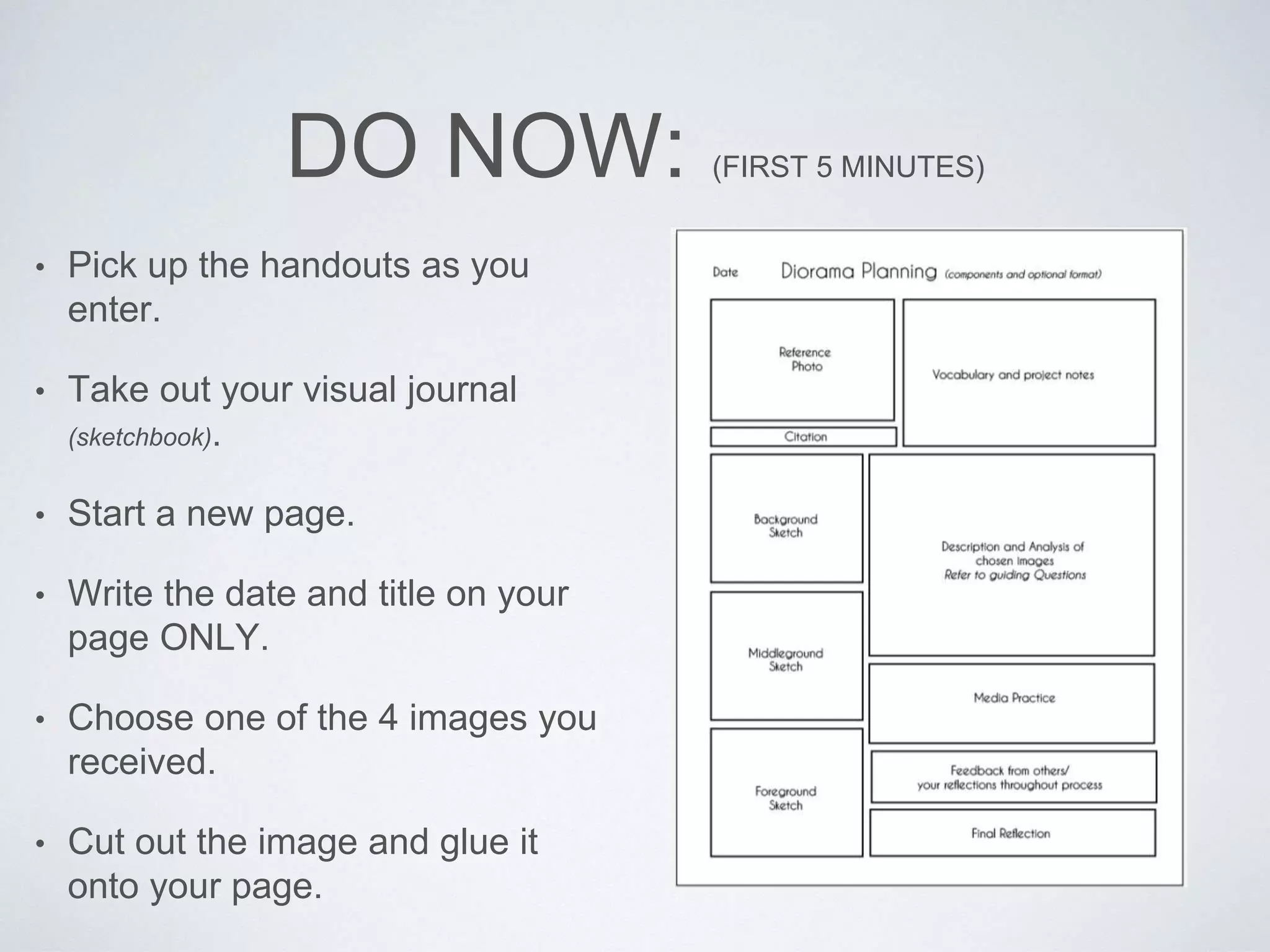
• Pick up the handouts as you 
enter. 
• Take out your visual journal 
(sketchbook). 
• Start a new page. 
• Write the date and title on your 
page ONLY. 
• Choose one of the 4 images you 
received. 
• Cut out the image and glue it 
onto your page.
BY THE END OF CLASS YOUR PAGE 
WILL… 
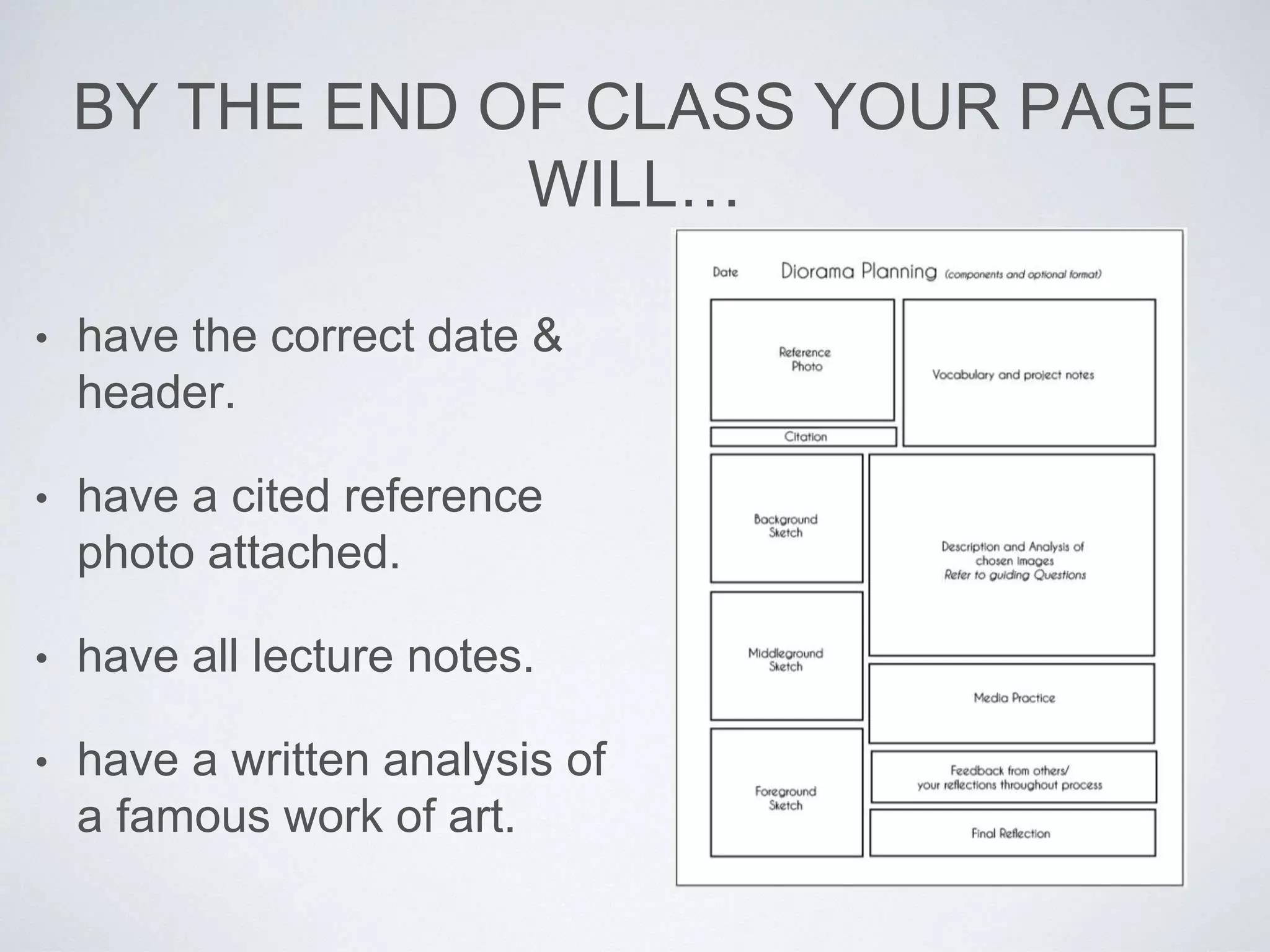
• have the correct date & 
header. 
• have a cited reference 
photo attached. 
• have all lecture notes. 
• have a written analysis of 
a famous work of art.
GET READY TO TAKE A 
FEW GUIDED NOTES
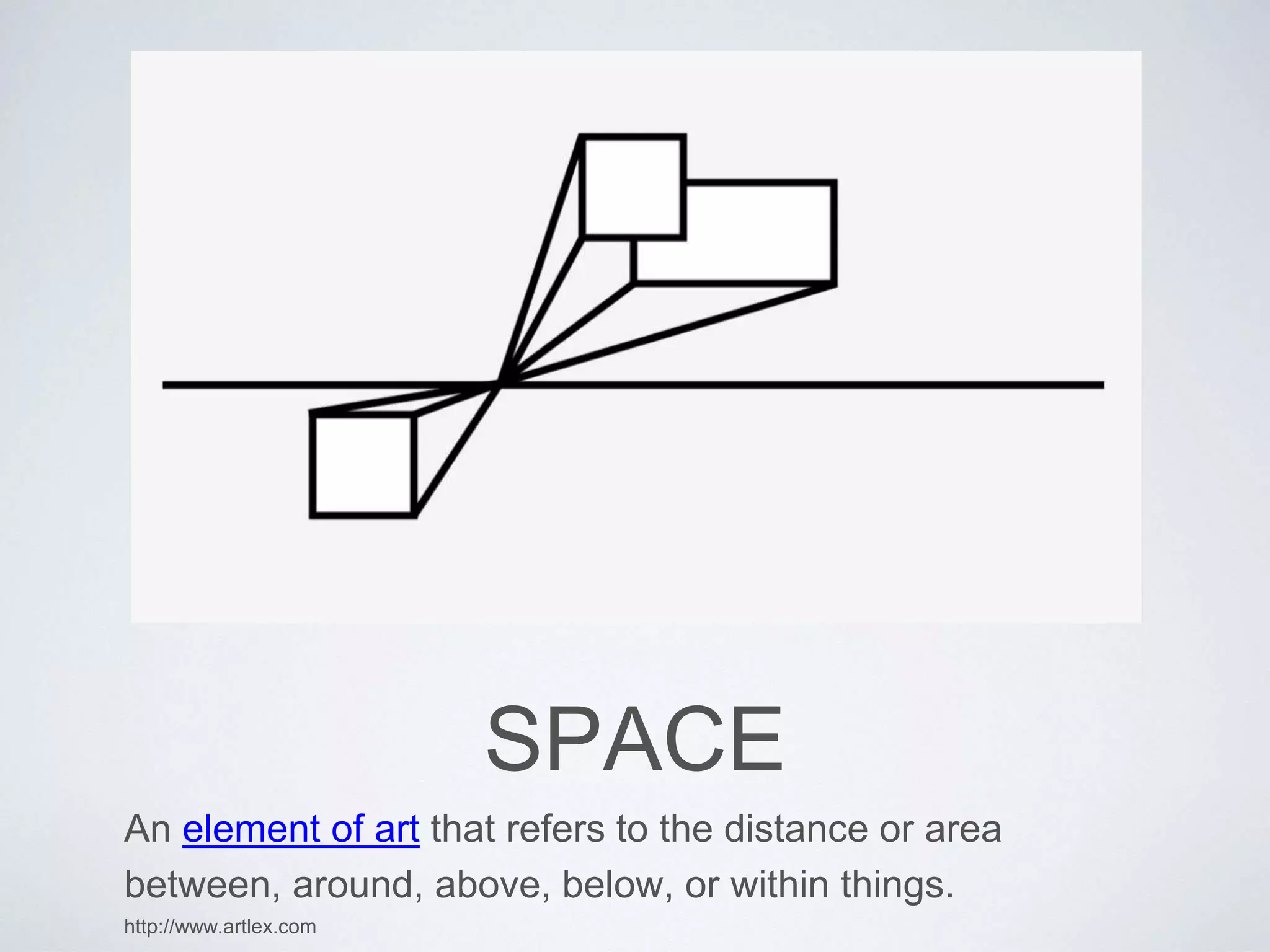
SPACE 
An element of art that refers to the distance or area 
between, around, above, below, or within things. 
http://www.artlex.com
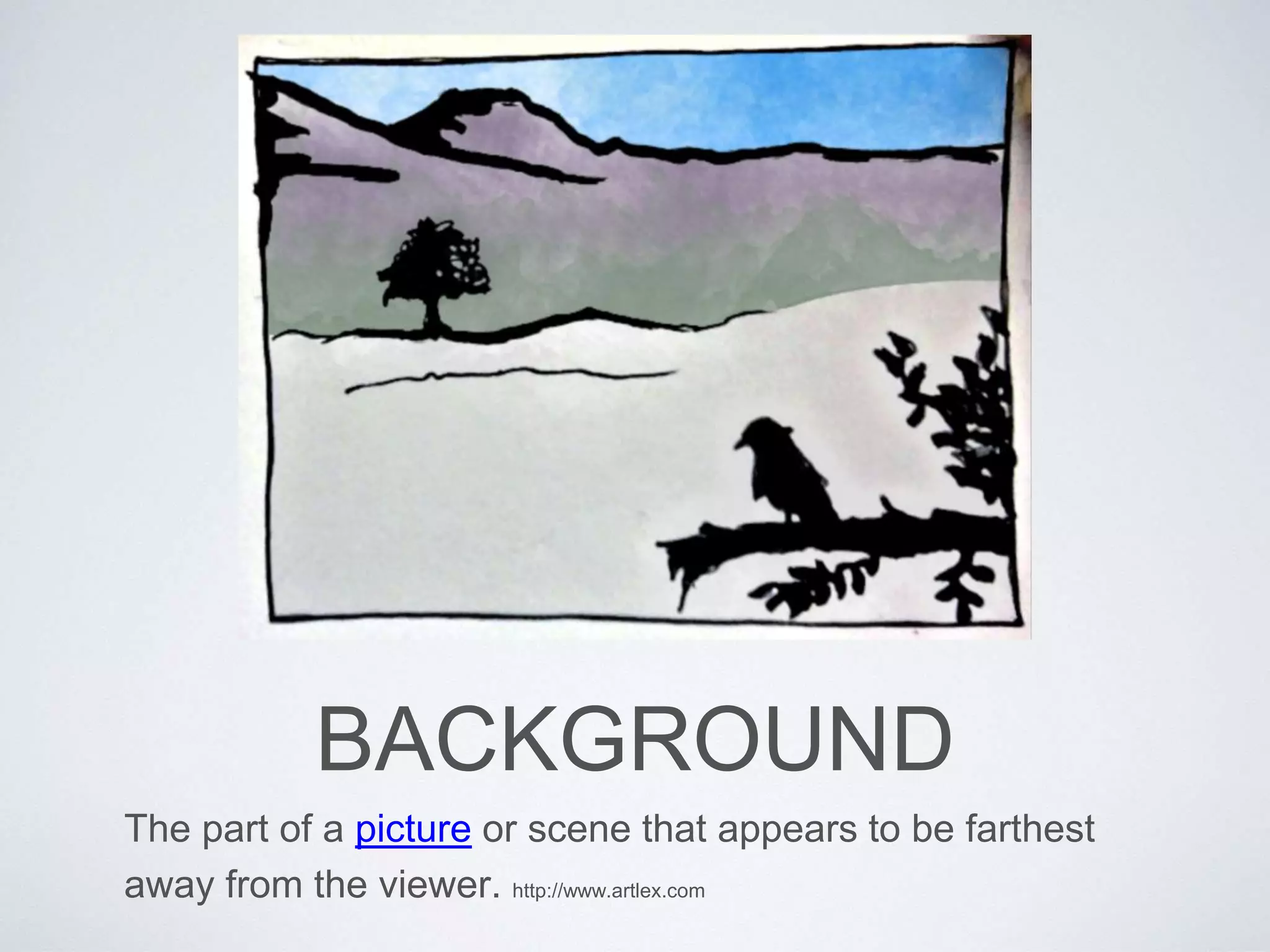
BACKGROUND 
The part of a picture or scene that appears to be farthest 
away from the viewer. http://www.artlex.com
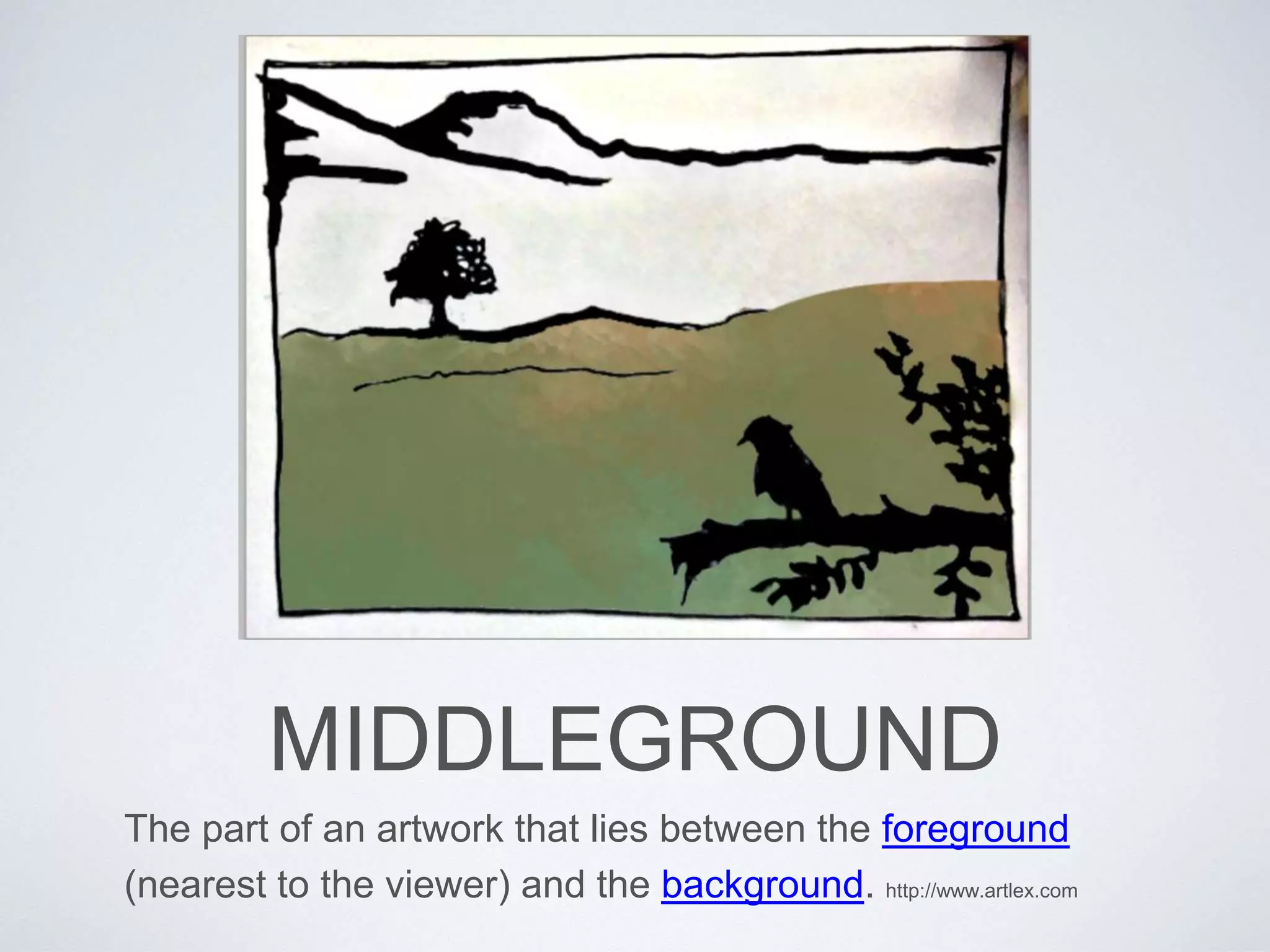
MIDDLEGROUND 
The part of an artwork that lies between the foreground 
(nearest to the viewer) and the background. http://www.artlex.com
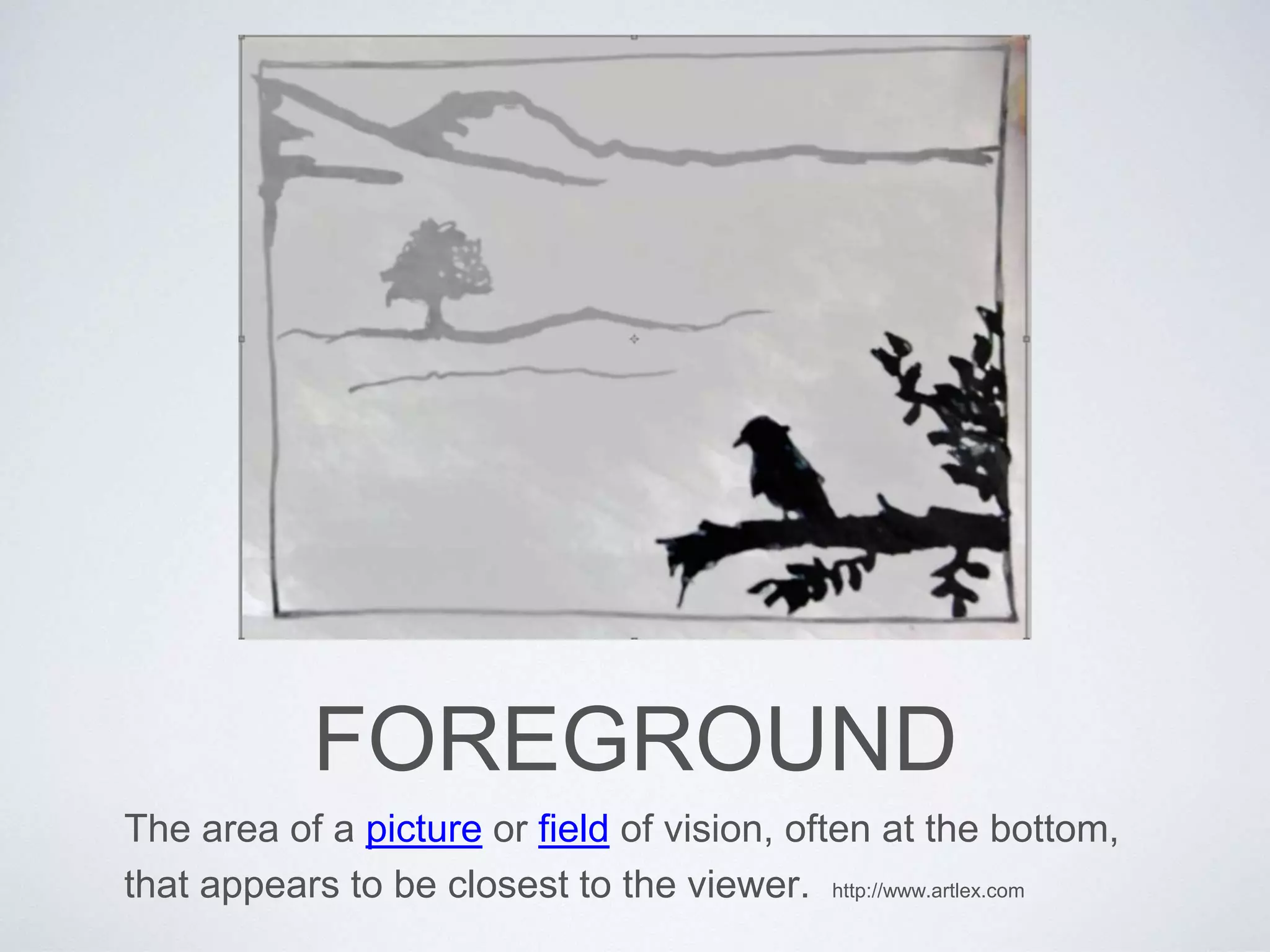
FOREGROUND 
The area of a picture or field of vision, often at the bottom, 
that appears to be closest to the viewer. http://www.artlex.com
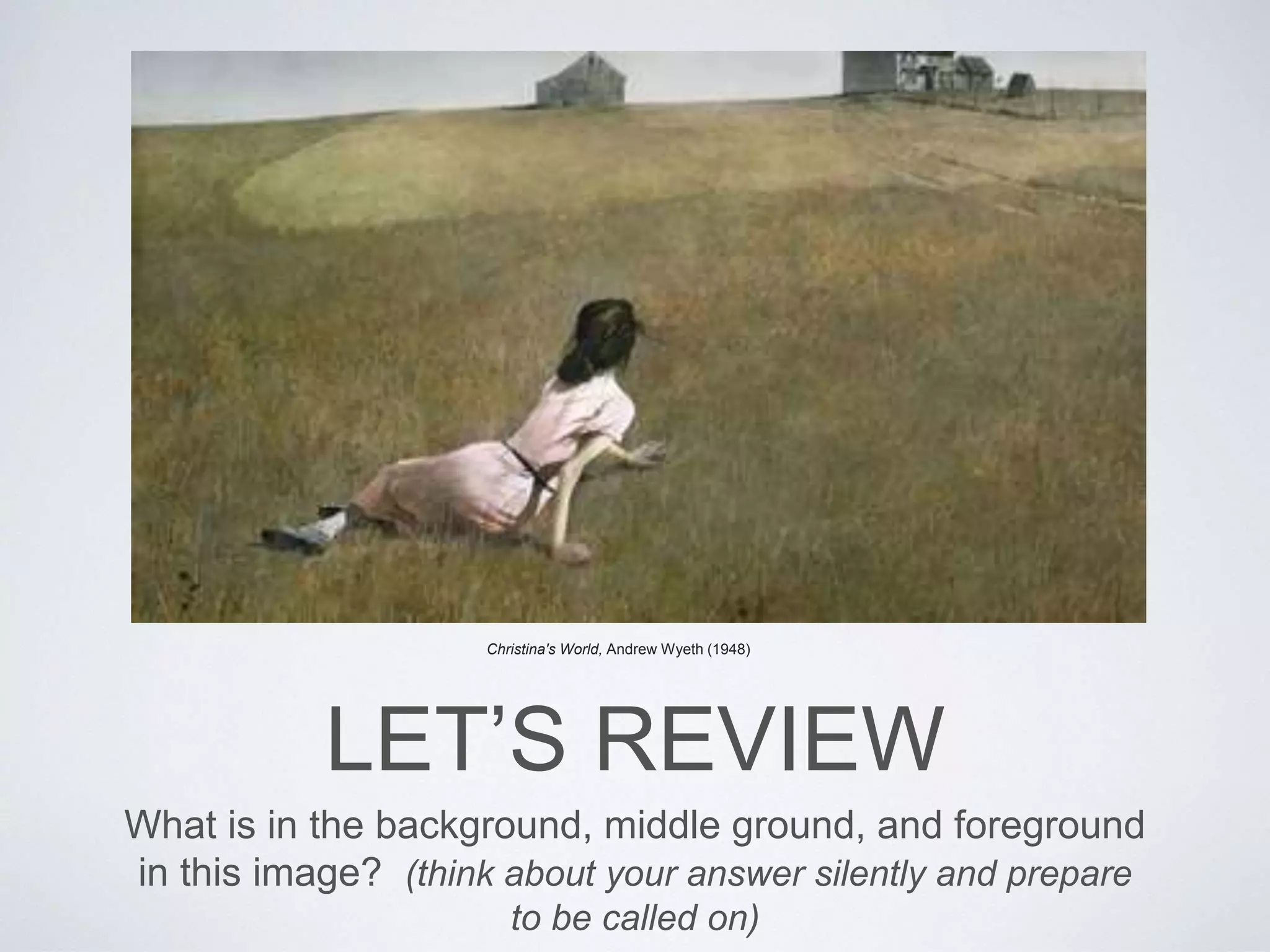
Christina's World, Andrew Wyeth (1948) 
LET’S REVIEW 
What is in the background, middle ground, and foreground 
in this image? (think about your answer silently and prepare 
to be called on)
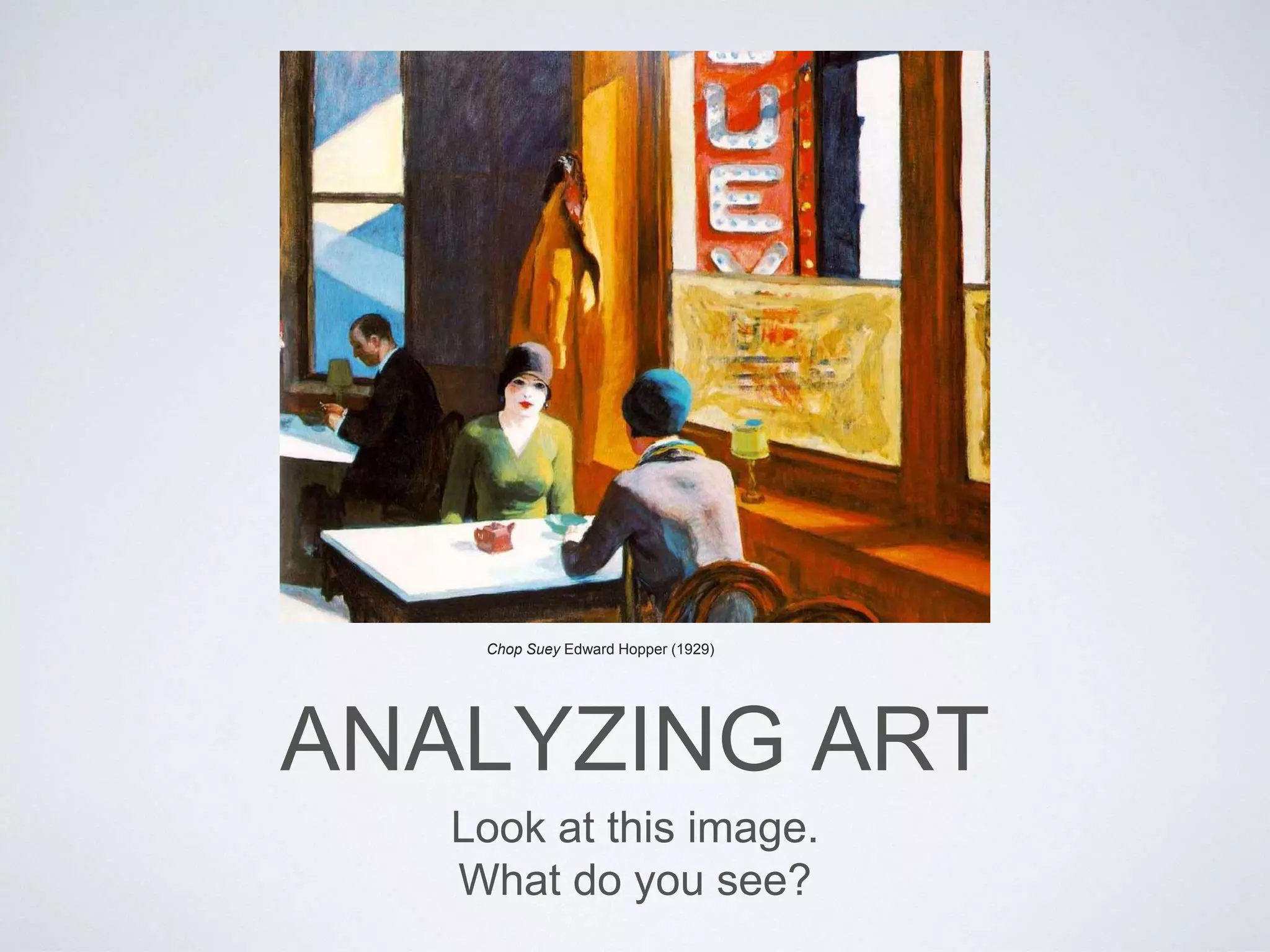
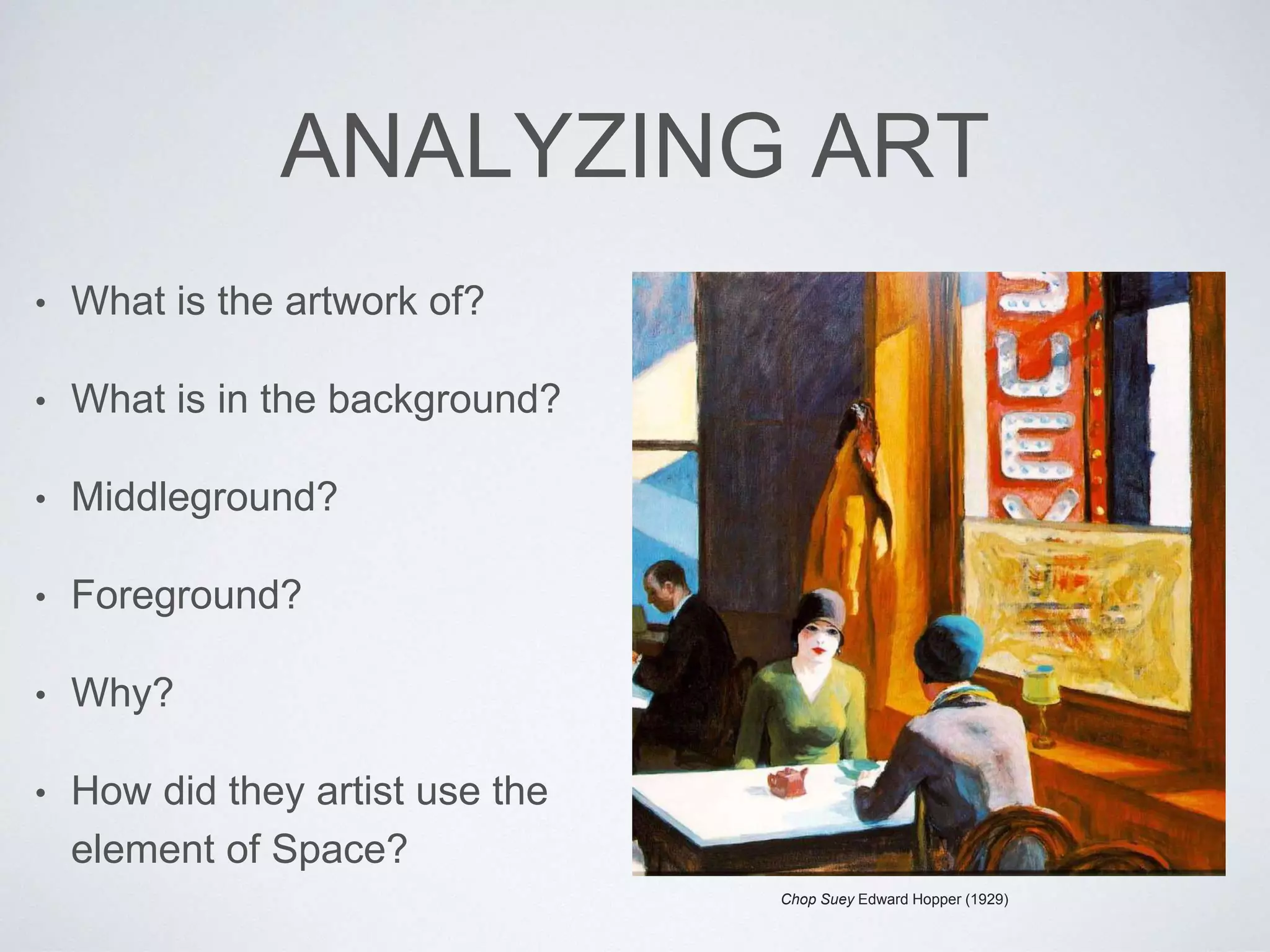
Chop Suey Edward Hopper (1929) 
ANALYZING ART 
Look at this image. 
What do you see?
ANALYZING ART 
• What is the artwork of? 
• What is in the background? 
• Middleground? 
• Foreground? 
• Why? 
• How did they artist use the 
element of Space? 
Chop Suey Edward Hopper (1929)
ANALYZING ART 
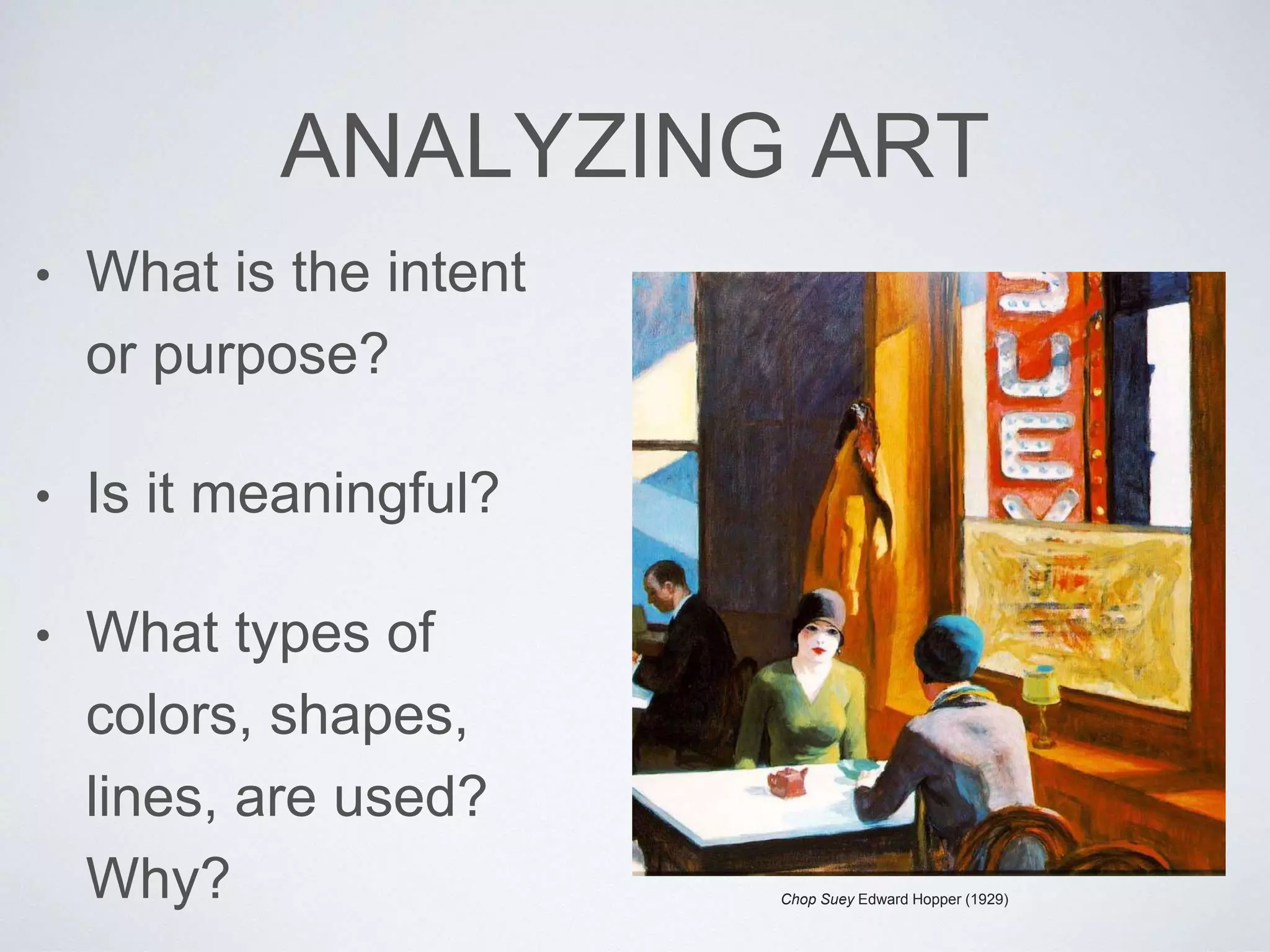
• What is the intent 
or purpose? 
• Is it meaningful? 
• What types of 
colors, shapes, 
lines, are used? 
Why? Chop Suey Edward Hopper (1929)
ANALYZING ART 
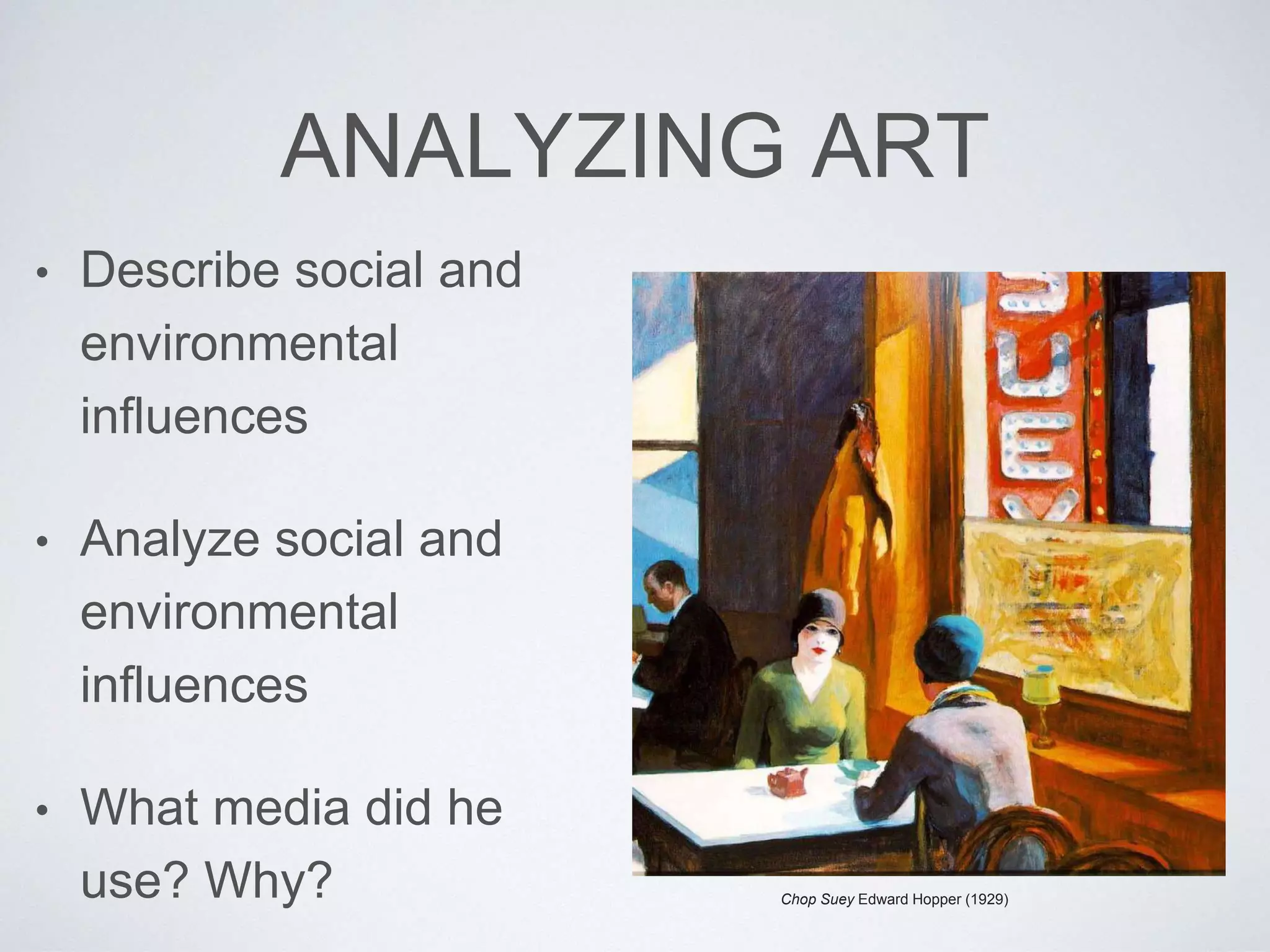
• Describe social and 
environmental 
influences 
• Analyze social and 
environmental 
influences 
• What media did he 
use? Why? Chop Suey Edward Hopper (1929)
INDEPENDENT PRACTICE 
• 15 minutes 
• Read available 
information about the 
image your chose. 
• Use guiding questions 
to write 1-2 
paragraphs of 
description and 
analysis of the work. 
• (don’t forget to: use complete 
sentences and appropriate 
vocabulary)
SHARE: 5 MINUTES 
• Turn to a shoulder partner and tell them about your 
image. (2 minutes each) 
• Why did you choose it? 
• What did you write for analysis? 
• Ask them what they would add. 
• Revise/add to your analysis.
IMAGINARY SPACES 
Day 2
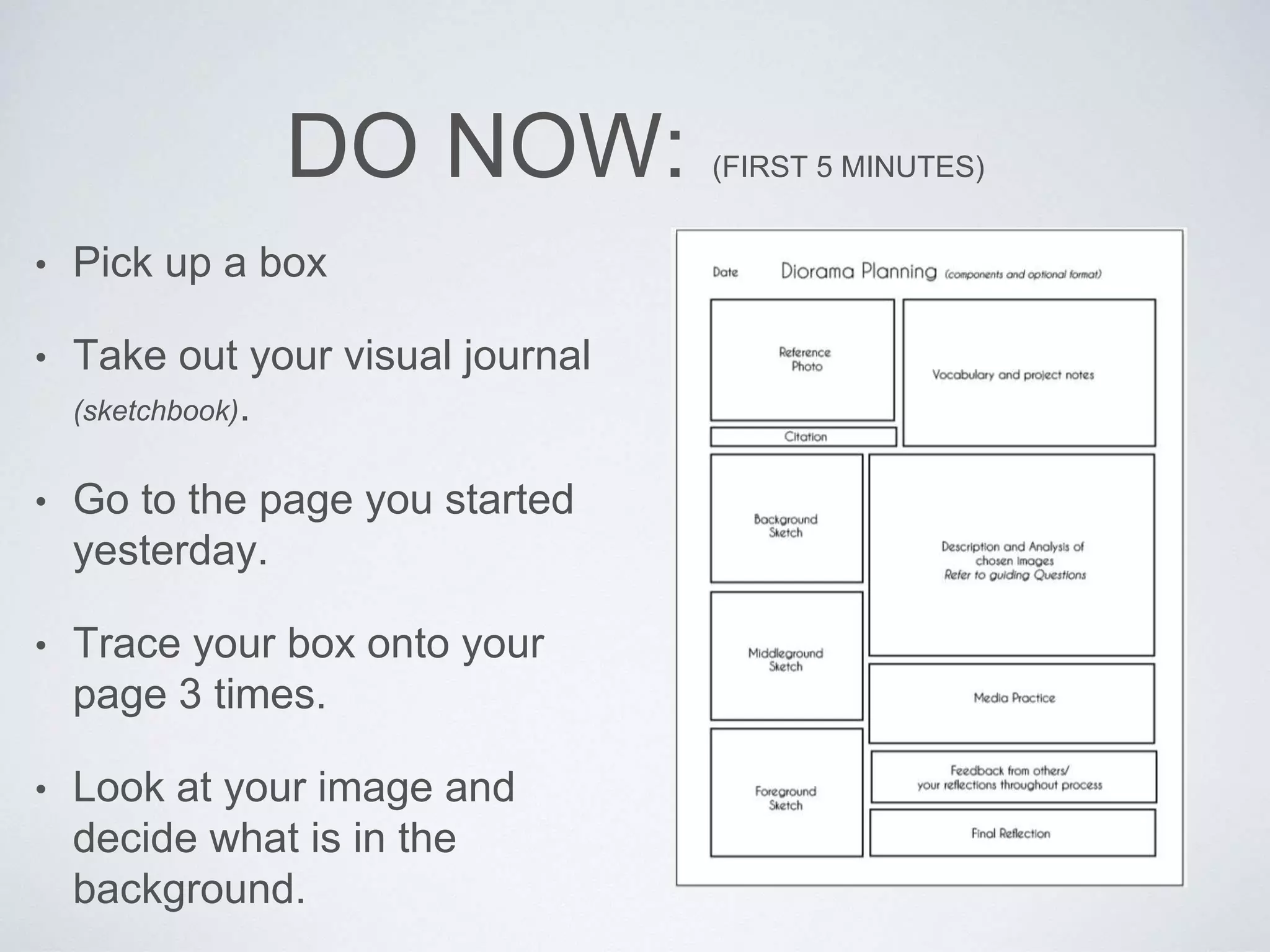
DO NOW: (FIRST 5 MINUTES) 
• Pick up a box 
• Take out your visual journal 
(sketchbook). 
• Go to the page you started 
yesterday. 
• Trace your box onto your 
page 3 times. 
• Look at your image and 
decide what is in the 
background.
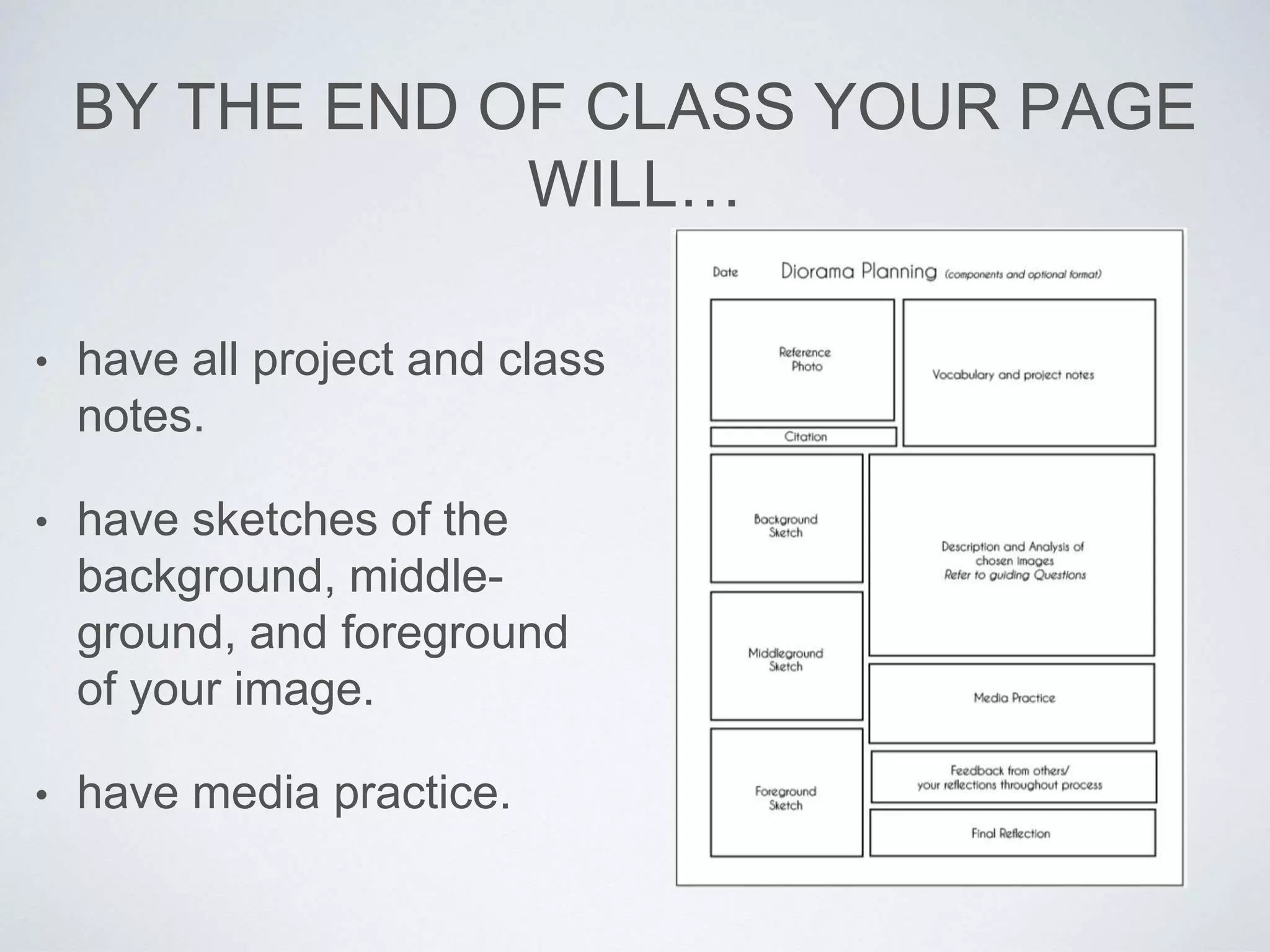
BY THE END OF CLASS YOUR PAGE 
• have all project and class 
notes. 
• have sketches of the 
background, middle-ground, 
and foreground 
of your image. 
• have media practice. 
WILL…
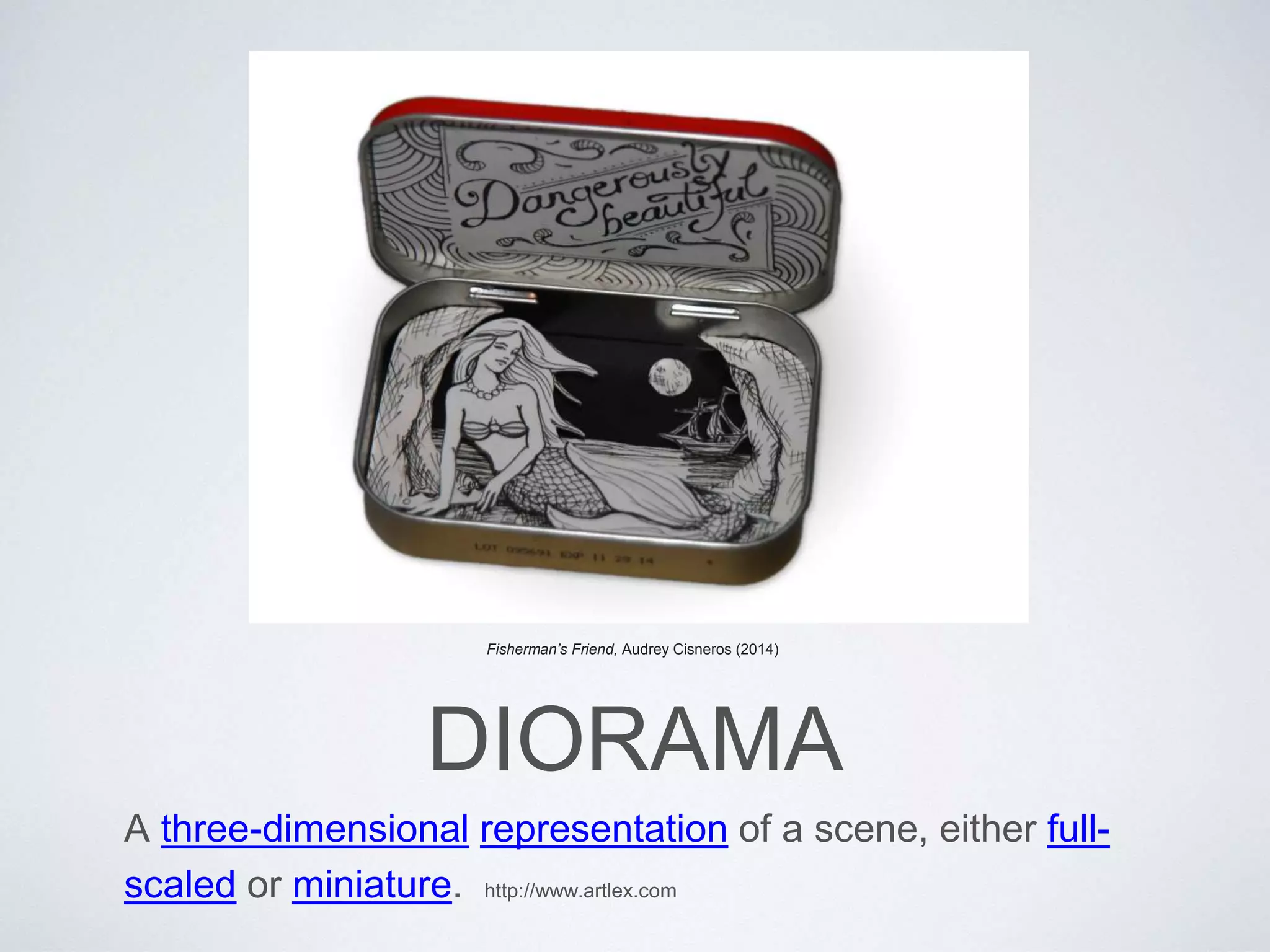
Fisherman’s Friend, Audrey Cisneros (2014) 
DIORAMA 
A three-dimensional representation of a scene, either full-scaled 
or miniature. http://www.artlex.com
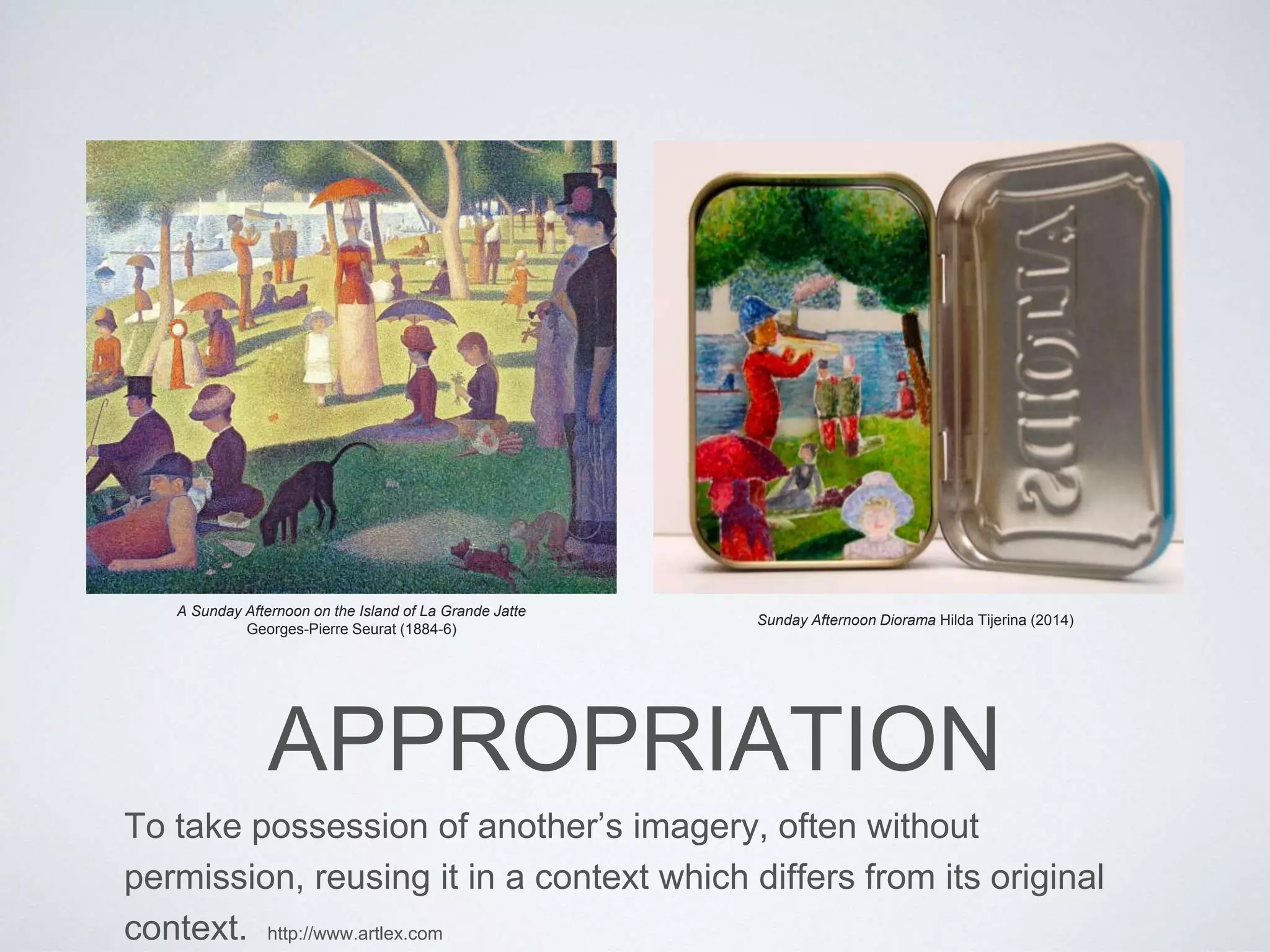
Sunday Afternoon Diorama Hilda Tijerina (2014) 
A Sunday Afternoon on the Island of La Grande Jatte 
Georges-Pierre Seurat (1884-6) 
APPROPRIATION 
To take possession of another’s imagery, often without 
permission, reusing it in a context which differs from its original 
context. http://www.artlex.com
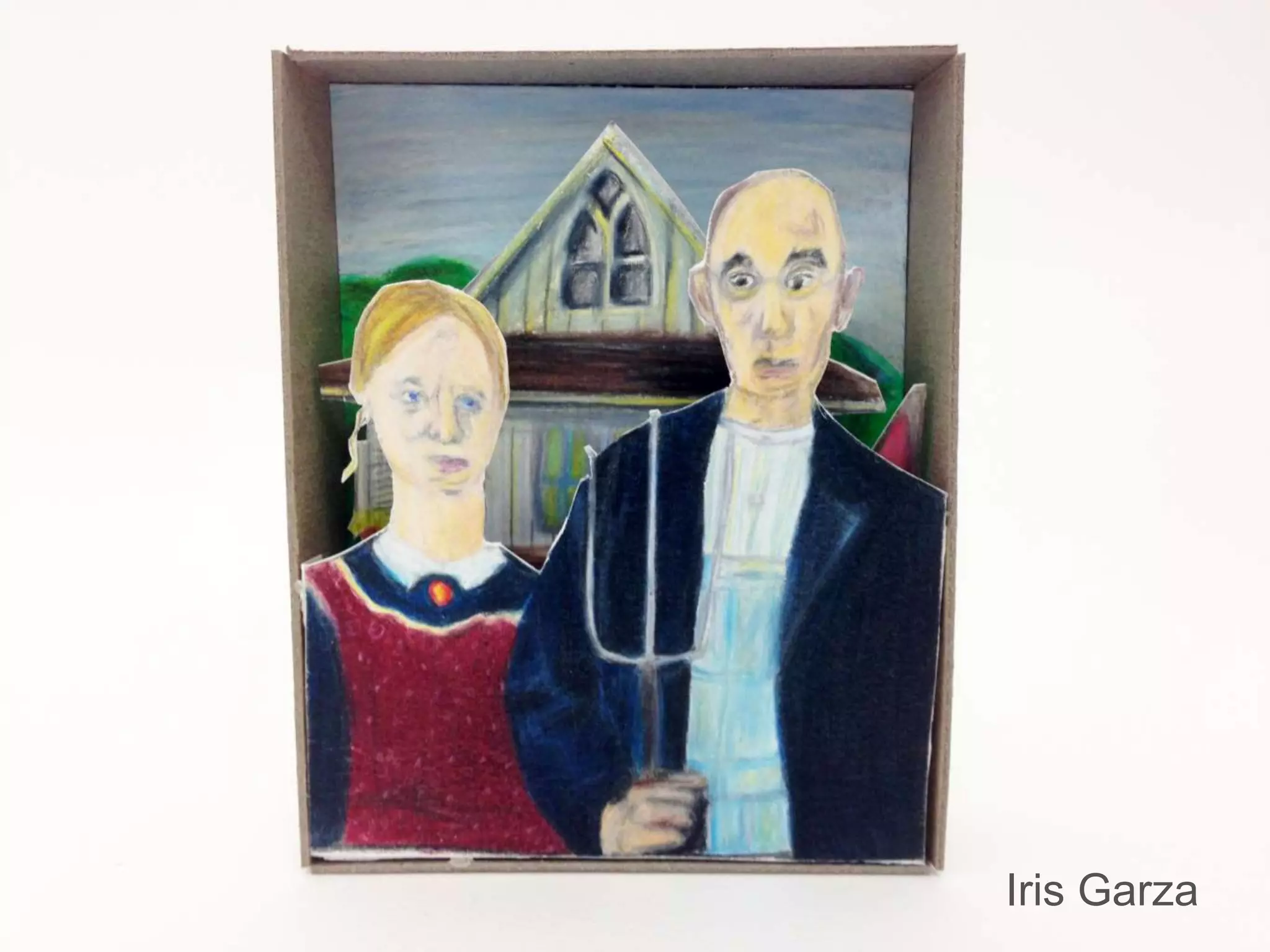
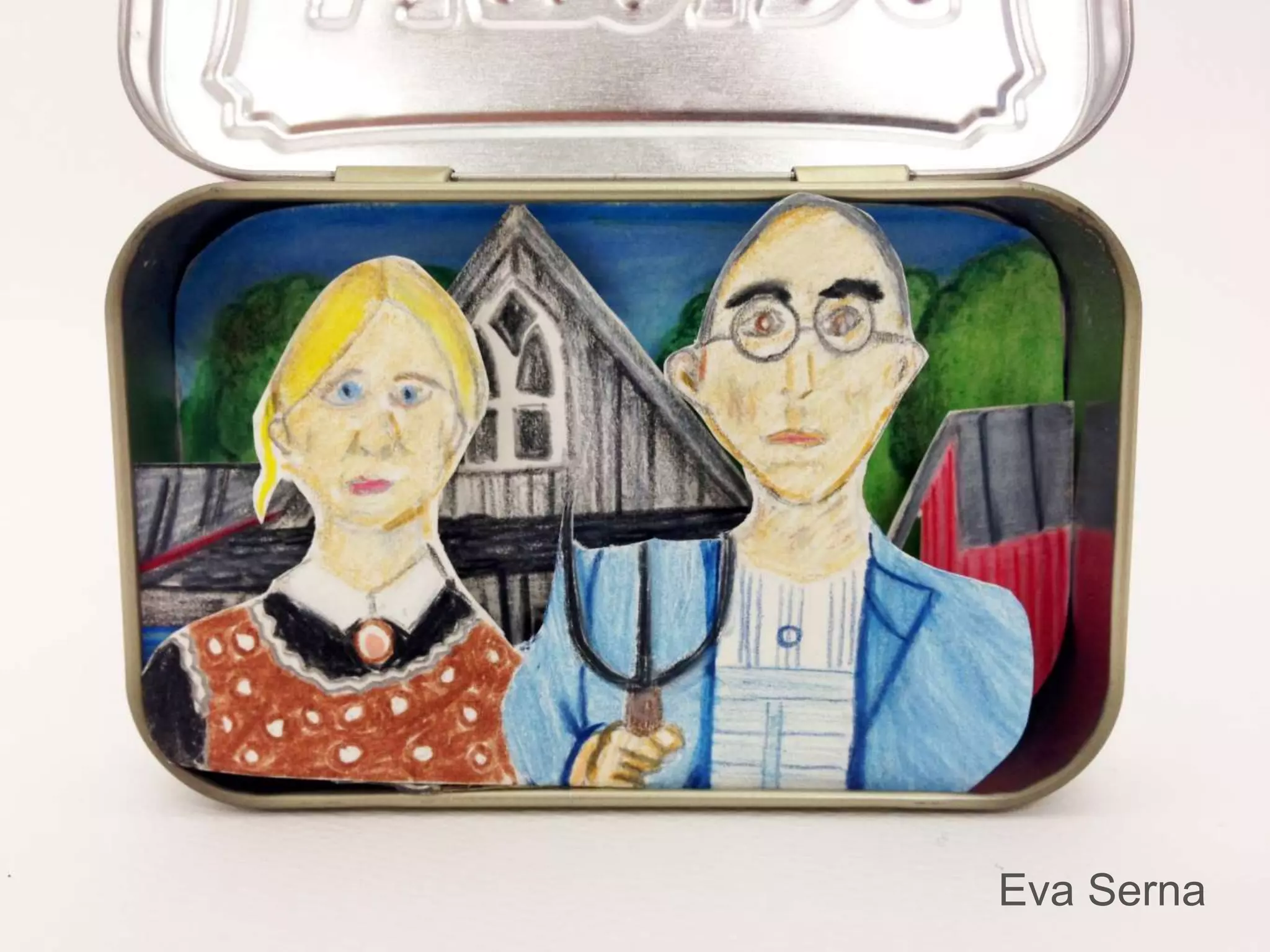
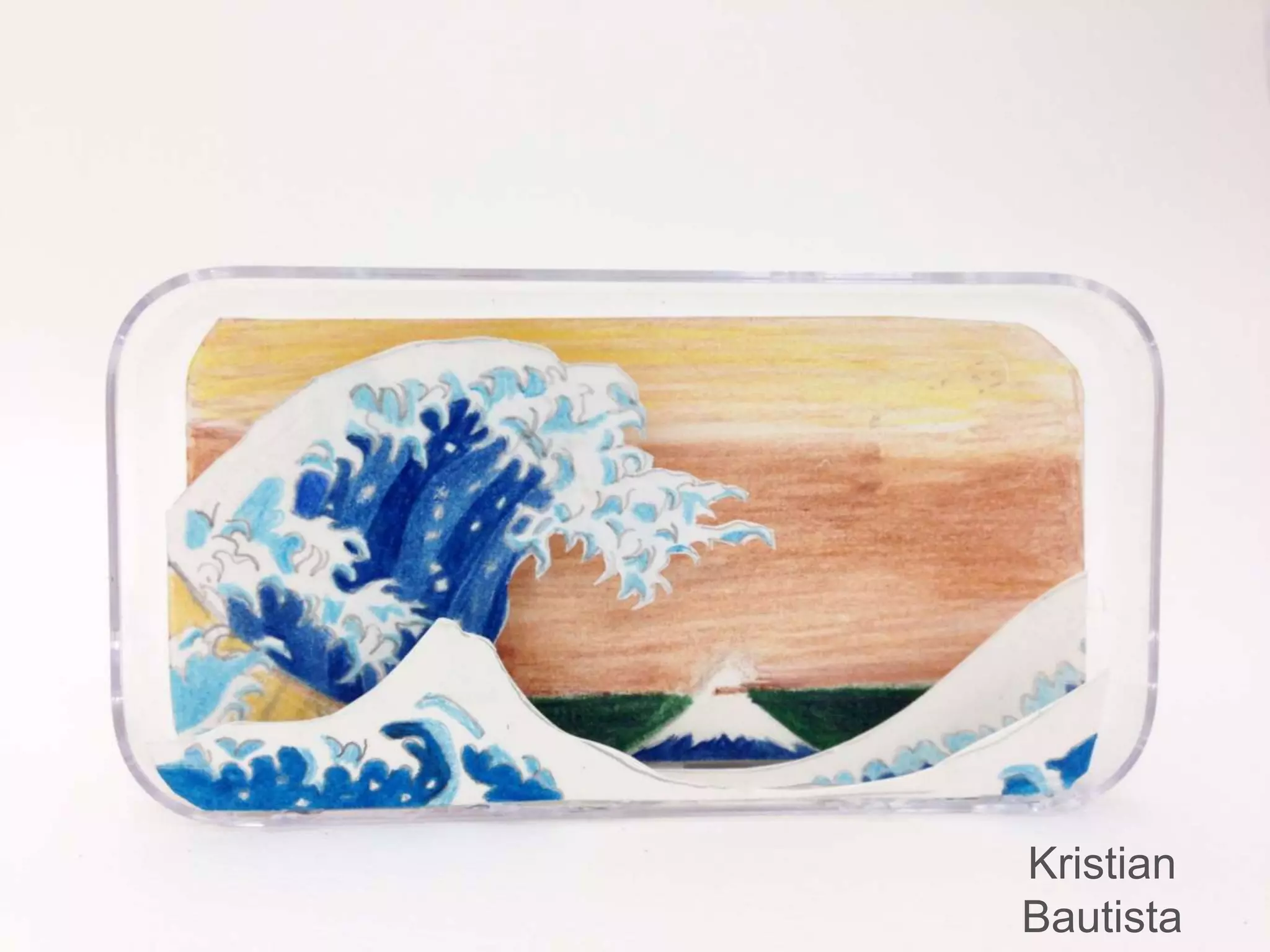
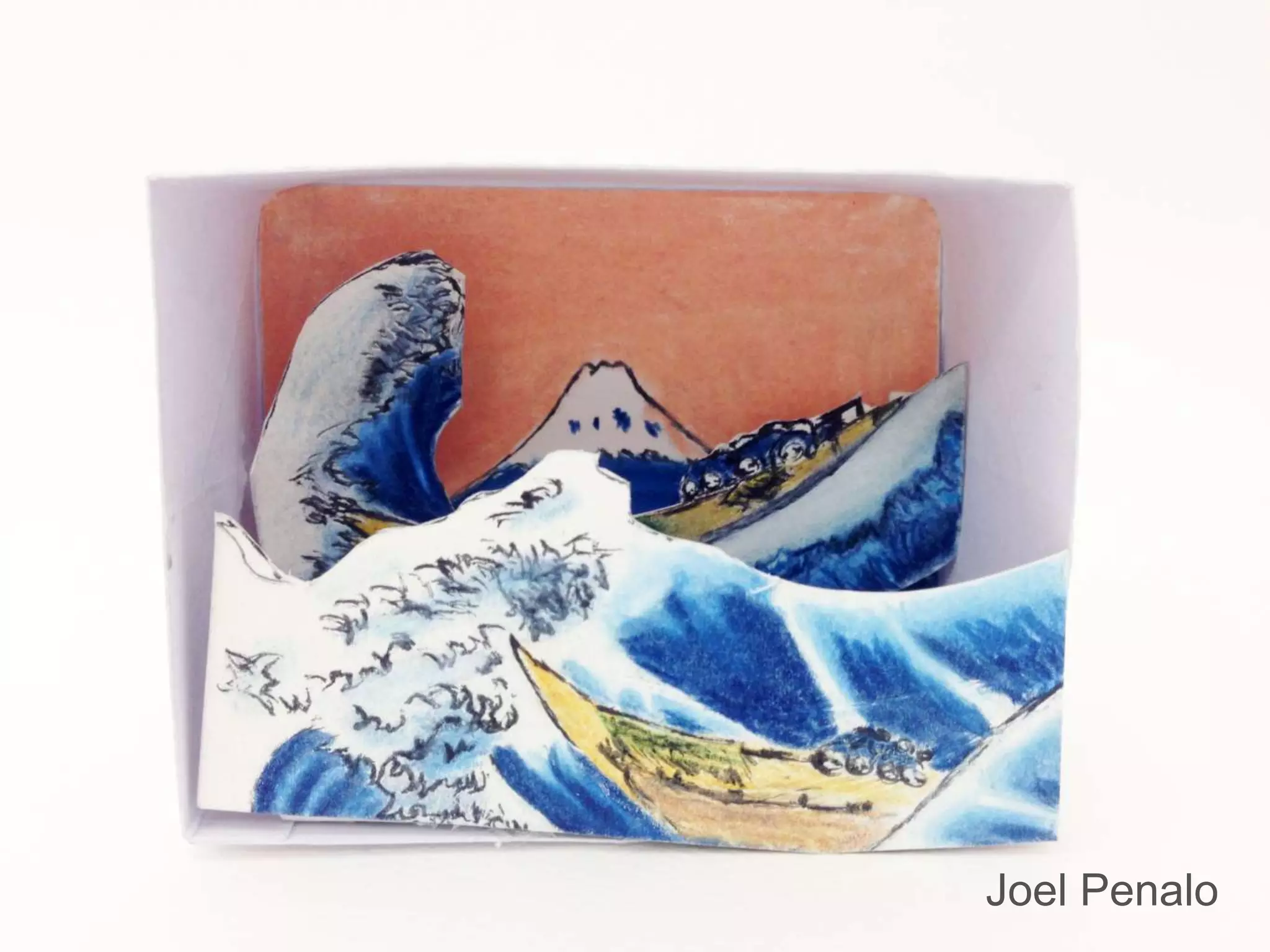
YOUR DIORAMA: 
• will pay homage to a master’s work of art. 
• will have at least 3 layers. 
• will demonstrate a careful and effective use 
of your chosen media. 
• will demonstrate your understanding of 
Space.
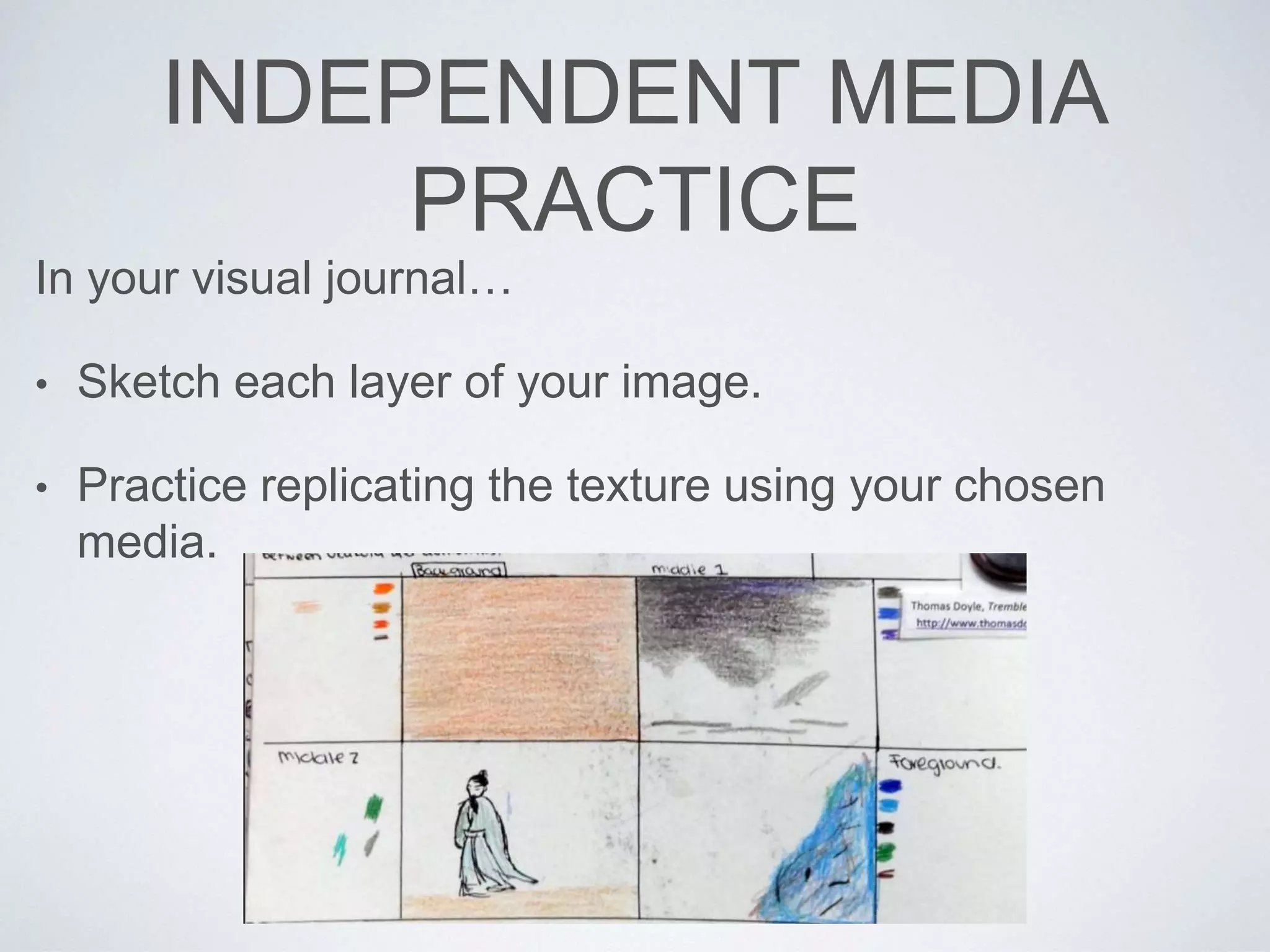
INDEPENDENT MEDIA 
PRACTICE 
In your visual journal… 
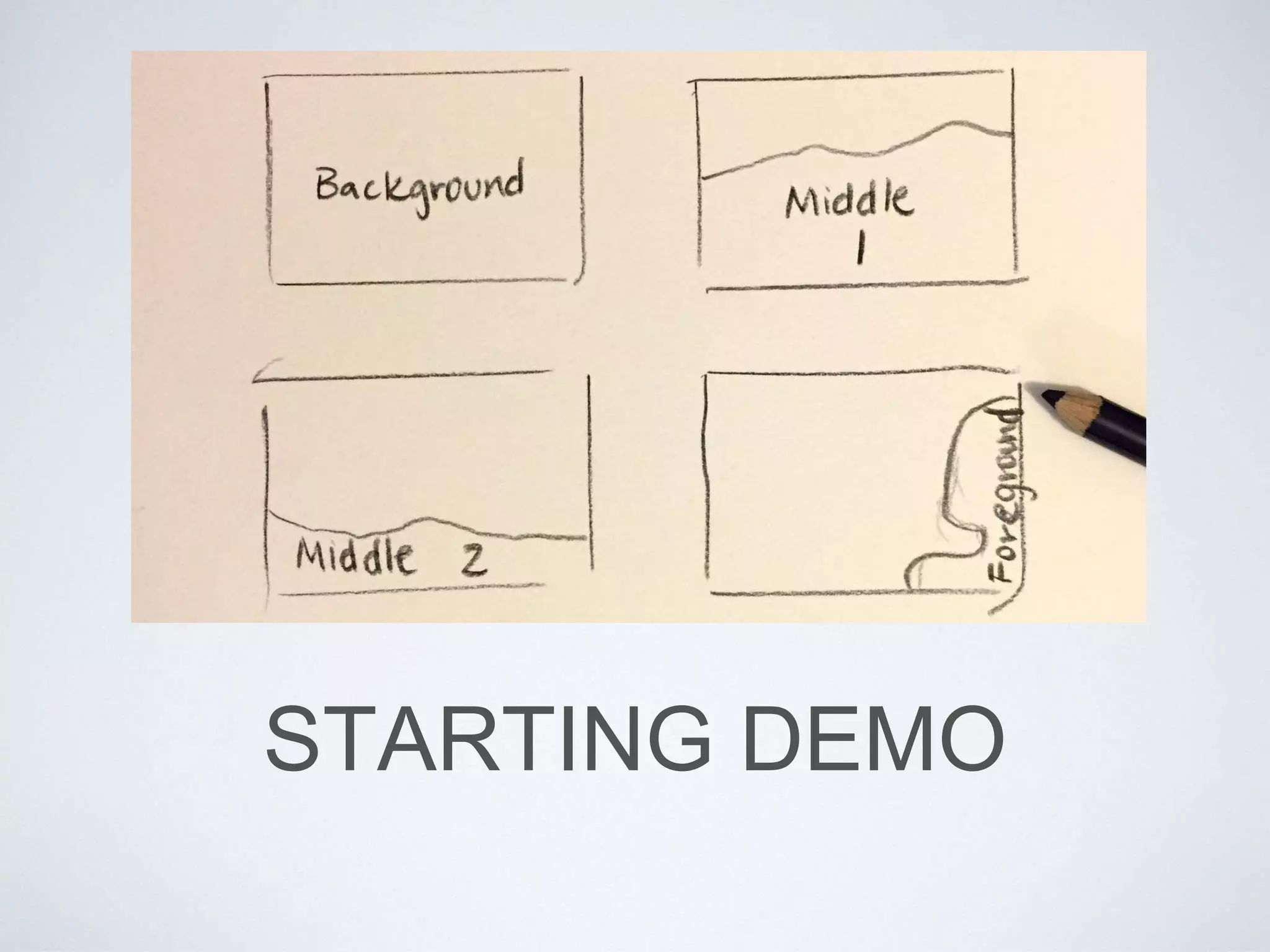
• Sketch each layer of your image. 
• Practice replicating the texture using your chosen 
media.
SHARE: 5 MINUTES 
• Turn to a shoulder partner and tell them about 
your sketches and media practice. (2 minutes 
each) 
• What was your choice of media? Why? 
• What were your successes? 
• What were your challenges?
IMAGINARY SPACES 
Day 3
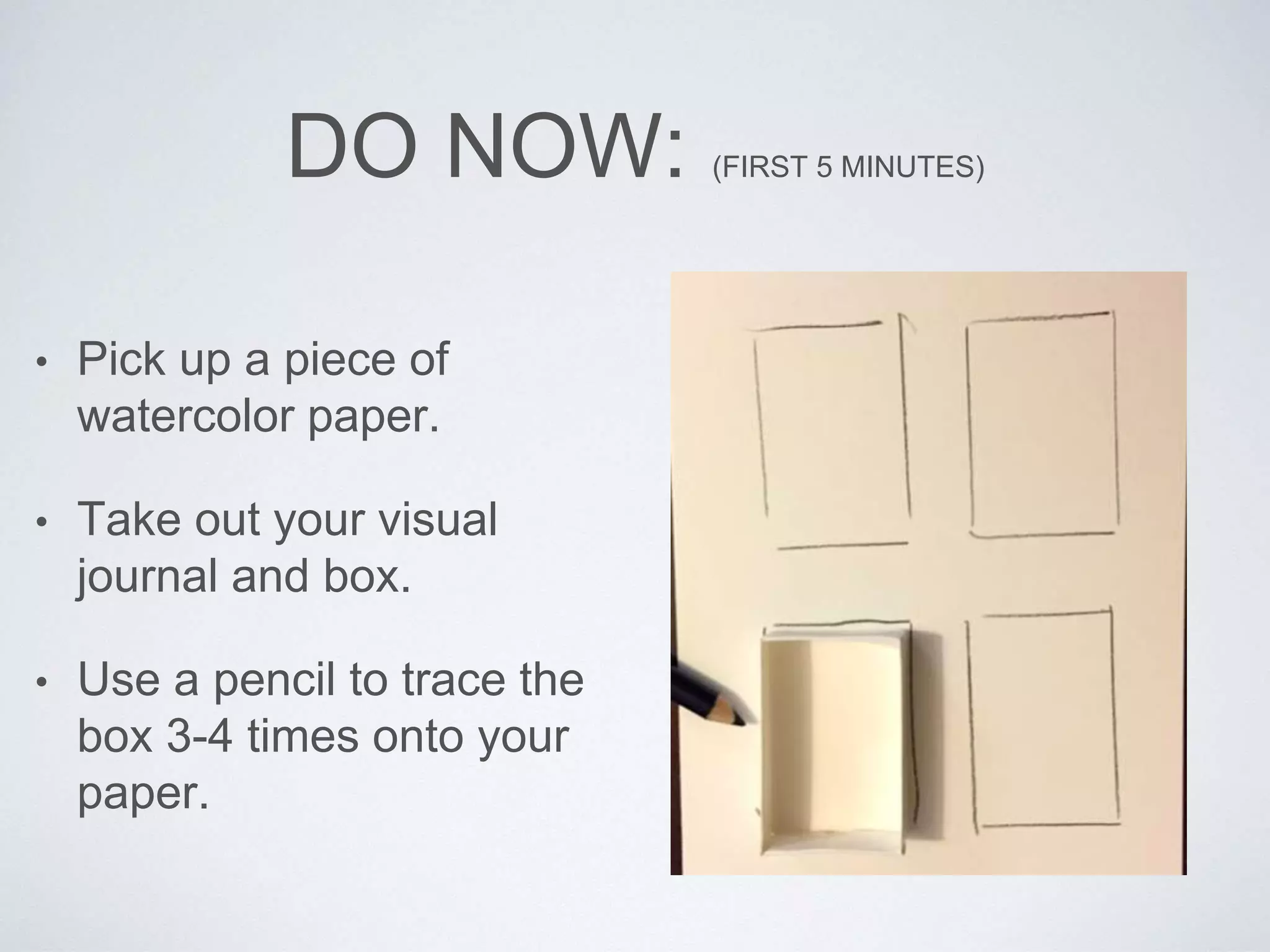
DO NOW: (FIRST 5 MINUTES) 
• Pick up a piece of 
watercolor paper. 
• Take out your visual 
journal and box. 
• Use a pencil to trace the 
box 3-4 times onto your 
paper.
STARTING DEMO
STUDIO TIME IS… 
• FOCUSED 
• QUIET 
• PURPOSEFUL 
• POSITIVE
IMAGINARY SPACES 
Day 4
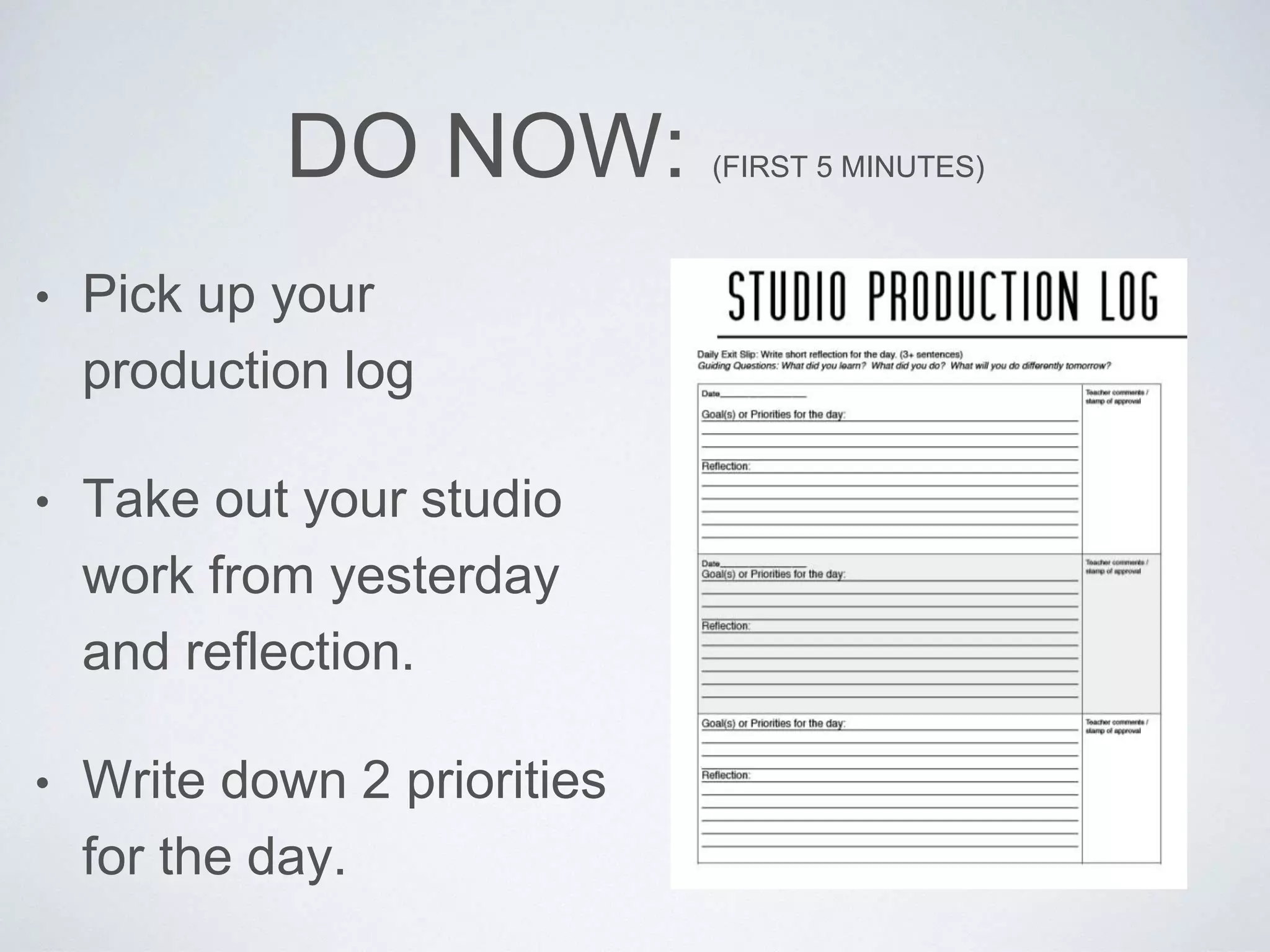
DO NOW: (FIRST 5 MINUTES) 
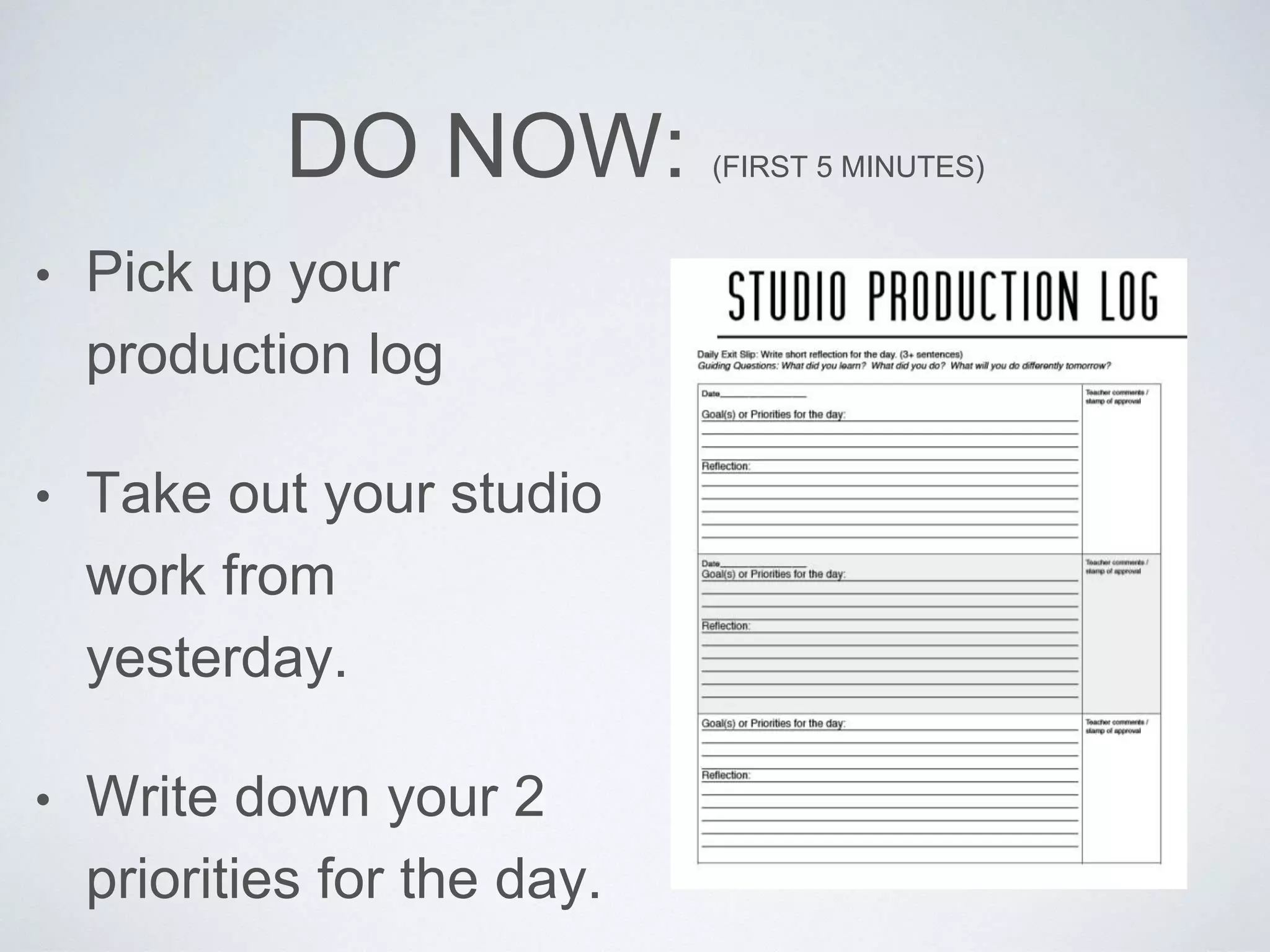
• Pick up your 
production log 
• Take out your studio 
work from yesterday 
and reflection. 
• Write down 2 priorities 
for the day.
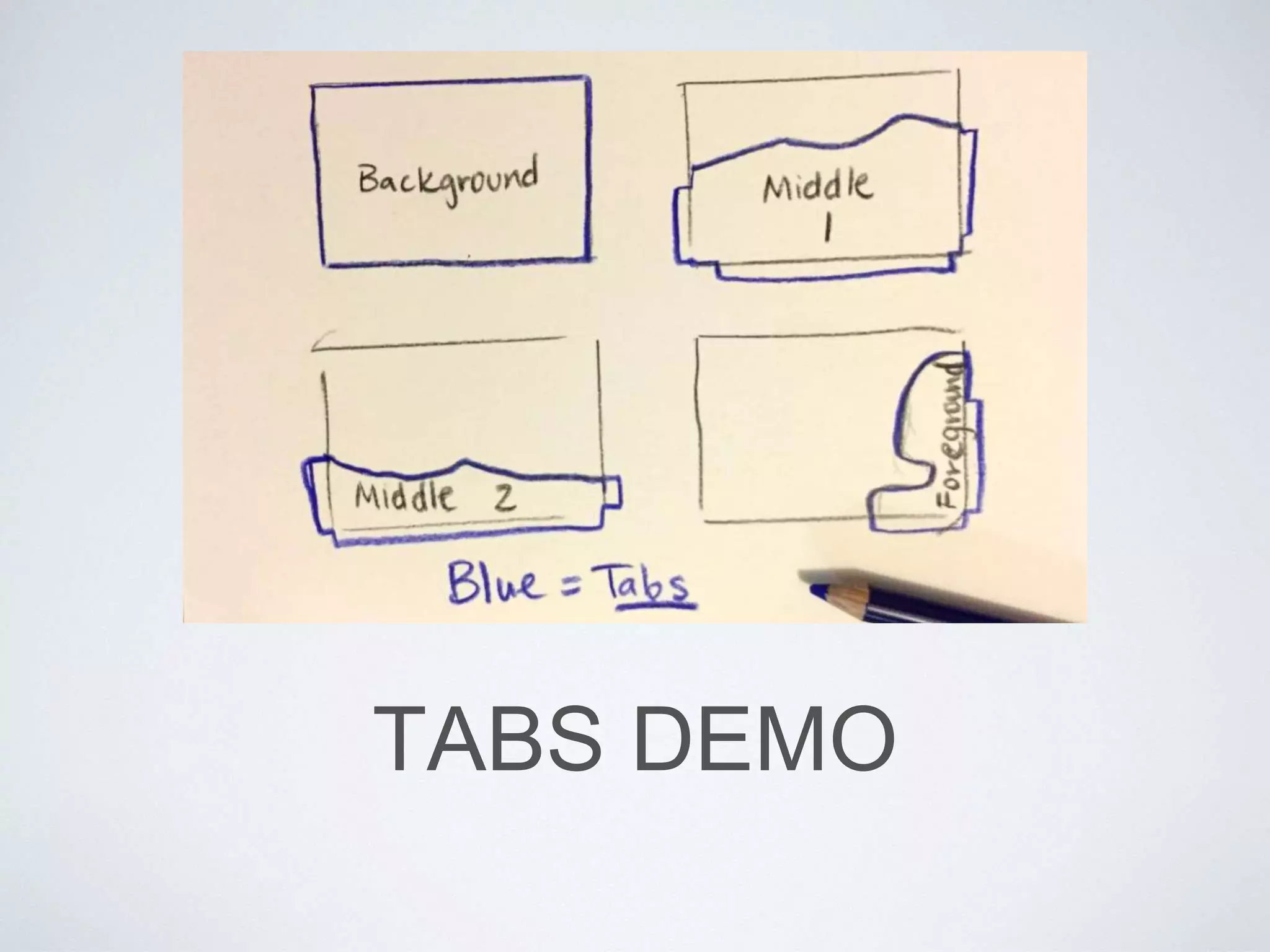
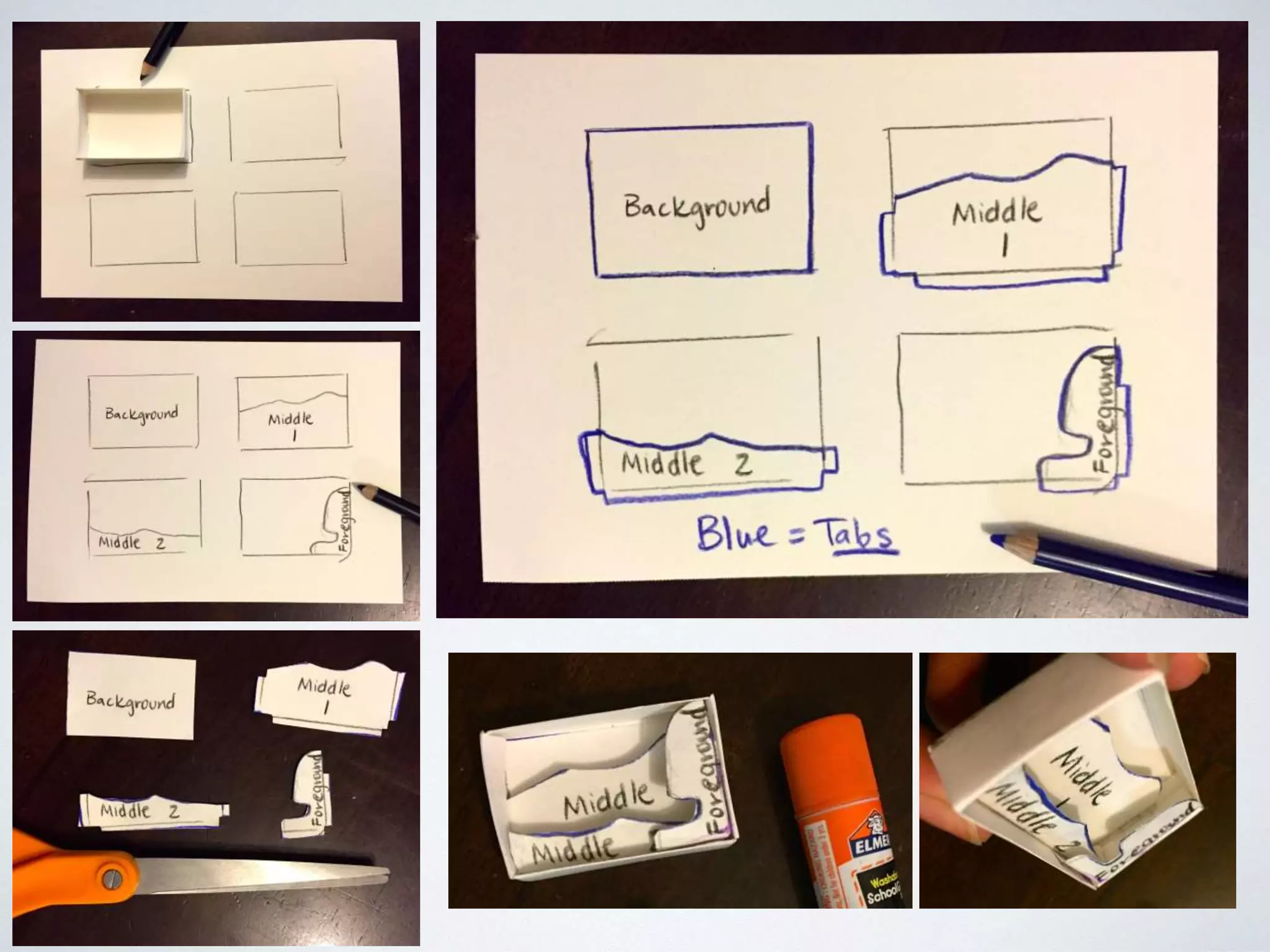
TABS DEMO
STUDIO TIME IS… 
• FOCUSED 
• QUIET 
• PURPOSEFUL 
• POSITIVE
IMAGINARY SPACES 
Day 5
DO NOW: (FIRST 5 MINUTES) 
• Pick up your 
production log 
• Take out your studio 
work from 
yesterday. 
• Write down your 2 
priorities for the day.
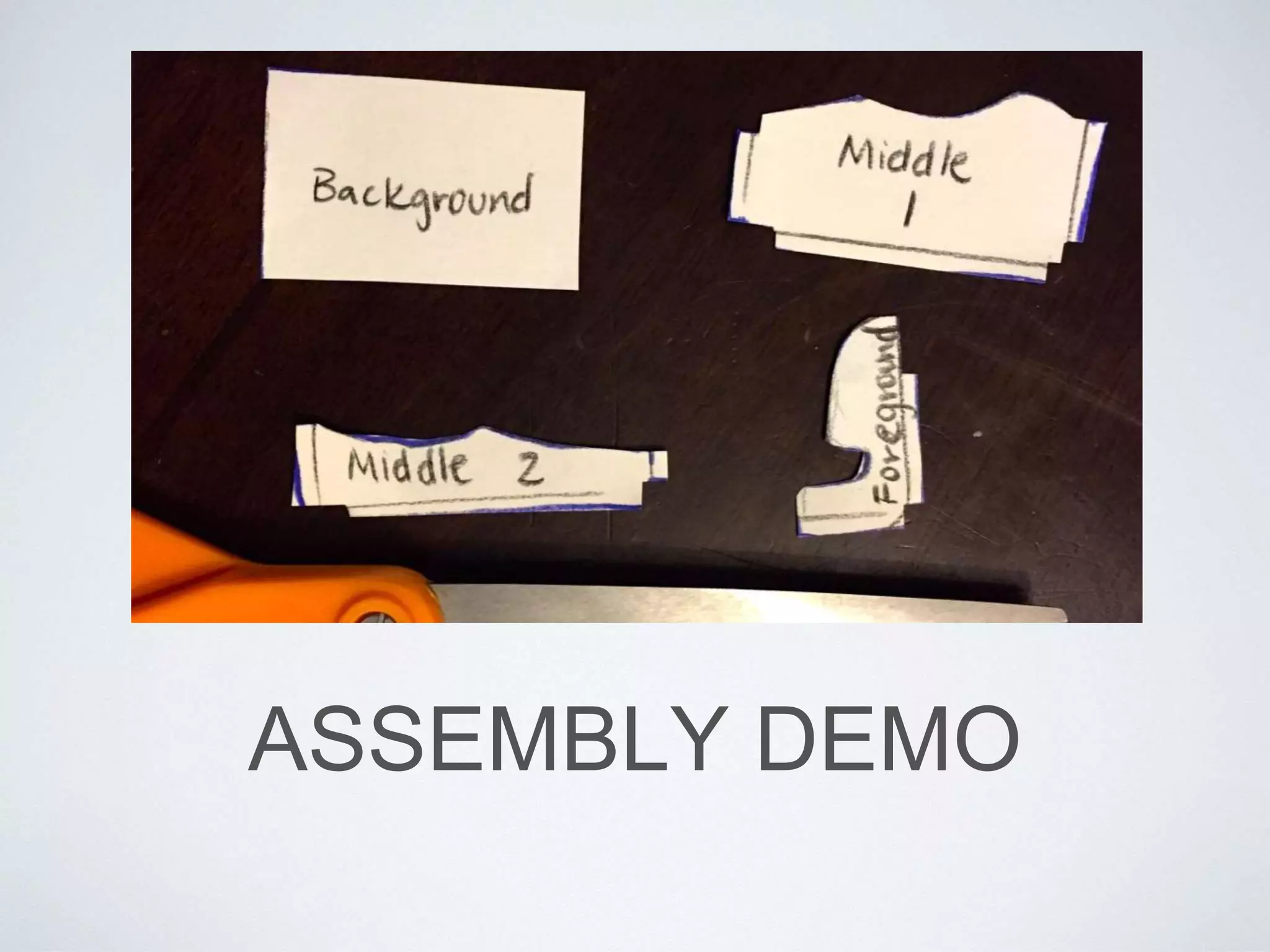
ASSEMBLY DEMO
STUDIO TIME IS… 
• FOCUSED 
• QUIET 
• PURPOSEFUL 
• POSITIVE
IMAGINARY SPACES 
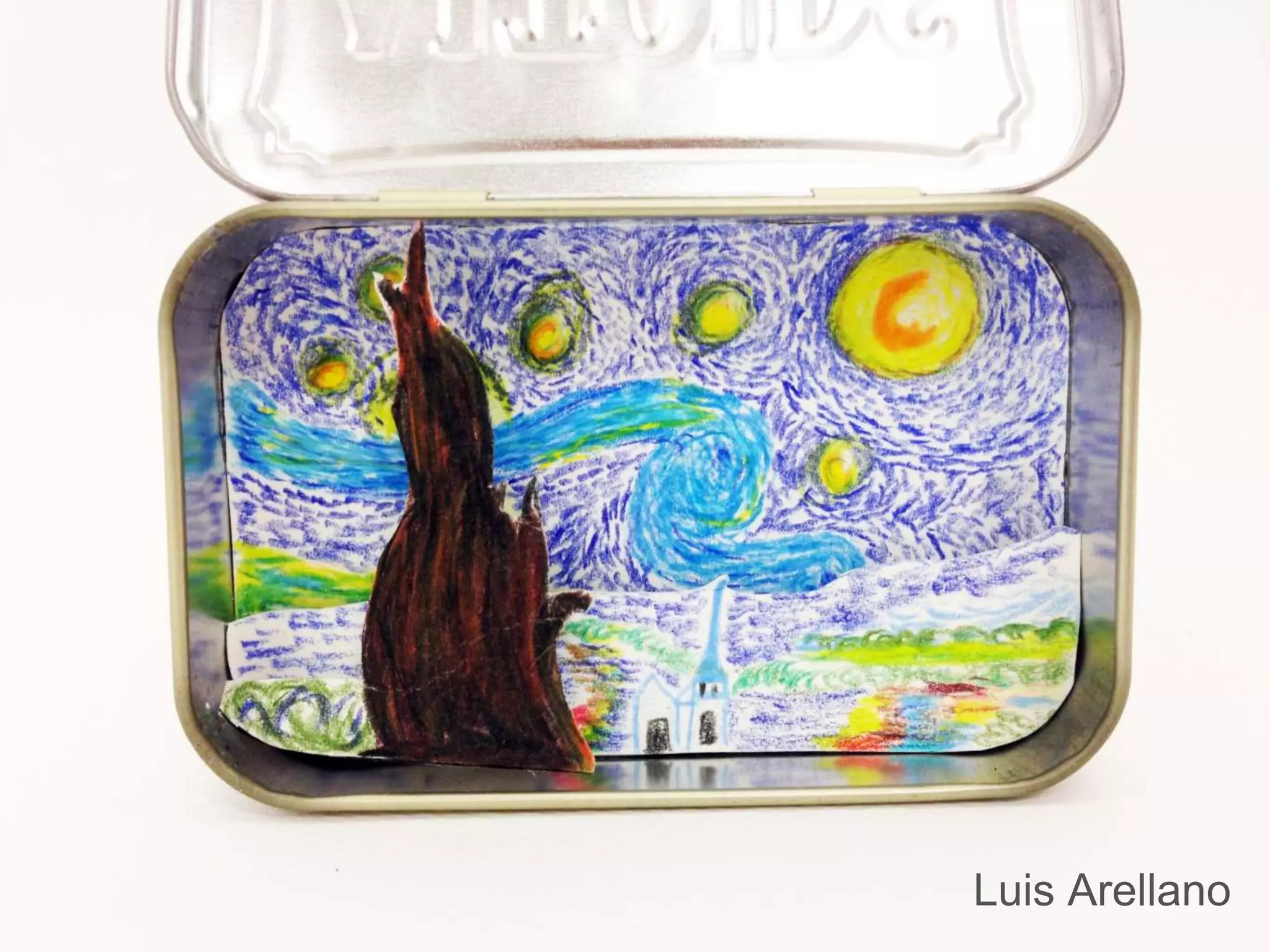
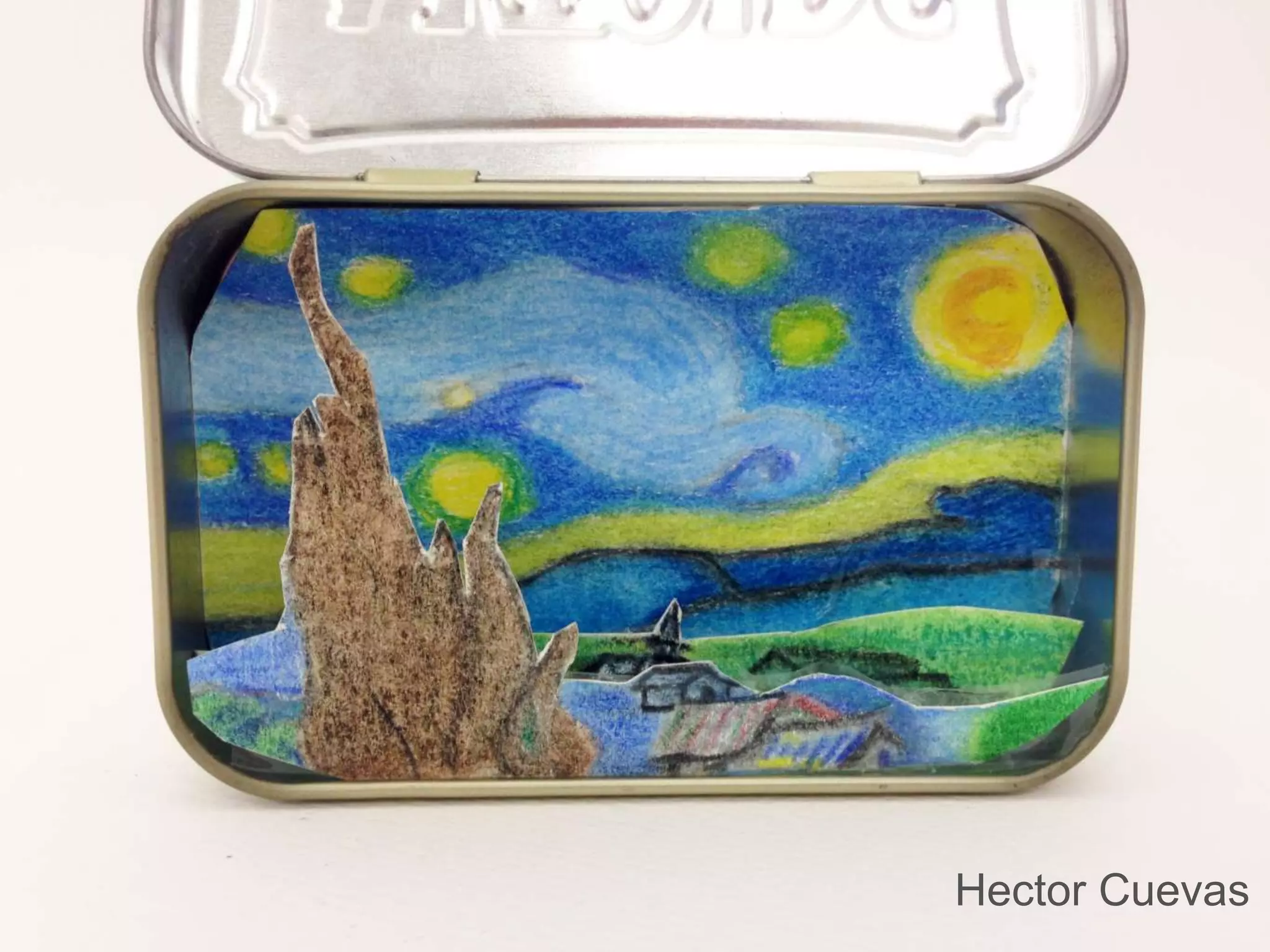
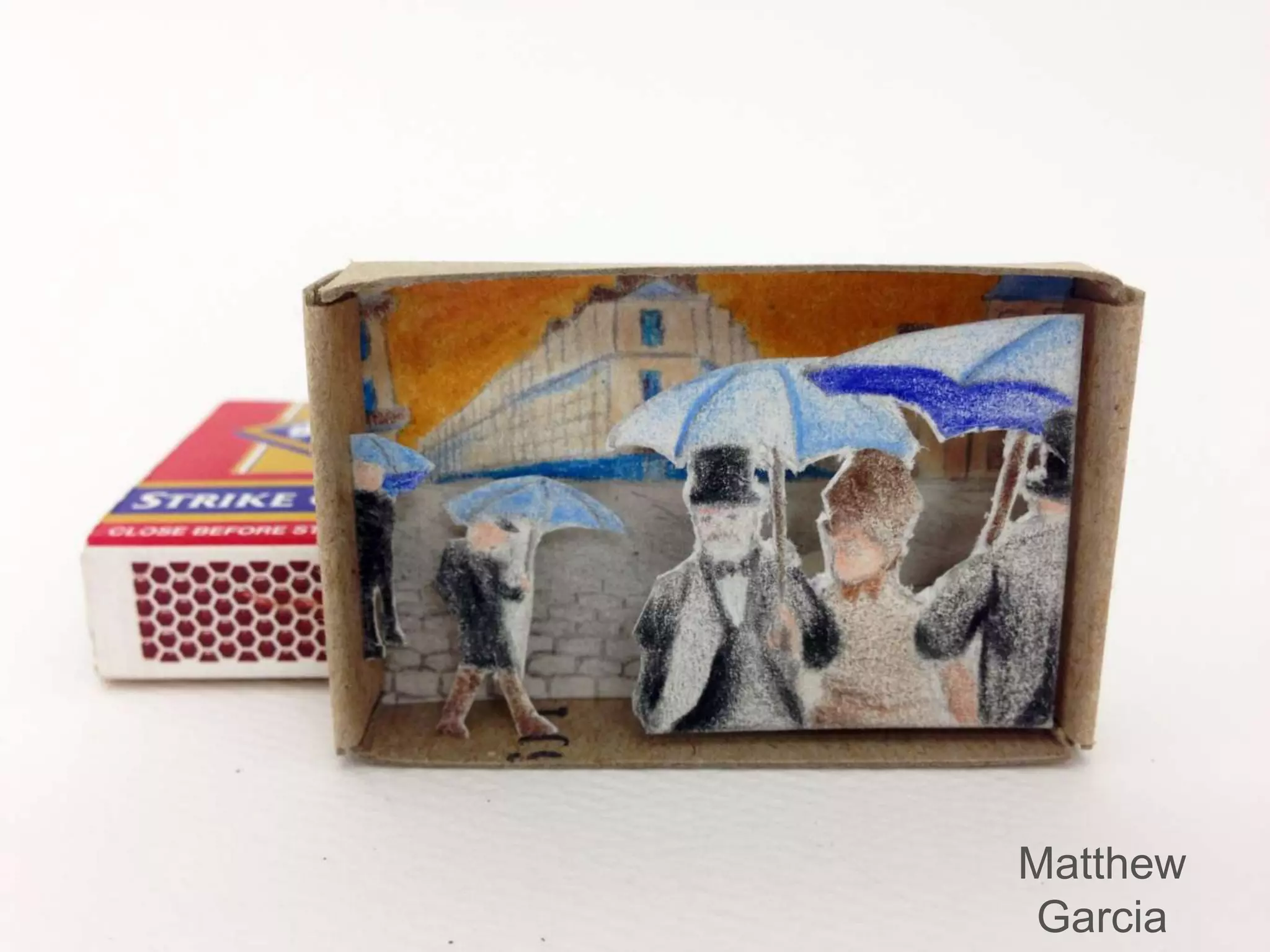
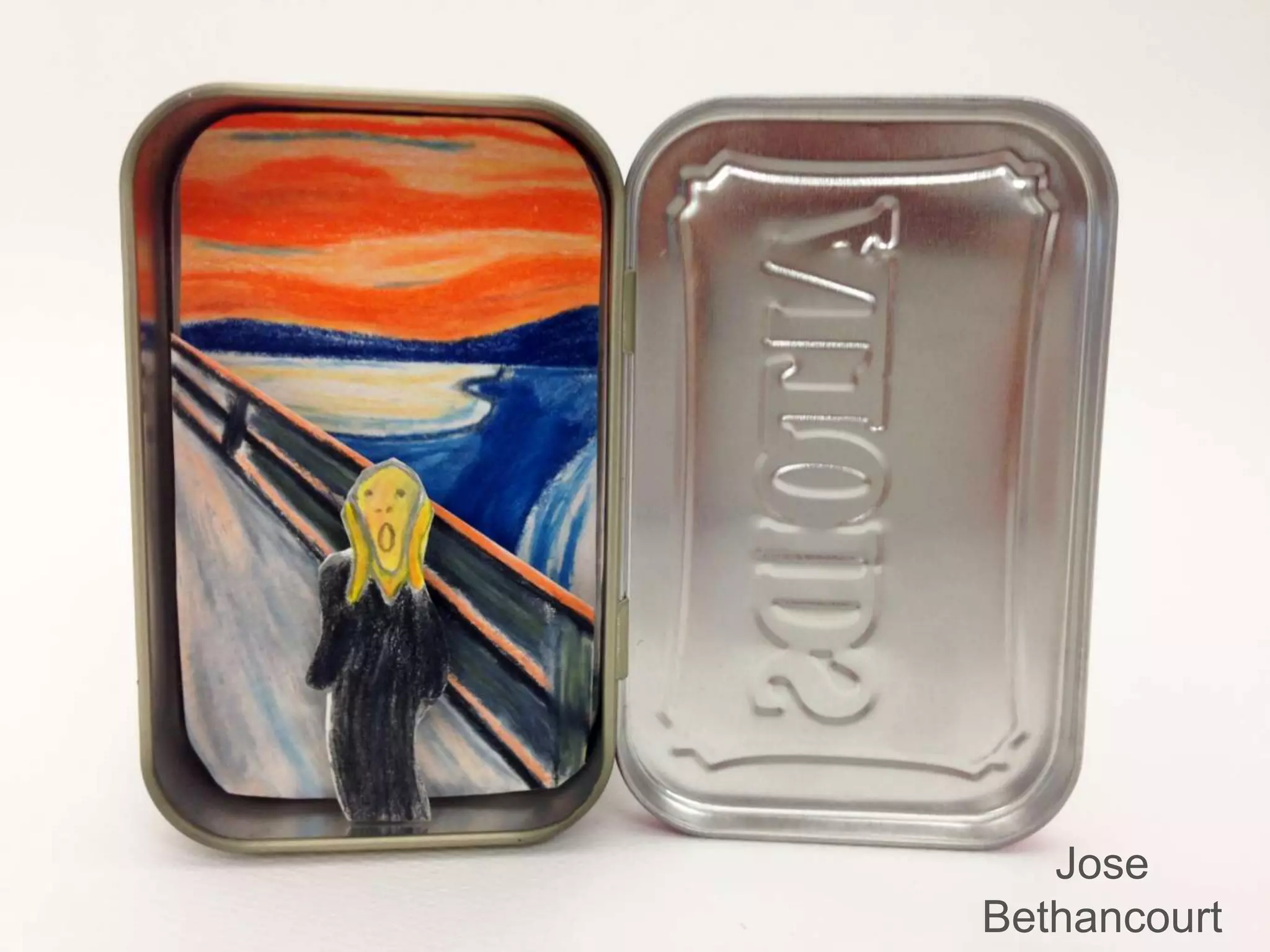
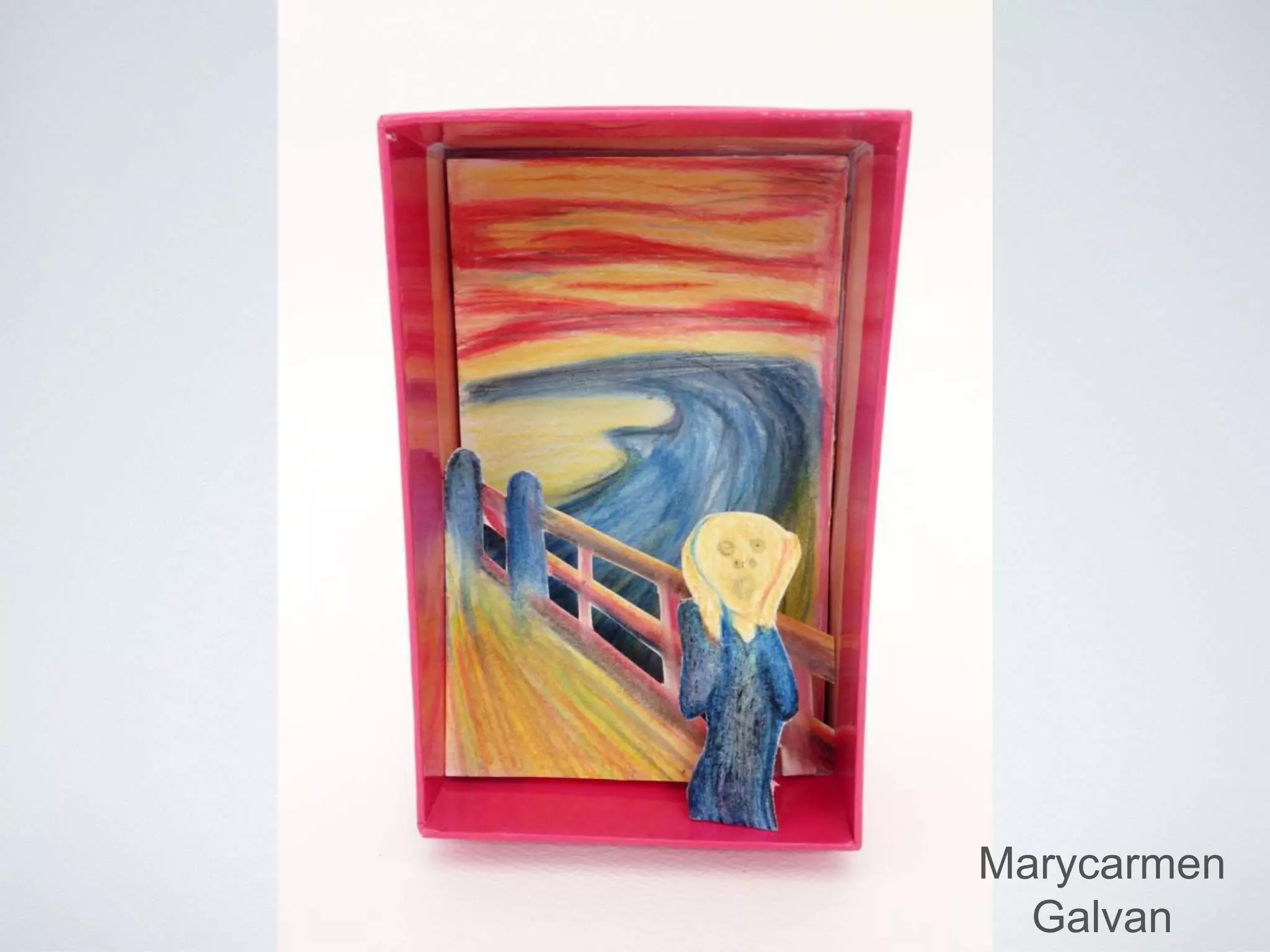
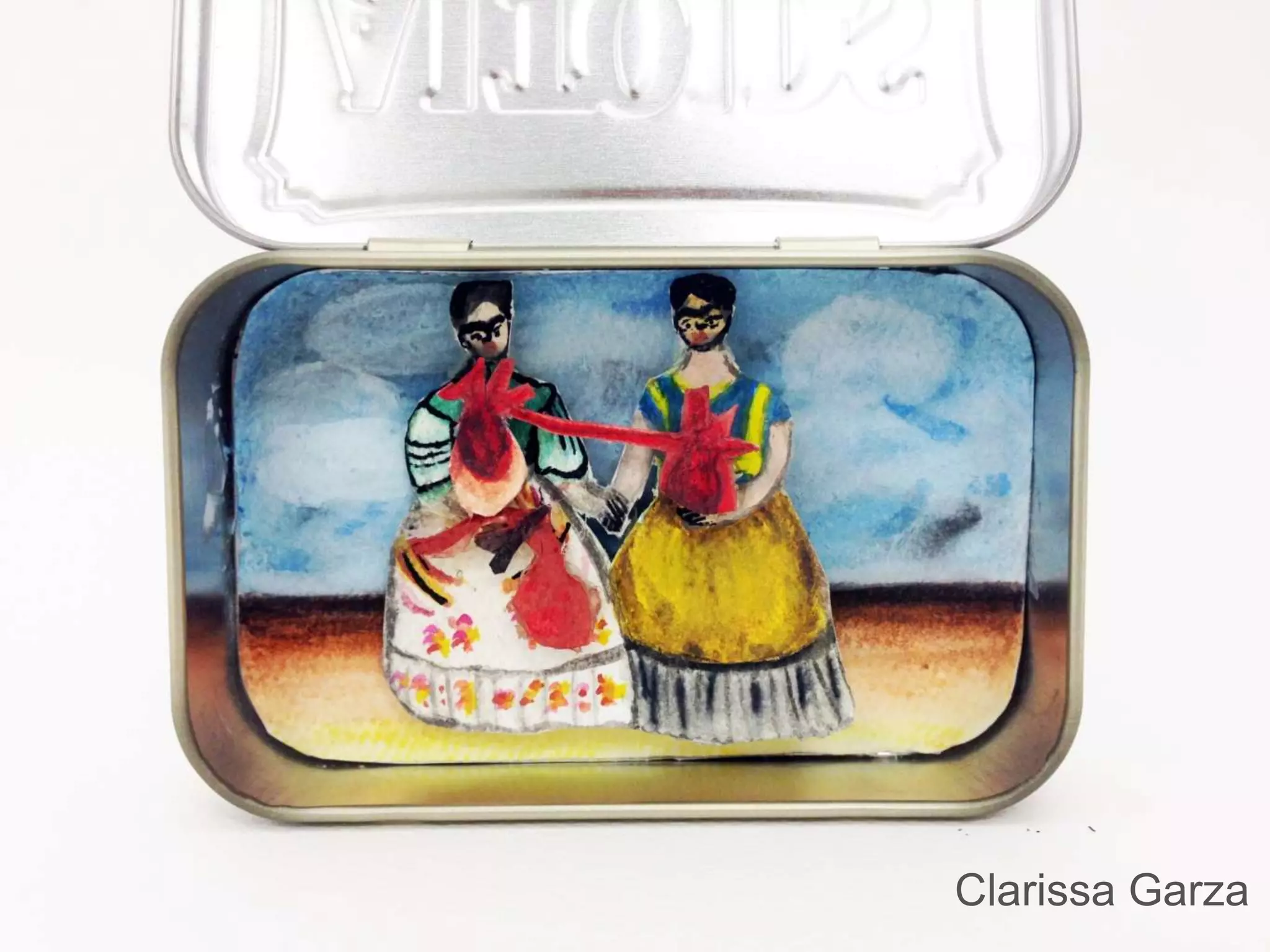
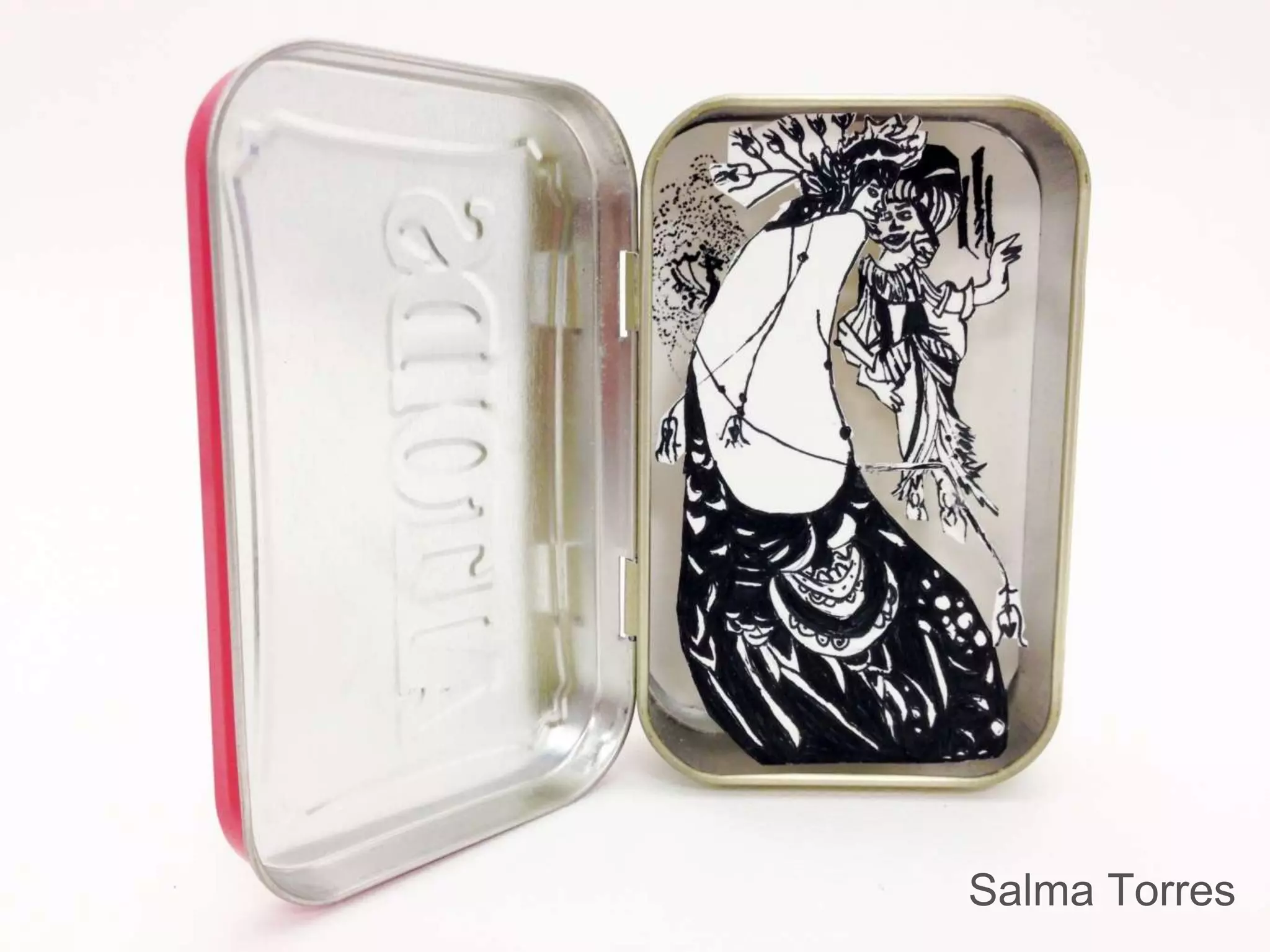
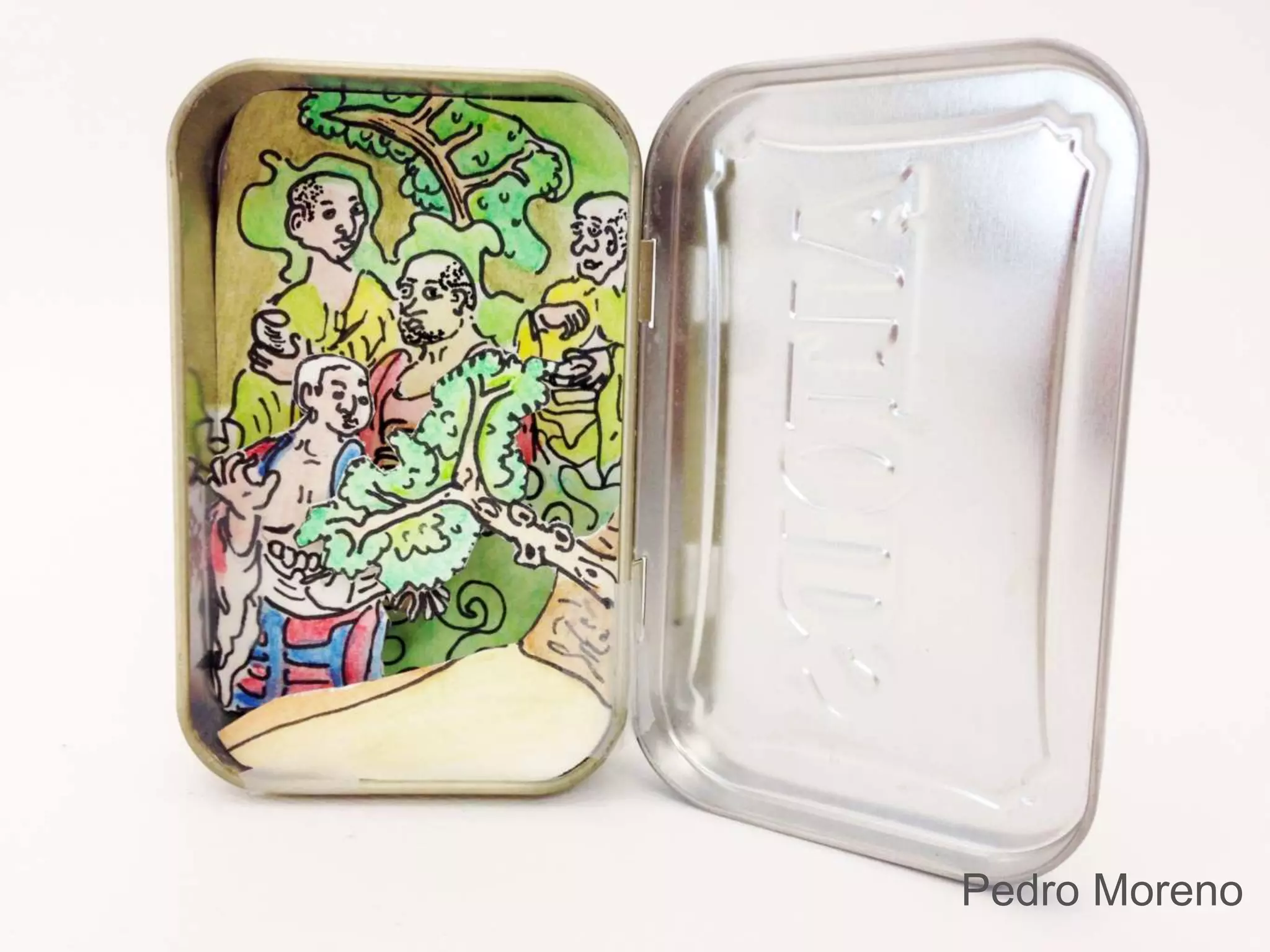
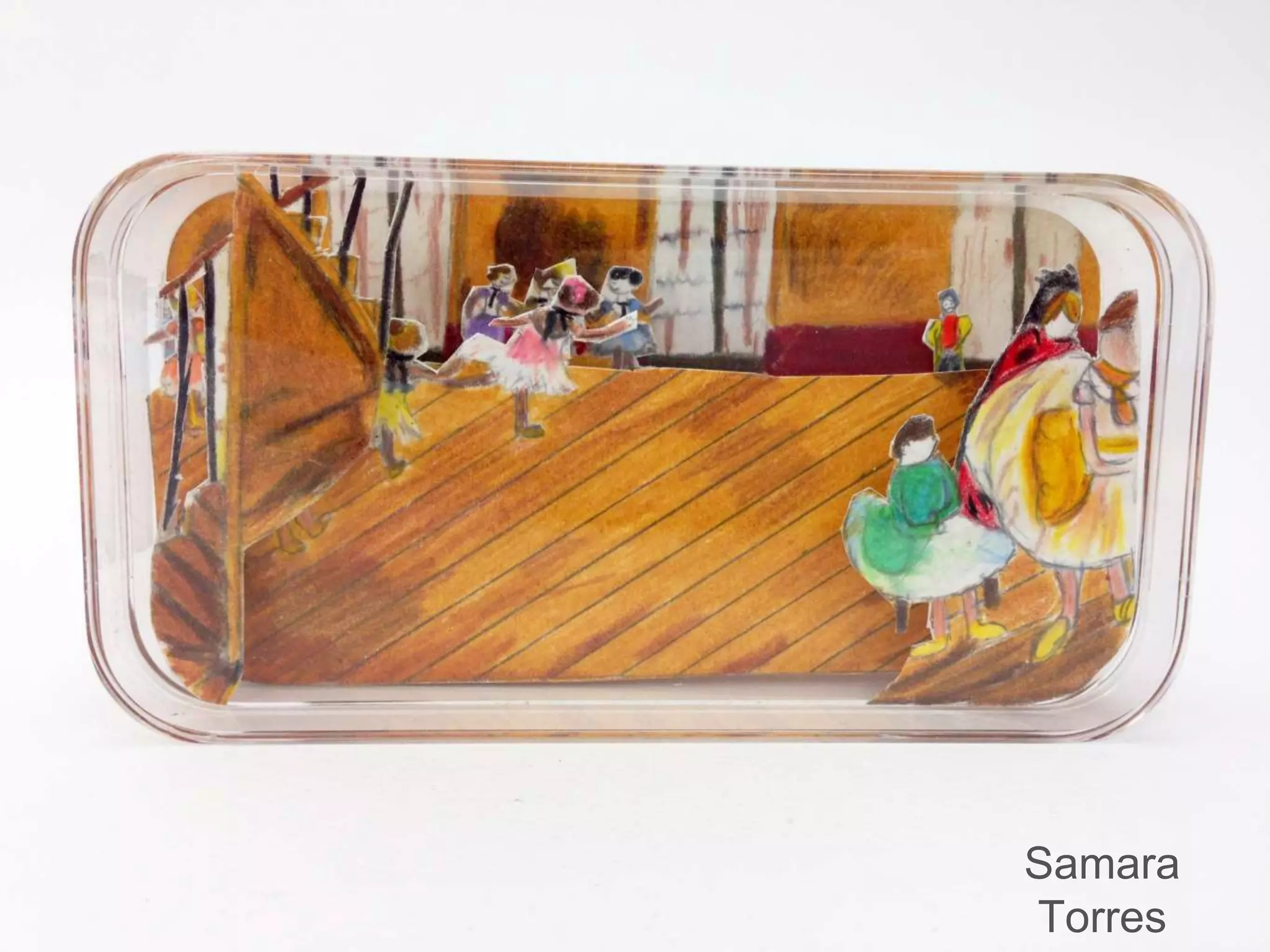
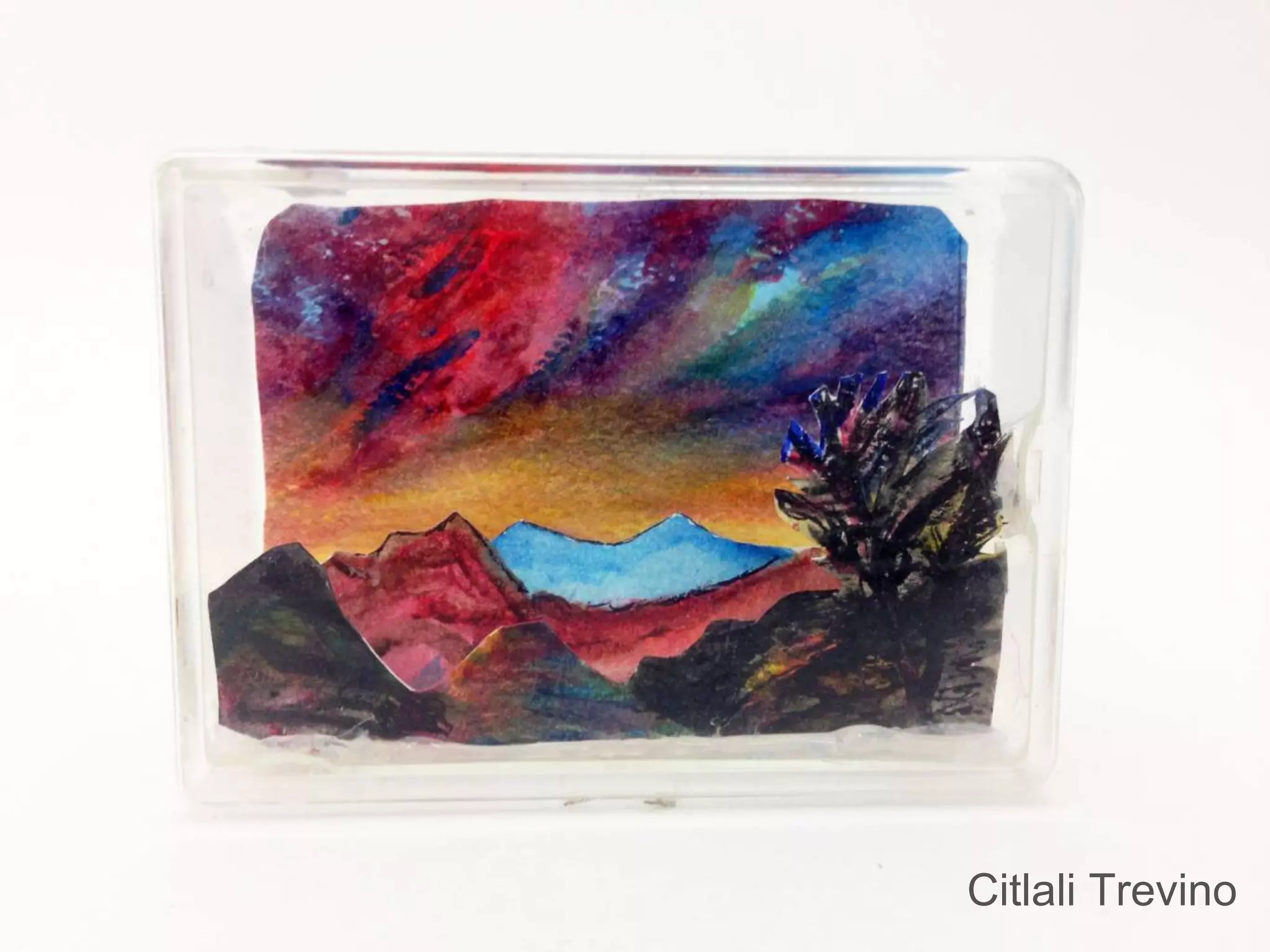
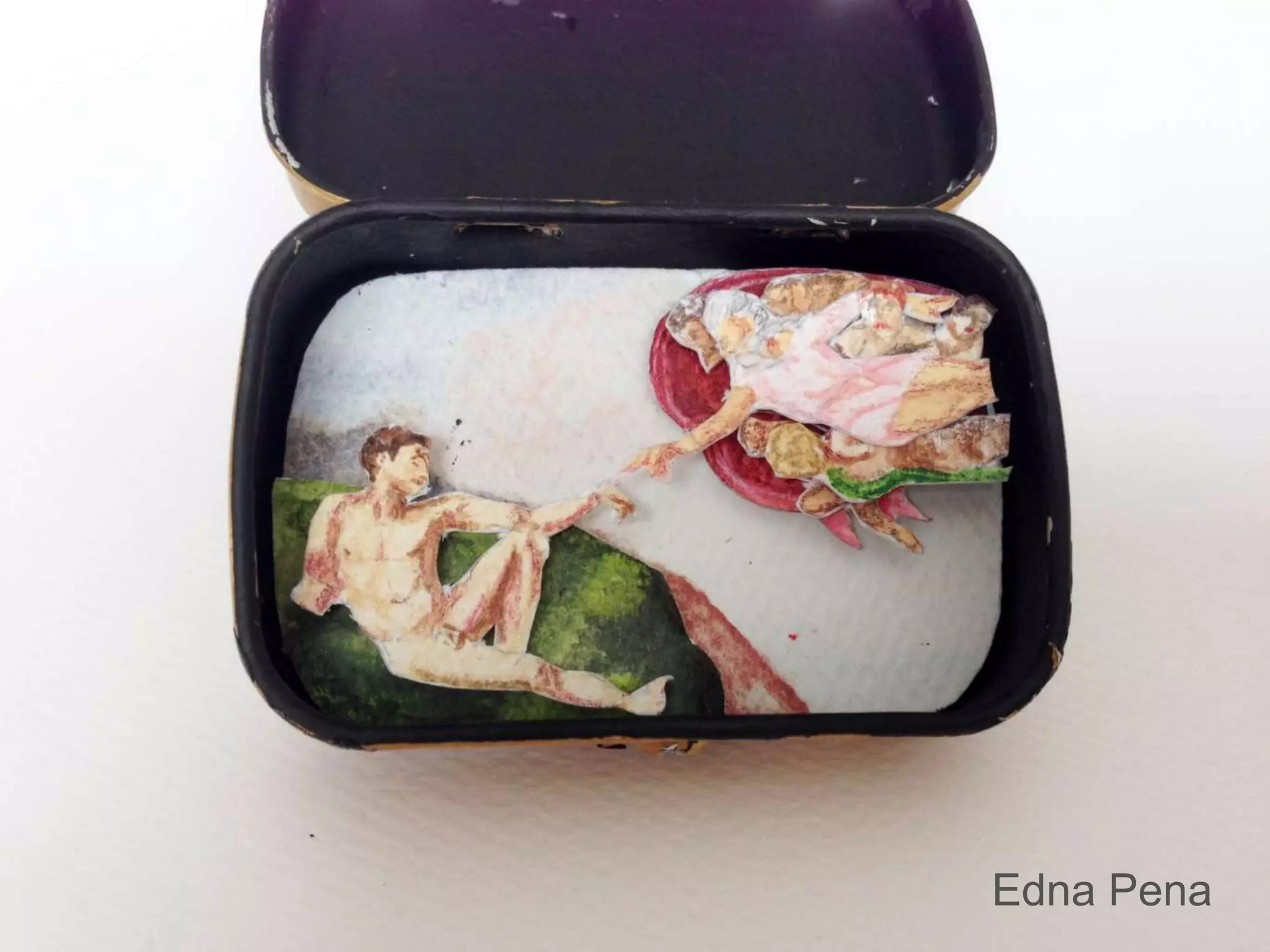
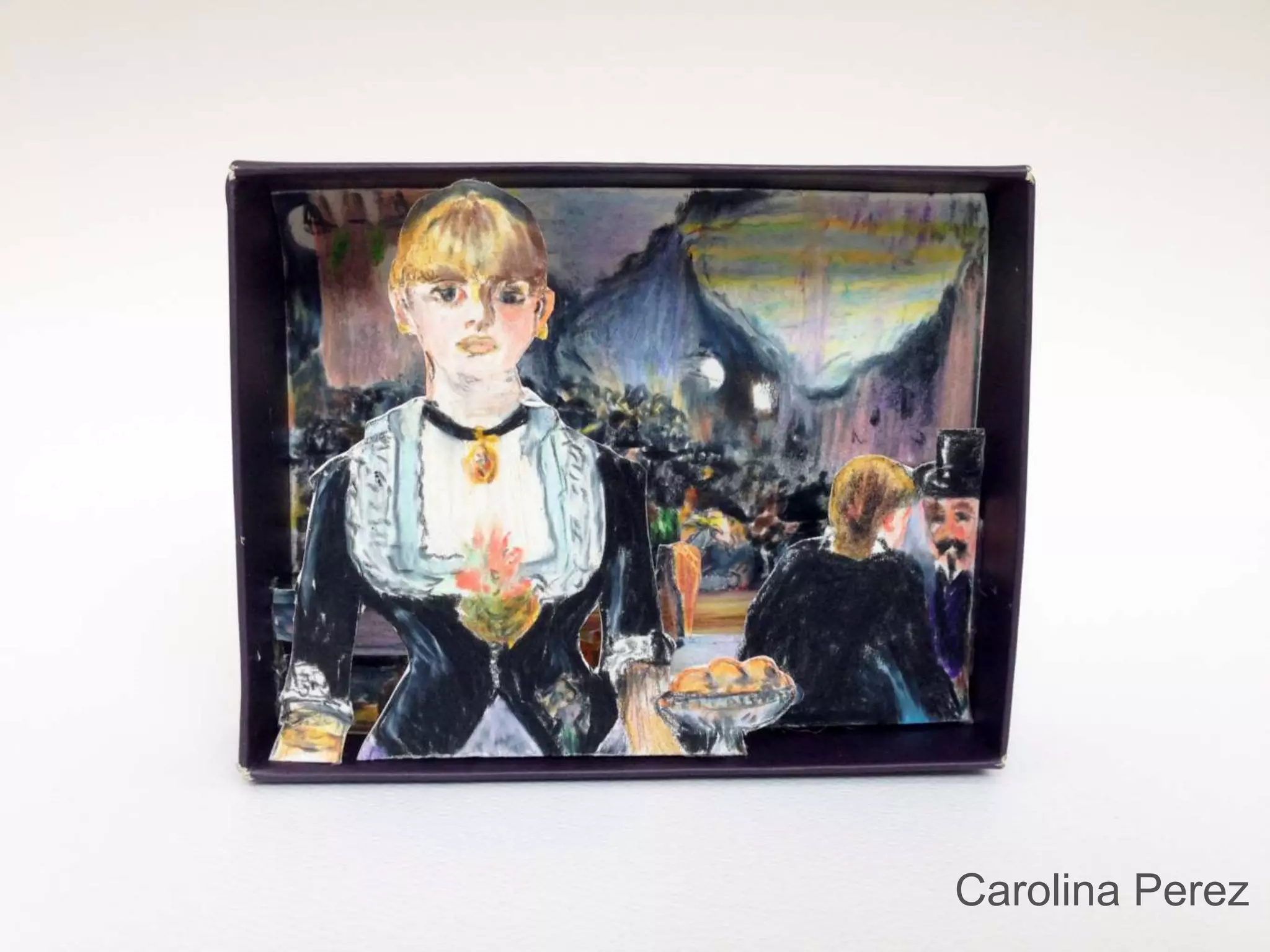
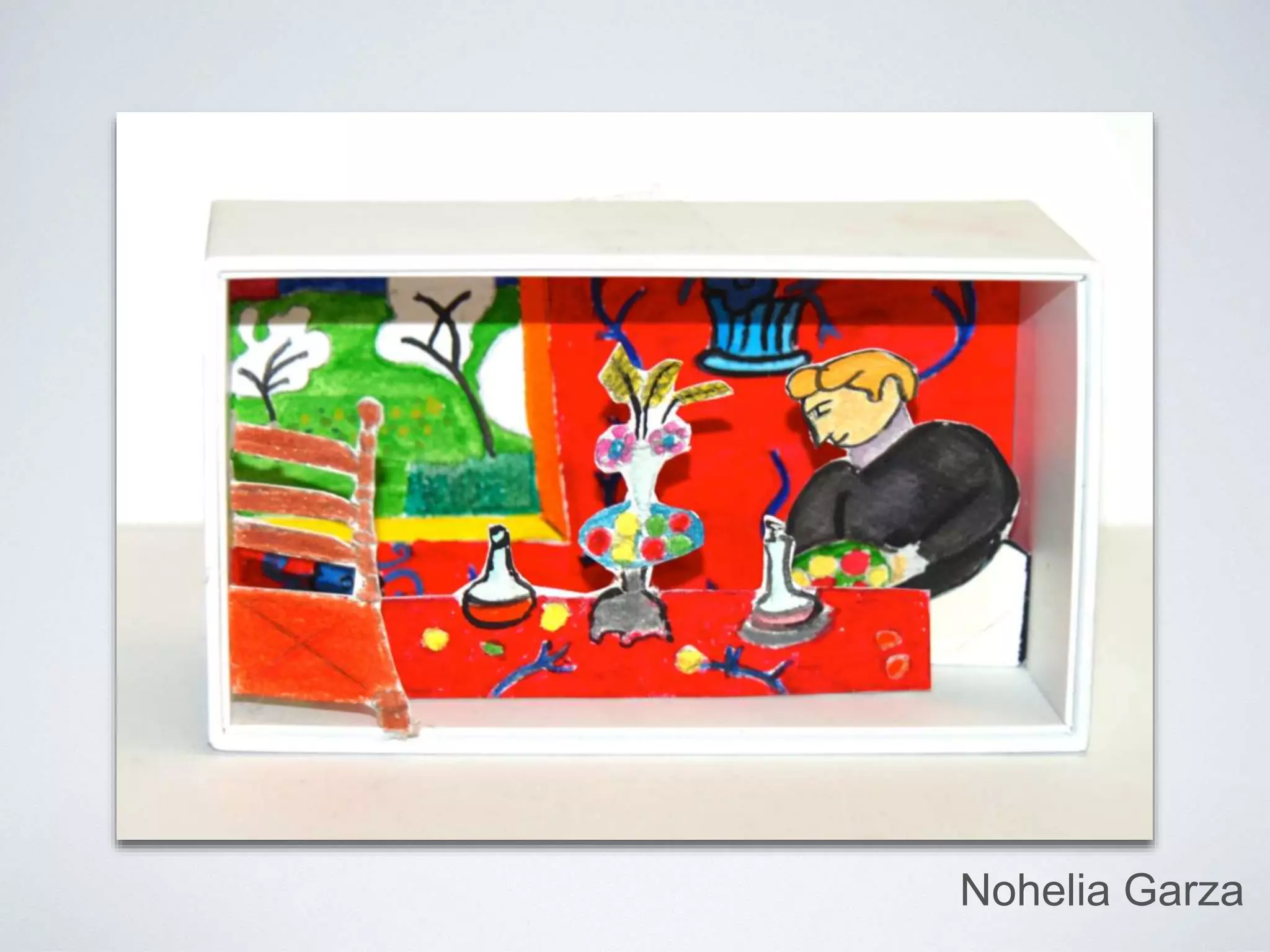
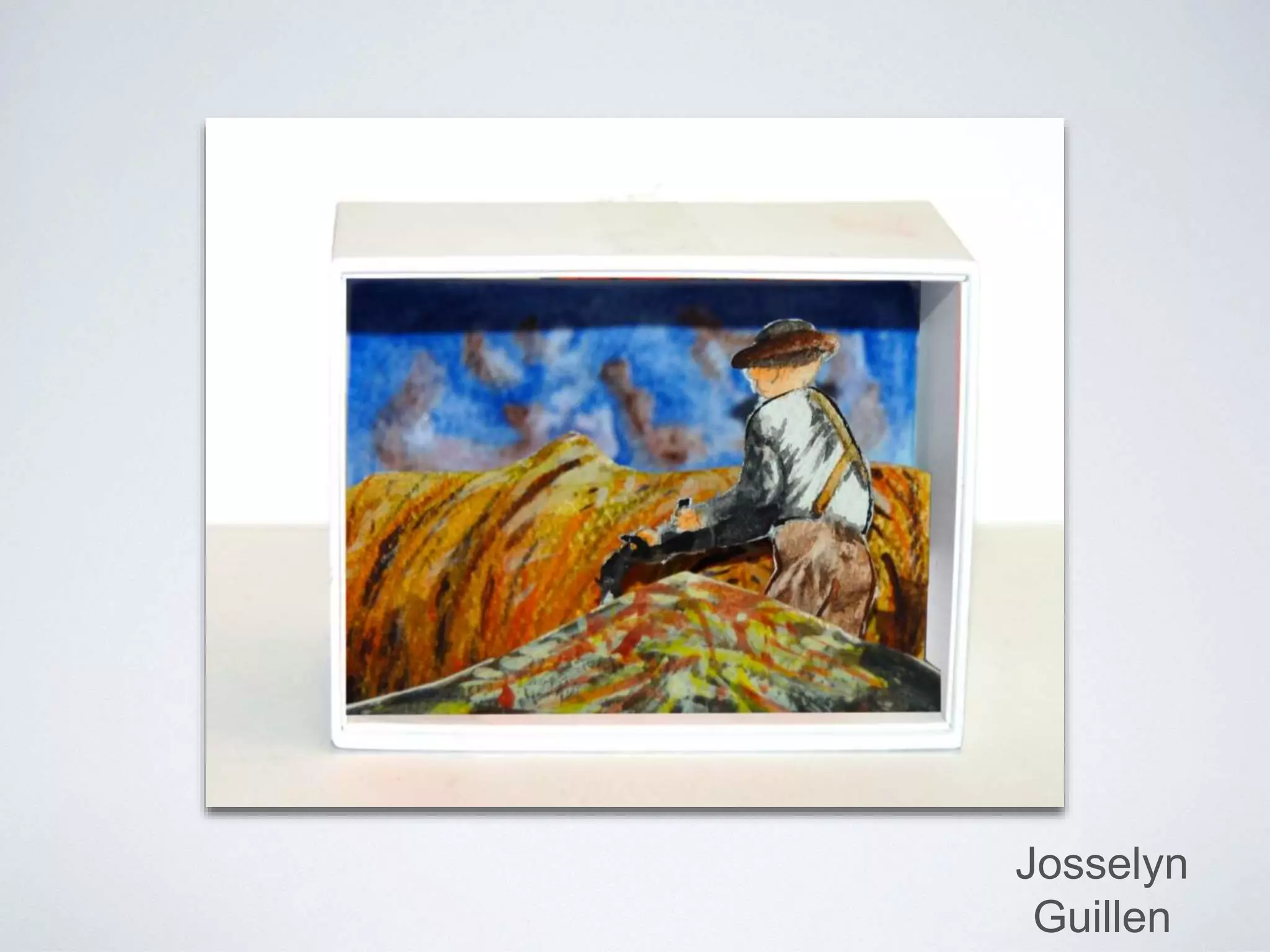
Student Examples
Luis Arellano
Hector Cuevas
Iris Garza
Eva Serna
Kristian 
Bautista
Joel Penalo
Matthew 
Garcia
Jose 
Bethancourt
Marycarmen 
Galvan
Clarissa Garza
Salma Torres
Pedro Moreno
Samara 
Torres
Citlali Trevino
Stefanie Teyer
Edna Pena
Carolina Perez
Nohelia Garza
Josselyn 
Guillen
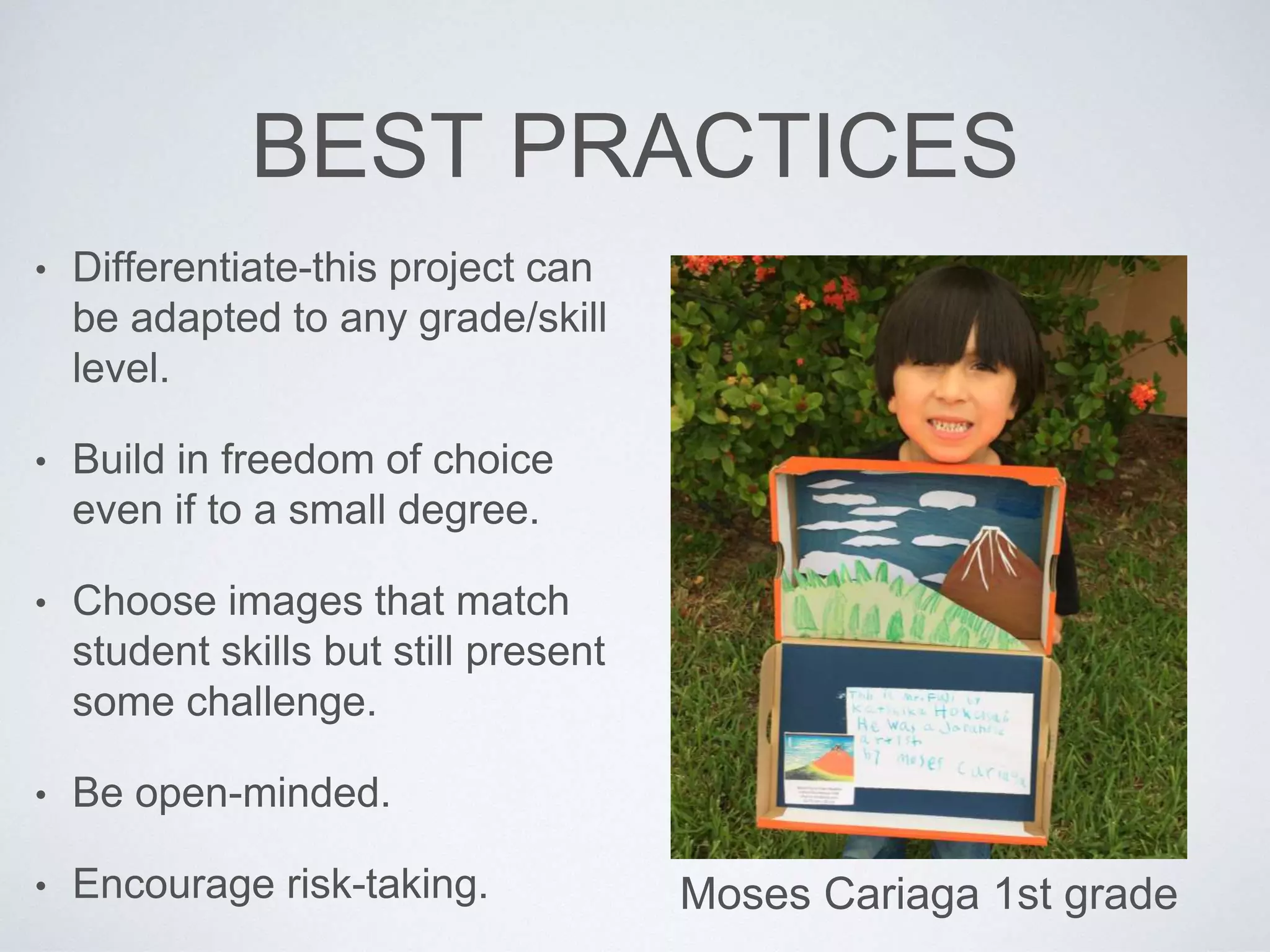
BEST PRACTICES 
• Differentiate-this project can 
be adapted to any grade/skill 
level. 
• Build in freedom of choice 
even if to a small degree. 
• Choose images that match 
student skills but still present 
some challenge. 
• Be open-minded. 
• Encourage risk-taking. Moses Cariaga 1st grade
Imaginary Spaces

  • 1.
  • 2.
    DO NOW: (FIRST5 MINUTES) • Pick up the handouts as you enter. • Take out your visual journal (sketchbook). • Start a new page. • Write the date and title on your page ONLY. • Choose one of the 4 images you received. • Cut out the image and glue it onto your page.
  • 3.
    BY THE ENDOF CLASS YOUR PAGE WILL… • have the correct date & header. • have a cited reference photo attached. • have all lecture notes. • have a written analysis of a famous work of art.
  • 4.
    GET READY TOTAKE A FEW GUIDED NOTES
  • 5.
    SPACE An elementof art that refers to the distance or area between, around, above, below, or within things. http://www.artlex.com
  • 6.
    BACKGROUND The partof a picture or scene that appears to be farthest away from the viewer. http://www.artlex.com
  • 7.
    MIDDLEGROUND The partof an artwork that lies between the foreground (nearest to the viewer) and the background. http://www.artlex.com
  • 8.
    FOREGROUND The areaof a picture or field of vision, often at the bottom, that appears to be closest to the viewer. http://www.artlex.com
  • 9.
    Christina's World, AndrewWyeth (1948) LET’S REVIEW What is in the background, middle ground, and foreground in this image? (think about your answer silently and prepare to be called on)
  • 10.
    Chop Suey EdwardHopper (1929) ANALYZING ART Look at this image. What do you see?
  • 11.
    ANALYZING ART •What is the artwork of? • What is in the background? • Middleground? • Foreground? • Why? • How did they artist use the element of Space? Chop Suey Edward Hopper (1929)
  • 12.
    ANALYZING ART •What is the intent or purpose? • Is it meaningful? • What types of colors, shapes, lines, are used? Why? Chop Suey Edward Hopper (1929)
  • 13.
    ANALYZING ART •Describe social and environmental influences • Analyze social and environmental influences • What media did he use? Why? Chop Suey Edward Hopper (1929)
  • 14.
    INDEPENDENT PRACTICE •15 minutes • Read available information about the image your chose. • Use guiding questions to write 1-2 paragraphs of description and analysis of the work. • (don’t forget to: use complete sentences and appropriate vocabulary)
  • 15.
    SHARE: 5 MINUTES • Turn to a shoulder partner and tell them about your image. (2 minutes each) • Why did you choose it? • What did you write for analysis? • Ask them what they would add. • Revise/add to your analysis.
  • 16.
  • 17.
    DO NOW: (FIRST5 MINUTES) • Pick up a box • Take out your visual journal (sketchbook). • Go to the page you started yesterday. • Trace your box onto your page 3 times. • Look at your image and decide what is in the background.
  • 18.
    BY THE ENDOF CLASS YOUR PAGE • have all project and class notes. • have sketches of the background, middle-ground, and foreground of your image. • have media practice. WILL…
  • 19.
    Fisherman’s Friend, AudreyCisneros (2014) DIORAMA A three-dimensional representation of a scene, either full-scaled or miniature. http://www.artlex.com
  • 20.
    Sunday Afternoon DioramaHilda Tijerina (2014) A Sunday Afternoon on the Island of La Grande Jatte Georges-Pierre Seurat (1884-6) APPROPRIATION To take possession of another’s imagery, often without permission, reusing it in a context which differs from its original context. http://www.artlex.com
  • 21.
    YOUR DIORAMA: •will pay homage to a master’s work of art. • will have at least 3 layers. • will demonstrate a careful and effective use of your chosen media. • will demonstrate your understanding of Space.
  • 22.
    INDEPENDENT MEDIA PRACTICE In your visual journal… • Sketch each layer of your image. • Practice replicating the texture using your chosen media.
  • 23.
    SHARE: 5 MINUTES • Turn to a shoulder partner and tell them about your sketches and media practice. (2 minutes each) • What was your choice of media? Why? • What were your successes? • What were your challenges?
  • 24.
  • 25.
    DO NOW: (FIRST5 MINUTES) • Pick up a piece of watercolor paper. • Take out your visual journal and box. • Use a pencil to trace the box 3-4 times onto your paper.
  • 26.
  • 27.
    STUDIO TIME IS… • FOCUSED • QUIET • PURPOSEFUL • POSITIVE
  • 28.
  • 29.
    DO NOW: (FIRST5 MINUTES) • Pick up your production log • Take out your studio work from yesterday and reflection. • Write down 2 priorities for the day.
  • 30.
  • 31.
    STUDIO TIME IS… • FOCUSED • QUIET • PURPOSEFUL • POSITIVE
  • 32.
  • 33.
    DO NOW: (FIRST5 MINUTES) • Pick up your production log • Take out your studio work from yesterday. • Write down your 2 priorities for the day.
  • 34.
  • 35.
    STUDIO TIME IS… • FOCUSED • QUIET • PURPOSEFUL • POSITIVE
  • 37.
  • 38.
  • 39.
  • 40.
  • 41.
  • 42.
  • 43.
  • 44.
  • 45.
  • 46.
  • 47.
  • 48.
  • 49.
  • 50.
  • 51.
  • 52.
  • 53.
  • 54.
  • 55.
  • 56.
  • 57.
    BEST PRACTICES •Differentiate-this project can be adapted to any grade/skill level. • Build in freedom of choice even if to a small degree. • Choose images that match student skills but still present some challenge. • Be open-minded. • Encourage risk-taking. Moses Cariaga 1st grade