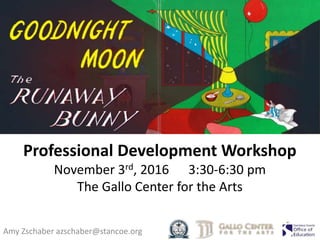
Professional Development Workshop
November 3rd, 2016 3:30-6:30 pm
The Gallo Center for the Arts
Amy Zschaber azschaber@stancoe.org
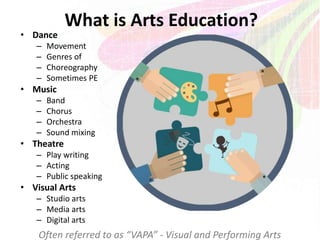
What is Arts Education?
• Dance
– Movement
– Genres of
– Choreography
– Sometimes PE
• Music
– Band
– Chorus
– Orchestra
– Sound mixing
• Theatre
– Play writing
– Acting
– Public speaking
• Visual Arts
– Studio arts
– Media arts
– Digital arts
Often referred to as “VAPA” - Visual and Performing Arts
Arts Education experiences. . .
• Help students
– Feel good about themselves as individuals
– Develop abilities to observe and respond sensitively
– Develop skill, creativity, and imagination
– Develop understanding of the arts
– Become appreciative of music, art, and dance from
their own and other cultures, times, and places.
–develop stronger academic skills
across multiple non-arts subjects.
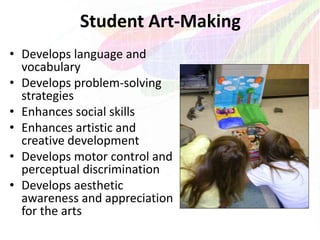
Student Art-Making
• Develops language and
vocabulary
• Develops problem-solving
strategies
• Enhances social skills
• Enhances artistic and
creative development
• Develops motor control and
perceptual discrimination
• Develops aesthetic
awareness and appreciation
for the arts
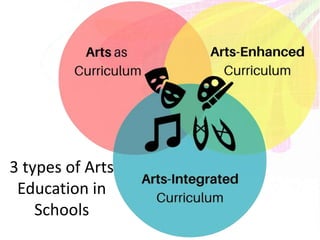
3 types of Arts
Education in
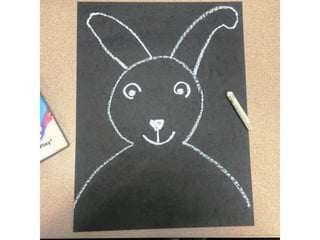
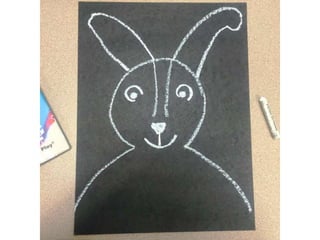
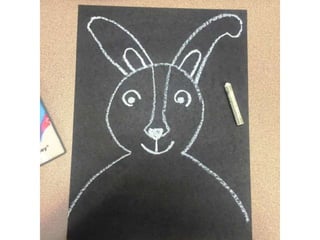
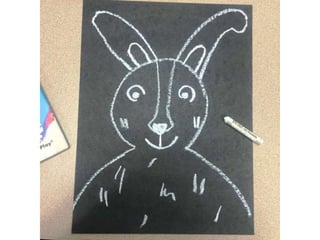
Schools
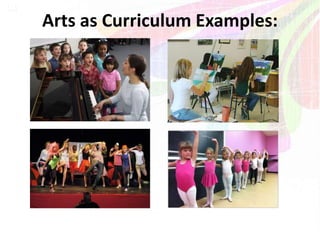
Arts as Curriculum Examples:TAB 1
1-3

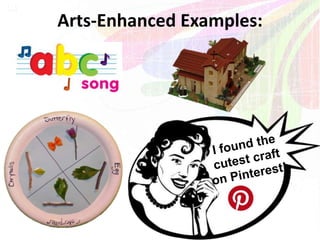
Arts-Enhanced Examples:TAB 1
1-3

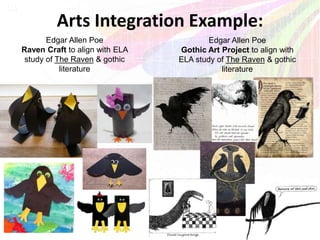
Arts Integration Example:TAB 1
1-3

Edgar Allen Poe
Raven Craft to align with ELA
study of The Raven & gothic
literature
Edgar Allen Poe
Gothic Art Project to align with
ELA study of The Raven & gothic
literature
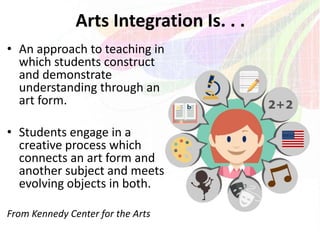
Arts Integration Is. . .
• An approach to teaching in
which students construct
and demonstrate
understanding through an
art form.
• Students engage in a
creative process which
connects an art form and
another subject and meets
evolving objects in both.
From Kennedy Center for the Arts
Arts Integration looks like a conversation
• Sometimes the arts subject speaks
• Sometimes the non-arts subject speaks
• Sometimes the arts subject and the non-arts
subject overlap
Art Science
Arts Integration lessons should be
balanced.
• “. . . [M]ust meet evolving objects in both
disciplines.”
• Rigor is important to all disciplines
Dance and Science Balanced
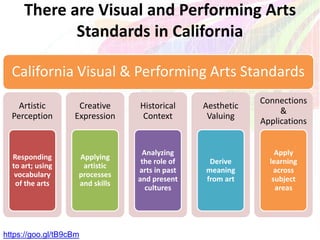
There are Visual and Performing Arts
Standards in California
California Visual & Performing Arts Standards
Artistic
Perception
Responding
to art; using
vocabulary
of the arts
Creative
Expression
Applying
artistic
processes
and skills
Historical
Context
Analyzing
the role of
arts in past
and present
cultures
Aesthetic
Valuing
Derive
meaning
from art
Connections
&
Applications
Apply
learning
across
subject
areas
https://goo.gl/tB9cBm
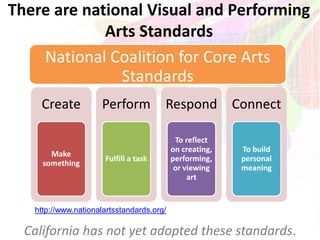
There are national Visual and Performing
Arts Standards
California has not yet adopted these standards.
Create
Make
something
Perform
Fulfill a task
Respond
To reflect
on creating,
performing,
or viewing
art
Connect
To build
personal
meaning
National Coalition for Core Arts
Standards
http://www.nationalartsstandards.org/
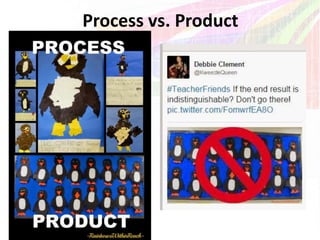
Always consider the abilities of students
when designing arts integrated lessons
• Students under the age of 8
generally are more
interested in the process of
art-making than they are in
the product of art-making.
• Most VAPA educators of
students in grades 3 and
younger agree that when it
comes to learning, process
is more important that the
product.
• This principle applies to any
kind of student art-making
(dance, music, theatre, &
visual arts).
Process vs. Product
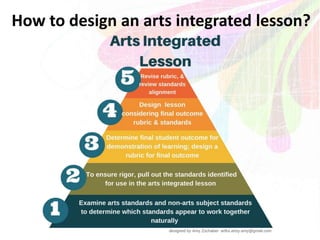
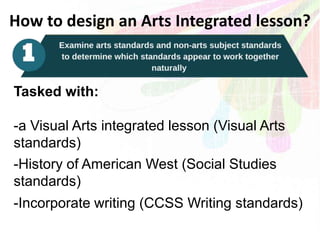
How to design an arts integrated lesson?
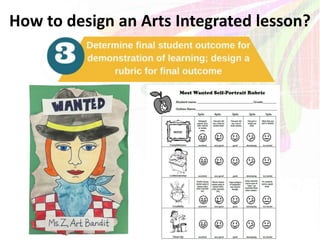
How to design an Arts Integrated lesson?
Tasked with:
-a Visual Arts integrated lesson (Visual Arts
standards)
-History of American West (Social Studies
standards)
-Incorporate writing (CCSS Writing standards)
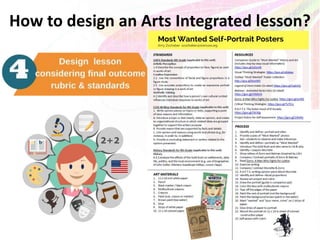
How to design an Arts Integrated lesson?
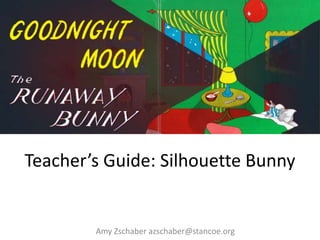
Teacher’s Guide: Silhouette Bunny
Amy Zschaber azschaber@stancoe.org
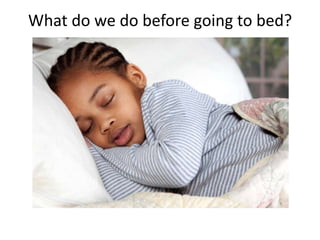
What do we do before going to bed?
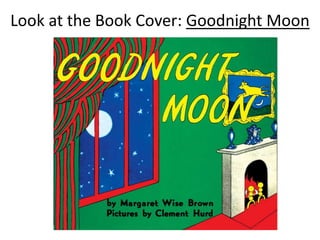
Look at the Book Cover: Goodnight Moon
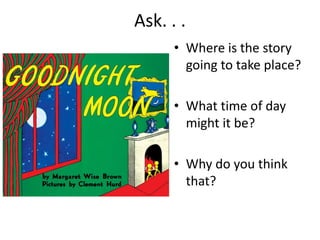
Ask. . .
• Where is the story
going to take place?
• What time of day
might it be?
• Why do you think
that?
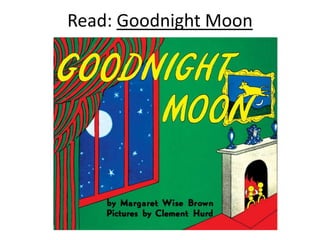
Read: Goodnight Moon
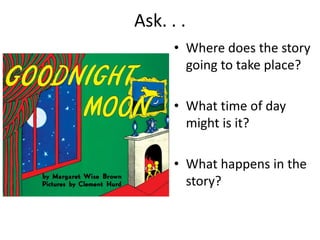
Ask. . .
• Where does the story
going to take place?
• What time of day
might is it?
• What happens in the
story?
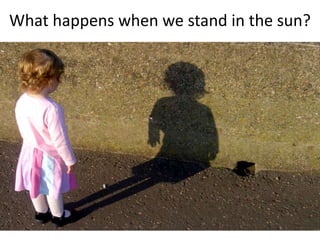
What happens when we stand in the sun?
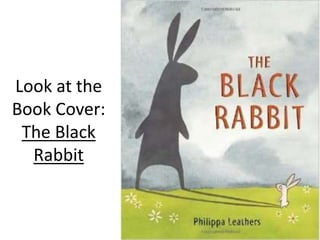
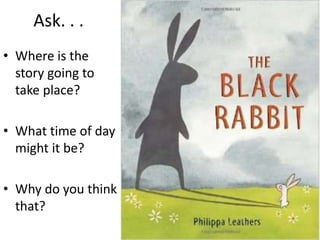
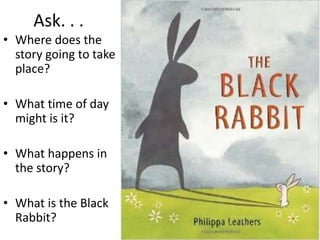
Look at the
Book Cover:
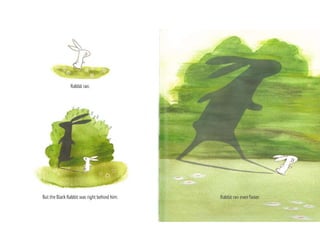
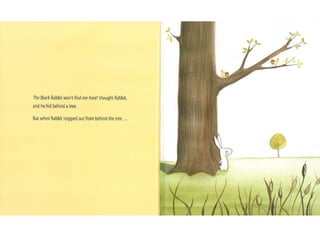
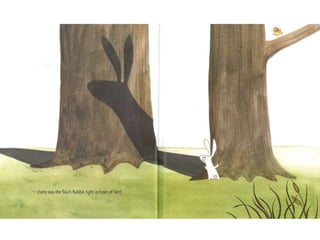
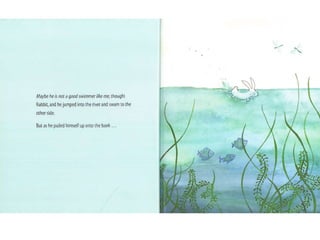
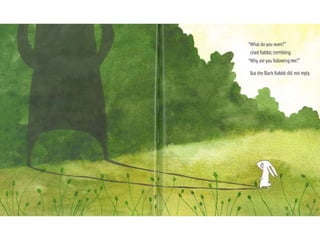
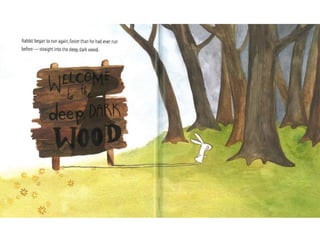
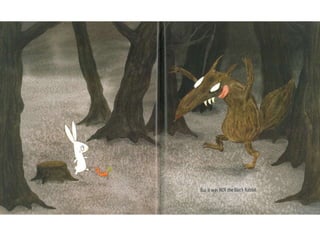
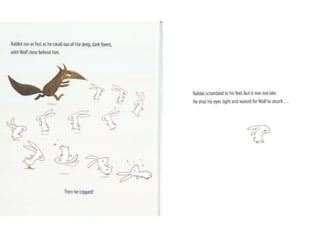
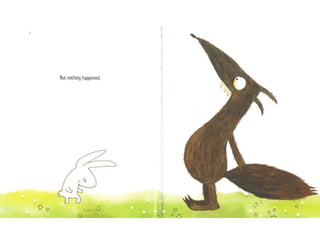
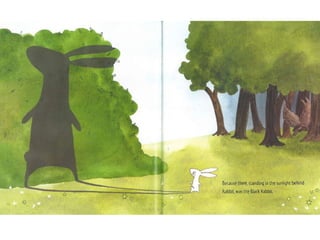
The Black
Rabbit
Ask. . .
• Where is the
story going to
take place?
• What time of day
might it be?
• Why do you think
that?
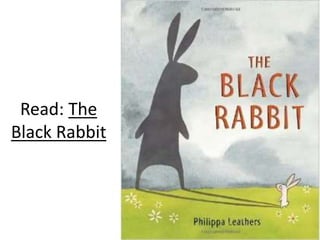
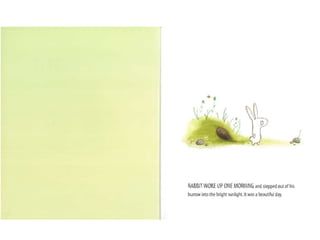
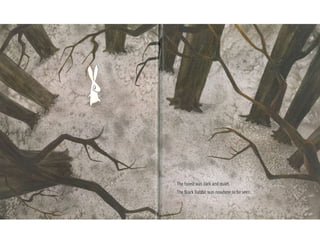
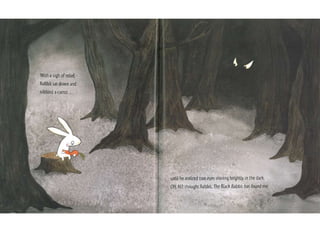
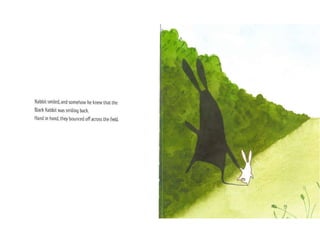
Read: The
Black Rabbit
Ask. . .
• Where does the
story going to take
place?
• What time of day
might is it?
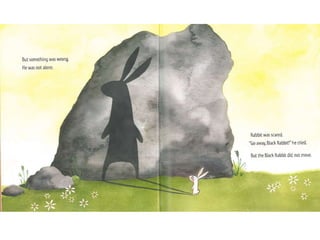
• What happens in
the story?
• What is the Black
Rabbit?
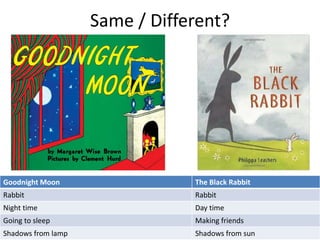
Same / Different?
Goodnight Moon The Black Rabbit
Rabbit Rabbit
Night time Day time
Going to sleep Making friends
Shadows from lamp Shadows from sun
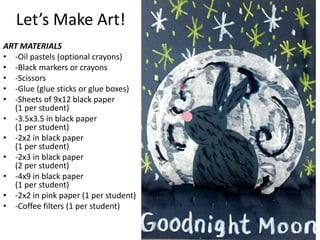
Let’s Make Art!
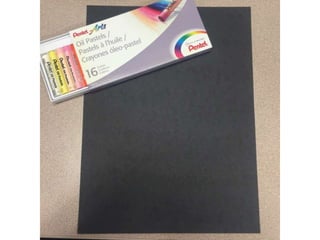
ART MATERIALS
• -Oil pastels (optional crayons)
• -Black markers or crayons
• -Scissors
• -Glue (glue sticks or glue boxes)
• -Sheets of 9x12 black paper
(1 per student)
• -3.5x3.5 in black paper
(1 per student)
• -2x2 in black paper
(1 per student)
• -2x3 in black paper
(2 per student)
• -4x9 in black paper
(1 per student)
• -2x2 in pink paper (1 per student)
• -Coffee filters (1 per student)
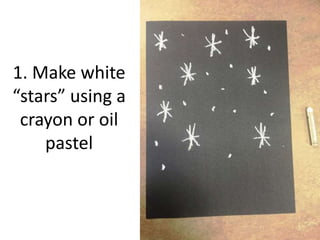
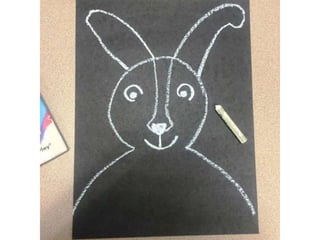
1. Make white
“stars” using a
crayon or oil
pastel
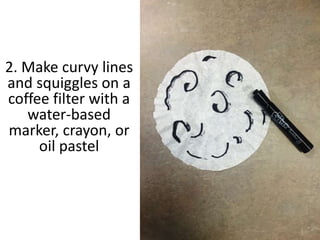
2. Make curvy lines
and squiggles on a
coffee filter with a
water-based
marker, crayon, or
oil pastel
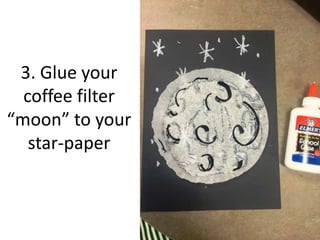
3. Glue your
coffee filter
“moon” to your
star-paper
4. On the smaller
black pieces of
paper draw circles
and ovals and cut
them out
(as shown)
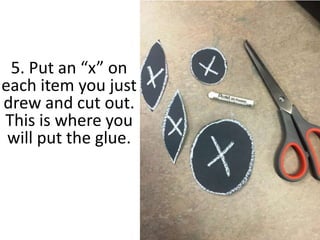
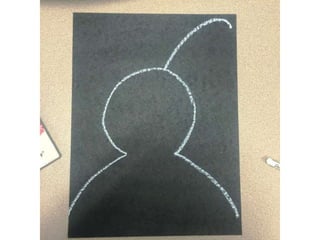
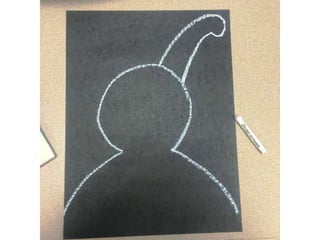
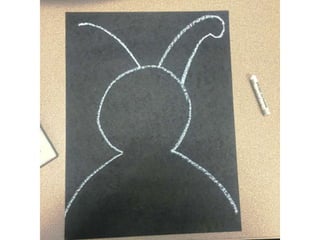
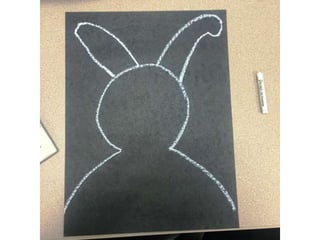
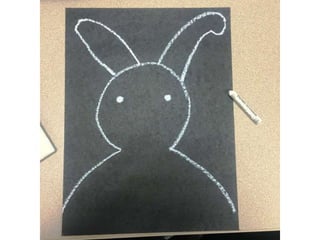
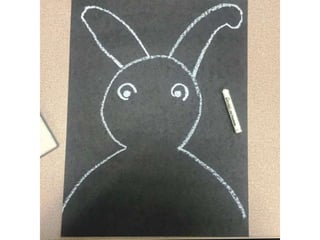
5. Put an “x” on
each item you just
drew and cut out.
This is where you
will put the glue.
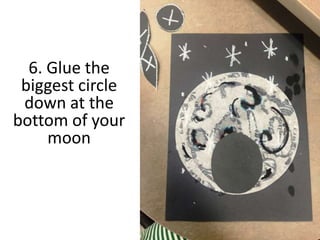
6. Glue the
biggest circle
down at the
bottom of your
moon
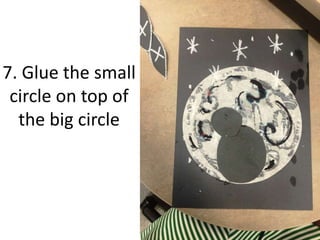
7. Glue the small
circle on top of
the big circle
8. Glue the two
ears on top
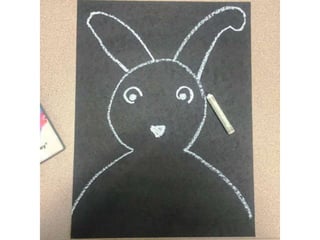
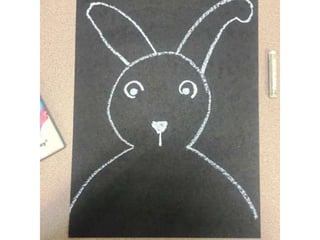
9. Draw a circle on
the pink paper. Cut
it out and glue it
down on the head
(the pink circle is
the nose)
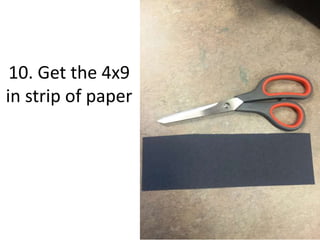
10. Get the 4x9
in strip of paper
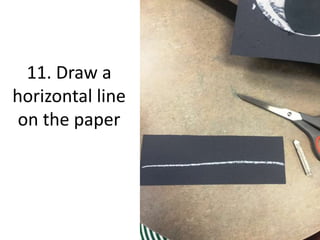
11. Draw a
horizontal line
on the paper
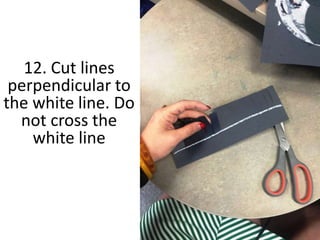
12. Cut lines
perpendicular to
the white line. Do
not cross the
white line
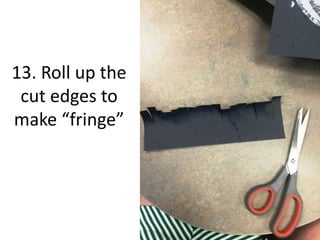
13. Roll up the
cut edges to
make “fringe”
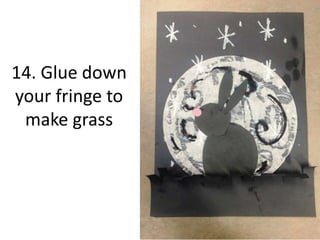
14. Glue down
your fringe to
make grass
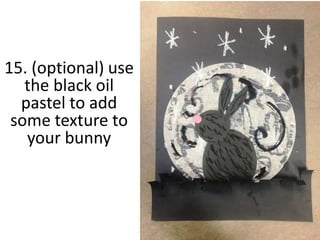
15. (optional) use
the black oil
pastel to add
some texture to
your bunny
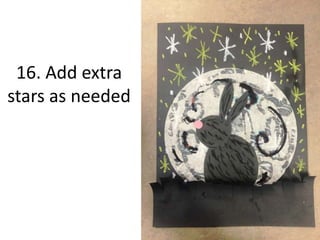
16. Add extra
stars as needed
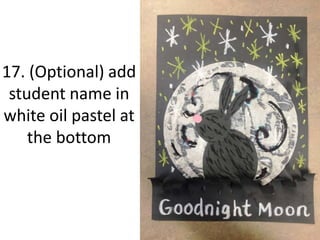
17. (Optional) add
student name in
white oil pastel at
the bottom
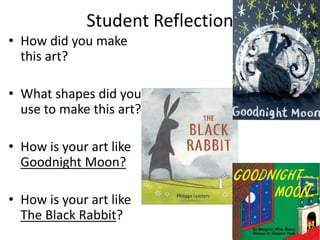
Student Reflection
• How did you make
this art?
• What shapes did you
use to make this art?
• How is your art like
Goodnight Moon?
• How is your art like
The Black Rabbit?
How would you change / customize this
lesson to better suit your classroom
culture(s)?
Let’s take a
break!
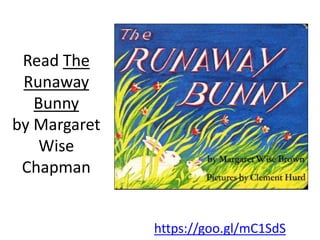
Read The
Runaway
Bunny
by Margaret
Wise
Chapman
https://goo.gl/mC1SdS
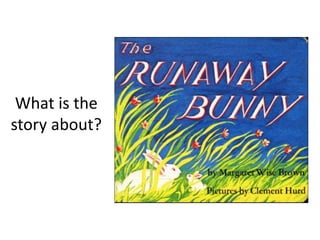
What is the
story about?
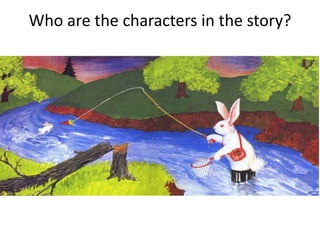
Who are the characters in the story?
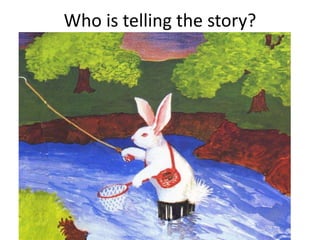
Who is telling the story?
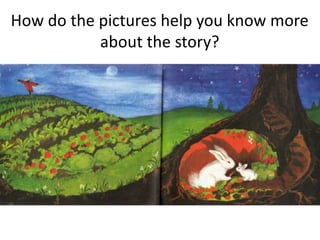
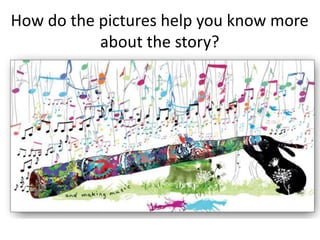
How do the pictures help you know more
about the story?
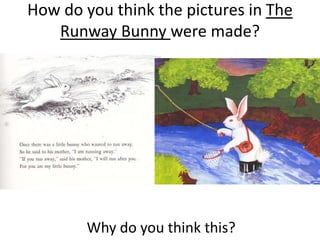
How do you think the pictures in The
Runway Bunny were made?
Why do you think this?
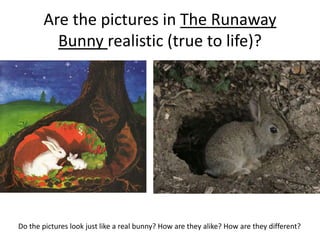
Are the pictures in The Runaway
Bunny realistic (true to life)?
Do the pictures look just like a real bunny? How are they alike? How are they different?
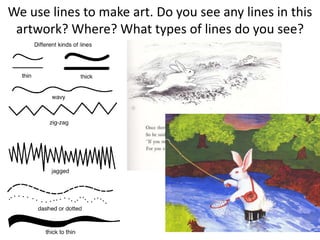
We use lines to make art. Do you see any lines in this
artwork? Where? What types of lines do you see?
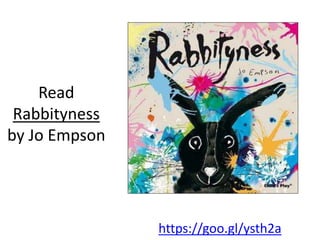
Read
Rabbityness
by Jo Empson
https://goo.gl/ysth2a
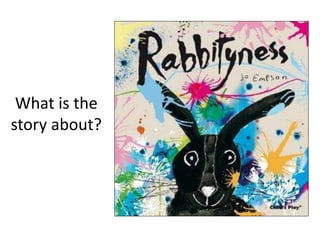
What is the
story about?
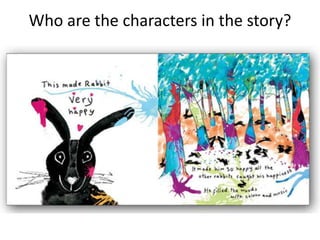
Who are the characters in the story?
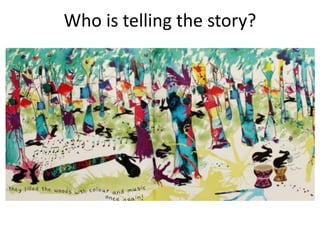
Who is telling the story?
How do the pictures help you know more
about the story?
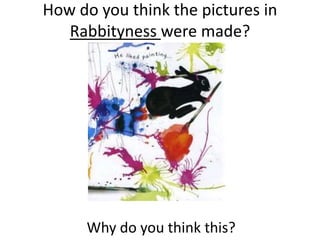
How do you think the pictures in
Rabbityness were made?
Why do you think this?
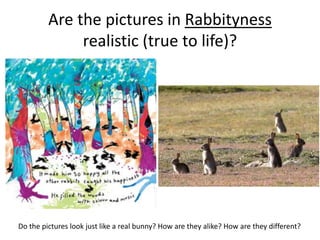
Are the pictures in Rabbityness
realistic (true to life)?
Do the pictures look just like a real bunny? How are they alike? How are they different?
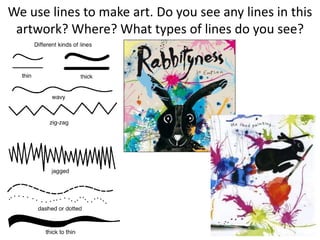
We use lines to make art. Do you see any lines in this
artwork? Where? What types of lines do you see?
Artwork like looks like a photograph is
called, realism
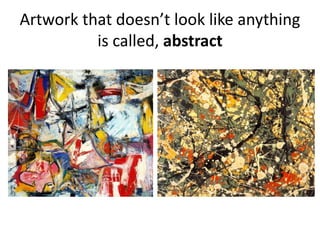
Artwork that doesn’t look like anything
is called, abstract
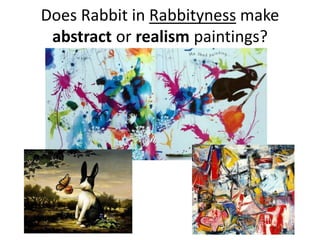
Does Rabbit in Rabbityness make
abstract or realism paintings?
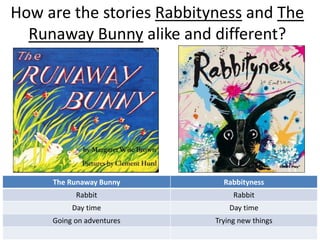
How are the stories Rabbityness and The
Runaway Bunny alike and different?
The Runaway Bunny Rabbityness
Rabbit Rabbit
Day time Day time
Going on adventures Trying new things
What type of sounds does Rabbit
make with this instrument?
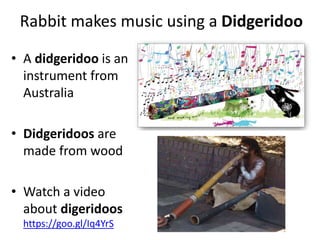
Rabbit makes music using a Didgeridoo
• A didgeridoo is an
instrument from
Australia
• Didgeridoos are
made from wood
• Watch a video
about digeridoos
https://goo.gl/Iq4YrS
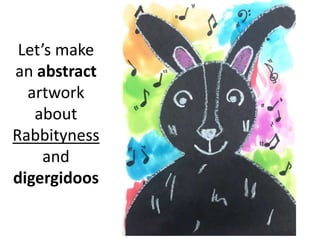
Let’s make
an abstract
artwork
about
Rabbityness
and
digergidoos
Listen to the
music of the
digergidoo
https://goo.gl/ON7EUq
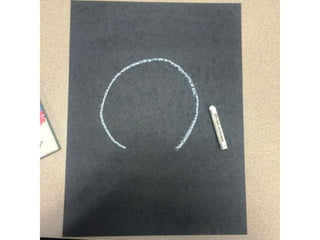
Draw different
music notes as
you listen!
Listen to the
music of the
digergidoo
https://goo.gl/ON7EUq
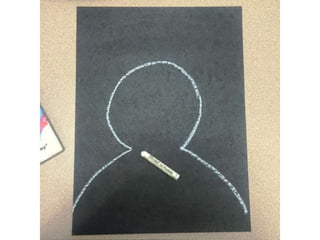
Paint what
the music
sounds like
No splatter
painting!
How would you change / customize this
lesson to better suit your classroom
culture(s)?
Questions / Reflections
Amy Zschaber azschaber@stancoe.org

G moon rbunny presentation 11.03.16

  • 1.
    Professional Development Workshop November3rd, 2016 3:30-6:30 pm The Gallo Center for the Arts Amy Zschaber azschaber@stancoe.org
  • 2.
    What is ArtsEducation? • Dance – Movement – Genres of – Choreography – Sometimes PE • Music – Band – Chorus – Orchestra – Sound mixing • Theatre – Play writing – Acting – Public speaking • Visual Arts – Studio arts – Media arts – Digital arts Often referred to as “VAPA” - Visual and Performing Arts
  • 3.
    Arts Education experiences.. . • Help students – Feel good about themselves as individuals – Develop abilities to observe and respond sensitively – Develop skill, creativity, and imagination – Develop understanding of the arts – Become appreciative of music, art, and dance from their own and other cultures, times, and places. –develop stronger academic skills across multiple non-arts subjects.
  • 4.
    Student Art-Making • Developslanguage and vocabulary • Develops problem-solving strategies • Enhances social skills • Enhances artistic and creative development • Develops motor control and perceptual discrimination • Develops aesthetic awareness and appreciation for the arts
  • 5.
    3 types ofArts Education in Schools
  • 6.
    Arts as CurriculumExamples:TAB 1 1-3 
  • 7.
  • 8.
    Arts Integration Example:TAB1 1-3  Edgar Allen Poe Raven Craft to align with ELA study of The Raven & gothic literature Edgar Allen Poe Gothic Art Project to align with ELA study of The Raven & gothic literature
  • 9.
    Arts Integration Is.. . • An approach to teaching in which students construct and demonstrate understanding through an art form. • Students engage in a creative process which connects an art form and another subject and meets evolving objects in both. From Kennedy Center for the Arts
  • 10.
    Arts Integration lookslike a conversation • Sometimes the arts subject speaks • Sometimes the non-arts subject speaks • Sometimes the arts subject and the non-arts subject overlap Art Science
  • 11.
    Arts Integration lessonsshould be balanced. • “. . . [M]ust meet evolving objects in both disciplines.” • Rigor is important to all disciplines Dance and Science Balanced
  • 12.
    There are Visualand Performing Arts Standards in California California Visual & Performing Arts Standards Artistic Perception Responding to art; using vocabulary of the arts Creative Expression Applying artistic processes and skills Historical Context Analyzing the role of arts in past and present cultures Aesthetic Valuing Derive meaning from art Connections & Applications Apply learning across subject areas https://goo.gl/tB9cBm
  • 13.
    There are nationalVisual and Performing Arts Standards California has not yet adopted these standards. Create Make something Perform Fulfill a task Respond To reflect on creating, performing, or viewing art Connect To build personal meaning National Coalition for Core Arts Standards http://www.nationalartsstandards.org/
  • 14.
    Always consider theabilities of students when designing arts integrated lessons • Students under the age of 8 generally are more interested in the process of art-making than they are in the product of art-making. • Most VAPA educators of students in grades 3 and younger agree that when it comes to learning, process is more important that the product. • This principle applies to any kind of student art-making (dance, music, theatre, & visual arts).
  • 15.
  • 16.
    How to designan arts integrated lesson?
  • 17.
    How to designan Arts Integrated lesson? Tasked with: -a Visual Arts integrated lesson (Visual Arts standards) -History of American West (Social Studies standards) -Incorporate writing (CCSS Writing standards)
  • 18.
    How to designan Arts Integrated lesson?
  • 19.
    How to designan Arts Integrated lesson?
  • 20.
    How to designan Arts Integrated lesson?
  • 21.
    How to designan Arts Integrated lesson?
  • 22.
    Teacher’s Guide: SilhouetteBunny Amy Zschaber azschaber@stancoe.org
  • 23.
    What do wedo before going to bed?
  • 24.
    Look at theBook Cover: Goodnight Moon
  • 25.
    Ask. . . •Where is the story going to take place? • What time of day might it be? • Why do you think that?
  • 26.
  • 27.
    Ask. . . •Where does the story going to take place? • What time of day might is it? • What happens in the story?
  • 28.
    What happens whenwe stand in the sun?
  • 29.
    Look at the BookCover: The Black Rabbit
  • 30.
    Ask. . . •Where is the story going to take place? • What time of day might it be? • Why do you think that?
  • 31.
  • 32.
    Ask. . . •Where does the story going to take place? • What time of day might is it? • What happens in the story? • What is the Black Rabbit?
  • 33.
    Same / Different? GoodnightMoon The Black Rabbit Rabbit Rabbit Night time Day time Going to sleep Making friends Shadows from lamp Shadows from sun
  • 34.
    Let’s Make Art! ARTMATERIALS • -Oil pastels (optional crayons) • -Black markers or crayons • -Scissors • -Glue (glue sticks or glue boxes) • -Sheets of 9x12 black paper (1 per student) • -3.5x3.5 in black paper (1 per student) • -2x2 in black paper (1 per student) • -2x3 in black paper (2 per student) • -4x9 in black paper (1 per student) • -2x2 in pink paper (1 per student) • -Coffee filters (1 per student)
  • 35.
    1. Make white “stars”using a crayon or oil pastel
  • 36.
    2. Make curvylines and squiggles on a coffee filter with a water-based marker, crayon, or oil pastel
  • 37.
    3. Glue your coffeefilter “moon” to your star-paper
  • 38.
    4. On thesmaller black pieces of paper draw circles and ovals and cut them out (as shown)
  • 39.
    5. Put an“x” on each item you just drew and cut out. This is where you will put the glue.
  • 40.
    6. Glue the biggestcircle down at the bottom of your moon
  • 41.
    7. Glue thesmall circle on top of the big circle
  • 42.
    8. Glue thetwo ears on top
  • 43.
    9. Draw acircle on the pink paper. Cut it out and glue it down on the head (the pink circle is the nose)
  • 44.
    10. Get the4x9 in strip of paper
  • 45.
    11. Draw a horizontalline on the paper
  • 46.
    12. Cut lines perpendicularto the white line. Do not cross the white line
  • 47.
    13. Roll upthe cut edges to make “fringe”
  • 48.
    14. Glue down yourfringe to make grass
  • 49.
    15. (optional) use theblack oil pastel to add some texture to your bunny
  • 50.
  • 51.
    17. (Optional) add studentname in white oil pastel at the bottom
  • 52.
    Student Reflection • Howdid you make this art? • What shapes did you use to make this art? • How is your art like Goodnight Moon? • How is your art like The Black Rabbit?
  • 55.
    How would youchange / customize this lesson to better suit your classroom culture(s)?
  • 56.
  • 58.
  • 59.
  • 60.
    Who are thecharacters in the story?
  • 61.
    Who is tellingthe story?
  • 62.
    How do thepictures help you know more about the story?
  • 63.
    How do youthink the pictures in The Runway Bunny were made? Why do you think this?
  • 64.
    Are the picturesin The Runaway Bunny realistic (true to life)? Do the pictures look just like a real bunny? How are they alike? How are they different?
  • 65.
    We use linesto make art. Do you see any lines in this artwork? Where? What types of lines do you see?
  • 66.
  • 67.
  • 68.
    Who are thecharacters in the story?
  • 69.
    Who is tellingthe story?
  • 70.
    How do thepictures help you know more about the story?
  • 71.
    How do youthink the pictures in Rabbityness were made? Why do you think this?
  • 72.
    Are the picturesin Rabbityness realistic (true to life)? Do the pictures look just like a real bunny? How are they alike? How are they different?
  • 73.
    We use linesto make art. Do you see any lines in this artwork? Where? What types of lines do you see?
  • 74.
    Artwork like lookslike a photograph is called, realism
  • 75.
    Artwork that doesn’tlook like anything is called, abstract
  • 76.
    Does Rabbit inRabbityness make abstract or realism paintings?
  • 77.
    How are thestories Rabbityness and The Runaway Bunny alike and different? The Runaway Bunny Rabbityness Rabbit Rabbit Day time Day time Going on adventures Trying new things
  • 78.
    What type ofsounds does Rabbit make with this instrument?
  • 79.
    Rabbit makes musicusing a Didgeridoo • A didgeridoo is an instrument from Australia • Didgeridoos are made from wood • Watch a video about digeridoos https://goo.gl/Iq4YrS
  • 80.
  • 100.
    Listen to the musicof the digergidoo https://goo.gl/ON7EUq Draw different music notes as you listen!
  • 105.
    Listen to the musicof the digergidoo https://goo.gl/ON7EUq Paint what the music sounds like No splatter painting!
  • 112.
    How would youchange / customize this lesson to better suit your classroom culture(s)?
  • 113.
    Questions / Reflections AmyZschaber azschaber@stancoe.org