ILLNESS AS A STRESS AND 
COPING WITH ILLNESS 
AAM. AMJATH 
MEDICINE 
4TH BATCH 
FHCS.
Stress 
• A state of mental or emotional strain or tension resulting from adverse or 
demanding circumstances. 
• Not always harmful. 
• A particular amount of stress is beneficial and healthy also. 
• Positive stress: 
• Improve performance 
• Motivation 
• Adaptation 
• Excess stress: lead to many harmful effects
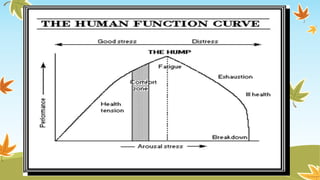
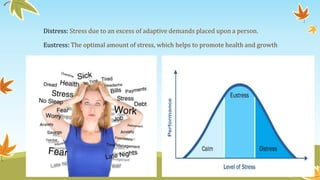
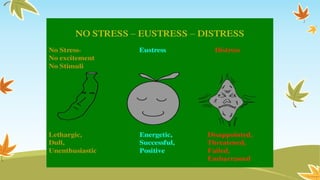
Distress: Stress due to an excess of adaptive demands placed upon a person. 
Eustress: The optimal amount of stress, which helps to promote health and growth
Components of psychological response to 
stressful circumstances 
• Emotional response 
• To threat: fear 
• To loss: depression 
• Somatic response 
• Autonomic arousal (HR , BP , Muscle tone , dry mouth) 
• Reduced physical activity 
• Difficulty in recall and numbing (absence of feeling about events) 
• Coping strategies 
• Adaptive 
• Maladaptive 
• Culturally determined
Strategies for coping with stressful experiences 
• Adaptive 
• Avoidance 
• Working through problems 
• Coming to terms with situation 
 Effective in short and long term 
• Maladaptive 
• Excess use of alcohol and drugs 
• Histrionic or aggressive behaviour 
• Deliberate self-harm 
Short term but may lead to difficulties in longer term.
Associated disorders 
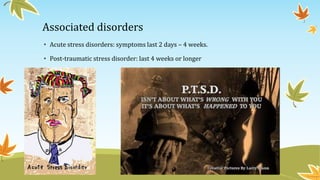
• Acute stress disorders: symptoms last 2 days – 4 weeks. 
• Post-traumatic stress disorder: last 4 weeks or longer
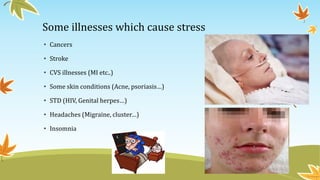
Some illnesses which cause stress 
• Cancers 
• Stroke 
• CVS illnesses (MI etc..) 
• Some skin conditions (Acne, psoriasis…) 
• STD (HIV, Genital herpes…) 
• Headaches (Migraine, cluster…) 
• Insomnia
Physical illness as a stressor 
• Physical illness may lead to 
 Anxiety 
 Depression 
 Anger 
• Short lived 
• Subsides when pt adjusts to new situation 
• Stressful effect of illness can’t be judged solely by objective severity, because it 
also depends on patient’s appraisal. (may lead to false assumption)
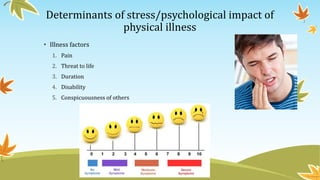
Determinants of stress/psychological impact of 
physical illness 
• Illness factors 
1. Pain 
2. Threat to life 
3. Duration 
4. Disability 
5. Conspicuousness of others
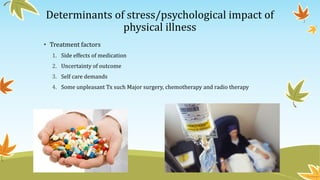
Determinants of stress/psychological impact of 
physical illness 
• Treatment factors 
1. Side effects of medication 
2. Uncertainty of outcome 
3. Self care demands 
4. Some unpleasant Tx such Major surgery, chemotherapy and radio therapy
Determinants of stress/psychological impact of 
physical illness 
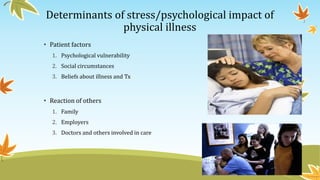
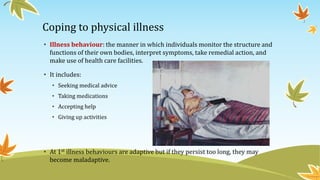
• Patient factors 
1. Psychological vulnerability 
2. Social circumstances 
3. Beliefs about illness and Tx 
• Reaction of others 
1. Family 
2. Employers 
3. Doctors and others involved in care
Coping to physical illness 
• Illness behaviour: the manner in which individuals monitor the structure and 
functions of their own bodies, interpret symptoms, take remedial action, and 
make use of health care facilities. 
• It includes: 
• Seeking medical advice 
• Taking medications 
• Accepting help 
• Giving up activities 
• At 1st illness behaviours are adaptive but if they persist too long, they may 
become maladaptive.
Coping to physical illness 
• The sick role: The protective role given an individual who is physically or 
mentally ill or injured; it may be assumed by the individual or it may be imposed 
as a part of social custom. 
• Society allow sick people to adopt a special role. 
• Two privileges and two duties. 
• Exemption(freedom) from some responsibilities 
• The right to help and care 
• The obligation to seek and cooperate in Tx 
• The expectation of a wish to recover and efforts to achieve this 
• Usually adaptive
Treatment…. 
• When adjustment to physical illness is slow and incomplete, Tx is given 
• By primary care or hospital team 
• Clinicians: 
• Explain nature of illness and its Tx 
• Discuss about pt’s anxiety 
 Effect of illness in family 
 Threat of job loss 
• Treat the maladaptive behaviours (overdependence/poor adherence) 
 Counselling is effective 
 Take more time to achieve good relationship 
 But trusting relationship must not be allowed to become one of dependence
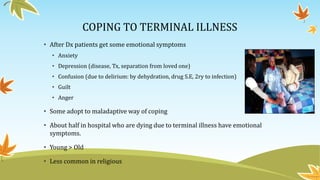
COPING TO TERMINAL ILLNESS 
• After Dx patients get some emotional symptoms 
• Anxiety 
• Depression (disease, Tx, separation from loved one) 
• Confusion (due to delirium: by dehydration, drug S.E, 2ry to infection) 
• Guilt 
• Anger 
• Some adopt to maladaptive way of coping 
• About half in hospital who are dying due to terminal illness have emotional 
symptoms. 
• Young > Old 
• Less common in religious
Response of pt to terminal illness 
1. Denial 
• 1st reaction to news 
• It diminishes gradually when pt get to know about situation 
2. Displacement 
• Anger about the situation may displaced to doctors, nurses and relatives 
3. Dependency 
• Common 
• Adaptive 
• Excessive: make Tx more difficult 
4. Acceptance 
• Final stage of adjustment in terminal illness
TREATMENT.. 
• Control of the pain and confusion 
• Explain the illness and treatment 
• Sharing information 
• Help for relatives 
• Special nursing: Given by terminal care nurses who are skilled in psychological 
as well as physical care of the dying. 
• Referral to psychiatrist: 
• Indications: 
1. Doubt about the psychiatric Dx 
2. Previous psychiatric disorders 
3. Refuse to discus the illness 
4. Refuse to cooperate with treatment
THANK YOU

Illness as a stress

  • 1.
    ILLNESS AS ASTRESS AND COPING WITH ILLNESS AAM. AMJATH MEDICINE 4TH BATCH FHCS.
  • 3.
    Stress • Astate of mental or emotional strain or tension resulting from adverse or demanding circumstances. • Not always harmful. • A particular amount of stress is beneficial and healthy also. • Positive stress: • Improve performance • Motivation • Adaptation • Excess stress: lead to many harmful effects
  • 5.
    Distress: Stress dueto an excess of adaptive demands placed upon a person. Eustress: The optimal amount of stress, which helps to promote health and growth
  • 7.
    Components of psychologicalresponse to stressful circumstances • Emotional response • To threat: fear • To loss: depression • Somatic response • Autonomic arousal (HR , BP , Muscle tone , dry mouth) • Reduced physical activity • Difficulty in recall and numbing (absence of feeling about events) • Coping strategies • Adaptive • Maladaptive • Culturally determined
  • 8.
    Strategies for copingwith stressful experiences • Adaptive • Avoidance • Working through problems • Coming to terms with situation  Effective in short and long term • Maladaptive • Excess use of alcohol and drugs • Histrionic or aggressive behaviour • Deliberate self-harm Short term but may lead to difficulties in longer term.
  • 9.
    Associated disorders •Acute stress disorders: symptoms last 2 days – 4 weeks. • Post-traumatic stress disorder: last 4 weeks or longer
  • 10.
    Some illnesses whichcause stress • Cancers • Stroke • CVS illnesses (MI etc..) • Some skin conditions (Acne, psoriasis…) • STD (HIV, Genital herpes…) • Headaches (Migraine, cluster…) • Insomnia
  • 11.
    Physical illness asa stressor • Physical illness may lead to  Anxiety  Depression  Anger • Short lived • Subsides when pt adjusts to new situation • Stressful effect of illness can’t be judged solely by objective severity, because it also depends on patient’s appraisal. (may lead to false assumption)
  • 12.
    Determinants of stress/psychologicalimpact of physical illness • Illness factors 1. Pain 2. Threat to life 3. Duration 4. Disability 5. Conspicuousness of others
  • 13.
    Determinants of stress/psychologicalimpact of physical illness • Treatment factors 1. Side effects of medication 2. Uncertainty of outcome 3. Self care demands 4. Some unpleasant Tx such Major surgery, chemotherapy and radio therapy
  • 14.
    Determinants of stress/psychologicalimpact of physical illness • Patient factors 1. Psychological vulnerability 2. Social circumstances 3. Beliefs about illness and Tx • Reaction of others 1. Family 2. Employers 3. Doctors and others involved in care
  • 15.
    Coping to physicalillness • Illness behaviour: the manner in which individuals monitor the structure and functions of their own bodies, interpret symptoms, take remedial action, and make use of health care facilities. • It includes: • Seeking medical advice • Taking medications • Accepting help • Giving up activities • At 1st illness behaviours are adaptive but if they persist too long, they may become maladaptive.
  • 16.
    Coping to physicalillness • The sick role: The protective role given an individual who is physically or mentally ill or injured; it may be assumed by the individual or it may be imposed as a part of social custom. • Society allow sick people to adopt a special role. • Two privileges and two duties. • Exemption(freedom) from some responsibilities • The right to help and care • The obligation to seek and cooperate in Tx • The expectation of a wish to recover and efforts to achieve this • Usually adaptive
  • 17.
    Treatment…. • Whenadjustment to physical illness is slow and incomplete, Tx is given • By primary care or hospital team • Clinicians: • Explain nature of illness and its Tx • Discuss about pt’s anxiety  Effect of illness in family  Threat of job loss • Treat the maladaptive behaviours (overdependence/poor adherence)  Counselling is effective  Take more time to achieve good relationship  But trusting relationship must not be allowed to become one of dependence
  • 18.
    COPING TO TERMINALILLNESS • After Dx patients get some emotional symptoms • Anxiety • Depression (disease, Tx, separation from loved one) • Confusion (due to delirium: by dehydration, drug S.E, 2ry to infection) • Guilt • Anger • Some adopt to maladaptive way of coping • About half in hospital who are dying due to terminal illness have emotional symptoms. • Young > Old • Less common in religious
  • 19.
    Response of ptto terminal illness 1. Denial • 1st reaction to news • It diminishes gradually when pt get to know about situation 2. Displacement • Anger about the situation may displaced to doctors, nurses and relatives 3. Dependency • Common • Adaptive • Excessive: make Tx more difficult 4. Acceptance • Final stage of adjustment in terminal illness
  • 20.
    TREATMENT.. • Controlof the pain and confusion • Explain the illness and treatment • Sharing information • Help for relatives • Special nursing: Given by terminal care nurses who are skilled in psychological as well as physical care of the dying. • Referral to psychiatrist: • Indications: 1. Doubt about the psychiatric Dx 2. Previous psychiatric disorders 3. Refuse to discus the illness 4. Refuse to cooperate with treatment
  • 22.

Editor's Notes

  • #6 Eu: greek word- good Dis:latin word-bad
  • #11 Nowa days people get several illnesses. But those diseases cause stress to the patients.