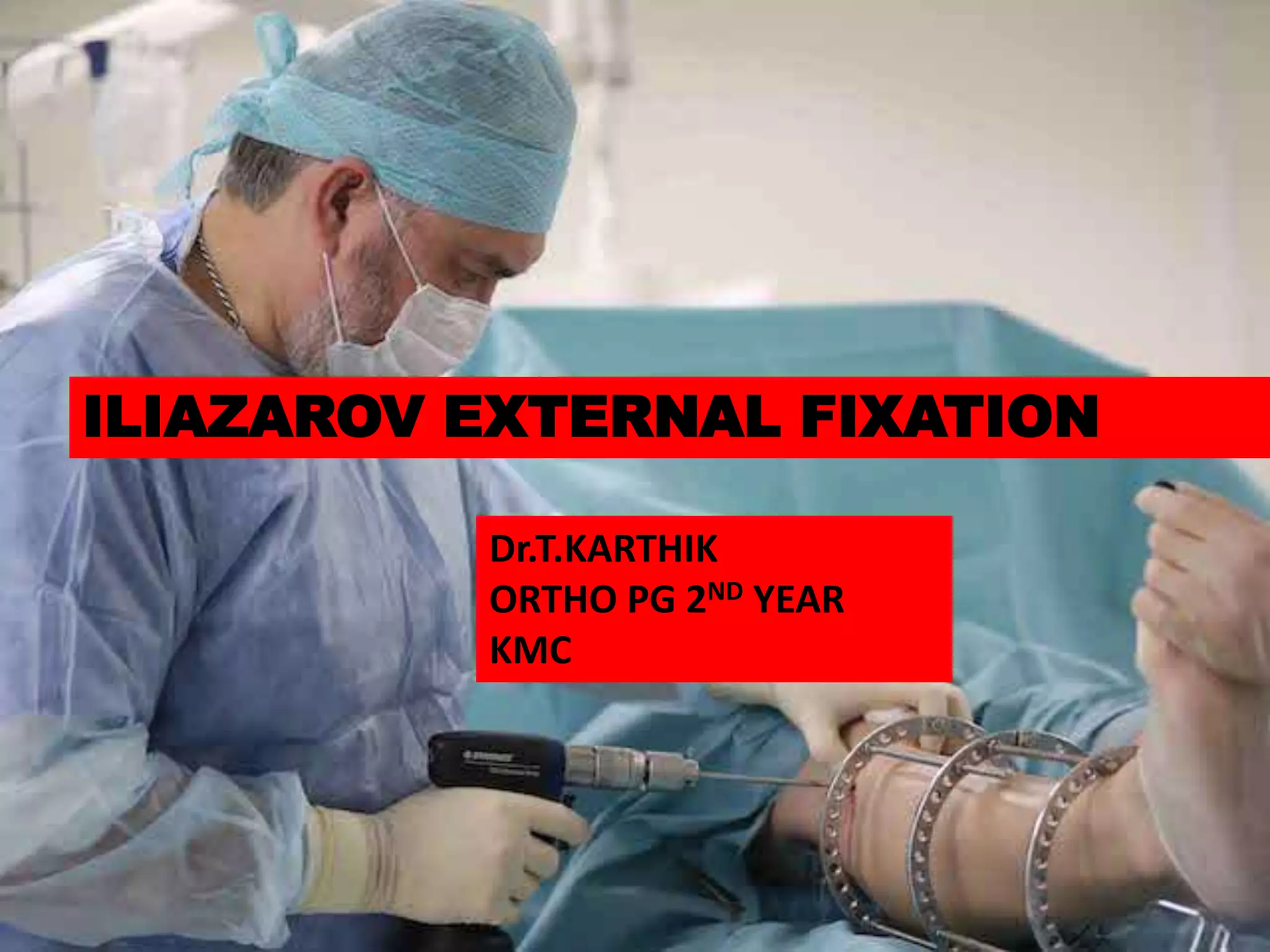








ILIAZAROV EXTERNAL FIXATION
Dr.T.KARTHIK
ORTHO PG 2ND YEAR
KMC
BACKGROUND
BIOMECHANICS OF ILIAZAROV TECHNIQUE
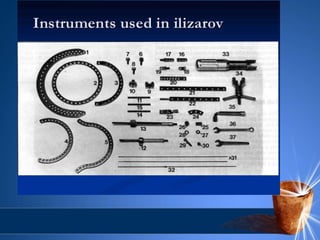
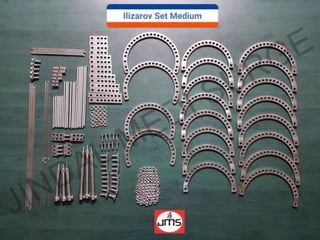
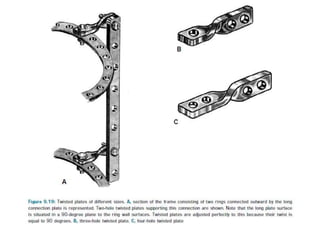
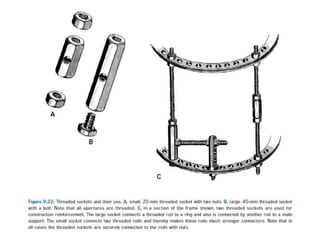
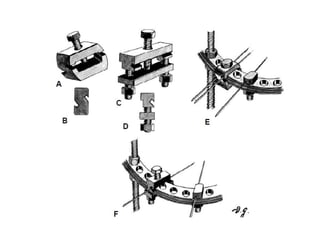
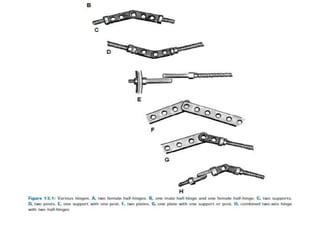
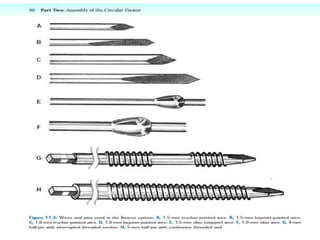
COMPONENTS OF ILLIAZAROV FIXATION
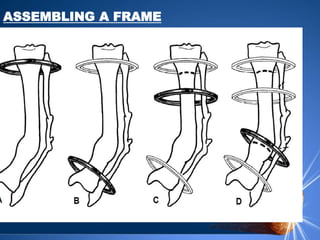
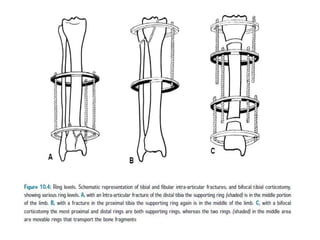
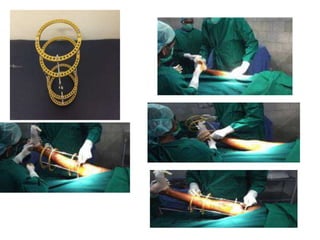
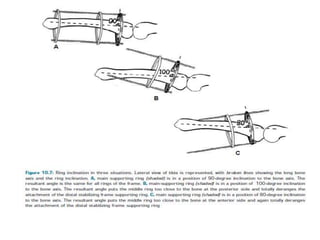
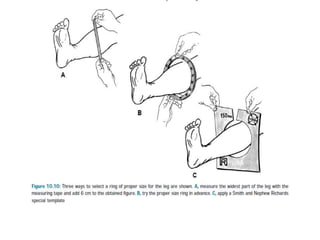
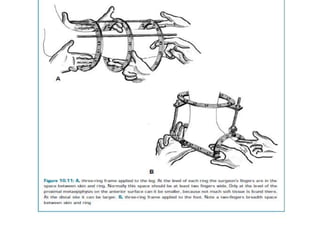
ASSEMBLING A FRAME
APPLICATION OF ILIAZAROV TECHNIQUE
TENSION STRESS EFFECT
“slow, steady traction of tissues caused
them to become metabolically activated,
Resulting in an increase in the
proliferative and biosynthetic function”
Distraction forces can create tissue stress capable
of stimulating local metabolic activity with cell
transformation. This eventually leads to the
development of bony regenerate
Quality and quantity of newly formed bone
depends upon several factors:
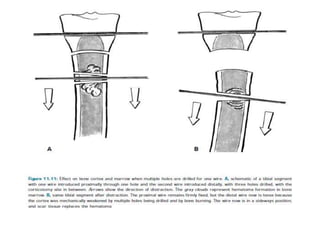
• The regidity of bone fragment fixation
• The degree of damage of the bone marrow, the
periosteal, soft tissues and the nutrient blood
vessels at the level of the osteotomy
• The speed of a distraction (rate)
• The rhythm (frequency) of a distraction
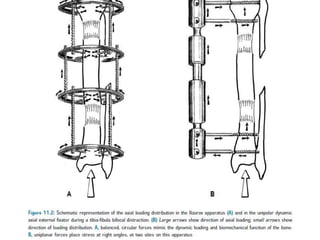
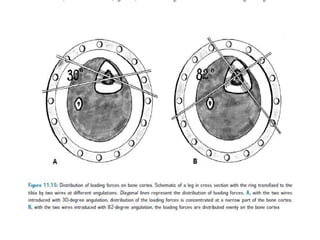
• The distribution of forces on the bone
circumference
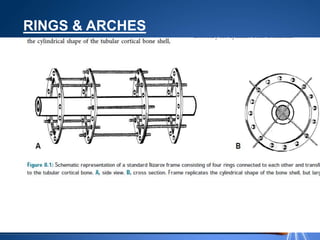
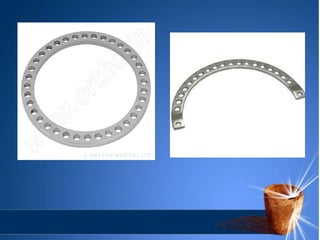
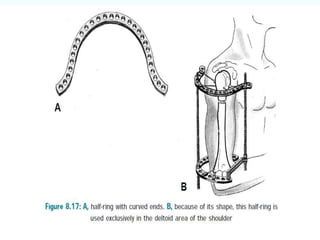
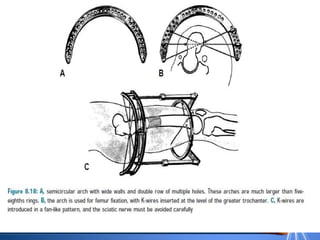
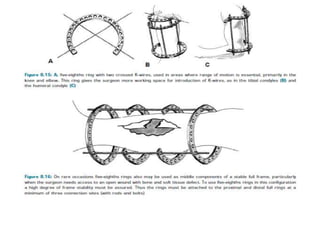
RINGS & ARCHES
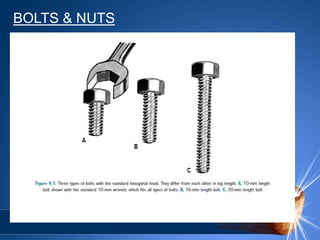
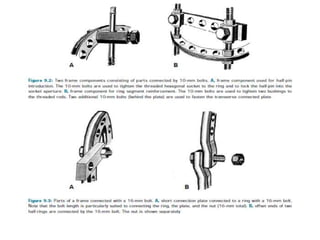
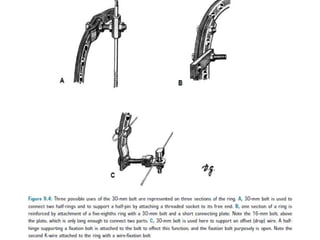
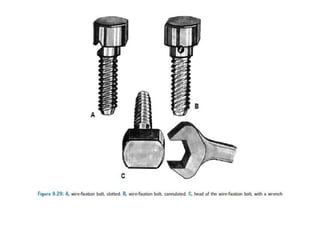
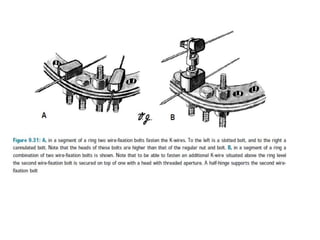
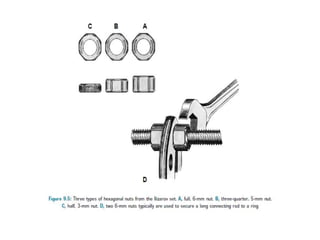
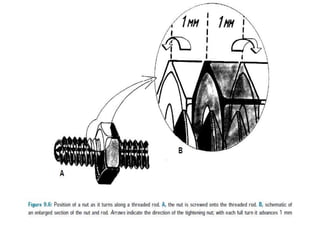
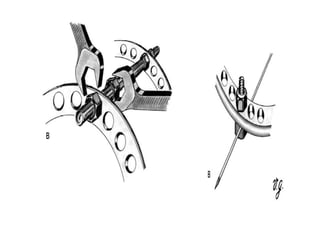
BOLTS & NUTS
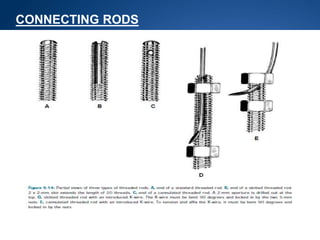
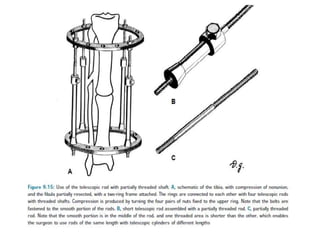
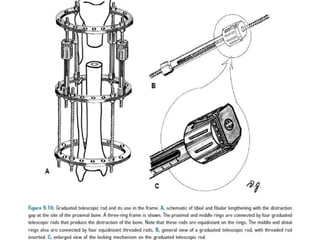
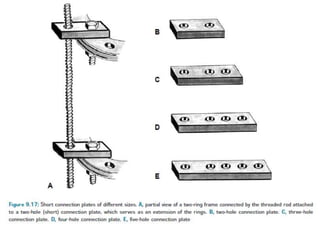
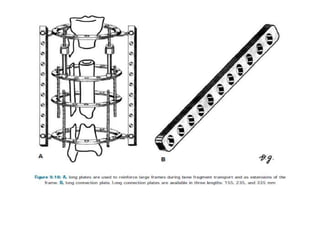
CONNECTING RODS
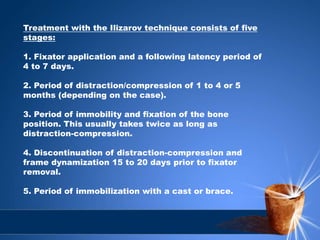
Treatment with the Ilizarov technique consists of five
stages:
1. Fixator application and a following latency period of
4 to 7 days.
2. Period of distraction/compression of 1 to 4 or 5
months (depending on the case).
3. Period of immobility and fixation of the bone
position. This usually takes twice as long as
distraction-compression.
4. Discontinuation of distraction-compression and
frame dynamization 15 to 20 days prior to fixator
removal.
5. Period of immobilization with a cast or brace.
ASSEMBLING A FRAME
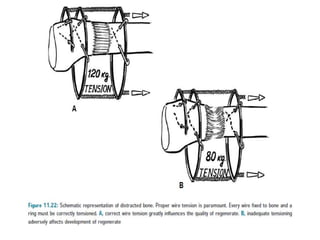
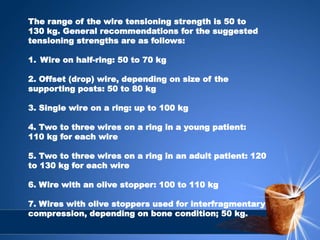
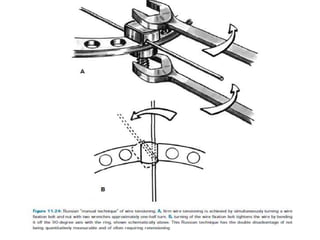
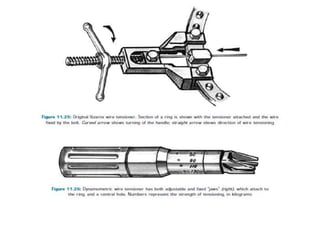
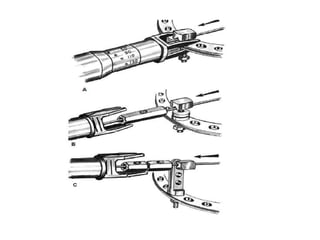
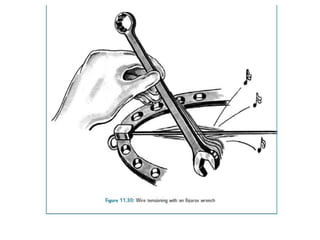
The range of the wire tensioning strength is 50 to
130 kg. General recommendations for the suggested
tensioning strengths are as follows:
1. Wire on half-ring: 50 to 70 kg
2. Offset (drop) wire, depending on size of the
supporting posts: 50 to 80 kg
3. Single wire on a ring: up to 100 kg
4. Two to three wires on a ring in a young patient:
110 kg for each wire
5. Two to three wires on a ring in an adult patient: 120
to 130 kg for each wire
6. Wire with an olive stopper: 100 to 110 kg
7. Wires with olive stoppers used for interfragmentary
compression, depending on bone condition; 50 kg.
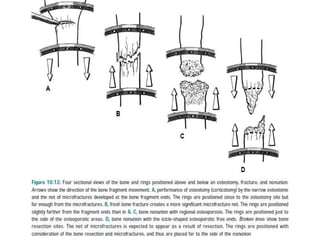
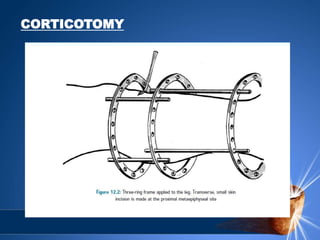
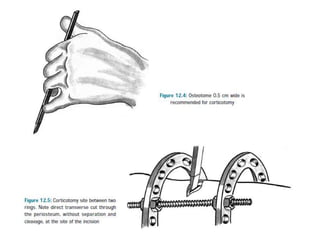
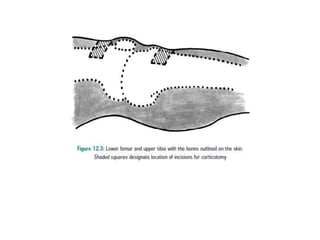
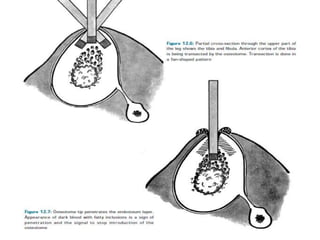
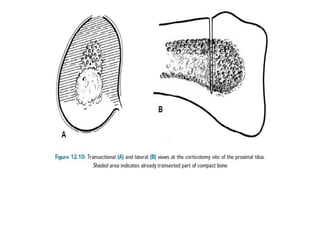
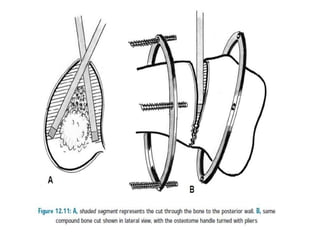
CORTICOTOMY
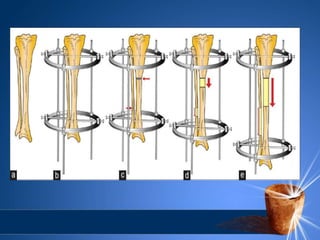
In the Ilizarov procedure the bone cut serves three
main purposes:
1. To create mechanical conditions (a gap) necessary for
the development of distraction
2. To store the new bone-forming cells that were
developed during lengthening and deposited along
the lines parallel to the mechanical stress
3. To develop the area with increased blood circulation
necessary for increased metabolic transformation of
local tissues.
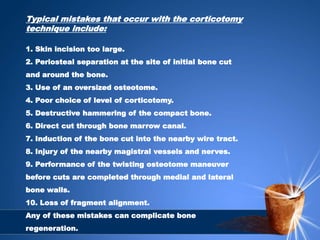
Typical mistakes that occur with the corticotomy
technique include:
1. Skin incision too large.
2. Periosteal separation at the site of initial bone cut
and around the bone.
3. Use of an oversized osteotome.
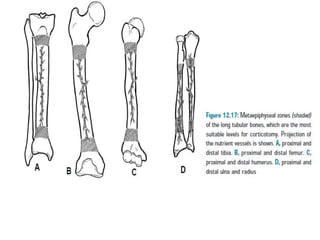
4. Poor choice of level of corticotomy.
5. Destructive hammering of the compact bone.
6. Direct cut through bone marrow canal.
7. Induction of the bone cut into the nearby wire tract.
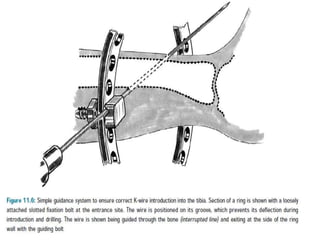
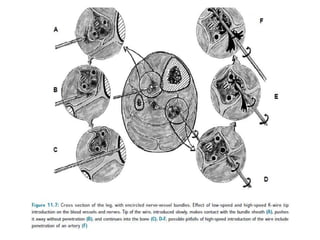
8. Injury of the nearby magistral vessels and nerves.
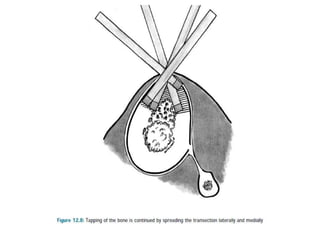
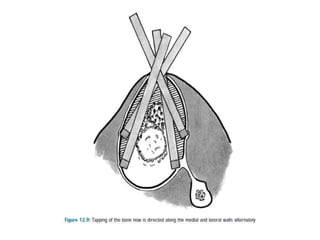
9. Performance of the twisting osteotome maneuver
before cuts are completed through medial and lateral
bone walls.
10. Loss of fragment alignment.
Any of these mistakes can complicate bone
regeneration.
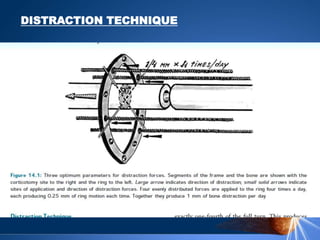
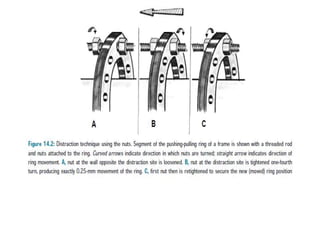
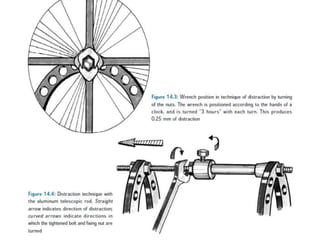
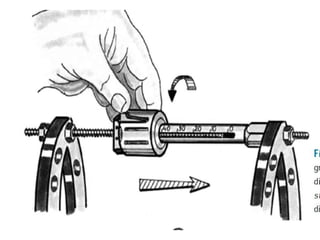
DISTRACTION TECHNIQUE
COMPRESSION OSTEOGENESIS
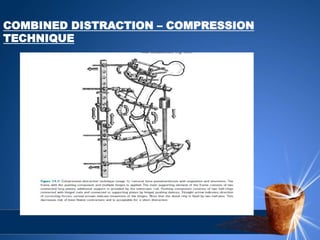
COMBINED DISTRACTION – COMPRESSION
TECHNIQUE
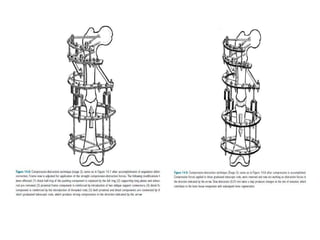
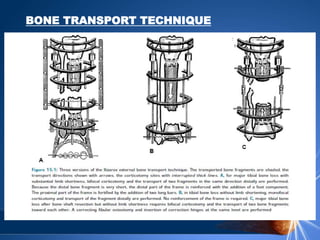
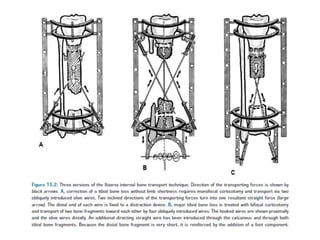
BONE TRANSPORT TECHNIQUE
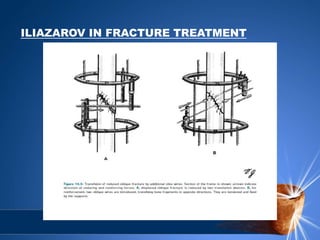
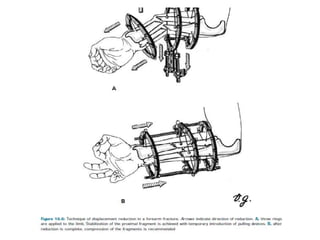
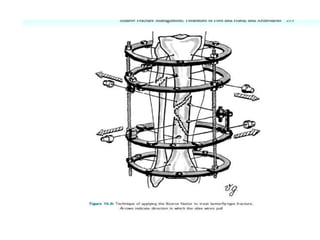
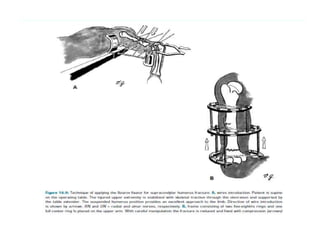
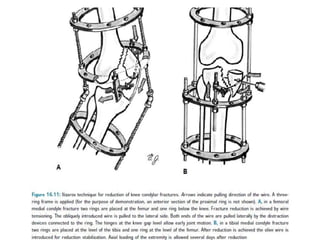
ILIAZAROV IN FRACTURE TREATMENT
The advantages of using the Ilizarov fixator in fracture
cases are:
1. Possibility of simultaneous anatomic reduction of the
displaced fragments.
2. Stable fixation provided by the wires, introduced at
multiple levels and in multiple planes and orientations.
3. Early functional treatment, including joint range of
motion and weight bearing, that stimulates fracture
healing and shortens treatment time.
4. Possibility of correction of the secondary displacement
by frame adjustment.
5. Easy approach to wounds in cases of compound
fractures.
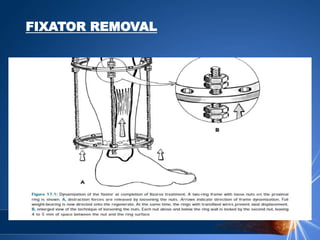
FIXATOR REMOVAL
The following is a list of the four most important
factors in the Ilizarov fixator removal technique.
1. The tension of all wires must be released before they
are cut. Because the wires are under tension of more
than 100 kg, cutting them produces extreme pain,
which the patient can feel even under sedation and
superficial anesthesia. Moreover, when the wire is cut
while still under tension microinjury and even stress
fracture in the regenerate may be provoked.
2. All olive wires (or the other wires with stoppers) must
be removed by extraction toward the stopper. Sometimes
this requires the application of considerable strength.
.
There also may be a blood vessel near the
stopper, which will cause some bleeding to occur.
This requires that the surgeon apply pressure with the
finger for several minutes.
3. Extraction of the wires with large pliers must be don
strictly in the direction of the wire position and
orientation in the bone.
4. Removal of the half-pins requires careful turning of
the T-shaped hand drill because of their tendency to
break in the bone. Because these pins are under
tension for a long time, metal fatigue and microfailure
can develop, causing the pins to break when turned.
COMPLICATIONS OF ILIAZAROV TECHNIQUE
THANK YOU
COURTESY.....---

Ilizarov

  • 1.
  • 2.
    BACKGROUND BIOMECHANICS OF ILIAZAROVTECHNIQUE COMPONENTS OF ILLIAZAROV FIXATION ASSEMBLING A FRAME APPLICATION OF ILIAZAROV TECHNIQUE
  • 6.
    TENSION STRESS EFFECT “slow,steady traction of tissues caused them to become metabolically activated, Resulting in an increase in the proliferative and biosynthetic function”
  • 7.
    Distraction forces cancreate tissue stress capable of stimulating local metabolic activity with cell transformation. This eventually leads to the development of bony regenerate
  • 9.
    Quality and quantityof newly formed bone depends upon several factors: • The regidity of bone fragment fixation • The degree of damage of the bone marrow, the periosteal, soft tissues and the nutrient blood vessels at the level of the osteotomy • The speed of a distraction (rate) • The rhythm (frequency) of a distraction • The distribution of forces on the bone circumference
  • 13.
  • 18.
  • 26.
  • 36.
    Treatment with theIlizarov technique consists of five stages: 1. Fixator application and a following latency period of 4 to 7 days. 2. Period of distraction/compression of 1 to 4 or 5 months (depending on the case). 3. Period of immobility and fixation of the bone position. This usually takes twice as long as distraction-compression. 4. Discontinuation of distraction-compression and frame dynamization 15 to 20 days prior to fixator removal. 5. Period of immobilization with a cast or brace.
  • 37.
  • 60.
    The range ofthe wire tensioning strength is 50 to 130 kg. General recommendations for the suggested tensioning strengths are as follows: 1. Wire on half-ring: 50 to 70 kg 2. Offset (drop) wire, depending on size of the supporting posts: 50 to 80 kg 3. Single wire on a ring: up to 100 kg 4. Two to three wires on a ring in a young patient: 110 kg for each wire 5. Two to three wires on a ring in an adult patient: 120 to 130 kg for each wire 6. Wire with an olive stopper: 100 to 110 kg 7. Wires with olive stoppers used for interfragmentary compression, depending on bone condition; 50 kg.
  • 67.
  • 68.
    In the Ilizarovprocedure the bone cut serves three main purposes: 1. To create mechanical conditions (a gap) necessary for the development of distraction 2. To store the new bone-forming cells that were developed during lengthening and deposited along the lines parallel to the mechanical stress 3. To develop the area with increased blood circulation necessary for increased metabolic transformation of local tissues.
  • 77.
    Typical mistakes thatoccur with the corticotomy technique include: 1. Skin incision too large. 2. Periosteal separation at the site of initial bone cut and around the bone. 3. Use of an oversized osteotome. 4. Poor choice of level of corticotomy. 5. Destructive hammering of the compact bone. 6. Direct cut through bone marrow canal. 7. Induction of the bone cut into the nearby wire tract. 8. Injury of the nearby magistral vessels and nerves. 9. Performance of the twisting osteotome maneuver before cuts are completed through medial and lateral bone walls. 10. Loss of fragment alignment. Any of these mistakes can complicate bone regeneration.
  • 78.
  • 82.
  • 83.
    COMBINED DISTRACTION –COMPRESSION TECHNIQUE
  • 85.
  • 87.
  • 88.
    The advantages ofusing the Ilizarov fixator in fracture cases are: 1. Possibility of simultaneous anatomic reduction of the displaced fragments. 2. Stable fixation provided by the wires, introduced at multiple levels and in multiple planes and orientations. 3. Early functional treatment, including joint range of motion and weight bearing, that stimulates fracture healing and shortens treatment time. 4. Possibility of correction of the secondary displacement by frame adjustment. 5. Easy approach to wounds in cases of compound fractures.
  • 96.
  • 97.
    The following isa list of the four most important factors in the Ilizarov fixator removal technique. 1. The tension of all wires must be released before they are cut. Because the wires are under tension of more than 100 kg, cutting them produces extreme pain, which the patient can feel even under sedation and superficial anesthesia. Moreover, when the wire is cut while still under tension microinjury and even stress fracture in the regenerate may be provoked. 2. All olive wires (or the other wires with stoppers) must be removed by extraction toward the stopper. Sometimes this requires the application of considerable strength. .
  • 98.
    There also maybe a blood vessel near the stopper, which will cause some bleeding to occur. This requires that the surgeon apply pressure with the finger for several minutes. 3. Extraction of the wires with large pliers must be don strictly in the direction of the wire position and orientation in the bone. 4. Removal of the half-pins requires careful turning of the T-shaped hand drill because of their tendency to break in the bone. Because these pins are under tension for a long time, metal fatigue and microfailure can develop, causing the pins to break when turned.
  • 99.
  • 100.
  • 101.