Turn JTBD Theory into Practice 
With Outcome-Driven Innovation
We all share a desire to create 
successful, game-changing products
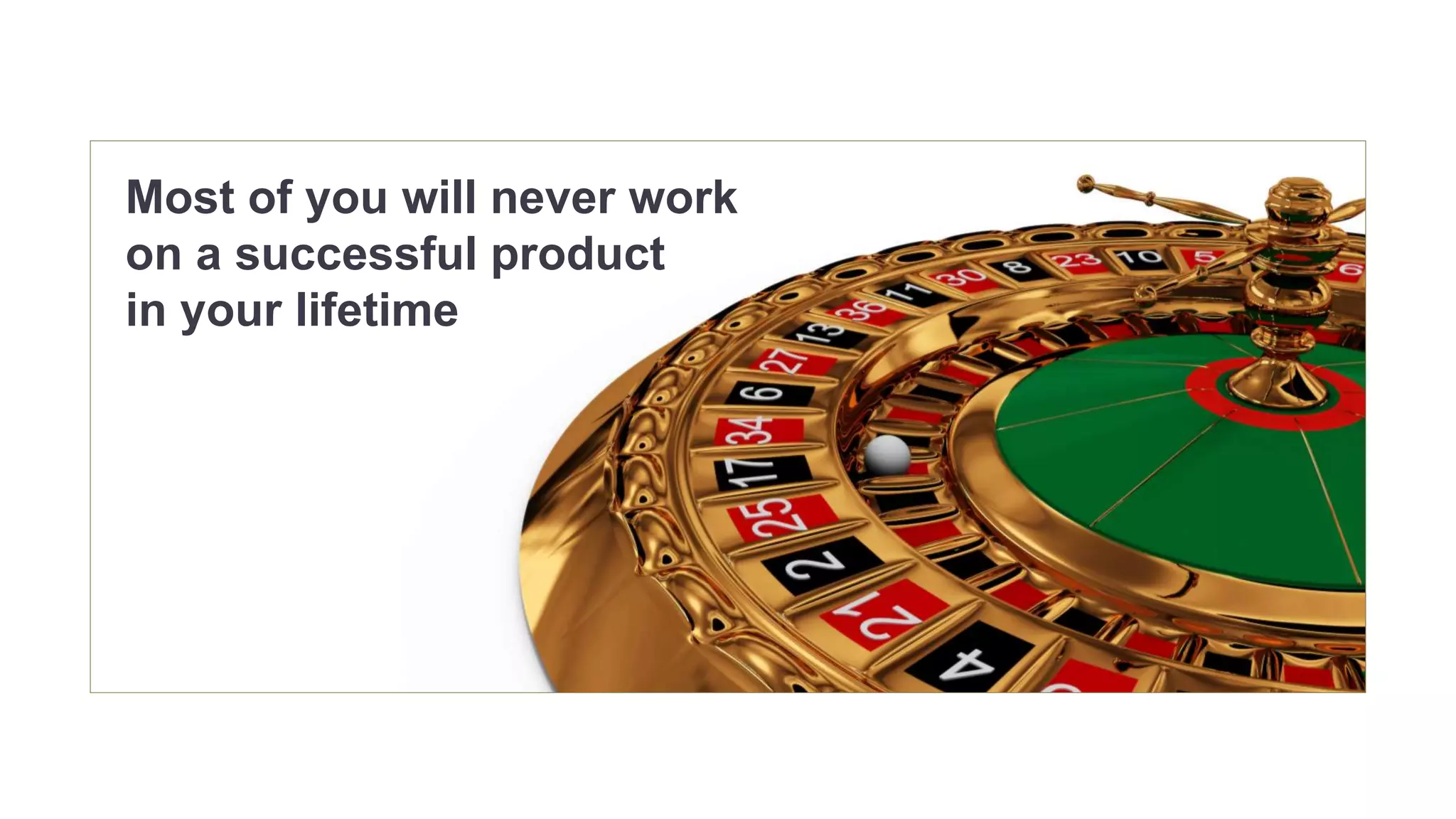
Most of you will never work 
on a successful product 
in your lifetime
Innovation = solutions that satisfy unmet needs
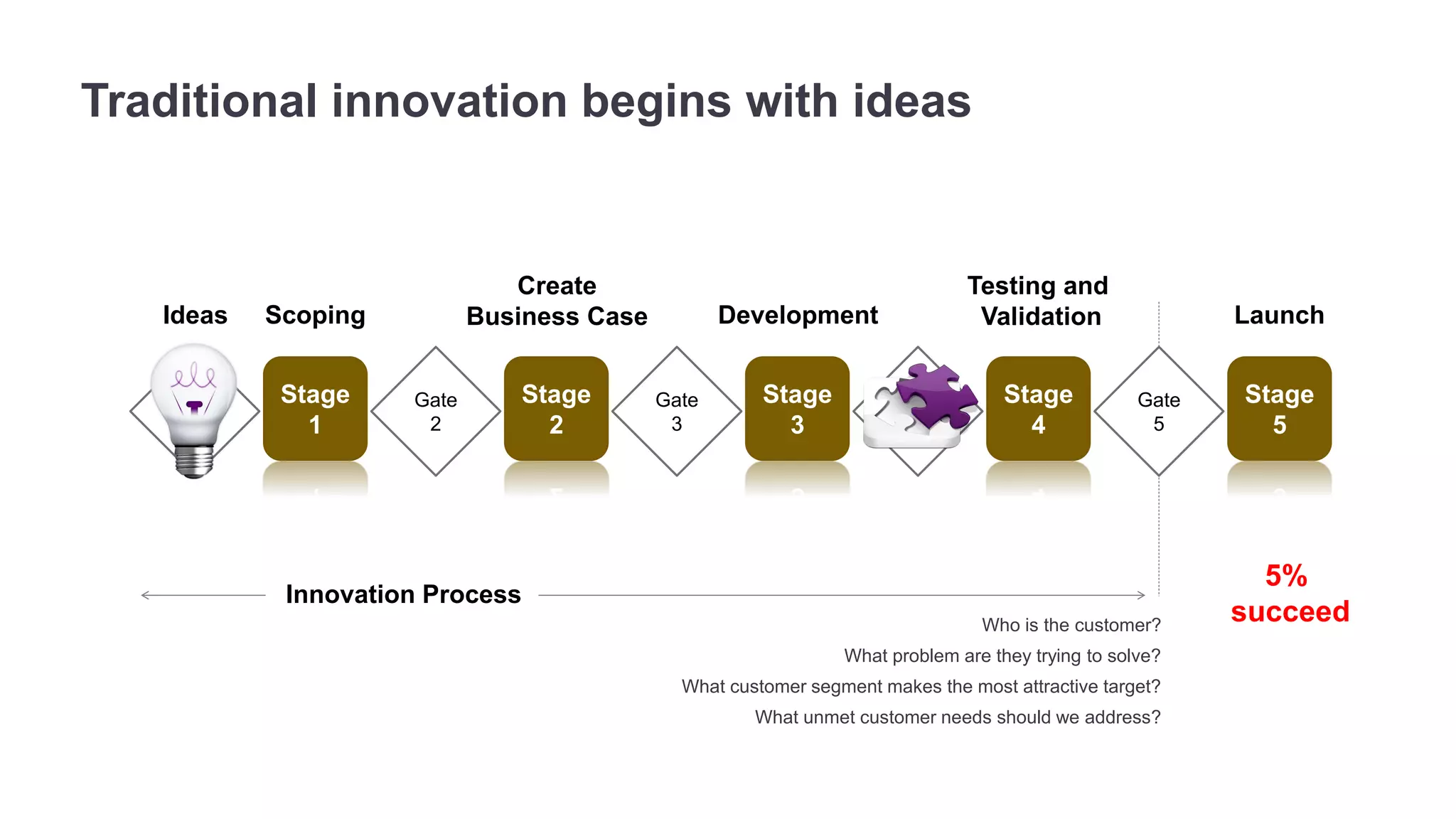
Traditional innovation begins with ideas 
Stage 
1 
Stage 
2 
Stage 
3 
Stage 
4 
Stage 
5 
Gate 
2 
Gate 
3 
Gate 
1 
Gate 
4 
Gate 
5 
Create 
Business Case Development 
Testing and 
Validation Launch 
Ideas Scoping 
Innovation Process 
Who is the customer? 
What problem are they trying to solve? 
What customer segment makes the most attractive target? 
What unmet customer needs should we address? 
5% 
succeed
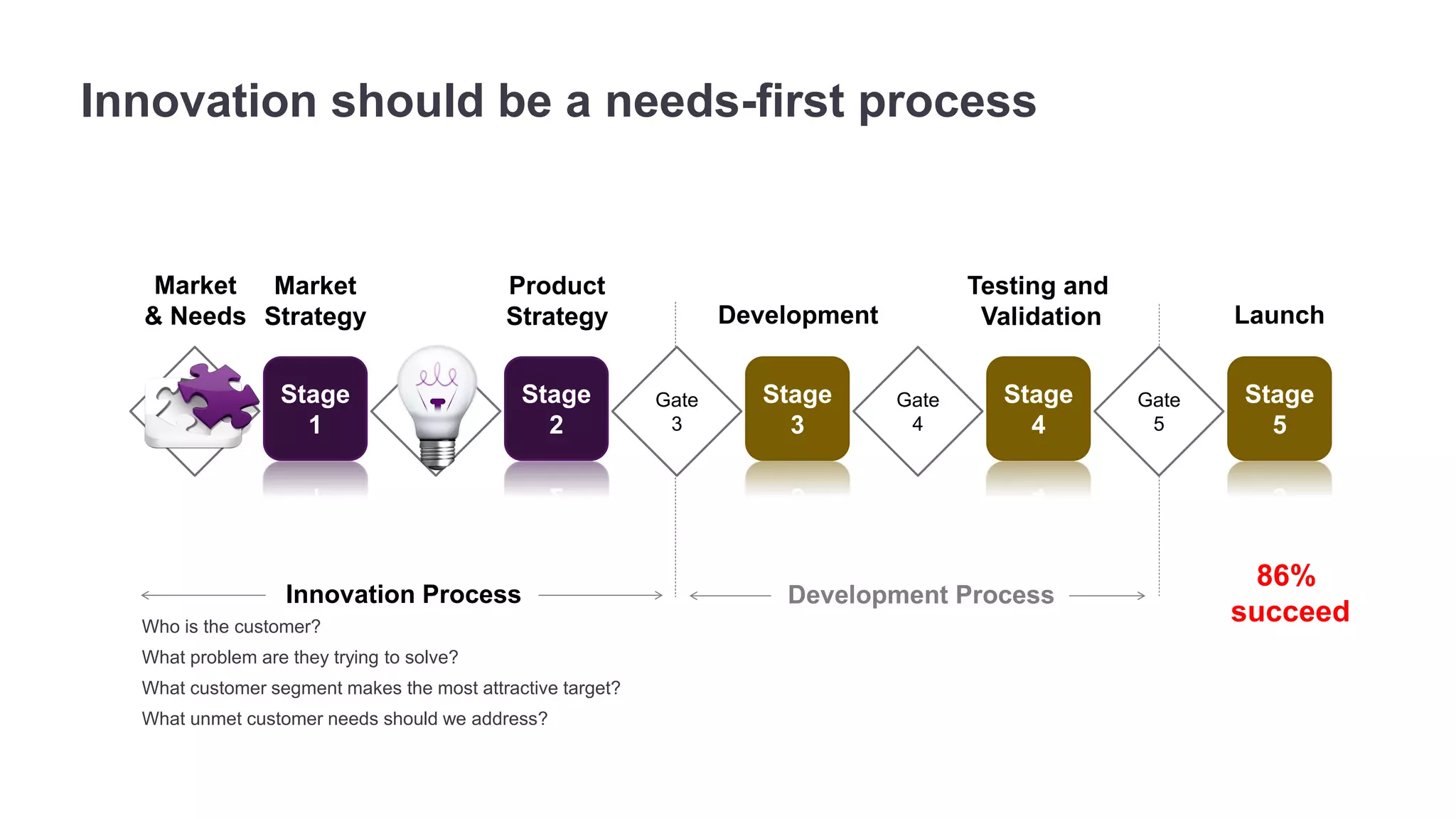
Innovation should be a needs-first process 
Stage 
1 
Product 
Strategy Development 
Stage 
2 
Stage 
3 
Stage 
4 
Stage 
5 
Gate 
2 
Gate 
3 
Gate 
1 
Gate 
4 
Gate 
5 
Innovation Process 
Testing and 
Validation Launch 
Market 
& Needs 
Market 
Strategy 
Who is the customer? 
What problem are they trying to solve? 
What customer segment makes the most attractive target? 
What unmet customer needs should we address? 
Development Process 
86% 
succeed
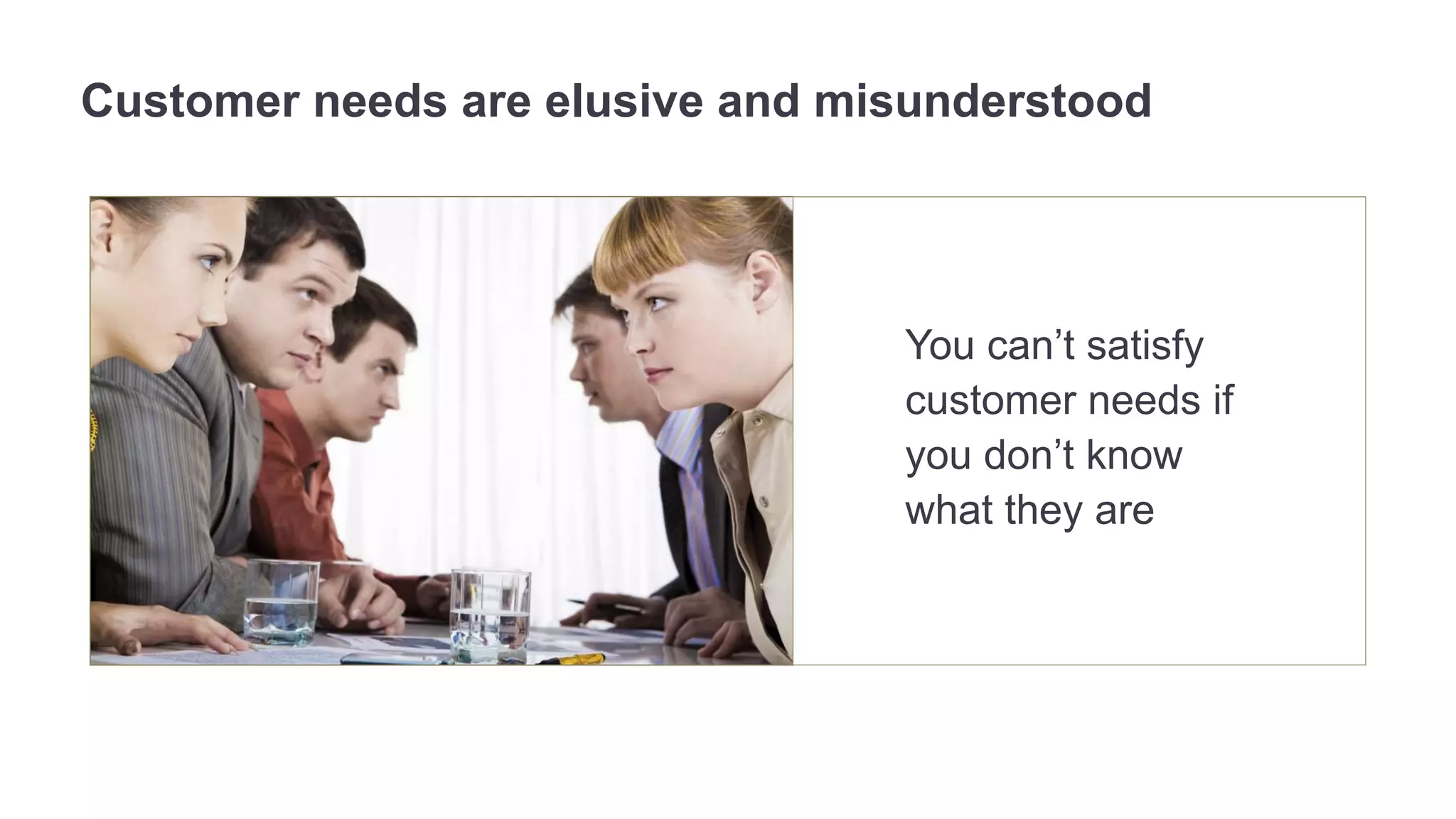
Customer needs are elusive and misunderstood 
You can’t satisfy 
customer needs if 
you don’t know 
what they are
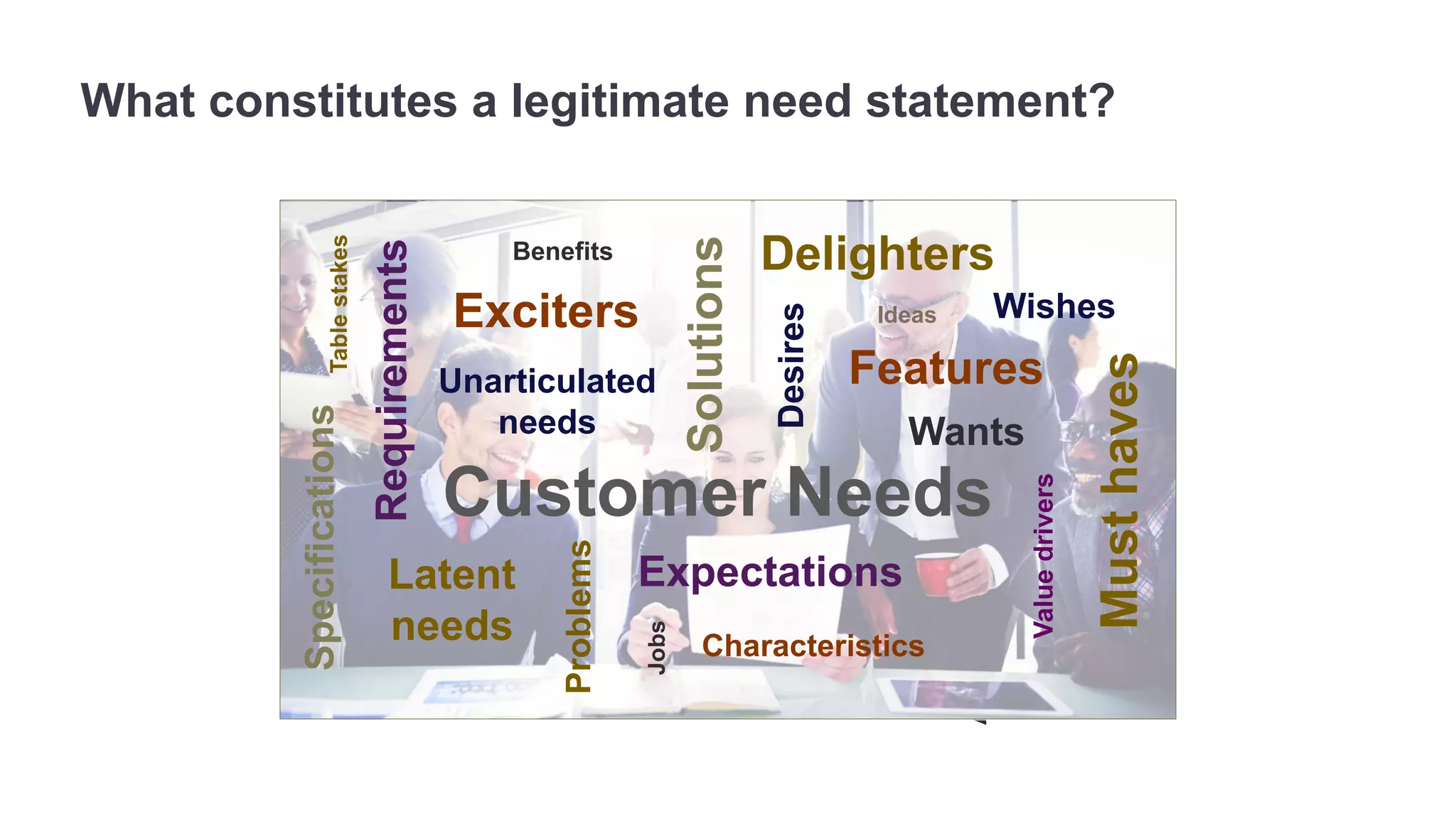
What constitutes a legitimate need statement? 
Wants 
Attributes 
Solutions 
Specifications 
Unarticulated 
needs 
Problems 
Requirements 
Desires 
Customer Needs 
Must haves 
Exciters 
Delighters 
Value drivers 
Latent 
needs 
Expectations 
Characteristics 
Wishes 
Features 
Benefits 
Ideas 
Jobs 
Table stakes
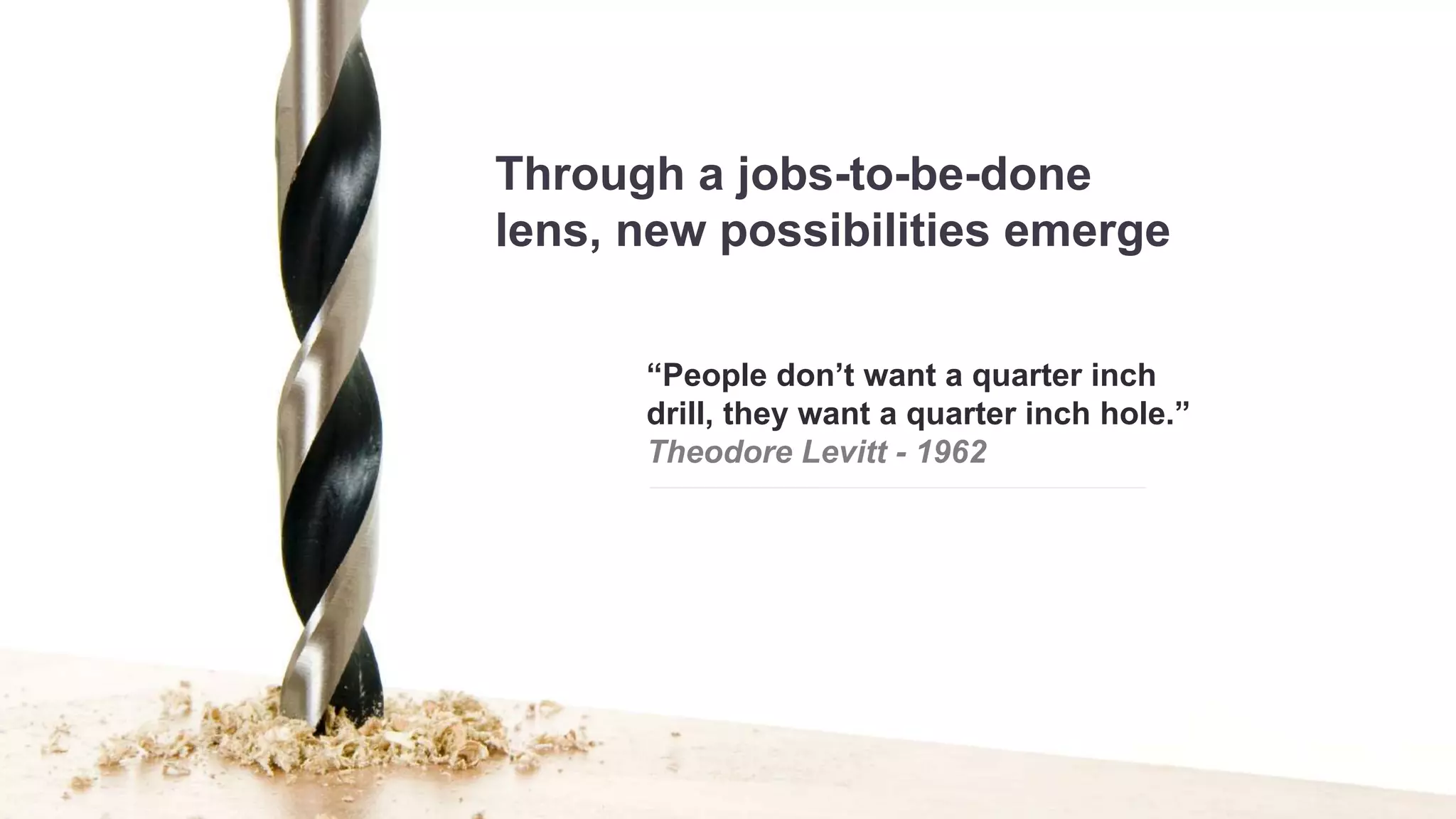
Through a jobs-to-be-done 
lens, new possibilities emerge 
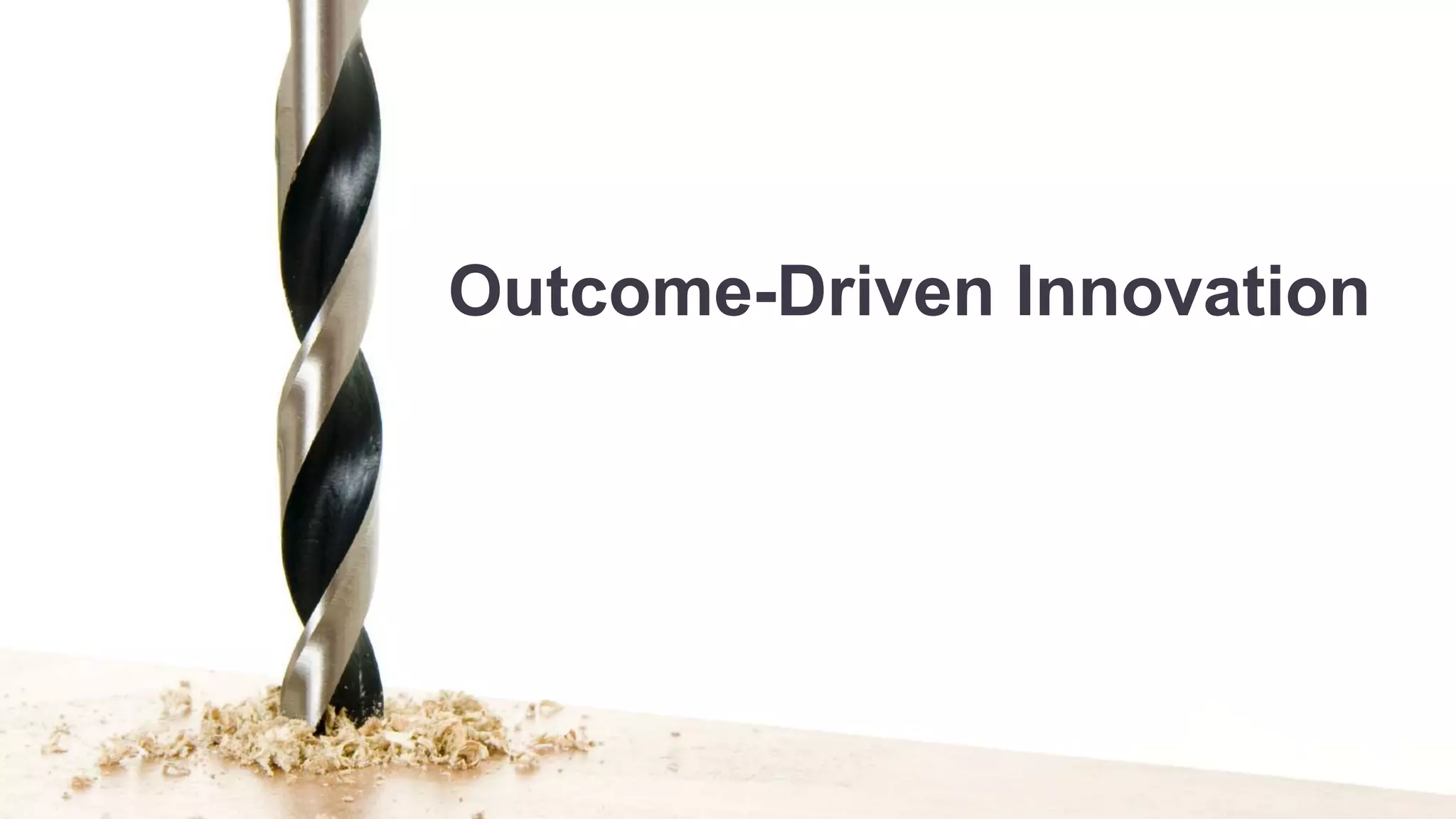
“People don’t want a quarter inch 
drill, they want a quarter inch hole.” 
Theodore Levitt - 1962
Outcome-Driven Innovation
ODI transforms JTBD theory into practice 
Market definition Needs analysis Market strategy
How should a “market” be defined? 
Market definition Needs analysis Market strategy
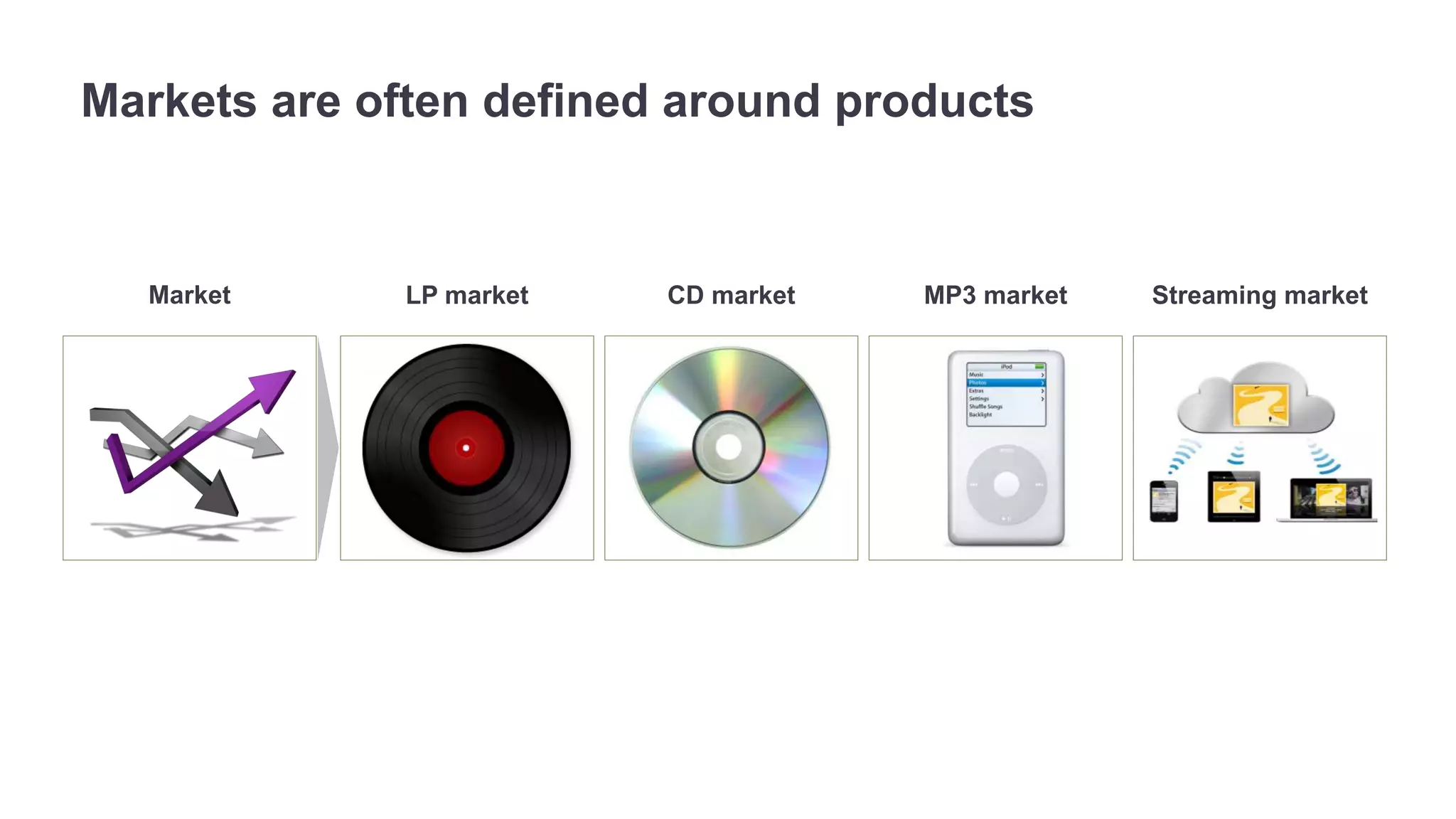
Markets are often defined around products 
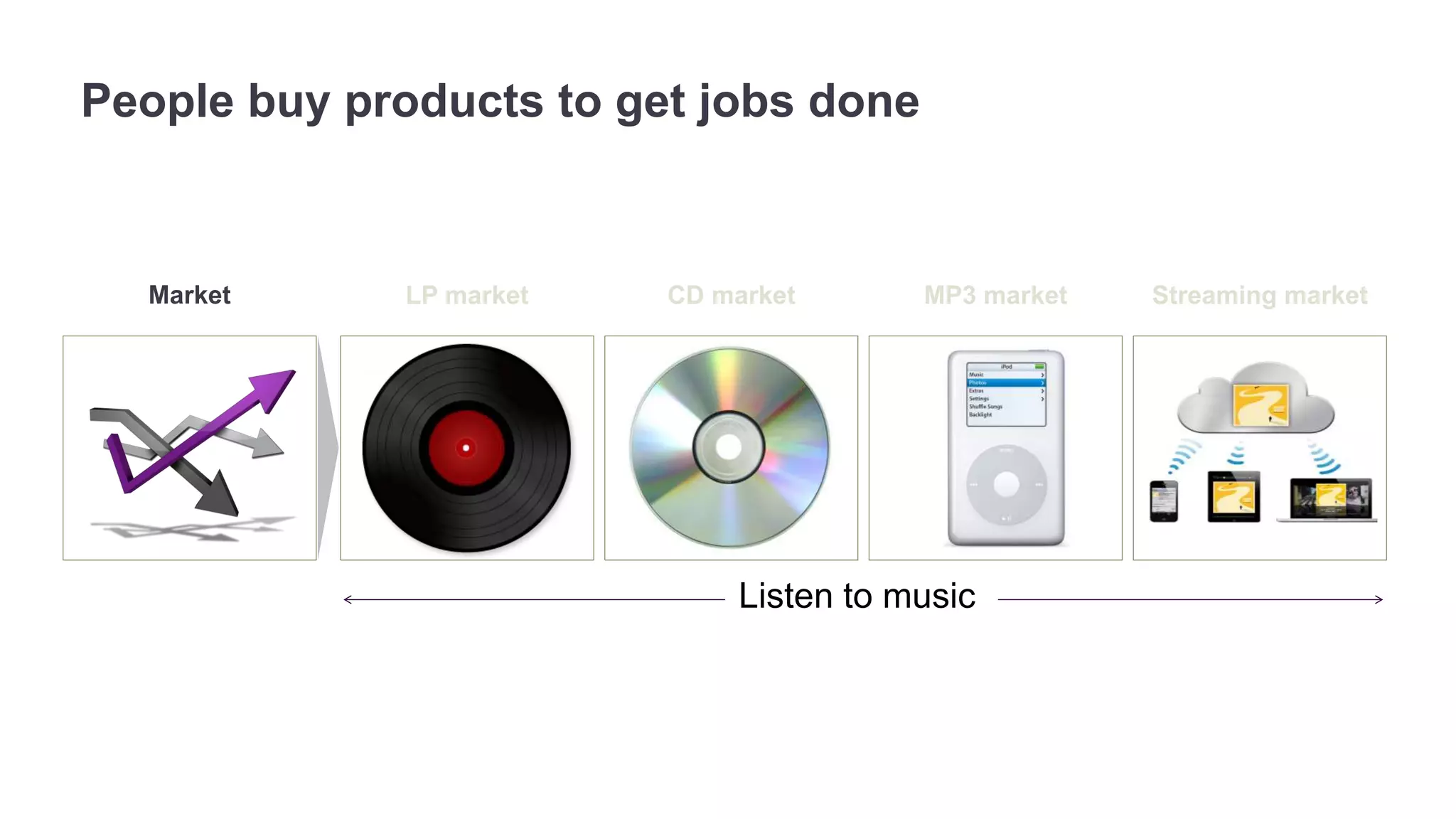
Market LP market CD market MP3 market Streaming market
People buy products to get jobs done 
LP market CD market MP3 market Streaming market 
Listen to music 
Market
Don’t gamble on innovation
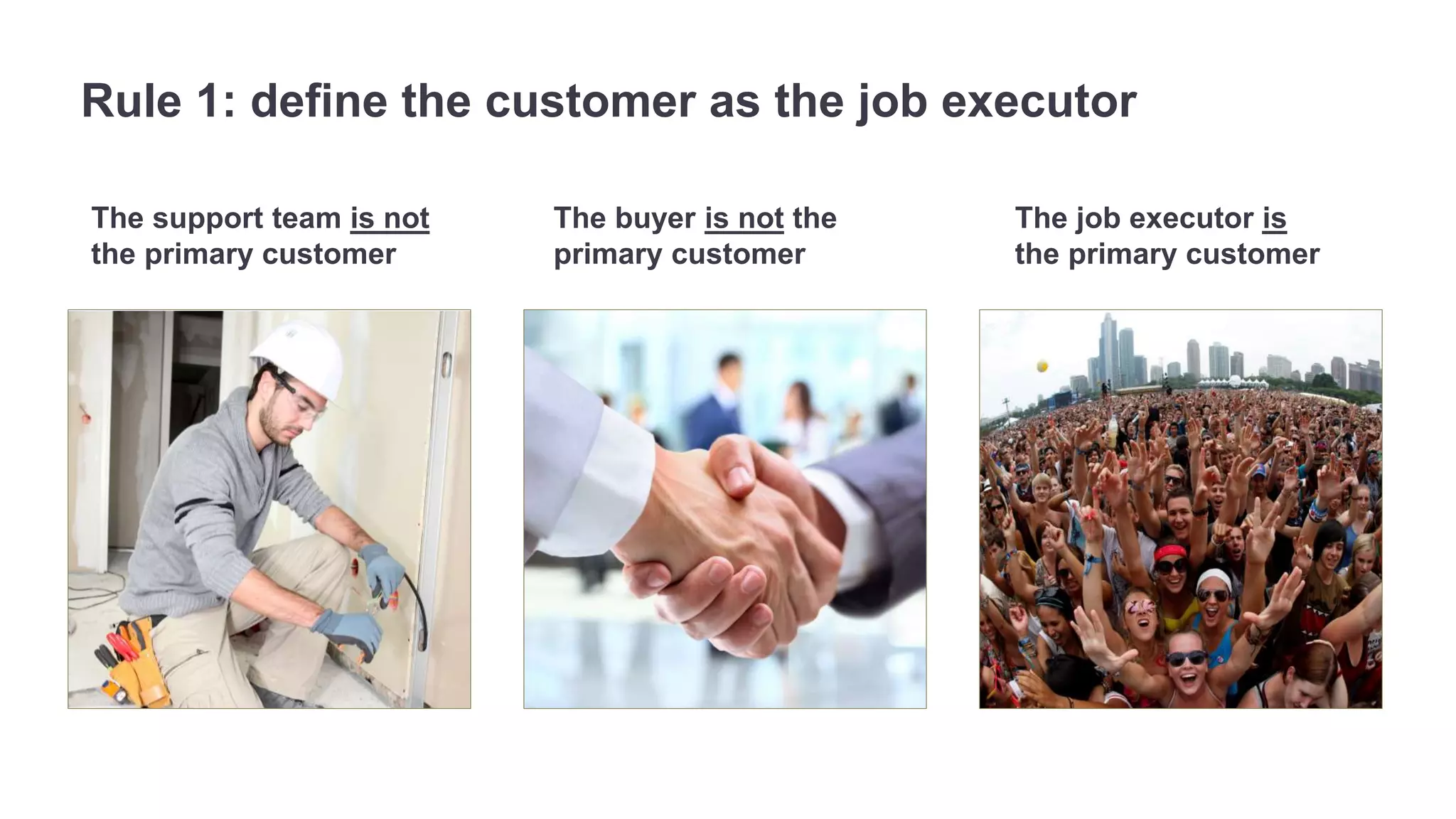
Rule 1: define the customer as the job executor 
The support team is not 
the primary customer 
The job executor is 
the primary customer 
The buyer is not the 
primary customer
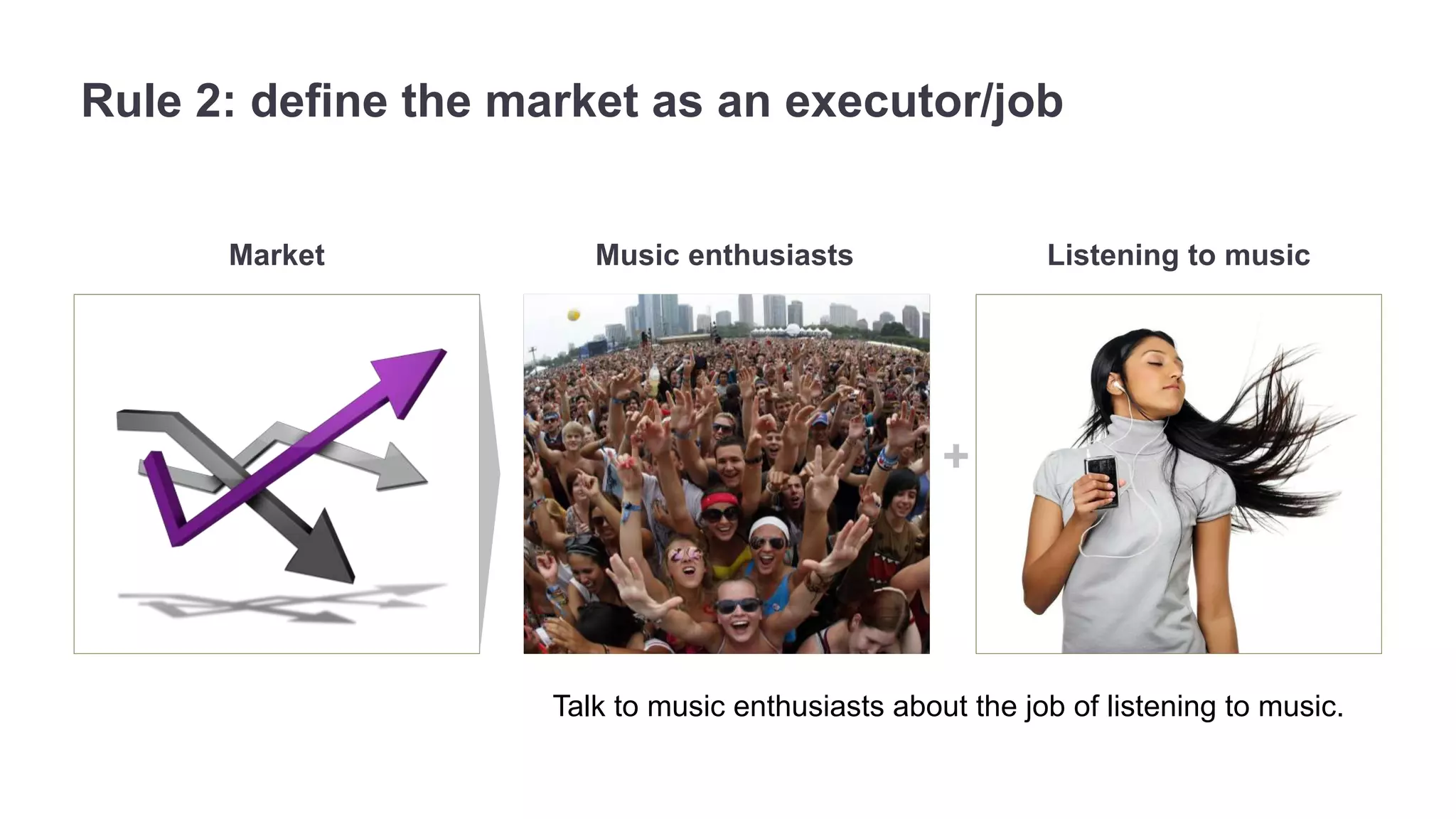
Rule 2: define the market as an executor/job 
Market Music enthusiasts Listening to music 
+ 
Talk to music enthusiasts about the job of listening to music.
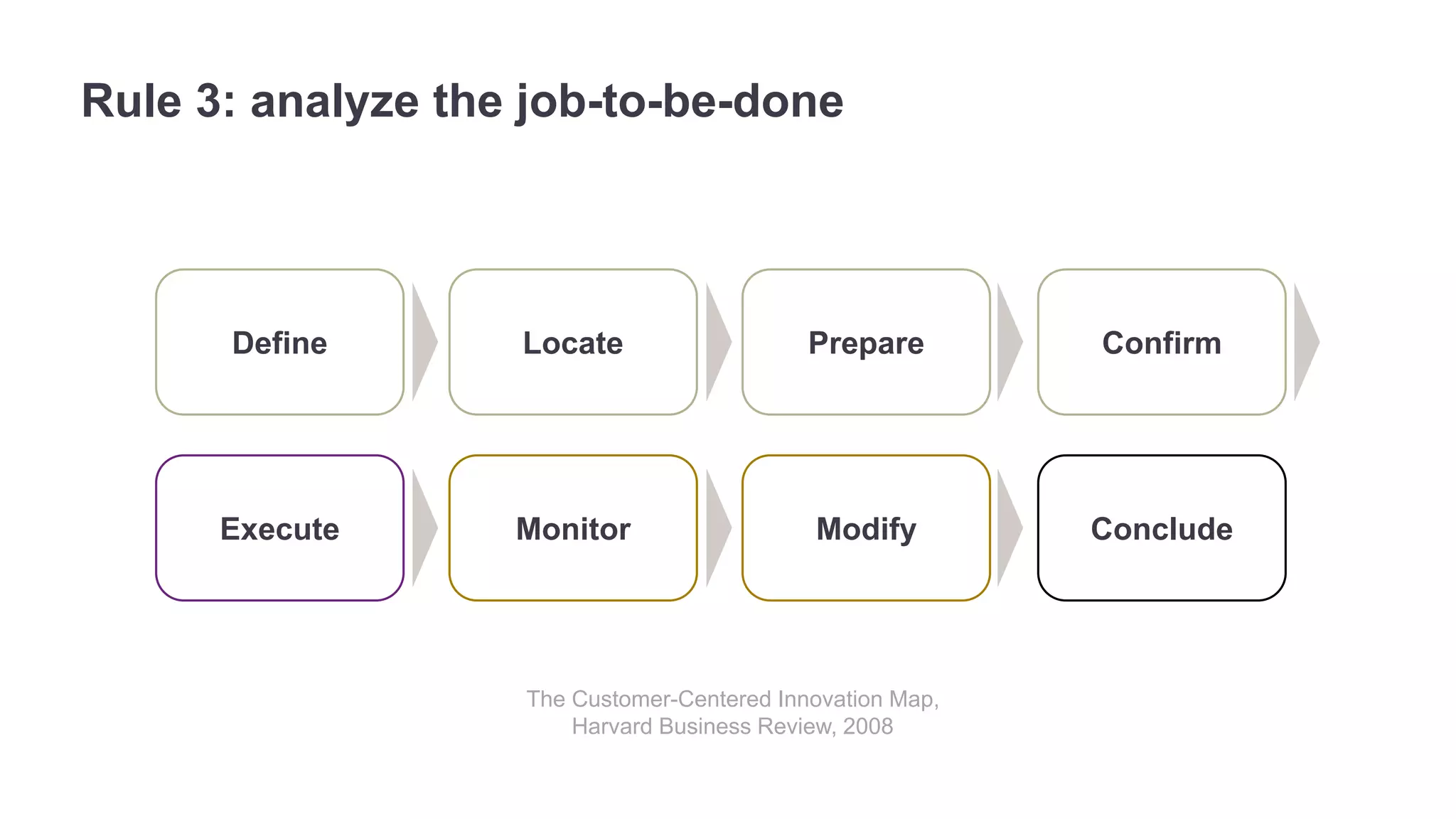
Rule 3: analyze the job-to-be-done 
Confirm 
Define Locate Prepare 
Execute Monitor 
Modify Conclude 
The Customer-Centered Innovation Map, 
Harvard Business Review, 2008
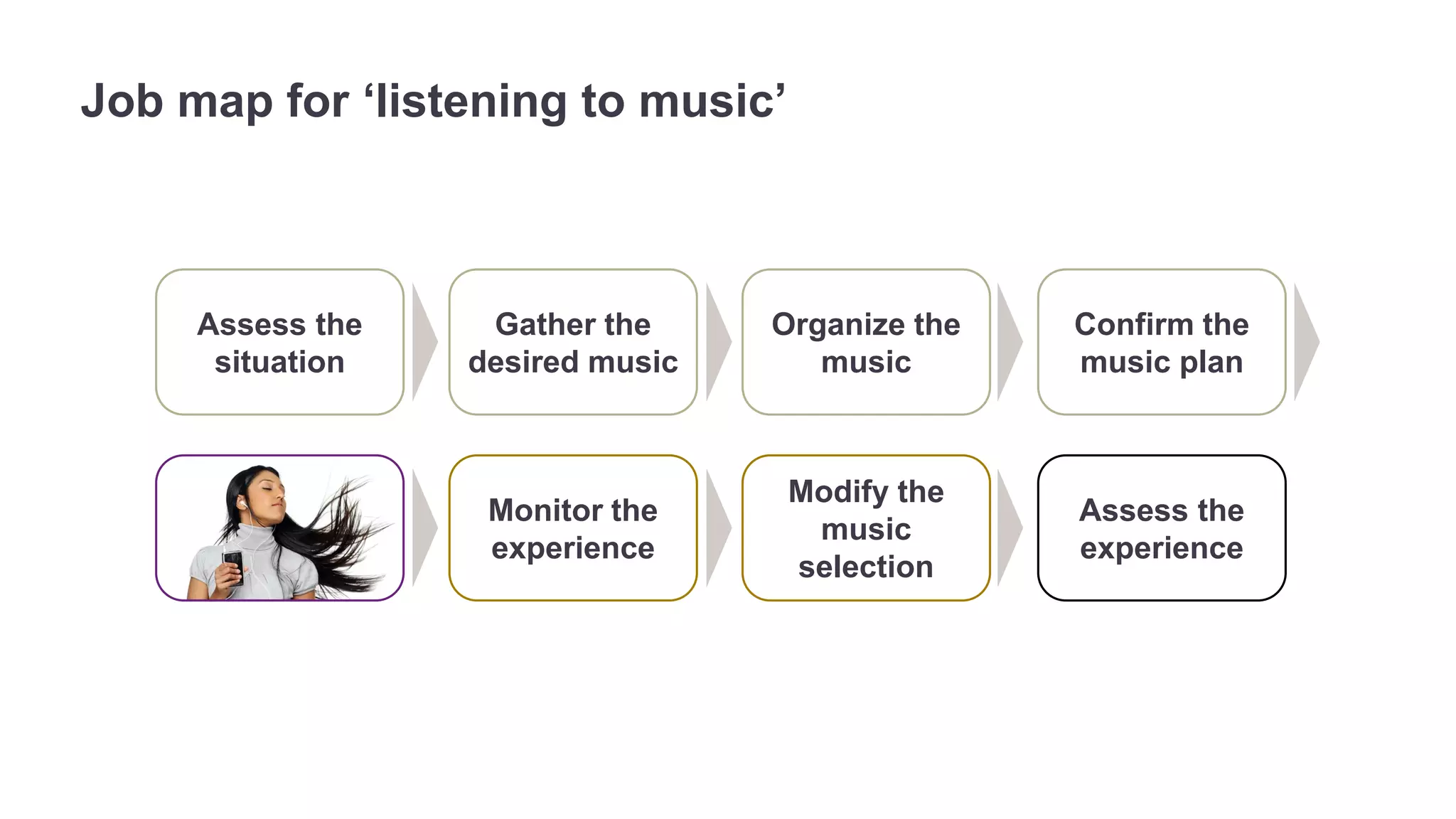
Job map for ‘listening to music’ 
Confirm the 
music plan 
Monitor the 
experience 
Assess the 
situation 
Gather the 
desired music 
Organize the 
music 
Modify the 
music 
selection 
Assess the 
experience
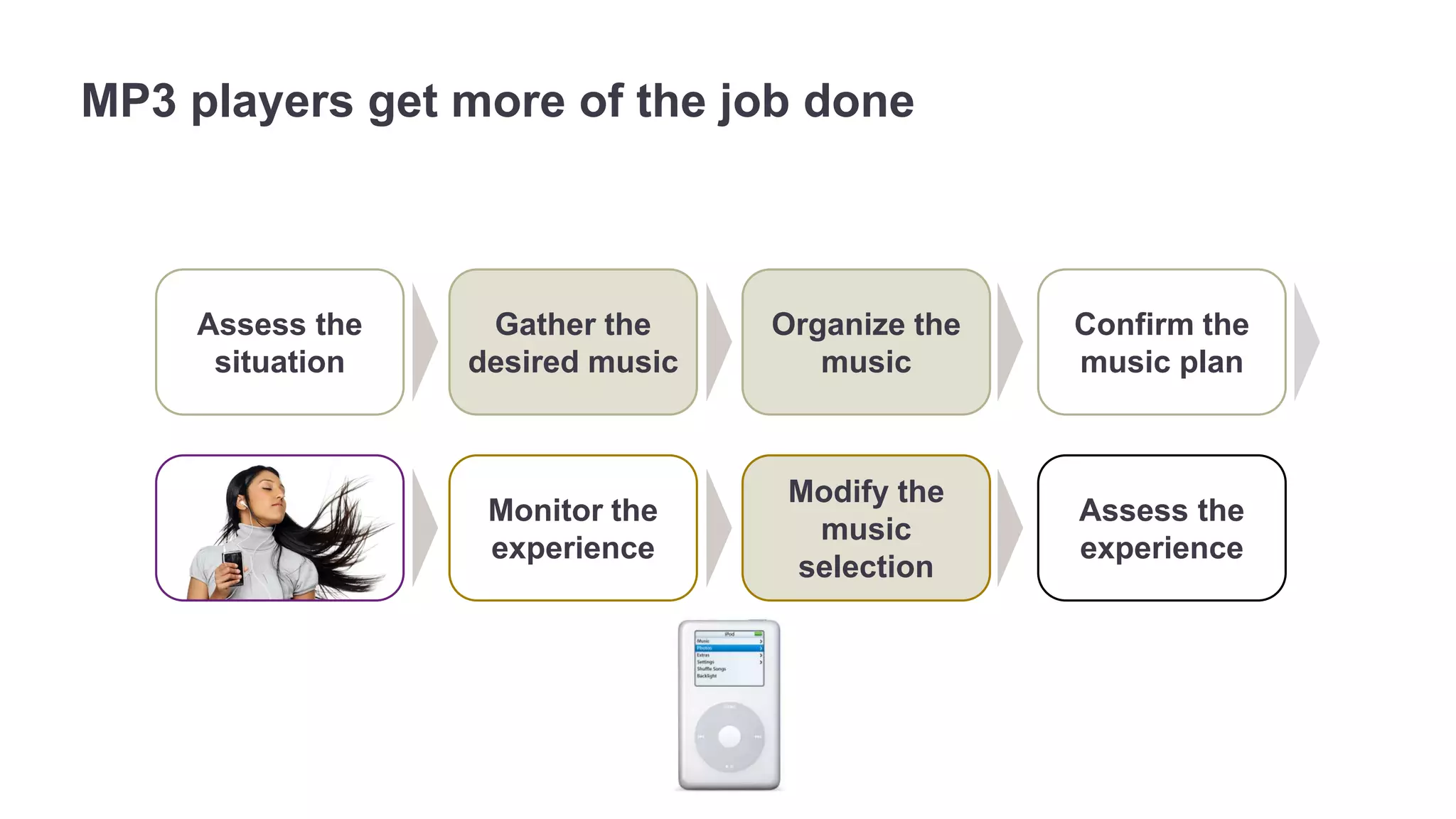
MP3 players get more of the job done 
Confirm the 
music plan 
Monitor the 
experience 
Assess the 
situation 
Gather the 
desired music 
Organize the 
music 
Modify the 
music 
selection 
Assess the 
experience
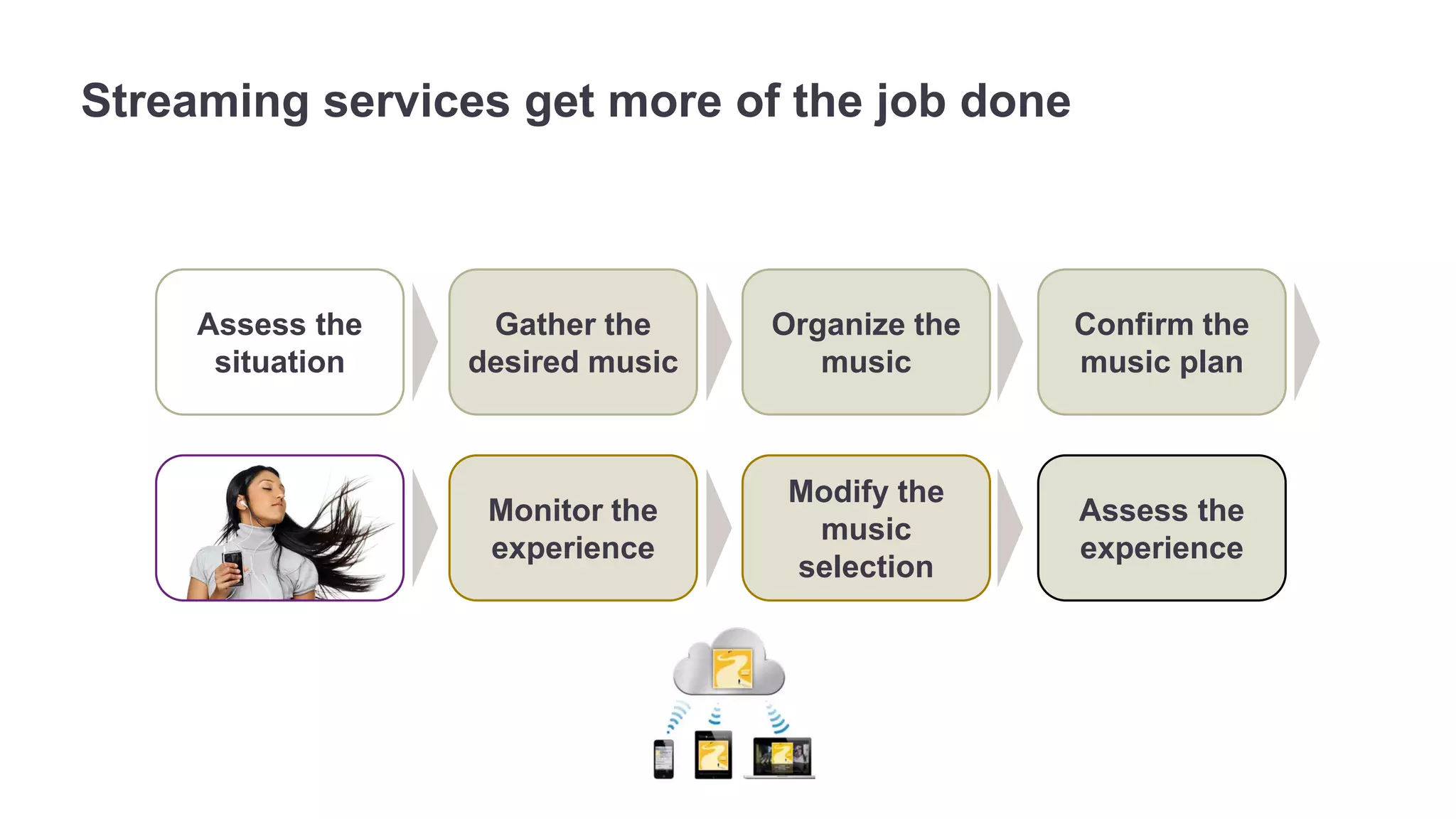
Streaming services get more of the job done 
Confirm the 
music plan 
Monitor the 
experience 
Assess the 
situation 
Gather the 
desired music 
Organize the 
music 
Modify the 
music 
selection 
Assess the 
experience
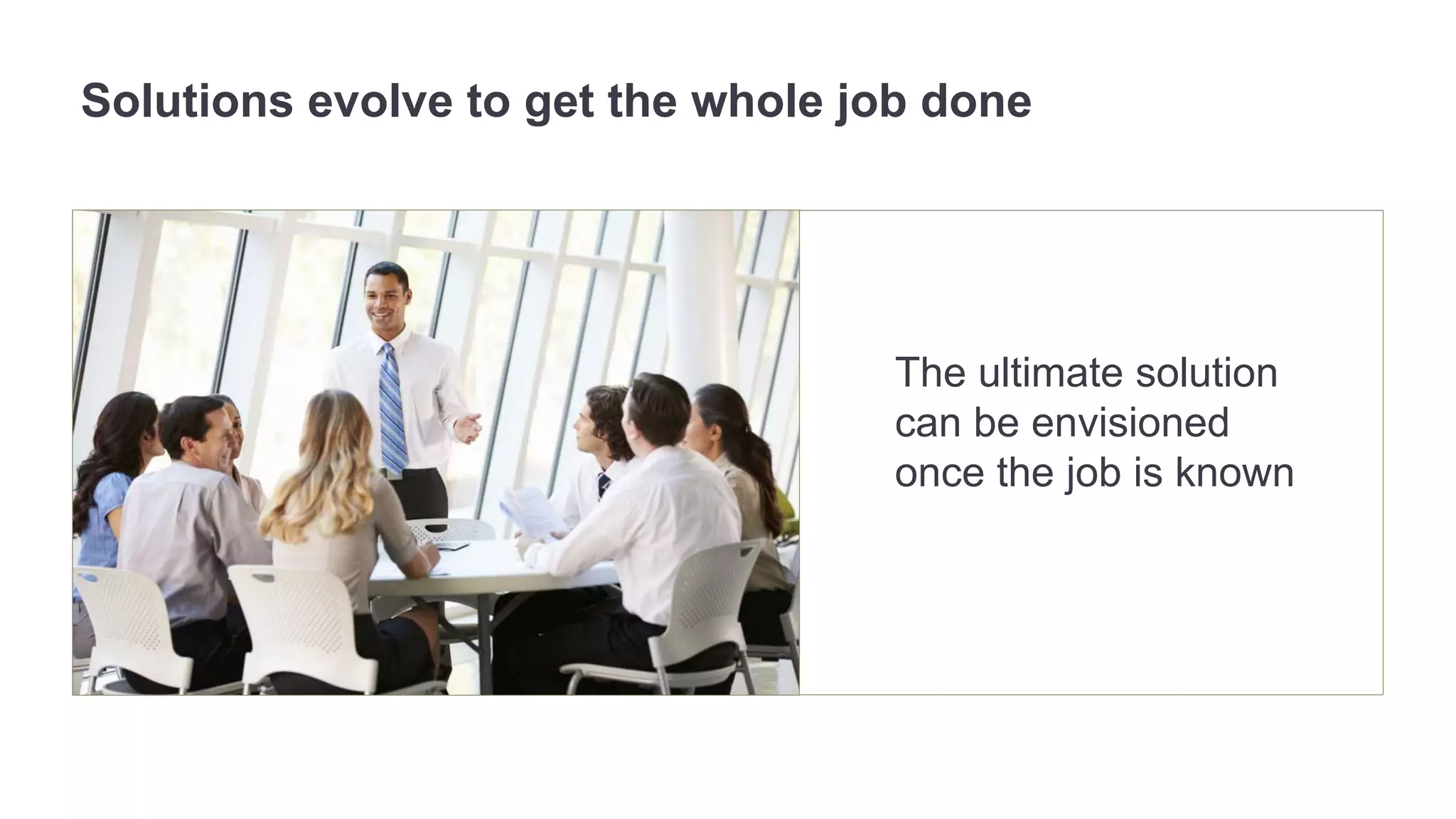
Solutions evolve to get the whole job done 
The ultimate solution 
can be envisioned 
once the job is known
How should a customer “need” be defined? 
Market definition Needs analysis Market strategy
Rule 4: define customer needs as desired outcomes 
Giving Customers a Fair Hearing, 
MIT Sloan Management Review 2008 
Needs 
Direction Metric Object of Control 
Minimize the time it takes to get the songs in 
the desired order
Outcomes are perfectly defined need statements 
Desired outcomes 
are the glue that 
holds the innovation 
process together
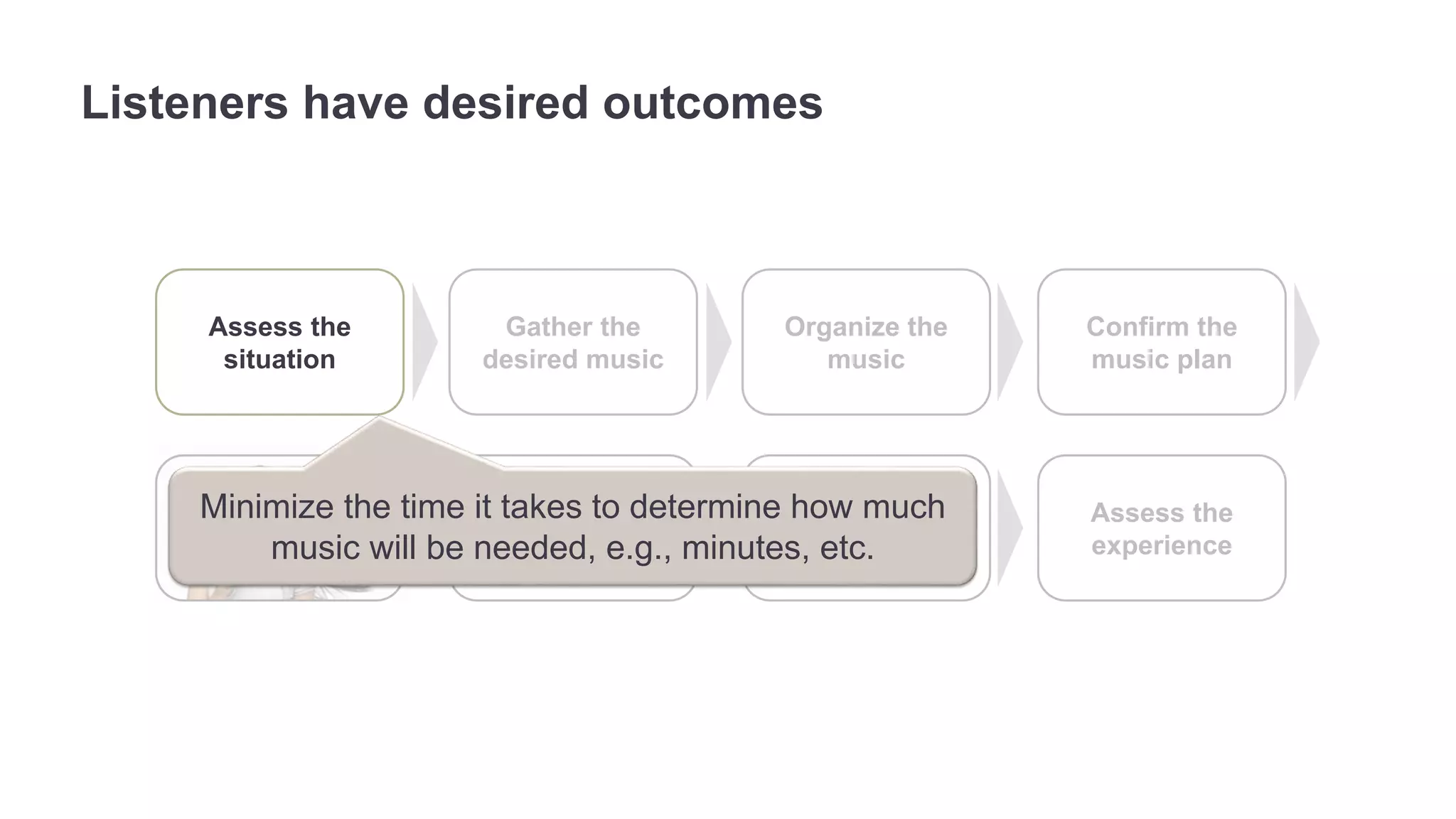
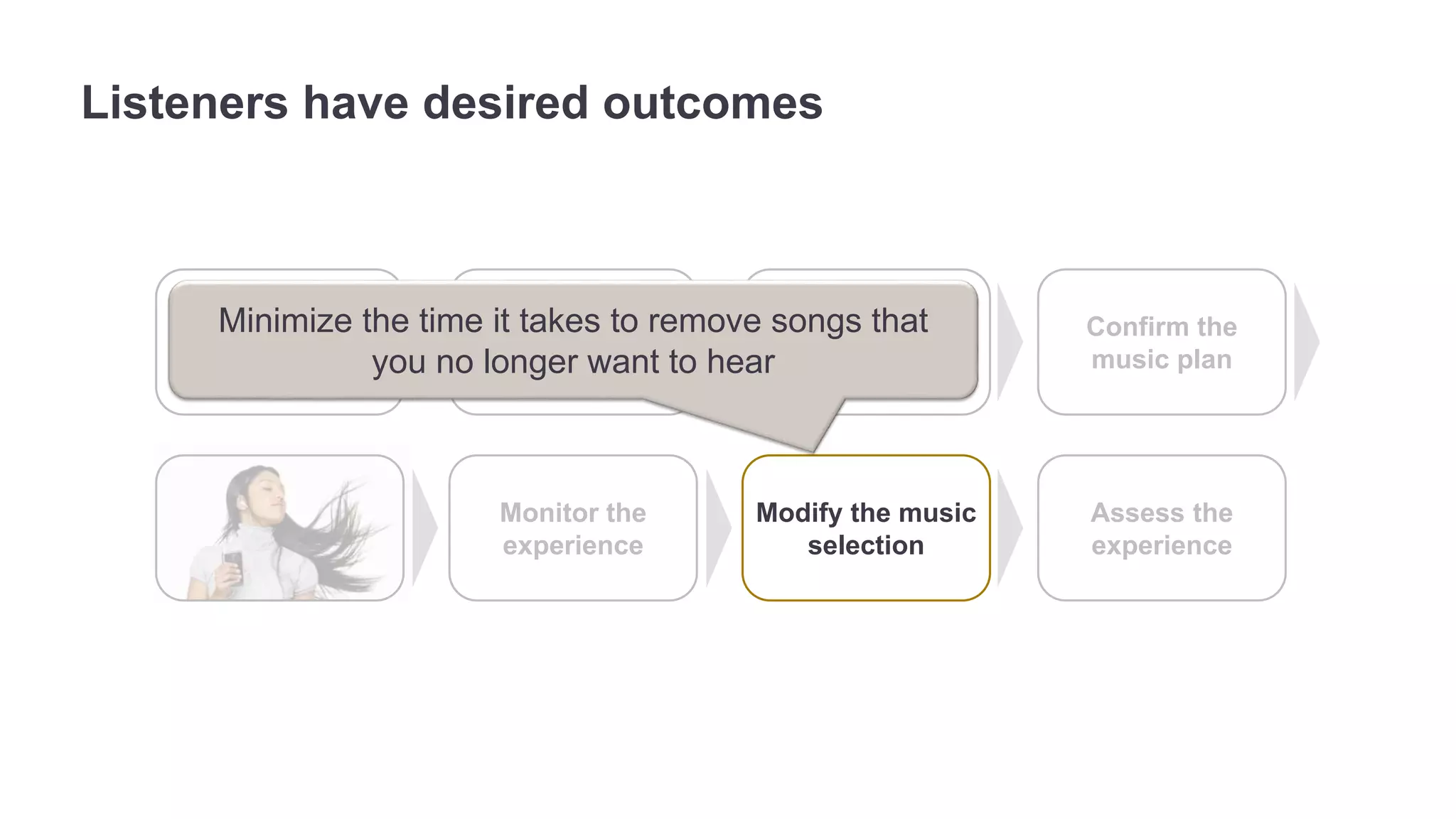
Listeners have desired outcomes 
Confirm the 
music plan 
Monitor the 
experience 
Assess the 
situation 
Gather the 
desired music 
Organize the 
music 
Modify the music 
selection 
Assess the 
experience 
Minimize the time it takes to determine how much 
music will be needed, e.g., minutes, etc.
Confirm the 
music plan 
Monitor the 
experience 
Assess the 
situation 
Gather the 
desired music 
Organize the 
music 
Modify the music 
selection 
Assess the 
experience 
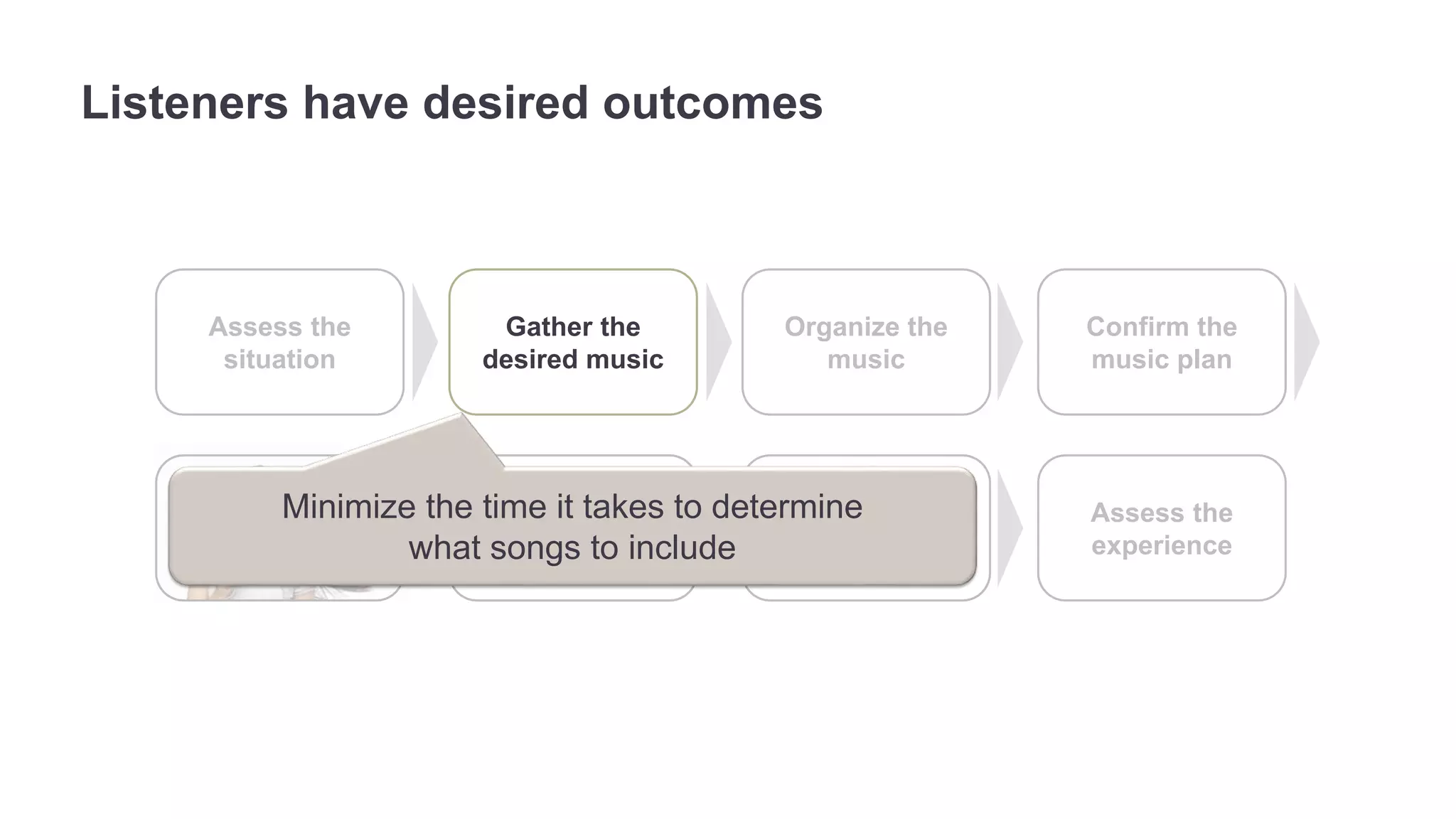
Listeners have desired outcomes 
Minimize the time it takes to determine 
what songs to include
Confirm the 
music plan 
Monitor the 
experience 
Assess the 
situation 
Gather the 
desired music 
Organize the 
music 
Modify the music 
selection 
Assess the 
experience 
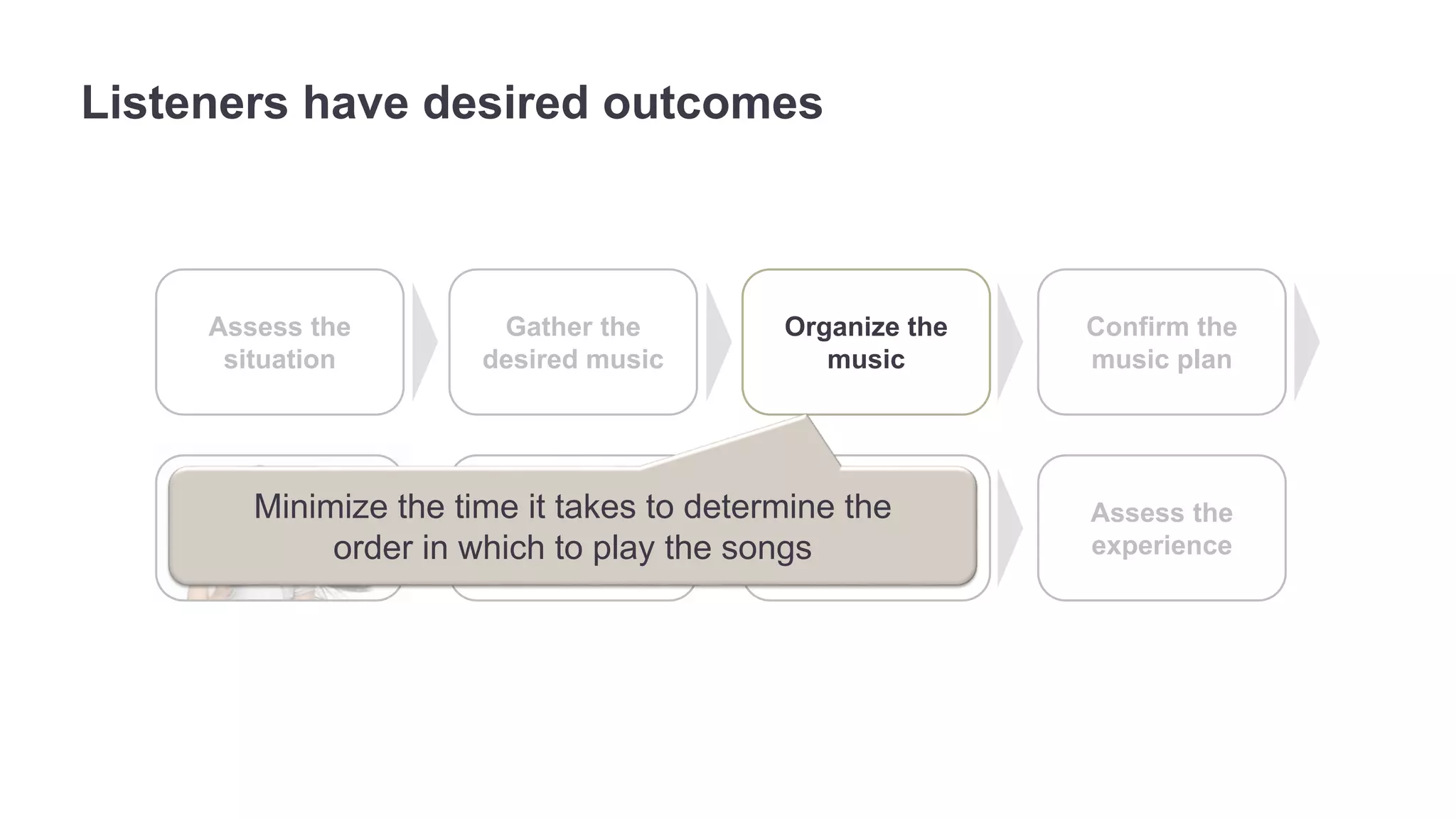
Listeners have desired outcomes 
Minimize the time it takes to determine the 
order in which to play the songs
Confirm the 
music plan 
Monitor the 
experience 
Assess the 
situation 
Gather the 
desired music 
Organize the 
music 
Modify the music 
selection 
Assess the 
experience 
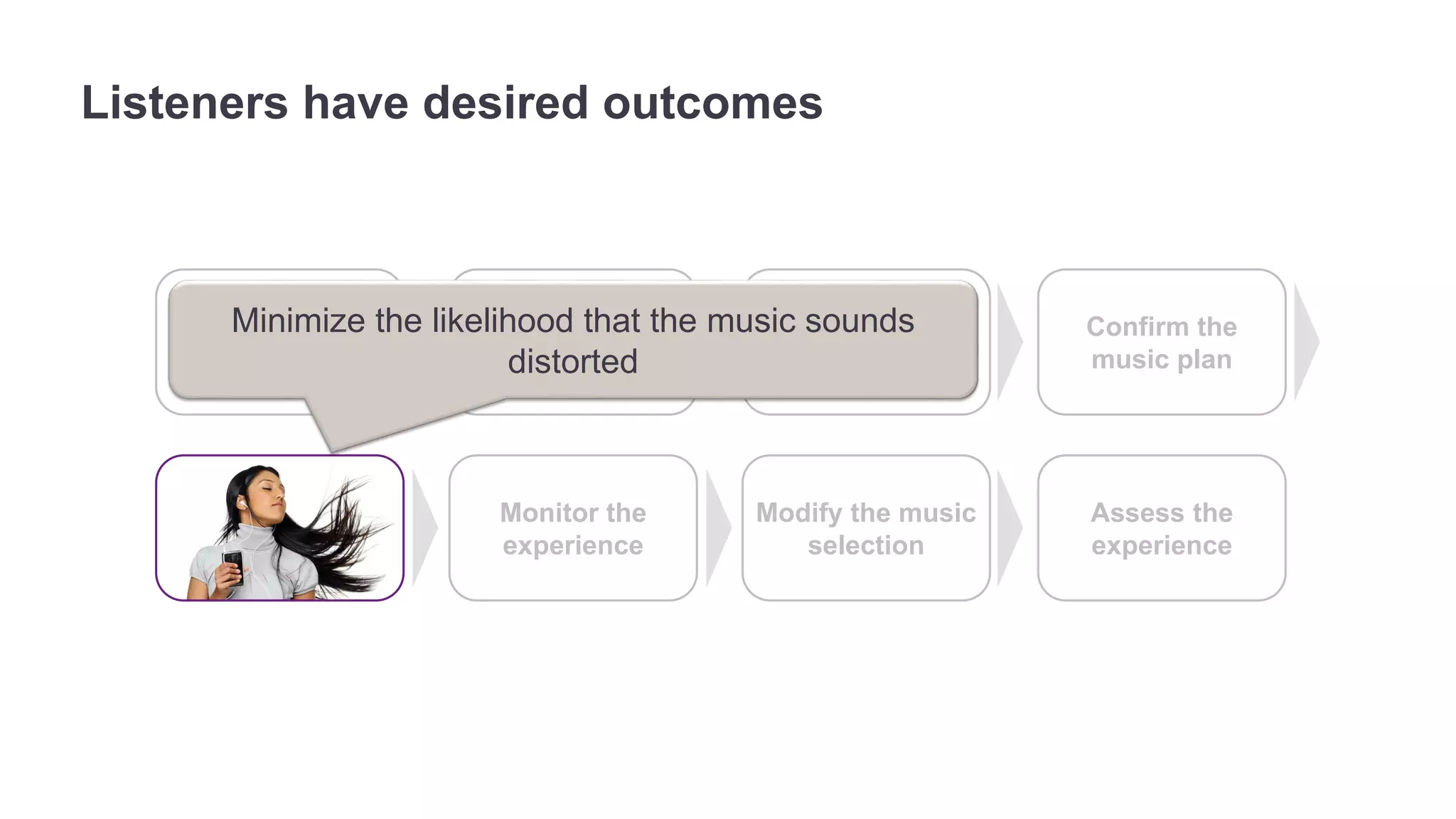
Listeners have desired outcomes 
Minimize the likelihood that the music sounds 
distorted
Confirm the 
music plan 
Monitor the 
experience 
Assess the 
situation 
Gather the 
desired music 
Organize the 
music 
Modify the music 
selection 
Assess the 
experience 
Listeners have desired outcomes 
Minimize the time it takes to remove songs that 
you no longer want to hear
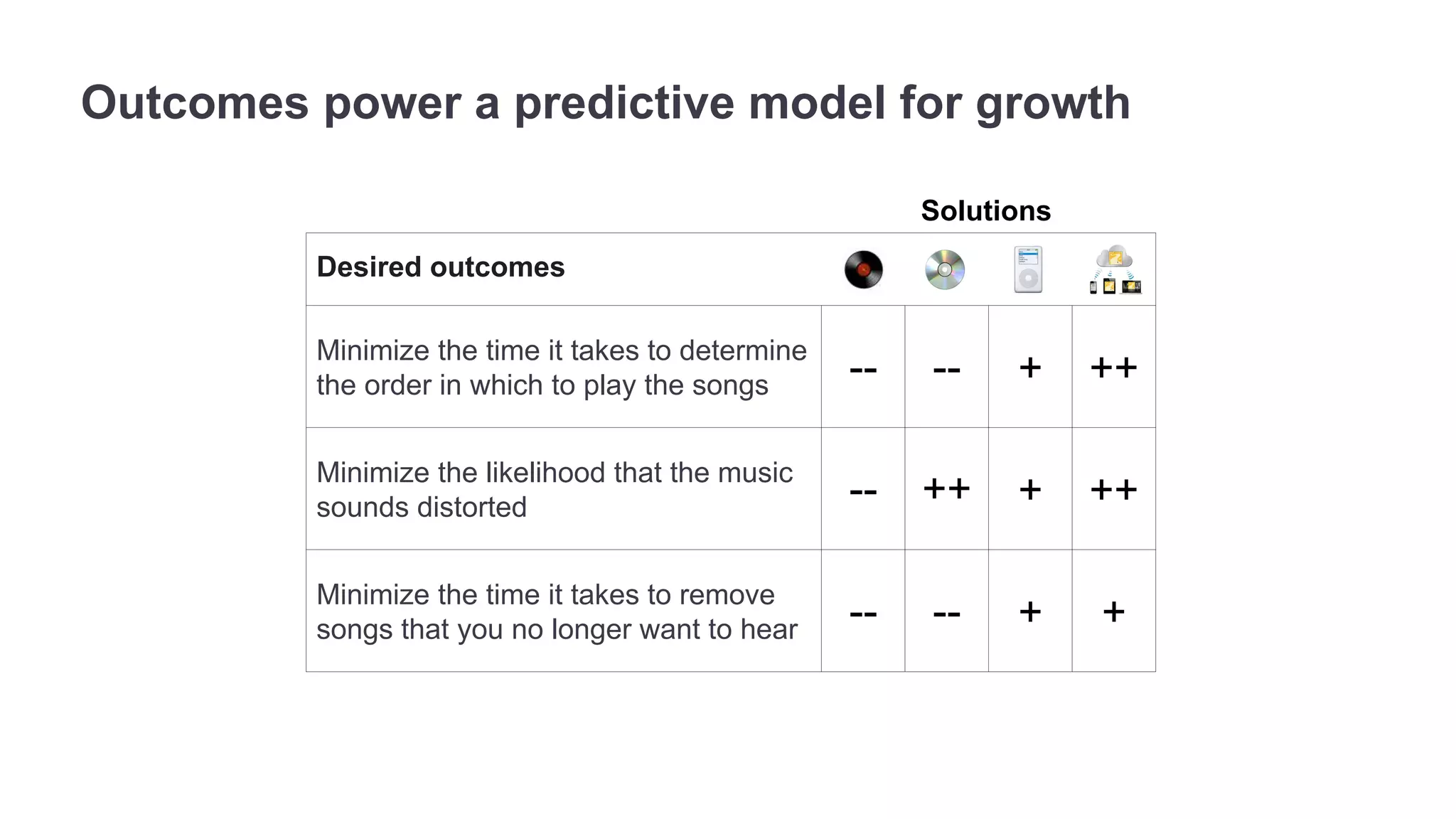
Outcomes power a predictive model for growth 
Desired outcomes 
Solutions 
Minimize the time it takes to determine 
the order in which to play the songs -- -- + ++ 
Minimize the likelihood that the music 
sounds distorted -- ++ + ++ 
Minimize the time it takes to remove 
songs that you no longer want to hear -- -- + +
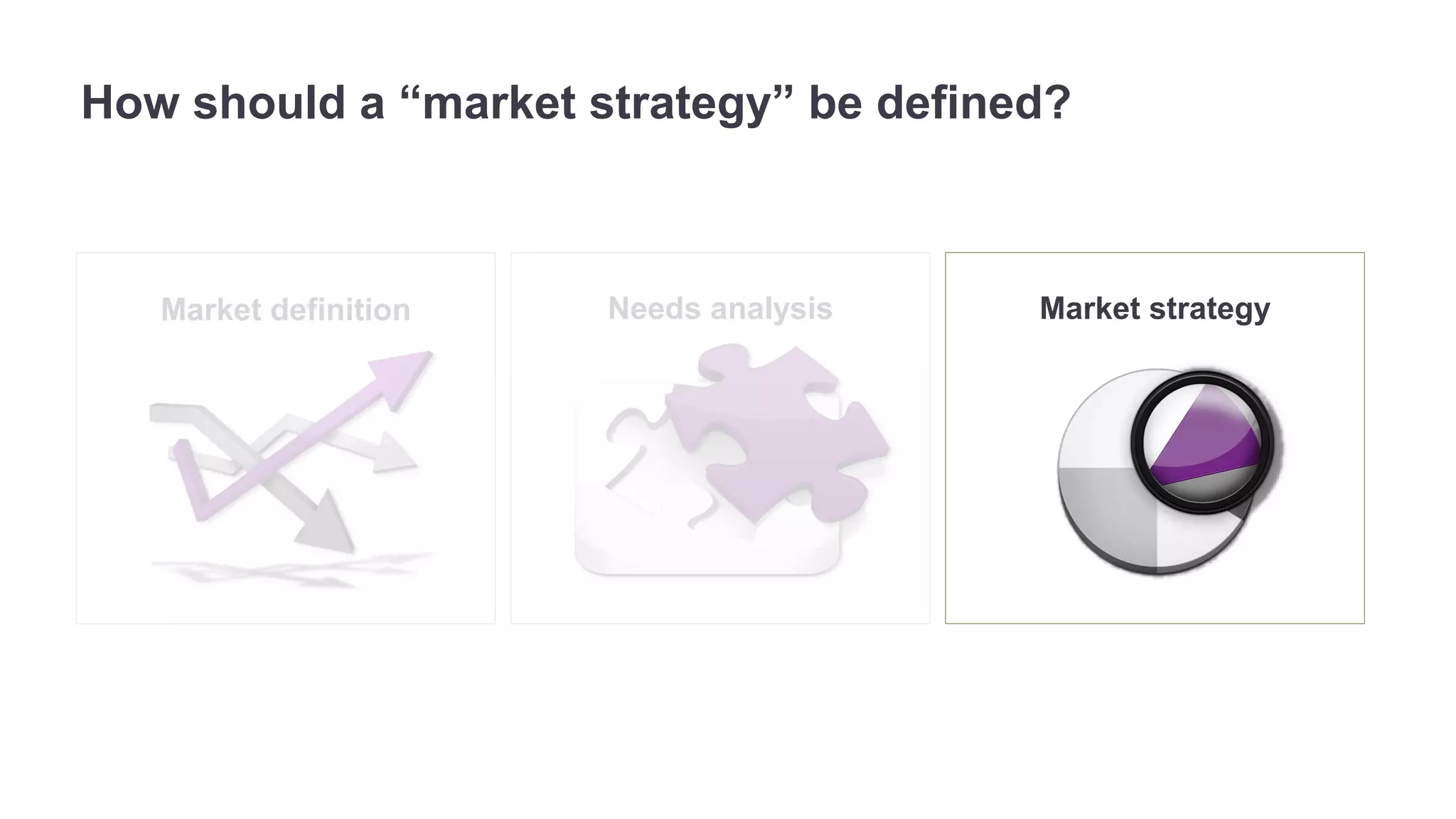
How should a “market strategy” be defined? 
Market definition Needs analysis Market strategy
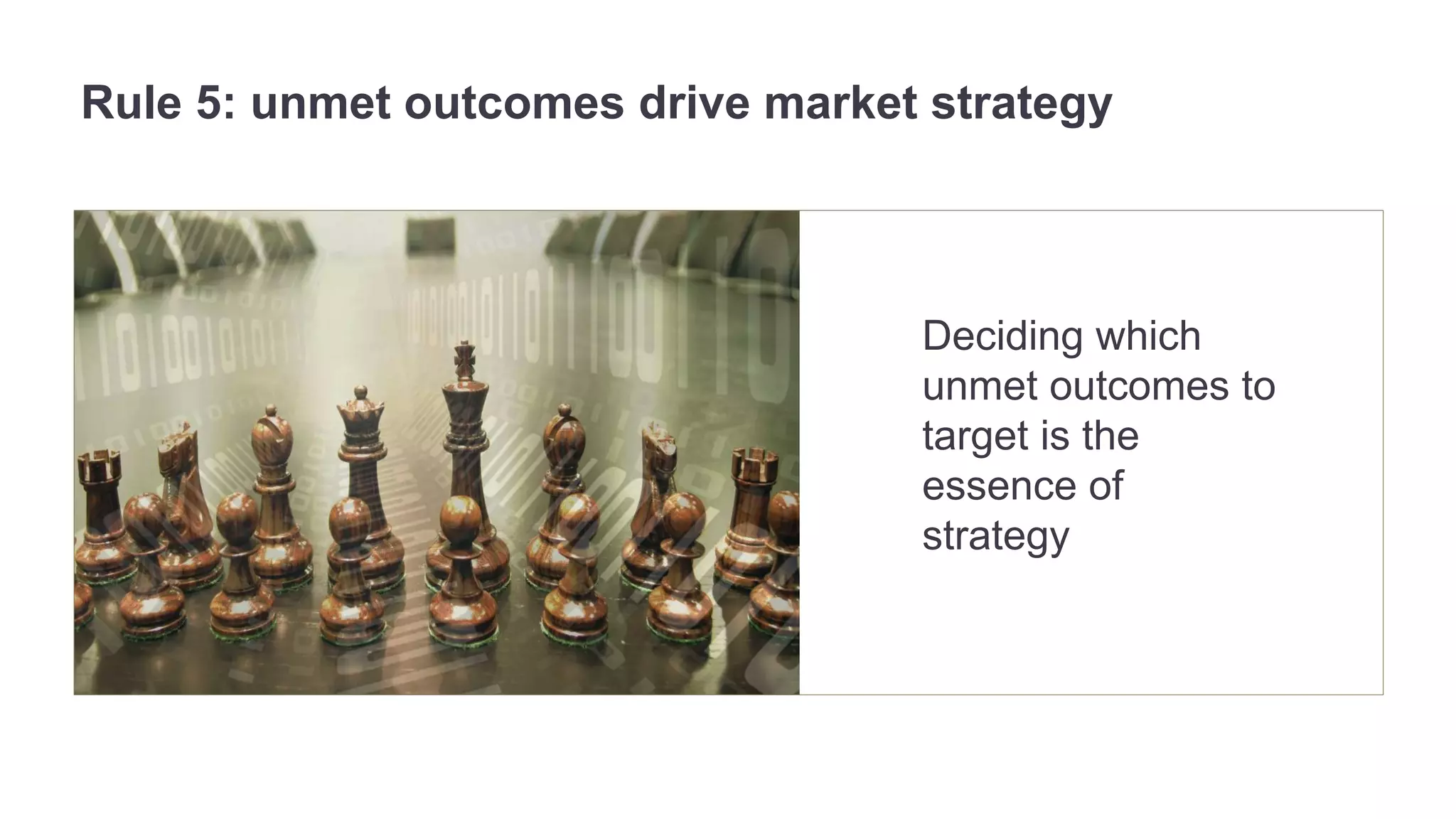
Rule 5: unmet outcomes drive market strategy 
Deciding which 
unmet outcomes to 
target is the 
essence of 
strategy
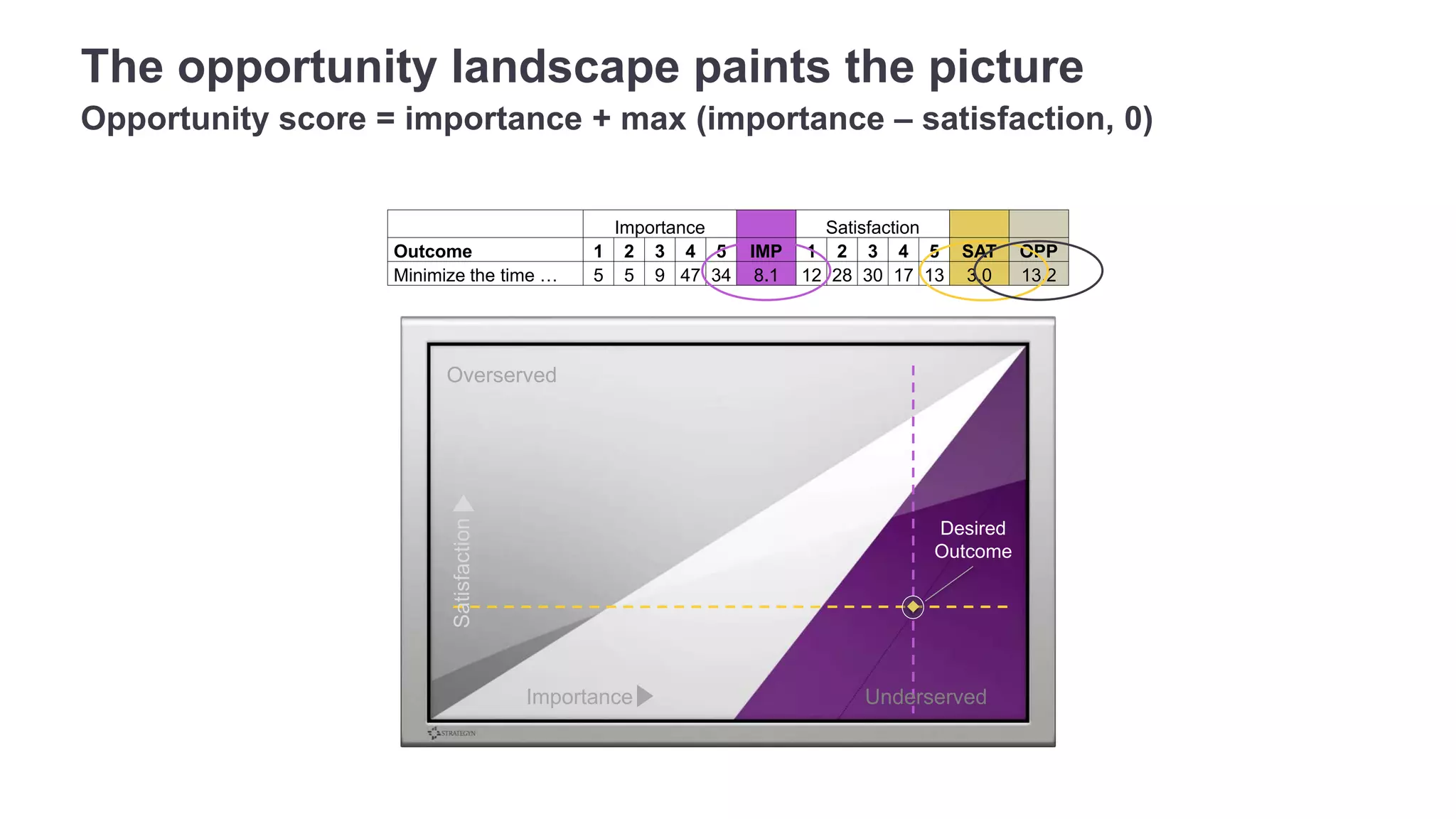
The opportunity landscape paints the picture 
Opportunity score = importance + max (importance – satisfaction, 0) 
Importance Satisfaction 
Outcome 1 2 3 4 5 IMP 1 2 3 4 5 SAT OPP 
Minimize the time … 5 5 9 47 34 8.1 12 28 30 17 13 3.0 13.2 
Desired 
Outcome 
Overserved 
Satisfaction 
Importance 
Underserved
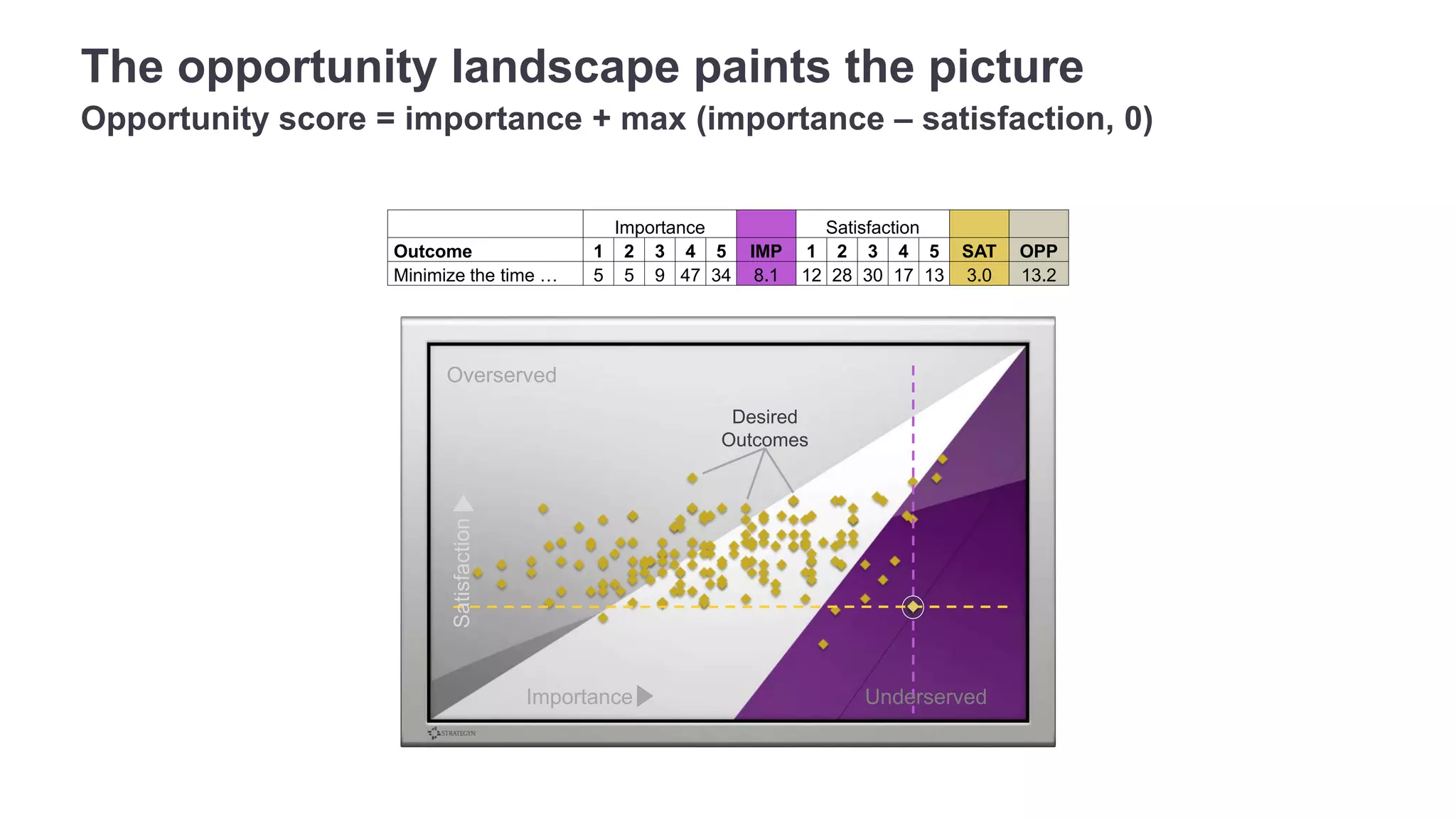
The opportunity landscape paints the picture 
Opportunity score = importance + max (importance – satisfaction, 0) 
Importance Satisfaction 
Outcome 1 2 3 4 5 IMP 1 2 3 4 5 SAT OPP 
Minimize the time … 5 5 9 47 34 8.1 12 28 30 17 13 3.0 13.2 
Desired 
Outcomes 
Overserved 
Satisfaction 
Importance 
Underserved
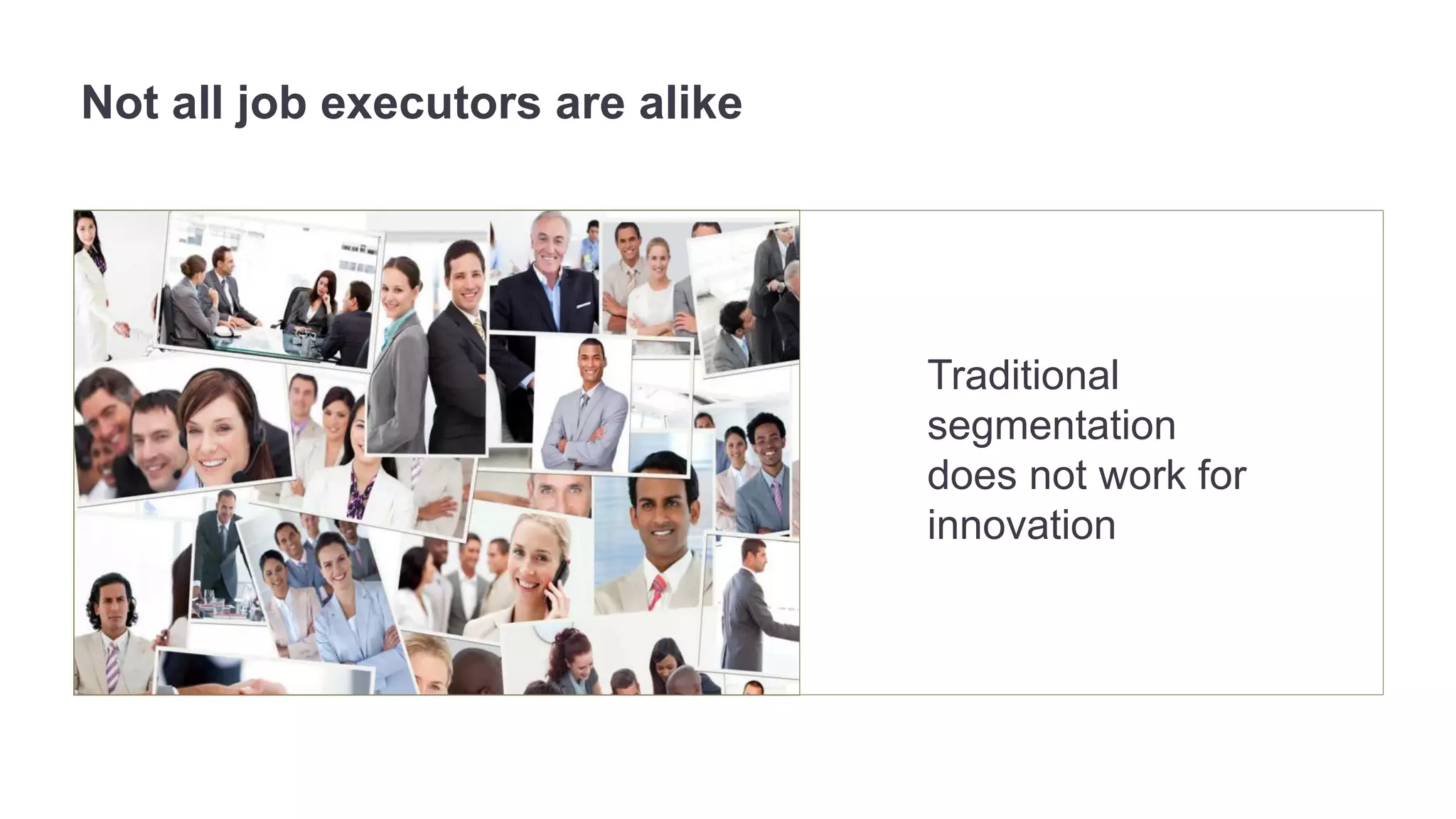
Traditional 
segmentation 
does not work for 
innovation 
Not all job executors are alike
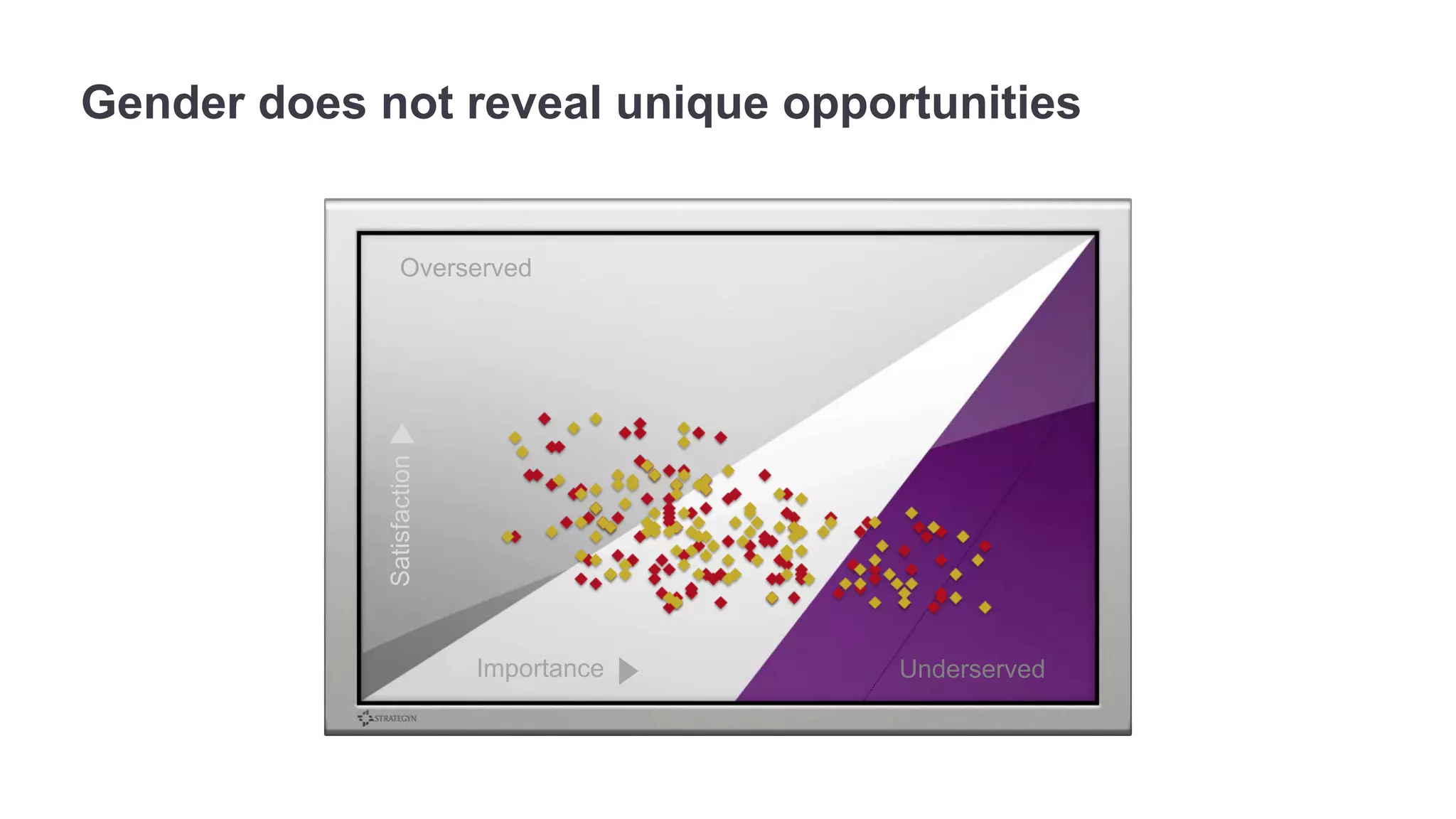
Gender does not reveal unique opportunities 
Overserved 
Satisfaction 
Importance 
Underserved
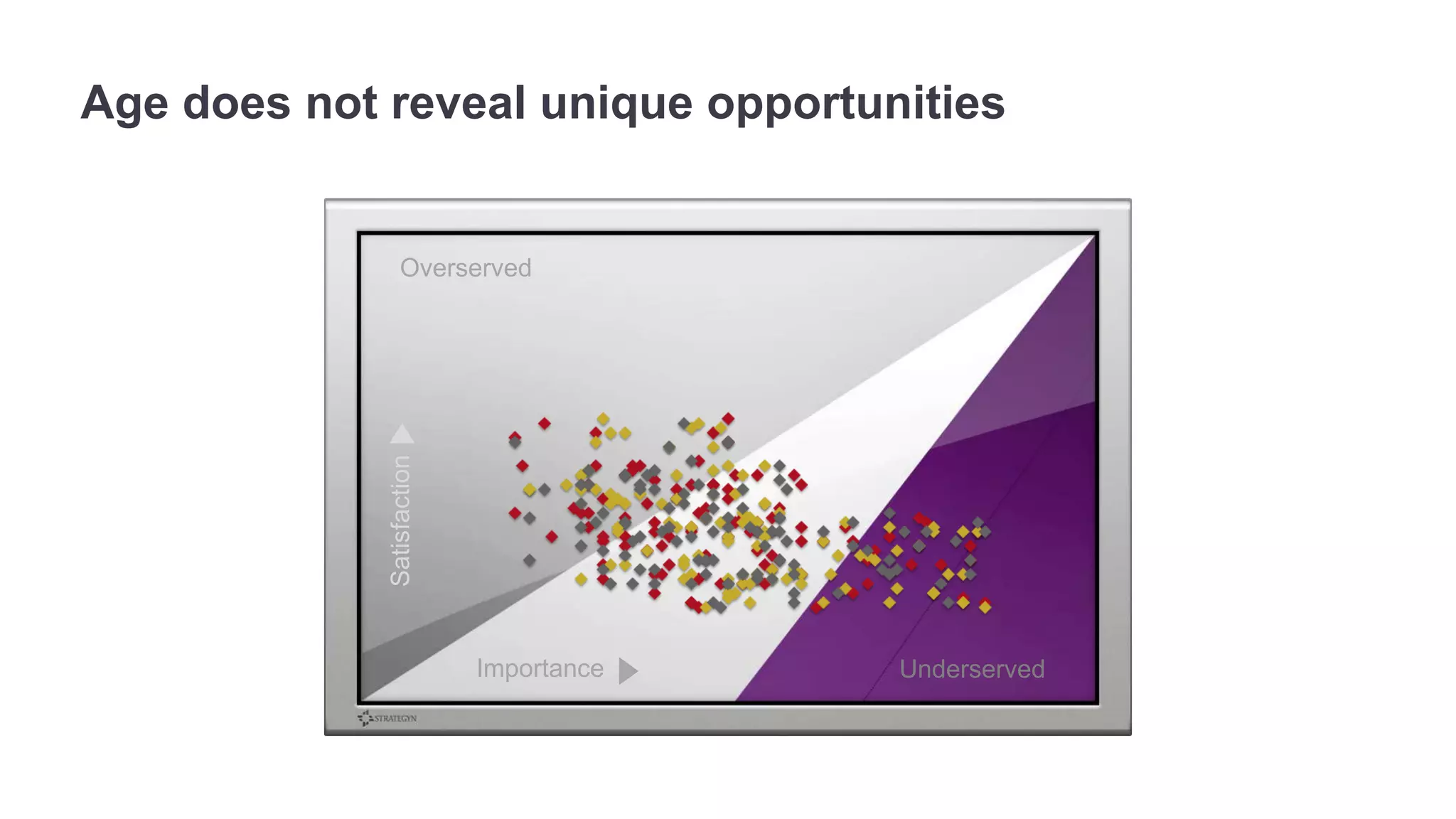
Age does not reveal unique opportunities 
Overserved 
Satisfaction 
Importance 
Underserved
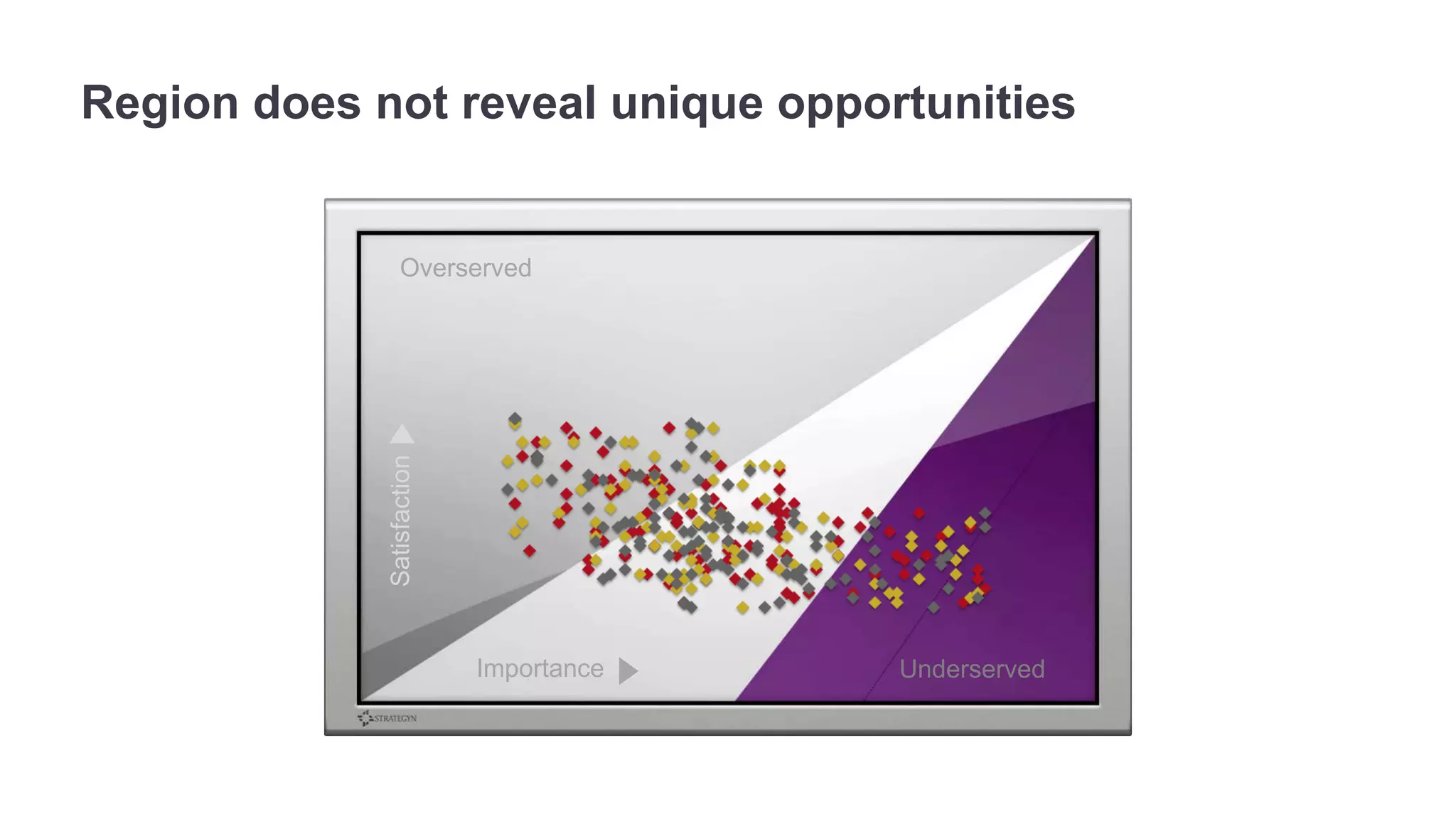
Region does not reveal unique opportunities 
Overserved 
Satisfaction 
Importance 
Underserved
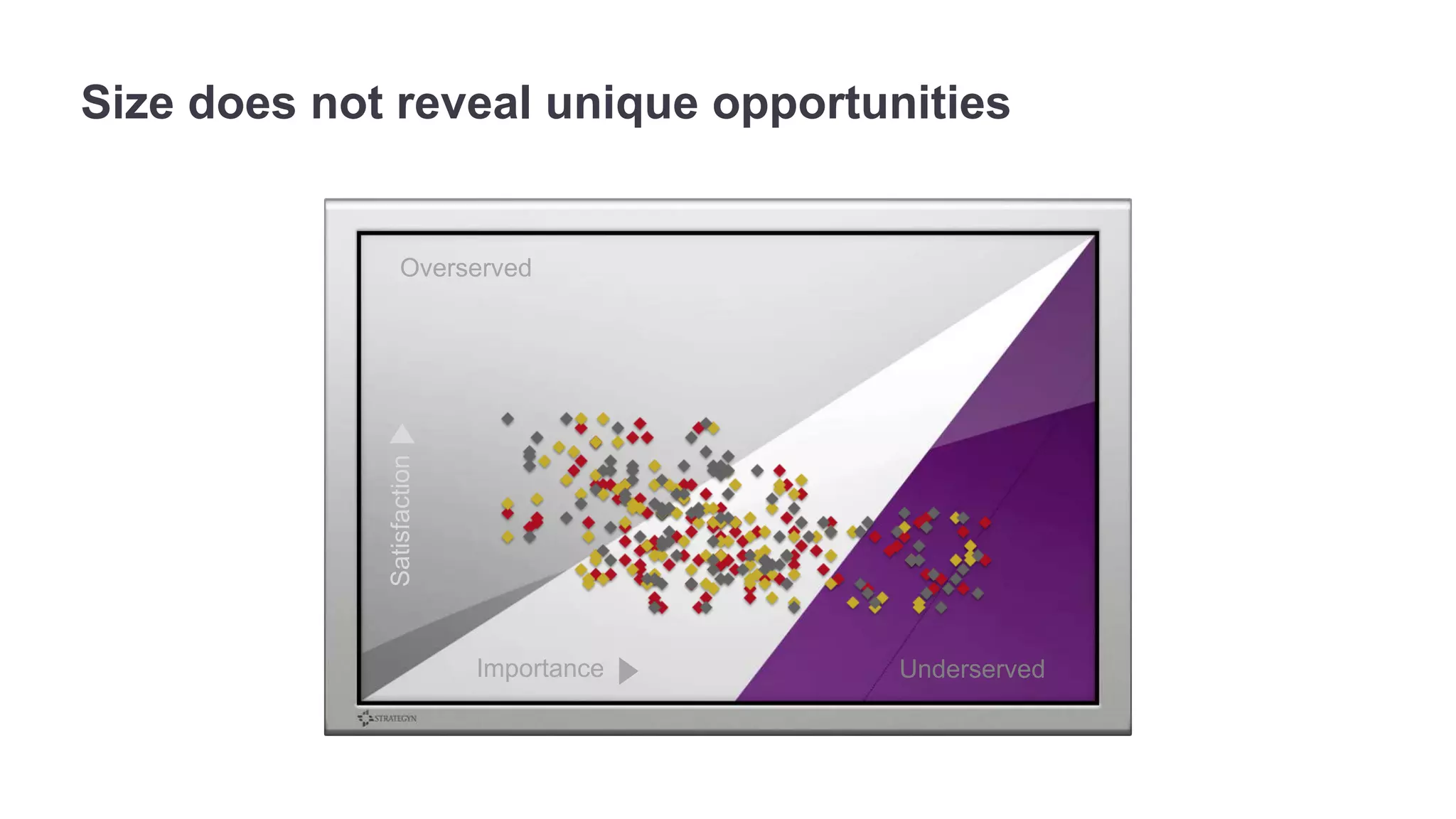
Size does not reveal unique opportunities 
Overserved 
Satisfaction 
Importance 
Underserved
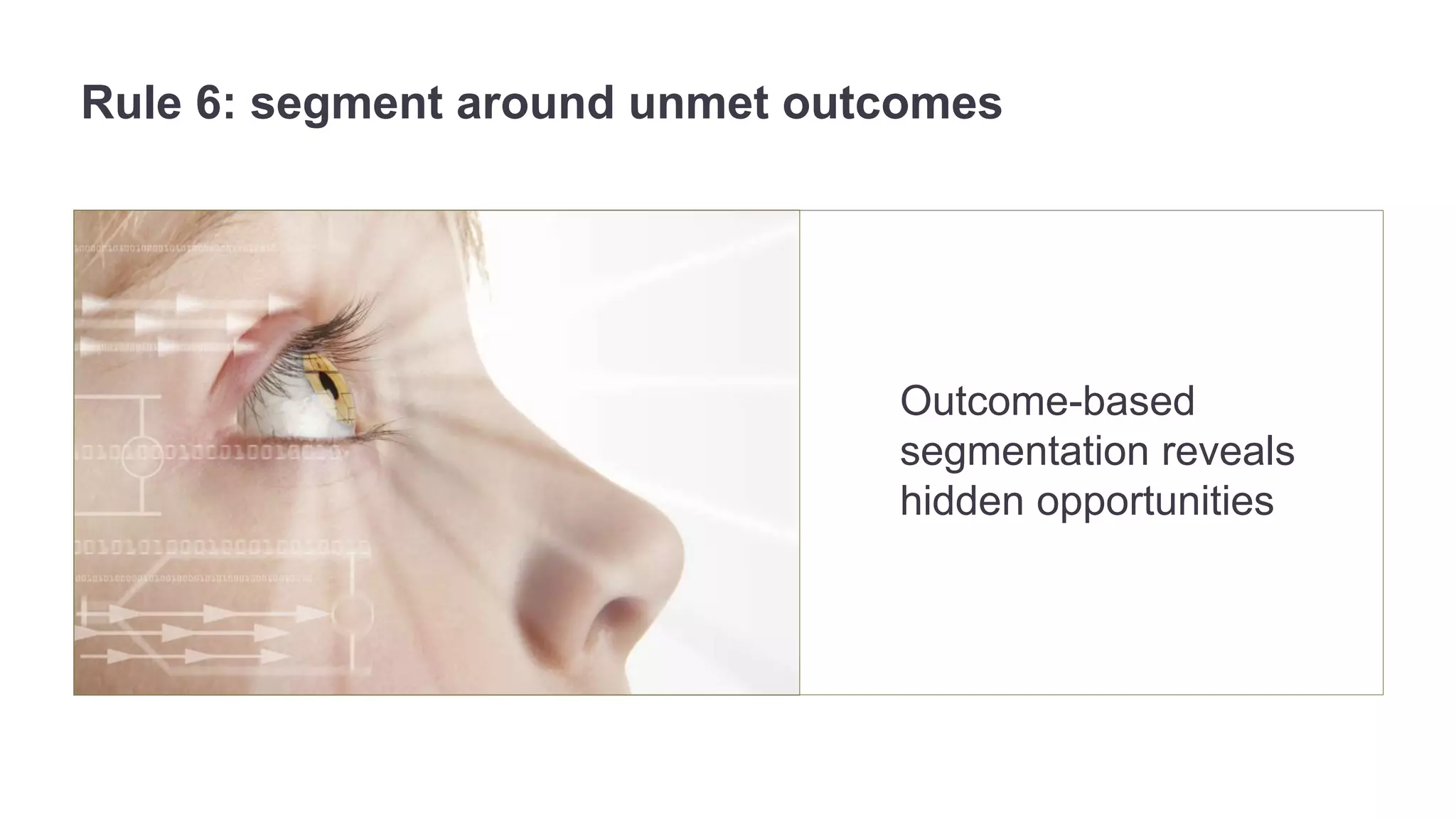
Rule 6: segment around unmet outcomes 
Outcome-based 
segmentation reveals 
hidden opportunities
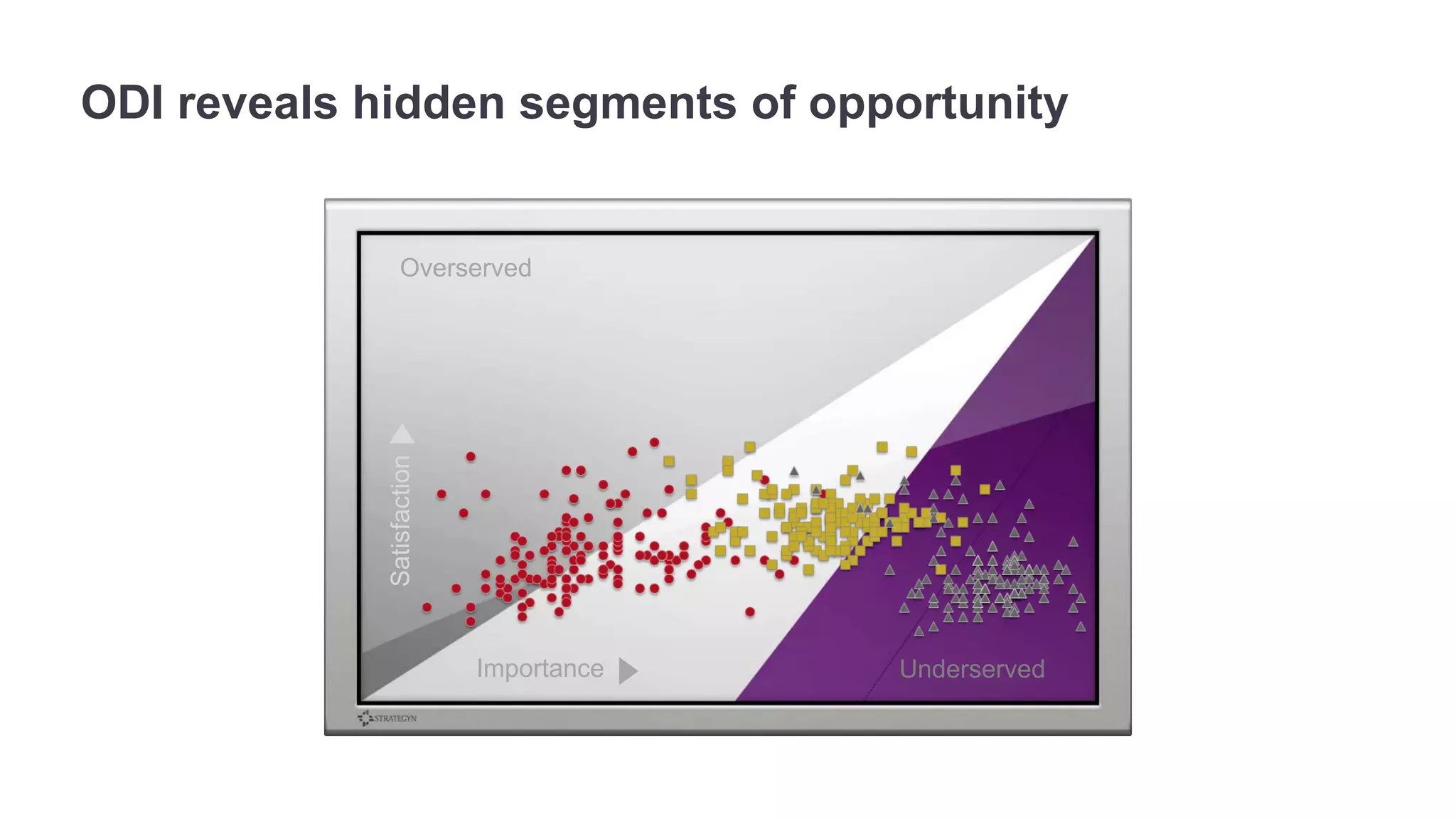
ODI reveals hidden segments of opportunity 
Overserved 
Satisfaction 
Importance 
Underserved
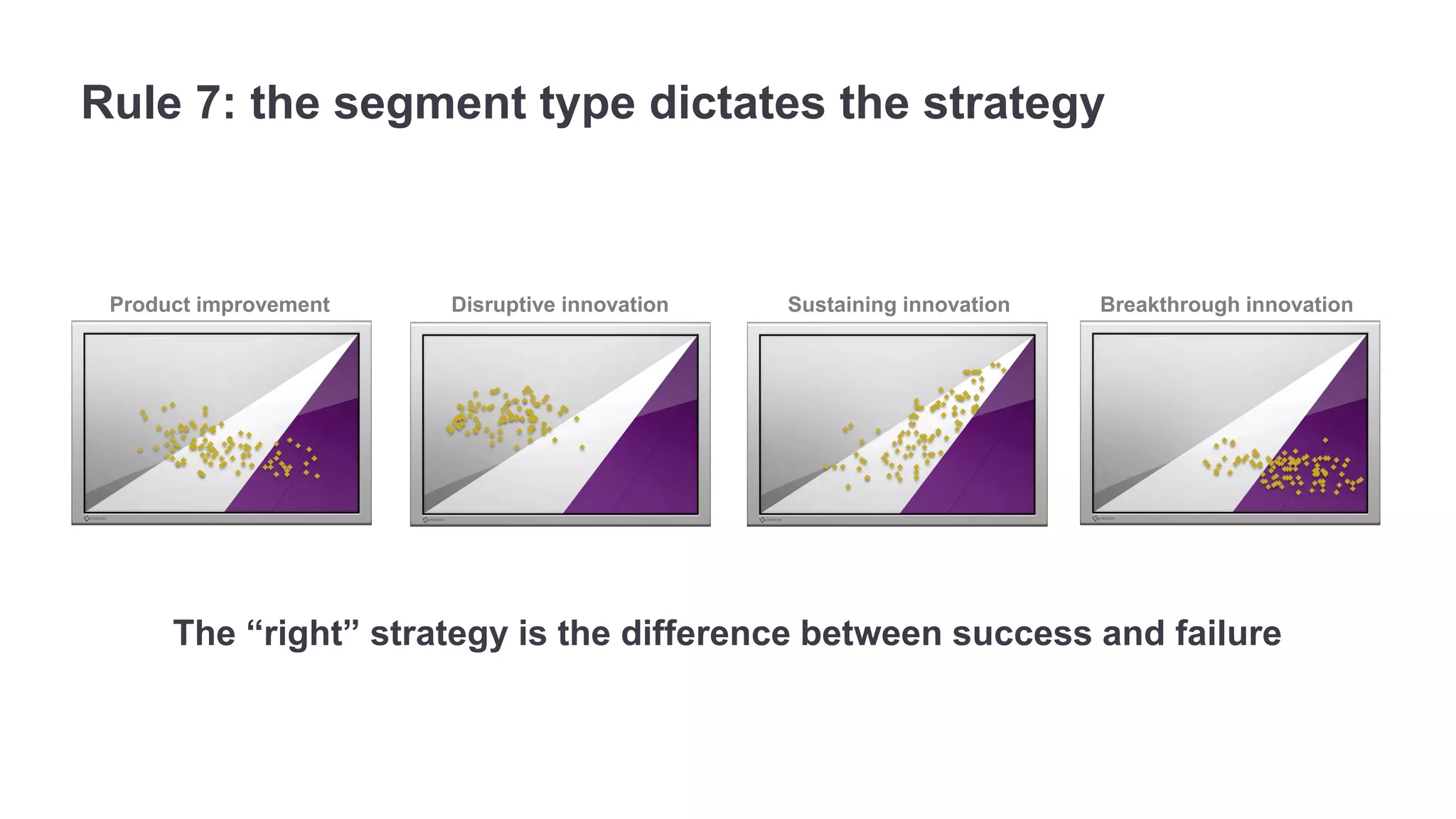
Rule 7: the segment type dictates the strategy 
Product improvement Disruptive innovation Sustaining innovation Breakthrough innovation 
The “right” strategy is the difference between success and failure
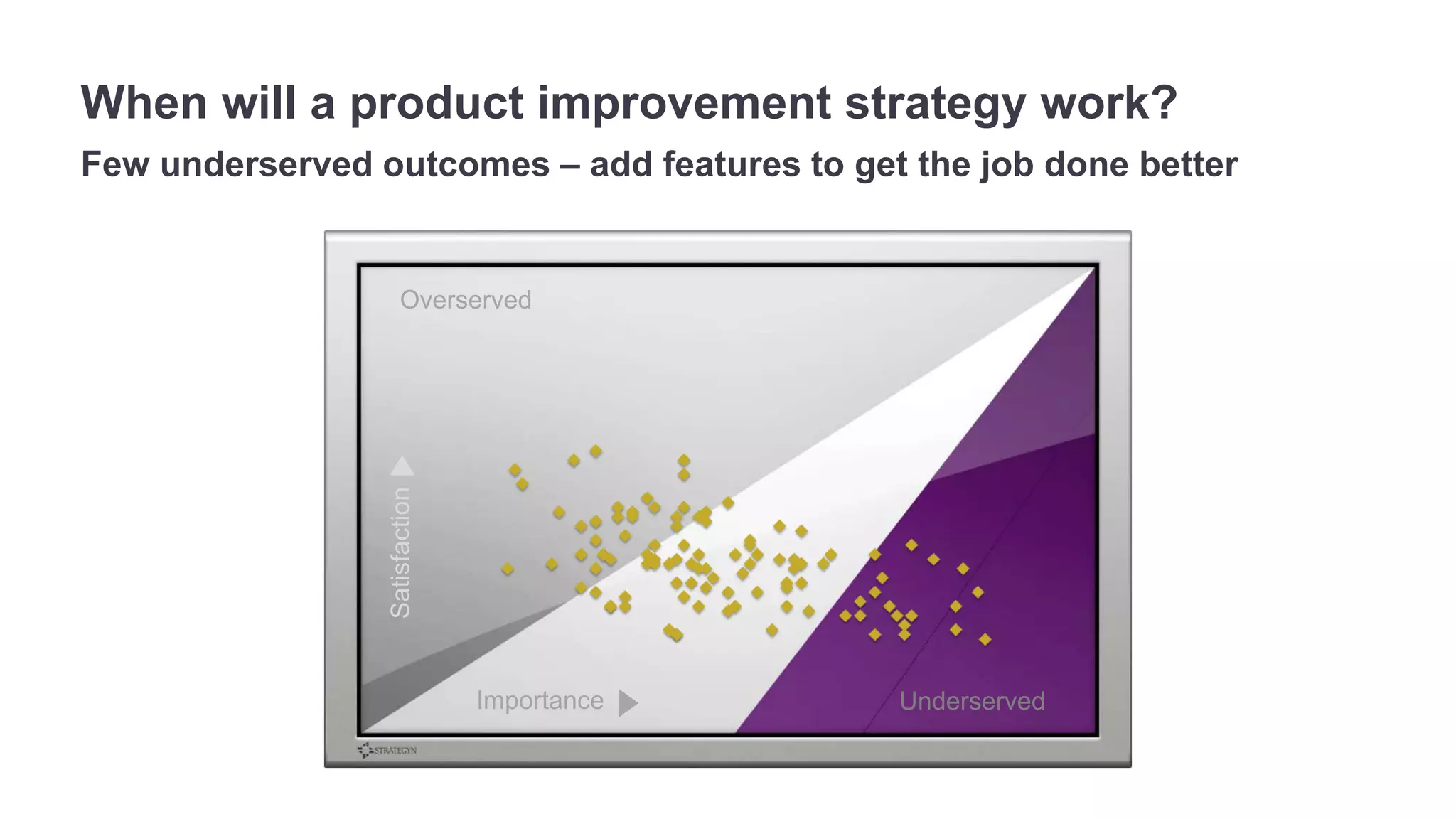
When will a product improvement strategy work? 
Few underserved outcomes – add features to get the job done better 
Overserved 
Satisfaction 
Importance 
Underserved
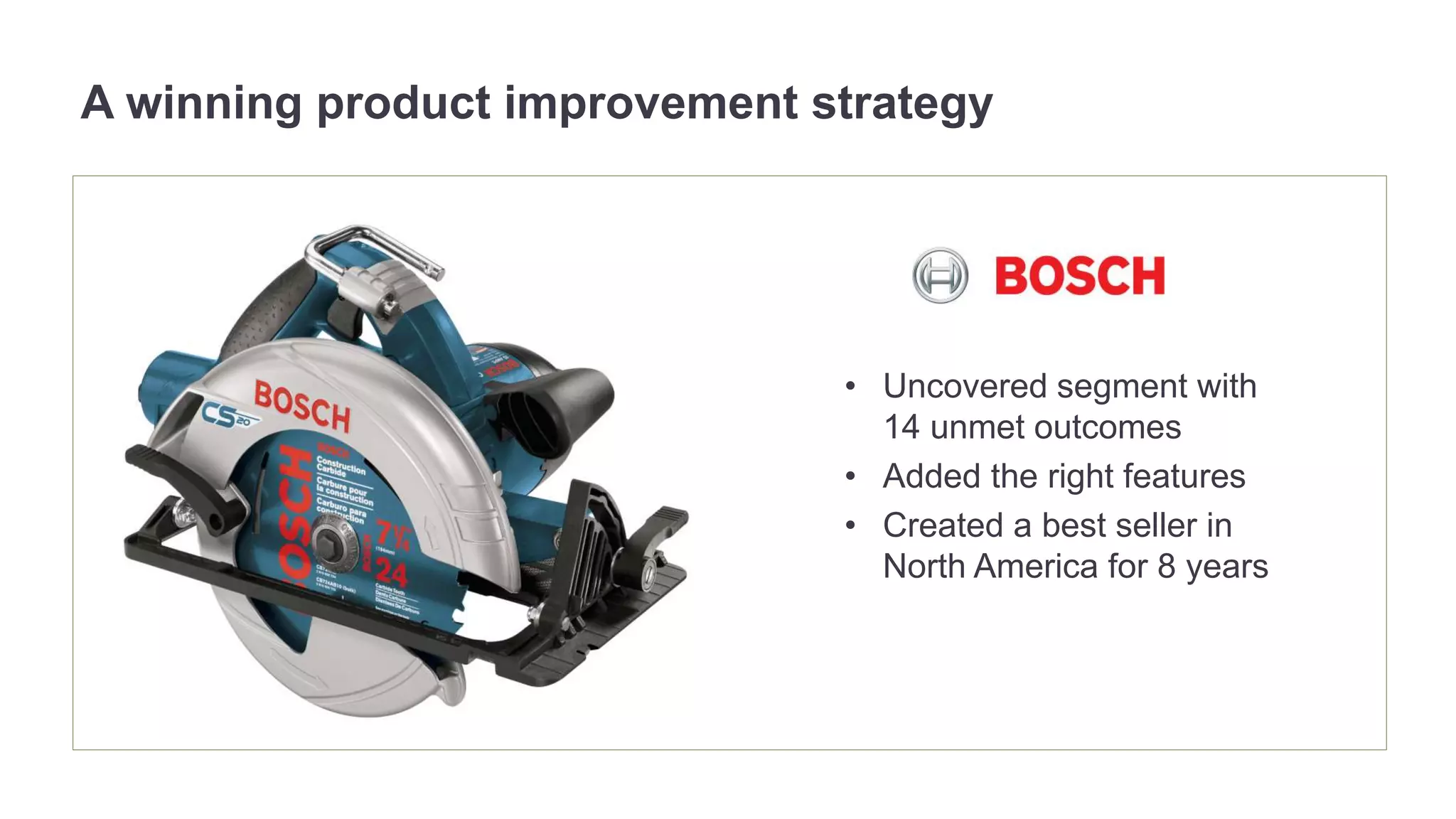
A winning product improvement strategy 
• Uncovered segment with 
14 unmet outcomes 
• Added the right features 
• Created a best seller in 
North America for 8 years
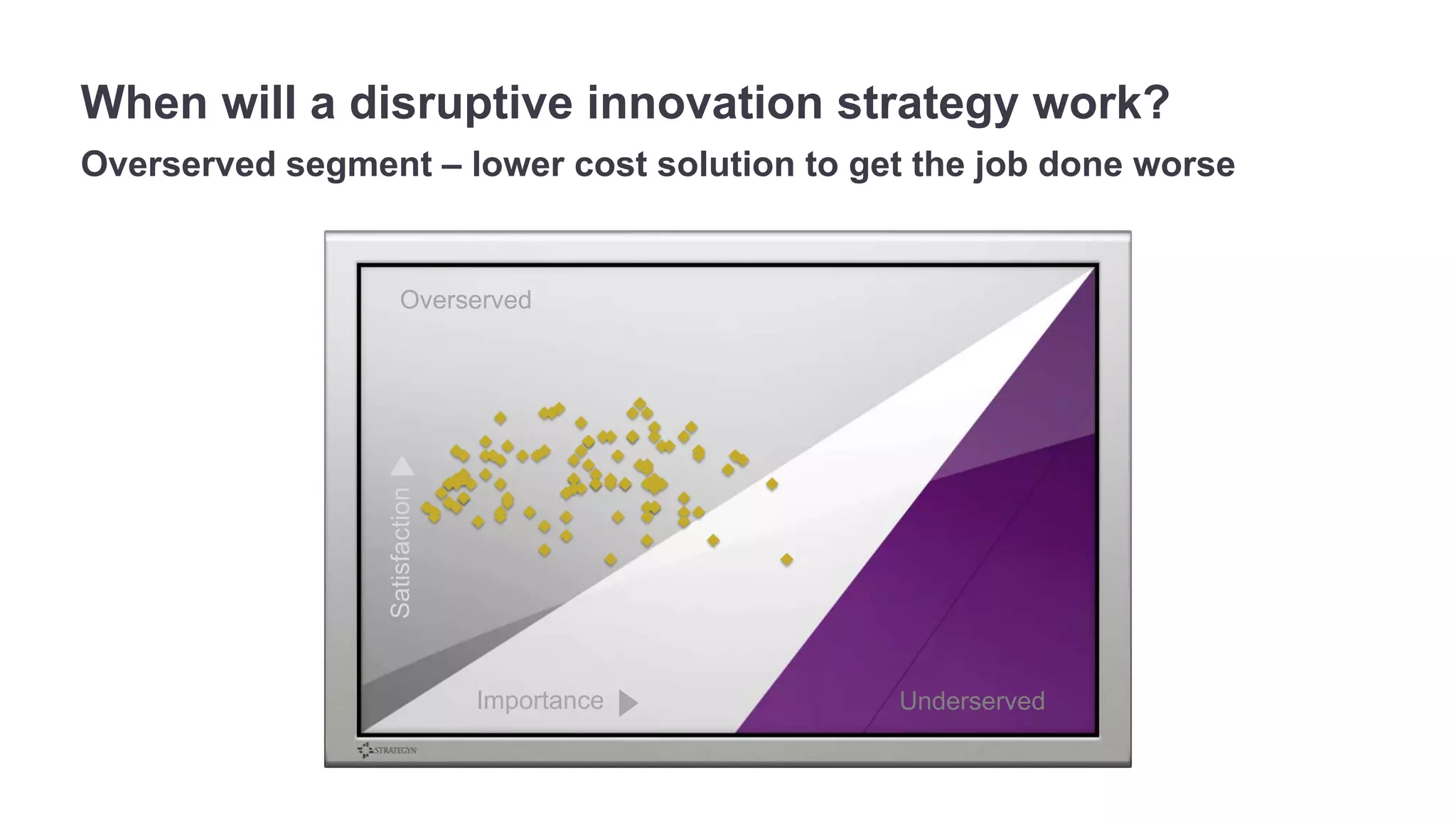
When will a disruptive innovation strategy work? 
Overserved segment – lower cost solution to get the job done worse 
Overserved 
Satisfaction 
Importance 
Underserved
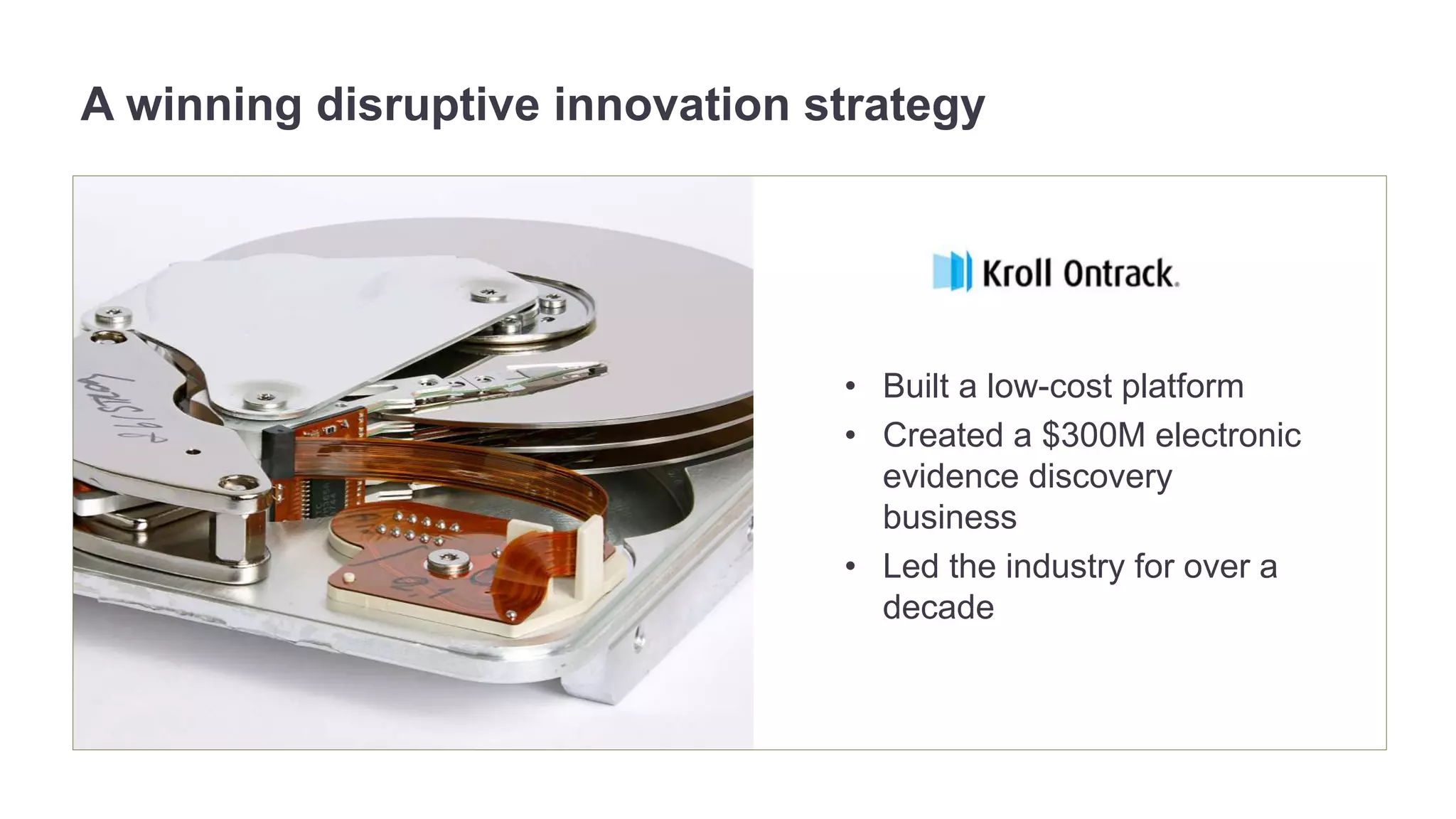
A winning disruptive innovation strategy 
• Built a low-cost platform 
• Created a $300M electronic 
evidence discovery 
business 
• Led the industry for over a 
decade
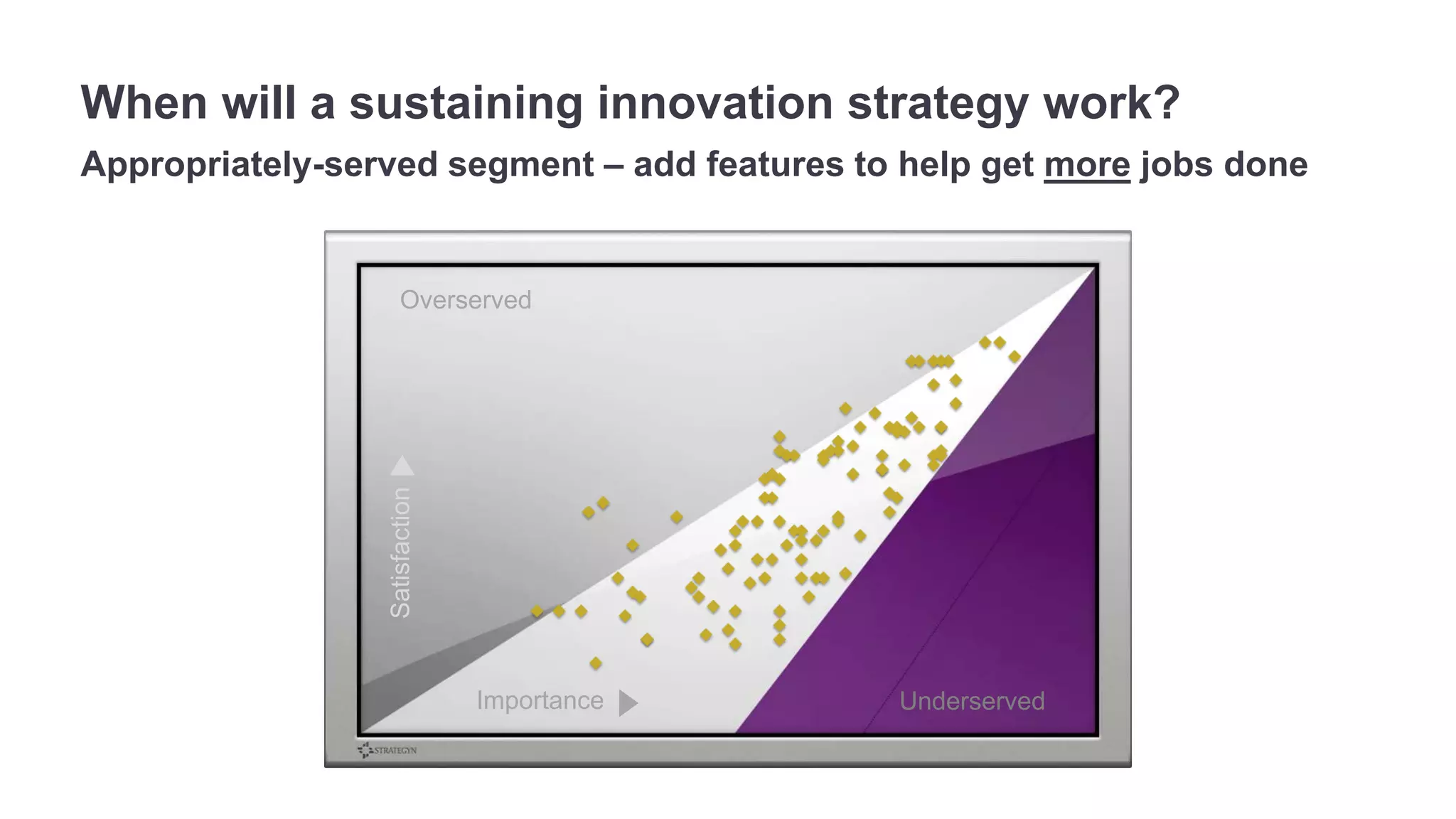
When will a sustaining innovation strategy work? 
Appropriately-served segment – add features to help get more jobs done 
Overserved 
Satisfaction 
Importance 
Underserved
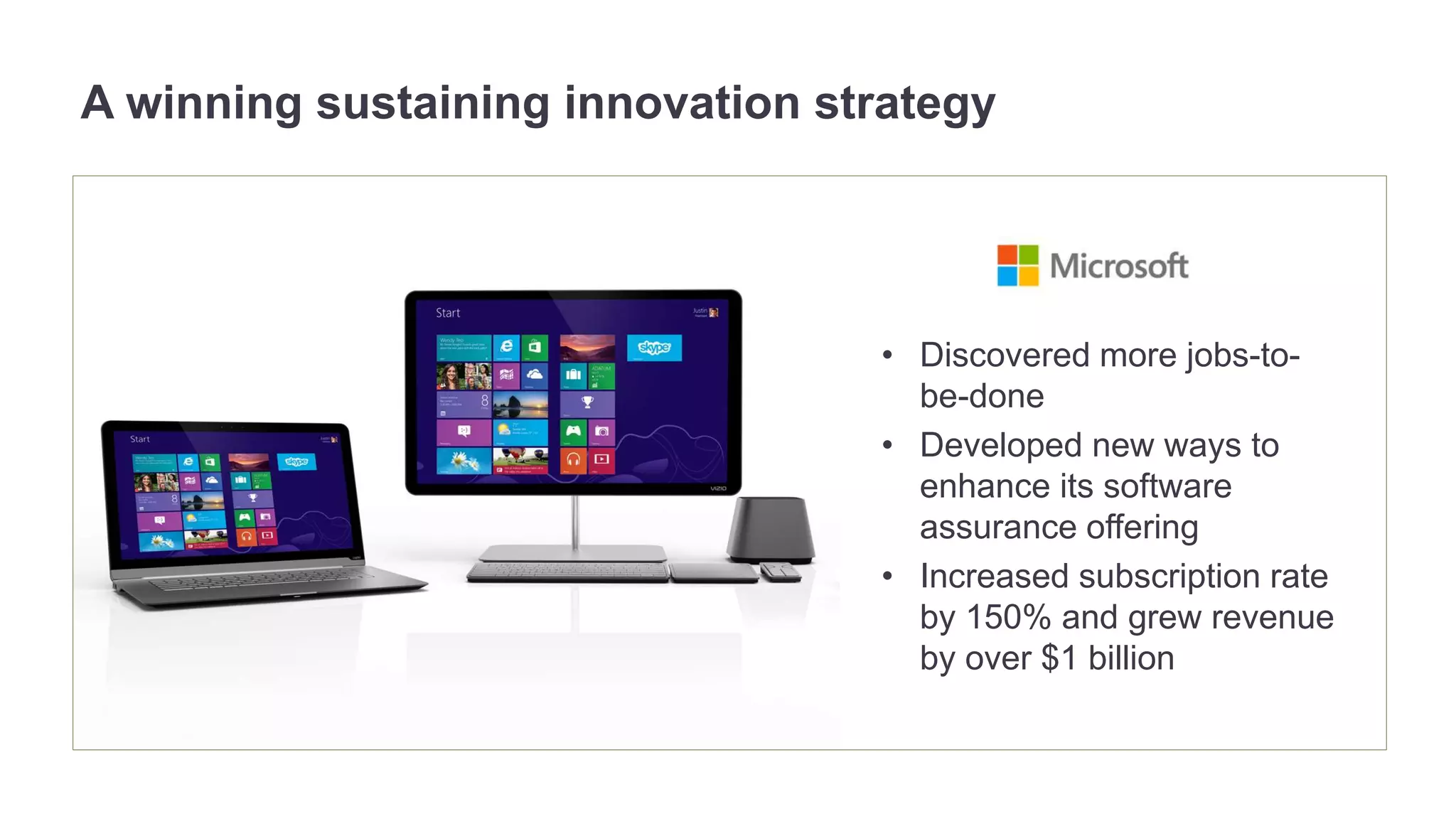
A winning sustaining innovation strategy 
• Discovered more jobs-to-be- 
done 
• Developed new ways to 
enhance its software 
assurance offering 
• Increased subscription rate 
by 150% and grew revenue 
by over $1 billion
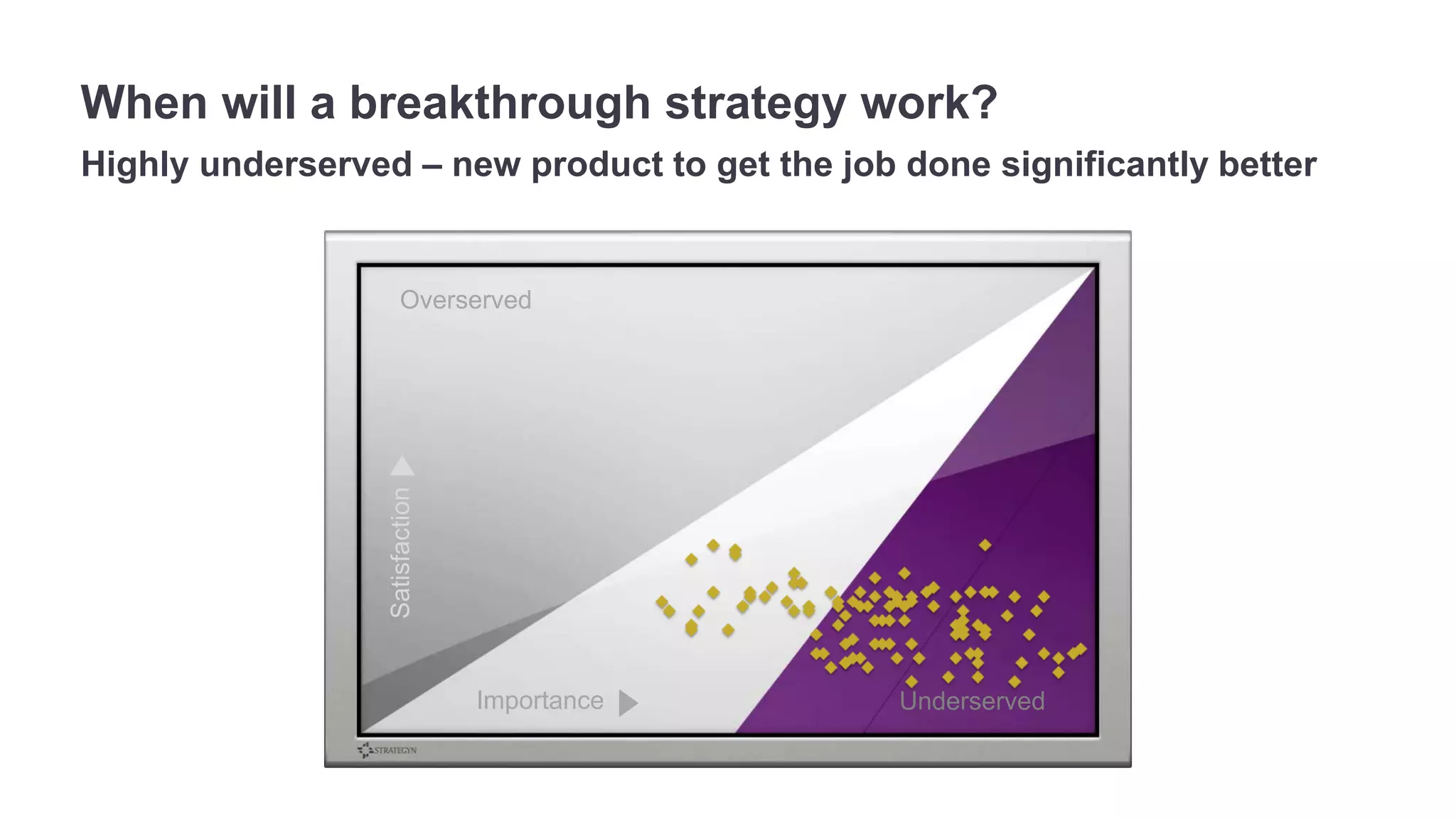
When will a breakthrough strategy work? 
Highly underserved – new product to get the job done significantly better 
Overserved 
Satisfaction 
Importance 
Underserved
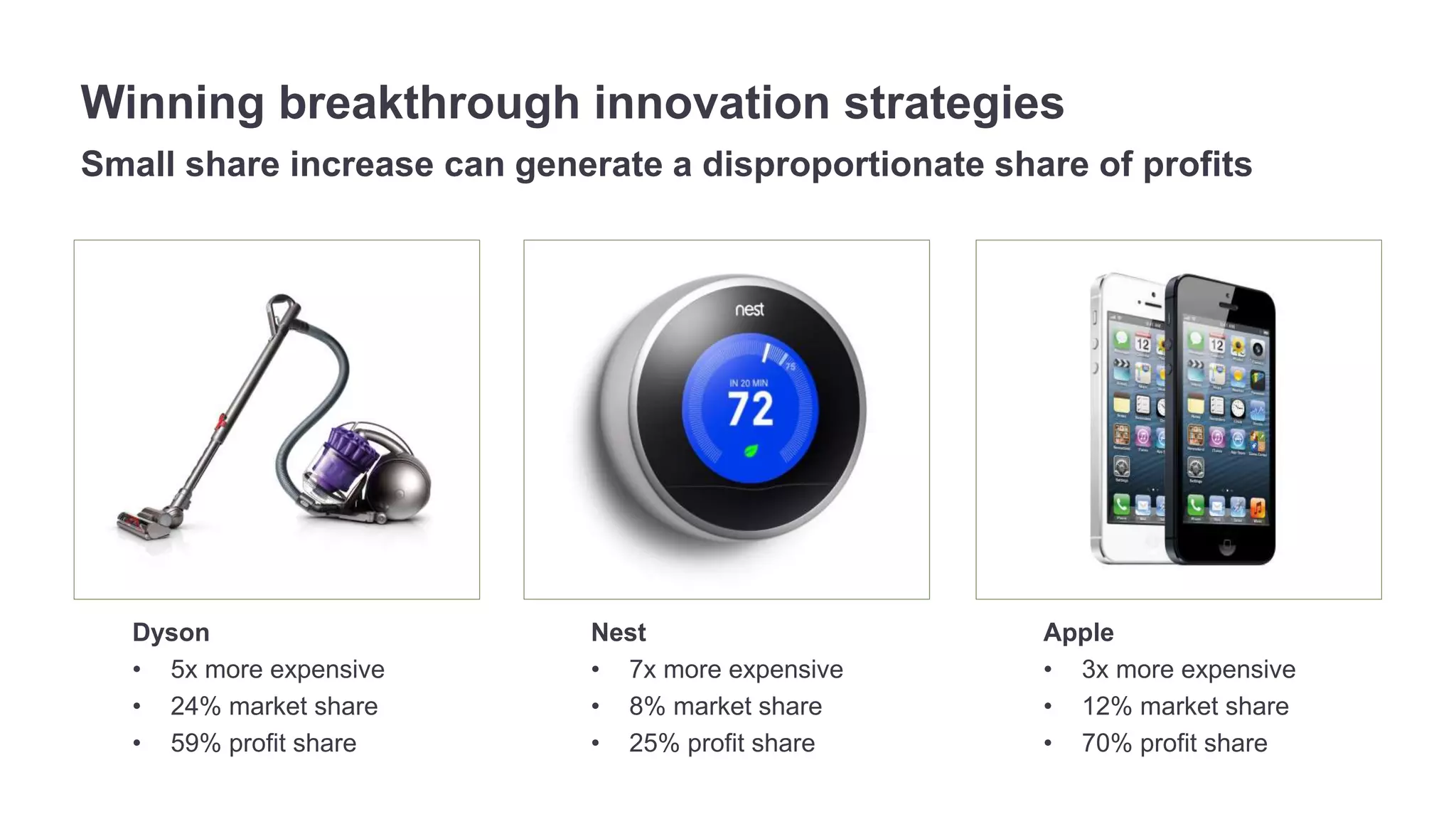
Winning breakthrough innovation strategies 
Small share increase can generate a disproportionate share of profits 
Dyson 
• 5x more expensive 
• 24% market share 
• 59% profit share 
Nest 
• 7x more expensive 
• 8% market share 
• 25% profit share 
Apple 
• 3x more expensive 
• 12% market share 
• 70% profit share
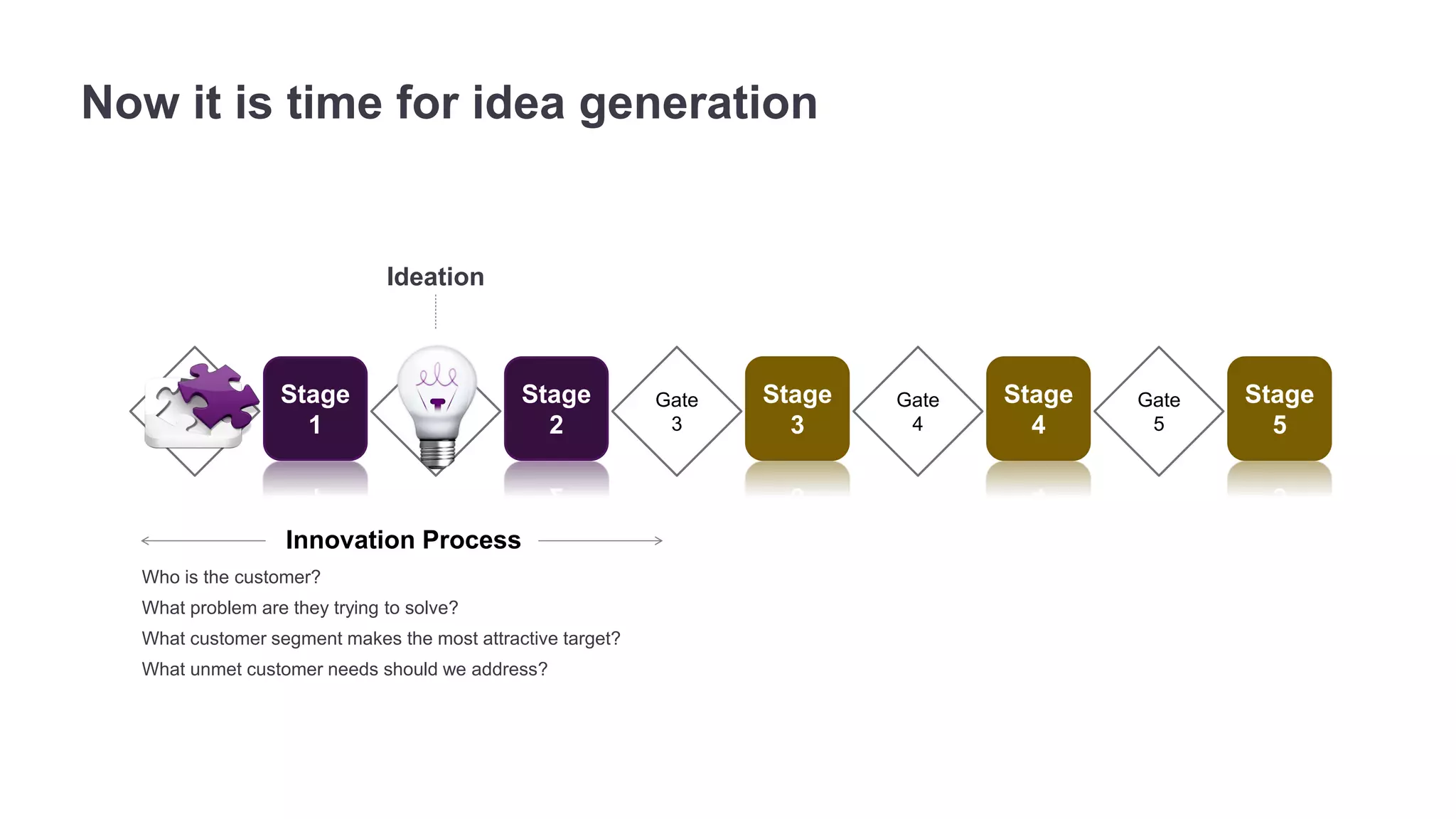
Now it is time for idea generation 
Stage 
1 
Stage 
2 
Stage 
3 
Stage 
4 
Stage 
5 
Ideation 
Gate 
2 
Gate 
3 
Gate 
1 
Gate 
4 
Gate 
5 
Innovation Process 
Who is the customer? 
What problem are they trying to solve? 
What customer segment makes the most attractive target? 
What unmet customer needs should we address?
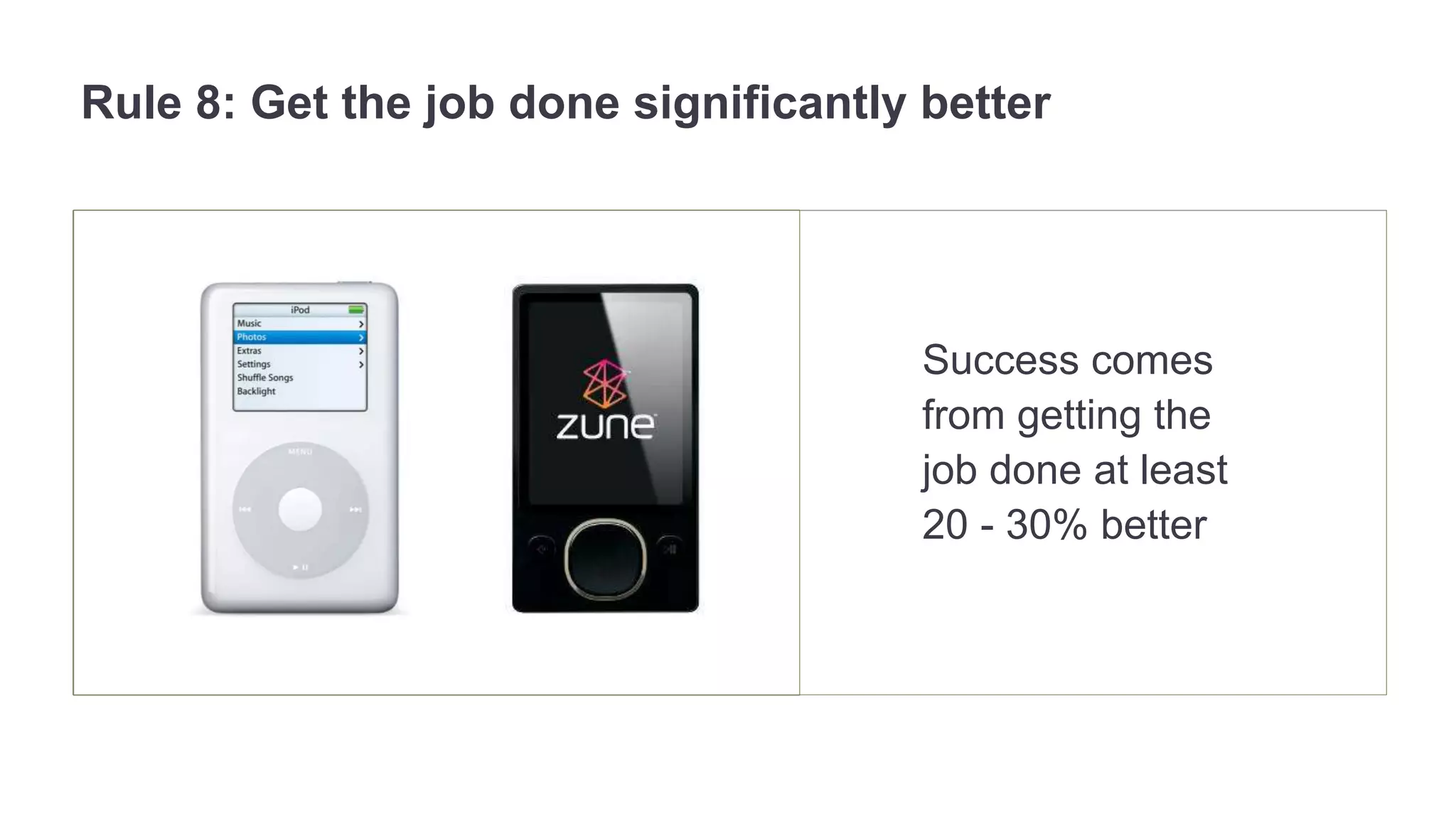
Rule 8: Get the job done significantly better 
Success comes 
from getting the 
job done at least 
20 - 30% better
Don’t gamble on innovation
You decide.
Outcome-Driven Innovation® 
ulwick@strategyn.com 
Twitter: @ulwick
Stage 
1 
Product 
Strategy Development 
Stage 
2 
Stage 
3 
Stage 
4 
Stage 
5 
Gate 
2 
Gate 
3 
Gate 
1 
Gate 
4 
Gate 
5 
Innovation Process 
Testing and 
Validation Launch 
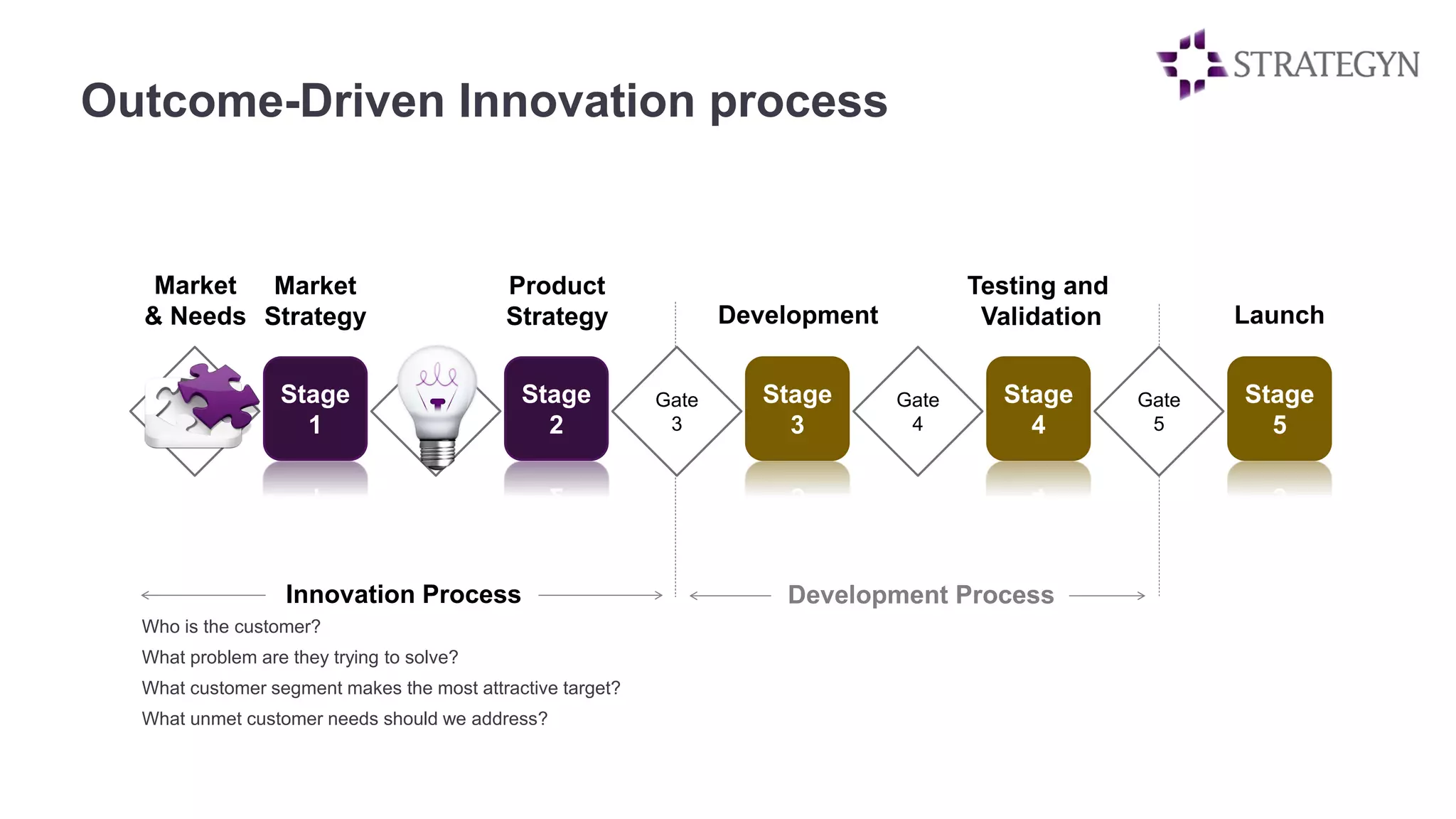
Outcome-Driven Innovation process 
Market 
& Needs 
Market 
Strategy 
Who is the customer? 
What problem are they trying to solve? 
What customer segment makes the most attractive target? 
What unmet customer needs should we address? 
Development Process

Turn Jobs to Be Done Theory into Practice - Tony Ulwick at Business of Software Conference 2014

  • 1.
    Turn JTBD Theoryinto Practice With Outcome-Driven Innovation
  • 2.
    We all sharea desire to create successful, game-changing products
  • 3.
    Most of youwill never work on a successful product in your lifetime
  • 4.
    Innovation = solutionsthat satisfy unmet needs
  • 5.
    Innovation = solutionsthat satisfy unmet needs
  • 6.
    Traditional innovation beginswith ideas Stage 1 Stage 2 Stage 3 Stage 4 Stage 5 Gate 2 Gate 3 Gate 1 Gate 4 Gate 5 Create Business Case Development Testing and Validation Launch Ideas Scoping Innovation Process Who is the customer? What problem are they trying to solve? What customer segment makes the most attractive target? What unmet customer needs should we address? 5% succeed
  • 7.
    Innovation should bea needs-first process Stage 1 Product Strategy Development Stage 2 Stage 3 Stage 4 Stage 5 Gate 2 Gate 3 Gate 1 Gate 4 Gate 5 Innovation Process Testing and Validation Launch Market & Needs Market Strategy Who is the customer? What problem are they trying to solve? What customer segment makes the most attractive target? What unmet customer needs should we address? Development Process 86% succeed
  • 8.
    Customer needs areelusive and misunderstood You can’t satisfy customer needs if you don’t know what they are
  • 9.
    What constitutes alegitimate need statement? Wants Attributes Solutions Specifications Unarticulated needs Problems Requirements Desires Customer Needs Must haves Exciters Delighters Value drivers Latent needs Expectations Characteristics Wishes Features Benefits Ideas Jobs Table stakes
  • 10.
    Through a jobs-to-be-done lens, new possibilities emerge “People don’t want a quarter inch drill, they want a quarter inch hole.” Theodore Levitt - 1962
  • 11.
  • 12.
    ODI transforms JTBDtheory into practice Market definition Needs analysis Market strategy
  • 13.
    How should a“market” be defined? Market definition Needs analysis Market strategy
  • 14.
    Markets are oftendefined around products Market LP market CD market MP3 market Streaming market
  • 15.
    People buy productsto get jobs done LP market CD market MP3 market Streaming market Listen to music Market
  • 16.
  • 17.
    Rule 1: definethe customer as the job executor The support team is not the primary customer The job executor is the primary customer The buyer is not the primary customer
  • 18.
    Rule 2: definethe market as an executor/job Market Music enthusiasts Listening to music + Talk to music enthusiasts about the job of listening to music.
  • 19.
    Rule 3: analyzethe job-to-be-done Confirm Define Locate Prepare Execute Monitor Modify Conclude The Customer-Centered Innovation Map, Harvard Business Review, 2008
  • 20.
    Job map for‘listening to music’ Confirm the music plan Monitor the experience Assess the situation Gather the desired music Organize the music Modify the music selection Assess the experience
  • 21.
    MP3 players getmore of the job done Confirm the music plan Monitor the experience Assess the situation Gather the desired music Organize the music Modify the music selection Assess the experience
  • 22.
    Streaming services getmore of the job done Confirm the music plan Monitor the experience Assess the situation Gather the desired music Organize the music Modify the music selection Assess the experience
  • 23.
    Solutions evolve toget the whole job done The ultimate solution can be envisioned once the job is known
  • 24.
    How should acustomer “need” be defined? Market definition Needs analysis Market strategy
  • 25.
    Rule 4: definecustomer needs as desired outcomes Giving Customers a Fair Hearing, MIT Sloan Management Review 2008 Needs Direction Metric Object of Control Minimize the time it takes to get the songs in the desired order
  • 26.
    Outcomes are perfectlydefined need statements Desired outcomes are the glue that holds the innovation process together
  • 27.
    Listeners have desiredoutcomes Confirm the music plan Monitor the experience Assess the situation Gather the desired music Organize the music Modify the music selection Assess the experience Minimize the time it takes to determine how much music will be needed, e.g., minutes, etc.
  • 28.
    Confirm the musicplan Monitor the experience Assess the situation Gather the desired music Organize the music Modify the music selection Assess the experience Listeners have desired outcomes Minimize the time it takes to determine what songs to include
  • 29.
    Confirm the musicplan Monitor the experience Assess the situation Gather the desired music Organize the music Modify the music selection Assess the experience Listeners have desired outcomes Minimize the time it takes to determine the order in which to play the songs
  • 30.
    Confirm the musicplan Monitor the experience Assess the situation Gather the desired music Organize the music Modify the music selection Assess the experience Listeners have desired outcomes Minimize the likelihood that the music sounds distorted
  • 31.
    Confirm the musicplan Monitor the experience Assess the situation Gather the desired music Organize the music Modify the music selection Assess the experience Listeners have desired outcomes Minimize the time it takes to remove songs that you no longer want to hear
  • 32.
    Outcomes power apredictive model for growth Desired outcomes Solutions Minimize the time it takes to determine the order in which to play the songs -- -- + ++ Minimize the likelihood that the music sounds distorted -- ++ + ++ Minimize the time it takes to remove songs that you no longer want to hear -- -- + +
  • 33.
    How should a“market strategy” be defined? Market definition Needs analysis Market strategy
  • 34.
    Rule 5: unmetoutcomes drive market strategy Deciding which unmet outcomes to target is the essence of strategy
  • 35.
    The opportunity landscapepaints the picture Opportunity score = importance + max (importance – satisfaction, 0) Importance Satisfaction Outcome 1 2 3 4 5 IMP 1 2 3 4 5 SAT OPP Minimize the time … 5 5 9 47 34 8.1 12 28 30 17 13 3.0 13.2 Desired Outcome Overserved Satisfaction Importance Underserved
  • 36.
    The opportunity landscapepaints the picture Opportunity score = importance + max (importance – satisfaction, 0) Importance Satisfaction Outcome 1 2 3 4 5 IMP 1 2 3 4 5 SAT OPP Minimize the time … 5 5 9 47 34 8.1 12 28 30 17 13 3.0 13.2 Desired Outcomes Overserved Satisfaction Importance Underserved
  • 37.
    Traditional segmentation doesnot work for innovation Not all job executors are alike
  • 38.
    Gender does notreveal unique opportunities Overserved Satisfaction Importance Underserved
  • 39.
    Age does notreveal unique opportunities Overserved Satisfaction Importance Underserved
  • 40.
    Region does notreveal unique opportunities Overserved Satisfaction Importance Underserved
  • 41.
    Size does notreveal unique opportunities Overserved Satisfaction Importance Underserved
  • 42.
    Rule 6: segmentaround unmet outcomes Outcome-based segmentation reveals hidden opportunities
  • 43.
    ODI reveals hiddensegments of opportunity Overserved Satisfaction Importance Underserved
  • 44.
    Rule 7: thesegment type dictates the strategy Product improvement Disruptive innovation Sustaining innovation Breakthrough innovation The “right” strategy is the difference between success and failure
  • 45.
    When will aproduct improvement strategy work? Few underserved outcomes – add features to get the job done better Overserved Satisfaction Importance Underserved
  • 46.
    A winning productimprovement strategy • Uncovered segment with 14 unmet outcomes • Added the right features • Created a best seller in North America for 8 years
  • 47.
    When will adisruptive innovation strategy work? Overserved segment – lower cost solution to get the job done worse Overserved Satisfaction Importance Underserved
  • 48.
    A winning disruptiveinnovation strategy • Built a low-cost platform • Created a $300M electronic evidence discovery business • Led the industry for over a decade
  • 49.
    When will asustaining innovation strategy work? Appropriately-served segment – add features to help get more jobs done Overserved Satisfaction Importance Underserved
  • 50.
    A winning sustaininginnovation strategy • Discovered more jobs-to-be- done • Developed new ways to enhance its software assurance offering • Increased subscription rate by 150% and grew revenue by over $1 billion
  • 51.
    When will abreakthrough strategy work? Highly underserved – new product to get the job done significantly better Overserved Satisfaction Importance Underserved
  • 52.
    Winning breakthrough innovationstrategies Small share increase can generate a disproportionate share of profits Dyson • 5x more expensive • 24% market share • 59% profit share Nest • 7x more expensive • 8% market share • 25% profit share Apple • 3x more expensive • 12% market share • 70% profit share
  • 53.
    Now it istime for idea generation Stage 1 Stage 2 Stage 3 Stage 4 Stage 5 Ideation Gate 2 Gate 3 Gate 1 Gate 4 Gate 5 Innovation Process Who is the customer? What problem are they trying to solve? What customer segment makes the most attractive target? What unmet customer needs should we address?
  • 54.
    Rule 8: Getthe job done significantly better Success comes from getting the job done at least 20 - 30% better
  • 55.
  • 56.
  • 57.
  • 58.
    Stage 1 Product Strategy Development Stage 2 Stage 3 Stage 4 Stage 5 Gate 2 Gate 3 Gate 1 Gate 4 Gate 5 Innovation Process Testing and Validation Launch Outcome-Driven Innovation process Market & Needs Market Strategy Who is the customer? What problem are they trying to solve? What customer segment makes the most attractive target? What unmet customer needs should we address? Development Process