
Singh et al.
Page 82
RESEARCH PAPER OPEN ACCESS
Effect of crop establishment/irrigation techniques and nitrogen
levels on growth, yield, nutrient uptake and quality of hybrid
maize (Zea mays L.)
P.K. Singh*
, Sachin Kumar, Arvind Kumar, Raj Kumar
Department of Agronomy, R.K. (P.G.) College, Shamli, C.C.S.U., Meerut, U.P247776, India
Article published on June 23, 2015
Key words: Growth, nitrogen, planting/irrigation, quality, maize.
Abstract
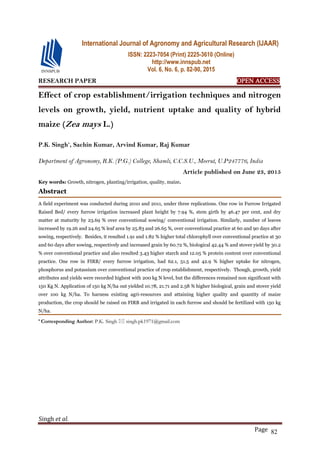
A field experiment was conducted during 2010 and 2011, under three replications. One row in Furrow Irrigated
Raised Bed/ every furrow irrigation increased plant height by 7.94 %, stem girth by 46.47 per cent, and dry
matter at maturity by 23.69 % over conventional sowing/ conventional irrigation. Similarly, number of leaves
increased by 19.26 and 24.65 % leaf area by 25.83 and 26.65 %, over conventional practice at 60 and 90 days after
sowing, respectively. Besides, it resulted 1.91 and 1.82 % higher total chlorophyll over conventional practice at 30
and 60 days after sowing, respectively and increased grain by 60.72 %, biological 42.44 % and stover yield by 30.2
% over conventional practice and also resulted 3.43 higher starch and 12.05 % protein content over conventional
practice. One row in FIRB/ every furrow irrigation, had 62.1, 51.5 and 42.9 % higher uptake for nitrogen,
phosphorus and potassium over conventional practice of crop establishment, respectively. Though, growth, yield
attributes and yields were recorded highest with 200 kg N level, but the differences remained non significant with
150 Kg N. Application of 150 kg N/ha out yielded 10.78, 21.71 and 2.58 % higher biological, grain and stover yield
over 100 kg N/ha. To harness existing agri-resources and attaining higher quality and quantity of maize
production, the crop should be raised on FIRB and irrigated in each furrow and should be fertilized with 150 kg
N/ha.
* Corresponding Author: P.K. Singh  singh.pk1971@gmail.com
International Journal of Agronomy and Agricultural Research (IJAAR)
ISSN: 2223-7054 (Print) 2225-3610 (Online)
http://www.innspub.net
Vol. 6, No. 6, p. 82-90, 2015
Singh et al.
Page 83
Introduction
Maize (Zea mays L.) is created as queen of cereals by
virtue of its higher productivity. In India, traditional
practice of sowing and irrigation of crop without any
spatial arrangement is being practiced in most of
maize growing tracts. The excessive exploitation of
ground water resources for irrigation from shallow
and deep aquifers has caused the water table to fall
and has created many other environmental problems
(Xia et al. 2005). The groundwater table is falling
steadily at the rate of about 1m/year and the main
factors leading to this decline are the expansion of the
area under the water exploiting crops and in
appropriate techniques of irrigation, resulting in low
water-use efficiency (Zhang et al. 2006). Therefore, it
is the matter of imperative importance to control the
fall in rate of the ground water table by increasing the
water-use efficiency of the crops by virtue of adopting
appropriate planting/ irrigation technology. Bed
planting has long been recognized as a yield boosting
and water saving measure in field crops. Furrow
Irrigated Raised Bed technique (FIRB) has recently
emerged as the most potential water saving technique
in the Indo-Gangetic plains of northern western
India. FIRB planting besides saving 31.2 per cent
irrigation water, also boosts yield up to 24 percent in
the cereals. FIRB planting by virtue of facilitating
better seeds germination, root establishment,
enhanced root aeration, tends the plants to exploit its
soil as well as aerial environment to the most possible
extent (Jat, et al. 2005). Besides, it also prevents from
excess moisture problem in heavy soils. As maize, is
highly sensitive to both excess as well as shortage of
moisture and paucity of information is available on
the performance of maize to the FIRB planting with
irrigation schedules. Therefore, the present
investigation was conducted to evaluate the
performance of different planting /irrigation
techniques and nitrogen levels to elucidate their
effects on growth, yield attributes, yields, nutrient
uptake and quality of maize (Zea mays L.).
Materials and methods
A field experiment was conducted for two consecutive
years (2010 and 2011) at Agronomic Research Block
of R.K. (P.G.) College, Shamli, (U.P.) India. The soil of
experimental field was sandy loam in texture, nearly
neutral in reaction (pH 7.4), low in available nitrogen
(170.4 kg N/ha), medium in available phosphorus
(14.2 Kg P/ha) and available potassium (163.35 kg
K/ha). Bulk density of the experimental field was 1.51
g/cm3. The experiment was conducted in Split Plot
Design with planting techniques/ irrigation schedules
as main plot and nitrogen levels as sub plot under
three replications. The maize variety Ganga 11 was
sown as per treatments. The FIRBS were made with
the help of spade and planting was done by hand with
the help of khurpi. The FIRB spacing in one row FIRB
was kept 67.66 cm and plant to plant 20 cm apart
where as, in case of two row in FIRB, FIRB spacing
was kept 78 cm with plant to plant 20cm space. In the
main plot treatment No. 5 and 6 the crop was sown
conventionally followed by FIRB preparation in
month of July at knee height stage. Recommended
dose of P and K were applied at the time of sowing
@60 kg P2O5 and 40 kg K2O/ha, however, nitrogen
was applied as per treatments. Weeds were controlled
manually by khurpi. Precise quantity of water as per
treatments was applied when plants started to show
initial wilting symptoms. The crop was harvested plot
wise at the commencement of appropriate maturity.
Required plant protection measures were adopted as
and when found necessary. The occurrence of
different phenological stages was judged visually. The
data pertaining to crop growth, development, yields,
protein and starch content and their yield were
subjected to appropriate statistical analysis. Cost of
cultivation and net monitory returns were calculated
based on prevailing market price of the inputs and
produce (Labour 180/labour, seed cost
120/kg, Stover 95/quintal, grain 950/
quintal).
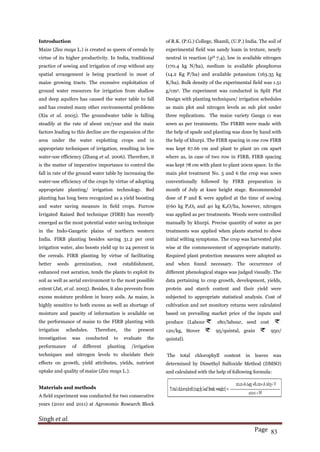
The total chlorophyll content in leaves was
determined by Dimethyl Sulfoxide Method (DMSO)
and calculated with the help of following formula:
Singh et al.
Page 84
Where, A, V and W were absorbance, final volume
and weight of sample, respectively.
Results and discussion
Growth and growth parameters
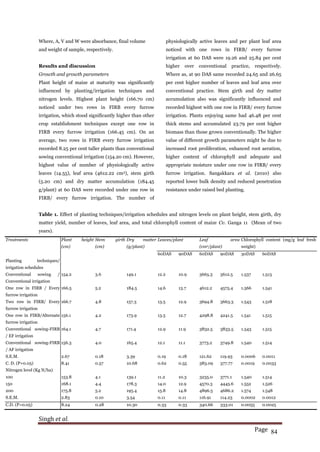
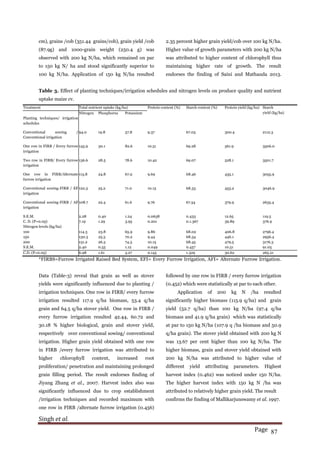
Plant height of maize at maturity was significantly
influenced by planting/irrigation techniques and
nitrogen levels. Highest plant height (166.70 cm)
noticed under two rows in FIRB every furrow
irrigation, which stood significantly higher than other
crop establishment techniques except one row in
FIRB every furrow irrigation (166.45 cm). On an
average, two rows in FIRB every furrow irrigation
recorded 8.25 per cent taller plants than conventional
sowing conventional irrigation (154.20 cm). However,
highest value of number of physiologically active
leaves (14.55), leaf area (4612.22 cm2), stem girth
(5.20 cm) and dry matter accumulation (184.45
g/plant) at 60 DAS were recorded under one row in
FIRB/ every furrow irrigation. The number of
physiologically active leaves and per plant leaf area
noticed with one rows in FIRB/ every furrow
irrigation at 60 DAS were 19.26 and 25.84 per cent
higher over conventional practice, respectively.
Where as, at 90 DAS same recorded 24.65 and 26.65
per cent higher number of leaves and leaf area over
conventional practice. Stem girth and dry matter
accumulation also was significantly influenced and
recorded highest with one row in FIRB/ every furrow
irrigation. Plants enjoying same had 46.48 per cent
thick stems and accumulated 23.79 per cent higher
biomass than those grown conventionally. The higher
value of different growth parameters might be due to
increased root proliferation, enhanced root aeration,
higher content of chlorophyll and adequate and
appropriate moisture under one row in FIRB/ every
furrow irrigation. Sangakkara et al. (2010) also
reported lower bulk density and reduced penetration
resistance under raised bed planting.
Table 1. Effect of planting techniques/irrigation schedules and nitrogen levels on plant height, stem girth, dry
matter yield, number of leaves, leaf area, and total chlorophyll content of maize Cv. Ganga 11 (Mean of two
years).
Treatments Plant height
(cm)
Stem girth
(cm)
Dry matter
(g/plant)
Leaves/plant Leaf area
(cm2/plant)
Chlorophyll content (mg/g leaf fresh
weight)
60DAS 90DAS 60DAS 90DAS 30DAS 60DAS
Planting techniques/
irrigation schedules
Conventional sowing /
Conventional irrigation
154.2 3.6 149.1 12.2 10.9 3665.3 3612.5 1.537 1.513
One row in FIRB / Every
furrow irrigation
166.5 5.2 184.5 14.6 13.7 4612.2 4575.4 1.566 1.541
Two row in FIRB/ Every
furrow irrigation
166.7 4.8 157.3 13.5 12.9 3694.8 3663.3 1.543 1.518
One row in FIRB/Alternate
furrow irrigation
156.1 4.2 173.9 13.5 12.7 4298.8 4241.5 1.541 1.515
Conventional sowing-FIRB
/ EF irrigation
164.1 4.7 171.4 12.9 11.9 3832.5 3833.5 1.543 1.515
Conventional sowing-FIRB
/ AF irrigation
156.3 4.0 165.4 12.1 11.1 3773.2 3749.8 1.540 1.514
S.E.M. 2.67 0.18 3.39 0.19 0.18 121.62 119.93 0.0006 0.0011
C. D. (P=0.05) 8.41 0.57 10.68 0.62 0.55 383.09 377.77 0.0019 0.0033
Nitrogen level (Kg N/ha)
100 153.8 4.1 139.1 11.2 10.3 3235.0 3771.1 1.540 1.514
150 168.1 4.4 178.3 14.0 12.9 4570.3 4445.6 1.552 1.526
200 175.8 5.2 195.4 15.8 14.8 4896.5 4686.2 1.574 1.548
S.E.M. 2.83 0.10 3.54 0.11 0.11 116.91 114.23 0.0002 0.0012
C.D. (P=0.05) 8.24 0.28 10.30 0.33 0.33 340.66 333.01 0.0055 0.0025
Singh et al.
Page 85
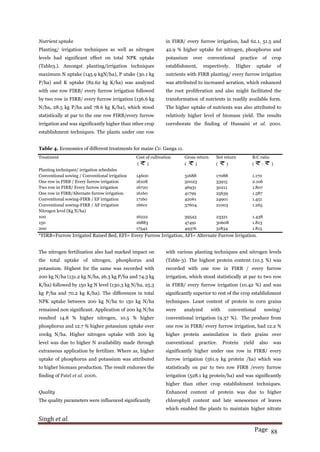
*FIRB=Furrow Irrigated Raised Bed, EFI= Every Furrow Irrigation, AFI= Alternate Furrow Irrigation.
Singh et al.
Page 86
Application of 200 kg N/ha, significantly influenced
plant height (175.80 cm), number of leaves (15.80 at
60 DAS and 14.75 leaves at 90 DAS), leaf area
(4896.45 cm2 at 60 DAS and 4886.20 cm2 at 90
DAS), stem girth (5.16 cm) as well as dry matter
accumulation (195.35 g/plant). Nitrogen @200 kg
N/ha resulted 14.34 per cent taller plants, maintained
41.07 and 43.20 per cent higher number of leaves at
60 and 90 DAS, respectively, 51.36 and 39.01 per cent
higher leaf area at 60 and 90 DAS, respectively, 27.41
% thick stems and accumulated 40.48 per cent
additional dry matter at maturity than 100 kg N/ha.
Enhanced growth due to nitrogen application might
was due to vital importance of nitrogen in the
synthesis of chlorophyll, protoplasm, proteins, RNA
and DNA and also in the synthesis of plant hormones.
Thus, enabled the plants to photosynthesize higher
quantity of photo assimilates. The finding confirms
the result of Jat, et al. 2006.
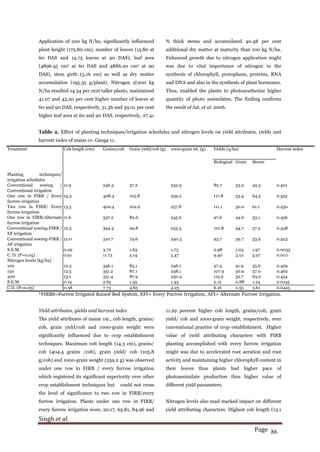
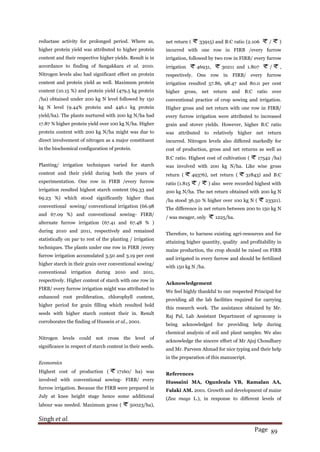
Table 2. Effect of planting techniques/irrigation schedules and nitrogen levels on yield attributes, yields and
harvest index of maize cv. Ganga 11.
Treatment Cob length (cm) Grains/cob Grain yield/cob (g) 1000-grain wt. (g) Yields (q/ha) Harvest index
Biological Grain Stover
Planting techniques/
irrigation schedules
Conventional sowing /
Conventional irrigation
11.9 246.3 57.2 232.9 82.7 33.2 49.5 0.401
One row in FIRB / Every
furrow irrigation
14.3 408.4 105.8 259.2 117.8 53.4 64.5 0.452
Two row in FIRB/ Every
furrow irrigation
13.5 400.4 102.9 257.8 111.1 50.0 61.1 0.450
One row in FIRB/Alternate
furrow irrigation
11.6 337.2 82.6 245.6 97.6 44.6 53.1 0.456
Conventional sowing-FIRB /
EF irrigation
12.3 394.4 99.8 253.3 101.8 44.7 57.2 0.438
Conventional sowing-FIRB /
AF irrigation
12.0 310.7 74.6 240.5 93.7 39.7 53.9 0.423
S.E.M. 0.29 3.72 1.63 1.73 2.98 1.03 1.97 0.0035
C. D. (P=0.05) 0.91 11.73 5.14 5.47 9.40 3.12 5.97 0.0111
Nitrogen levels (kg/ha)
100 12.3 346.1 85.1 246.1 97.4 41.9 55.6 0.429
150 12.5 351.2 87.1 248.1 107.9 50.9 57.0 0.462
200 13.1 351.4 87.9 250.4 115.9 52.7 63.2 0.454
S.E.M. 0.19 2.65 1.59 1.45 2.12 0.88 1.24 0.0145
C.D. (P=0.05) 0.58 7.73 4.63 4.23 6.16 2.55 3.61 0.0425
*FIRBS=Furrow Irrigated Raised Bed System, EFI= Every Furrow Irrigation, AFI= Alternate Furrow Irrigation.
Yield attributes, yields and harvest index
The yield attributes of maize viz., cob length, grains/
cob, grain yield/cob and 1000-grain weight were
significantly influenced due to crop establishment
techniques. Maximum cob length (14.3 cm), grains/
cob (404.4 grains /cob), grain yield/ cob (105.8
g/cob) and 1000-grain weight (259.2 g) was observed
under one row in FIRB / every furrow irrigation
which registered its significant superiority over other
crop establishment techniques but could not cross
the level of significance to two row in FIRB/every
furrow irrigation. Plants under one row in FIRB/
every furrow irrigation wore, 20.17, 65.81, 84.96 and
11.29 percent higher cob length, grains/cob, grain
yield/ cob and 1000-grain weight, respectively, over
conventional practice of crop establishment. Higher
value of yield attributing characters with FIRB
planting accomplished with every furrow irrigation
might was due to accelerated root aeration and root
activity and maintaining higher chlorophyll content in
their leaves thus plants had higher pace of
photoassimilate production thus higher value of
different yield parameters.
Nitrogen levels also mad marked impact on different
yield attributing characters. Highest cob length (13.1
Singh et al.
Page 87
cm), grains /cob (351.44 grains/cob), grain yield /cob
(87.9g) and 1000-grain weight (250.4 g) was
observed with 200 kg N/ha, which remained on par
to 150 kg N/ ha and stood significantly superior to
100 kg N/ha. Application of 150 kg N/ha resulted
2.35 percent higher grain yield/cob over 100 kg N/ha.
Higher value of growth parameters with 200 kg N/ha
was attributed to higher content of chlorophyll thus
maintaining higher rate of growth. The result
endorses the finding of Saini and Mathauda 2013.
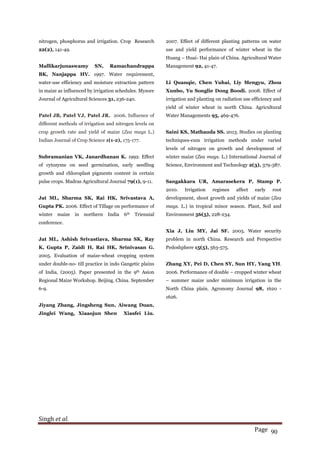
Table 3. Effect of planting techniques/irrigation schedules and nitrogen levels on produce quality and nutrient
uptake maize cv.
Treatment Total nutrient uptake (kg/ha) Protein content (%) Starch content (%) Protein yield (kg/ha) Starch
yield (kg/ha)Nitrogen Phosphorus Potassium
Planting techniques/ irrigation
schedules
Conventional sowing /
Conventional irrigation
94.0 19.8 57.8 9.37 67.03 300.4 2112.3
One row in FIRB / Every furrow
irrigation
145.9 30.1 82.6 10.51 69.28 561.9 3506.0
Two row in FIRB/ Every furrow
irrigation
136.6 28.5 78.6 10.42 69.07 528.1 3501.7
One row in FIRB/Alternate
furrow irrigation
115.8 24.8 67.9 9.69 68.46 435.1 3055.9
Conventional sowing-FIRB / EF
irrigation
122.3 25.2 71.0 10.15 68.33 453.2 3046.9
Conventional sowing-FIRB / AF
irrigation
108.7 22.4 61.6 9.76 67.54 379.9 2635.4
S.E.M. 2.28 0.40 1.24 0.0638 0.433 12.65 119.5
C. D. (P=0.05) 7.19 1.29 3.95 0.201 0.1.367 39.89 376.9
Nitrogen levels (kg/ha)
100 114.3 23.8 65.9 9.86 68.02 406.8 2796.4
150 130.3 25.3 70.2 9.44 68.34 446.1 2956.4
200 131.2 26.3 74.3 10.15 68.45 479.5 3176.3
S.E.M. 2.40 0.55 1.12 0.049 0.457 10.51 91.05
C.D. (P=0.05) 6.98 1.61 3.27 0.145 1.329 30.62 265.21
*FIRBS=Furrow Irrigated Raised Bed System, EFI= Every Furrow Irrigation, AFI= Alternate Furrow Irrigation.
Data (Table-3) reveal that grain as well as stover
yields were significantly influenced due to planting /
irrigation techniques. One row in FIRB/ every furrow
irrigation resulted 117.9 q/ha biomass, 53.4 q/ha
grain and 64.5 q/ha stover yield. One row in FIRB /
every furrow irrigation resulted 42.44, 60.72 and
30.18 % higher biological, grain and stover yield,
respectively over conventional sowing/ conventional
irrigation. Higher grain yield obtained with one row
in FIRB /every furrow irrigation was attributed to
higher chlorophyll content, increased root
proliferation/ penetration and maintaining prolonged
grain filling period. The result endorses finding of
Jiyang Zhang et al., 2007. Harvest index also was
significantly influenced due to crop establishment
/irrigation techniques and recorded maximum with
one row in FIRB /alternate furrow irrigation (0.456)
followed by one row in FIRB / every furrow irrigation
(0.452) which were statistically at par to each other.
Application of 200 kg N /ha resulted
significantly higher biomass (115.9 q/ha) and grain
yield (52.7 q/ha) than 100 kg N/ha (97.4 q/ha
biomass and 41.9 q/ha grain) which was statistically
at par to 150 kg N/ha (107.9 q /ha biomass and 50.9
q/ha grain). The stover yield obtained with 200 kg N
was 13.67 per cent higher than 100 kg N/ha. The
higher biomass, grain and stover yield obtained with
200 kg N/ha was attributed to higher value of
different yield attributing parameters. Highest
harvest index (0.462) was noticed under 150 N/ha.
The higher harvest index with 150 kg N /ha was
attributed to relatively higher grain yield. The result
confirms the finding of Mallikarjunswamy et al. 1997.
Singh et al.
Page 88
Nutrient uptake
Planting/ irrigation techniques as well as nitrogen
levels had significant effect on total NPK uptake
(Table3.). Amongst planting/irrigation techniques
maximum N uptake (145.9 kgN/ha), P utake (30.1 kg
P/ha) and K uptake (82.62 kg K/ha) was analyzed
with one row FIRB/ every furrow irrigation followed
by two row in FIRB/ every furrow irrigation (136.6 kg
N/ha, 28.5 kg P/ha and 78.6 kg K/ha), which stood
statistically at par to the one row FIRB/every furrow
irrigation and was significantly higher than other crop
establishment techniques. The plants under one row
in FIRB/ every furrow irrigation, had 62.1, 51.5 and
42.9 % higher uptake for nitrogen, phosphorus and
potassium over conventional practice of crop
establishment, respectively. Higher uptake of
nutrients with FIRB planting/ every furrow irrigation
was attributed to increased aeration, which enhanced
the root proliferation and also might facilitated the
transformation of nutrients in readily available form.
The higher uptake of nutrients was also attributed to
relatively higher level of biomass yield. The results
corroborate the finding of Hussaini et al. 2001.
Table 4. Economics of different treatments for maize Cv. Ganga 11.
Treatment Cost of cultivation
( )))))0000000000000000
Gross return
( )
Net return
( )
B:C ratio
( : )
Planting techniques/ irrigation schedules
Conventional sowing / Conventional irrigation 14600 31688 17088 1.170
One row in FIRB / Every furrow irrigation 16108 50023 33915 2.106
Two row in FIRB/ Every furrow irrigation 16720 46931 30211 1.807
One row in FIRB/Alternate furrow irrigation 16160 41799 25639 1.587
Conventional sowing-FIRB / EF irrigation 17160 42061 24901 1.451
Conventional sowing-FIRB / AF irrigation 16601 37604 21003 1.265
Nitrogen level (Kg N/ha)
100 16222 39543 23321 1.438
150 16883 47491 30608 1.813
200 17542 49376 31834 1.815
*FIRB=Furrow Irrigated Raised Bed, EFI= Every Furrow Irrigation, AFI= Alternate Furrow Irrigation.
The nitrogen fertilization also had marked impact on
the total uptake of nitrogen, phosphorus and
potassium. Highest for the same was recorded with
200 kg N/ha (131.2 kg N/ha, 26.3 kg P/ha and 74.3 kg
K/ha) followed by 150 kg N level (130.3 kg N/ha, 25.3
kg P/ha and 70.2 kg K/ha). The differences in total
NPK uptake between 200 kg N/ha to 150 kg N/ha
remained non significant. Application of 200 kg N/ha
resulted 14.8 % higher nitrogen, 10.5 % higher
phosphorus and 12.7 % higher potassium uptake over
100kg N/ha. Higher nitrogen uptake with 200 kg
level was due to higher N availability made through
extraneous application by fertilizer. Where as, higher
uptake of phosphorus and potassium was attributed
to higher biomass production. The result endorses the
finding of Patel et al. 2006.
Quality
The quality parameters were influenced significantly
with various planting techniques and nitrogen levels
(Table-3). The highest protein content (10.5 %) was
recorded with one row in FIRB / every furrow
irrigation, which stood statistically at par to two row
in FIRB/ every furrow irrigation (10.42 %) and was
significantly superior to rest of the crop establishment
techniques. Least content of protein in corn grains
were analyzed with conventional sowing/
conventional irrigation (9.37 %). The produce from
one row in FIRB/ every furrow irrigation, had 12.2 %
higher protein assimilation in their grains over
conventional practice. Protein yield also was
significantly higher under one row in FIRB/ every
furrow irrigation (561.9 kg protein /ha) which was
statistically on par to two row FIRB /every furrow
irrigation (528.1 kg protein/ha) and was significantly
higher than other crop establishment techniques.
Enhanced content of protein was due to higher
chlorophyll content and late senescence of leaves
which enabled the plants to maintain higher nitrate
Singh et al.
Page 89
reductase activity for prolonged period. Where as,
higher protein yield was attributed to higher protein
content and their respective higher yields. Result is in
accordance to finding of Sangakkara et al. 2010.
Nitrogen levels also had significant effect on protein
content and protein yield as well. Maximum protein
content (10.15 %) and protein yield (479.5 kg protein
/ha) obtained under 200 kg N level followed by 150
kg N level (9.44% protein and 446.1 kg protein
yield/ha). The plants nurtured with 200 kg N/ha had
17.87 % higher protein yield over 100 kg N/ha. Higher
protein content with 200 kg N/ha might was due to
direct involvement of nitrogen as a major constituent
in the biochemical configuration of protein.
Planting/ irrigation techniques varied for starch
content and their yield during both the years of
experimentation. One row in FIRB /every furrow
irrigation resulted highest starch content (69.33 and
69.23 %) which stood significantly higher than
conventional sowing/ conventional irrigation (66.98
and 67.09 %) and conventional sowing- FIRB/
alternate furrow irrigation (67.41 and 67.48 % )
during 2010 and 2011, respectively and remained
statistically on par to rest of the planting / irrigation
techniques. The plants under one row in FIRB /every
furrow irrigation accumulated 3.50 and 3.19 per cent
higher starch in their grain over conventional sowing/
conventional irrigation during 2010 and 2011,
respectively. Higher content of starch with one row in
FIRB/ every furrow irrigation might was attributed to
enhanced root proliferation, chlorophyll content,
higher period for grain filling which resulted bold
seeds with higher starch content their in. Result
corroborates the finding of Hussein et al., 2001.
Nitrogen levels could not cross the level of
significance in respect of starch content in their seeds.
Economics
Highest cost of production ( 17160/ ha) was
involved with conventional sowing- FIRB/ every
furrow irrigation. Because the FIRB were prepared in
July at knee height stage hence some additional
labour was needed. Maximum gross ( 50023/ha),
net return ( 33915) and B:C ratio (2.106 / )
incurred with one row in FIRB /every furrow
irrigation, followed by two row in FIRB/ every furrow
irrigation 46931, 30211 and 1.807 / ,
respectively. One row in FIRB/ every furrow
irrigation resulted 57.86, 98.47 and 80.0 per cent
higher gross, net return and B:C ratio over
conventional practice of crop sowing and irrigation.
Higher gross and net return with one row in FIRB/
every furrow irrigation were attributed to increased
grain and stover yields. However, higher B:C ratio
was attributed to relatively higher net return
incurred. Nitrogen levels also differed markedly for
cost of production, gross and net returns as well as
B:C ratio. Highest cost of cultivation ( 17542 /ha)
was involved with 200 kg N/ha. Like wise gross
return ( 49376), net return ( 31843) and B:C
ratio (1.815 / ) also were recorded highest with
200 kg N/ha. The net return obtained with 200 kg N
/ha stood 36.50 % higher over 100 kg N ( 23321).
The difference in net return between 200 to 150 kg N
/ was meager, only 1225/ha.
Therefore, to harness existing agri-resources and for
attaining higher quantity, quality and profitability in
maize production, the crop should be raised on FIRB
and irrigated in every furrow and should be fertilized
with 150 kg N /ha.
Acknowledgement
We feel highly thankful to our respected Principal for
providing all the lab facilities required for carrying
this research work. The assistance obtained by Mr.
Raj Pal, Lab Assistant Department of agronomy is
being acknowledged for providing help during
chemical analysis of soil and plant samples. We also
acknowledge the sincere effort of Mr Ajuj Choudhary
and Mr. Parveen Ahmad for nice typing and their help
in the preparation of this manuscript.
References
Hussaini MA, Ogunleala VB, Ramalan AA,
Falaki AM. 2001. Growth and development of maize
(Zea mays L.), in response to different levels of
Singh et al.
Page 90
nitrogen, phosphorus and irrigation. Crop Research
22(2), 141-49.
Mallikarjunaswamy SN, Ramachandrappa
BK, Nanjappa HV. 1997. Water requirement,
water-use efficiency and moisture extraction pattern
in maize as influenced by irrigation schedules. Mysore
Journal of Agricultural Sciences 31, 236-240.
Patel JB, Patel VJ, Patel JR. 2006. Influence of
different methods of irrigation and nitrogen levels on
crop growth rate and yield of maize (Zea mays L.)
Indian Journal of Crop Science 1(1-2), 175-177.
Subramanian VK, Janardhanan K. 1992. Effect
of cytozyme on seed germination, early seedling
growth and chloroplast pigments content in certain
pulse crops. Madras Agricultural Journal 79(1), 9-11.
Jat ML, Sharma SK, Rai HK, Srivastava A,
Gupta PK. 2006. Effect of Tillage on performance of
winter maize in northern India 6th Triennial
conference.
Jat ML, Ashish Srivastiava, Sharma SK, Ray
K, Gupta P, Zaidi H, Rai HK, Srinivasan G.
2005. Evaluation of maize-wheat cropping system
under double-no- till practice in indo Gangetic plains
of India, (2005). Paper presented in the 9th Asion
Regional Maize Workshop. Beijing. China. September
6-9.
Jiyang Zhang, Jingsheng Sun, Aiwang Duan,
Jinglei Wang, Xiaaojun Shen Xiasfei Liu.
2007. Effect of different planting patterns on water
use and yield performance of winter wheat in the
Huang – Huai- Hai plain of China. Agricultural Water
Management 92, 41-47.
Li Quanqie, Chen Yuhai, Liy Mengyu, Zhou
Xunbo, Yu Songlie Dong Boodi. 2008. Effect of
irrigation and planting on radiation use efficiency and
yield of winter wheat in north China. Agricultural
Water Managements 95, 469-476.
Saini KS, Mathauda SS. 2013. Studies on planting
techniques-cum irrigation methods under varied
levels of nitrogen on growth and development of
winter maize (Zea mays. L.) International Journal of
Science, Environment and Technology 2(3), 379-387.
Sangakkara UR, Amarasekera P, Stamp P.
2010. Irrigation regimes affect early root
development, shoot growth and yields of maize (Zea
mays. L.) in tropical minor season. Plant, Soil and
Environment 56(5), 228-234.
Xia J, Liu MY, Jai SF. 2005. Water security
problem in north China. Research and Perspective
Pedoshphere 15(5), 563-575.
Zhang XY, Pei D, Chen SY, Sun HY, Yang YH.
2006. Performance of double – cropped winter wheat
– summer maize under minimum irrigation in the
North China plain. Agronomy Journal 98, 1620 -
1626.

Effect of crop establishment/irrigation techniques and nitrogen levels on growth, yield, nutrient uptake and quality of hybrid maize (Zea mays L.)

  • 1.
    Singh et al. Page82 RESEARCH PAPER OPEN ACCESS Effect of crop establishment/irrigation techniques and nitrogen levels on growth, yield, nutrient uptake and quality of hybrid maize (Zea mays L.) P.K. Singh* , Sachin Kumar, Arvind Kumar, Raj Kumar Department of Agronomy, R.K. (P.G.) College, Shamli, C.C.S.U., Meerut, U.P247776, India Article published on June 23, 2015 Key words: Growth, nitrogen, planting/irrigation, quality, maize. Abstract A field experiment was conducted during 2010 and 2011, under three replications. One row in Furrow Irrigated Raised Bed/ every furrow irrigation increased plant height by 7.94 %, stem girth by 46.47 per cent, and dry matter at maturity by 23.69 % over conventional sowing/ conventional irrigation. Similarly, number of leaves increased by 19.26 and 24.65 % leaf area by 25.83 and 26.65 %, over conventional practice at 60 and 90 days after sowing, respectively. Besides, it resulted 1.91 and 1.82 % higher total chlorophyll over conventional practice at 30 and 60 days after sowing, respectively and increased grain by 60.72 %, biological 42.44 % and stover yield by 30.2 % over conventional practice and also resulted 3.43 higher starch and 12.05 % protein content over conventional practice. One row in FIRB/ every furrow irrigation, had 62.1, 51.5 and 42.9 % higher uptake for nitrogen, phosphorus and potassium over conventional practice of crop establishment, respectively. Though, growth, yield attributes and yields were recorded highest with 200 kg N level, but the differences remained non significant with 150 Kg N. Application of 150 kg N/ha out yielded 10.78, 21.71 and 2.58 % higher biological, grain and stover yield over 100 kg N/ha. To harness existing agri-resources and attaining higher quality and quantity of maize production, the crop should be raised on FIRB and irrigated in each furrow and should be fertilized with 150 kg N/ha. * Corresponding Author: P.K. Singh  singh.pk1971@gmail.com International Journal of Agronomy and Agricultural Research (IJAAR) ISSN: 2223-7054 (Print) 2225-3610 (Online) http://www.innspub.net Vol. 6, No. 6, p. 82-90, 2015
  • 2.
    Singh et al. Page83 Introduction Maize (Zea mays L.) is created as queen of cereals by virtue of its higher productivity. In India, traditional practice of sowing and irrigation of crop without any spatial arrangement is being practiced in most of maize growing tracts. The excessive exploitation of ground water resources for irrigation from shallow and deep aquifers has caused the water table to fall and has created many other environmental problems (Xia et al. 2005). The groundwater table is falling steadily at the rate of about 1m/year and the main factors leading to this decline are the expansion of the area under the water exploiting crops and in appropriate techniques of irrigation, resulting in low water-use efficiency (Zhang et al. 2006). Therefore, it is the matter of imperative importance to control the fall in rate of the ground water table by increasing the water-use efficiency of the crops by virtue of adopting appropriate planting/ irrigation technology. Bed planting has long been recognized as a yield boosting and water saving measure in field crops. Furrow Irrigated Raised Bed technique (FIRB) has recently emerged as the most potential water saving technique in the Indo-Gangetic plains of northern western India. FIRB planting besides saving 31.2 per cent irrigation water, also boosts yield up to 24 percent in the cereals. FIRB planting by virtue of facilitating better seeds germination, root establishment, enhanced root aeration, tends the plants to exploit its soil as well as aerial environment to the most possible extent (Jat, et al. 2005). Besides, it also prevents from excess moisture problem in heavy soils. As maize, is highly sensitive to both excess as well as shortage of moisture and paucity of information is available on the performance of maize to the FIRB planting with irrigation schedules. Therefore, the present investigation was conducted to evaluate the performance of different planting /irrigation techniques and nitrogen levels to elucidate their effects on growth, yield attributes, yields, nutrient uptake and quality of maize (Zea mays L.). Materials and methods A field experiment was conducted for two consecutive years (2010 and 2011) at Agronomic Research Block of R.K. (P.G.) College, Shamli, (U.P.) India. The soil of experimental field was sandy loam in texture, nearly neutral in reaction (pH 7.4), low in available nitrogen (170.4 kg N/ha), medium in available phosphorus (14.2 Kg P/ha) and available potassium (163.35 kg K/ha). Bulk density of the experimental field was 1.51 g/cm3. The experiment was conducted in Split Plot Design with planting techniques/ irrigation schedules as main plot and nitrogen levels as sub plot under three replications. The maize variety Ganga 11 was sown as per treatments. The FIRBS were made with the help of spade and planting was done by hand with the help of khurpi. The FIRB spacing in one row FIRB was kept 67.66 cm and plant to plant 20 cm apart where as, in case of two row in FIRB, FIRB spacing was kept 78 cm with plant to plant 20cm space. In the main plot treatment No. 5 and 6 the crop was sown conventionally followed by FIRB preparation in month of July at knee height stage. Recommended dose of P and K were applied at the time of sowing @60 kg P2O5 and 40 kg K2O/ha, however, nitrogen was applied as per treatments. Weeds were controlled manually by khurpi. Precise quantity of water as per treatments was applied when plants started to show initial wilting symptoms. The crop was harvested plot wise at the commencement of appropriate maturity. Required plant protection measures were adopted as and when found necessary. The occurrence of different phenological stages was judged visually. The data pertaining to crop growth, development, yields, protein and starch content and their yield were subjected to appropriate statistical analysis. Cost of cultivation and net monitory returns were calculated based on prevailing market price of the inputs and produce (Labour 180/labour, seed cost 120/kg, Stover 95/quintal, grain 950/ quintal). The total chlorophyll content in leaves was determined by Dimethyl Sulfoxide Method (DMSO) and calculated with the help of following formula:
  • 3.
    Singh et al. Page84 Where, A, V and W were absorbance, final volume and weight of sample, respectively. Results and discussion Growth and growth parameters Plant height of maize at maturity was significantly influenced by planting/irrigation techniques and nitrogen levels. Highest plant height (166.70 cm) noticed under two rows in FIRB every furrow irrigation, which stood significantly higher than other crop establishment techniques except one row in FIRB every furrow irrigation (166.45 cm). On an average, two rows in FIRB every furrow irrigation recorded 8.25 per cent taller plants than conventional sowing conventional irrigation (154.20 cm). However, highest value of number of physiologically active leaves (14.55), leaf area (4612.22 cm2), stem girth (5.20 cm) and dry matter accumulation (184.45 g/plant) at 60 DAS were recorded under one row in FIRB/ every furrow irrigation. The number of physiologically active leaves and per plant leaf area noticed with one rows in FIRB/ every furrow irrigation at 60 DAS were 19.26 and 25.84 per cent higher over conventional practice, respectively. Where as, at 90 DAS same recorded 24.65 and 26.65 per cent higher number of leaves and leaf area over conventional practice. Stem girth and dry matter accumulation also was significantly influenced and recorded highest with one row in FIRB/ every furrow irrigation. Plants enjoying same had 46.48 per cent thick stems and accumulated 23.79 per cent higher biomass than those grown conventionally. The higher value of different growth parameters might be due to increased root proliferation, enhanced root aeration, higher content of chlorophyll and adequate and appropriate moisture under one row in FIRB/ every furrow irrigation. Sangakkara et al. (2010) also reported lower bulk density and reduced penetration resistance under raised bed planting. Table 1. Effect of planting techniques/irrigation schedules and nitrogen levels on plant height, stem girth, dry matter yield, number of leaves, leaf area, and total chlorophyll content of maize Cv. Ganga 11 (Mean of two years). Treatments Plant height (cm) Stem girth (cm) Dry matter (g/plant) Leaves/plant Leaf area (cm2/plant) Chlorophyll content (mg/g leaf fresh weight) 60DAS 90DAS 60DAS 90DAS 30DAS 60DAS Planting techniques/ irrigation schedules Conventional sowing / Conventional irrigation 154.2 3.6 149.1 12.2 10.9 3665.3 3612.5 1.537 1.513 One row in FIRB / Every furrow irrigation 166.5 5.2 184.5 14.6 13.7 4612.2 4575.4 1.566 1.541 Two row in FIRB/ Every furrow irrigation 166.7 4.8 157.3 13.5 12.9 3694.8 3663.3 1.543 1.518 One row in FIRB/Alternate furrow irrigation 156.1 4.2 173.9 13.5 12.7 4298.8 4241.5 1.541 1.515 Conventional sowing-FIRB / EF irrigation 164.1 4.7 171.4 12.9 11.9 3832.5 3833.5 1.543 1.515 Conventional sowing-FIRB / AF irrigation 156.3 4.0 165.4 12.1 11.1 3773.2 3749.8 1.540 1.514 S.E.M. 2.67 0.18 3.39 0.19 0.18 121.62 119.93 0.0006 0.0011 C. D. (P=0.05) 8.41 0.57 10.68 0.62 0.55 383.09 377.77 0.0019 0.0033 Nitrogen level (Kg N/ha) 100 153.8 4.1 139.1 11.2 10.3 3235.0 3771.1 1.540 1.514 150 168.1 4.4 178.3 14.0 12.9 4570.3 4445.6 1.552 1.526 200 175.8 5.2 195.4 15.8 14.8 4896.5 4686.2 1.574 1.548 S.E.M. 2.83 0.10 3.54 0.11 0.11 116.91 114.23 0.0002 0.0012 C.D. (P=0.05) 8.24 0.28 10.30 0.33 0.33 340.66 333.01 0.0055 0.0025
  • 4.
    Singh et al. Page85 *FIRB=Furrow Irrigated Raised Bed, EFI= Every Furrow Irrigation, AFI= Alternate Furrow Irrigation.
  • 5.
    Singh et al. Page86 Application of 200 kg N/ha, significantly influenced plant height (175.80 cm), number of leaves (15.80 at 60 DAS and 14.75 leaves at 90 DAS), leaf area (4896.45 cm2 at 60 DAS and 4886.20 cm2 at 90 DAS), stem girth (5.16 cm) as well as dry matter accumulation (195.35 g/plant). Nitrogen @200 kg N/ha resulted 14.34 per cent taller plants, maintained 41.07 and 43.20 per cent higher number of leaves at 60 and 90 DAS, respectively, 51.36 and 39.01 per cent higher leaf area at 60 and 90 DAS, respectively, 27.41 % thick stems and accumulated 40.48 per cent additional dry matter at maturity than 100 kg N/ha. Enhanced growth due to nitrogen application might was due to vital importance of nitrogen in the synthesis of chlorophyll, protoplasm, proteins, RNA and DNA and also in the synthesis of plant hormones. Thus, enabled the plants to photosynthesize higher quantity of photo assimilates. The finding confirms the result of Jat, et al. 2006. Table 2. Effect of planting techniques/irrigation schedules and nitrogen levels on yield attributes, yields and harvest index of maize cv. Ganga 11. Treatment Cob length (cm) Grains/cob Grain yield/cob (g) 1000-grain wt. (g) Yields (q/ha) Harvest index Biological Grain Stover Planting techniques/ irrigation schedules Conventional sowing / Conventional irrigation 11.9 246.3 57.2 232.9 82.7 33.2 49.5 0.401 One row in FIRB / Every furrow irrigation 14.3 408.4 105.8 259.2 117.8 53.4 64.5 0.452 Two row in FIRB/ Every furrow irrigation 13.5 400.4 102.9 257.8 111.1 50.0 61.1 0.450 One row in FIRB/Alternate furrow irrigation 11.6 337.2 82.6 245.6 97.6 44.6 53.1 0.456 Conventional sowing-FIRB / EF irrigation 12.3 394.4 99.8 253.3 101.8 44.7 57.2 0.438 Conventional sowing-FIRB / AF irrigation 12.0 310.7 74.6 240.5 93.7 39.7 53.9 0.423 S.E.M. 0.29 3.72 1.63 1.73 2.98 1.03 1.97 0.0035 C. D. (P=0.05) 0.91 11.73 5.14 5.47 9.40 3.12 5.97 0.0111 Nitrogen levels (kg/ha) 100 12.3 346.1 85.1 246.1 97.4 41.9 55.6 0.429 150 12.5 351.2 87.1 248.1 107.9 50.9 57.0 0.462 200 13.1 351.4 87.9 250.4 115.9 52.7 63.2 0.454 S.E.M. 0.19 2.65 1.59 1.45 2.12 0.88 1.24 0.0145 C.D. (P=0.05) 0.58 7.73 4.63 4.23 6.16 2.55 3.61 0.0425 *FIRBS=Furrow Irrigated Raised Bed System, EFI= Every Furrow Irrigation, AFI= Alternate Furrow Irrigation. Yield attributes, yields and harvest index The yield attributes of maize viz., cob length, grains/ cob, grain yield/cob and 1000-grain weight were significantly influenced due to crop establishment techniques. Maximum cob length (14.3 cm), grains/ cob (404.4 grains /cob), grain yield/ cob (105.8 g/cob) and 1000-grain weight (259.2 g) was observed under one row in FIRB / every furrow irrigation which registered its significant superiority over other crop establishment techniques but could not cross the level of significance to two row in FIRB/every furrow irrigation. Plants under one row in FIRB/ every furrow irrigation wore, 20.17, 65.81, 84.96 and 11.29 percent higher cob length, grains/cob, grain yield/ cob and 1000-grain weight, respectively, over conventional practice of crop establishment. Higher value of yield attributing characters with FIRB planting accomplished with every furrow irrigation might was due to accelerated root aeration and root activity and maintaining higher chlorophyll content in their leaves thus plants had higher pace of photoassimilate production thus higher value of different yield parameters. Nitrogen levels also mad marked impact on different yield attributing characters. Highest cob length (13.1
  • 6.
    Singh et al. Page87 cm), grains /cob (351.44 grains/cob), grain yield /cob (87.9g) and 1000-grain weight (250.4 g) was observed with 200 kg N/ha, which remained on par to 150 kg N/ ha and stood significantly superior to 100 kg N/ha. Application of 150 kg N/ha resulted 2.35 percent higher grain yield/cob over 100 kg N/ha. Higher value of growth parameters with 200 kg N/ha was attributed to higher content of chlorophyll thus maintaining higher rate of growth. The result endorses the finding of Saini and Mathauda 2013. Table 3. Effect of planting techniques/irrigation schedules and nitrogen levels on produce quality and nutrient uptake maize cv. Treatment Total nutrient uptake (kg/ha) Protein content (%) Starch content (%) Protein yield (kg/ha) Starch yield (kg/ha)Nitrogen Phosphorus Potassium Planting techniques/ irrigation schedules Conventional sowing / Conventional irrigation 94.0 19.8 57.8 9.37 67.03 300.4 2112.3 One row in FIRB / Every furrow irrigation 145.9 30.1 82.6 10.51 69.28 561.9 3506.0 Two row in FIRB/ Every furrow irrigation 136.6 28.5 78.6 10.42 69.07 528.1 3501.7 One row in FIRB/Alternate furrow irrigation 115.8 24.8 67.9 9.69 68.46 435.1 3055.9 Conventional sowing-FIRB / EF irrigation 122.3 25.2 71.0 10.15 68.33 453.2 3046.9 Conventional sowing-FIRB / AF irrigation 108.7 22.4 61.6 9.76 67.54 379.9 2635.4 S.E.M. 2.28 0.40 1.24 0.0638 0.433 12.65 119.5 C. D. (P=0.05) 7.19 1.29 3.95 0.201 0.1.367 39.89 376.9 Nitrogen levels (kg/ha) 100 114.3 23.8 65.9 9.86 68.02 406.8 2796.4 150 130.3 25.3 70.2 9.44 68.34 446.1 2956.4 200 131.2 26.3 74.3 10.15 68.45 479.5 3176.3 S.E.M. 2.40 0.55 1.12 0.049 0.457 10.51 91.05 C.D. (P=0.05) 6.98 1.61 3.27 0.145 1.329 30.62 265.21 *FIRBS=Furrow Irrigated Raised Bed System, EFI= Every Furrow Irrigation, AFI= Alternate Furrow Irrigation. Data (Table-3) reveal that grain as well as stover yields were significantly influenced due to planting / irrigation techniques. One row in FIRB/ every furrow irrigation resulted 117.9 q/ha biomass, 53.4 q/ha grain and 64.5 q/ha stover yield. One row in FIRB / every furrow irrigation resulted 42.44, 60.72 and 30.18 % higher biological, grain and stover yield, respectively over conventional sowing/ conventional irrigation. Higher grain yield obtained with one row in FIRB /every furrow irrigation was attributed to higher chlorophyll content, increased root proliferation/ penetration and maintaining prolonged grain filling period. The result endorses finding of Jiyang Zhang et al., 2007. Harvest index also was significantly influenced due to crop establishment /irrigation techniques and recorded maximum with one row in FIRB /alternate furrow irrigation (0.456) followed by one row in FIRB / every furrow irrigation (0.452) which were statistically at par to each other. Application of 200 kg N /ha resulted significantly higher biomass (115.9 q/ha) and grain yield (52.7 q/ha) than 100 kg N/ha (97.4 q/ha biomass and 41.9 q/ha grain) which was statistically at par to 150 kg N/ha (107.9 q /ha biomass and 50.9 q/ha grain). The stover yield obtained with 200 kg N was 13.67 per cent higher than 100 kg N/ha. The higher biomass, grain and stover yield obtained with 200 kg N/ha was attributed to higher value of different yield attributing parameters. Highest harvest index (0.462) was noticed under 150 N/ha. The higher harvest index with 150 kg N /ha was attributed to relatively higher grain yield. The result confirms the finding of Mallikarjunswamy et al. 1997.
  • 7.
    Singh et al. Page88 Nutrient uptake Planting/ irrigation techniques as well as nitrogen levels had significant effect on total NPK uptake (Table3.). Amongst planting/irrigation techniques maximum N uptake (145.9 kgN/ha), P utake (30.1 kg P/ha) and K uptake (82.62 kg K/ha) was analyzed with one row FIRB/ every furrow irrigation followed by two row in FIRB/ every furrow irrigation (136.6 kg N/ha, 28.5 kg P/ha and 78.6 kg K/ha), which stood statistically at par to the one row FIRB/every furrow irrigation and was significantly higher than other crop establishment techniques. The plants under one row in FIRB/ every furrow irrigation, had 62.1, 51.5 and 42.9 % higher uptake for nitrogen, phosphorus and potassium over conventional practice of crop establishment, respectively. Higher uptake of nutrients with FIRB planting/ every furrow irrigation was attributed to increased aeration, which enhanced the root proliferation and also might facilitated the transformation of nutrients in readily available form. The higher uptake of nutrients was also attributed to relatively higher level of biomass yield. The results corroborate the finding of Hussaini et al. 2001. Table 4. Economics of different treatments for maize Cv. Ganga 11. Treatment Cost of cultivation ( )))))0000000000000000 Gross return ( ) Net return ( ) B:C ratio ( : ) Planting techniques/ irrigation schedules Conventional sowing / Conventional irrigation 14600 31688 17088 1.170 One row in FIRB / Every furrow irrigation 16108 50023 33915 2.106 Two row in FIRB/ Every furrow irrigation 16720 46931 30211 1.807 One row in FIRB/Alternate furrow irrigation 16160 41799 25639 1.587 Conventional sowing-FIRB / EF irrigation 17160 42061 24901 1.451 Conventional sowing-FIRB / AF irrigation 16601 37604 21003 1.265 Nitrogen level (Kg N/ha) 100 16222 39543 23321 1.438 150 16883 47491 30608 1.813 200 17542 49376 31834 1.815 *FIRB=Furrow Irrigated Raised Bed, EFI= Every Furrow Irrigation, AFI= Alternate Furrow Irrigation. The nitrogen fertilization also had marked impact on the total uptake of nitrogen, phosphorus and potassium. Highest for the same was recorded with 200 kg N/ha (131.2 kg N/ha, 26.3 kg P/ha and 74.3 kg K/ha) followed by 150 kg N level (130.3 kg N/ha, 25.3 kg P/ha and 70.2 kg K/ha). The differences in total NPK uptake between 200 kg N/ha to 150 kg N/ha remained non significant. Application of 200 kg N/ha resulted 14.8 % higher nitrogen, 10.5 % higher phosphorus and 12.7 % higher potassium uptake over 100kg N/ha. Higher nitrogen uptake with 200 kg level was due to higher N availability made through extraneous application by fertilizer. Where as, higher uptake of phosphorus and potassium was attributed to higher biomass production. The result endorses the finding of Patel et al. 2006. Quality The quality parameters were influenced significantly with various planting techniques and nitrogen levels (Table-3). The highest protein content (10.5 %) was recorded with one row in FIRB / every furrow irrigation, which stood statistically at par to two row in FIRB/ every furrow irrigation (10.42 %) and was significantly superior to rest of the crop establishment techniques. Least content of protein in corn grains were analyzed with conventional sowing/ conventional irrigation (9.37 %). The produce from one row in FIRB/ every furrow irrigation, had 12.2 % higher protein assimilation in their grains over conventional practice. Protein yield also was significantly higher under one row in FIRB/ every furrow irrigation (561.9 kg protein /ha) which was statistically on par to two row FIRB /every furrow irrigation (528.1 kg protein/ha) and was significantly higher than other crop establishment techniques. Enhanced content of protein was due to higher chlorophyll content and late senescence of leaves which enabled the plants to maintain higher nitrate
  • 8.
    Singh et al. Page89 reductase activity for prolonged period. Where as, higher protein yield was attributed to higher protein content and their respective higher yields. Result is in accordance to finding of Sangakkara et al. 2010. Nitrogen levels also had significant effect on protein content and protein yield as well. Maximum protein content (10.15 %) and protein yield (479.5 kg protein /ha) obtained under 200 kg N level followed by 150 kg N level (9.44% protein and 446.1 kg protein yield/ha). The plants nurtured with 200 kg N/ha had 17.87 % higher protein yield over 100 kg N/ha. Higher protein content with 200 kg N/ha might was due to direct involvement of nitrogen as a major constituent in the biochemical configuration of protein. Planting/ irrigation techniques varied for starch content and their yield during both the years of experimentation. One row in FIRB /every furrow irrigation resulted highest starch content (69.33 and 69.23 %) which stood significantly higher than conventional sowing/ conventional irrigation (66.98 and 67.09 %) and conventional sowing- FIRB/ alternate furrow irrigation (67.41 and 67.48 % ) during 2010 and 2011, respectively and remained statistically on par to rest of the planting / irrigation techniques. The plants under one row in FIRB /every furrow irrigation accumulated 3.50 and 3.19 per cent higher starch in their grain over conventional sowing/ conventional irrigation during 2010 and 2011, respectively. Higher content of starch with one row in FIRB/ every furrow irrigation might was attributed to enhanced root proliferation, chlorophyll content, higher period for grain filling which resulted bold seeds with higher starch content their in. Result corroborates the finding of Hussein et al., 2001. Nitrogen levels could not cross the level of significance in respect of starch content in their seeds. Economics Highest cost of production ( 17160/ ha) was involved with conventional sowing- FIRB/ every furrow irrigation. Because the FIRB were prepared in July at knee height stage hence some additional labour was needed. Maximum gross ( 50023/ha), net return ( 33915) and B:C ratio (2.106 / ) incurred with one row in FIRB /every furrow irrigation, followed by two row in FIRB/ every furrow irrigation 46931, 30211 and 1.807 / , respectively. One row in FIRB/ every furrow irrigation resulted 57.86, 98.47 and 80.0 per cent higher gross, net return and B:C ratio over conventional practice of crop sowing and irrigation. Higher gross and net return with one row in FIRB/ every furrow irrigation were attributed to increased grain and stover yields. However, higher B:C ratio was attributed to relatively higher net return incurred. Nitrogen levels also differed markedly for cost of production, gross and net returns as well as B:C ratio. Highest cost of cultivation ( 17542 /ha) was involved with 200 kg N/ha. Like wise gross return ( 49376), net return ( 31843) and B:C ratio (1.815 / ) also were recorded highest with 200 kg N/ha. The net return obtained with 200 kg N /ha stood 36.50 % higher over 100 kg N ( 23321). The difference in net return between 200 to 150 kg N / was meager, only 1225/ha. Therefore, to harness existing agri-resources and for attaining higher quantity, quality and profitability in maize production, the crop should be raised on FIRB and irrigated in every furrow and should be fertilized with 150 kg N /ha. Acknowledgement We feel highly thankful to our respected Principal for providing all the lab facilities required for carrying this research work. The assistance obtained by Mr. Raj Pal, Lab Assistant Department of agronomy is being acknowledged for providing help during chemical analysis of soil and plant samples. We also acknowledge the sincere effort of Mr Ajuj Choudhary and Mr. Parveen Ahmad for nice typing and their help in the preparation of this manuscript. References Hussaini MA, Ogunleala VB, Ramalan AA, Falaki AM. 2001. Growth and development of maize (Zea mays L.), in response to different levels of
  • 9.
    Singh et al. Page90 nitrogen, phosphorus and irrigation. Crop Research 22(2), 141-49. Mallikarjunaswamy SN, Ramachandrappa BK, Nanjappa HV. 1997. Water requirement, water-use efficiency and moisture extraction pattern in maize as influenced by irrigation schedules. Mysore Journal of Agricultural Sciences 31, 236-240. Patel JB, Patel VJ, Patel JR. 2006. Influence of different methods of irrigation and nitrogen levels on crop growth rate and yield of maize (Zea mays L.) Indian Journal of Crop Science 1(1-2), 175-177. Subramanian VK, Janardhanan K. 1992. Effect of cytozyme on seed germination, early seedling growth and chloroplast pigments content in certain pulse crops. Madras Agricultural Journal 79(1), 9-11. Jat ML, Sharma SK, Rai HK, Srivastava A, Gupta PK. 2006. Effect of Tillage on performance of winter maize in northern India 6th Triennial conference. Jat ML, Ashish Srivastiava, Sharma SK, Ray K, Gupta P, Zaidi H, Rai HK, Srinivasan G. 2005. Evaluation of maize-wheat cropping system under double-no- till practice in indo Gangetic plains of India, (2005). Paper presented in the 9th Asion Regional Maize Workshop. Beijing. China. September 6-9. Jiyang Zhang, Jingsheng Sun, Aiwang Duan, Jinglei Wang, Xiaaojun Shen Xiasfei Liu. 2007. Effect of different planting patterns on water use and yield performance of winter wheat in the Huang – Huai- Hai plain of China. Agricultural Water Management 92, 41-47. Li Quanqie, Chen Yuhai, Liy Mengyu, Zhou Xunbo, Yu Songlie Dong Boodi. 2008. Effect of irrigation and planting on radiation use efficiency and yield of winter wheat in north China. Agricultural Water Managements 95, 469-476. Saini KS, Mathauda SS. 2013. Studies on planting techniques-cum irrigation methods under varied levels of nitrogen on growth and development of winter maize (Zea mays. L.) International Journal of Science, Environment and Technology 2(3), 379-387. Sangakkara UR, Amarasekera P, Stamp P. 2010. Irrigation regimes affect early root development, shoot growth and yields of maize (Zea mays. L.) in tropical minor season. Plant, Soil and Environment 56(5), 228-234. Xia J, Liu MY, Jai SF. 2005. Water security problem in north China. Research and Perspective Pedoshphere 15(5), 563-575. Zhang XY, Pei D, Chen SY, Sun HY, Yang YH. 2006. Performance of double – cropped winter wheat – summer maize under minimum irrigation in the North China plain. Agronomy Journal 98, 1620 - 1626.