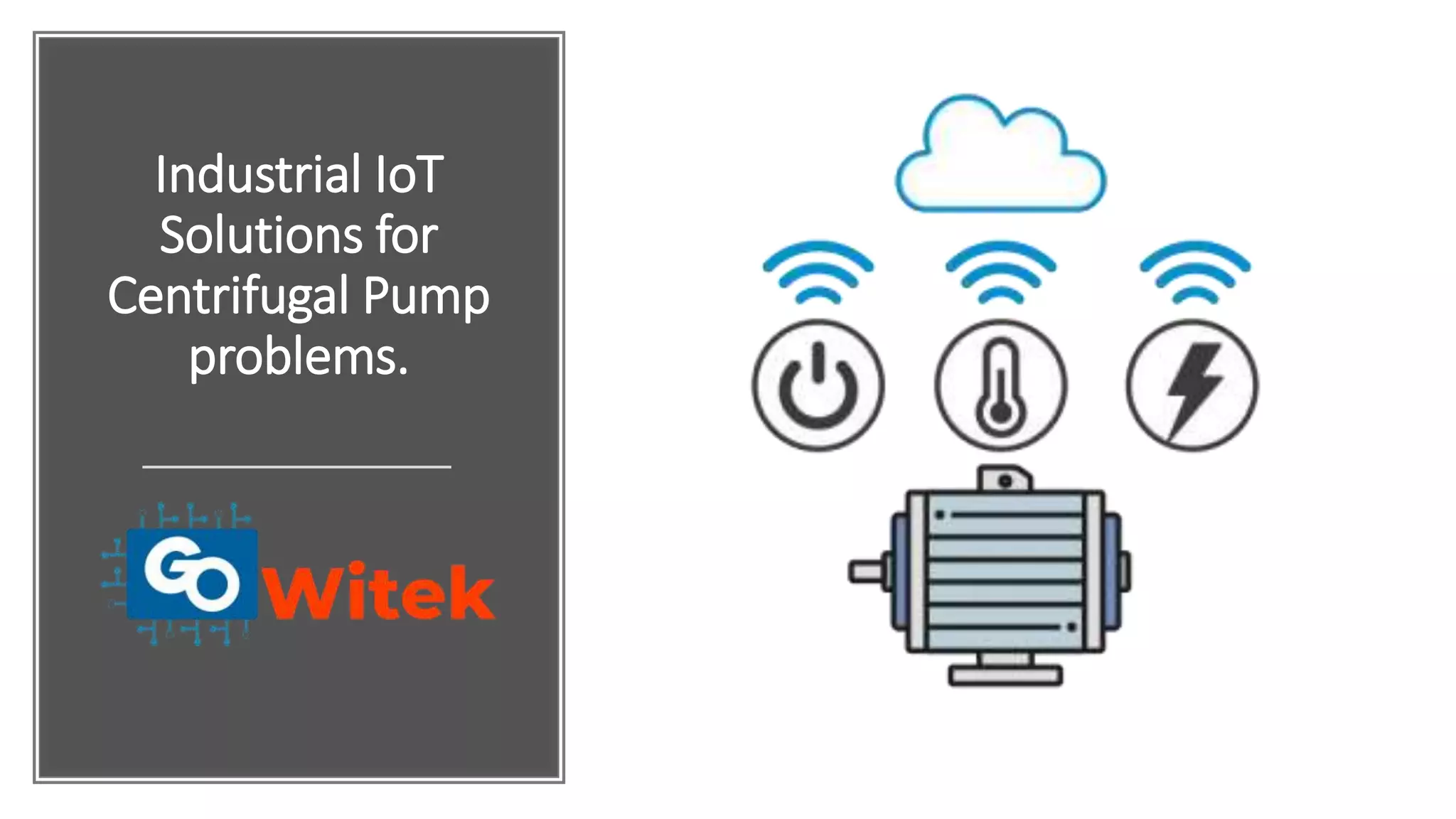
Industrial IoT
Solutions for
Centrifugal Pump
problems.
Introduction
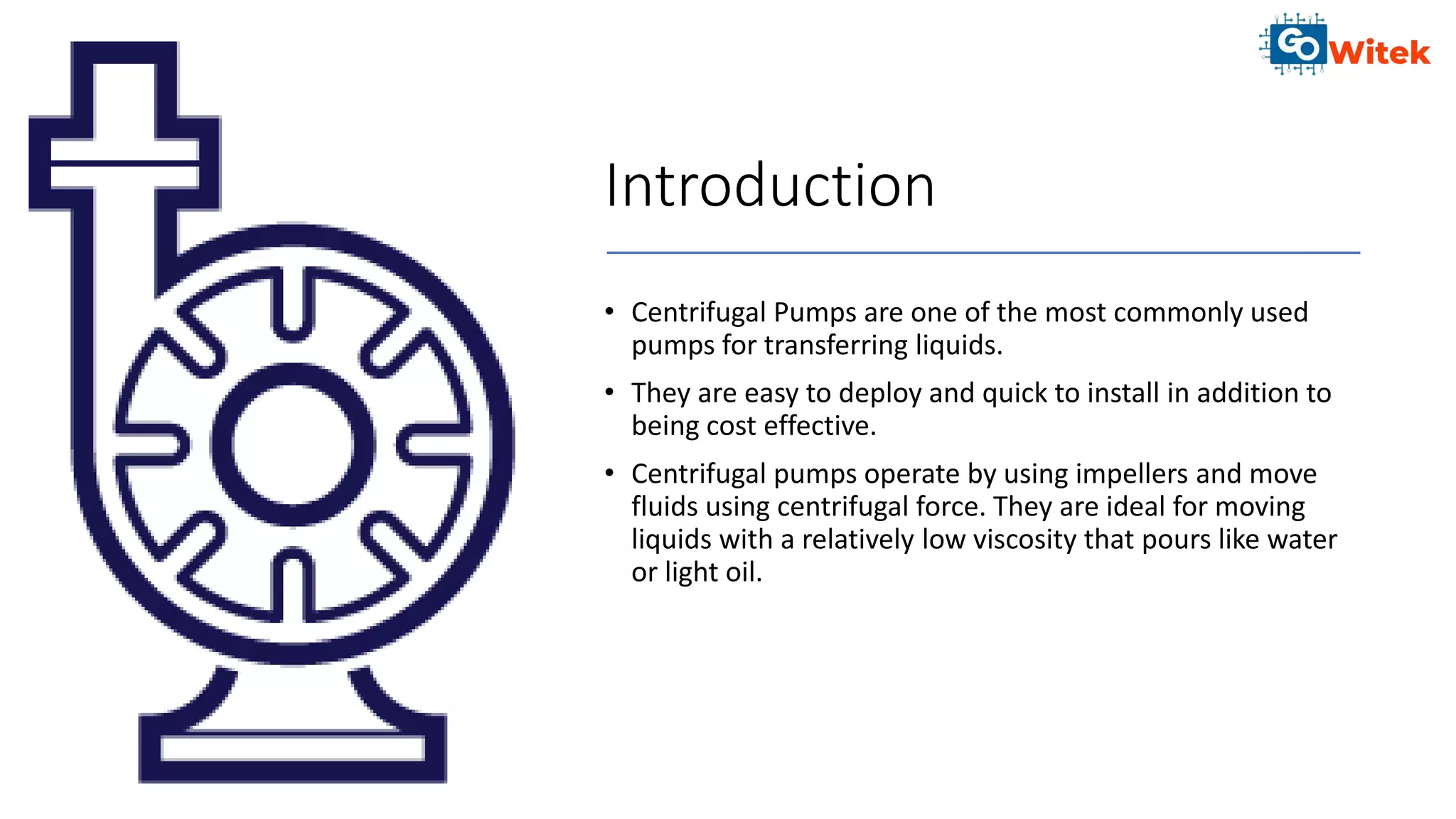
• Centrifugal Pumps are one of the most commonly used
pumps for transferring liquids.
• They are easy to deploy and quick to install in addition to
being cost effective.
• Centrifugal pumps operate by using impellers and move
fluids using centrifugal force. They are ideal for moving
liquids with a relatively low viscosity that pours like water
or light oil.
Problems of Centrifugal Pumps
• Variable flow patterns tend to cause damage
leading to plant downtime and resultant loss in
revenue.
• Support staff is notified when the failure has
already occurred. This leads to poor equipment
maintenance.
• No data on failure causes and patterns.
• Visibility into real time environment condition
possible only through Manual operations.
Some additional problems:
• New emerging end user markets such as
chemical and pharmaceutical Industry demand
value added solutions as they are extremely
competitive.
• Centrifugal Pumps being used in European
Markets always need to comply with IE3
standards during operation. This compliance is
possible only with real time monitoring.
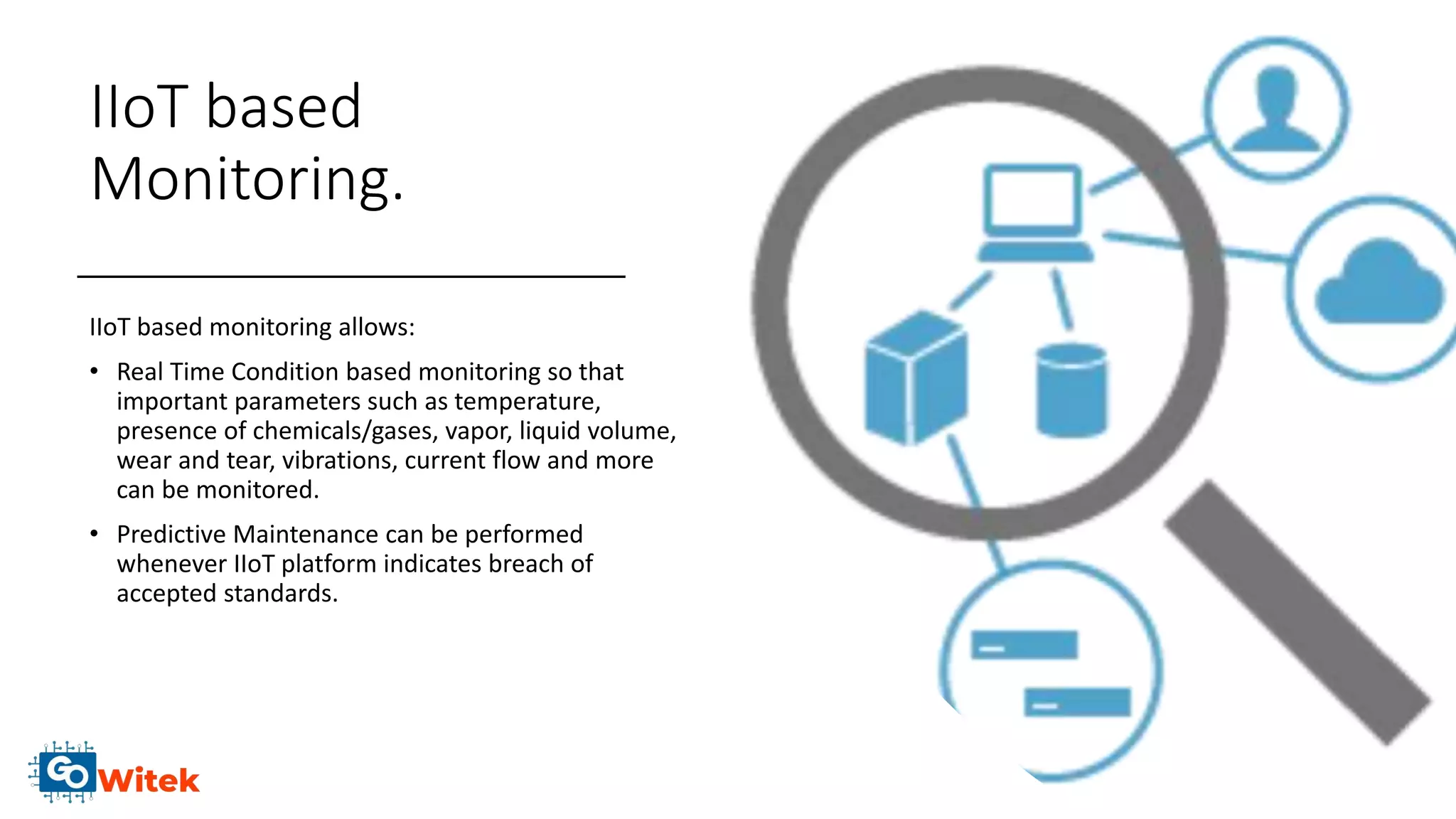
IIoT based
Monitoring.
IIoT based monitoring allows:
• Real Time Condition based monitoring so that
important parameters such as temperature,
presence of chemicals/gases, vapor, liquid volume,
wear and tear, vibrations, current flow and more
can be monitored.
• Predictive Maintenance can be performed
whenever IIoT platform indicates breach of
accepted standards.
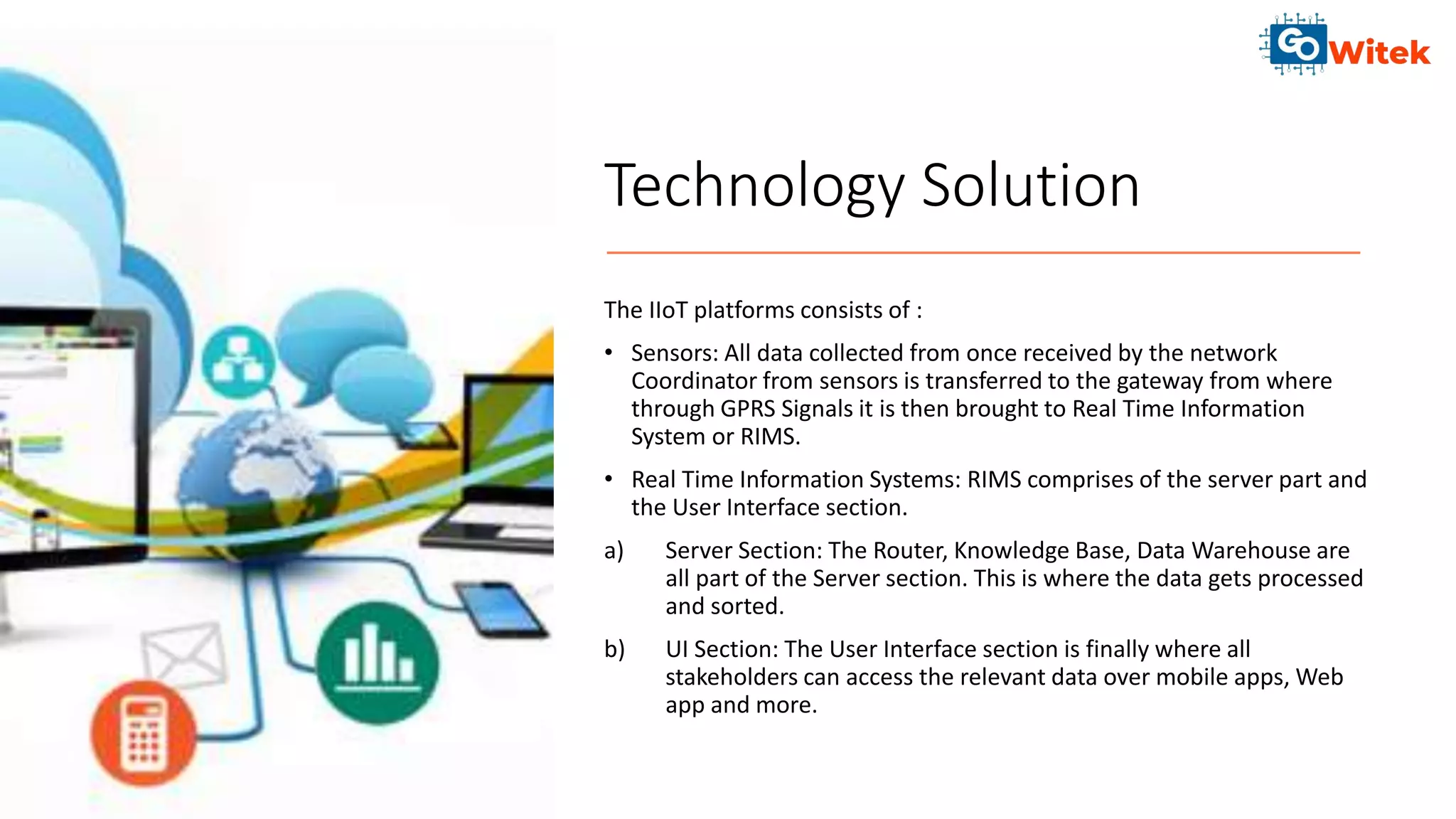
Technology Solution
The IIoT platforms consists of :
• Sensors: All data collected from once received by the network
Coordinator from sensors is transferred to the gateway from where
through GPRS Signals it is then brought to Real Time Information
System or RIMS.
• Real Time Information Systems: RIMS comprises of the server part and
the User Interface section.
a) Server Section: The Router, Knowledge Base, Data Warehouse are
all part of the Server section. This is where the data gets processed
and sorted.
b) UI Section: The User Interface section is finally where all
stakeholders can access the relevant data over mobile apps, Web
app and more.
Benefits of IIoT based Monitoring
of Centrifugal Pumps:
• Competitive edge through condition-based monitoring:
Manufacturers can know whether their pumps are operating
within the expected thresholds and their real time performance.
This helps them provide accurate support for better customer
service leading to brand Reputation.
• Predictive and Real-time Downtime Alerts: It is possible to get
predictive and real-time alerts if vital operating parameters of the
pump have breached thresholds or if a failure has occurred. They
can gather and analyze this data for enhanced product
development.
• Cost Effective, efficient solutions: The end user of the pump
receives a cost-effective solution as it is now possible for them to
monitor energy consumption and ensure that the pump is
functioning in compliance to any specific requirement such as the
European motor and pump efficiency regulation. It also lets them
track excessive energy consumption thus saving energy costs
IIoT solutions for centrifugal pump problems

IIoT solutions for centrifugal pump problems

  • 1.
  • 2.
    Introduction • Centrifugal Pumpsare one of the most commonly used pumps for transferring liquids. • They are easy to deploy and quick to install in addition to being cost effective. • Centrifugal pumps operate by using impellers and move fluids using centrifugal force. They are ideal for moving liquids with a relatively low viscosity that pours like water or light oil.
  • 3.
    Problems of CentrifugalPumps • Variable flow patterns tend to cause damage leading to plant downtime and resultant loss in revenue. • Support staff is notified when the failure has already occurred. This leads to poor equipment maintenance. • No data on failure causes and patterns. • Visibility into real time environment condition possible only through Manual operations.
  • 4.
    Some additional problems: •New emerging end user markets such as chemical and pharmaceutical Industry demand value added solutions as they are extremely competitive. • Centrifugal Pumps being used in European Markets always need to comply with IE3 standards during operation. This compliance is possible only with real time monitoring.
  • 5.
    IIoT based Monitoring. IIoT basedmonitoring allows: • Real Time Condition based monitoring so that important parameters such as temperature, presence of chemicals/gases, vapor, liquid volume, wear and tear, vibrations, current flow and more can be monitored. • Predictive Maintenance can be performed whenever IIoT platform indicates breach of accepted standards.
  • 6.
    Technology Solution The IIoTplatforms consists of : • Sensors: All data collected from once received by the network Coordinator from sensors is transferred to the gateway from where through GPRS Signals it is then brought to Real Time Information System or RIMS. • Real Time Information Systems: RIMS comprises of the server part and the User Interface section. a) Server Section: The Router, Knowledge Base, Data Warehouse are all part of the Server section. This is where the data gets processed and sorted. b) UI Section: The User Interface section is finally where all stakeholders can access the relevant data over mobile apps, Web app and more.
  • 7.
    Benefits of IIoTbased Monitoring of Centrifugal Pumps: • Competitive edge through condition-based monitoring: Manufacturers can know whether their pumps are operating within the expected thresholds and their real time performance. This helps them provide accurate support for better customer service leading to brand Reputation. • Predictive and Real-time Downtime Alerts: It is possible to get predictive and real-time alerts if vital operating parameters of the pump have breached thresholds or if a failure has occurred. They can gather and analyze this data for enhanced product development. • Cost Effective, efficient solutions: The end user of the pump receives a cost-effective solution as it is now possible for them to monitor energy consumption and ensure that the pump is functioning in compliance to any specific requirement such as the European motor and pump efficiency regulation. It also lets them track excessive energy consumption thus saving energy costs