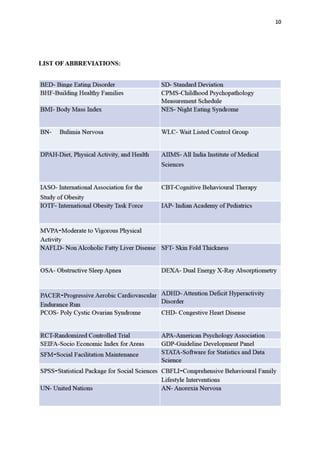
1
TITLE OF THE STUDY
THE ROLE OF FAMILY COUNSELLING IN CONTROLLING
OBESITY AND OVERWEIGHT IN CHILDREN AND ADOLESCENTS
A Dissertation (MCFTP-002) submitted
to
Indira Gandhi National Open University
in partial fulfilment
of the requirement
for the Degree of
Master’s of Science in Counselling and Family Therapy
BY
ENROLMENT NUMBER:
MSCCFT PART II
National Centre for Disability Studies
Indira Gandhi National Open University
Maidan Garhi, New Delhi-110068
2
TITLE -The Role of Family Counselling in Controlling
Obesity and Overweight in Children and Adolescents
MSCCFT- (MCFTP-002)
DISSERTATION
ENROLMENT NUMBER-
Regional Centre Code- 29,Delhi 2, Rajghat
Program Study Centre- 29053 P
Mobile number-
Email id-
Program Guide-
Program Supervisor-
Dept. of Psychiatry
LHMC & SSSK HOSP.
NEW DELHI
3
4
6
Acknowledgements:
I would like to thank my dear husband , who has been a
constant support and inspired me at every stage of this work.
He helped me in search of a relevant topic and discussed with me at every stage
how to go about it.
I am deeply grateful to my mentor and guide , who was
always there to show me the right path.
I would like to thank who throughout the work, supported and
guided me and made it very easy for me to see how it needed to be done.
I would like to thank my close associates and my staff who were always ready
to cooperate with me at every step of this work.
11
ABSTRACT:
We undertook this study to find The Role of Family Counselling in Controlling Obesity
and Overweight in Children and Adolescents.
India has seen a surge in overweight and obesity, in recent years, and data shows that among
5-19 year olds, the prevalence of obesity ranges from 3.6 % to 11.7%. It is predicted that by
2025 there will be 17 million obese children in India.
Obesity and overweight can have serious health consequences and affects children across all
age groups.Raised BMI is considered as a major risk factor for diseases such as
cardiovascular diseases, type 2 diabetes, hypertension and many cancers. These Non-
communicable diseases lead to lifelong sickness and early death. In children obesity
significantly reduces their quality of life, and they may become subject of bullying, teasing,
and social isolation.
Obesity is nowadays considered the most serious health challenges of the 21st century!
National and International policy makers have been going through all kinds of methods to
control it. We are aware that multiple methods will be required to control overweight and
obesity. But in the case of children and adolescents, who spend a considerable time at home,
till much late age, in India, with different cultures and beliefs, leading to different eating
habits of the Indian Population, we felt that the environment provided at home by parents, of
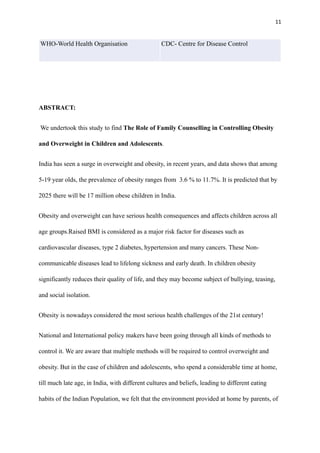
WHO-World Health Organisation CDC- Centre for Disease Control
12
physical activities, and healthy food practices comes first hand in controlling the problem.
This study was therefore undertaken keeping the important role of parents in mind.
So we started the study keeping in mind the Research Question: ‘How can counselling of
parents help in controlling overweight and obesity in children and adolescents?’
We studied Original Researches, Randomised Controlled Trials on the topic, Systematic
Analysis, and Review Articles, published on this subject over the last 10 years. We selected
articles or researches conducted under proper controls, and following validated methods and
followed up over a long period of time.
After an extensive study of 19 articles we compared the results of these studies to find the
answer to our Research Question.
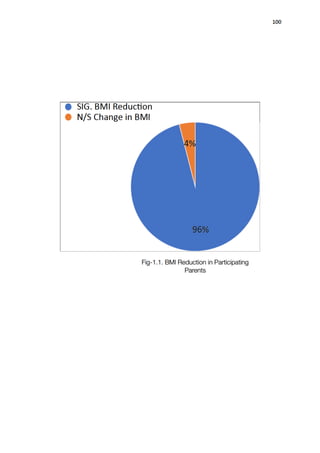
Our findings confirmed the important role of parental counselling and involvement of
parents, in controlling obesity and overweight in children and adolescents. Almost all the
studies which involved parents in the intervention programs, reported confirmed weight loss
by measuring BMI, or BMI z scores. Various methods have come up, as have National and
International Guidelines to describe how parental counselling can help in controlling
childhood and adolescent obesity and overweight.
13
Chapter-1
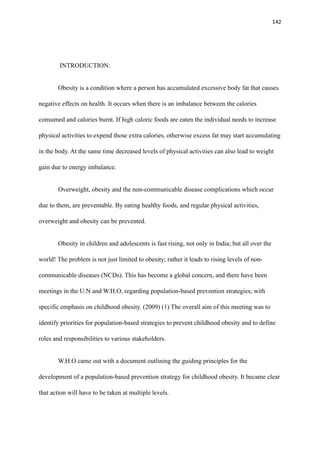
INTRODUCTION:
Obesity is a condition where a person has accumulated excessive body fat that causes
negative effects on health. It occurs when there is an imbalance between the calories
consumed and calories burnt. If high caloric foods are eaten the individual needs to increase
physical activities to expend those extra calories, otherwise excess fat may start accumulating
in the body. At the same time decreased levels of physical activities can also lead to weight
gain due to energy imbalance.
Overweight, obesity and the non-communicable disease complications which occur due to
them, are preventable. By eating healthy foods, and regular physical activities, overweight
and obesity can be prevented.
Obesity in children and adolescents is fast rising, not only in India; but all over the world!
The problem is not just limited to obesity; rather it leads to rising levels of non-
communicable diseases (NCDs). This has become a global concern, and there have been
meetings in the U.N and W.H.O, regarding population-based prevention strategies; with
specific emphasis on childhood obesity. (2009) (1) The overall aim of this meeting was to
identify priorities for population-based strategies to prevent childhood obesity and to define
roles and responsibilities to various stakeholders.
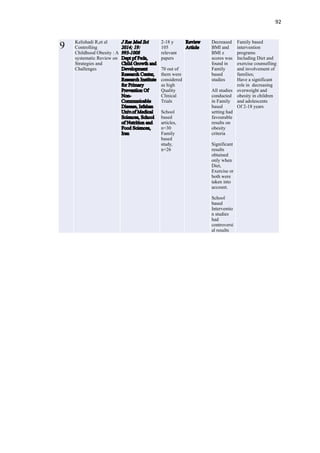
W.H.O came out with a document outlining the guiding principles for the development of a
population-based prevention strategy for childhood obesity. It became clear that action will
have to be taken at multiple levels.
14
So, they divided the prevention strategy into three broad components:
1. Government policies
2. Population wide policies and initiatives
3. Community based interventions
Epidemiology of the problem:
Globally: An estimated 200 million children, less than 18 years age are now estimated to be
overweight, as per the assessment of the International Association for the study of Obesity
(IASO), and International Obesity task Force (IOTF) The global presence of obesity has
doubled from 1990 to 2015. The increase has been found to be more in children than in
adults. Just in the last three decades, the number of school-going children and adolescents
with obesity, has increased by 10-fold! (10)
One third of children and adolescents in the United States are classified as either overweight
or obese.
15
In India: The prevalence of obesity, in Indian children 5–19-year-olds, ranged between 3.6
and 11.7 %. It is predicted that by 2025 there will be 17 million obese children in India.
About 50% of obese children will become obese adults, suffering from the complications.
In a recent study by Reddy et al, more than 28% of adult males and 47% of adult females in
urban Delhi were overweight by WHO standards. In the same study the corresponding figures
for overweight in a neighbouring Haryana rural area were 7% in males, and 9% in females.
Conversely, as many as 38% of males and 36% of females in the rural area were actually
underweight by BMI standards. Such an urban, rural divide has been documented in other
Indian studies too.
In children, the difference between the rich and the poor is fairly evident in recently
conducted urban studies. Ramchandran et al, studied children from six schools in Chennai,
two each from high, middle and lower income groups. The prevalence of overweight and
obese adolescents ranges from 22% in better off schools to 4.5% in lower income group
schools. In a Delhi school with tuition fee more than 2,500 per month, the prevalence of
overweight was found to be 31%, out of which 7.5% were frankly obese. (11)
In Pune, the figures for overweight children were 24% in a well off school and 6% in a
corporation school (unpublished data)
Enormity of the problem:
16
Overweight and obesity can have serious health consequences and
affects children across all age groups.
Raised body mass index (BMI) is considered as a major risk factor for diseases such as
cardiovascular diseases, type 2 diabetes, and many cancers, hypertension. These Non-
communicable diseases lead to lifelong sickness and early death.
In children obesity significantly reduces their quality of life, and they may become subject of
bullying, teasing and social isolation.
Obesity is nowadays considered as the most serious public health challenges of the 21st
century.
In 2011, the United Nations (UN) General Assembly, in its political declaration; recognised
the urgent need for global action and acknowledged that such diseases pose a major threat of
economies of many Member states.
It provided a strong impetus for governments to take preventive action against NCDs
including Obesity.
In 2004, the World Health Assembly endorsed Resolution WHA57.17 on the Global Strategy
on Diet, Physical Activity and Health (DPAH) It addresses, the increasing prevalence and
burden of NCDs and proposes that national governments should demonstrate leadership and
17
implement policies and programmes to promote a positive environment for health; more
specifically changes in diet, and physical activity patterns.
Obesity is a very complex problem as it involves genetic, biological, developmental,
environmental as well as behavioural factors. It is becoming a major health problem and has
been recognised as such all over the world now. The reason of obesity in childhood and
adolescence is mainly an inequity in energy balance. Which means an excess of calorie intake
without an appropriate calorie expenditure. The increasing prevalence of obesity in childhood
and adolescence is associated with a rise in co-morbidities which were earlier seen only in
adults, e.g Type 2 Diabetes Mellitus, Hypertension, Non-alcoholic Fatty Liver Disease
(NAFLD), Obstructive Sleep Apnea (OSA), and Dyslipidemia. [2]
Also, obesity increases the risk of early puberty in children, menstrual irregularities in
adolescent girls (PCOS), high Cholesterol levels, Metabolic Syndrome.
Additionally, obese children and adolescents can suffer from psychological issues such as
Depression, Anxiety, Poor Self-esteem, body image issues, Peer relationships, and eating
disorders like Bulimia Nervosa (BN), Binge-eating disorder (BED), Night Eating Syndrome
(NES). Sometimes to be healthy and restrict their diet they may cross the extreme and suffer
from Anorexia Nervosa (AN)
Statement Of The Problem:
The Role of Family Counselling in Obese and Overweight Children and Adolescents.
18
To understand this topic, we first need to be clear about the meaning of overweight and
obesity.
Definition Of Overweight and Obesity and its Measurement:
Obesity is defined as a condition of abnormal or excessive fat accumulation in adipose
tissue, to the extent that health may be impaired (WHO consultation on obesity, 2000)
It has to be pointed out here that the terms overweight and obesity are often used
somewhat loosely and interchangeably. However, standardisation is necessary for
international and secular comparisons.
Measurement of Obesity;
There are many methods of measuring body fat of a person, for e.g.,
1.BMI (Body mass index), There are two BMI charts that can be used for Indian Children as
of now :
(1)The NCHS/ CDC charts from USA. The American Obesity Association uses the 85th
percentile of BMI for age and sex as a reference point for overweight and the 95th
percentile for obesity in children. Bhave.S, et al,(2004) [12]. These charts can be readily
downloaded from the internet sites, but are based on well off populations from USA.
(2)Recently, new BMI standards in children using a large internationally representative
sample from six different countries (not India), with widely differing prevalence rates for
obesity have been published. Age and sex-specific BMI cut-off points for defining
overweight and obesity in children have been derived by identifying percentiles in
19
children analogous to adult BMIs of 25 kg/m2, and 30 kg/m2, respectively. These are
referred to as IOTF cutoff points and are now recommended as standards for international
comparison of data.
Other Markers of Obesity: All of these markers have their individual advantages (e.g waist
circumference for central obesity, DEXA for actual fat percentage) but none are really
standardised as yet for children.
(1)Measuring skin-fold thickness (SFT) with a calliper, has not been validated as a marker of
obesity in population studies. Body fat percentage can be calculated from prediction
equations using multiple skin-fold measurements. Cut-off values for obesity-30% body fat
(girls) and 20-25% body fat (boys).
Disadvantages: Significant inter and intra observer variation, affected by gender and
ethnicity, no Indian reference data, no significant advantage over BMI.
(2) Waist circumference: Highly sensitive and specific measure of central obesity. Cut off
values for risk - 102 cm (adult males), 88 cm (adult females), 71 cm (non-pubertal children)
No Indian data.
(3)Waist hip ratio: Waist circumference/ Hip circumference >0.9= Central Obesity. No added
advantage of WHR over waist circumference in assessing central obesity.
(4)Bioelectrical Impedance Analysis : Non invasive, safe, cheap, reliable estimation of body
composition using a small portable instrument.
Requires standardised conditions, experienced personnel, adequate hydration status, over-
predicts body fat in lean and muscular individuals and under-predicts in obese.
20
(5) Dual-energy X-ray Absorptiometry (DEXA): Accurately estimates whole body as well as
regional bone mineral density, lean mass, and fat mass over a wide range of ages and body
sizes.
Cut off values for body fat %: adult males >25%, females > 35%. Non invasive, minimal
radiation, but very expensive.
(6)Air Displacement Plethysmography ( BOD-POD): A sophisticated new technique.
Accurate, non-invasive, comfortable but very expensive. May be unsuitable for younger
children as it needs considerable cooperation.
Most of these may measure the body fat even directly, but it has been found that calculating
the BMI by using a formula-----weight(kg) / height in (m)2
of height and weight of children over 2 years, is an inexpensive method to assess body fat.
Although it does not measure body fat directly; it is an excellent screening method, for
research. But for diagnosis, one should not depend entirely on it.
BMI provides a reasonable estimate of body fat and studies have shown that BMI correlates
with body fat as well as future health risks. For children BMI should be plotted on age and
sex specific BMI growth charts, such as those from centre for disease control (CDC) United
States, or from the WHO.
Unlike in adults, Z-scores, or Percentiles are used to represent BMI in children and vary with
age and sex of the child.
21
The World Health Organisation (WHO), has defined the
Risk of overweight as BMI Z-score >1.0
Overweight as BMI Z-score > 2.0
Obesity as BMI Z-score > 3.0
In terms of percentiles:
Underweight=BMI <5th percentile
Healthy weight= BMI 5th – 84th percentile
Overweight =BMI > 85th percentile and <95th percentile
Obesity = BMI > 95th percentile.
Keeping the above information in mind we selected studies which mostly used BMI and z
scores for the assessment of overweight and obesity.
Causes of Obesity
Obesity has a complex pathophysiology and results from a combination of individual and
societal factors.
Individual Level: biological, physiological factors, own genetic predisposition, and
tendency to gain weight.
22
Societal Level: family influence, community, environmental factors and socio-
economic resources shape the behaviours.(2)
Justification /Rationale of this study:
As we have seen above, overweight and obesity in children and adolescents have fast risen to
alarming levels and have caused concerns globally due to their consequences on long term
health of populations and the upcoming generations.
International and National policy makers have been going through all kinds of methods to
control it. We are aware that multiple methods are required to control overweight and obesity,
but in the case of children and adolescents, we feel that the environment provided at home by
parents, of physical activities and healthy food choices come first-hand in controlling the
problem.
This study was therefore undertaken keeping the important role of parents in mind. Even if
school - teachers educate the children about healthy food and physical activities, it is
ultimately what food they are served at home, how much, and how frequently, and what the
environment of physical activities or outdoor games is available to the children. For e.g a
child may be interested in playing badminton and may easily arrange a partner to play with
him, but it is on the parents to provide him with the bat and equipment, as well as allow him
time to play, or even motivate him to play.
23
Lately in India we have seen children going to school, and then after an hour of rest going for
coaching, coming home late in the evening, by the time it is already dark, they cannot play,
have dinner, and watch T.V, or play mobile games and go off to sleep. Physical activity is
totally missing in their daily schedule.
Since December 2020, when Covid-19 started all over the world, the little activity that
children had, by going to school, is also stopped, as in India schools have been closed for a
long time. Whole families have been sedentary, inside homes, watching TV news, or on
mobiles. Children have been busy trying to adapt to the new Digital platform of online
studies. All this has added to Overweight and obesity, and Pediatricians have seen an
alarming weight gain in children.
The older a child is, when he or she remains overweight, the greater the likelihood that
overweight will remain in adulthood.
The prevalence of diabetes, CHD and other lifestyle disorders is increasing alarmingly in
India, and is affecting much younger populations than even in the West. A large pool of
young Indians demonstrate ‘prediabetics’ (i.e., insulin resistance and or glucose intolerance.
Gestational diabetes is common in mothers. High BMIs and central obesity have been now
accepted to be closely associated with these problems.
In a country like India, which is in a phase of transitional economy, malnutrition often co-
exists with obesity —a double burden of disease. This often leads to confusion in health
messages.
Seeing to the rising incidence of obesity and overweight in children and adolescent, and the
enormous risks involved in their health, as youngsters and even into adulthood, this study
24
was undertaken to confirm how much and how, parents can contribute in controlling
overweight and obesity in their children and adolescents. Because they are together, at home,
can influence each other as they are the role models, and bring about change at a faster rate,
and more economically than all Government policies or programs put together.
RESEARCH QUESTION:
How can counselling of parents help in controlling overweight and obesity in
children and adolescents?
OBJECTIVES OF THIS STUDY:
1. Collect evidence-based data of the role of parental counselling in controlling
overweight and obesity in children and adolescents
2. What interventions are being carried out to help parents in controlling overweight
and obesity in their children and adolescents.
3.Enlist methods which when used by parents really help to control overweight and
obesity in children and adolescents.
25
Chapter-2
REVIEW OF LITERATURE
Studies published previously as well as reviewed by other scientists and published as review
articles were studied, to understand what others have done and found regarding the role of
parents in controlling overweight and obesity in children and adolescents.
Foreign Studies
1. Study in Australia:
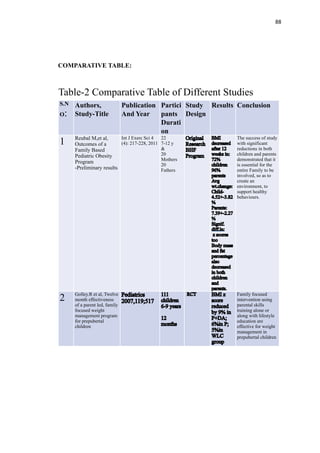
Rebecca Golley.R, Anthea M. Magarey, Louise A. Baur, Katherine S. Steinbeck, Lunne A. Daniels,
(2007)[13], The Objec
ti
ve of this study was to evaluate the rela
ti
ve e
ff
ec
ti
veness of paren
ti
ng skills
training as a key strategy for the treatment of overweight children.
The Sample consisted of an assessor binded, randomized, controlled trial involving 111(64% female)
overweight, prepubertal children 6 to 9 years of age. They were randomly assigned to paren
ti
ng skills
training plus intensive lifestyle educa
ti
on, paren
ti
ng skills training alone, or a 12 month waitlisted
control. Height, BMI and waist circumference z score and metabolic pro
fi
le were assessed at
baseline, 6 months and 12 months, with an inten
ti
on to treat.
Aim of this study was to evaluate the rela
ti
ve e
ff
ec
ti
veness of paren
ti
ng skills training as a key
strategy for the treatment of overweight children. It tests the hypothesis that prepubertal children
whose parents par
ti
cipate in a family focused child weight management program, comprising
parental skills training and intensive lifestyle modi
fi
ca
ti
on educa
ti
on , will have BMI and waist
circumference z scores and metabolic pro
fi
les a
ft
er 12 months that will be :
(1) Improved when compared to wait listed children and
26
(2) No di
ff
erent from children whose parents par
ti
cipate in a program that focused on paren
ti
ng skills
training alone.
Design: A single - blinded, randomized, controlled trial(Australian Clinical Trial Register
00001103[ www.actr.org.au]) was used to determine the e
ff
ec
ti
veness of 2 child weight-
management interven
ti
ons, namely paren
ti
ng-skills training with intensive lifestyle educa
ti
on
(P+DA),and paren
ti
ng- skills training alone(P). These interven
ti
ons were compared with each other
and with a control group wait-listed for interven
ti
on for 12 months (WLC).
Parents in the P and WLC groups received a general ‘ healthy- lifestyle’ pamphlet.
The study was conducted at 2 metropolitan teaching hospitals in Adelaide, South Australia. It was
approved by Flinders Clinical Research Ethics, and Women’s and Childrens’ Hospitals Ethics
commi
tt
ees. The design, conduct, and repor
ti
ng of this study followed the guidance outlined in The
Consolidates Standards of Repor
ti
ng Trials (CONSORT) statement.
The Randomiza
ti
on schedules were computer generated using a three block design. Individual group
alloca
ti
ons were sealed in opaque envelopes, with the next envelope opened on a child’s comple
ti
on
of baseline measurements. Researchers involved in the recruitment, par
ti
cipant alloca
ti
on, and
interven
ti
on or data collec
ti
on, were not involved in the randomiza
ti
on process.
Dr. Golley had developed the lifestyle educa
ti
on component a
ft
er undertaking accredited training for
the paren
ti
ng component. All interven
ti
on sessions were conducted by him only.
The Interven
ti
on sessions were based en
ti
rely on the mode of parent-only. Parents were supposed to
have the sole responsibility for a
tt
ending program sessions and implemen
ti
ng family lifestyle change.
Children did not a
tt
end any educa
ti
on sessions. The family was encouraged to implement change at
family level and not only the child level.
Interven
ti
on Descrip
ti
ons:
P -Group: For Paren
ti
ng skills training the parents par
ti
cipated in a standardized and evaluated
general paren
ti
ng program—Triple P( Posi
ti
ve Paren
ti
ng Program); which is based on Child
27
development theory and social learning principles. The program consisted of weekly 2-hour group
sessions (4weeks); followed by weekly individual telephone sessions of 15-20 minutes each( 4
weeks) , 15-20 minute telephone sessions at monthly intervals(3 months). Par
ti
cipants were
informed and guided about ea
ti
ng and ac
ti
vity behaviours, supported by pamphlets.
P+DA - Group: A
ft
er comple
ti
ng the above Triple-P program, this group par
ti
cipated in an addi
ti
onal 7
intensive lifestyle support group sessions.These were held at 2 weekly intervals at
fi
rst, then monthly.
The sessions focused on lifestyle knowledge, and skills including the following:
Family focused healthy ea
ti
ng
Speci
fi
c core food serve recommenda
ti
ons
Monitoring
Label reading
Snacks
Modifying Recipes
Being ac
ti
ve in a variety of ways
Roles and responsibili
ti
es around ea
ti
ng
Managing appe
ti
te
Self-esteem
Teasing
While parents a
tt
ended the lifestyle sessions, children in the P+ DA group a
tt
ended structured
supervised ac
ti
vity sessions developed by Physical ac
ti
vity experts. The sessions consisted of fun, non
compe
ti
ti
ve games, designed around aerobic ac
ti
vity, and development of fundamental motor skills.
The sessions were designed as play and were diversional rather than interven
ti
onal. The ac
ti
vi
ti
es
required minimum equipment and could be easily replicated at home.
28
WLC- Group: In addi
ti
on to the general healthy lifestyle pamphlet, the WLC group in the 12 month
wait-listed period were contacted by telephone 3 to 4
ti
mes for 5 minutes, as a reten
ti
on strategy.
Measurements: were taken at baseline, at 6 months of interven
ti
on and again a
ft
er 12 months of
interven
ti
on. A ques
ti
onnaire containing 18 items was
fi
lled at baseline with ques
ti
ons based on
demography- gender,age, ethnicity, rela
ti
onship to child, marital status,number of children in family
SE status was assessed by Australian Socio Economic Index for Areas (SEIFA)
Anthropometry:
The Primary study outcome was BMI z score. Height and weight were measured with par
ti
cipants
lightly clothed and without shoes. (Trumeter stadiometer). Weight was measured with SECA
electronic scales( SECA Hamburg,Germany). BMI was calculated and converted to a BMI z score by
using U.K reference Data, due to absence of Australian data. Waist circumference was measured
midway between the tenth rib, and the iliac crest, with par
ti
cipants in standing posi
ti
on, and
converted to a z score by using U.K reference scale.
The par
ti
cipants were classi
fi
ed as non overweight, overweight and obese, based on the
interna
ti
onal Obesity Task Force de
fi
ni
ti
on. Parental height and weight were measured and BMI was
calculated. Parents’ weight status was classi
fi
ed using the World Health Organiza
ti
on de
fi
ni
ti
on, with
BMI > 25 kg/m2 = overweight
BMI > 30 kg/m2= obese.
Metabolic Health Outcomes: Blood pressure, Fas
ti
ng glucose, total cholesterol, high density
lipoprotein cholesterol, and triacylglycerol levels were analyzed by standardized methods.
Program Evalua
ti
on : was done to check parental sa
ti
sfac
ti
on by 16 item, anonymous ques
ti
onnaire
adapted from the one used in a typical Triple P program.
Data Analysis:
Analysis was performed using SPSS for windows version 11.5 (SPSS Inc, Chicago, IL) Where the
distribu
ti
on of variables is normal, data are expressed as mean+- SD and propor
ti
ons. Where
29
variables were normally distributed and had equality of variance of residuals, a linear mixed model
(SPSS MIXED) including
ti
me, group, was used to determine whether there was a signi
fi
cant
ti
me by
group e
ff
ect between baseline, 6,and 12 months.
Results:
(1) 64% par
ti
cipants were females, majority being 8 yrs or older (75/111) and obese (82/111)
(2) 34% of parents were overweight and 44% as obese
(3)There were no signi
fi
cant di
ff
erences in the SE status of children who par
ti
cipated in the study.
(4)Height increased in the study par
ti
cipants by 6.5 +—1.3 cms between baseline and 12 months.
Height z score for all study par
ti
cipants was 1.2+— 0.9 at baseline and 1.3+— 0.9 at 12 months,
indica
ti
ng that the growth of interven
ti
on children was similar to that of children wait-listed for
interven
ti
on for 12 months.
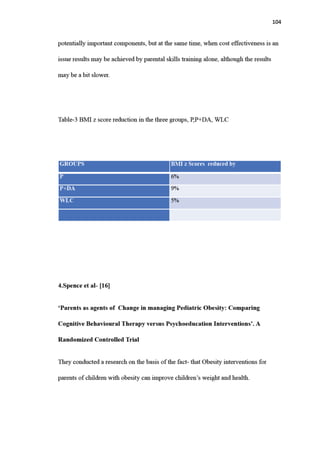
(5)Outcome at 12 months: Primary study outcome: BMI z score, reduced by 9% in the P+DA group;
6% in the P group, and 5% in the WLC group. 45% of the children in the WLC group increased their
BMI z score over 12 months, compared with 19% and 24% in the P+DA and P groups, respec
ti
vely
(P=0.03).
(6)Boys in both interven
ti
on groups had signi
fi
cantly lower BMI z scores at 6 and 12 months
compared with their baseline.
(7)The waist circumference z score was signi
fi
cantly lower at 12 months in both P+DA and P groups
as compared to baseline, but not in the WLC group. It was also signi
fi
cantly lower at 12 months vs
6 months for the P+DA group.
The key study
fi
nding was that all three groups had a signi
fi
cant reduc
ti
on in BMI z scores over 12
months. The BMI z scores decreased in double the number of children in the P+DA group (45%) as
compared with the P interven
ti
on (24%); and WLC (19%). Waist circumference z score fell
signi
fi
cantly over 12 months in both interven
ti
on groups but not in the control group. This study was
30
not powered for studying a gender di
ff
erence in weight loss; but a signi
fi
cant di
ff
erence was
observed between them, and further studies are recommended to include gender di
ff
erence also.
An unan
ti
cipated reduc
ti
on in BMI z scores in the control group produces the poten
ti
al for type II
error.
The Ar
ti
cle concludes that a Family focused interven
ti
on using paren
ti
ng skills training and promo
ti
ng
a healthy lifestyle may be an e
ff
ec
ti
ve approach to weight management in prepubertal children. Both
Paren
ti
ng skills training and lifestyle educa
ti
on are poten
ti
ally important components. This approach
addresses family and parental factors in
fl
uencing childrens’ ea
ti
ng and ac
ti
vity behaviours and
achieves a moderate reduc
ti
on in adiposity a
ft
er 12 months.
2.Angelina Fowler Brown, (2002)[14]. The candidate ar
ti
cles and the data sources were iden
ti
fi
ed
through searches of Cochrane Database of Systema
ti
c Reviews, and Websites of the Na
ti
onal
Ins
ti
tutes of Health, the CDC, and the Na
ti
onal Guideline Clearing house. Other sources of ar
ti
cles
included bibliographies of review ar
ti
cle that speci
fi
cally addressed overweight preven
ti
on or
treatment in children and adolescents. Studies were included only if their primary aim was
overweight preven
ti
on ot treatment, and were large observa
ti
onal studies, or randomized controlled
trials(RCTs), using more than 50 pa
ti
ents. Studies were not considered if they did not use outcomes
that included weight or BMI measurements. Seven studies that used a popula
ti
on approach to the
preven
ti
on of overweight in preschool or school aged children and adolescents were iden
ti
fi
ed.
These studies used a no-interven
ti
on control excep
ti
ng one cohort study. Most of these were
randomized. Only one of these studies had been undertaken outside of the United States. These
studies were heterogenous and had mixed results. Four of the studies used a mul
ti
component
school based interven
ti
on program, involving nutri
ti
on and physical ac
ti
vity. One of them also
involved educa
ti
on to reduce sedentary behaviours. They found that school-based preven
ti
on
programs are generally not successful in reducing the prevalence of obesity. Even extra sessions of
physical ac
ti
vity in school were not successful. A study which had focused on nutri
ti
on educa
ti
on
showed moderate success. Treatment interven
ti
ons required, like behavioural therapy, reduc
ti
on in
sedentary behaviour, nutri
ti
on and physical ac
ti
vity educa
ti
on are moderately successful, but may
not be generalised to the primary care se
tti
ng. The ar
ti
cle concludes that rather than focusing on
31
school interven
ti
ons for weight reduc
ti
on in children and adolescents ; The Family Physicians
should focus on identifying at-risk and overweight children and adolescents at an early stage
and educating families about the health consequences of being overweight. Interventions should
be tailored to the patient and involve the entire family. (4) The article goes further to mention
Consensus guidelines prepared by experts participating in a conference, sponsored by the Maternal
and Child Health Bureau of the U.S Department of Health and Human Resources and Services
Administration.The guidelines provide general recommendations for physicians and state that
➢ intervention for weight problems in children should begin early - 2 years or
older.
➢ The Family must be ready for change, if not, the intervention is likely to fail
➢ Physicians should educate families about the medical complications of obesity
➢ Physicians should involve the family and all caregivers in the treatment
program
➢ Physicians should encourage and empathize but not criticize
➢ The treatment program should help the family make small gradual changes
➢ The treatment program should include learning to monitor eating and activity
➢ A variety of experienced professionals can be involved in the weight
management program. (Adapted from permission from Barlow SE, Dietz WH.
Obesity evaluation and treatment: Expert Committee Recommendations.The
Maternal and child Health Bureau, Health Resources and Services
Administration and the Dept of Health and Human Services. Pediatrics
1998;102:E29(7)
32
• 3.Kittiya Rattanamanee, and Chintana Wacharasin, (2021)[5] A Quasi
Experimental Study, conducted for 7-weeks found that the group I which
received a Family based behavioural counselling program ,had significantly
better healthy eating habits at the end as compared to Group II which received
group based counselling and the Control Group III which received only a
usual program. The findings indicated that this program could enhance healthy
eating behaviour and physical activity and decrease BMI in children with
obesity.
• 4.A Systematic Review, conducted by Saravana Kumar Kothandan, (2014)[6],
identified 1231 articles, out of which 13 met the criteria. Out of 13 studies, eight were
Family based interventions (n=8) and five were school based (n=5), with total
participants (n=2067). The participants were aged between 6 and 17 and the study
duration ranged between one month and three years.
Family based interventions demonstrated effectiveness for children under the age of
twelve; and School based interventions were most effective for children in 12 to 17
age group, with differences for both long-term and short-term results.
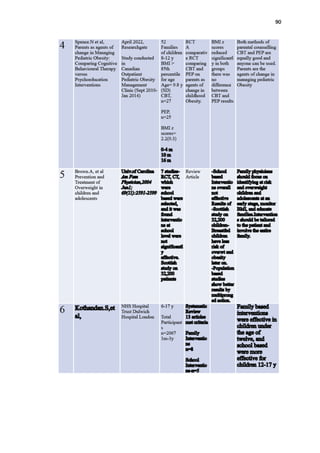
5.Nicholas D Spence, Amanda S Newton, Rachel A. Keaschuk, and Geoff D Ball, in
(2022)[16], conducted a research on basis of the fact that Obesity interventions for
parents of children with obesity can improve children’s weight and health.
33
They evaluated whether a parent based intervention based on CBT principles was superior to
a parent based intervention based on Psychoeducation Programme PEP, in improving
children's Obesity
A comparative Randomized Controlled Trial comparing CBT and PEP
CBT Vs PEP on Parents as agents of change in childhood Obesity;
They studied 52, randomly assigned children, having a mean age- 9.8 years (SD) (1.7) BMIz
score 2.2(0.3) Mean differences in BMIz score were not significantly different between the
CBT (n=27), and PEP (n=25) groups on 0-4, 10-, and 16- month follow up.
Pragmatic, two armed , parallel, superiority RCT- Randomized Controlled Trial was
conducted at a Canadian outpatient Pediatric Obesity Management Clinic (from September
2010- January 2014). It included families with children 8-12 years with an age and sex
specific BMI> 85th percentile. The subjects were followed up at 4,10 and 16 months and the
results of the two groups was compared Quantitatively. The Primary outcome was BMIz
score at post intervention (4 months), and Secondary outcomes included anthropometric,
lifestyle, psychosocial, and cardiometabolic Variables.
Quantitative methods were used and BMIz scores of the two groups were compared , as also
the Secondary outcomes.
Among 52 randomly assigned children, the mean age (SD) was 9.8(1.7) years and BMIz
score was 2.2 (0.3). Mean differences in BMIz scores were not significantly different
between the CBT(n=27) and PEP(n= 25) groups from 0 to 4, 10-,16-, month follow up.
At 4 months, the Mean difference in BMIz score from preintervention between the
CBT( -0.05, 95% Cl=-0.09 to 0.00) and PEP( 0.04, 95% Cl=-0.09 to 0.01) groups was -
34
0.01(95% Cl=-0.08 to 0.06, p=0.80) Similar results were found across all Secondary
outcomes.
The CBT based intervention for parents of children with Obesity was not found to be superior
in reducing BMIz scores vs PEP based intervention.
It was concluded that both therapies showed almost equal results and the results were not
significantly different in the two approaches used.
We have considered this study to highlight the importance of parental involvement and
counselling in the management of overweight and obese children. This study confirms that
both methods of counselling CBT and PEP are equally effective in solving the problem,
and once again it confirms that counselling parents has a very important role in helping
overweight and obese children and adolescents in reducing their weight.
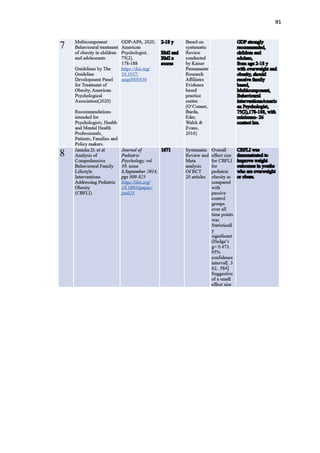
• 6.An article published in American Psycologist,(2020) [25] by
The Guideline Development panel for Treatment Of Obesity, American Psycological
Association (2020); provided the recommendations intended for psycologists, Health and
Mental health professionals, patients,families and policy makers. The guideline
development panel (GDP), used a systematic review conducted by Kaiser Permanente
Research Affiliates Evidence-based practice center as its primary evidence base.
(O’Conner, Burda, Eder, Walsh,& Evans,2016). The GDP consisted of researchers and
clinicians psycology, nursing, nutrition and medicine. They had also involved adult
community members who had childhood and adolescent experience with obesity.
35
The Criteria they used were for critically rating the evidence and formulating their
recommendations were; change in body mass index (BMI or zBMI) and serious adverse
events. Their recommendations were as follows:
The GDP strongly recommended that children and adolescents from age 2 to 18 years with
overweight and obesity, should receive family based, multicomponent behavioural
interventions; with a minimum of 26 contact hours. These should be initiated at the earliest
age possible. GDP has not as yet made any recommendations about specific forms of familty
based multicomponent behavioural interventions with respect to their comparative
effectiveness, due to lack of sufficient evidence.
The above guidelines based on evidence based research strengthen our view; that family
counselling has a very important role to play in controlling childhood and adolescent
overweight and obesity.
• 7. David M. Janicke, Ric G.Steele, Laurie A. Gayes, MS et al, (2014), (17)
The study was a meta-analysis of randomized controlled trials examining the efficacy of
comprehensive behavioural family lifestyle interventions (CBFLI) for pediatric obesity. They
searched the common research databases for articles. Their inclusion criteria were met by 20
articles of different studies with 42 effect sizes and 1671 participants. They conducted an
assessment for risk bias, and rating of quality of the evidence.
Results of this study were as follows: The overall effect size for CBFLIs as compared with
passive control groups over all time points was statistically significant (Hedge’s g = 0.473,
95% confidence interval [.362,.584]) and suggestive of a small effect size. Duration of
treatment, number of treatment sessions, the amount of time in treatment, child age, format of
36
therapy (individual vs group), form of contact, and study use of intent to treat analysis were
all statistically significant moderators of effect size.
They concluded that CBFLIs demonstrated efficacy for improving weight outcomes in youths
who are overweight or obese.
This article also quoted some very important evidence based research studies which
strengthen our view point too.
(1) Research on continual rise of rates of pediatric obesity, provides evidence of environment
by gene interactions contributing to child and adolescent weight status.
(2) Studies have also shown, that environmental factors can alter genetic factors associated
with weight ( Koletzko, Brands, Poston, Godfrey, & Demmelmair, 2012)
(3)The enviromental factors include consuming large portions of high calorie, nutrient poor
foods, decreased physical activities, and increased time spent in sedentary behaviours
(Lioret, Volatier, Lafay, Touvier, & Maire, 2009; Spear et al., 2007)
(4) One of the strongest predictors of child weight is parent weight status (Whitaker,
Wright, Pepe, Seidel, & Dietz, 1997)
(5) Given that parents play a significant role in establishing patterns of eating and physical
activity throughout childhood ( Spear et al., 2007), behavioural family lifestyle
interventions have been developed that focus on modifying the obesogenic family
environment to address weight management in children and adolescents.
37
The Behavioural Family Lifestyle Interventions focus on encouraging overweight and obese
children as well as their parents to modify :
➢ The family’s dietary intake
➢ Physical activity habits, or,
➢ Both
Dietary Modifications target :
➢ Reduction in the high calorie- high fat foods
➢ Increasing the consumption of fruits and vegetables
➢ Dietary Monitoring through classification systems e.g- Spotlight diet
(Epstein,1993)
Activity Targets include :
➢ Increasing the intensity and duration of physical activity ( e.g- play, family
activities,sports, exercise)
➢ Reducing time spent in sedentary activities (e.g- television, internet, video
games, social sites, chats and blogs etc)
Behavioural strategies to promote adoption of healthier lifestyle behaviours are central to
these programs.
Specific strategies may include the following
➢ Parent modeling
➢ Monitoring of dietary intake and physical activity
➢ Goal setting
➢ Problem solving
➢ Gradual shaping
➢ Child behaviour management
38
➢ Strategies including differential attention and contingency management
➢ Stimulus control
The review analysis goes further and mentions:
“ Parents are often considered a critical agent of change in bahavioural lifestyle interventions,
as they exercise significant control over children’s eating and physical environment, and
ultimately behaviours.”
This is more so in our country, India, as children and adolescents are groomed in a
dependent style, and are very close to and also live together until they get married and
have to move out of town for a job.
Thus this study statistically proves our viewpoint, that Parental counselling to involve
them in overall behavioural and lifestyle change towards healthy living for the whole
family have an important role to play in controlling the weight of overweight and obese
children and adolescents.
This study, also provides references of many other evidence based studies reinforcing our
point in clear terms.
• 8. David M. Janicke,PhD, Ric G.Steele, PhD, Laurie A. Gayes, MS, Ishadi R, Azizi-
Soleiman F. (2014);[18]
In their Review article said, the epidemic of childhood obesity is no more limited to high-
income countries and has become one of the most important global health problems of the
21st century.
39
The study made an electronic search of papers published from 2000 to 2012 in MEDLINE,
PubMed, ISI Web of Science and Scopus. Using the relevant keywords they found 1768
articles. Their search yielded 105 relevant papers after needful exclusions, 70 of them were
conducted as high quality clinical trials.
Study Selection and Eligibility Criteria :
The relevant papers were selected in three phases. Removal of duplicates, screening of titles
and abstracts, full text exploration in the third phase.
The studies were included if they met the following criteria:
Age- 2-18 year old children; community, family, school, and clinical interventions or a
combination of them; English language, and conducted among obese or overweight children
and adolescents. They excluded reviews, meta-analysis, and editorials were excluded.
They extracted the following information from all eligible papers:
i) General characteristics of the study
ii) Characteristics of the study population
iii)Type and duration of the intervention, measures used to assess child weight
iv)Main finding.
The Interventions were categorized as school based, family based, and clinic based.
School based programs - 30 articles were reviewed in this category: Children spend a
considerable part of their time in school and it is thought that both teachers and peers can be
engaged in nutritional education and changes in dietary habits as well in increasing physical
activities through structured programs. Although studies showed positive impact on eating
40
and activity behaviours some of them did not evaluate the effect of intervention on
anthropometric measures. The most common limitation of these studies was, self reported
data, non-randomized selection of schools, short duration of study and not masking the
interventional groups. The impact of school based programs on obesity prevention remained
controversial in this review, and remains to be determined by large studies with long term
follow up research.
Family based Programs:
It was found that reaching a healthy weight is not successful, unless children have support for
making healthy behaviour choices; and obviously the providers for such a support are the
families. Family is an applicable target for health promoting interventions. Family-based
intervention programs are considered as one of the most successful methods for obesity
treatment or prevention. They found that engaging parents in childhood obesity prevention
programs may make weight loss easier for children; because they can provide confirmatory
conditions to help their children to choose healthy behaviours. They are also important role
models for their children.
It was also found that it is difficult for parents to accept that their child has excess weight,
therefore, often they do not comprehend the necessity of obesity prevention.
The review studied (n=26) Family-based studies for this article, and found that most of these
programs were successful in decreasing body mass index (BMI) z-score and some health
consequences of overweight too.
After participation of parents in these programs, their children consumed more fibre diet, and
became less sedentary. In some cases significant decrease in fat mass was documented.
41
Low parental confidence predicts drop-out rate from family-based behavioural treatment.
The main limitation of family-based studies was found to be small sample size, high drop-out
rate, no follow-up data, and selection of motivated families.
Overall, all of the studies conducted in the family setting (n=26) had favourable results on
obesity criteria. Although some had negligible effects, probably because long term follow up
could not be done.
Clinic based interventions, in this review, had different methods, but almost the same results.
It was found that significant results were obtained on anthropometric indices only when diet,
exercise or both of them were taken into account. Although most researchers have tried low
calorie-low fat diets for treating obesity, experts recommend a diet with balanced
macronutrients. High protein diet seems to provide better satiety, but two studies could not
confirm their advantage over standard diets for decrease in BMI.
We included this study in our research because of various reasons.
Firstly, it was relevant to our study topic. Secondly, studying different countries gives us a
wider perspective as to the globalization of the problem, involving developing countries
also. Our country is also a developing Nation and is already facing a similar problem in
epidemic proportions!
Secondly, this article has taken up a lot of different studies, and compared three different
methods of controlling weight. This provided us with a great information, as to the success
of these programs, at a comparative level between school based, family based and clinic
based.
42
It came out that researchers all over the world are finding that family based programs for
controlling overweight and obesity in children and adolescents are even better than school
based programs or clinic based programs.
This confirmed with what we had set out to study.
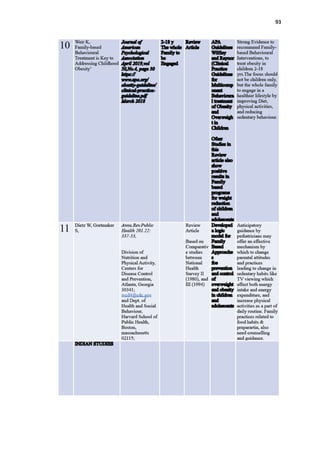
• 9. Kirsten Weir, (April 2019) [19], in her review article writes,
“ Both Wilfley and Raynor were among a panel of obesity experts who develpoed
a new APA (American Psychology Association) clinical practice guideline to
provide recommendations on treatment of overweight and obesity in children
and adolescents”. (Clinical Practice Guideline for Multicomponent Behavioural
Treatment of Obesity and Overweight in Children and Adolescents( h
tt
ps://
www.apa.org/obesity-guideline/clinical-prac
ti
ce-guideline.pdf) March 2018)
After reviewing the literature the guideline panel found strong evidence to
recommend Family- based behavioural interventions, to treat obesity in children 2-18
years old. They focus not only on the children but the whole family to engage in a
healthier lifestyle by improving the diet, physical activities, and by reducing sedentary
behavoiur.
They also focus on behaviour change, teaching strategies to parents for Goal setting,
problem solving, monitoring their childrens’ behaviours,and. also by modelling
positive parental behaviours.
43
The skills were taught both in family sessions with children, and their caregivers
attending together, and also in individual sessions designed for children or for adult
family members to attend alone.
The author mentions that family based behavioural treatments for pediatric obesity
have been around for more than three decades now and were first developed by
psychologist Leonard Epstein, PhD, a leading pediatric obesity expert at the
University at Buffalo Jacobs School of Medicine and Biomedical Sciences. Today
researchers are finding newer and better ways to make these programmes more
effective.
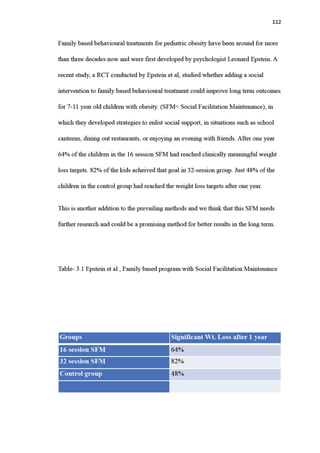
The article also mentions a recent study, a randomised controlled trial conducted by
Epstein, Wilfley, and colleagues, ‘To study whether adding a social intervention to
family-based behavioural treatment could improve long-term outcomes for 7-11 year
old children with obesity. All the participants completed a 4 month family-based,
weight-loss program. Three groups were created, two of the groups participated in a
social facilitation maintenance (SFM) program, in which they developed strategies to
enlist social supports, as well as to maintain healthier habits, in situations such as
schools, dining out at restaurants or while enjoying an evening out with friends. One
group participated in 32 sessions of the SFM, and the other in 16 sessions of the same.
A third group, the control group received additional information on diet and exercise,
without social facilitation training or any skills intruction.
After one year: 64% of the children in the 16 session SFM program had reached
clinically meaningful weight loss targets, 82% of kids achieved that goal in the 32-
44
session group. Just 48% of the children in the control group had reached the weight
loss targets after one year. ( JAMA Pediatrics (h
tt
ps://www.ncbi.nlm.nih.gov/pmc/
ar
ti
cles/PMC6169780/),Vol.171, No.12, 2017)
APA’s Clinical guideline recommends a minimum of 26 contact hours for family-
based behavioural weight management interventions.
Changing Lifestyle habits that are deeply rooted in cultures and different regions can
be really tough and expensive. Moreover Obesity and Overweight treatment expenses
are usually not covered by any Insurance companies. These pose as barriers to
treatment and training both.
• 10.William H. Dietz and Steven L. Gortmaker, [20] in a review article, write
“families and schools represent the most important foci for preventive efforts
in children and adolescents. Anticipatory guidance by pediatricians may offer
an effective mechanism by which to change parental attitudes and practices
leading to change in sedentary habits like television viewing which affect both
energy intake, and energy expenditure.”
According to the data provided by the National Health Surveys II (1980) and III
(1994) NHANES; the number of children and adolescents considered overweight,
defined as a body mass index (BMI) equal to or > 95th percentile for children of the
same age and gender, had increased by 100% in the United States. At the time of the
survey III, 10-15% of children and adolescents were found to be overweight.
Substantial weight increase was found in all age,gender, and ethnicity groups
45
considered. Because the gene pool within the US population had not changed
significantly, in the 15 years between the two surveys, they accounted the changes in
the prevalence of overweight to environmental effects on energy balance. They
concluded that the key mechanisms were alterations in the balance of dietary intake
and physical activity levels of children and youth.
It was also found that the rapid increases in the prevalence of overweight in children
and adolescents heralded an increase in obesity-associated chronic diseases.
It was found that 60% of overweight 5-10 year old children already had one
associated cardiovascular disease risk factor, such as hyperlipidemia, elevated blood
pressure, or hyperinsulinemia. Also, it was discovered, that 20% had two or more
adverse cardiovascular disease risk factors. The incidence of type II diabetes, had also
increased dramatically among youth, which until recently was thought to be an adult
onset disease.
These data showed that ideally efforts to prevent obesity in children and adolescents
should begin early, on those who were not yet overweight, but since 10-15% of
children and adolescents were already overweight, they will also require effective
treatment to prevent obesity in adulthood.
They developed a logic model for family based approaches to prevent primary or
secondary obesity in children and adolescents:
i) Choosing to breast feed rather than using formula may prevent subsequent obesity
46
ii) The qualities of food brought into the home can increase caloric intake, e.g sugar
sweetened beverages, high fat-foods, fast foods. The consumption of fruits and
vegetables and whole grains may offset high caloric intake
iii) Parental knowledge, attitudes or beliefs could be influenced by the physicians
counseling around diet.
iv)The time spent watching television, is also amenable to modification by counseling
and to parental control and may also influence food purchases and choices by
parents and children and adolescents.
v) Family practices related to food preparation, include use of fat or oil in cooking, or
cream, butter, margarine, or high fat- cheese in recipes.
vi) Family interactions related to food choices was also found to have substantial data
as a logical approach to the prevention of obesity.
vii)They also felt that family practices also affect the behaviour patterns associated
with physical activity. Time spent viewing television was of great importance in
this regard. Counseling by physicians should focus on television time; as it affects
both food intake as well as activity levels. Ideally it is best to exclude television
from the childrens’ bedrooms, and to regulate the time to not more than 2 hours per
day. This is considered an important target for intervention.
viii)They advise that parents of young children, primary health care providers can
offer anticipatory guidance counseling, that has the potential to influence both
parenting practices and the knowledge attitude and beliefs of children. The most
47
appropriate strategy is not to purchase these foods, rather than to have them in the
house and restrict access to them.
ix) Another strategy should focus on ways to increase physical activity as part of daily
routine of children and adolescents.
x) Next, the article covers some school based strategies, which we are not covering in
our study.
We selected this study to include in ours, for various reasons. Firstly, it is a very
important study based on a National Health Survey of U.S.A, as well as on the
comparison of the data of the latest survey with the data of National Health Survey
done 15 years ago.
Secondly, It brings home very important issues related to our study. It focuses on
counseling of parents to prevent and control primary and secondary overweight and
obesity.
Thirdly, the study also mentions the issues to be taken up for counseling the
parents, by health personnale, or pediatricians.
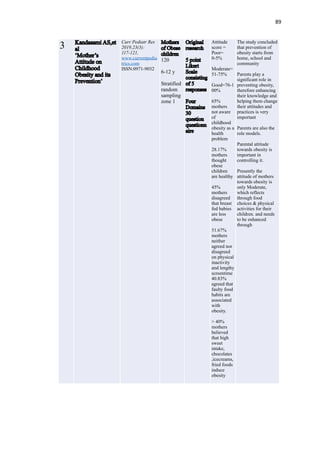
• 11. Meghan l. Reubal, Kate A. Heelan, Todd Bartee, and Nancy Foster, in their
original research ,(2011)[21] observed, that children and their parents lost
significant body mass after an intervention of 12 weeks. There were also decreases
in the child participants’ intake of high fat, high calorie foods. They concluded that
family based pediatric obesity programs may offer significant benefits and lead to
healthier lifestyles for obese children and their parents. (22)
48
Epstein demonstrated that when children and parents were targeted together for
behavioural changes, the outcomes of weight loss generally improved.
Parents are typically targeted because they are the. most influential to child’s dietary
habits and levels of physical activity. ( proven by numerous studies) A decrease in
parental body mass has been shown to influence the weight loss success of their
children.
However, reviews of treatment studies conducted on children in weight management
programs have indicated success rates ranging from 43 to 73%. These results suggest
that there is variability in weight loss of children in weight management programs.
Therfore, there is a need to understand or identify mediating variables that are
associated with weight loss in children so as to enhance the long term success of
pediatric weight control programs.
AIM: The purpose of this study was to :
Determine the outcomes of Building Healthy Families (BHF)
A family- based pediatric weight loss treatment program composed of nutrition,
physical activity, and behavioural modification strategies.
Specifically, they aimed to determine which variables, if any, mediated changes in
physical activity, or energy intake behaviours and in turn impact the weight loss of
the child.
METHODS : The study was conducted between April 2009- January 2010. (N=20
families). Twenty two obese children, (7-12 y) and their families volunteered to
49
participate in BHF - Building Healthy Families program, through area physician
referrals, media advertisements,and school nurses.
In addition 20 mothers and 20 fathers participated with their children during this
program.
Children eligible to participate were equal to or >95th percentile for age and gender.
The participants belonged to rural community of Nebraska. (30,000 people)
All due permissions from the university, child assents and informed consent from
parents were duly taken.
PROTOCOL:
BHF Included A 12 Week Intensive Intervention that consisted of:
Weekly sessions of Behaviour Modification
Nutrition Education
Family Lifestyle physical activities (1.5-2 hours/week)
It was a Family based bahavioural program based on a similar program created by
Epstein et al.(Epstein,L.H., Family based behavioural intervention for obese children.
Int J Obes Relat Metab Disord, 1996. 20 Suppl 1: p.S14-21)
Entire family participation was encouraged and participants were dismissed from the
study if they missed more than two sessions.
50
Weekly Nutrition Education Sessions (30 mts):
Conducted by a registered dietician
Stoplight Diet Curriculum created by Epstein et al was modified for the nutrition
component
Green- Low calorie foods, Yellow- Medium, Red- high calorie foods
The focus was on reducing consumption of redlight foods per week (Red light foods
were defined as foods with> 200 kcal/serving or > 5gms of fat/ serving)
Each participant was provided a self-monitoring habit book to keep daily records of
Energy intake and minutes of physical activity per week.
Nutrition Education Sessions provided information on nutrition related topics, such
as MyPyramid.gov,label reading, portion size, modifying recipes etc..
Lifestyle Physical Activities:
Conducted by a physical educator
Time duration 30 minutes
Activities were based on lifestyle based curriculum that included the whole family.
Aim was to increase physical activity in a fun, non- threatening environment.
Families received information about ways to reduce sedentary activities and
increase physical activities to meet the current recommendation of 60 minutes of
physical activity a day
51
Behavioural Counseling:
Conducted by licensed psychologists specializing in behaviour therapy.
Each family met one on one with a behavioural psychologist each session to
determine barriers to healthy living and design strategies to meet weekly goals.
Goals were developed based on effective weight reduction techniques, that have
been well established.
Assessments:
Physical activity was measured for seven consecutive days during baseline and
week 12 using an accelerometer, ( Accelerometers are the most widely used
measurement of physical activity and are considered a reliable assessment of
movement in children and adolescents)for child participants and measured daily by
Omron pedometers for both participants and parents. (Valid and reliable measures of
walking and lifestyle activities in adults)
Body composition, energy intake, cardiorespiratory fitness, behavioural
assessments, and nutritional knowledge were assessed at baseline and at 12 weeks
for both child and parent participants
Anthropometry:
Body mass and stature were measured and used to calculate body mass index, using
the formula (BMI= Wt/ ht in (m)2. BMI percentiles were calculated using growth
charts from CDC, BMI z scores are considered a better tool for assessment of
52
adiposity changes, and were calculated using a reference program obtained from
CDC website.
Body Composition: Dual energy x-ray absorptiometry (DXA) was used to
determine - percentage body fat, fat-free mass, and fat mass.
Cardiorespiratory fitness: The Progressive Aerobic Cardiovascular Endurance Run
(PACER) was used because it is a valid and reliable method for all ages.
Energy Intake Analysis: Participants were required to complete a three-day food log
at baseline (one weekend day and two weekdays) and at the end of the 12 week
program. Child participants completed the food log with the help of their parents.
The food loge were analyzed using the Food Processor Plus, Version 8.0 Program,
known to be a valid and reliable program for analysis of energy intake.
Behavioural Assessment: Behavioural counselors met weekly with families to assess
self-monitoring and goal obtainment. A five point scale with set criteria was used to
determine percent completion of the habit books for each week of intervention.
Also, weekly program goals were created for each family, including a weight loss
goal of 0.5-1.0 pounds for children, an energy intake goal of reducing red foods
consumed from the previous week by 1,until the participants reached 2 red foods a
day and a physical activity goal of increasing steps by 1000 steps per day from the
previous week. Individual strategy goals for the family were also developed each
week.The counselors kept weekly records for attainment of goals( 1=met goal,
0=didn’t meet goal)
53
Nutrition Knowledge: A 10- item multiple choice questionnaire was created by the
BHF research team to assess participant’s knowledge of nutrition before and after
the intervention.
Statistical Analysis: All data analysis was completed using SAS version 10.0 (Cary,
NC) Paired t-tests were used to analyze differences between baseline and 12 weeks.
A Pearson correlations matrix was developed to determine the mediating variables
that were associated with the child’s change in physical activity and energy intake
behaviours over the 12 week intervention. The Mediating variables included:
Nutrition knowledge scores, weekly goal attainment, habit book scores,attendance,
total energy intake, fat calorie intake, minutes of MVPA (moderate to vigorous
physical activity-child only), steps per day, aerobic minutes, BMI,BMI z-scores,
(child only), and PACER laps for both child and parent.
Mediating variables that correlated with the dependent variables at p < 0.10 were
entered into a separate stepwise regression analysis. Three different types of
regressions were performed:
➢ Correlated mediating variables of both children and parents with
child’s energy intake
➢ Correlated mediating variables of both children and parents with
child’s physical activity
➢ Energy intake and physical activity variables of the child with child’s
body mass loss.
54
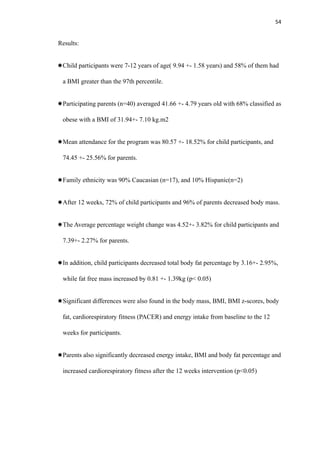
Results:
Child participants were 7-12 years of age( 9.94 +- 1.58 years) and 58% of them had
a BMI greater than the 97th percentile.
Participating parents (n=40) averaged 41.66 +- 4.79 years old with 68% classified as
obese with a BMI of 31.94+- 7.10 kg.m2
Mean attendance for the program was 80.57 +- 18.52% for child participants, and
74.45 +- 25.56% for parents.
Family ethnicity was 90% Caucasian (n=17), and 10% Hispanic(n=2)
After 12 weeks, 72% of child participants and 96% of parents decreased body mass.
The Average percentage weight change was 4.52+- 3.82% for child participants and
7.39+- 2.27% for parents.
In addition, child participants decreased total body fat percentage by 3.16+- 2.95%,
while fat free mass increased by 0.81 +- 1.39kg (p< 0.05)
Significant differences were also found in the body mass, BMI, BMI z-scores, body
fat, cardiorespiratory fitness (PACER) and energy intake from baseline to the 12
weeks for participants.
Parents also significantly decreased energy intake, BMI and body fat percentage and
increased cardiorespiratory fitness after the 12 weeks intervention (p<0.05)
55
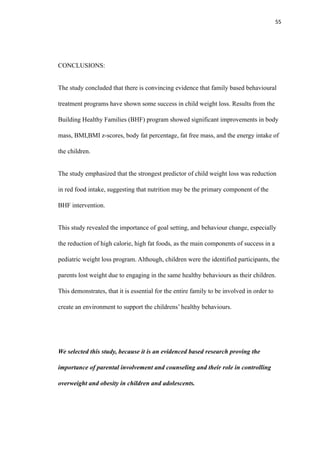
CONCLUSIONS:
The study concluded that there is convincing evidence that family based behavioural
treatment programs have shown some success in child weight loss. Results from the
Building Healthy Families (BHF) program showed significant improvements in body
mass, BMI,BMI z-scores, body fat percentage, fat free mass, and the energy intake of
the children.
The study emphasized that the strongest predictor of child weight loss was reduction
in red food intake, suggesting that nutrition may be the primary component of the
BHF intervention.
This study revealed the importance of goal setting, and behaviour change, especially
the reduction of high calorie, high fat foods, as the main components of success in a
pediatric weight loss program. Although, children were the identified participants, the
parents lost weight due to engaging in the same healthy behaviours as their children.
This demonstrates, that it is essential for the entire family to be involved in order to
create an environment to support the childrens’ healthy behaviours.
We selected this study, because it is an evidenced based research proving the
importance of parental involvement and counseling and their role in controlling
overweight and obesity in children and adolescents.
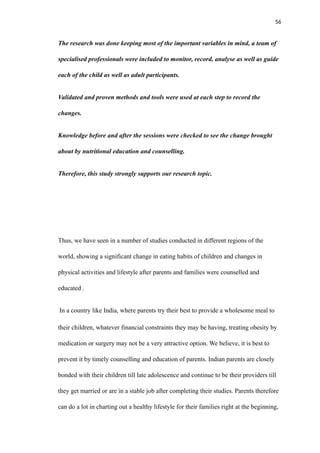
56
The research was done keeping most of the important variables in mind, a team of
specialised professionals were included to monitor, record, analyse as well as guide
each of the child as well as adult participants.
Validated and proven methods and tools were used at each step to record the
changes.
Knowledge before and after the sessions were checked to see the change brought
about by nutritional education and counselling.
Therefore, this study strongly supports our research topic.
Thus, we have seen in a number of studies conducted in different regions of the
world, showing a significant change in eating habits of children and changes in
physical activities and lifestyle after parents and families were counselled and
educated .
In a country like India, where parents try their best to provide a wholesome meal to
their children, whatever financial constraints they may be having, treating obesity by
medication or surgery may not be a very attractive option. We believe, it is best to
prevent it by timely counselling and education of parents. Indian parents are closely
bonded with their children till late adolescence and continue to be their providers till
they get married or are in a stable job after completing their studies. Parents therefore
can do a lot in charting out a healthy lifestyle for their families right at the beginning,
57
if only they have the right knowledge about it. obesity in children and how they can
help their children lead a healthier life.
Now let us look at some Indian Studies related to our Topic:
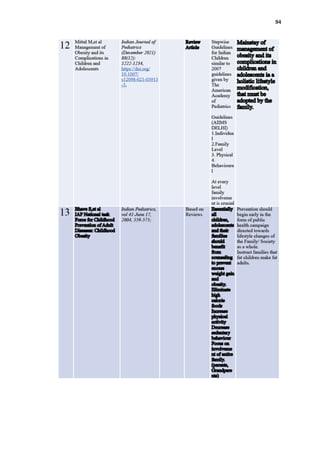
12. Medha Mi
tt
al, and Vandana Jain, (2021) [7]: in their review ar
ti
cle, found that the
mainstay of management of Obesity and its complica
ti
ons in children and adolescents is a
holis
ti
c lifestyle modi
fi
ca
ti
on that must be adopted by the family. It involves dietary changes,
regular physical ac
ti
vity, and behavioural changes that favour a healthy way of life. Regular
follow-up, and a
tt
en
ti
on to keeping up the mo
ti
va
ti
on of the child and family achieves good
results.
The ar
ti
cle presents a stepwise approach to preven
ti
on and management of overweight and
obesity in children and adolescents, adapted to the Indian scenario.
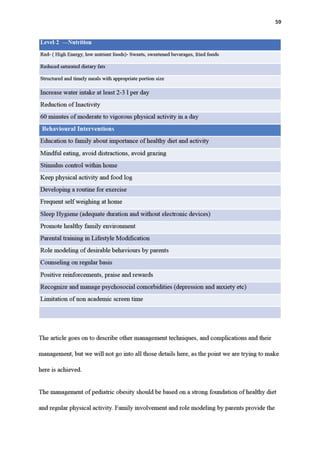
Since our focus here is on parental counseling and the role of parents in the control, we may
remain focused to our topic and may not give details of other management steps men
ti
oned
in this ar
ti
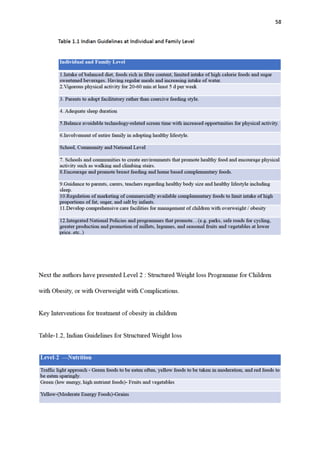
cle. The authors have suggested a stepwise approach similar to the 2007
guidelines given by The American Academy of Pediatrics, but contexualized to our se
tti
ng as
in India.
Firstly, they take up the Level 1: Preven
ti
on of Overweight /Obesity and Management of
Overweight without Complica
ti
ons. Keeping in mind the phrase,’Preven
ti
on is be
tt
er than
cure’, the authors recommend key strategies to be ins
ti
tuted early and con
ti
nued through
childhood and adolescence. Any child who is crossing the percen
ti
le lines needs close
observa
ti
on and monitoring.
60
crucial motivation. The pediatrician has the overall responsibility of guiding the family and
the child, along with a dedicated multidisciplinary team. Pharmacotherapy has limited role
and bariatric surgery may be an option for those with severe obesity or significant
complications, refractory to diet and lifestyle modification.
We selected this article on guidelines on prevention and management of overweight and
obesity in children and adolescents, because:
It is a study conducted in a premier research Institute of our country AIIMS Delhi, and
research quality they follow is stringent and of high standards.
Moreover, the guidelines prepared by the premier Institution regarding prevention and
treatment of overweight as well as obesity, clearly highlight the importance of family
involvement, and parental counseling at every level.
The authors summarise the article as follows:
It reaffirms our belief that parents have an important role to play in controlling overweight
and obesity in children and adolescents, and that all health care providers should be made
aware of it, and start to counsel parents as soon as possible, to prevent overweight or obesity
in the child population, which seems to be rising to enormous proportions rapidly!
• 13. Sheila Bhave, Ashish Bavdekar, Madhumati Otiv, IAP National Task Force for
Childhood Prevention of Adult Diseases: Childhood Obesity: (2004), [8]observed that,
61
India is in the midst of an escalating epidemic of life style disorders associated with
childhood obesity.
Prevention must begin early in the form of a public health campaign directed towards
lifestyle changes of the Family/ society as a whole. The campaign requires strong social
and political will.(8)
The important causes of the epidemic in India appear to be : Unhealthy eating patterns,
reduced physical activity, increased sedentary pursuits and possibly constitutional
predispositions.
Health professionals must think ‘ prevention of obesity at all visits, monitor BMI and
ensure that nutrition messages are not confusing and conflicting’.
Special strategies for different ages and channels of intervention for prevention of obesity
have been outlined.
Clinic based individual assessment of the obese child and principles of therapy are
provided by the study.
The first and foremost strategy mentioned by the task force is
The Public Health Approach;
As a public health approach, essentially all children, adolescents and their families should
benefit from counseling to prevent excess weight gain and obesity.
(a)Lifestyle Approach: (i) Healthy Eating Patterns: Emphasis should be on Nutrition rather
than dieting. It is essential to maintain healthy components of traditional diets and guard
62
against heavily marketed energy dense fatty and salty foods (e.g., pre-packaged snacks,
ice creams,and chocolates) and sugary cold drinks. The strategy should be to recognise
and eliminate risk features of high calorie intake such as samosas, potato chips, chiwdas,
burgers, dosas, cakes and chocolates , as well beverages like colas, beers etc. Habits
attained early on have more chance of remaining throughout life.
(ii) Increase Physical activity levels
(iii) Decrease Sedentary Behaviour
(iv) Tailor the interventions to suit the specific needs of the community
(v) Focus on involvement of entire family (parents, grandparents) indeed the entire
community for best results. Average Indian families have poor knowledge of ‘healthy eating’.
(vi) Mothers should prevent excess weight gain in pregnancy, control diabetes or impaired
glucose tolerance in pregnancy, promote exclusive breast feeding for six months. Later,
instruct mothers to accept child’s appetite and not to force feed.
(vii) Instruct families that ‘ fat infants make fat adults’.
The task force has provided instructions at different levels of overweight and obesity,
depending on age and other parameters. We shall not go into all the details here, as our point
of view is clear from the above guidelines. In fact, most of the guidelines presented above,
need counseling of the parents and involving them as to what to cook at home, what kind of
meals to serve their kids, what not to, how to keep their children active, how to celebrate
occassions, in parks or while playing rather than going to malls, or serving energy dense
63
foods or drinks. Counseling of parents also comes in when and how to reduce the sedentary
activities of their children.
In fact Sheila Bhave et al, conducted a school based study with controls, and followed up the
participants over a 5 year period. They faced many problems, as to limited size of school
grounds for activities, academic curriculum pressures to restrict their counseling sessions to
students and teachers, they could provide healthy food to only those who did not bring tiffins,
and had to remove all hawkers from outside school premises, change the kitchen pattern of
school canteen, but after a period of 5 years, although some change was noticed in waist
circumference of participants, overall there was no significant decrease in BMIs. This again
shows that involvement of parents and regular counseling of parents regarding healthy foods,
and physical activities by healthcare providers is essential. This can be done by the school
teachers too.
• 14. Anjali Mahajan, Prakash C. Negi, Sunita Gandhi, Dinesh Sharma, Neelam
Grover, : (2022) [22] conducted a school based cluster randomized study, to study the
‘Impact of School based Health Behavioural Intervention on Awareness, Practice Pattern of
Healthy Lifestyle, and Cardiometabolic Risk Factors among School Children of Shimla’
where they studied 3707 students of 13-18 yrs.from 12 senior secondary schools of Shimla,
over a period of 10 months; and trained teachers to impart health and nutrition related
knowledge to adolescents to control overweight and obesity. The Intervention was. Found
to be ineffective in improving the knowledge and food habit scores after adjusting for
cluster level baseline measures. Physical activity was slightly found to have increased after
intervention, but it did not differ significantly from the control groups. Secondary outcomes
such as anthropometric measurements and biochemical profile also did not differ in the two
64
groups, except for low density lipoprotein (LDL) cholesterol, which was significantly less
in the intervention groups. The Intervention also did not have any significant effect on
physical activity levels and screen time.Many other studies have also reported similar
results.
We have taken reference of these school based, evidence based, Indian intervention Studies
here, to bring home the point, that so much work and community and social work is done
by healthcare providers and policy makers at the school level, but significant results cannot
be seen by studies. Whereas, involvement and counselling of parents for the same
consistently provides evidence of significant change. This is important and more and more
family based programs should be designed to control this rising epidemic.
Further evidence based carefully planned researches should also be conducted to ensure
easier and more feasible methods of parental counseling at a large scale.
• 15. Sitanshu Shekhar Kar, and Subhranshu Shekhar Kar,(2015) [9] in their review
article “Prevention of Childhood Obesity in India: Way Forward” , wrote that to
effectively address the problem of childhood obesity, a sustained multisectoral response is
required. These strategies should be initiated at home and in pre-school institutions, and
involve health care professionals and non-governmental sectors. Preventing obesity in the
65
child’s earliest years (and even before birth, by healthy habits during pregnancy) confers a
lifetime of health benefits! And it is the most promising path for turning around the global
epidemic. “The Bottom line: It’s never too early to start preventing obesity”.The article
highlighted the good practices and lessons learned from developed countries in tackling
childhood obesity. It focuses entirely on methods of control and prevention of childhood
obesity, which India should take up seeing to the increasing trend of incidence of obesity in
India in recent times. According to this article, limited evidences are available regarding the
burden of overweight and obesity among children in the Indian scenario. A study conducted
among 24,842 school children in south India showed that from 2003 to 2005, the
proportion of overweight children had increased from 4.94% to 6.57%. This demonstrates
that the problem is increasing very rapidly in our country, and we should take notice of it
and look for all possible measures to control it early.The article also mentions that
according to the IOTF - International Obesity Task Force cutoffs, a school based study in
India found that in children 8-18 years age group, the prevalence of overweight was 14.4%
and that of Obesity was 2.8%, but the same data if considered by WHO cutoffs was 18%
and 5.3% respectively. The article studied extensively the methods of control and
prevention being used all over the globe by different countries; as this problem has now
become global. They studied methods used in Australia, Canada, Europe, USA, U.K, and
came out with certain points on What India can Learn from developed Nations?
Some of the specific recommendations the article mentions are as follows:
(i)Surveillance - Periodic monitoring of nutritional and obesity status of
children and adults, to create a database, to initiate community based
research to document the burden of obesity and associated risk factors, and
66
to maintain a nationwide database on trends in obesity and its associated
comorbidities.
(ii)Health Education- For all children and their families, routine healthcare
should include obesity focused education
➢ Nutrition and physical advice should be provided by use of
audio-visual media and culturally conducive methods
➢ Endorsement of healthy lifestyle by prominent people and local
champions
➢ A series of counseling interventions are suggested in the
primary care setting
➢ Educational material should be made available to facilitate the
counseling
(iii) Community Mobilization:
➢ Information to parents about Nutrition (particularly mothers)
➢ Organization of health walks and healthy food festivals
➢ Children specific nutrition information and workshops for
newly married women
➢ To establish a therapeutic relationship to enhance effectiveness,
the communication and interventions should be supportive
67
rather than blaming. They should be family centered, rather
than focused on the child alone.
➢ The emphasis should be on long term risks rather than just diet
or exercise, which are short-term goals.
(iv) Start right from Pregnancy, by educating the pregnant mother;
➢ Pregnant mothers should be educated to eat balanced nutrition.
➢ Exclusive breast feeding should be encouraged.
➢ Catch-up obesity should be avoided in infants and children by
counseling the mothers.
(v) Home Based Interventions:
➢ Mandatory physical activity of atleast 60 minutes, to be
supervised by parents
➢ Restriction of keeping junk foods at home and also to eating
out at weekends
➢ TV/Computer time to be restricted to a maximum of 2 h/day
➢ Key goals to be addressed to parents are the common diet-
related problems encountered in children, set firm limits on
television and other media early in child’s life, and establish
habits of frequent physical activity
68
(vi) School based interventions
(vii) Policy Formulation
Here, we have not covered the last two recommendations in greater detail, as
they are not related to our focus; the counseling of parents in controlling
overweight and obesity in childhood and adolescence.
We selected this article for our research because:
It addresses our major concern, the involvement of family and parents in
controlling obesity and overweight in children and adolescents, in India.
It covers all the health measures that are being taken to control this great
global epidemic all over the world. After studying so many countries and
continents, the author come to a conclusion, that the problem should be
tackled at multiple levels and that the importance of parental counseling in
controlling it cannot be underestimated!
In fact, the authors suggest, that as soon as a woman and a mother to be, gets
pregnant, she should be counseled about how to deal with this problem right
from the pregnancy itself.
69
Therefore, this important review article confirms our belief that parental
counseling is a very important aspect in controlling overweight and obesity
among children and adolescents.
• 16.Arunachalam Samundeeswari, Kandasami Maheshwari, (2019) [23]
conducted a study which intended to identify the attitude of mothers having
obese children, about the cause and prevention of childhood obesity.
‘Mothers’Attitude on Childhood Obesity and its Prevention’.They felt that
mothers are the primary caregivers and therefore their perception about child
health have a great influence on childrens’ nutrition, and physical activity.
They play a vital role in sculpting the knowledge, behaviour, and attitudes of
their children at early ages; help them in developing eating behaviours,
energy intake and food preferences. They felt that the primary prevention
inevitably involves good obesity related knowledge by parents as well as
proper attitudes leading to appropriate practices. Management of obesity
requires behaviour change including diet and physical exercise, or activity.
These are possible by health care professionals, and families who provide
adequate support and reinforcement of healthy lifestyles among children and
can help parents recognize obesity as a risk factor for future diseases in
children. The lack of knowledge of parents on childhood obesity presents a
challenge to any intervention because an underlying cause of poor health
(e.g.obesity) might be perceived as manifestation of good health.(23)
Materials and Methods used:
70
➢ Participants of the study were mothers of obese children
➢ Random sampling method was used as Zone 1 was chosen
➢ The related authorities of the schools were requested for formal
permission for the study
➢ Children of age group 6-12 years were screened for obesity
➢ Stratified Random Sampling Method was used to identify 120
obese children
➢ The mothers of these obese children were informed on the
significance of the study and their consent was obtained for
willingness to participate in the study
➢ Initially, personal information was obtained about child and
mother
➢ Next, Attitude Scale was administered to assess the attitude of
mothers on obesity and its prevention.
Development and Description of the Tool:
A 5 point Likert Scale was developed to assess the attitude of mothers about
the causes and prevention of childhood obesity.
Likert’s Scale consisted of five responses :
71
(b)strongly disagree,—1(b) disagree, —2(c) neither agree nor disagree,—3 (d)
agree, —4(e) strongly agree—5.The Numerical scores were assigned
against each of the responses as, given above.
(c) The Attitude Scale had four domains: General Information on obesity— 2
questions, Causes of obesity— 14 questions, Consequences of obesity— 4
questions, and Prevention of obesity— 10 questions.
(d)The 30 question questionnaire was developed by the investigator and was
validated by experts from various fields, like pediatrician, Nutritionist, and
Nursing fraternity.
(e)The Attitude score ranked as Poor-(0-5%); moderate-(51-75%); good-
(76-100%)
(f) Reliability of the tool was assessed by using cron-bach Alpha method
r=0.85 and a pilot study was conducted to assess the feasibility of the study.
Participants of the study were mothers of obese children. A greater number
of female children (57.50%) in the age range of 10-12 years, studying in
class four, were identified as obese. Of the total participants 65% had a two
child norm. Fathers were graduate in 26.03% and employed as unskilled
employee (38.66%). regarding mothers 79.17% of the mothers in the study
were home makers and ( 42.50%)had completed higher school education.
Majority of them (85%) were residing in urban area. All children were
found to be consuming Non-vegetarian food atleast twice a week.(34.86%)
72
Statistical Analysis: In this case study analysis was performed by using IBM
Statistical Package for the Social Sciences (SPSS) version 16, and Software
for Statistics and Data Science (STATA) version 10 and Statistical Software
for Epidemiology (Epi info) version 3.5.1. Child and mothers’ personal data
were given in frequencies with their percentages. Attitude scores were given in
mean and standard deviation.
RESULTS: The research findings revealed that parents had a weak attitude
towards overweight. A gap was found between Nutritional knowledge and
attitude, particularly on causes of overweight and its prevention. Nearly 65%
of the mothers were not aware of childhood obesity as a health problem. The
mothers’ attitude on the questions revealed that 34.17% of mothers strongly
disagreed with obese children are healthy; whereas 28.17% of them agreed
with it. Only 36.67% of mothers agreed that obesity is a majot health problem.
43.33% pf the mothers disagreed that obese parents have obese child, and 45%
of them disagreed that breast feeding infant has less prevalence of obesity.
51.67% of the mothers neither agreed nor disagreed on skipping of breakfast,
physical inactivity and lengthy screentime 40.83%.
They agreed with faulty food habits 40.83%; unhealthy lifestyle practices
55.83%; and parent dietary behaviour 39.17% ; is associated with obesity.
The attitude of mothers in 35% of the cases neither agreed nor disagreed to
accept the truth of obesity that increased intake of carbonated drinks - 35%;
may increase the risk of obesity. But they agreed with high sweet intake
73
-41.67%, and chocolates- 49.17%, ice creams- 50%, fried foods-53.33%,
induces obesity. 35% of the mothers agreed that media influences child eating
behaviour. Only 36.6% mothers agreed that musculoskeletal problems, and
diabetes, kidney and cardiovascular problems - are common among obese
children. But they disagreed with psychological problems and decrease in
cognitive ability; due to obesity- 35.83%.
Mothers agreed with parental role in change of lifestyle practices- 55%, parent
role modeling- 46.61%, daily physical activity- 51.67%, and physical
education classes - 48.33%, diet restriction-60%, may decrease the risk of
obesity. 45.83% of mothers were confused that eating while watching
television may influence obesity.
The study concludes that prevention of obesity should be the supreme focus. It
starts from home, school and community. Parents play a significant role in
preventing childhood obesity because they are the role model for their child.
Parental attitud towards obesity can bring several intervention measures to
eliminate obesity among child and adolescents.
The study also found that presently, the aatitude of mothers towards obesity
and its prevention, was moderate. Their attitude reflects on food choices, and
physical activities of their children. Though the children seem to be having
adequate knowledge of obesity, their attitude towards it is negative, probably
due to their parental influences.
74
It signals, that healthcare providers need to give certain interventions like
counseling for both, child and parent, family based, school based intervention
program on healthy lifestyle practices and its importance.
We selected this study for our research purpose because it answers our main
research question: Can parental counselling help in controlling overweight and
obesity in children and adolescents?
It is a well planned, validated research, which helps to bring home the point
that parental counselling, which would be focused on enhancing their
knowledge and attitude towards healthy eating practices and living a healthy
lifestyle, and being a role model for their children at home regarding a healthy
lifestyle, can go a long way in controlling overweight and obesity in children
and adolescents in our country.
The study also shows that at parental knowledge and attitude towards this
rapidly increasing health problem is only moderate and they are confused over
various issues and do not realize the long term risks associated with this. This
study, therefore helps us to reinforce the importance of parental counselling in
controlling overweight and obesity in children and adolescents.
• 17.Rajesh Sagar, and Tanu Gupta, (2018) [24], in a review article
‘Psychological Aspects of Obesity in Children and Adolescents’ reviewed
various studies on psychopathology of obese children and adolescents. In the
Indian context they found that many studies highlighted the increased
prevalence of childhood obesity in India, however, very few studies target
75
the mental state of an obese child. The existing Indian Literature does report
the presence of more behavioural problems in obese children as compared to
their normal weight peers.
A large population based sample of 421 obese children was assessed on
Childhood Psychopathology Measurement Schedule (CPMS) and the
prevalence of psychopathology was found in 44.2% of obese children
compared to only 13.8% of non obese children (p<0.001).
They also found a number of cross-sectional, case control and prospective
studies which reported the association of increased body mass index (BMI),
and psychopathology. The findings varied in terms of population that was
studied. But Clinical samples of obese children consistently reported more
behaviour problems and a higher risk of developing psychopathology
compared to non-clinical population.
Depression was found to be the most frequently and consistently reported
diagnosis, followed by anxiety disorder, eating disorder, or episodes of binge
eating and attention deficit hyperactivity disorder (ADHD).
The cause-effect analysis of this relationship reported presence of obesity
before the onset of psychiatric disorder based on retrospective recall.
There is as yet no literature available exclusively on adolescent studies in
India, directly linking obesity to depression, however indirect pathways and
experiences such as stressful life events, peer victimization, and weight based
76
teasing may be the contributing factors for development of Depression in
adolescents.
Few studies have also reported sex differences in obese children and
adolescents in relation to depression and anxiety, whweir obese girls were
reported to be on greater risk of developing dpression and anxiety with
increasing weight.
Body Shape Concerns and Childhood Obesity:
A number of cross sectional studies, both clinical and population based;
examined the body shape concerns in children as well as adolescents. Wardle
and Cooke reviewed 17 recent studies and reported that obesity and body
dissatisfaction are well associated in children ans adolescents, leading to low
self esteem. Gender based studies revealed that girls are more predisposed to
these behaviours. Excess of overweight concerns in girls is also found to be a
reason for depressive symptoms in obese girls. Overweight status, female
gender and binge eating were reported as risk factors for body image
disturbances and psychological distress in obese individuals.
Self-esteem:
79
Cognitive Behavioural Management of Childhood Obesity:
The disorder in itself is complex and no single treatment modality is sufficient
to handle this multifactorial disease. Literature recommends integration of
psychological approaches within the clinical management of childhood
obesity. Psychological approaches like CBT- Cognitive Behaviour Therapy,
are evidence based treatment modality for weight loss.
“The authors further state, that while dealing with children, it is very
important to involve family into the treatment process. Therefore, Family
based treatment, utilizing various techniques from CBT was considered to be a
gold standard treatment of childhood obesity.
NICE guidelines also recommend the use of behavioural change techniques,
positive parenting skills, along with changes in diet and physical activity
routine.
The intervention plan should be tailored to the need of the individual child,
and also include both parents and children to get more beneficial results.
Mostly, Behavioural Intervention Programs include 8-16 initial weekly
sessions of 45-90 minutes each.
The follow up booster sessions for a period of 4-12 months.
CBT is now-a-days being delivered in the form of well structured modules
that include multiple components. Based on this author’s clinical experience
and extensive review of literature, the authors also developed a cognitive
80
behavioural treatment module for obese children and adolescents, at
AIIMS,Delhi as follows:
It include 12 weekly sessions lasting for 45-60 minutes, and a monthly booster
session as follow-up, for a period of 4-12 months.
The module explains session-wise process of therapy and utilised various
CBT techniques such as :
Psychoeducation : A process of educating parents and children about the
nature of the illness, assessment findings, therapeutic process, structure and
the role expectations from them
Goal Setting : Encourages children to set realistic and achievable realistic
goals of therapy.
Self monitoring: is an evidence based technique of CBT for weight
management that encourages children to self -monitor their diet, physical
activity, and weight to maintain a track of improvement over a period of time.
Stimulus control: This involves environmental restructuring in such a way
that promotes healthy eating and increased physical activity involvement of
the child, e.g, Parents are counselled to go for outings in parks rather than
malls, as it has the potential to increase physical activity of the child and at the
same time decrease the chance of eating junk food at the mall.
Behavioural Contract: is used with the children to enhance their motivation.
It is a written document with specific rewards for specific behavioural change.
81
Reinforcement: is a key technique of behavioural management with children
wherein, each behavioural change is positively rewarded by the parents or the
therapist
Problem Solving: helps the children to learn and understand steps of solving
various problems in a constructive manner.
Cognitive Restructuring: helps the children to identify and challenge their
negative thoughts and to replace them with alternative thoughts.
Barriers to Treatment:
➢ They also identified various barriers to treatment and one of the
major barriers they found was parental attitude that a fat child
is a healthy child. They would usually consult a doctor only
when they observe some obesity related complications
(parental attitude can be changed by making them aware about
the physical as well as mental health risks associated with
obesity through psychoeducation.)
➢ Environment that provides easy access to junk foods and social
media, which uses children as soft targets for promotion of
unhealthy snacks.
➢ Lack of Social support and encouragement from family and
friends. ( Social support can be enhanced by educating the
significant others about their role in the treatment )
82
➢ Family eating habits and history of obesity in the mother can be
a big hurdle ( can be handled by seeking support from the
school authorities wherin they can organize sport activities and
healthy cooking competitions for mothers to actually enhance
their motivation to bring positive change in their own lifestyle)
➢ Failed attempts in the past ( can be handled by cognitive
restructuring which is an effective technique of CBT for
correcting negative thought)
The authors further mention , to overcome these barriers, the active
involvement of children and parents is desirable. Prevention is always better
than diagnosis and treatment.
We selected this study for our research for the following reasons:
The study was conducted in a premier Institution of India, known for its
research quality and standards.
The research came up with important guidelines in management of
psychological issues due to obesity in India, and highlighted the importance
of parents at every step of prevention and management as well as in
overcoming the barriers to success of control programs.
This confirms our belief that parental counselling has a very important role
to play in the control of overweight, obesity, and their complications whether
83
physical or psychological, in children and adolescents of all age groups in
India.
Chapter-3
METHODOLOGY:
This study for Dissertation was done following the latest facilitative guidelines of
IGNOU, for completing Practical courses, Internship and Dissertation, given on the
IGNOU website, in these times of Covid-19 and now upcoming Omicron variant.
For 8 Credit Dissertation course (MCFTP-002)
“For Dissertation, primary data collection is not essential. You may complete the
Dissertation using only secondary data. Please select a research topic related to
counselling and family therapy. You may use online material available for doing
review of literature, and secondary data sources for finishing your Dissertation.”
Method:
Original Research studies, and articles published on them, also Review articles
consisting of many studies, published, and validated by prestigious journals and peer
reviews, from Indian studies as well as foreign studies; were selected. We also went
through the guidelines on prevention and control of overweight and obesity in
84
children and adolescents, designed by premium International and National Institutes,
to present a solid case of our research topic.
The key words for looking for these articles were-
Family based interventions, family counselling, family education, parent, childhood
obesity and /or adolescent obesity and overweight, controlling/ preventing/
management, body mass index (BMI), trend, prevalence, comprehensive, behavioural
modifications, dietary, activity, intervention, treatment, overweight, obesity.
Systematic searches for these databases were made from January 2022 when the topic
was thought of, and before starting the synopsis. The research was limited to articles
available in English language. A total of 1550 articles were identified through the
initial searches, across databases.
Study Exclusion criteria :
1. Duplicates across one or more data bases
2. Participants: a. Youth > 19 years of age b. Less than 10 participants in any
condition at the time of post-treatment.
3. Intervention a. If the study did not include at least three kinds of interventions -
Dietary, and Activity, and Family lifestyle and Behavioural modification
counselling. (Comprehensive), it was excluded.
4. If Child weight was not the primary outcome of the intervention
5. If the full text of the article was not available.
85
6. After exclusion at the abstract level and in the second phase after reading the full
text of the remaining articles we were left with 19 articles which passed all our
criteria for selection.
The articles relevant to the study were selected after reading the articles diligently
and noting down their methodology, analysis & conclusions we arrived at our results
and conclusions.
The majority of the studies were published in last 10 years. Many of them did not
provide zBMI data. In these cases, BMI, % body fat, or % overweight data were used,
to determine weight change in the participants.
We accepted only validated methods, from different countries, developed as well as
developing, rich as well as poor, review articles, original researches, guidelines by
authentic bodies working day and night on this ever increasing menace of childhood
overweight, obesity and its consequent adult complications, just to be able to reach a
conclusion that what really helps in bringing about a real change, and what all others
researching on it have seen or experienced.
Our study included children as well as adolescents.
Sample:
In this study we searched the studies conducted in last 10 years, in India as well as in
other countries.
86
Our aim was to present the current scenario in this area. Literature search was done in
available scientific public domains such as Google Scholar, PubMed, PsycINFO,
Cochrane systematic reviews, using the key words as stated above.
Also, websites of official agencies such as International Obesity task Force, (IOTF),
World Health Organisation (WHO), Centre for Disease Control (CDC)
were accessed for related information.
87
Section 3:
Method of Data Analysis/ Methodology
The primary objective of this research was to evaluate the impact and efficacy of
family counselling in controlling overweight and obesity in children and
adolescents. In most of the studies,the parents were counselled regarding dietary
changes, active healthy lifestyle changes for the whole family, minimising
sedentary activities, and behaviour modification to bring about an all round
healthy lifestyle change in the family including parents as role-models.
We also included a few school based studies so as to be able to see the difference
if any.
This is a qualitative study. The data was compiled, tabulated for comparison, and
presented in the form of graphs and diagrams.
88
COMPARATIVE TABLE:
Table-2 Comparative Table of Different Studies
S.N
O:
Authors,
Study-Title
Publication
And Year
Partici
pants
Durati
on
Study
Design
Results Conclusion
1 Reubal M,et al,
Outcomes of a
Family Based
Pediatric Obesity
Program
-Preliminary results
Int J Exerc Sci 4
(4): 217-228, 2011
22
7-12 y
&
20
Mothers
20
Fathers
r n BMI
d cr ed
aft r 12
w k i
72%
chi dren
96%
p r nt
vg
wt nge
Chi d
4 52 3 82
%
P rent
7 39 2 27
%
Si nif
diff i
z cor
t o
Body m
and f
p rc nt ge
a o
d cr ed
i th
chi dren
and
p r nt
The success of study
with significant
reductions in both
children and parents
demonstrated that it
is essential for the
entire Family to be
involved, so as to
create an
environment, to
support healthy
behaviours.
2 Golley.R et al, Twelve
month effectiveness
of a parent led, family
focused weight
management program
for prepubertal
children
20 9;
11
c i dr n
6 ye rs
12
m nt
M z
c e
r d c
by % in
6%in
%in
gr p
Family focused
intervention using
parental skills
training alone or
along with lifestyle
education are
effective for weight
management in
prepubertal children
89
3 K AS
M
A
C d d
Ob
Curr Pediatr Res
2019,23(3):
117-121,
www.currentpedia
trics.com
ISSN:0971-9032
Mot e
of O
c i dr n
120
6-12 y
Stratified
random
sampling
zone 1
Orig n
r c
p nt
Li er
e
c ting
f
r
F
Dom n
3
q e n
q e nn
r
Attitude
score =
Poor=
0-5%
Moderate=
51-75%
Good=76-1
00%
65%
mothers
not aware
of
childhood
obesity as a
health
problem
28.17%
mothers
thought
obese
children
are healthy
45%
mothers
disagreed
that breast
fed babies
are less
obese
51.67%
mothers
neither
agreed nor
disagreed
on physical
inactivity
and lengthy
screentime
40.83%
agreed that
faulty food
habits are
associated
with
obesity.
> 40%
mothers
believed
that high
sweet
intake,
chocolates
,icecreams,
fried foods
induce
obesity
The study concluded
that prevention of
obesity starts from
home, school and
community
Parents play a
significant role in
preventing obesity,
therefore enhancing
their knowledge and
helping them change
their attitudes and
practices is very
important
Parents are also the
role models.
Parental attitude
towards obesity is
important in
controlling it.
Presently the
attitude of mothers
towards obesity is
only Moderate,
which reflects
through food
choices & physical
activities for their
children. and needs
to be enhanced
through
92
9 Kelishadi R,et al
Controlling
Childhood Obesity : A
systematic Review on
Strategies and
Challenges
4 9
3 8
p f
w
m
h
h
f
v O
mmu
a
n v f
f
2-18 y
105
relevant
papers
70 out of
them were
considered
as high
Quality
Clinical
Trials
School
based
articles,
n=30
Family
based
study,
n=26
v Decreased
BMI and
BMI z
scores was
found in
Family
based
studies
All studies
conducted
in Family
based
setting had
favourable
results on
obesity
criteria
Significant
results
obtained
only when
Diet,
Exercise or
both were
taken into
account.
School
based
Interventio
n studies
had
controversi
al results
Family based
intervention
programs
Including Diet and
exercise counselling
and involvement of
families;
Have a significant
role in decreasing
overweight and
obesity in children
and adolescents
Of 2-18 years
96
15 Kar SS,et al
‘Prevention of
Childhood Obesity in
India: way Forward’
J Nat Sci Biol
Med. 2015 Jan-
Jun; 6(1): 12-17;
doi:10.4103/0976-
9668.149071,
S t
n
fr m
0
t 0
Review
Article
Studied
methods
used in
Australia
Canada
Europe
USA
U.K
What India
can learn
from
developed
Nations:
Surveillanc
e: periodic
Health
Education:
For
Children
and their
Families
Communit
y
Mobilizatio
n:
Informatio
n to
Parents
Health
walks
Healthy
food
festivals
Interventio
ns should
be family
centered,
rather than
focused on
child alone
Start right
from
pregnancy,
encourage
healthy diet
for mother
and
Exclusive
Breast
Feeding to
avoid later
weight gain
due to
formula
feeding.
Mandatory
60 mts
exercise to
be
supervised
by parents
Reduce
TV/
computer
time to
maximum
of 2 h/dy
restriction
to keeping
A sustained
multisectoral
response is required
to effectively
address the problem
of childhood obesity.
These strategies
should be initiated at
home and in pre-
school institutions,
and involve
healthcare
professional and
non-govt sectors.
97
16 S g R Gu
g
A
Ob
C d
Ad
j
t ( l
0 ) (
4
p / o
209
2 2
421 R w
C MS
Psychopath
ology
found in
44.2% of
obese
children as
compared
to only
13.8% on
Non-obese
children
(p<0.001)
Increased
BMI was
found to be
associated
with
psychopath
ology, or
behavioura
l problems
Depression
, Anxiety
disorder,
Body shape
concerns,
Eating
Disorder,
ADHD
Cause-
effect
analysis=
presence of
obesity
before the
psychopath
ology
V
vo v
F
s
g
P
d
P
M
g d
M d
d g
2
4
d
P d
d
3 S
M g
S u
B u
o
R
b
g
C
R u
98
17 Kandasami AS,et al
‘Mother’s Attitude on
Childhood Obesity
and its Prevention’
C i
R
2 19 2
1 7 2 ,
di o
SSN
2
Mothers
of
Obese
children
120
6 12
S f
d
s
g
z
Original
research
5 point
Likert
Scale
consisting
of 5
responses
Four
Domains
30 question
questionnai
re
t t
0
t
7
7
0
6
m h
n t
f
h h
ty a
h t
p b
7
m h
t g t
h r
a
4
m h
r
t at
f
a
7
m h
n t
a
r
a t v ty
a t
t m
4
a
f ty
h
a at
w t
ty
m h
b v
t at h
t
t
h at
fr
ty
d
d
b
u
P
p
b
g
w
d
v
P
P
w
P
d
s
b
M w
o
d
v
b
u
101
Chapter-4
RESULTS & DISCUSSION:
Original Research Papers or Randomized Control Trials:
1. Reubal M et al, [21]‘ Outcomes of a Family based Pediatric Obesity Program-
Preliminary Results’ : BHF program, or the Building Healthy Program, had 22
participants of age group 7-12 years. They also had 20 mothers and 20 fathers as
participants. After 12 weeks , they found 72% children had decreased BMI scores,
96% parents had also decreased their BMI scores. The average weight change in
children was 4.52+- 3.82%, and that in the parents was 7.39=- 2.27%.
The study also found the z scores in children had decreased significantly. Also body
mass and fat percentage was also calculated in this study and these also decreased in
both children as well as parents.
The 12 week Intensive Intervention consisted of ;
-weekly sessions of Behaviour Modification
-Nutrition Education
102
-Family Lifestyle physical activities for 1.5 to 2 hours a week
-They encouraged participation by the entire family.
They concluded that the success of this study demonstrated that it is essential for the
entire family to be involved, so as to create an environment to support healthy
behaviours at home too.
Parents are typically targeted because they are the most influential to a child’s dietary
habits, as well as levels of physical activity; and this has been proven by numerous
studies now, as well as in ours.
This study also focused on the variables which are important to weight loss, as
different studies present variable amount of change.
Inclusion of this study in our research therefore strengthens our belief that Parental
Counselling has a very important role to play in controlling overweight and obesity in
children and adolescents.
2.Golley.R et al, [13]‘Twelve month effectiveness of a parent led, family focused
weight management program for prepubertal children’ conducted in Australia,
had 111, participants out of which 64% were females. They all were overweight
prepubertal children 6-9 years of age.
The Measures used were: Parenting skills training, and intensive lifestyle
education(P+DA)Or parenting skills training alone (P); or a third group was of a
103
control group which was waitlisted for a 12 month period (WLC). Height, BMI, waist
circumference z score and metabolic profile were assessed at baseline, 6 months, and
at 12 months.
They wanted to evaluate if parenting skills training was in itself sufficient, or
intensive lifestyle changes were also required for the purpose.
At 12 months: BMI z scores reduced by 9% in the P+DA group, 6% in the P group,
and 5% in the WLC group.
45% of the children in the WLC group, in fact increased their BMI zscore over 12
months, whereas this happened in 19% of the P+DA and 24% of P groups
respectively.(p=0.03)
Boys in both groups had significantly lower BMI zscores at 6 and 12 months as
compared with their baseline.
The waist circumference z score was significantly lower at 12 months in both P+DA,
and P groups as compared to baseline, but not in the WLC group.
It was also significantly lower at 12 months vs 6 months for the P+DA group.
The significant finding was that all the three groups had a significant reduction in
BMI z scores over 12 months.
This study concluded that Family focused intervention using parental skills training
and also promoting a healthy lifestyle is an effective approach to weight management
in prepubertal children. Both, parental skills training and lifestyle education are
105
They evaluated whether a parent based intervention based on CBT principles was
superior to a parent based intervention based on Psychoeducation Programme PEP.
We included this study , because it was based on parent based interventions, and to
control the psychological problems it is imperative to control weight and obesity.
The study included 52 participant obese children of mean age 9.8 years, with a
baseline BMIz score of 2.2 (0.3).
The participants in CBNT group were n=27, and the PEP group n=25. The BMI z
scores in the two groups were similar at 0-4,10-,16- month follow up.
At 4 months, the BMI z scores had significantly reduced in both the groups, as
compared to the baseline- CBT- (-0.05,95% Cl=-0.09 to 0.00) and PEP (0.04, 95%
CL=0.09 to 0.01) The mean difference between the two groups was -0.01 (95% Cl=
-0.08 to 0.06, p=0.80). Similar results were found across all secondary outcomes.
Both therapies showed equal results at the scheduled follow ups.
As concerned with our research, this study shows that parental counselling is not only
effective in helping children and adolescents to reduce their weight, but also has a
very important role in managing the psychological and behavioural complications of
obesity. Any of the two therapies can be used CBT or PEP, both being equally
effective.
• 5. Brown A, et al [14] ‘ Prevention and Treatment of Overweight in Children and
Adolescents’, conducted a Review Article . They found that school-based
prevention programs are generally not successful in reducing the prevalence of
106
obesity. Even extra sessions of physical activity in school were not successful. A
study which had focused on nutrition education showed moderate success.
Treatment interventions required, like behavioural therapy, reduction in sedentary
behaviour, nutrition and physical activity education are moderately successful, but
may not be generalised to the primary care setting. The article concludes that rather
than focusing on school interventions for weight reduction in children and
adolescents ; The Family Physicians should focus on identifying at-risk and
overweight children and adolescents at an early stage and educating families about
the health consequences of being overweight. Interventions should be tailored to the
patient and involve the entire family. (4) The article goes further to mention
Consensus guidelines prepared by experts participating in a conference, sponsored
by the Maternal and Child Health Bureau of the U.S Department of Health and
Human Resources and Services Administration. The guidelines provide general
recommendations for physicians and state that
➢ intervention for weight problems in children should begin early - 2 years or
older.
➢ The Family must be ready for change, if not, the intervention is likely to fail
➢ Physicians should educate families about the medical complications of obesity
➢ Physicians should involve the family and all caregivers in the treatment
program
➢ Physicians should encourage and empathize but not criticize
107
➢ The treatment program should help the family make small gradual changes
➢ The treatment program should include learning to monitor eating and activity
➢ A variety of experienced professionals can be involved in the weight
management program. (Adapted from permission from Barlow SE, Dietz WH.
Obesity evaluation and treatment: Expert Committee Recommendations.The
Maternal and child Health Bureau, Health Resources and Services
Administration and the Dept of Health and Human Services. Pediatrics
1998;102:E29(7)
• 6 Kothandan S et al, [6] describes in his review article that, 13 articles which met
the criteria from 1231 ; eight were Family based interventions (n=8), and five were
school based (n=5), with total participants (n=2067). The participants aged between
6-17 years, and the study duration between 1 month to 3 years. They found after a
systematic review that the family based interventions demonstrated effectiveness for
children under the age of twelve; and School based interventions were most
effective for children in 12-17 age group with differences for both long term and
short term results.
This study further strengths our belief that family based interven
ti
ons have a very
important role to play in decreasing weight in children and adolescents. This study
came out with an amazing
fi
nding which could not be seen in other studies we went
through. Children above 12 years were seen to responding be
tt
er to school based
interven
ti
ons. This is an interes
ti
ng fact and can be explained on the basis of
adolescent con
fl
ict with parents and more in
fl
uence of peers and teachers on them.
108
If it is indeed so, this fact needs further research and could be u
ti
lized in weight
reduc
ti
on programmes in future !
• 7. Rattanamanee.K and Chintana Wacharasin, [5] in their Quasi experimental
study, ‘Effectiveness of a Family Based Behavioural Counselling Program among
school aged Children with obesity’which was conducted for 7 weeks; found that the
group I which received a Family based counselling program, had significantly better
healthy eating habits at the end as compared to Group II which received group
based counselling; and also when compared to Group III which received only a
usual program. The findings indicated that this Family based program could
enhance healthy eating bahaviour and physical activity and decrease BMI in
children with obesity.
• 9. Guidelines by the Guideline Development Panel for Treatment of Obesity,
American Psychological Association (2020) [15], ‘Multicomponent Behavioural
Treatment of Obesity in Children and Adolescents’; in this article we found, that
based on Systematic Review conducted by Kaiser Permanente Research Affiliates
Evidence based Practice Center, these recommendations were issued with
intentions for guiding Psychologists, Health and Mental Health Professionals,
Patients, Families, as well as Policy Makers, engaged in taking care of overweight
and obese children. The criteria they used for selection was BMI and BMI z scores
The GDP strongly recommended that children 2-18 years should receive Family
based, Multicomponent, Behavioural Intrventions., for controlling overweight and
obesity in children and adolescents. The minimum contact time should be 26 hours
with parents, These measures should be initiated at the earliest age possible
109
The above guidelines once again highlight our research topic : Role of Parental
counselling in controlling overweight and obesity in children and adolescents.
10.Janicke.D et al[17,18] in their Systematic Review and Meta analysis of 20
studies which were randomized Controlled Trials (RCT) analysed the
‘Comprehensive Behavioural Family Lifestyle Interventions Addressing Pediatric
Obesity (CBFLI)’. The participants in the studies were 1671. The results of this
analysis were as follows:
The overall effect size for CBFLI as compared with passive control groups over all
time points was statisticallysignificant (Hedge’s g=0.473), 95% confidence
interval[ .362,.584] and suggestive of a small effect size. Duration of treatment,
number of treatment sessions, the amount of time in treatment, child age,format of
therapy (individual vs group), form of contact, and study of intent to treat analysis
were all statistically significant moderators of effect size.
They concluded that CBFLI demonstrated efficacy for improving weight outcomes in
youths who are overweight or obese. The article analyses that “ Parents are often
considered a critical agent of change in behavioural lifestyle interventions, as they
exercise significant control over children’s eating and physical environment, and
ultimately their behaviours.”
The above statement is more true for our Indian Culture where there is a
collesctivistic culture and interdependence till late adolescence or even later till
adulthood. The Comprehensive program is given in detail in material and methods.
110
11. Kelishadi R , Azizi- Soleiman F, in their Systematic Review on ‘ Controlling
Childhood Obesity: Strategies and Challenges’, conducted in Iran, [18]; agreed that
the epidemic proportion of childhood obesity is no more limited to developed
countries only and is rapidly engulfing the developing nations too.
Studies were included if they were conducted on 2-18 year old children, community,
family, school, and clinical interventions or, a combination of them, English language,
and conducted among obese or overweight children and adolescents.
They had 30 articles from school based programs, 26 family based articles.
The school based studies showed positive impact on eating and activity behaviours,
but could not elicit significant change in BMI levels.
The Family based programs found, that family is an applicable target for promoting
health care interventions. They found that engaging parents in childhood obesity
prevention programs will make weight loss easier for children, because they are the
agents who can provide conditions to help their children to choose healthy
behaviours. They are also important role models for their children.
It was found that parents find it difficult to accept that their child is overweight,
therefore they do not comprehend the necessity of obesity prevention.
The review studied n=26 family based studies and found that most of these programs
were successful in decreasing body mass index BMI, and BMI z scores, and some
health consequences of overweight too.
111
overall, all the studies conducted in family setting had favourable results on obesity
criteria. A few had negligible effects, but it was probably because these studies did not
follow up for a longer period.
This study helped us to understand that not only in developed countries, but also
developing countries are being engulfed with this problem as is our own country,
India. This article also took up many studies and included three different methods of
interventions. It came out that involvement of the family is by far the time tested
method out of the three and should be pursued consistently in all countries. Clinic
based methods were very varied and did not provide with any consistent results, so
they are not being taken up in more detail here.
• 12.Kirsten Weir, authored a review article ‘ Family Based Behavioural Treatment
is Key to Addressing Childhood Obesity’. [19]The author writes that Wilfley and
Raynor were among a panel of obesity experts who developed a new Guideline for
American Psychology Association (APA) March 2018. Clinical Practice Guideline
for Multicomponent Behavioural Treatment of Obesity and Overweight in Children
and Adolescents. After reviewing all literature the panel found strong evidence to
recommend family based behavioural interventions, to treat obesity in children 2-18
years old. They focus not only on the children but the whole family to engage in a
healthier lifestyle by improving the diet, physical activities and by reducing
sedentary behaviour. They also focus on behaviour change, teaching strategies to
parents for goal setting, problem solving, monitoring their childrens; behaviours,
and also by modelling positive parental behaviours.
113
• 13.Steven L Gortmaker, and William H.Dietz: [20] authored a Review Article in
which they addressed the natural history of obesity in children, the most promising
family based and school based approaches to its prevention, as also the barriers and
opportunities associated with secondary prevention. Their study showed that 60% of
the obese and overweight children above 5-10 years age, already had associated
cardiovascular disease risk factor, such as hyperlipidmia, elevated blood pressure,
or hyperinsulinemia. Also, 20% had two or more cardiovascular risk factors. The
incidence of Type II Diabetes had also increased dramatically among youth, which
until recently was thought to be an adult onset disease.
We selected this study to include in ours, for various reasons. Firstly, it is a very
important study based on a National Health Survey of U.S.A, as well as on the
comparison of the data of the latest survey with the data of National Health Survey
done 15 years ago.
They developed a logic model for Family based approaches to prevent primary or
secondary obesity in children and adolescents. The details of this model have been
given in detail in the materials and methods section.
Most of these approaches advise active involvement of parents in helping the
children, for which the parents need counselling and guidance at various levels so as
to implement them successfully and sustain the results over long term periods. This
involves a lifestyle change in eating, playing, sedentary and many other day to day
activities.
114
This study brings home very important issues related to our research and strengthens
our research that parents have an important role to play in controlling and preventing
overweight and obesity in children and adolescents.
This study also gives us details of the issues to be taken up for counselling the
parents, by health personnale or pediatricians.
• 15. Indian Studies :
• Medha Mittal and Vandana Jain, ‘ Management of Obesity and its Complications
in Children and Adolescents’. [7]A review article found that
The mainstay of management of Obesity and its complications in children and
adolescents is a holistic lifestyle modification that must be adopted by the whole
family. It involves dietary changes, regular physical activity, as well as behavioural
changes that favour a healthy way of life. To achieve good and longterm results it is
essential to followup the cases regularly, and keep up the motivation of the child and
the family as a whole.
The article presents a stepwise approach to prevention and management of overweight
and obesity in children and adolescents, adapted to the Indian scenario, based on an
approach similar to the guidelines given by The American Academy of Pediatrics, but
contextual to our setting as in India. The guidelines involve the parents at all levels
namely- Individual and Family level steps; Physical activity; Behavioural
interventions. According to this study, family involvement and role modeling by
115
parents provide the crucial motivation required by the child.The Pediatrician has the
overall responsibility of guiding the family and the child, through these steps, along
with the help and support of a multidisciplinary team. Pharmacotherapy has limited
role and bariatric surgery may be an option for those with severe obesity or significant
complications, rfractory to diet and lifestyle modification.
The study was conducted in a premier institute of India, responsible for issuing
important guidelines for healthcare workers as well as population in general.
The authors concluded their study as follows: “It reaffirms oue belief that parents
have an important role to play in controlling overweight and obesity in children and
adolescents, and that all healthcare providers should be made aware of it, and start to
counsel parents as soon as possible, to prevent overweight or obesity in the child
population, which seems to be rising to enormous proportions rapidly!
This study further adds strength to our research topic about the important role of
parents in controlling and preventing overweight anf obesity in children and
adolescents.
• 16. Sheila Bhave, Ashish Bavdekar, Madhumati Otiv,: (2004)[8]‘IAP Taskforce
for Childhood Prevention of Adult Diseases: Childhood Obesity’ agreed that India is
in the midst of an escalating epidemic of lifestyle disorders associated with
childhood obesity.
116
➢ Prevention must begin early in the form of a public health campaign
directed towards lifestyle changes of the family/ society as a whole.
➢ Health professionals must think ‘ prevention of obesity at all visits,
monitor BMI and ensure that nutrition messages are not confusing and
conflicting. This is happening in India because at one side we have
rising obesity and on the other side we have malnutrition!
➢ The study has provided special strategies for different ages as well as
clinic based assessment of the obese child. Principle of therapy have
also been provided by the study.
➢ Most of the guidelines presented , need counseling of the parents and
involving them as to what are healthy meals and how it is best to cook
them, what not to offer, how to keep their children active, how it is best
to celebrate occasions in parks, or while playing, rather than malls,
where children are exposed to junk foods, how to reduce the sedentary
activities of their children and families.
In fact Sheila Bhave et al also conducted an original research study a randomized
control trial, on a large sample, in schools of Pune, and after following up the cases
for 5 years, they could not elicit any significant reduction in BMIs of the participants.
Their own study also reinforced their view that although school based programs look
to be effective and large samples can be accessed, the desired results cannot be
achieved without the involvement of parents at every level.
117
This Indian study and guidelines support our research topic that parents really do have
an important role to play and involving them can keep the child motivated, as well as
create a desired environment for the child in all the fields- that of Diet, Food choices,
physical activities and resources for them, and behavioural modifications.
• 17. Anjali Mahajan, et al, [22] who conducted a Cluster, randomized, Intervention
,school based study ‘ Impact of A School Based Health Behavioural Intervention on
Awareness, Practice Pattern of Healthy Lifestyle, and Cardiometabolic Risk Factors
among School Children of Shimla’, where they studied 3707 students of 13-18 years
from 12 senior Secondary schools of Shimla, over a period of 10 months. They
trained teachers to impart health and nutrion related knowledge to adolescents to
control overweight and obesity. The intervention was found to be ineffective in
improving the BMIs and no significant change could be elicited at the end of the
study.
Although improved knowledge of students could be seen regarding healthy food
choices and nutrient value of foods, the implementation in preparing such foods at
home could not be enforced as mothers were not involved in the program, school
activities even though doubled could not elicit results, as at home the environment
continued to be sedentary, with no active and safe places for them to play after school,
or due to lack of resources.
This study indirectly supports our research topic as few other school based studies
also do. Thes are studies conducted in India, and similar results are seen from other
118
countries too. Except for one study which found that children above 12 years
responded better to school based interventions; and needs further research on larger
samples. This is important because if school based studies started showing results it
would be more cost effective and a faster method to deliver interventions to
adolescents who are the future of India.
• 18. Sitanshu Shekhar Kar et al, (2015)[9], in a review article ‘Prevention of
Childhood Obesity in India: Way Forward;’found a study that was conducted among
24,842 school children in India, and discovered that from 2003 to 2005, the
proportion of overweight children had increased from 4.94% to 6.57%. They also
found that according to the IOTF- International Obesity Task Force cutoffs, it was
found in a school based study in India, that prevalence of overweight was 14.4%,
and that of Obesity was 2.8%.
After researching methods of control and prevention of obesity and overweight from
all other countries Australia, Canada, Europe, USA, UK, they came out with certain
points of what India can learn from the developed Nations?
1. Surveillance- Periodic monitoring of nutritional and obesity status of children and
adults
2. Health Education: For all children and their Families
3. Community Mobilization: Information to parents about Nutrition, particularly
mothers, workshops for newly married women, Communications and interventions
to be family centered rather than focused on child alone, start right from the
119
pregnancy by educating the pregnant mother, exclusive breast feeding to be
encouraged as it reduces risk of later obesity,
4. Home based Interventions: Mandatory physical activity of atleast 60 minutes to be
supervised by parents, restricting junk foods storage at home, TV/Computer time to
be restricted by parents to a maximum of 2h/dy
5. School based Interventions
6. Policy Formulation.
Thus it can be clearly seen, that studies in India and guidelines in India are also
focusing on parental role in controlling and preventing overweight and obesity in
children and adolescents. More so, almost all studies we could find could not elicit
and significant results in school based studies but at the same time could present
evidence based data of a significant change when parents were involved in the
interventions.
• 19. Kandasami As,Et Al.(2019)[23] ‘Mothers’Attitude On Childhood Obesity And
Its Prevention’. (An Indian Study)The study was conducted with an intention to
identify the attitude of mothers having obese children, regarding the causes and
prevention of childhood obesity. We included this study, because we wanted to
know how knowledge and attitude of mothers towards overweight and obesity, can
affect the outcome of a healthy lifestyle in children and adolescents. It was
relevant to our study because if the mothers have deficit in knowledge; of
120
nutrition, preparation of foods, importance of physical activities in their
childrens’ lives, and the consequences of overweight and obesity in the long term,
it will affect the longterm health of not only children and adolescents but also
when they become adults and future mothers and fathers.
They took a sample of 120 obese children aged 6-12 years, by stratified Random
Sampling, and invited their mothers. They were informed about the significance of the
study and their consent was obtained. A 5 point Likert scale was developed to assess
the attitude of mothers about the causes and prevention of childhood obesity.
Numerical scores were assigned against each of the five responses—
a. Srongly Disagree-1
b. Disagree - 2
c. Neither agree nor disagree - 3
d. Agree - 4
e. Strongly Agree - 5
The Attitude scale had four domains :
General Information on Obesity - 2 questions
Causes of Obesity - 14 questions
Consequences of Obesity - 4 questions
Prevention of Obesity - 10 questions
121
The 30 question questionnaire was made and validated by experts.
The Attitude score ranked as : Poor - (0.5%); Moderate - (51-75%); Goog -
(76-100%).
A pilot study was conducted, and Reliability of the tool was assessed by using cro-
bach Alpha method.
The study found that a greater number of female children (57.50%) in the age range
10-12 years were obese.
The findings revealed that mothers had a Poor attitude towards overweight. A gap
was found between Nutritional knowledge and attitude, particularly on causes of
overweight and its prevention. Nearly 65% of the mothers were not aware of
childhood obesity as a health problem. 28.17% of mothers agreed that obese children
are healthy. Only 36.67% of the mothers agreed that obesity is a major health
problem.
45% of the mothers disagreed that breast feeding infant has less prevalence of obesity.
51.67% of the mothers neither agreed nor disagreed that skipping of breakfast, lack of
physical activity and lengthy screentime are causes of obesity.
They agreed (40.83% ), that faulty food habits, unhealthy lifestyle practices (55.83%),
and parent dietary behaviour (39.17%) are factors associated with obesity.
123
More than 40% of the mothers agreed that high sweet intake, ice creams, fried foods
and chocolates can induce obesity.
Only 36.6% agreed that diabetes, kidney and cardiovascular problems, as well as
musculoskeletal problems are common among obese children. They also disagreed
(35.83%)with presence of psychological problems and decrease in cognitive ability
due to obesity.
Mothers agreed with parental role in change of lifestyle practices -55%; Parent role
modeling -46.61%; daily physical activity- 51.67% , and physical education classes
-48.33%, even diet restriction-60%.
When we applied the findings of this study to our concept, of parental counselling as
an important role to play in controlling childhood overweight and obesity, we found
this study of great importance. If 65% of the mothers are not aware of childhood
obesity as a problem; how will they take their child’s increasing weight seriously.
Moreover in a country like India, where culture is such that we cook and present
many dishes on the plate, and implore others to eat more, and this is considered as
good! In this study almost 28% of the mothers actually believed that obese children
are healthy! Most of them were not aware of the consequences of obesity in the long
term.
This study strengthens our belief that counselling of parents about nutrition, and a
healthy lifestyle is an important road to a healthy future population, by controlling
overweight and obesity.
124
Thus we see, that even while trying to manage the behavioural problems, counselling
parents and involving them at different steps is advisable to control and prevent the
behavioural consequences of obesity and overweight.
• Rajesh Sagar, and Tanu Gupta, ‘Psychological Aspects of Obesity in Children
and Adolescents’,is a Review Article found that:[ 24] Many studies highlighted
the increased prevalence of childhood obesity in India, but very few studies target
the mental state of an obese child. The existing Indian Literature does report the
presence of more behavioural problems in obese children as compared to their
125
normal weight peers. They mostly have a global low self esteem, maladaptive eating
habits, eating disorders, anxiety and indirectly-depression,
The disorder is complex and no single treatment modality is sufficient to handle this
multifactorial disease. Psychological approaches like CBT-Cognitive Behavioural
Therapy are now evidence based methods for treatment of weight loss.
NICE guidelines also recommend the use of behavioural change techniques, positive
parenting skills, along with changes in diet and physical activity.
The authors, on the basis of their clinical experience and extensive review of
literature; developed a behavioural treatment module for obese children and
adolescents.
When we set out to study this article we once again realised that every step, of this
behavioural module,parental counselling to involve them and motivate them is vital.
The 12 weekly sessions of this module lasting for 45-60 minutes , and later by a
monthly booster session as follow up, for a period of 4-12 months consisted of the
following points:
Psychoeducation: Educating parents and children about the nature of illness,
assessment findings, therapeutic process, structure and the role expectations from
them
126
Goal Setting : encourages children to set realistic and achievable goals.
Self-Monitoring skills training
Stimulus Control: Environmental Restructuring in such a way that promotes halthy
eating and increased physical activity; parents are counselled to go for outings in
parks rather than malls, as it has the potential to increase physical activity of the
child and also decrease the chance of eating junk foods at the mall.
Reinforcement: The behavioural change is positivly rewarded by the parents or the
therapist
Problem Solving
Cognitive Restructuring
Behavioural Contract
127
Chapter-5
CONCLUSIONS :
1. We undertook study of 11 review articles, 3 randomized Control trial Studies, 3
Original research Studies and 2 School based studies.
2. All 17 articles based on Parental involvement, endorsed it and showed significant
results in decreasing weight of children and parents too if involved. (100%)
3. Two school based Indian Studies did not show any significant change in weight of
children even after 5 yrs of consistent education and follow up. But one study
conducted in NHS hospital Dulwich found that Family based interventions were
effective in children under 12 years age, whereas school based interventions were
more effective for children 12-17 years.
4. Guideline Articles presented by National and International authenticated bodies
clearly expressed need of Parental involvement in controlling and preventing
weight gain and obesity in children and adolescents.
5. The studies in India as well as USA, Australia, England, Europe, Thailand, Iran, all
have the same thing to say that parental involvement is crucial in getting results.
6. The studies from such varied sources prove that the problem is global, and as much
present in developing countries as it is in developed countries.
128
7. This study thereby proves that there is evidence from all over the world as well as
in India that there is substantial role of parents in helping control and prevent
overweight in childhood and adolescence.
8. We had a study where they compared two methods of psychotherapy Cognitive
Behavioral Therapy CBT and PEP, and found that both methods worked equally
well and were able to bring about positive change in the participants. But they too
mentioned that even here parents are the agents of change in managing pediatric
obesity.
9. The Guidelines by GDP- Guideline Development Panel for treatment of Obesity,
American Psychology Association srongly recommended that such children should
receive family based, multicomponent Behavioural Intervention. They
recommended atleast 26 hours of contact with families for better results.
10.A study conducted in Iran reviewed 70 high quality articles and found all studies
conducted in Family based setting had favourable results on obesity criteria. But
significant results were obtained only when Diet and Exercise, or both were taken
into account. They also found that school based studies had controversial results.
11.It was suggested that anticipatory guidance to parents should be provided by
Physicians or Pediatricians and could be an effective method to change parental
attitudes and practices, like changing sedentary habits, and in increasing physical
activities as a part of daily routine. they mentioned that family practices related to
food choices and preparation methods also need careful counselling.
129
12.The original research BHF program found, significant decrease in BMI after 12
weeks in 72% children and 96% of the parents who participated in the intervention
program. Thus they were able to demonstrate that for such good results it is
essential for the parents or rather the entire family to be involved in it, so as to
create an environment to support healthy behaviour.
13.An Original Indian research on ‘Mothers’Attitude on Childhood Obesity and its
Prevention found that very few mothers were aware of :
Childhood obesity as a health problem, in fact many of them believed that obese
children are healthy! Many of them were unaware of the value of physical activity in
childrens’ lives and focused on studies and tutions most of the time. The study
concluded that education of mothers on the subject is very important to get results in
controlling this rising menace of obesity in our country!
132
extended adolescence; it is very important to involve the family for treatment process,
teaching positive parenting skills, dietary and physical activity enhancement
methods.They also suggested a treatment module based on CBT techniques for these
overweight and obese children.
133
Chapter-6
SUMMARY:
“Our Research on the subject of Role of parental counselling in control of overweight
and obesity in children and adolescents led us to the conclusion that there is enough
evidence out there to confirm the role of parental counselling and the involvement of
parents helps greatly in the success of any program, whether it is for prevention,
weight reduction of the child, or treatment modalities for behavioural problems due to
overweight and obesity in children and adolescents.”
At the same time this study was eye opening in the sense that we found numerous
original researches and review articles, as well as systematic analysis which observed
that school based intervention programs though apparently they may look useful, may
not end up giving any significant results in weight loss or lifestyle change, although
they may enhance the theoretical knowledge of the participants about food and its
nutrient value.
We also came to know that various Guidelines have been laid over the past three
decades by various authentic task forces for the purpose of weight control in children
and adolescents, but ever since the 1990s parental involvement has been a key factor
in all guidelines whether in India or abroad.
134
Chapter-7
RECOMMENDATIONS
1. Any weight reduction program for children and adolescents must involve the
parents of participants
2. Guidelines for Indian culture based issues have been presented by authenticated
bodies which cover every aspect, and should best be followed for good results
3. Parents should be counselled regarding food preparations which are healthy, have
great nutrient value, as also foods which lead to unnecessary weight gain,
increasing physical activity and reducing sedentary lifestyle must be suggested
along with better alternatives which can be used instead.
4. Parents also need to be educated to overcome thier myths that a fat child is healthy,
and an awareness needs to be created about the adult non communicable diseases
coming up all over the globe due to overweight and obesity.
5. Pediatricians, physicians and healthcare workers are the best people to look
carefully about each child’s BMI on each visit and counsel the family from time to
time. The personalized counselling to parents can be very effective. The approach
of the pediatrician should be empathetic and not critical or forceful. The Nutritional
guidance should be provided by pediatricians from time to time, evn at the
preventive stage. The pediatrician should talk directly to the adolescent about how
to reduce weight and should also conduct a HEEADSSS history taking to assess for
any psychological problems related to obesity.
135
6. Schools should be asked to include more information of healthy foods in their
curriculum from early classes, physical activity periods should be regularized, and
playgrounds and resources for playing should be mandatory in every school.
7. Every residential colony should have a park well equipped for exercising, and
playing active games, and open access to all
8. More research is required in our country and should focus on local eating habits
and cooking habits of locals before designing a program. It should be culture
sensitive, so that people do not have to make any major changes in their lifestyle.
9. The changes should come in small bits one by one, so people can find it easy to
adapt to them
10.Research on school based adolescent programs needs further research, as we came
across one study which found that childrn below 12 responded better to family
focused interventions, but children above 12 years were found to respond better to
school based program
136
Chapter-8
REFERENCES/ BIBLIOGRAPHY
1. Population based approaches to Childhood Obesity Prevention, World Health
Organisation, downloaded from www.who.int
2. West F, SandersMR, Cleghorn Geoffrey J, Davies. PSW Randomised clinical trial
of a family-based lifestyle intervention for childhood obesity involving parents as
the exclusive agents of change: Behaviour research and therapy, 2010, 48
(12),1170-1179
3. Kansra R Alvina, Lakkunarajah S, Jay Susan M : Childhood and Adolescent
Obesity: A Review, Front.Pediatr, 12 January 2021/, https://doi.org/10.3389/
fped.2020.581461
4. Brown FA, Kahwati LC. Prevention and treatment of Overweight in Children and
Adolescents Am Fam Physician.2004 Jun 1;69(11): 2591-2599.
5. Rattanamanee K, Wacharasin C.Effectiveness of a Family-based Behavioural
Counselling Program among school-aged Children with Obesity: A Quasi-
Experimental Study, Pacific Rim Int J Nurs Res 2021; 25(3) 466-480
6. Kothandan S K. School based interven
ti
ons versus family based interven
ti
ons in
the treatment of childhood obesity- A Systema
ti
c review, Archives of Public
Health 2014, 72:3, h
tt
p://www.archpublichealth.com/content/72/1/3
137
7.Mittal M, Jain V. Management of Obesity and its Complications in Children and
Adolescents : Indian J of Pediatr, 2021, volume 88, 1202-12
8. Bhave S ,Bavdekar A, Otiv M.IAP National Task Force for Childhood Prevention
of Adult Diseases: Childhood Obesity, Indian Pediatr 2004, 41:559-575
9. Kar SS, Kar SS. Prevention of Childhood Obesity in India: Way Forward, J Nat Sc
Biol Med 2015; 6:12-17
10. Shashindran VK, Dudeja P: Obesity in School Children in India, Intechopen 1-19
http://dx.doi.org/10.5772/intechopen.89602
11.Ramchandran A, Snehalata C, Vinitha R, Thayyil M, Sathish Kumar CK, Sheeba L,et al.
Prevalence of overweight in urban Indian adolescent school children. Diabetes Res Clin
Pract 2002; 57: 185-190.)
12.Sheila Bhave, Ashish Bavdekar, Madhumati Otiv.National Task Force for Childhood
Prevention of Adult Diseases (IAP): Childhood Obesity Indian Pediatrics, vol 41-June 17,
2004,
13.Rebecca K. Golley, Anthea M. Magarey, Louise A. Baur, Katherine S. Steinbeck, Lunne A.
Daniels, ‘ Twelve Month Effectiveness of a Parent-led, Family-Focused Weight Management Program
for Prepubertal Children’: A Randomized, Controlled Trial: Pediatrics 2007; 119;517
DOI: 10.1542/peds.2006-1746; http://pediatrics.aappublications.org/content/119/3/517.full.html
14. Angelina Fowler Brown from University of North Carolina, published a study on ‘Prevention and
Treatment of Overweight in children and Adolescents’.
138
15. Barlow SE, Dietz WH. Obesity evaluation and treatment: Expert Committee
Recommendations.The Maternal and child Health Bureau, Health Resources and Services
Administration and the Dept of Health and Human Services. Pediatrics 1998;102:E29(7)
16.Nicholas D Spence, Amanda S Newton, Rachel A. Keaschuk, and Geoff D Ball, ‘Parents
as Agents of Change in Managing Pediatric Obesity’: A Randomized Controlled Trial
Comparing Cognitive Behavioural Therapy versus Psychoeducation Interventions; April
2022, by Researchgate,
American Psycologist,75(2),178-188. h
tt
ps://doi.org/10.1037/amp0000530
17. David M. Janicke,PhD, Ric G.Steele, PhD, Laurie A. Gayes, MS et al, A Systema
ti
c Review and
Meta-Analysis of Comprehensive Behavioural Family Lifestyle Interven
ti
ons Addressing Pediatric
Obesity, Journal of Pediatric Psychology, Volume 39, issue 8, September 2014, pages 809-825,
h
tt
ps://doi.org/10.1093/jpepsy/jsu023,
18.David M. Janicke,PhD, Ric G.Steele, PhD, Laurie A. Gayes, MS et al,
ishadi R, Azizi-Soleiman F. ‘Controlling childhood obesity: A systematic review on strategies
and challenges’. J Res Med Sci 2014; 19:993-1008,13 May 2014
19.Kirsten Weir,‘Family-based behavioural treatment is key to addressing childhood obesity’,
American Psychological Association’, (April 2019, Vol 50, No.4, page 30)
20.William H. Dietz and Steven L. Gortmaker, ————— Division of Nutrition and
Physical Activity, Centers for Disease Control and Prevention, Atlanta, Georgia 30341; email:
wcd4@cdc.gov, and Department of Health and Social Behaviour, Harvard School of Public
Health, Boston, Massachusetts 02115; email- sgortmak@hsph.harvard.edu, and published in
Annu.Rev.Public Health 201.22:337-53
139
21.Meghan l. Reubal, Kate A. Heelan, Todd Bartee, and Nancy Foster, ‘Outcomes of a family
Based Pediatric Obesity Program- Preliminary Results’; Int J Exerc Sci 4 (4): 217-228,2011
22.Anjali Mahajan, Prakash C. Negi, Sunita Gandhi, Dinesh Sharma, Neelam Grover, ‘ Impact of
School based Health Behavioural Interven
ti
on on Awareness, Prac
ti
ce Pa
tt
ern of Healthy Lifestyle,
and Cardiometabolic Risk Factors among School Children of Shimla: ———————
23.Arunachalam Samundeeswari, Kandasami Maheshwari, Mothers’Attitude on Childhood
Obesity and its Prevention: Curr Pediatr Res 2019, 23 (3): 117-121,
www.currentpediatrics.com ISSN:0971-9032,
24.Rajesh Sagar, and Tanu Gupta, ‘Psychological Aspects of Obesity in Children and
Adolescents’: Indian J Pediatr( July 2018) 85 (7): 554-559,
h
tt
ps://doi.org/10.1007/s12098-017-2539-2
25.An ar
ti
cle published in American Psycologist,, on ‘The clinical prac
ti
ce guideline for
mul
ti
component behavioural treatment of obesity and overweight in children and adolescents’:The
Guideline Development panel for Treatment Of Obesity, American Psycological Associa
ti
on (2020);
75(2),178-188. h
tt
ps://doi.org/10.1037/amp0000530
140
ATTACHED APPROVED SYNOPSIS FOLLOWS
141
TITLE OF THE STUDY
THE ROLE OF FAMILY COUNSELLING IN CONTROLLING OBESITY
AND OVERWEIGHT IN CHILDREN AND ADOLESCENTS
Synopsis for Dissertation MCFTP-002
IGNOU (Indira Gandhi National Open University)
BY
ENROLMENT NUMBER:
MSCCFT PART II
Under guidance of
HOD Dept. of Psychiatry
LHMC and SSSK Hospitals New Delhi Under Supervision of
A.Prof. Dept. Psychiatry
142
INTRODUCTION:
Obesity is a condition where a person has accumulated excessive body fat that causes
negative effects on health. It occurs when there is an imbalance between the calories
consumed and calories burnt. If high caloric foods are eaten the individual needs to increase
physical activities to expend those extra calories, otherwise excess fat may start accumulating
in the body. At the same time decreased levels of physical activities can also lead to weight
gain due to energy imbalance.
Overweight, obesity and the non-communicable disease complications which occur
due to them, are preventable. By eating healthy foods, and regular physical activities,
overweight and obesity can be prevented.
Obesity in children and adolescents is fast rising, not only in India; but all over the
world! The problem is not just limited to obesity; rather it leads to rising levels of non-
communicable diseases (NCDs). This has become a global concern, and there have been
meetings in the U.N and W.H.O, regarding population-based prevention strategies; with
specific emphasis on childhood obesity. (2009) (1) The overall aim of this meeting was to
identify priorities for population-based strategies to prevent childhood obesity and to define
roles and responsibilities to various stakeholders.
W.H.O came out with a document outlining the guiding principles for the
development of a population-based prevention strategy for childhood obesity. It became clear
that action will have to be taken at multiple levels.
143
So, they divided the prevention strategy into three broad components:
1. Government policies
2. Population wide policies and initiatives
3. Community based interventions
Epidemiology of the problem:
Globally: An estimated 200 million children, less than 18 years age are now estimated
to be overweight, as per the assessment of the International Association for the study of
Obesity (IASO), and International Obesity task Force (IOTF) The global presence of obesity
has doubled from 1990 to 2015. The increase has been found to be more in children than in
adults. Just in the last three decades, the number of school-going children and adolescents
with obesity, has increased by 10-fold! (10)
One third of children and adolescents in the United States are classified as either
overweight or obese.
In India: The prevalence of obesity, in Indian children 5–19-year-olds, ranged
between 3.6 and 11.7 %. It is predicted that by 2025 there will be 17 million obese children in
India. About 50% of obese children will become obese adults, suffering from the
complications.
144
Enormity of the problem:
Overweight and obesity can have serious health consequences and affects children
across all age groups.
Raised body mass index (BMI) is considered as a major risk factor for diseases such
as cardiovascular diseases, type 2 diabetes, and many cancers, hypertension. These Non-
communicable diseases lead to lifelong sickness and early death.
In children obesity significantly reduces their quality of life, and they may become
subject of bullying, teasing and social isolation.
Obesity is nowadays considered as the most serious public health challenges of the
21st century.
In 2011, the United Nations (UN) General Assembly, in its political declaration;
recognised the urgent need for global action and acknowledged that such diseases pose a
major threat of economies of many Member states.
It provided a strong impetus for governments to take preventive action against NCDs
including Obesity.
In 2004, the World Health Assembly endorsed Resolution WHA57.17 on the Global
Strategy on Diet, Physical Activity and Health (DPAH) It addresses, the increasing
prevalence and burden of NCDs and proposes that national governments should demonstrate
145
leadership and implement policies and programmes to promote a positive environment for
health; more specifically changes in diet, and physical activity patterns.
Obesity is a very complex problem as it involves genetic, biological, developmental,
environmental as well as behavioural factors. It is becoming a major health problem and has
been recognised as such all over the world now. The reason of obesity in childhood and
adolescence is mainly an inequity in energy balance. Which means an excess of calorie intake
without an appropriate calorie expenditure. The increasing prevalence of obesity in childhood
and adolescence is associated with a rise in comorbidities which were earlier seen only in
adults, e.g Type 2 Diabetes Mellitus, Hypertension, Non-alcoholic Fatty Liver Disease
(NAFLD), Obstructive Sleep Apnea (OSA), and Dyslipidemia. (2)
Also, obesity increases the risk of early puberty in children, menstrual irregularities in
adolescent girls (PCOS), high Cholesterol levels, Metabolic Syndrome.
Additionally, obese children and adolescents can suffer from psychological issues
such as Depression, Anxiety, Poor Self-esteem, body image issues, Peer relationships, and
eating disorders like Bulimia Nervosa (BN), Binge-eating disorder (BED), Night Eating
Syndrome (NES). Sometimes to be healthy and restrict their diet they may cross the extreme
and suffer from Anorexia Nervosa (AN)
146
STATEMENT OF THE PROBLEM:
The Role of Family Counselling in Obese and Overweight Children and Adolescents.
To understand this topic, we first need to be clear about the meaning of overweight
and obesity.
Definition Of Overweight and Obesity
There are many methods of measuring body fat of a person, for e.g., BMI (Body mass
index), measuring skinfold thickness with a calliper, Bioelectrical Impedance, Hydro
densitometry, Dual-energy X-ray Absorptiometry (DEXA), and Air Displacement
Plethysmography (3)
Most of these may measure the body fat even directly, but it has been found that
calculating the BMI by using a formula-----weight(kg) / height in (m)2
of height and weight of children over 2 years, is an inexpensive method to assess
body fat. Although it does not measure bodyfat directly; it is an excellent screening method,
for research. But for diagnosis, one should not depend entirely on it.
BMI provides a reasonable estimate of body fat and studies have shown that BMI
correlates with body fat as well as future health risks. For children BMI should be plotted on
age and sex specific BMI growth charts, such as those from centre for disease control (CDC)
United States, or from the WHO.
147
Unlike in adults, Z-scores, or Percentiles are used to represent BMI in children and
vary with age and sex of the child.
The World Health Organisation (WHO), has defined the Risk of overweight as BMI
Z-score >1.0
Overweight as BMI Z-score > 2.0
Obesity as BMI Z-score > 3.0
In terms of percentiles:
Underweight=BMI <5th percentile
Healthy weight= BMI 5th – 84th percentile
Overweight =BMI > 85th percentile and <95th percentile
Obesity = BMI > 95th percentile.
Causes of Obesity
Obesity has a complex pathophysiology and results from a combination of individual
and societal factors.
Individual Level: biological, physiological factors, own genetic predisposition, and
tendency to gain weight.
Societal Level: family influence, community, environmental factors and socio-
economic resources shape the behaviours.(2)
148
Justification /Rationale of this study:
As we have seen above, overweight and obesity in children and adolescents have fast
risen to alarming levels and have caused concerns globally due to their consequences on long
term health of populations and the upcoming generations.
International and National policy makers have been going through all kinds of
methods to control it. We are aware that multiple methods are required to control overweight
and obesity, but in the case of children and adolescents, we feel that the environment
provided at home by parents, of physical activities and healthy food choices come first-hand
in controlling the problem.
This study was therefore undertaken keeping the important role of parents in mind.
Even if schoolteachers educate the children about healthy food and physical activities, it is
ultimately what food they are served at home, how much, and how frequently, and what the
environment of physical activities or outdoor games is available to the children. For e.g a
child may be interested in playing badminton and may easily arrange a partner to play with
him, but it is on the parents to provide him with the bat and equipment, as well as allow him
time to play, or even motivate him to play.
Lately in India we have seen children going to school, and then after an hour of rest
going for coaching, coming home late in the evening, by the time it is already dark, they
149
cannot play, have dinner, and watch T.V, or play mobile games and go off to sleep. Physical
activity is totally missing in their daily schedule.
Since December 2020, when Covid-19 started all over the world, the little activity that
children had, by going to school, is also stopped, as in India schools have been closed for a
long time. Whole families have been sedentary, inside homes, watching TV news, or on
mobiles. Children have been busy trying to adapt to the new Digital platform of online
studies. All this has added to Overweight and obesity, and Pediatricians have seen an
alarming weight gain in children.
This study was undertaken to confirm how much parents can contribute in controlling
overweight and obesity in their children and adolescents. Because they are together, at home,
can influence each other as they are the role models, and bring about change at a faster rate,
and more economically than all Government policies or programmes put together.
Research Question:
How can counselling of parents help in controlling overweight and obesity in children
and adolescents?
150
Objectives of this study:
1. Collect evidence-based data of the role of parental counselling in controlling
overweight and obesity in children and adolescents
2. What interventions are being carried out to help parents in controlling overweight
and obesity in their children and adolescents.
3.Enlist methods which when used by parents really help to control overweight and
obesity in children and adolescents.
151
REVIEW OF LITERATURE
Studies published previously as well as reviewed by other scientists and published as
review articles were studied, to understand what others have done and found regarding the
role of parents in controlling overweight and obesity in children and adolescents.
Study in Australia: University of Queensland (2)
West and Davies conducted parent centred interventions for childhood obesity, with
an aim to improve parents’ skills and confidence in managing children’s dietary and activity
patterns and in promoting a healthy lifestyle in their family.
They evaluated a lifestyle-specific parenting program. One hundred and one families
with overweight and obese 4–11-year-old children participated in the study.
The 12-week intervention was associated with significant reductions in child BMI-z
scores, and weight related problem behaviour. The parents also reported better confidence in
managing their children’s weight related problem behaviour.
The results of short-term intervention were found to be significantly maintained after
a one- year follow-up. (2)
• A review article in U.S. Frontier, by Alvina .R. Kansra et al, (3), recognises the
enormity of the problem and its complications. They suggest various upcoming
pharmacological and surgical methods for the treatment of obesity. But at the same time
accept that most of the methods suggested are either not yet FDA approved or not very
152
successful. “For the present, ongoing clinical research efforts in concert with
pharmacotherapeutic and multidisciplinary lifestyle programs hold promise.”
• Study at NHS Hospital Trust, Dulwich Hospital London:
Angelina Fowler Brown from University of North Carolina, published a study on
Prevention and Treatment of Overweight in children and Adolescents. They found that
school-based prevention programs are generally not successful in reducing the prevalence of
obesity. Treatment interventions required, like behavioural therapy, reduction in sedentary
behaviour, nutrition and physical activity education are moderately successful, but may not
be generalised to the primary care setting. Family Physicians should focus on identifying at-
risk and overweight children and adolescents at an early stage and educating families about
the health consequences of being overweight. Interventions should be tailored to the patient
and involve the entire family. (4)
• A study conducted in Thailand by Kittiya Rattanamanee, and Chintana Wacharasin,
on the Effectiveness of a Family -Based Behavioural Counselling Program among school-
aged children with Obesity : A Quasi Experimental Study, conducted for 7-weeks found
that the group I which received a Family based behavioural counselling program ,had
significantly better healthy eating habits at the end as compared to Group II which received
group based counselling and the Control Group III which received only a usual program.
The findings indicated that this program could enhance healthy eating behaviour and
physical activity and decrease BMI in children with obesity. (5)
153
• A Systematic Review Published in Archives of Public Health (6) and conducted by
Saravana Kumar Kothandan, identified 1231 articles, out of which 13 met the criteria. Out
of 13 studies, eight were Family based interventions (n=8) and five were school based
(n=5), with total participants (n=2067). The participants were aged between 6 and 17 and
the study duration ranged between one month and three years.
Family based interventions demonstrated effectiveness for children under the age of
twelve; and School based interventions were most effective for children in 12 to 17 age
group, with differences for both long-term and short-term results.
Thus, we have seen in a number of studies conducted in different regions of the
world, showing a significant change in eating habits of children and changes in physical
activities and lifestyle after parents and families were counselled and educated .
In a country like India, where parents try their best to provide a wholesome meal to
their children, whatever financial constraints they may be having, treating obesity by
medication or surgery may not be a very attractive option. We believe, it is best to prevent it
by timely counselling and education of parents. Indian parents are closely bonded with their
children till late adolescence and continue to be their providers till they get married or are in a
stable job after completing their studies. Parents therefore can do a lot in charting out a
healthy lifestyle for their families right at the beginning, if only they have the right
knowledge about it. obesity in children and how they can help their children lead a healthier
life.
154
Now let us look at some Indian Studies related to our Topic:
➢ Review article authored by Medha Mittal, and Vandana Jain found that
the mainstay of management of Obesity and its complications in children and
adolescents is a holistic lifestyle modification that must be adopted by the
family. It involves dietary changes, regular physical activity, and behavioural
changes that favour a healthy way of life. (7)
➢ Sheila Bhave et al study was focused on Childhood Obesity
complications and prevention. They observed that India is in the midst of an
escalating epidemic of life style disorders associated with childhood obesity.
Prevention must begin early in the form of a public health campaign directed
towards lifestyle changes of the Family/ society as a whole. (8)
➢ A Review Article on “Prevention of Childhood Obesity in India: Way
Forward”, by Sitanshu Shekhar Kar, and Subhranshu Shekhar Kar observed to
effectively address the problem of childhood obesity, a sustained multisectoral
response is required. These strategies should be initiated at home and in pre-
school institutions, and involve health care professionals and non-
governmental sectors. Preventing obesity in the child’s earliest years (and even
before birth, by healthy habits during pregnancy) confers a lifetime of health
benefits! And it is the most promising path for turning around the global
epidemic. (9)
“The Bottom line: It’s never too early to start preventing obesity”.
155
METHODOLOGY:
This study for Dissertation has been done following the latest facilitative guidelines of
IGNOU, for completing Practical courses, Internship and Dissertation, given on the website,
in these times of Covid-19 and now upcoming Omicron variant.
“For 8 Credit Dissertation course (MCFTP-002)
For Dissertation, primary data collection is not essential. You may complete the
Dissertation using only secondary data. Please select a research topic related to counselling
and family therapy. You may use online material available for doing review of literature, and
secondary data sources for finishing your Dissertation.”
Method:
Research studies, and articles published on them, also Review articles consisting of
many studies, published, and validated by prestigious journals and peer reviews, from Indian
studies as well as foreign studies; will be selected. The key words for looking for these
articles will be-
Family based interventions, family counselling, family education, childhood obesity
and /or adolescent obesity and overweight, controlling/ preventing/management, body mass
index (BMI), trend, prevalence.
156
The articles relevant to the study will be selected after reading the articles diligently
and noting down their methodology, analysis & conclusions
Based on the analysis our results will be projected and conclusions given.
Sample:
In this study we will search the studies conducted in last 10 years, in India as well as
in other countries.
Our aim will be to present the current scenario in this area. Literature search will be
done in available scientific public domains such as Google Scholar, PubMed, Cochrane
systematic reviews, using the key words as stated above.
Also, websites of official agencies such as International Obesity task Force, (IOTF),
World Health Organisation (WHO), Centre for Disease Control (CDC)
will be accessed for related information.
Method of Data Analysis:
This will be a qualitative study. Articles and studies which meet the criteria will be
selected, and those which do not meet the criteria will not be included. The data will be
compiled, tabulated for comparison, and presented in the form of graphs and diagrams.
157
References:
1. Population based approaches to Childhood Obesity Prevention, World Health
Organisation, downloaded from www.who.int
2. West F, SandersMR, Cleghorn Geoffrey J, Davies. PSW Randomised clinical trial
of a family-based lifestyle intervention for childhood obesity involving parents as the
exclusive agents of change: Behaviour research and therapy, 2010, 48 (12),1170-1179
3. Kansra R Alvina, Lakkunarajah S, Jay Susan M : Childhood and Adolescent
Obesity: A Review, Front.Pediatr, 12 January 2021/, https://doi.org/10.3389/
fped.2020.581461
4. Brown FA, Kahwati LC. Prevention and treatment of Overweight in Children and
Adolescents Am Fam Physician.2004 Jun 1;69(11): 2591-2599.
5.Rattanamanee K, Wacharasin C.Effectiveness of a Family-based Behavioural
Counselling Program among school-aged Children with Obesity: A Quasi- Experimental
Study, Pacific Rim Int J Nurs Res 2021; 25(3) 466-480
6.Kothandan S K.School based interven=ons versus family based interven=ons in the
treatment of childhood obesity- A Systema=c review, Archives of Public Health 2014, 72:3,
hGp://www.archpublichealth.com/content/72/1/3
158
7.Mittal M, Jain V. Management of Obesity and its Complications in Children and
159
Adolescents : Indian J of Pediatr, 2021, volume 88, 1202-12
8. Bhave S ,Bavdekar A, Otiv M.IAP National Task Force for Childhood Prevention
of Adult Diseases: Childhood Obesity, Indian Pediatr 2004, 41:559-575
9. Kar SS, Kar SS. Prevention of Childhood Obesity in India: Way Forward, J Nat Sc
Biol Med 2015; 6:12-17
10. Shashindran VK, Dudeja P: Obesity in School Children in India, Intechopen 1-19
http://dx.doi.org/10.5772/intechopen.89602
160

IGNOU Sample Dissertation File for MCFTP002 GB

  • 1.
    1 TITLE OF THESTUDY THE ROLE OF FAMILY COUNSELLING IN CONTROLLING OBESITY AND OVERWEIGHT IN CHILDREN AND ADOLESCENTS A Dissertation (MCFTP-002) submitted to Indira Gandhi National Open University in partial fulfilment of the requirement for the Degree of Master’s of Science in Counselling and Family Therapy BY ENROLMENT NUMBER: MSCCFT PART II National Centre for Disability Studies Indira Gandhi National Open University Maidan Garhi, New Delhi-110068
  • 2.
    2 TITLE -The Roleof Family Counselling in Controlling Obesity and Overweight in Children and Adolescents MSCCFT- (MCFTP-002) DISSERTATION ENROLMENT NUMBER- Regional Centre Code- 29,Delhi 2, Rajghat Program Study Centre- 29053 P Mobile number- Email id- Program Guide- Program Supervisor- Dept. of Psychiatry LHMC & SSSK HOSP. NEW DELHI
  • 3.
  • 4.
  • 6.
    6 Acknowledgements: I would liketo thank my dear husband , who has been a constant support and inspired me at every stage of this work. He helped me in search of a relevant topic and discussed with me at every stage how to go about it. I am deeply grateful to my mentor and guide , who was always there to show me the right path. I would like to thank who throughout the work, supported and guided me and made it very easy for me to see how it needed to be done. I would like to thank my close associates and my staff who were always ready to cooperate with me at every step of this work.
  • 11.
    11 ABSTRACT: We undertook thisstudy to find The Role of Family Counselling in Controlling Obesity and Overweight in Children and Adolescents. India has seen a surge in overweight and obesity, in recent years, and data shows that among 5-19 year olds, the prevalence of obesity ranges from 3.6 % to 11.7%. It is predicted that by 2025 there will be 17 million obese children in India. Obesity and overweight can have serious health consequences and affects children across all age groups.Raised BMI is considered as a major risk factor for diseases such as cardiovascular diseases, type 2 diabetes, hypertension and many cancers. These Non- communicable diseases lead to lifelong sickness and early death. In children obesity significantly reduces their quality of life, and they may become subject of bullying, teasing, and social isolation. Obesity is nowadays considered the most serious health challenges of the 21st century! National and International policy makers have been going through all kinds of methods to control it. We are aware that multiple methods will be required to control overweight and obesity. But in the case of children and adolescents, who spend a considerable time at home, till much late age, in India, with different cultures and beliefs, leading to different eating habits of the Indian Population, we felt that the environment provided at home by parents, of WHO-World Health Organisation CDC- Centre for Disease Control
  • 12.
    12 physical activities, andhealthy food practices comes first hand in controlling the problem. This study was therefore undertaken keeping the important role of parents in mind. So we started the study keeping in mind the Research Question: ‘How can counselling of parents help in controlling overweight and obesity in children and adolescents?’ We studied Original Researches, Randomised Controlled Trials on the topic, Systematic Analysis, and Review Articles, published on this subject over the last 10 years. We selected articles or researches conducted under proper controls, and following validated methods and followed up over a long period of time. After an extensive study of 19 articles we compared the results of these studies to find the answer to our Research Question. Our findings confirmed the important role of parental counselling and involvement of parents, in controlling obesity and overweight in children and adolescents. Almost all the studies which involved parents in the intervention programs, reported confirmed weight loss by measuring BMI, or BMI z scores. Various methods have come up, as have National and International Guidelines to describe how parental counselling can help in controlling childhood and adolescent obesity and overweight.
  • 13.
    13 Chapter-1 INTRODUCTION: Obesity is acondition where a person has accumulated excessive body fat that causes negative effects on health. It occurs when there is an imbalance between the calories consumed and calories burnt. If high caloric foods are eaten the individual needs to increase physical activities to expend those extra calories, otherwise excess fat may start accumulating in the body. At the same time decreased levels of physical activities can also lead to weight gain due to energy imbalance. Overweight, obesity and the non-communicable disease complications which occur due to them, are preventable. By eating healthy foods, and regular physical activities, overweight and obesity can be prevented. Obesity in children and adolescents is fast rising, not only in India; but all over the world! The problem is not just limited to obesity; rather it leads to rising levels of non- communicable diseases (NCDs). This has become a global concern, and there have been meetings in the U.N and W.H.O, regarding population-based prevention strategies; with specific emphasis on childhood obesity. (2009) (1) The overall aim of this meeting was to identify priorities for population-based strategies to prevent childhood obesity and to define roles and responsibilities to various stakeholders. W.H.O came out with a document outlining the guiding principles for the development of a population-based prevention strategy for childhood obesity. It became clear that action will have to be taken at multiple levels.
  • 14.
    14 So, they dividedthe prevention strategy into three broad components: 1. Government policies 2. Population wide policies and initiatives 3. Community based interventions Epidemiology of the problem: Globally: An estimated 200 million children, less than 18 years age are now estimated to be overweight, as per the assessment of the International Association for the study of Obesity (IASO), and International Obesity task Force (IOTF) The global presence of obesity has doubled from 1990 to 2015. The increase has been found to be more in children than in adults. Just in the last three decades, the number of school-going children and adolescents with obesity, has increased by 10-fold! (10) One third of children and adolescents in the United States are classified as either overweight or obese.
  • 15.
    15 In India: Theprevalence of obesity, in Indian children 5–19-year-olds, ranged between 3.6 and 11.7 %. It is predicted that by 2025 there will be 17 million obese children in India. About 50% of obese children will become obese adults, suffering from the complications. In a recent study by Reddy et al, more than 28% of adult males and 47% of adult females in urban Delhi were overweight by WHO standards. In the same study the corresponding figures for overweight in a neighbouring Haryana rural area were 7% in males, and 9% in females. Conversely, as many as 38% of males and 36% of females in the rural area were actually underweight by BMI standards. Such an urban, rural divide has been documented in other Indian studies too. In children, the difference between the rich and the poor is fairly evident in recently conducted urban studies. Ramchandran et al, studied children from six schools in Chennai, two each from high, middle and lower income groups. The prevalence of overweight and obese adolescents ranges from 22% in better off schools to 4.5% in lower income group schools. In a Delhi school with tuition fee more than 2,500 per month, the prevalence of overweight was found to be 31%, out of which 7.5% were frankly obese. (11) In Pune, the figures for overweight children were 24% in a well off school and 6% in a corporation school (unpublished data) Enormity of the problem:
  • 16.
    16 Overweight and obesitycan have serious health consequences and affects children across all age groups. Raised body mass index (BMI) is considered as a major risk factor for diseases such as cardiovascular diseases, type 2 diabetes, and many cancers, hypertension. These Non- communicable diseases lead to lifelong sickness and early death. In children obesity significantly reduces their quality of life, and they may become subject of bullying, teasing and social isolation. Obesity is nowadays considered as the most serious public health challenges of the 21st century. In 2011, the United Nations (UN) General Assembly, in its political declaration; recognised the urgent need for global action and acknowledged that such diseases pose a major threat of economies of many Member states. It provided a strong impetus for governments to take preventive action against NCDs including Obesity. In 2004, the World Health Assembly endorsed Resolution WHA57.17 on the Global Strategy on Diet, Physical Activity and Health (DPAH) It addresses, the increasing prevalence and burden of NCDs and proposes that national governments should demonstrate leadership and
  • 17.
    17 implement policies andprogrammes to promote a positive environment for health; more specifically changes in diet, and physical activity patterns. Obesity is a very complex problem as it involves genetic, biological, developmental, environmental as well as behavioural factors. It is becoming a major health problem and has been recognised as such all over the world now. The reason of obesity in childhood and adolescence is mainly an inequity in energy balance. Which means an excess of calorie intake without an appropriate calorie expenditure. The increasing prevalence of obesity in childhood and adolescence is associated with a rise in co-morbidities which were earlier seen only in adults, e.g Type 2 Diabetes Mellitus, Hypertension, Non-alcoholic Fatty Liver Disease (NAFLD), Obstructive Sleep Apnea (OSA), and Dyslipidemia. [2] Also, obesity increases the risk of early puberty in children, menstrual irregularities in adolescent girls (PCOS), high Cholesterol levels, Metabolic Syndrome. Additionally, obese children and adolescents can suffer from psychological issues such as Depression, Anxiety, Poor Self-esteem, body image issues, Peer relationships, and eating disorders like Bulimia Nervosa (BN), Binge-eating disorder (BED), Night Eating Syndrome (NES). Sometimes to be healthy and restrict their diet they may cross the extreme and suffer from Anorexia Nervosa (AN) Statement Of The Problem: The Role of Family Counselling in Obese and Overweight Children and Adolescents.
  • 18.
    18 To understand thistopic, we first need to be clear about the meaning of overweight and obesity. Definition Of Overweight and Obesity and its Measurement: Obesity is defined as a condition of abnormal or excessive fat accumulation in adipose tissue, to the extent that health may be impaired (WHO consultation on obesity, 2000) It has to be pointed out here that the terms overweight and obesity are often used somewhat loosely and interchangeably. However, standardisation is necessary for international and secular comparisons. Measurement of Obesity; There are many methods of measuring body fat of a person, for e.g., 1.BMI (Body mass index), There are two BMI charts that can be used for Indian Children as of now : (1)The NCHS/ CDC charts from USA. The American Obesity Association uses the 85th percentile of BMI for age and sex as a reference point for overweight and the 95th percentile for obesity in children. Bhave.S, et al,(2004) [12]. These charts can be readily downloaded from the internet sites, but are based on well off populations from USA. (2)Recently, new BMI standards in children using a large internationally representative sample from six different countries (not India), with widely differing prevalence rates for obesity have been published. Age and sex-specific BMI cut-off points for defining overweight and obesity in children have been derived by identifying percentiles in
  • 19.
    19 children analogous toadult BMIs of 25 kg/m2, and 30 kg/m2, respectively. These are referred to as IOTF cutoff points and are now recommended as standards for international comparison of data. Other Markers of Obesity: All of these markers have their individual advantages (e.g waist circumference for central obesity, DEXA for actual fat percentage) but none are really standardised as yet for children. (1)Measuring skin-fold thickness (SFT) with a calliper, has not been validated as a marker of obesity in population studies. Body fat percentage can be calculated from prediction equations using multiple skin-fold measurements. Cut-off values for obesity-30% body fat (girls) and 20-25% body fat (boys). Disadvantages: Significant inter and intra observer variation, affected by gender and ethnicity, no Indian reference data, no significant advantage over BMI. (2) Waist circumference: Highly sensitive and specific measure of central obesity. Cut off values for risk - 102 cm (adult males), 88 cm (adult females), 71 cm (non-pubertal children) No Indian data. (3)Waist hip ratio: Waist circumference/ Hip circumference >0.9= Central Obesity. No added advantage of WHR over waist circumference in assessing central obesity. (4)Bioelectrical Impedance Analysis : Non invasive, safe, cheap, reliable estimation of body composition using a small portable instrument. Requires standardised conditions, experienced personnel, adequate hydration status, over- predicts body fat in lean and muscular individuals and under-predicts in obese.
  • 20.
    20 (5) Dual-energy X-rayAbsorptiometry (DEXA): Accurately estimates whole body as well as regional bone mineral density, lean mass, and fat mass over a wide range of ages and body sizes. Cut off values for body fat %: adult males >25%, females > 35%. Non invasive, minimal radiation, but very expensive. (6)Air Displacement Plethysmography ( BOD-POD): A sophisticated new technique. Accurate, non-invasive, comfortable but very expensive. May be unsuitable for younger children as it needs considerable cooperation. Most of these may measure the body fat even directly, but it has been found that calculating the BMI by using a formula-----weight(kg) / height in (m)2 of height and weight of children over 2 years, is an inexpensive method to assess body fat. Although it does not measure body fat directly; it is an excellent screening method, for research. But for diagnosis, one should not depend entirely on it. BMI provides a reasonable estimate of body fat and studies have shown that BMI correlates with body fat as well as future health risks. For children BMI should be plotted on age and sex specific BMI growth charts, such as those from centre for disease control (CDC) United States, or from the WHO. Unlike in adults, Z-scores, or Percentiles are used to represent BMI in children and vary with age and sex of the child.
  • 21.
    21 The World HealthOrganisation (WHO), has defined the Risk of overweight as BMI Z-score >1.0 Overweight as BMI Z-score > 2.0 Obesity as BMI Z-score > 3.0 In terms of percentiles: Underweight=BMI <5th percentile Healthy weight= BMI 5th – 84th percentile Overweight =BMI > 85th percentile and <95th percentile Obesity = BMI > 95th percentile. Keeping the above information in mind we selected studies which mostly used BMI and z scores for the assessment of overweight and obesity. Causes of Obesity Obesity has a complex pathophysiology and results from a combination of individual and societal factors. Individual Level: biological, physiological factors, own genetic predisposition, and tendency to gain weight.
  • 22.
    22 Societal Level: familyinfluence, community, environmental factors and socio- economic resources shape the behaviours.(2) Justification /Rationale of this study: As we have seen above, overweight and obesity in children and adolescents have fast risen to alarming levels and have caused concerns globally due to their consequences on long term health of populations and the upcoming generations. International and National policy makers have been going through all kinds of methods to control it. We are aware that multiple methods are required to control overweight and obesity, but in the case of children and adolescents, we feel that the environment provided at home by parents, of physical activities and healthy food choices come first-hand in controlling the problem. This study was therefore undertaken keeping the important role of parents in mind. Even if school - teachers educate the children about healthy food and physical activities, it is ultimately what food they are served at home, how much, and how frequently, and what the environment of physical activities or outdoor games is available to the children. For e.g a child may be interested in playing badminton and may easily arrange a partner to play with him, but it is on the parents to provide him with the bat and equipment, as well as allow him time to play, or even motivate him to play.
  • 23.
    23 Lately in Indiawe have seen children going to school, and then after an hour of rest going for coaching, coming home late in the evening, by the time it is already dark, they cannot play, have dinner, and watch T.V, or play mobile games and go off to sleep. Physical activity is totally missing in their daily schedule. Since December 2020, when Covid-19 started all over the world, the little activity that children had, by going to school, is also stopped, as in India schools have been closed for a long time. Whole families have been sedentary, inside homes, watching TV news, or on mobiles. Children have been busy trying to adapt to the new Digital platform of online studies. All this has added to Overweight and obesity, and Pediatricians have seen an alarming weight gain in children. The older a child is, when he or she remains overweight, the greater the likelihood that overweight will remain in adulthood. The prevalence of diabetes, CHD and other lifestyle disorders is increasing alarmingly in India, and is affecting much younger populations than even in the West. A large pool of young Indians demonstrate ‘prediabetics’ (i.e., insulin resistance and or glucose intolerance. Gestational diabetes is common in mothers. High BMIs and central obesity have been now accepted to be closely associated with these problems. In a country like India, which is in a phase of transitional economy, malnutrition often co- exists with obesity —a double burden of disease. This often leads to confusion in health messages. Seeing to the rising incidence of obesity and overweight in children and adolescent, and the enormous risks involved in their health, as youngsters and even into adulthood, this study
  • 24.
    24 was undertaken toconfirm how much and how, parents can contribute in controlling overweight and obesity in their children and adolescents. Because they are together, at home, can influence each other as they are the role models, and bring about change at a faster rate, and more economically than all Government policies or programs put together. RESEARCH QUESTION: How can counselling of parents help in controlling overweight and obesity in children and adolescents? OBJECTIVES OF THIS STUDY: 1. Collect evidence-based data of the role of parental counselling in controlling overweight and obesity in children and adolescents 2. What interventions are being carried out to help parents in controlling overweight and obesity in their children and adolescents. 3.Enlist methods which when used by parents really help to control overweight and obesity in children and adolescents.
  • 25.
    25 Chapter-2 REVIEW OF LITERATURE Studiespublished previously as well as reviewed by other scientists and published as review articles were studied, to understand what others have done and found regarding the role of parents in controlling overweight and obesity in children and adolescents. Foreign Studies 1. Study in Australia: Rebecca Golley.R, Anthea M. Magarey, Louise A. Baur, Katherine S. Steinbeck, Lunne A. Daniels, (2007)[13], The Objec ti ve of this study was to evaluate the rela ti ve e ff ec ti veness of paren ti ng skills training as a key strategy for the treatment of overweight children. The Sample consisted of an assessor binded, randomized, controlled trial involving 111(64% female) overweight, prepubertal children 6 to 9 years of age. They were randomly assigned to paren ti ng skills training plus intensive lifestyle educa ti on, paren ti ng skills training alone, or a 12 month waitlisted control. Height, BMI and waist circumference z score and metabolic pro fi le were assessed at baseline, 6 months and 12 months, with an inten ti on to treat. Aim of this study was to evaluate the rela ti ve e ff ec ti veness of paren ti ng skills training as a key strategy for the treatment of overweight children. It tests the hypothesis that prepubertal children whose parents par ti cipate in a family focused child weight management program, comprising parental skills training and intensive lifestyle modi fi ca ti on educa ti on , will have BMI and waist circumference z scores and metabolic pro fi les a ft er 12 months that will be : (1) Improved when compared to wait listed children and
  • 26.
    26 (2) No di ff erentfrom children whose parents par ti cipate in a program that focused on paren ti ng skills training alone. Design: A single - blinded, randomized, controlled trial(Australian Clinical Trial Register 00001103[ www.actr.org.au]) was used to determine the e ff ec ti veness of 2 child weight- management interven ti ons, namely paren ti ng-skills training with intensive lifestyle educa ti on (P+DA),and paren ti ng- skills training alone(P). These interven ti ons were compared with each other and with a control group wait-listed for interven ti on for 12 months (WLC). Parents in the P and WLC groups received a general ‘ healthy- lifestyle’ pamphlet. The study was conducted at 2 metropolitan teaching hospitals in Adelaide, South Australia. It was approved by Flinders Clinical Research Ethics, and Women’s and Childrens’ Hospitals Ethics commi tt ees. The design, conduct, and repor ti ng of this study followed the guidance outlined in The Consolidates Standards of Repor ti ng Trials (CONSORT) statement. The Randomiza ti on schedules were computer generated using a three block design. Individual group alloca ti ons were sealed in opaque envelopes, with the next envelope opened on a child’s comple ti on of baseline measurements. Researchers involved in the recruitment, par ti cipant alloca ti on, and interven ti on or data collec ti on, were not involved in the randomiza ti on process. Dr. Golley had developed the lifestyle educa ti on component a ft er undertaking accredited training for the paren ti ng component. All interven ti on sessions were conducted by him only. The Interven ti on sessions were based en ti rely on the mode of parent-only. Parents were supposed to have the sole responsibility for a tt ending program sessions and implemen ti ng family lifestyle change. Children did not a tt end any educa ti on sessions. The family was encouraged to implement change at family level and not only the child level. Interven ti on Descrip ti ons: P -Group: For Paren ti ng skills training the parents par ti cipated in a standardized and evaluated general paren ti ng program—Triple P( Posi ti ve Paren ti ng Program); which is based on Child
  • 27.
    27 development theory andsocial learning principles. The program consisted of weekly 2-hour group sessions (4weeks); followed by weekly individual telephone sessions of 15-20 minutes each( 4 weeks) , 15-20 minute telephone sessions at monthly intervals(3 months). Par ti cipants were informed and guided about ea ti ng and ac ti vity behaviours, supported by pamphlets. P+DA - Group: A ft er comple ti ng the above Triple-P program, this group par ti cipated in an addi ti onal 7 intensive lifestyle support group sessions.These were held at 2 weekly intervals at fi rst, then monthly. The sessions focused on lifestyle knowledge, and skills including the following: Family focused healthy ea ti ng Speci fi c core food serve recommenda ti ons Monitoring Label reading Snacks Modifying Recipes Being ac ti ve in a variety of ways Roles and responsibili ti es around ea ti ng Managing appe ti te Self-esteem Teasing While parents a tt ended the lifestyle sessions, children in the P+ DA group a tt ended structured supervised ac ti vity sessions developed by Physical ac ti vity experts. The sessions consisted of fun, non compe ti ti ve games, designed around aerobic ac ti vity, and development of fundamental motor skills. The sessions were designed as play and were diversional rather than interven ti onal. The ac ti vi ti es required minimum equipment and could be easily replicated at home.
  • 28.
    28 WLC- Group: Inaddi ti on to the general healthy lifestyle pamphlet, the WLC group in the 12 month wait-listed period were contacted by telephone 3 to 4 ti mes for 5 minutes, as a reten ti on strategy. Measurements: were taken at baseline, at 6 months of interven ti on and again a ft er 12 months of interven ti on. A ques ti onnaire containing 18 items was fi lled at baseline with ques ti ons based on demography- gender,age, ethnicity, rela ti onship to child, marital status,number of children in family SE status was assessed by Australian Socio Economic Index for Areas (SEIFA) Anthropometry: The Primary study outcome was BMI z score. Height and weight were measured with par ti cipants lightly clothed and without shoes. (Trumeter stadiometer). Weight was measured with SECA electronic scales( SECA Hamburg,Germany). BMI was calculated and converted to a BMI z score by using U.K reference Data, due to absence of Australian data. Waist circumference was measured midway between the tenth rib, and the iliac crest, with par ti cipants in standing posi ti on, and converted to a z score by using U.K reference scale. The par ti cipants were classi fi ed as non overweight, overweight and obese, based on the interna ti onal Obesity Task Force de fi ni ti on. Parental height and weight were measured and BMI was calculated. Parents’ weight status was classi fi ed using the World Health Organiza ti on de fi ni ti on, with BMI > 25 kg/m2 = overweight BMI > 30 kg/m2= obese. Metabolic Health Outcomes: Blood pressure, Fas ti ng glucose, total cholesterol, high density lipoprotein cholesterol, and triacylglycerol levels were analyzed by standardized methods. Program Evalua ti on : was done to check parental sa ti sfac ti on by 16 item, anonymous ques ti onnaire adapted from the one used in a typical Triple P program. Data Analysis: Analysis was performed using SPSS for windows version 11.5 (SPSS Inc, Chicago, IL) Where the distribu ti on of variables is normal, data are expressed as mean+- SD and propor ti ons. Where
  • 29.
    29 variables were normallydistributed and had equality of variance of residuals, a linear mixed model (SPSS MIXED) including ti me, group, was used to determine whether there was a signi fi cant ti me by group e ff ect between baseline, 6,and 12 months. Results: (1) 64% par ti cipants were females, majority being 8 yrs or older (75/111) and obese (82/111) (2) 34% of parents were overweight and 44% as obese (3)There were no signi fi cant di ff erences in the SE status of children who par ti cipated in the study. (4)Height increased in the study par ti cipants by 6.5 +—1.3 cms between baseline and 12 months. Height z score for all study par ti cipants was 1.2+— 0.9 at baseline and 1.3+— 0.9 at 12 months, indica ti ng that the growth of interven ti on children was similar to that of children wait-listed for interven ti on for 12 months. (5)Outcome at 12 months: Primary study outcome: BMI z score, reduced by 9% in the P+DA group; 6% in the P group, and 5% in the WLC group. 45% of the children in the WLC group increased their BMI z score over 12 months, compared with 19% and 24% in the P+DA and P groups, respec ti vely (P=0.03). (6)Boys in both interven ti on groups had signi fi cantly lower BMI z scores at 6 and 12 months compared with their baseline. (7)The waist circumference z score was signi fi cantly lower at 12 months in both P+DA and P groups as compared to baseline, but not in the WLC group. It was also signi fi cantly lower at 12 months vs 6 months for the P+DA group. The key study fi nding was that all three groups had a signi fi cant reduc ti on in BMI z scores over 12 months. The BMI z scores decreased in double the number of children in the P+DA group (45%) as compared with the P interven ti on (24%); and WLC (19%). Waist circumference z score fell signi fi cantly over 12 months in both interven ti on groups but not in the control group. This study was
  • 30.
    30 not powered forstudying a gender di ff erence in weight loss; but a signi fi cant di ff erence was observed between them, and further studies are recommended to include gender di ff erence also. An unan ti cipated reduc ti on in BMI z scores in the control group produces the poten ti al for type II error. The Ar ti cle concludes that a Family focused interven ti on using paren ti ng skills training and promo ti ng a healthy lifestyle may be an e ff ec ti ve approach to weight management in prepubertal children. Both Paren ti ng skills training and lifestyle educa ti on are poten ti ally important components. This approach addresses family and parental factors in fl uencing childrens’ ea ti ng and ac ti vity behaviours and achieves a moderate reduc ti on in adiposity a ft er 12 months. 2.Angelina Fowler Brown, (2002)[14]. The candidate ar ti cles and the data sources were iden ti fi ed through searches of Cochrane Database of Systema ti c Reviews, and Websites of the Na ti onal Ins ti tutes of Health, the CDC, and the Na ti onal Guideline Clearing house. Other sources of ar ti cles included bibliographies of review ar ti cle that speci fi cally addressed overweight preven ti on or treatment in children and adolescents. Studies were included only if their primary aim was overweight preven ti on ot treatment, and were large observa ti onal studies, or randomized controlled trials(RCTs), using more than 50 pa ti ents. Studies were not considered if they did not use outcomes that included weight or BMI measurements. Seven studies that used a popula ti on approach to the preven ti on of overweight in preschool or school aged children and adolescents were iden ti fi ed. These studies used a no-interven ti on control excep ti ng one cohort study. Most of these were randomized. Only one of these studies had been undertaken outside of the United States. These studies were heterogenous and had mixed results. Four of the studies used a mul ti component school based interven ti on program, involving nutri ti on and physical ac ti vity. One of them also involved educa ti on to reduce sedentary behaviours. They found that school-based preven ti on programs are generally not successful in reducing the prevalence of obesity. Even extra sessions of physical ac ti vity in school were not successful. A study which had focused on nutri ti on educa ti on showed moderate success. Treatment interven ti ons required, like behavioural therapy, reduc ti on in sedentary behaviour, nutri ti on and physical ac ti vity educa ti on are moderately successful, but may not be generalised to the primary care se tti ng. The ar ti cle concludes that rather than focusing on
  • 31.
    31 school interven ti ons forweight reduc ti on in children and adolescents ; The Family Physicians should focus on identifying at-risk and overweight children and adolescents at an early stage and educating families about the health consequences of being overweight. Interventions should be tailored to the patient and involve the entire family. (4) The article goes further to mention Consensus guidelines prepared by experts participating in a conference, sponsored by the Maternal and Child Health Bureau of the U.S Department of Health and Human Resources and Services Administration.The guidelines provide general recommendations for physicians and state that ➢ intervention for weight problems in children should begin early - 2 years or older. ➢ The Family must be ready for change, if not, the intervention is likely to fail ➢ Physicians should educate families about the medical complications of obesity ➢ Physicians should involve the family and all caregivers in the treatment program ➢ Physicians should encourage and empathize but not criticize ➢ The treatment program should help the family make small gradual changes ➢ The treatment program should include learning to monitor eating and activity ➢ A variety of experienced professionals can be involved in the weight management program. (Adapted from permission from Barlow SE, Dietz WH. Obesity evaluation and treatment: Expert Committee Recommendations.The Maternal and child Health Bureau, Health Resources and Services Administration and the Dept of Health and Human Services. Pediatrics 1998;102:E29(7)
  • 32.
    32 • 3.Kittiya Rattanamanee,and Chintana Wacharasin, (2021)[5] A Quasi Experimental Study, conducted for 7-weeks found that the group I which received a Family based behavioural counselling program ,had significantly better healthy eating habits at the end as compared to Group II which received group based counselling and the Control Group III which received only a usual program. The findings indicated that this program could enhance healthy eating behaviour and physical activity and decrease BMI in children with obesity. • 4.A Systematic Review, conducted by Saravana Kumar Kothandan, (2014)[6], identified 1231 articles, out of which 13 met the criteria. Out of 13 studies, eight were Family based interventions (n=8) and five were school based (n=5), with total participants (n=2067). The participants were aged between 6 and 17 and the study duration ranged between one month and three years. Family based interventions demonstrated effectiveness for children under the age of twelve; and School based interventions were most effective for children in 12 to 17 age group, with differences for both long-term and short-term results. 5.Nicholas D Spence, Amanda S Newton, Rachel A. Keaschuk, and Geoff D Ball, in (2022)[16], conducted a research on basis of the fact that Obesity interventions for parents of children with obesity can improve children’s weight and health.
  • 33.
    33 They evaluated whethera parent based intervention based on CBT principles was superior to a parent based intervention based on Psychoeducation Programme PEP, in improving children's Obesity A comparative Randomized Controlled Trial comparing CBT and PEP CBT Vs PEP on Parents as agents of change in childhood Obesity; They studied 52, randomly assigned children, having a mean age- 9.8 years (SD) (1.7) BMIz score 2.2(0.3) Mean differences in BMIz score were not significantly different between the CBT (n=27), and PEP (n=25) groups on 0-4, 10-, and 16- month follow up. Pragmatic, two armed , parallel, superiority RCT- Randomized Controlled Trial was conducted at a Canadian outpatient Pediatric Obesity Management Clinic (from September 2010- January 2014). It included families with children 8-12 years with an age and sex specific BMI> 85th percentile. The subjects were followed up at 4,10 and 16 months and the results of the two groups was compared Quantitatively. The Primary outcome was BMIz score at post intervention (4 months), and Secondary outcomes included anthropometric, lifestyle, psychosocial, and cardiometabolic Variables. Quantitative methods were used and BMIz scores of the two groups were compared , as also the Secondary outcomes. Among 52 randomly assigned children, the mean age (SD) was 9.8(1.7) years and BMIz score was 2.2 (0.3). Mean differences in BMIz scores were not significantly different between the CBT(n=27) and PEP(n= 25) groups from 0 to 4, 10-,16-, month follow up. At 4 months, the Mean difference in BMIz score from preintervention between the CBT( -0.05, 95% Cl=-0.09 to 0.00) and PEP( 0.04, 95% Cl=-0.09 to 0.01) groups was -
  • 34.
    34 0.01(95% Cl=-0.08 to0.06, p=0.80) Similar results were found across all Secondary outcomes. The CBT based intervention for parents of children with Obesity was not found to be superior in reducing BMIz scores vs PEP based intervention. It was concluded that both therapies showed almost equal results and the results were not significantly different in the two approaches used. We have considered this study to highlight the importance of parental involvement and counselling in the management of overweight and obese children. This study confirms that both methods of counselling CBT and PEP are equally effective in solving the problem, and once again it confirms that counselling parents has a very important role in helping overweight and obese children and adolescents in reducing their weight. • 6.An article published in American Psycologist,(2020) [25] by The Guideline Development panel for Treatment Of Obesity, American Psycological Association (2020); provided the recommendations intended for psycologists, Health and Mental health professionals, patients,families and policy makers. The guideline development panel (GDP), used a systematic review conducted by Kaiser Permanente Research Affiliates Evidence-based practice center as its primary evidence base. (O’Conner, Burda, Eder, Walsh,& Evans,2016). The GDP consisted of researchers and clinicians psycology, nursing, nutrition and medicine. They had also involved adult community members who had childhood and adolescent experience with obesity.
  • 35.
    35 The Criteria theyused were for critically rating the evidence and formulating their recommendations were; change in body mass index (BMI or zBMI) and serious adverse events. Their recommendations were as follows: The GDP strongly recommended that children and adolescents from age 2 to 18 years with overweight and obesity, should receive family based, multicomponent behavioural interventions; with a minimum of 26 contact hours. These should be initiated at the earliest age possible. GDP has not as yet made any recommendations about specific forms of familty based multicomponent behavioural interventions with respect to their comparative effectiveness, due to lack of sufficient evidence. The above guidelines based on evidence based research strengthen our view; that family counselling has a very important role to play in controlling childhood and adolescent overweight and obesity. • 7. David M. Janicke, Ric G.Steele, Laurie A. Gayes, MS et al, (2014), (17) The study was a meta-analysis of randomized controlled trials examining the efficacy of comprehensive behavioural family lifestyle interventions (CBFLI) for pediatric obesity. They searched the common research databases for articles. Their inclusion criteria were met by 20 articles of different studies with 42 effect sizes and 1671 participants. They conducted an assessment for risk bias, and rating of quality of the evidence. Results of this study were as follows: The overall effect size for CBFLIs as compared with passive control groups over all time points was statistically significant (Hedge’s g = 0.473, 95% confidence interval [.362,.584]) and suggestive of a small effect size. Duration of treatment, number of treatment sessions, the amount of time in treatment, child age, format of
  • 36.
    36 therapy (individual vsgroup), form of contact, and study use of intent to treat analysis were all statistically significant moderators of effect size. They concluded that CBFLIs demonstrated efficacy for improving weight outcomes in youths who are overweight or obese. This article also quoted some very important evidence based research studies which strengthen our view point too. (1) Research on continual rise of rates of pediatric obesity, provides evidence of environment by gene interactions contributing to child and adolescent weight status. (2) Studies have also shown, that environmental factors can alter genetic factors associated with weight ( Koletzko, Brands, Poston, Godfrey, & Demmelmair, 2012) (3)The enviromental factors include consuming large portions of high calorie, nutrient poor foods, decreased physical activities, and increased time spent in sedentary behaviours (Lioret, Volatier, Lafay, Touvier, & Maire, 2009; Spear et al., 2007) (4) One of the strongest predictors of child weight is parent weight status (Whitaker, Wright, Pepe, Seidel, & Dietz, 1997) (5) Given that parents play a significant role in establishing patterns of eating and physical activity throughout childhood ( Spear et al., 2007), behavioural family lifestyle interventions have been developed that focus on modifying the obesogenic family environment to address weight management in children and adolescents.
  • 37.
    37 The Behavioural FamilyLifestyle Interventions focus on encouraging overweight and obese children as well as their parents to modify : ➢ The family’s dietary intake ➢ Physical activity habits, or, ➢ Both Dietary Modifications target : ➢ Reduction in the high calorie- high fat foods ➢ Increasing the consumption of fruits and vegetables ➢ Dietary Monitoring through classification systems e.g- Spotlight diet (Epstein,1993) Activity Targets include : ➢ Increasing the intensity and duration of physical activity ( e.g- play, family activities,sports, exercise) ➢ Reducing time spent in sedentary activities (e.g- television, internet, video games, social sites, chats and blogs etc) Behavioural strategies to promote adoption of healthier lifestyle behaviours are central to these programs. Specific strategies may include the following ➢ Parent modeling ➢ Monitoring of dietary intake and physical activity ➢ Goal setting ➢ Problem solving ➢ Gradual shaping ➢ Child behaviour management
  • 38.
    38 ➢ Strategies includingdifferential attention and contingency management ➢ Stimulus control The review analysis goes further and mentions: “ Parents are often considered a critical agent of change in bahavioural lifestyle interventions, as they exercise significant control over children’s eating and physical environment, and ultimately behaviours.” This is more so in our country, India, as children and adolescents are groomed in a dependent style, and are very close to and also live together until they get married and have to move out of town for a job. Thus this study statistically proves our viewpoint, that Parental counselling to involve them in overall behavioural and lifestyle change towards healthy living for the whole family have an important role to play in controlling the weight of overweight and obese children and adolescents. This study, also provides references of many other evidence based studies reinforcing our point in clear terms. • 8. David M. Janicke,PhD, Ric G.Steele, PhD, Laurie A. Gayes, MS, Ishadi R, Azizi- Soleiman F. (2014);[18] In their Review article said, the epidemic of childhood obesity is no more limited to high- income countries and has become one of the most important global health problems of the 21st century.
  • 39.
    39 The study madean electronic search of papers published from 2000 to 2012 in MEDLINE, PubMed, ISI Web of Science and Scopus. Using the relevant keywords they found 1768 articles. Their search yielded 105 relevant papers after needful exclusions, 70 of them were conducted as high quality clinical trials. Study Selection and Eligibility Criteria : The relevant papers were selected in three phases. Removal of duplicates, screening of titles and abstracts, full text exploration in the third phase. The studies were included if they met the following criteria: Age- 2-18 year old children; community, family, school, and clinical interventions or a combination of them; English language, and conducted among obese or overweight children and adolescents. They excluded reviews, meta-analysis, and editorials were excluded. They extracted the following information from all eligible papers: i) General characteristics of the study ii) Characteristics of the study population iii)Type and duration of the intervention, measures used to assess child weight iv)Main finding. The Interventions were categorized as school based, family based, and clinic based. School based programs - 30 articles were reviewed in this category: Children spend a considerable part of their time in school and it is thought that both teachers and peers can be engaged in nutritional education and changes in dietary habits as well in increasing physical activities through structured programs. Although studies showed positive impact on eating
  • 40.
    40 and activity behaviourssome of them did not evaluate the effect of intervention on anthropometric measures. The most common limitation of these studies was, self reported data, non-randomized selection of schools, short duration of study and not masking the interventional groups. The impact of school based programs on obesity prevention remained controversial in this review, and remains to be determined by large studies with long term follow up research. Family based Programs: It was found that reaching a healthy weight is not successful, unless children have support for making healthy behaviour choices; and obviously the providers for such a support are the families. Family is an applicable target for health promoting interventions. Family-based intervention programs are considered as one of the most successful methods for obesity treatment or prevention. They found that engaging parents in childhood obesity prevention programs may make weight loss easier for children; because they can provide confirmatory conditions to help their children to choose healthy behaviours. They are also important role models for their children. It was also found that it is difficult for parents to accept that their child has excess weight, therefore, often they do not comprehend the necessity of obesity prevention. The review studied (n=26) Family-based studies for this article, and found that most of these programs were successful in decreasing body mass index (BMI) z-score and some health consequences of overweight too. After participation of parents in these programs, their children consumed more fibre diet, and became less sedentary. In some cases significant decrease in fat mass was documented.
  • 41.
    41 Low parental confidencepredicts drop-out rate from family-based behavioural treatment. The main limitation of family-based studies was found to be small sample size, high drop-out rate, no follow-up data, and selection of motivated families. Overall, all of the studies conducted in the family setting (n=26) had favourable results on obesity criteria. Although some had negligible effects, probably because long term follow up could not be done. Clinic based interventions, in this review, had different methods, but almost the same results. It was found that significant results were obtained on anthropometric indices only when diet, exercise or both of them were taken into account. Although most researchers have tried low calorie-low fat diets for treating obesity, experts recommend a diet with balanced macronutrients. High protein diet seems to provide better satiety, but two studies could not confirm their advantage over standard diets for decrease in BMI. We included this study in our research because of various reasons. Firstly, it was relevant to our study topic. Secondly, studying different countries gives us a wider perspective as to the globalization of the problem, involving developing countries also. Our country is also a developing Nation and is already facing a similar problem in epidemic proportions! Secondly, this article has taken up a lot of different studies, and compared three different methods of controlling weight. This provided us with a great information, as to the success of these programs, at a comparative level between school based, family based and clinic based.
  • 42.
    42 It came outthat researchers all over the world are finding that family based programs for controlling overweight and obesity in children and adolescents are even better than school based programs or clinic based programs. This confirmed with what we had set out to study. • 9. Kirsten Weir, (April 2019) [19], in her review article writes, “ Both Wilfley and Raynor were among a panel of obesity experts who develpoed a new APA (American Psychology Association) clinical practice guideline to provide recommendations on treatment of overweight and obesity in children and adolescents”. (Clinical Practice Guideline for Multicomponent Behavioural Treatment of Obesity and Overweight in Children and Adolescents( h tt ps:// www.apa.org/obesity-guideline/clinical-prac ti ce-guideline.pdf) March 2018) After reviewing the literature the guideline panel found strong evidence to recommend Family- based behavioural interventions, to treat obesity in children 2-18 years old. They focus not only on the children but the whole family to engage in a healthier lifestyle by improving the diet, physical activities, and by reducing sedentary behavoiur. They also focus on behaviour change, teaching strategies to parents for Goal setting, problem solving, monitoring their childrens’ behaviours,and. also by modelling positive parental behaviours.
  • 43.
    43 The skills weretaught both in family sessions with children, and their caregivers attending together, and also in individual sessions designed for children or for adult family members to attend alone. The author mentions that family based behavioural treatments for pediatric obesity have been around for more than three decades now and were first developed by psychologist Leonard Epstein, PhD, a leading pediatric obesity expert at the University at Buffalo Jacobs School of Medicine and Biomedical Sciences. Today researchers are finding newer and better ways to make these programmes more effective. The article also mentions a recent study, a randomised controlled trial conducted by Epstein, Wilfley, and colleagues, ‘To study whether adding a social intervention to family-based behavioural treatment could improve long-term outcomes for 7-11 year old children with obesity. All the participants completed a 4 month family-based, weight-loss program. Three groups were created, two of the groups participated in a social facilitation maintenance (SFM) program, in which they developed strategies to enlist social supports, as well as to maintain healthier habits, in situations such as schools, dining out at restaurants or while enjoying an evening out with friends. One group participated in 32 sessions of the SFM, and the other in 16 sessions of the same. A third group, the control group received additional information on diet and exercise, without social facilitation training or any skills intruction. After one year: 64% of the children in the 16 session SFM program had reached clinically meaningful weight loss targets, 82% of kids achieved that goal in the 32-
  • 44.
    44 session group. Just48% of the children in the control group had reached the weight loss targets after one year. ( JAMA Pediatrics (h tt ps://www.ncbi.nlm.nih.gov/pmc/ ar ti cles/PMC6169780/),Vol.171, No.12, 2017) APA’s Clinical guideline recommends a minimum of 26 contact hours for family- based behavioural weight management interventions. Changing Lifestyle habits that are deeply rooted in cultures and different regions can be really tough and expensive. Moreover Obesity and Overweight treatment expenses are usually not covered by any Insurance companies. These pose as barriers to treatment and training both. • 10.William H. Dietz and Steven L. Gortmaker, [20] in a review article, write “families and schools represent the most important foci for preventive efforts in children and adolescents. Anticipatory guidance by pediatricians may offer an effective mechanism by which to change parental attitudes and practices leading to change in sedentary habits like television viewing which affect both energy intake, and energy expenditure.” According to the data provided by the National Health Surveys II (1980) and III (1994) NHANES; the number of children and adolescents considered overweight, defined as a body mass index (BMI) equal to or > 95th percentile for children of the same age and gender, had increased by 100% in the United States. At the time of the survey III, 10-15% of children and adolescents were found to be overweight. Substantial weight increase was found in all age,gender, and ethnicity groups
  • 45.
    45 considered. Because thegene pool within the US population had not changed significantly, in the 15 years between the two surveys, they accounted the changes in the prevalence of overweight to environmental effects on energy balance. They concluded that the key mechanisms were alterations in the balance of dietary intake and physical activity levels of children and youth. It was also found that the rapid increases in the prevalence of overweight in children and adolescents heralded an increase in obesity-associated chronic diseases. It was found that 60% of overweight 5-10 year old children already had one associated cardiovascular disease risk factor, such as hyperlipidemia, elevated blood pressure, or hyperinsulinemia. Also, it was discovered, that 20% had two or more adverse cardiovascular disease risk factors. The incidence of type II diabetes, had also increased dramatically among youth, which until recently was thought to be an adult onset disease. These data showed that ideally efforts to prevent obesity in children and adolescents should begin early, on those who were not yet overweight, but since 10-15% of children and adolescents were already overweight, they will also require effective treatment to prevent obesity in adulthood. They developed a logic model for family based approaches to prevent primary or secondary obesity in children and adolescents: i) Choosing to breast feed rather than using formula may prevent subsequent obesity
  • 46.
    46 ii) The qualitiesof food brought into the home can increase caloric intake, e.g sugar sweetened beverages, high fat-foods, fast foods. The consumption of fruits and vegetables and whole grains may offset high caloric intake iii) Parental knowledge, attitudes or beliefs could be influenced by the physicians counseling around diet. iv)The time spent watching television, is also amenable to modification by counseling and to parental control and may also influence food purchases and choices by parents and children and adolescents. v) Family practices related to food preparation, include use of fat or oil in cooking, or cream, butter, margarine, or high fat- cheese in recipes. vi) Family interactions related to food choices was also found to have substantial data as a logical approach to the prevention of obesity. vii)They also felt that family practices also affect the behaviour patterns associated with physical activity. Time spent viewing television was of great importance in this regard. Counseling by physicians should focus on television time; as it affects both food intake as well as activity levels. Ideally it is best to exclude television from the childrens’ bedrooms, and to regulate the time to not more than 2 hours per day. This is considered an important target for intervention. viii)They advise that parents of young children, primary health care providers can offer anticipatory guidance counseling, that has the potential to influence both parenting practices and the knowledge attitude and beliefs of children. The most
  • 47.
    47 appropriate strategy isnot to purchase these foods, rather than to have them in the house and restrict access to them. ix) Another strategy should focus on ways to increase physical activity as part of daily routine of children and adolescents. x) Next, the article covers some school based strategies, which we are not covering in our study. We selected this study to include in ours, for various reasons. Firstly, it is a very important study based on a National Health Survey of U.S.A, as well as on the comparison of the data of the latest survey with the data of National Health Survey done 15 years ago. Secondly, It brings home very important issues related to our study. It focuses on counseling of parents to prevent and control primary and secondary overweight and obesity. Thirdly, the study also mentions the issues to be taken up for counseling the parents, by health personnale, or pediatricians. • 11. Meghan l. Reubal, Kate A. Heelan, Todd Bartee, and Nancy Foster, in their original research ,(2011)[21] observed, that children and their parents lost significant body mass after an intervention of 12 weeks. There were also decreases in the child participants’ intake of high fat, high calorie foods. They concluded that family based pediatric obesity programs may offer significant benefits and lead to healthier lifestyles for obese children and their parents. (22)
  • 48.
    48 Epstein demonstrated thatwhen children and parents were targeted together for behavioural changes, the outcomes of weight loss generally improved. Parents are typically targeted because they are the. most influential to child’s dietary habits and levels of physical activity. ( proven by numerous studies) A decrease in parental body mass has been shown to influence the weight loss success of their children. However, reviews of treatment studies conducted on children in weight management programs have indicated success rates ranging from 43 to 73%. These results suggest that there is variability in weight loss of children in weight management programs. Therfore, there is a need to understand or identify mediating variables that are associated with weight loss in children so as to enhance the long term success of pediatric weight control programs. AIM: The purpose of this study was to : Determine the outcomes of Building Healthy Families (BHF) A family- based pediatric weight loss treatment program composed of nutrition, physical activity, and behavioural modification strategies. Specifically, they aimed to determine which variables, if any, mediated changes in physical activity, or energy intake behaviours and in turn impact the weight loss of the child. METHODS : The study was conducted between April 2009- January 2010. (N=20 families). Twenty two obese children, (7-12 y) and their families volunteered to
  • 49.
    49 participate in BHF- Building Healthy Families program, through area physician referrals, media advertisements,and school nurses. In addition 20 mothers and 20 fathers participated with their children during this program. Children eligible to participate were equal to or >95th percentile for age and gender. The participants belonged to rural community of Nebraska. (30,000 people) All due permissions from the university, child assents and informed consent from parents were duly taken. PROTOCOL: BHF Included A 12 Week Intensive Intervention that consisted of: Weekly sessions of Behaviour Modification Nutrition Education Family Lifestyle physical activities (1.5-2 hours/week) It was a Family based bahavioural program based on a similar program created by Epstein et al.(Epstein,L.H., Family based behavioural intervention for obese children. Int J Obes Relat Metab Disord, 1996. 20 Suppl 1: p.S14-21) Entire family participation was encouraged and participants were dismissed from the study if they missed more than two sessions.
  • 50.
    50 Weekly Nutrition EducationSessions (30 mts): Conducted by a registered dietician Stoplight Diet Curriculum created by Epstein et al was modified for the nutrition component Green- Low calorie foods, Yellow- Medium, Red- high calorie foods The focus was on reducing consumption of redlight foods per week (Red light foods were defined as foods with> 200 kcal/serving or > 5gms of fat/ serving) Each participant was provided a self-monitoring habit book to keep daily records of Energy intake and minutes of physical activity per week. Nutrition Education Sessions provided information on nutrition related topics, such as MyPyramid.gov,label reading, portion size, modifying recipes etc.. Lifestyle Physical Activities: Conducted by a physical educator Time duration 30 minutes Activities were based on lifestyle based curriculum that included the whole family. Aim was to increase physical activity in a fun, non- threatening environment. Families received information about ways to reduce sedentary activities and increase physical activities to meet the current recommendation of 60 minutes of physical activity a day
  • 51.
    51 Behavioural Counseling: Conducted bylicensed psychologists specializing in behaviour therapy. Each family met one on one with a behavioural psychologist each session to determine barriers to healthy living and design strategies to meet weekly goals. Goals were developed based on effective weight reduction techniques, that have been well established. Assessments: Physical activity was measured for seven consecutive days during baseline and week 12 using an accelerometer, ( Accelerometers are the most widely used measurement of physical activity and are considered a reliable assessment of movement in children and adolescents)for child participants and measured daily by Omron pedometers for both participants and parents. (Valid and reliable measures of walking and lifestyle activities in adults) Body composition, energy intake, cardiorespiratory fitness, behavioural assessments, and nutritional knowledge were assessed at baseline and at 12 weeks for both child and parent participants Anthropometry: Body mass and stature were measured and used to calculate body mass index, using the formula (BMI= Wt/ ht in (m)2. BMI percentiles were calculated using growth charts from CDC, BMI z scores are considered a better tool for assessment of
  • 52.
    52 adiposity changes, andwere calculated using a reference program obtained from CDC website. Body Composition: Dual energy x-ray absorptiometry (DXA) was used to determine - percentage body fat, fat-free mass, and fat mass. Cardiorespiratory fitness: The Progressive Aerobic Cardiovascular Endurance Run (PACER) was used because it is a valid and reliable method for all ages. Energy Intake Analysis: Participants were required to complete a three-day food log at baseline (one weekend day and two weekdays) and at the end of the 12 week program. Child participants completed the food log with the help of their parents. The food loge were analyzed using the Food Processor Plus, Version 8.0 Program, known to be a valid and reliable program for analysis of energy intake. Behavioural Assessment: Behavioural counselors met weekly with families to assess self-monitoring and goal obtainment. A five point scale with set criteria was used to determine percent completion of the habit books for each week of intervention. Also, weekly program goals were created for each family, including a weight loss goal of 0.5-1.0 pounds for children, an energy intake goal of reducing red foods consumed from the previous week by 1,until the participants reached 2 red foods a day and a physical activity goal of increasing steps by 1000 steps per day from the previous week. Individual strategy goals for the family were also developed each week.The counselors kept weekly records for attainment of goals( 1=met goal, 0=didn’t meet goal)
  • 53.
    53 Nutrition Knowledge: A10- item multiple choice questionnaire was created by the BHF research team to assess participant’s knowledge of nutrition before and after the intervention. Statistical Analysis: All data analysis was completed using SAS version 10.0 (Cary, NC) Paired t-tests were used to analyze differences between baseline and 12 weeks. A Pearson correlations matrix was developed to determine the mediating variables that were associated with the child’s change in physical activity and energy intake behaviours over the 12 week intervention. The Mediating variables included: Nutrition knowledge scores, weekly goal attainment, habit book scores,attendance, total energy intake, fat calorie intake, minutes of MVPA (moderate to vigorous physical activity-child only), steps per day, aerobic minutes, BMI,BMI z-scores, (child only), and PACER laps for both child and parent. Mediating variables that correlated with the dependent variables at p < 0.10 were entered into a separate stepwise regression analysis. Three different types of regressions were performed: ➢ Correlated mediating variables of both children and parents with child’s energy intake ➢ Correlated mediating variables of both children and parents with child’s physical activity ➢ Energy intake and physical activity variables of the child with child’s body mass loss.
  • 54.
    54 Results: Child participants were7-12 years of age( 9.94 +- 1.58 years) and 58% of them had a BMI greater than the 97th percentile. Participating parents (n=40) averaged 41.66 +- 4.79 years old with 68% classified as obese with a BMI of 31.94+- 7.10 kg.m2 Mean attendance for the program was 80.57 +- 18.52% for child participants, and 74.45 +- 25.56% for parents. Family ethnicity was 90% Caucasian (n=17), and 10% Hispanic(n=2) After 12 weeks, 72% of child participants and 96% of parents decreased body mass. The Average percentage weight change was 4.52+- 3.82% for child participants and 7.39+- 2.27% for parents. In addition, child participants decreased total body fat percentage by 3.16+- 2.95%, while fat free mass increased by 0.81 +- 1.39kg (p< 0.05) Significant differences were also found in the body mass, BMI, BMI z-scores, body fat, cardiorespiratory fitness (PACER) and energy intake from baseline to the 12 weeks for participants. Parents also significantly decreased energy intake, BMI and body fat percentage and increased cardiorespiratory fitness after the 12 weeks intervention (p<0.05)
  • 55.
    55 CONCLUSIONS: The study concludedthat there is convincing evidence that family based behavioural treatment programs have shown some success in child weight loss. Results from the Building Healthy Families (BHF) program showed significant improvements in body mass, BMI,BMI z-scores, body fat percentage, fat free mass, and the energy intake of the children. The study emphasized that the strongest predictor of child weight loss was reduction in red food intake, suggesting that nutrition may be the primary component of the BHF intervention. This study revealed the importance of goal setting, and behaviour change, especially the reduction of high calorie, high fat foods, as the main components of success in a pediatric weight loss program. Although, children were the identified participants, the parents lost weight due to engaging in the same healthy behaviours as their children. This demonstrates, that it is essential for the entire family to be involved in order to create an environment to support the childrens’ healthy behaviours. We selected this study, because it is an evidenced based research proving the importance of parental involvement and counseling and their role in controlling overweight and obesity in children and adolescents.
  • 56.
    56 The research wasdone keeping most of the important variables in mind, a team of specialised professionals were included to monitor, record, analyse as well as guide each of the child as well as adult participants. Validated and proven methods and tools were used at each step to record the changes. Knowledge before and after the sessions were checked to see the change brought about by nutritional education and counselling. Therefore, this study strongly supports our research topic. Thus, we have seen in a number of studies conducted in different regions of the world, showing a significant change in eating habits of children and changes in physical activities and lifestyle after parents and families were counselled and educated . In a country like India, where parents try their best to provide a wholesome meal to their children, whatever financial constraints they may be having, treating obesity by medication or surgery may not be a very attractive option. We believe, it is best to prevent it by timely counselling and education of parents. Indian parents are closely bonded with their children till late adolescence and continue to be their providers till they get married or are in a stable job after completing their studies. Parents therefore can do a lot in charting out a healthy lifestyle for their families right at the beginning,
  • 57.
    57 if only theyhave the right knowledge about it. obesity in children and how they can help their children lead a healthier life. Now let us look at some Indian Studies related to our Topic: 12. Medha Mi tt al, and Vandana Jain, (2021) [7]: in their review ar ti cle, found that the mainstay of management of Obesity and its complica ti ons in children and adolescents is a holis ti c lifestyle modi fi ca ti on that must be adopted by the family. It involves dietary changes, regular physical ac ti vity, and behavioural changes that favour a healthy way of life. Regular follow-up, and a tt en ti on to keeping up the mo ti va ti on of the child and family achieves good results. The ar ti cle presents a stepwise approach to preven ti on and management of overweight and obesity in children and adolescents, adapted to the Indian scenario. Since our focus here is on parental counseling and the role of parents in the control, we may remain focused to our topic and may not give details of other management steps men ti oned in this ar ti cle. The authors have suggested a stepwise approach similar to the 2007 guidelines given by The American Academy of Pediatrics, but contexualized to our se tti ng as in India. Firstly, they take up the Level 1: Preven ti on of Overweight /Obesity and Management of Overweight without Complica ti ons. Keeping in mind the phrase,’Preven ti on is be tt er than cure’, the authors recommend key strategies to be ins ti tuted early and con ti nued through childhood and adolescence. Any child who is crossing the percen ti le lines needs close observa ti on and monitoring.
  • 60.
    60 crucial motivation. Thepediatrician has the overall responsibility of guiding the family and the child, along with a dedicated multidisciplinary team. Pharmacotherapy has limited role and bariatric surgery may be an option for those with severe obesity or significant complications, refractory to diet and lifestyle modification. We selected this article on guidelines on prevention and management of overweight and obesity in children and adolescents, because: It is a study conducted in a premier research Institute of our country AIIMS Delhi, and research quality they follow is stringent and of high standards. Moreover, the guidelines prepared by the premier Institution regarding prevention and treatment of overweight as well as obesity, clearly highlight the importance of family involvement, and parental counseling at every level. The authors summarise the article as follows: It reaffirms our belief that parents have an important role to play in controlling overweight and obesity in children and adolescents, and that all health care providers should be made aware of it, and start to counsel parents as soon as possible, to prevent overweight or obesity in the child population, which seems to be rising to enormous proportions rapidly! • 13. Sheila Bhave, Ashish Bavdekar, Madhumati Otiv, IAP National Task Force for Childhood Prevention of Adult Diseases: Childhood Obesity: (2004), [8]observed that,
  • 61.
    61 India is inthe midst of an escalating epidemic of life style disorders associated with childhood obesity. Prevention must begin early in the form of a public health campaign directed towards lifestyle changes of the Family/ society as a whole. The campaign requires strong social and political will.(8) The important causes of the epidemic in India appear to be : Unhealthy eating patterns, reduced physical activity, increased sedentary pursuits and possibly constitutional predispositions. Health professionals must think ‘ prevention of obesity at all visits, monitor BMI and ensure that nutrition messages are not confusing and conflicting’. Special strategies for different ages and channels of intervention for prevention of obesity have been outlined. Clinic based individual assessment of the obese child and principles of therapy are provided by the study. The first and foremost strategy mentioned by the task force is The Public Health Approach; As a public health approach, essentially all children, adolescents and their families should benefit from counseling to prevent excess weight gain and obesity. (a)Lifestyle Approach: (i) Healthy Eating Patterns: Emphasis should be on Nutrition rather than dieting. It is essential to maintain healthy components of traditional diets and guard
  • 62.
    62 against heavily marketedenergy dense fatty and salty foods (e.g., pre-packaged snacks, ice creams,and chocolates) and sugary cold drinks. The strategy should be to recognise and eliminate risk features of high calorie intake such as samosas, potato chips, chiwdas, burgers, dosas, cakes and chocolates , as well beverages like colas, beers etc. Habits attained early on have more chance of remaining throughout life. (ii) Increase Physical activity levels (iii) Decrease Sedentary Behaviour (iv) Tailor the interventions to suit the specific needs of the community (v) Focus on involvement of entire family (parents, grandparents) indeed the entire community for best results. Average Indian families have poor knowledge of ‘healthy eating’. (vi) Mothers should prevent excess weight gain in pregnancy, control diabetes or impaired glucose tolerance in pregnancy, promote exclusive breast feeding for six months. Later, instruct mothers to accept child’s appetite and not to force feed. (vii) Instruct families that ‘ fat infants make fat adults’. The task force has provided instructions at different levels of overweight and obesity, depending on age and other parameters. We shall not go into all the details here, as our point of view is clear from the above guidelines. In fact, most of the guidelines presented above, need counseling of the parents and involving them as to what to cook at home, what kind of meals to serve their kids, what not to, how to keep their children active, how to celebrate occassions, in parks or while playing rather than going to malls, or serving energy dense
  • 63.
    63 foods or drinks.Counseling of parents also comes in when and how to reduce the sedentary activities of their children. In fact Sheila Bhave et al, conducted a school based study with controls, and followed up the participants over a 5 year period. They faced many problems, as to limited size of school grounds for activities, academic curriculum pressures to restrict their counseling sessions to students and teachers, they could provide healthy food to only those who did not bring tiffins, and had to remove all hawkers from outside school premises, change the kitchen pattern of school canteen, but after a period of 5 years, although some change was noticed in waist circumference of participants, overall there was no significant decrease in BMIs. This again shows that involvement of parents and regular counseling of parents regarding healthy foods, and physical activities by healthcare providers is essential. This can be done by the school teachers too. • 14. Anjali Mahajan, Prakash C. Negi, Sunita Gandhi, Dinesh Sharma, Neelam Grover, : (2022) [22] conducted a school based cluster randomized study, to study the ‘Impact of School based Health Behavioural Intervention on Awareness, Practice Pattern of Healthy Lifestyle, and Cardiometabolic Risk Factors among School Children of Shimla’ where they studied 3707 students of 13-18 yrs.from 12 senior secondary schools of Shimla, over a period of 10 months; and trained teachers to impart health and nutrition related knowledge to adolescents to control overweight and obesity. The Intervention was. Found to be ineffective in improving the knowledge and food habit scores after adjusting for cluster level baseline measures. Physical activity was slightly found to have increased after intervention, but it did not differ significantly from the control groups. Secondary outcomes such as anthropometric measurements and biochemical profile also did not differ in the two
  • 64.
    64 groups, except forlow density lipoprotein (LDL) cholesterol, which was significantly less in the intervention groups. The Intervention also did not have any significant effect on physical activity levels and screen time.Many other studies have also reported similar results. We have taken reference of these school based, evidence based, Indian intervention Studies here, to bring home the point, that so much work and community and social work is done by healthcare providers and policy makers at the school level, but significant results cannot be seen by studies. Whereas, involvement and counselling of parents for the same consistently provides evidence of significant change. This is important and more and more family based programs should be designed to control this rising epidemic. Further evidence based carefully planned researches should also be conducted to ensure easier and more feasible methods of parental counseling at a large scale. • 15. Sitanshu Shekhar Kar, and Subhranshu Shekhar Kar,(2015) [9] in their review article “Prevention of Childhood Obesity in India: Way Forward” , wrote that to effectively address the problem of childhood obesity, a sustained multisectoral response is required. These strategies should be initiated at home and in pre-school institutions, and involve health care professionals and non-governmental sectors. Preventing obesity in the
  • 65.
    65 child’s earliest years(and even before birth, by healthy habits during pregnancy) confers a lifetime of health benefits! And it is the most promising path for turning around the global epidemic. “The Bottom line: It’s never too early to start preventing obesity”.The article highlighted the good practices and lessons learned from developed countries in tackling childhood obesity. It focuses entirely on methods of control and prevention of childhood obesity, which India should take up seeing to the increasing trend of incidence of obesity in India in recent times. According to this article, limited evidences are available regarding the burden of overweight and obesity among children in the Indian scenario. A study conducted among 24,842 school children in south India showed that from 2003 to 2005, the proportion of overweight children had increased from 4.94% to 6.57%. This demonstrates that the problem is increasing very rapidly in our country, and we should take notice of it and look for all possible measures to control it early.The article also mentions that according to the IOTF - International Obesity Task Force cutoffs, a school based study in India found that in children 8-18 years age group, the prevalence of overweight was 14.4% and that of Obesity was 2.8%, but the same data if considered by WHO cutoffs was 18% and 5.3% respectively. The article studied extensively the methods of control and prevention being used all over the globe by different countries; as this problem has now become global. They studied methods used in Australia, Canada, Europe, USA, U.K, and came out with certain points on What India can Learn from developed Nations? Some of the specific recommendations the article mentions are as follows: (i)Surveillance - Periodic monitoring of nutritional and obesity status of children and adults, to create a database, to initiate community based research to document the burden of obesity and associated risk factors, and
  • 66.
    66 to maintain anationwide database on trends in obesity and its associated comorbidities. (ii)Health Education- For all children and their families, routine healthcare should include obesity focused education ➢ Nutrition and physical advice should be provided by use of audio-visual media and culturally conducive methods ➢ Endorsement of healthy lifestyle by prominent people and local champions ➢ A series of counseling interventions are suggested in the primary care setting ➢ Educational material should be made available to facilitate the counseling (iii) Community Mobilization: ➢ Information to parents about Nutrition (particularly mothers) ➢ Organization of health walks and healthy food festivals ➢ Children specific nutrition information and workshops for newly married women ➢ To establish a therapeutic relationship to enhance effectiveness, the communication and interventions should be supportive
  • 67.
    67 rather than blaming.They should be family centered, rather than focused on the child alone. ➢ The emphasis should be on long term risks rather than just diet or exercise, which are short-term goals. (iv) Start right from Pregnancy, by educating the pregnant mother; ➢ Pregnant mothers should be educated to eat balanced nutrition. ➢ Exclusive breast feeding should be encouraged. ➢ Catch-up obesity should be avoided in infants and children by counseling the mothers. (v) Home Based Interventions: ➢ Mandatory physical activity of atleast 60 minutes, to be supervised by parents ➢ Restriction of keeping junk foods at home and also to eating out at weekends ➢ TV/Computer time to be restricted to a maximum of 2 h/day ➢ Key goals to be addressed to parents are the common diet- related problems encountered in children, set firm limits on television and other media early in child’s life, and establish habits of frequent physical activity
  • 68.
    68 (vi) School basedinterventions (vii) Policy Formulation Here, we have not covered the last two recommendations in greater detail, as they are not related to our focus; the counseling of parents in controlling overweight and obesity in childhood and adolescence. We selected this article for our research because: It addresses our major concern, the involvement of family and parents in controlling obesity and overweight in children and adolescents, in India. It covers all the health measures that are being taken to control this great global epidemic all over the world. After studying so many countries and continents, the author come to a conclusion, that the problem should be tackled at multiple levels and that the importance of parental counseling in controlling it cannot be underestimated! In fact, the authors suggest, that as soon as a woman and a mother to be, gets pregnant, she should be counseled about how to deal with this problem right from the pregnancy itself.
  • 69.
    69 Therefore, this importantreview article confirms our belief that parental counseling is a very important aspect in controlling overweight and obesity among children and adolescents. • 16.Arunachalam Samundeeswari, Kandasami Maheshwari, (2019) [23] conducted a study which intended to identify the attitude of mothers having obese children, about the cause and prevention of childhood obesity. ‘Mothers’Attitude on Childhood Obesity and its Prevention’.They felt that mothers are the primary caregivers and therefore their perception about child health have a great influence on childrens’ nutrition, and physical activity. They play a vital role in sculpting the knowledge, behaviour, and attitudes of their children at early ages; help them in developing eating behaviours, energy intake and food preferences. They felt that the primary prevention inevitably involves good obesity related knowledge by parents as well as proper attitudes leading to appropriate practices. Management of obesity requires behaviour change including diet and physical exercise, or activity. These are possible by health care professionals, and families who provide adequate support and reinforcement of healthy lifestyles among children and can help parents recognize obesity as a risk factor for future diseases in children. The lack of knowledge of parents on childhood obesity presents a challenge to any intervention because an underlying cause of poor health (e.g.obesity) might be perceived as manifestation of good health.(23) Materials and Methods used:
  • 70.
    70 ➢ Participants ofthe study were mothers of obese children ➢ Random sampling method was used as Zone 1 was chosen ➢ The related authorities of the schools were requested for formal permission for the study ➢ Children of age group 6-12 years were screened for obesity ➢ Stratified Random Sampling Method was used to identify 120 obese children ➢ The mothers of these obese children were informed on the significance of the study and their consent was obtained for willingness to participate in the study ➢ Initially, personal information was obtained about child and mother ➢ Next, Attitude Scale was administered to assess the attitude of mothers on obesity and its prevention. Development and Description of the Tool: A 5 point Likert Scale was developed to assess the attitude of mothers about the causes and prevention of childhood obesity. Likert’s Scale consisted of five responses :
  • 71.
    71 (b)strongly disagree,—1(b) disagree,—2(c) neither agree nor disagree,—3 (d) agree, —4(e) strongly agree—5.The Numerical scores were assigned against each of the responses as, given above. (c) The Attitude Scale had four domains: General Information on obesity— 2 questions, Causes of obesity— 14 questions, Consequences of obesity— 4 questions, and Prevention of obesity— 10 questions. (d)The 30 question questionnaire was developed by the investigator and was validated by experts from various fields, like pediatrician, Nutritionist, and Nursing fraternity. (e)The Attitude score ranked as Poor-(0-5%); moderate-(51-75%); good- (76-100%) (f) Reliability of the tool was assessed by using cron-bach Alpha method r=0.85 and a pilot study was conducted to assess the feasibility of the study. Participants of the study were mothers of obese children. A greater number of female children (57.50%) in the age range of 10-12 years, studying in class four, were identified as obese. Of the total participants 65% had a two child norm. Fathers were graduate in 26.03% and employed as unskilled employee (38.66%). regarding mothers 79.17% of the mothers in the study were home makers and ( 42.50%)had completed higher school education. Majority of them (85%) were residing in urban area. All children were found to be consuming Non-vegetarian food atleast twice a week.(34.86%)
  • 72.
    72 Statistical Analysis: Inthis case study analysis was performed by using IBM Statistical Package for the Social Sciences (SPSS) version 16, and Software for Statistics and Data Science (STATA) version 10 and Statistical Software for Epidemiology (Epi info) version 3.5.1. Child and mothers’ personal data were given in frequencies with their percentages. Attitude scores were given in mean and standard deviation. RESULTS: The research findings revealed that parents had a weak attitude towards overweight. A gap was found between Nutritional knowledge and attitude, particularly on causes of overweight and its prevention. Nearly 65% of the mothers were not aware of childhood obesity as a health problem. The mothers’ attitude on the questions revealed that 34.17% of mothers strongly disagreed with obese children are healthy; whereas 28.17% of them agreed with it. Only 36.67% of mothers agreed that obesity is a majot health problem. 43.33% pf the mothers disagreed that obese parents have obese child, and 45% of them disagreed that breast feeding infant has less prevalence of obesity. 51.67% of the mothers neither agreed nor disagreed on skipping of breakfast, physical inactivity and lengthy screentime 40.83%. They agreed with faulty food habits 40.83%; unhealthy lifestyle practices 55.83%; and parent dietary behaviour 39.17% ; is associated with obesity. The attitude of mothers in 35% of the cases neither agreed nor disagreed to accept the truth of obesity that increased intake of carbonated drinks - 35%; may increase the risk of obesity. But they agreed with high sweet intake
  • 73.
    73 -41.67%, and chocolates-49.17%, ice creams- 50%, fried foods-53.33%, induces obesity. 35% of the mothers agreed that media influences child eating behaviour. Only 36.6% mothers agreed that musculoskeletal problems, and diabetes, kidney and cardiovascular problems - are common among obese children. But they disagreed with psychological problems and decrease in cognitive ability; due to obesity- 35.83%. Mothers agreed with parental role in change of lifestyle practices- 55%, parent role modeling- 46.61%, daily physical activity- 51.67%, and physical education classes - 48.33%, diet restriction-60%, may decrease the risk of obesity. 45.83% of mothers were confused that eating while watching television may influence obesity. The study concludes that prevention of obesity should be the supreme focus. It starts from home, school and community. Parents play a significant role in preventing childhood obesity because they are the role model for their child. Parental attitud towards obesity can bring several intervention measures to eliminate obesity among child and adolescents. The study also found that presently, the aatitude of mothers towards obesity and its prevention, was moderate. Their attitude reflects on food choices, and physical activities of their children. Though the children seem to be having adequate knowledge of obesity, their attitude towards it is negative, probably due to their parental influences.
  • 74.
    74 It signals, thathealthcare providers need to give certain interventions like counseling for both, child and parent, family based, school based intervention program on healthy lifestyle practices and its importance. We selected this study for our research purpose because it answers our main research question: Can parental counselling help in controlling overweight and obesity in children and adolescents? It is a well planned, validated research, which helps to bring home the point that parental counselling, which would be focused on enhancing their knowledge and attitude towards healthy eating practices and living a healthy lifestyle, and being a role model for their children at home regarding a healthy lifestyle, can go a long way in controlling overweight and obesity in children and adolescents in our country. The study also shows that at parental knowledge and attitude towards this rapidly increasing health problem is only moderate and they are confused over various issues and do not realize the long term risks associated with this. This study, therefore helps us to reinforce the importance of parental counselling in controlling overweight and obesity in children and adolescents. • 17.Rajesh Sagar, and Tanu Gupta, (2018) [24], in a review article ‘Psychological Aspects of Obesity in Children and Adolescents’ reviewed various studies on psychopathology of obese children and adolescents. In the Indian context they found that many studies highlighted the increased prevalence of childhood obesity in India, however, very few studies target
  • 75.
    75 the mental stateof an obese child. The existing Indian Literature does report the presence of more behavioural problems in obese children as compared to their normal weight peers. A large population based sample of 421 obese children was assessed on Childhood Psychopathology Measurement Schedule (CPMS) and the prevalence of psychopathology was found in 44.2% of obese children compared to only 13.8% of non obese children (p<0.001). They also found a number of cross-sectional, case control and prospective studies which reported the association of increased body mass index (BMI), and psychopathology. The findings varied in terms of population that was studied. But Clinical samples of obese children consistently reported more behaviour problems and a higher risk of developing psychopathology compared to non-clinical population. Depression was found to be the most frequently and consistently reported diagnosis, followed by anxiety disorder, eating disorder, or episodes of binge eating and attention deficit hyperactivity disorder (ADHD). The cause-effect analysis of this relationship reported presence of obesity before the onset of psychiatric disorder based on retrospective recall. There is as yet no literature available exclusively on adolescent studies in India, directly linking obesity to depression, however indirect pathways and experiences such as stressful life events, peer victimization, and weight based
  • 76.
    76 teasing may bethe contributing factors for development of Depression in adolescents. Few studies have also reported sex differences in obese children and adolescents in relation to depression and anxiety, whweir obese girls were reported to be on greater risk of developing dpression and anxiety with increasing weight. Body Shape Concerns and Childhood Obesity: A number of cross sectional studies, both clinical and population based; examined the body shape concerns in children as well as adolescents. Wardle and Cooke reviewed 17 recent studies and reported that obesity and body dissatisfaction are well associated in children ans adolescents, leading to low self esteem. Gender based studies revealed that girls are more predisposed to these behaviours. Excess of overweight concerns in girls is also found to be a reason for depressive symptoms in obese girls. Overweight status, female gender and binge eating were reported as risk factors for body image disturbances and psychological distress in obese individuals. Self-esteem:
  • 79.
    79 Cognitive Behavioural Managementof Childhood Obesity: The disorder in itself is complex and no single treatment modality is sufficient to handle this multifactorial disease. Literature recommends integration of psychological approaches within the clinical management of childhood obesity. Psychological approaches like CBT- Cognitive Behaviour Therapy, are evidence based treatment modality for weight loss. “The authors further state, that while dealing with children, it is very important to involve family into the treatment process. Therefore, Family based treatment, utilizing various techniques from CBT was considered to be a gold standard treatment of childhood obesity. NICE guidelines also recommend the use of behavioural change techniques, positive parenting skills, along with changes in diet and physical activity routine. The intervention plan should be tailored to the need of the individual child, and also include both parents and children to get more beneficial results. Mostly, Behavioural Intervention Programs include 8-16 initial weekly sessions of 45-90 minutes each. The follow up booster sessions for a period of 4-12 months. CBT is now-a-days being delivered in the form of well structured modules that include multiple components. Based on this author’s clinical experience and extensive review of literature, the authors also developed a cognitive
  • 80.
    80 behavioural treatment modulefor obese children and adolescents, at AIIMS,Delhi as follows: It include 12 weekly sessions lasting for 45-60 minutes, and a monthly booster session as follow-up, for a period of 4-12 months. The module explains session-wise process of therapy and utilised various CBT techniques such as : Psychoeducation : A process of educating parents and children about the nature of the illness, assessment findings, therapeutic process, structure and the role expectations from them Goal Setting : Encourages children to set realistic and achievable realistic goals of therapy. Self monitoring: is an evidence based technique of CBT for weight management that encourages children to self -monitor their diet, physical activity, and weight to maintain a track of improvement over a period of time. Stimulus control: This involves environmental restructuring in such a way that promotes healthy eating and increased physical activity involvement of the child, e.g, Parents are counselled to go for outings in parks rather than malls, as it has the potential to increase physical activity of the child and at the same time decrease the chance of eating junk food at the mall. Behavioural Contract: is used with the children to enhance their motivation. It is a written document with specific rewards for specific behavioural change.
  • 81.
    81 Reinforcement: is akey technique of behavioural management with children wherein, each behavioural change is positively rewarded by the parents or the therapist Problem Solving: helps the children to learn and understand steps of solving various problems in a constructive manner. Cognitive Restructuring: helps the children to identify and challenge their negative thoughts and to replace them with alternative thoughts. Barriers to Treatment: ➢ They also identified various barriers to treatment and one of the major barriers they found was parental attitude that a fat child is a healthy child. They would usually consult a doctor only when they observe some obesity related complications (parental attitude can be changed by making them aware about the physical as well as mental health risks associated with obesity through psychoeducation.) ➢ Environment that provides easy access to junk foods and social media, which uses children as soft targets for promotion of unhealthy snacks. ➢ Lack of Social support and encouragement from family and friends. ( Social support can be enhanced by educating the significant others about their role in the treatment )
  • 82.
    82 ➢ Family eatinghabits and history of obesity in the mother can be a big hurdle ( can be handled by seeking support from the school authorities wherin they can organize sport activities and healthy cooking competitions for mothers to actually enhance their motivation to bring positive change in their own lifestyle) ➢ Failed attempts in the past ( can be handled by cognitive restructuring which is an effective technique of CBT for correcting negative thought) The authors further mention , to overcome these barriers, the active involvement of children and parents is desirable. Prevention is always better than diagnosis and treatment. We selected this study for our research for the following reasons: The study was conducted in a premier Institution of India, known for its research quality and standards. The research came up with important guidelines in management of psychological issues due to obesity in India, and highlighted the importance of parents at every step of prevention and management as well as in overcoming the barriers to success of control programs. This confirms our belief that parental counselling has a very important role to play in the control of overweight, obesity, and their complications whether
  • 83.
    83 physical or psychological,in children and adolescents of all age groups in India. Chapter-3 METHODOLOGY: This study for Dissertation was done following the latest facilitative guidelines of IGNOU, for completing Practical courses, Internship and Dissertation, given on the IGNOU website, in these times of Covid-19 and now upcoming Omicron variant. For 8 Credit Dissertation course (MCFTP-002) “For Dissertation, primary data collection is not essential. You may complete the Dissertation using only secondary data. Please select a research topic related to counselling and family therapy. You may use online material available for doing review of literature, and secondary data sources for finishing your Dissertation.” Method: Original Research studies, and articles published on them, also Review articles consisting of many studies, published, and validated by prestigious journals and peer reviews, from Indian studies as well as foreign studies; were selected. We also went through the guidelines on prevention and control of overweight and obesity in
  • 84.
    84 children and adolescents,designed by premium International and National Institutes, to present a solid case of our research topic. The key words for looking for these articles were- Family based interventions, family counselling, family education, parent, childhood obesity and /or adolescent obesity and overweight, controlling/ preventing/ management, body mass index (BMI), trend, prevalence, comprehensive, behavioural modifications, dietary, activity, intervention, treatment, overweight, obesity. Systematic searches for these databases were made from January 2022 when the topic was thought of, and before starting the synopsis. The research was limited to articles available in English language. A total of 1550 articles were identified through the initial searches, across databases. Study Exclusion criteria : 1. Duplicates across one or more data bases 2. Participants: a. Youth > 19 years of age b. Less than 10 participants in any condition at the time of post-treatment. 3. Intervention a. If the study did not include at least three kinds of interventions - Dietary, and Activity, and Family lifestyle and Behavioural modification counselling. (Comprehensive), it was excluded. 4. If Child weight was not the primary outcome of the intervention 5. If the full text of the article was not available.
  • 85.
    85 6. After exclusionat the abstract level and in the second phase after reading the full text of the remaining articles we were left with 19 articles which passed all our criteria for selection. The articles relevant to the study were selected after reading the articles diligently and noting down their methodology, analysis & conclusions we arrived at our results and conclusions. The majority of the studies were published in last 10 years. Many of them did not provide zBMI data. In these cases, BMI, % body fat, or % overweight data were used, to determine weight change in the participants. We accepted only validated methods, from different countries, developed as well as developing, rich as well as poor, review articles, original researches, guidelines by authentic bodies working day and night on this ever increasing menace of childhood overweight, obesity and its consequent adult complications, just to be able to reach a conclusion that what really helps in bringing about a real change, and what all others researching on it have seen or experienced. Our study included children as well as adolescents. Sample: In this study we searched the studies conducted in last 10 years, in India as well as in other countries.
  • 86.
    86 Our aim wasto present the current scenario in this area. Literature search was done in available scientific public domains such as Google Scholar, PubMed, PsycINFO, Cochrane systematic reviews, using the key words as stated above. Also, websites of official agencies such as International Obesity task Force, (IOTF), World Health Organisation (WHO), Centre for Disease Control (CDC) were accessed for related information.
  • 87.
    87 Section 3: Method ofData Analysis/ Methodology The primary objective of this research was to evaluate the impact and efficacy of family counselling in controlling overweight and obesity in children and adolescents. In most of the studies,the parents were counselled regarding dietary changes, active healthy lifestyle changes for the whole family, minimising sedentary activities, and behaviour modification to bring about an all round healthy lifestyle change in the family including parents as role-models. We also included a few school based studies so as to be able to see the difference if any. This is a qualitative study. The data was compiled, tabulated for comparison, and presented in the form of graphs and diagrams.
  • 88.
    88 COMPARATIVE TABLE: Table-2 ComparativeTable of Different Studies S.N O: Authors, Study-Title Publication And Year Partici pants Durati on Study Design Results Conclusion 1 Reubal M,et al, Outcomes of a Family Based Pediatric Obesity Program -Preliminary results Int J Exerc Sci 4 (4): 217-228, 2011 22 7-12 y & 20 Mothers 20 Fathers r n BMI d cr ed aft r 12 w k i 72% chi dren 96% p r nt vg wt nge Chi d 4 52 3 82 % P rent 7 39 2 27 % Si nif diff i z cor t o Body m and f p rc nt ge a o d cr ed i th chi dren and p r nt The success of study with significant reductions in both children and parents demonstrated that it is essential for the entire Family to be involved, so as to create an environment, to support healthy behaviours. 2 Golley.R et al, Twelve month effectiveness of a parent led, family focused weight management program for prepubertal children 20 9; 11 c i dr n 6 ye rs 12 m nt M z c e r d c by % in 6%in %in gr p Family focused intervention using parental skills training alone or along with lifestyle education are effective for weight management in prepubertal children
  • 89.
    89 3 K AS M A Cd d Ob Curr Pediatr Res 2019,23(3): 117-121, www.currentpedia trics.com ISSN:0971-9032 Mot e of O c i dr n 120 6-12 y Stratified random sampling zone 1 Orig n r c p nt Li er e c ting f r F Dom n 3 q e n q e nn r Attitude score = Poor= 0-5% Moderate= 51-75% Good=76-1 00% 65% mothers not aware of childhood obesity as a health problem 28.17% mothers thought obese children are healthy 45% mothers disagreed that breast fed babies are less obese 51.67% mothers neither agreed nor disagreed on physical inactivity and lengthy screentime 40.83% agreed that faulty food habits are associated with obesity. > 40% mothers believed that high sweet intake, chocolates ,icecreams, fried foods induce obesity The study concluded that prevention of obesity starts from home, school and community Parents play a significant role in preventing obesity, therefore enhancing their knowledge and helping them change their attitudes and practices is very important Parents are also the role models. Parental attitude towards obesity is important in controlling it. Presently the attitude of mothers towards obesity is only Moderate, which reflects through food choices & physical activities for their children. and needs to be enhanced through
  • 92.
    92 9 Kelishadi R,etal Controlling Childhood Obesity : A systematic Review on Strategies and Challenges 4 9 3 8 p f w m h h f v O mmu a n v f f 2-18 y 105 relevant papers 70 out of them were considered as high Quality Clinical Trials School based articles, n=30 Family based study, n=26 v Decreased BMI and BMI z scores was found in Family based studies All studies conducted in Family based setting had favourable results on obesity criteria Significant results obtained only when Diet, Exercise or both were taken into account. School based Interventio n studies had controversi al results Family based intervention programs Including Diet and exercise counselling and involvement of families; Have a significant role in decreasing overweight and obesity in children and adolescents Of 2-18 years
  • 96.
    96 15 Kar SS,etal ‘Prevention of Childhood Obesity in India: way Forward’ J Nat Sci Biol Med. 2015 Jan- Jun; 6(1): 12-17; doi:10.4103/0976- 9668.149071, S t n fr m 0 t 0 Review Article Studied methods used in Australia Canada Europe USA U.K What India can learn from developed Nations: Surveillanc e: periodic Health Education: For Children and their Families Communit y Mobilizatio n: Informatio n to Parents Health walks Healthy food festivals Interventio ns should be family centered, rather than focused on child alone Start right from pregnancy, encourage healthy diet for mother and Exclusive Breast Feeding to avoid later weight gain due to formula feeding. Mandatory 60 mts exercise to be supervised by parents Reduce TV/ computer time to maximum of 2 h/dy restriction to keeping A sustained multisectoral response is required to effectively address the problem of childhood obesity. These strategies should be initiated at home and in pre- school institutions, and involve healthcare professional and non-govt sectors.
  • 97.
    97 16 S gR Gu g A Ob C d Ad j t ( l 0 ) ( 4 p / o 209 2 2 421 R w C MS Psychopath ology found in 44.2% of obese children as compared to only 13.8% on Non-obese children (p<0.001) Increased BMI was found to be associated with psychopath ology, or behavioura l problems Depression , Anxiety disorder, Body shape concerns, Eating Disorder, ADHD Cause- effect analysis= presence of obesity before the psychopath ology V vo v F s g P d P M g d M d d g 2 4 d P d d 3 S M g S u B u o R b g C R u
  • 98.
    98 17 Kandasami AS,etal ‘Mother’s Attitude on Childhood Obesity and its Prevention’ C i R 2 19 2 1 7 2 , di o SSN 2 Mothers of Obese children 120 6 12 S f d s g z Original research 5 point Likert Scale consisting of 5 responses Four Domains 30 question questionnai re t t 0 t 7 7 0 6 m h n t f h h ty a h t p b 7 m h t g t h r a 4 m h r t at f a 7 m h n t a r a t v ty a t t m 4 a f ty h a at w t ty m h b v t at h t t h at fr ty d d b u P p b g w d v P P w P d s b M w o d v b u
  • 101.
    101 Chapter-4 RESULTS & DISCUSSION: OriginalResearch Papers or Randomized Control Trials: 1. Reubal M et al, [21]‘ Outcomes of a Family based Pediatric Obesity Program- Preliminary Results’ : BHF program, or the Building Healthy Program, had 22 participants of age group 7-12 years. They also had 20 mothers and 20 fathers as participants. After 12 weeks , they found 72% children had decreased BMI scores, 96% parents had also decreased their BMI scores. The average weight change in children was 4.52+- 3.82%, and that in the parents was 7.39=- 2.27%. The study also found the z scores in children had decreased significantly. Also body mass and fat percentage was also calculated in this study and these also decreased in both children as well as parents. The 12 week Intensive Intervention consisted of ; -weekly sessions of Behaviour Modification -Nutrition Education
  • 102.
    102 -Family Lifestyle physicalactivities for 1.5 to 2 hours a week -They encouraged participation by the entire family. They concluded that the success of this study demonstrated that it is essential for the entire family to be involved, so as to create an environment to support healthy behaviours at home too. Parents are typically targeted because they are the most influential to a child’s dietary habits, as well as levels of physical activity; and this has been proven by numerous studies now, as well as in ours. This study also focused on the variables which are important to weight loss, as different studies present variable amount of change. Inclusion of this study in our research therefore strengthens our belief that Parental Counselling has a very important role to play in controlling overweight and obesity in children and adolescents. 2.Golley.R et al, [13]‘Twelve month effectiveness of a parent led, family focused weight management program for prepubertal children’ conducted in Australia, had 111, participants out of which 64% were females. They all were overweight prepubertal children 6-9 years of age. The Measures used were: Parenting skills training, and intensive lifestyle education(P+DA)Or parenting skills training alone (P); or a third group was of a
  • 103.
    103 control group whichwas waitlisted for a 12 month period (WLC). Height, BMI, waist circumference z score and metabolic profile were assessed at baseline, 6 months, and at 12 months. They wanted to evaluate if parenting skills training was in itself sufficient, or intensive lifestyle changes were also required for the purpose. At 12 months: BMI z scores reduced by 9% in the P+DA group, 6% in the P group, and 5% in the WLC group. 45% of the children in the WLC group, in fact increased their BMI zscore over 12 months, whereas this happened in 19% of the P+DA and 24% of P groups respectively.(p=0.03) Boys in both groups had significantly lower BMI zscores at 6 and 12 months as compared with their baseline. The waist circumference z score was significantly lower at 12 months in both P+DA, and P groups as compared to baseline, but not in the WLC group. It was also significantly lower at 12 months vs 6 months for the P+DA group. The significant finding was that all the three groups had a significant reduction in BMI z scores over 12 months. This study concluded that Family focused intervention using parental skills training and also promoting a healthy lifestyle is an effective approach to weight management in prepubertal children. Both, parental skills training and lifestyle education are
  • 105.
    105 They evaluated whethera parent based intervention based on CBT principles was superior to a parent based intervention based on Psychoeducation Programme PEP. We included this study , because it was based on parent based interventions, and to control the psychological problems it is imperative to control weight and obesity. The study included 52 participant obese children of mean age 9.8 years, with a baseline BMIz score of 2.2 (0.3). The participants in CBNT group were n=27, and the PEP group n=25. The BMI z scores in the two groups were similar at 0-4,10-,16- month follow up. At 4 months, the BMI z scores had significantly reduced in both the groups, as compared to the baseline- CBT- (-0.05,95% Cl=-0.09 to 0.00) and PEP (0.04, 95% CL=0.09 to 0.01) The mean difference between the two groups was -0.01 (95% Cl= -0.08 to 0.06, p=0.80). Similar results were found across all secondary outcomes. Both therapies showed equal results at the scheduled follow ups. As concerned with our research, this study shows that parental counselling is not only effective in helping children and adolescents to reduce their weight, but also has a very important role in managing the psychological and behavioural complications of obesity. Any of the two therapies can be used CBT or PEP, both being equally effective. • 5. Brown A, et al [14] ‘ Prevention and Treatment of Overweight in Children and Adolescents’, conducted a Review Article . They found that school-based prevention programs are generally not successful in reducing the prevalence of
  • 106.
    106 obesity. Even extrasessions of physical activity in school were not successful. A study which had focused on nutrition education showed moderate success. Treatment interventions required, like behavioural therapy, reduction in sedentary behaviour, nutrition and physical activity education are moderately successful, but may not be generalised to the primary care setting. The article concludes that rather than focusing on school interventions for weight reduction in children and adolescents ; The Family Physicians should focus on identifying at-risk and overweight children and adolescents at an early stage and educating families about the health consequences of being overweight. Interventions should be tailored to the patient and involve the entire family. (4) The article goes further to mention Consensus guidelines prepared by experts participating in a conference, sponsored by the Maternal and Child Health Bureau of the U.S Department of Health and Human Resources and Services Administration. The guidelines provide general recommendations for physicians and state that ➢ intervention for weight problems in children should begin early - 2 years or older. ➢ The Family must be ready for change, if not, the intervention is likely to fail ➢ Physicians should educate families about the medical complications of obesity ➢ Physicians should involve the family and all caregivers in the treatment program ➢ Physicians should encourage and empathize but not criticize
  • 107.
    107 ➢ The treatmentprogram should help the family make small gradual changes ➢ The treatment program should include learning to monitor eating and activity ➢ A variety of experienced professionals can be involved in the weight management program. (Adapted from permission from Barlow SE, Dietz WH. Obesity evaluation and treatment: Expert Committee Recommendations.The Maternal and child Health Bureau, Health Resources and Services Administration and the Dept of Health and Human Services. Pediatrics 1998;102:E29(7) • 6 Kothandan S et al, [6] describes in his review article that, 13 articles which met the criteria from 1231 ; eight were Family based interventions (n=8), and five were school based (n=5), with total participants (n=2067). The participants aged between 6-17 years, and the study duration between 1 month to 3 years. They found after a systematic review that the family based interventions demonstrated effectiveness for children under the age of twelve; and School based interventions were most effective for children in 12-17 age group with differences for both long term and short term results. This study further strengths our belief that family based interven ti ons have a very important role to play in decreasing weight in children and adolescents. This study came out with an amazing fi nding which could not be seen in other studies we went through. Children above 12 years were seen to responding be tt er to school based interven ti ons. This is an interes ti ng fact and can be explained on the basis of adolescent con fl ict with parents and more in fl uence of peers and teachers on them.
  • 108.
    108 If it isindeed so, this fact needs further research and could be u ti lized in weight reduc ti on programmes in future ! • 7. Rattanamanee.K and Chintana Wacharasin, [5] in their Quasi experimental study, ‘Effectiveness of a Family Based Behavioural Counselling Program among school aged Children with obesity’which was conducted for 7 weeks; found that the group I which received a Family based counselling program, had significantly better healthy eating habits at the end as compared to Group II which received group based counselling; and also when compared to Group III which received only a usual program. The findings indicated that this Family based program could enhance healthy eating bahaviour and physical activity and decrease BMI in children with obesity. • 9. Guidelines by the Guideline Development Panel for Treatment of Obesity, American Psychological Association (2020) [15], ‘Multicomponent Behavioural Treatment of Obesity in Children and Adolescents’; in this article we found, that based on Systematic Review conducted by Kaiser Permanente Research Affiliates Evidence based Practice Center, these recommendations were issued with intentions for guiding Psychologists, Health and Mental Health Professionals, Patients, Families, as well as Policy Makers, engaged in taking care of overweight and obese children. The criteria they used for selection was BMI and BMI z scores The GDP strongly recommended that children 2-18 years should receive Family based, Multicomponent, Behavioural Intrventions., for controlling overweight and obesity in children and adolescents. The minimum contact time should be 26 hours with parents, These measures should be initiated at the earliest age possible
  • 109.
    109 The above guidelinesonce again highlight our research topic : Role of Parental counselling in controlling overweight and obesity in children and adolescents. 10.Janicke.D et al[17,18] in their Systematic Review and Meta analysis of 20 studies which were randomized Controlled Trials (RCT) analysed the ‘Comprehensive Behavioural Family Lifestyle Interventions Addressing Pediatric Obesity (CBFLI)’. The participants in the studies were 1671. The results of this analysis were as follows: The overall effect size for CBFLI as compared with passive control groups over all time points was statisticallysignificant (Hedge’s g=0.473), 95% confidence interval[ .362,.584] and suggestive of a small effect size. Duration of treatment, number of treatment sessions, the amount of time in treatment, child age,format of therapy (individual vs group), form of contact, and study of intent to treat analysis were all statistically significant moderators of effect size. They concluded that CBFLI demonstrated efficacy for improving weight outcomes in youths who are overweight or obese. The article analyses that “ Parents are often considered a critical agent of change in behavioural lifestyle interventions, as they exercise significant control over children’s eating and physical environment, and ultimately their behaviours.” The above statement is more true for our Indian Culture where there is a collesctivistic culture and interdependence till late adolescence or even later till adulthood. The Comprehensive program is given in detail in material and methods.
  • 110.
    110 11. Kelishadi R, Azizi- Soleiman F, in their Systematic Review on ‘ Controlling Childhood Obesity: Strategies and Challenges’, conducted in Iran, [18]; agreed that the epidemic proportion of childhood obesity is no more limited to developed countries only and is rapidly engulfing the developing nations too. Studies were included if they were conducted on 2-18 year old children, community, family, school, and clinical interventions or, a combination of them, English language, and conducted among obese or overweight children and adolescents. They had 30 articles from school based programs, 26 family based articles. The school based studies showed positive impact on eating and activity behaviours, but could not elicit significant change in BMI levels. The Family based programs found, that family is an applicable target for promoting health care interventions. They found that engaging parents in childhood obesity prevention programs will make weight loss easier for children, because they are the agents who can provide conditions to help their children to choose healthy behaviours. They are also important role models for their children. It was found that parents find it difficult to accept that their child is overweight, therefore they do not comprehend the necessity of obesity prevention. The review studied n=26 family based studies and found that most of these programs were successful in decreasing body mass index BMI, and BMI z scores, and some health consequences of overweight too.
  • 111.
    111 overall, all thestudies conducted in family setting had favourable results on obesity criteria. A few had negligible effects, but it was probably because these studies did not follow up for a longer period. This study helped us to understand that not only in developed countries, but also developing countries are being engulfed with this problem as is our own country, India. This article also took up many studies and included three different methods of interventions. It came out that involvement of the family is by far the time tested method out of the three and should be pursued consistently in all countries. Clinic based methods were very varied and did not provide with any consistent results, so they are not being taken up in more detail here. • 12.Kirsten Weir, authored a review article ‘ Family Based Behavioural Treatment is Key to Addressing Childhood Obesity’. [19]The author writes that Wilfley and Raynor were among a panel of obesity experts who developed a new Guideline for American Psychology Association (APA) March 2018. Clinical Practice Guideline for Multicomponent Behavioural Treatment of Obesity and Overweight in Children and Adolescents. After reviewing all literature the panel found strong evidence to recommend family based behavioural interventions, to treat obesity in children 2-18 years old. They focus not only on the children but the whole family to engage in a healthier lifestyle by improving the diet, physical activities and by reducing sedentary behaviour. They also focus on behaviour change, teaching strategies to parents for goal setting, problem solving, monitoring their childrens; behaviours, and also by modelling positive parental behaviours.
  • 113.
    113 • 13.Steven LGortmaker, and William H.Dietz: [20] authored a Review Article in which they addressed the natural history of obesity in children, the most promising family based and school based approaches to its prevention, as also the barriers and opportunities associated with secondary prevention. Their study showed that 60% of the obese and overweight children above 5-10 years age, already had associated cardiovascular disease risk factor, such as hyperlipidmia, elevated blood pressure, or hyperinsulinemia. Also, 20% had two or more cardiovascular risk factors. The incidence of Type II Diabetes had also increased dramatically among youth, which until recently was thought to be an adult onset disease. We selected this study to include in ours, for various reasons. Firstly, it is a very important study based on a National Health Survey of U.S.A, as well as on the comparison of the data of the latest survey with the data of National Health Survey done 15 years ago. They developed a logic model for Family based approaches to prevent primary or secondary obesity in children and adolescents. The details of this model have been given in detail in the materials and methods section. Most of these approaches advise active involvement of parents in helping the children, for which the parents need counselling and guidance at various levels so as to implement them successfully and sustain the results over long term periods. This involves a lifestyle change in eating, playing, sedentary and many other day to day activities.
  • 114.
    114 This study bringshome very important issues related to our research and strengthens our research that parents have an important role to play in controlling and preventing overweight and obesity in children and adolescents. This study also gives us details of the issues to be taken up for counselling the parents, by health personnale or pediatricians. • 15. Indian Studies : • Medha Mittal and Vandana Jain, ‘ Management of Obesity and its Complications in Children and Adolescents’. [7]A review article found that The mainstay of management of Obesity and its complications in children and adolescents is a holistic lifestyle modification that must be adopted by the whole family. It involves dietary changes, regular physical activity, as well as behavioural changes that favour a healthy way of life. To achieve good and longterm results it is essential to followup the cases regularly, and keep up the motivation of the child and the family as a whole. The article presents a stepwise approach to prevention and management of overweight and obesity in children and adolescents, adapted to the Indian scenario, based on an approach similar to the guidelines given by The American Academy of Pediatrics, but contextual to our setting as in India. The guidelines involve the parents at all levels namely- Individual and Family level steps; Physical activity; Behavioural interventions. According to this study, family involvement and role modeling by
  • 115.
    115 parents provide thecrucial motivation required by the child.The Pediatrician has the overall responsibility of guiding the family and the child, through these steps, along with the help and support of a multidisciplinary team. Pharmacotherapy has limited role and bariatric surgery may be an option for those with severe obesity or significant complications, rfractory to diet and lifestyle modification. The study was conducted in a premier institute of India, responsible for issuing important guidelines for healthcare workers as well as population in general. The authors concluded their study as follows: “It reaffirms oue belief that parents have an important role to play in controlling overweight and obesity in children and adolescents, and that all healthcare providers should be made aware of it, and start to counsel parents as soon as possible, to prevent overweight or obesity in the child population, which seems to be rising to enormous proportions rapidly! This study further adds strength to our research topic about the important role of parents in controlling and preventing overweight anf obesity in children and adolescents. • 16. Sheila Bhave, Ashish Bavdekar, Madhumati Otiv,: (2004)[8]‘IAP Taskforce for Childhood Prevention of Adult Diseases: Childhood Obesity’ agreed that India is in the midst of an escalating epidemic of lifestyle disorders associated with childhood obesity.
  • 116.
    116 ➢ Prevention mustbegin early in the form of a public health campaign directed towards lifestyle changes of the family/ society as a whole. ➢ Health professionals must think ‘ prevention of obesity at all visits, monitor BMI and ensure that nutrition messages are not confusing and conflicting. This is happening in India because at one side we have rising obesity and on the other side we have malnutrition! ➢ The study has provided special strategies for different ages as well as clinic based assessment of the obese child. Principle of therapy have also been provided by the study. ➢ Most of the guidelines presented , need counseling of the parents and involving them as to what are healthy meals and how it is best to cook them, what not to offer, how to keep their children active, how it is best to celebrate occasions in parks, or while playing, rather than malls, where children are exposed to junk foods, how to reduce the sedentary activities of their children and families. In fact Sheila Bhave et al also conducted an original research study a randomized control trial, on a large sample, in schools of Pune, and after following up the cases for 5 years, they could not elicit any significant reduction in BMIs of the participants. Their own study also reinforced their view that although school based programs look to be effective and large samples can be accessed, the desired results cannot be achieved without the involvement of parents at every level.
  • 117.
    117 This Indian studyand guidelines support our research topic that parents really do have an important role to play and involving them can keep the child motivated, as well as create a desired environment for the child in all the fields- that of Diet, Food choices, physical activities and resources for them, and behavioural modifications. • 17. Anjali Mahajan, et al, [22] who conducted a Cluster, randomized, Intervention ,school based study ‘ Impact of A School Based Health Behavioural Intervention on Awareness, Practice Pattern of Healthy Lifestyle, and Cardiometabolic Risk Factors among School Children of Shimla’, where they studied 3707 students of 13-18 years from 12 senior Secondary schools of Shimla, over a period of 10 months. They trained teachers to impart health and nutrion related knowledge to adolescents to control overweight and obesity. The intervention was found to be ineffective in improving the BMIs and no significant change could be elicited at the end of the study. Although improved knowledge of students could be seen regarding healthy food choices and nutrient value of foods, the implementation in preparing such foods at home could not be enforced as mothers were not involved in the program, school activities even though doubled could not elicit results, as at home the environment continued to be sedentary, with no active and safe places for them to play after school, or due to lack of resources. This study indirectly supports our research topic as few other school based studies also do. Thes are studies conducted in India, and similar results are seen from other
  • 118.
    118 countries too. Exceptfor one study which found that children above 12 years responded better to school based interventions; and needs further research on larger samples. This is important because if school based studies started showing results it would be more cost effective and a faster method to deliver interventions to adolescents who are the future of India. • 18. Sitanshu Shekhar Kar et al, (2015)[9], in a review article ‘Prevention of Childhood Obesity in India: Way Forward;’found a study that was conducted among 24,842 school children in India, and discovered that from 2003 to 2005, the proportion of overweight children had increased from 4.94% to 6.57%. They also found that according to the IOTF- International Obesity Task Force cutoffs, it was found in a school based study in India, that prevalence of overweight was 14.4%, and that of Obesity was 2.8%. After researching methods of control and prevention of obesity and overweight from all other countries Australia, Canada, Europe, USA, UK, they came out with certain points of what India can learn from the developed Nations? 1. Surveillance- Periodic monitoring of nutritional and obesity status of children and adults 2. Health Education: For all children and their Families 3. Community Mobilization: Information to parents about Nutrition, particularly mothers, workshops for newly married women, Communications and interventions to be family centered rather than focused on child alone, start right from the
  • 119.
    119 pregnancy by educatingthe pregnant mother, exclusive breast feeding to be encouraged as it reduces risk of later obesity, 4. Home based Interventions: Mandatory physical activity of atleast 60 minutes to be supervised by parents, restricting junk foods storage at home, TV/Computer time to be restricted by parents to a maximum of 2h/dy 5. School based Interventions 6. Policy Formulation. Thus it can be clearly seen, that studies in India and guidelines in India are also focusing on parental role in controlling and preventing overweight and obesity in children and adolescents. More so, almost all studies we could find could not elicit and significant results in school based studies but at the same time could present evidence based data of a significant change when parents were involved in the interventions. • 19. Kandasami As,Et Al.(2019)[23] ‘Mothers’Attitude On Childhood Obesity And Its Prevention’. (An Indian Study)The study was conducted with an intention to identify the attitude of mothers having obese children, regarding the causes and prevention of childhood obesity. We included this study, because we wanted to know how knowledge and attitude of mothers towards overweight and obesity, can affect the outcome of a healthy lifestyle in children and adolescents. It was relevant to our study because if the mothers have deficit in knowledge; of
  • 120.
    120 nutrition, preparation offoods, importance of physical activities in their childrens’ lives, and the consequences of overweight and obesity in the long term, it will affect the longterm health of not only children and adolescents but also when they become adults and future mothers and fathers. They took a sample of 120 obese children aged 6-12 years, by stratified Random Sampling, and invited their mothers. They were informed about the significance of the study and their consent was obtained. A 5 point Likert scale was developed to assess the attitude of mothers about the causes and prevention of childhood obesity. Numerical scores were assigned against each of the five responses— a. Srongly Disagree-1 b. Disagree - 2 c. Neither agree nor disagree - 3 d. Agree - 4 e. Strongly Agree - 5 The Attitude scale had four domains : General Information on Obesity - 2 questions Causes of Obesity - 14 questions Consequences of Obesity - 4 questions Prevention of Obesity - 10 questions
  • 121.
    121 The 30 questionquestionnaire was made and validated by experts. The Attitude score ranked as : Poor - (0.5%); Moderate - (51-75%); Goog - (76-100%). A pilot study was conducted, and Reliability of the tool was assessed by using cro- bach Alpha method. The study found that a greater number of female children (57.50%) in the age range 10-12 years were obese. The findings revealed that mothers had a Poor attitude towards overweight. A gap was found between Nutritional knowledge and attitude, particularly on causes of overweight and its prevention. Nearly 65% of the mothers were not aware of childhood obesity as a health problem. 28.17% of mothers agreed that obese children are healthy. Only 36.67% of the mothers agreed that obesity is a major health problem. 45% of the mothers disagreed that breast feeding infant has less prevalence of obesity. 51.67% of the mothers neither agreed nor disagreed that skipping of breakfast, lack of physical activity and lengthy screentime are causes of obesity. They agreed (40.83% ), that faulty food habits, unhealthy lifestyle practices (55.83%), and parent dietary behaviour (39.17%) are factors associated with obesity.
  • 123.
    123 More than 40%of the mothers agreed that high sweet intake, ice creams, fried foods and chocolates can induce obesity. Only 36.6% agreed that diabetes, kidney and cardiovascular problems, as well as musculoskeletal problems are common among obese children. They also disagreed (35.83%)with presence of psychological problems and decrease in cognitive ability due to obesity. Mothers agreed with parental role in change of lifestyle practices -55%; Parent role modeling -46.61%; daily physical activity- 51.67% , and physical education classes -48.33%, even diet restriction-60%. When we applied the findings of this study to our concept, of parental counselling as an important role to play in controlling childhood overweight and obesity, we found this study of great importance. If 65% of the mothers are not aware of childhood obesity as a problem; how will they take their child’s increasing weight seriously. Moreover in a country like India, where culture is such that we cook and present many dishes on the plate, and implore others to eat more, and this is considered as good! In this study almost 28% of the mothers actually believed that obese children are healthy! Most of them were not aware of the consequences of obesity in the long term. This study strengthens our belief that counselling of parents about nutrition, and a healthy lifestyle is an important road to a healthy future population, by controlling overweight and obesity.
  • 124.
    124 Thus we see,that even while trying to manage the behavioural problems, counselling parents and involving them at different steps is advisable to control and prevent the behavioural consequences of obesity and overweight. • Rajesh Sagar, and Tanu Gupta, ‘Psychological Aspects of Obesity in Children and Adolescents’,is a Review Article found that:[ 24] Many studies highlighted the increased prevalence of childhood obesity in India, but very few studies target the mental state of an obese child. The existing Indian Literature does report the presence of more behavioural problems in obese children as compared to their
  • 125.
    125 normal weight peers.They mostly have a global low self esteem, maladaptive eating habits, eating disorders, anxiety and indirectly-depression, The disorder is complex and no single treatment modality is sufficient to handle this multifactorial disease. Psychological approaches like CBT-Cognitive Behavioural Therapy are now evidence based methods for treatment of weight loss. NICE guidelines also recommend the use of behavioural change techniques, positive parenting skills, along with changes in diet and physical activity. The authors, on the basis of their clinical experience and extensive review of literature; developed a behavioural treatment module for obese children and adolescents. When we set out to study this article we once again realised that every step, of this behavioural module,parental counselling to involve them and motivate them is vital. The 12 weekly sessions of this module lasting for 45-60 minutes , and later by a monthly booster session as follow up, for a period of 4-12 months consisted of the following points: Psychoeducation: Educating parents and children about the nature of illness, assessment findings, therapeutic process, structure and the role expectations from them
  • 126.
    126 Goal Setting :encourages children to set realistic and achievable goals. Self-Monitoring skills training Stimulus Control: Environmental Restructuring in such a way that promotes halthy eating and increased physical activity; parents are counselled to go for outings in parks rather than malls, as it has the potential to increase physical activity of the child and also decrease the chance of eating junk foods at the mall. Reinforcement: The behavioural change is positivly rewarded by the parents or the therapist Problem Solving Cognitive Restructuring Behavioural Contract
  • 127.
    127 Chapter-5 CONCLUSIONS : 1. Weundertook study of 11 review articles, 3 randomized Control trial Studies, 3 Original research Studies and 2 School based studies. 2. All 17 articles based on Parental involvement, endorsed it and showed significant results in decreasing weight of children and parents too if involved. (100%) 3. Two school based Indian Studies did not show any significant change in weight of children even after 5 yrs of consistent education and follow up. But one study conducted in NHS hospital Dulwich found that Family based interventions were effective in children under 12 years age, whereas school based interventions were more effective for children 12-17 years. 4. Guideline Articles presented by National and International authenticated bodies clearly expressed need of Parental involvement in controlling and preventing weight gain and obesity in children and adolescents. 5. The studies in India as well as USA, Australia, England, Europe, Thailand, Iran, all have the same thing to say that parental involvement is crucial in getting results. 6. The studies from such varied sources prove that the problem is global, and as much present in developing countries as it is in developed countries.
  • 128.
    128 7. This studythereby proves that there is evidence from all over the world as well as in India that there is substantial role of parents in helping control and prevent overweight in childhood and adolescence. 8. We had a study where they compared two methods of psychotherapy Cognitive Behavioral Therapy CBT and PEP, and found that both methods worked equally well and were able to bring about positive change in the participants. But they too mentioned that even here parents are the agents of change in managing pediatric obesity. 9. The Guidelines by GDP- Guideline Development Panel for treatment of Obesity, American Psychology Association srongly recommended that such children should receive family based, multicomponent Behavioural Intervention. They recommended atleast 26 hours of contact with families for better results. 10.A study conducted in Iran reviewed 70 high quality articles and found all studies conducted in Family based setting had favourable results on obesity criteria. But significant results were obtained only when Diet and Exercise, or both were taken into account. They also found that school based studies had controversial results. 11.It was suggested that anticipatory guidance to parents should be provided by Physicians or Pediatricians and could be an effective method to change parental attitudes and practices, like changing sedentary habits, and in increasing physical activities as a part of daily routine. they mentioned that family practices related to food choices and preparation methods also need careful counselling.
  • 129.
    129 12.The original researchBHF program found, significant decrease in BMI after 12 weeks in 72% children and 96% of the parents who participated in the intervention program. Thus they were able to demonstrate that for such good results it is essential for the parents or rather the entire family to be involved in it, so as to create an environment to support healthy behaviour. 13.An Original Indian research on ‘Mothers’Attitude on Childhood Obesity and its Prevention found that very few mothers were aware of : Childhood obesity as a health problem, in fact many of them believed that obese children are healthy! Many of them were unaware of the value of physical activity in childrens’ lives and focused on studies and tutions most of the time. The study concluded that education of mothers on the subject is very important to get results in controlling this rising menace of obesity in our country!
  • 132.
    132 extended adolescence; itis very important to involve the family for treatment process, teaching positive parenting skills, dietary and physical activity enhancement methods.They also suggested a treatment module based on CBT techniques for these overweight and obese children.
  • 133.
    133 Chapter-6 SUMMARY: “Our Research onthe subject of Role of parental counselling in control of overweight and obesity in children and adolescents led us to the conclusion that there is enough evidence out there to confirm the role of parental counselling and the involvement of parents helps greatly in the success of any program, whether it is for prevention, weight reduction of the child, or treatment modalities for behavioural problems due to overweight and obesity in children and adolescents.” At the same time this study was eye opening in the sense that we found numerous original researches and review articles, as well as systematic analysis which observed that school based intervention programs though apparently they may look useful, may not end up giving any significant results in weight loss or lifestyle change, although they may enhance the theoretical knowledge of the participants about food and its nutrient value. We also came to know that various Guidelines have been laid over the past three decades by various authentic task forces for the purpose of weight control in children and adolescents, but ever since the 1990s parental involvement has been a key factor in all guidelines whether in India or abroad.
  • 134.
    134 Chapter-7 RECOMMENDATIONS 1. Any weightreduction program for children and adolescents must involve the parents of participants 2. Guidelines for Indian culture based issues have been presented by authenticated bodies which cover every aspect, and should best be followed for good results 3. Parents should be counselled regarding food preparations which are healthy, have great nutrient value, as also foods which lead to unnecessary weight gain, increasing physical activity and reducing sedentary lifestyle must be suggested along with better alternatives which can be used instead. 4. Parents also need to be educated to overcome thier myths that a fat child is healthy, and an awareness needs to be created about the adult non communicable diseases coming up all over the globe due to overweight and obesity. 5. Pediatricians, physicians and healthcare workers are the best people to look carefully about each child’s BMI on each visit and counsel the family from time to time. The personalized counselling to parents can be very effective. The approach of the pediatrician should be empathetic and not critical or forceful. The Nutritional guidance should be provided by pediatricians from time to time, evn at the preventive stage. The pediatrician should talk directly to the adolescent about how to reduce weight and should also conduct a HEEADSSS history taking to assess for any psychological problems related to obesity.
  • 135.
    135 6. Schools shouldbe asked to include more information of healthy foods in their curriculum from early classes, physical activity periods should be regularized, and playgrounds and resources for playing should be mandatory in every school. 7. Every residential colony should have a park well equipped for exercising, and playing active games, and open access to all 8. More research is required in our country and should focus on local eating habits and cooking habits of locals before designing a program. It should be culture sensitive, so that people do not have to make any major changes in their lifestyle. 9. The changes should come in small bits one by one, so people can find it easy to adapt to them 10.Research on school based adolescent programs needs further research, as we came across one study which found that childrn below 12 responded better to family focused interventions, but children above 12 years were found to respond better to school based program
  • 136.
    136 Chapter-8 REFERENCES/ BIBLIOGRAPHY 1. Populationbased approaches to Childhood Obesity Prevention, World Health Organisation, downloaded from www.who.int 2. West F, SandersMR, Cleghorn Geoffrey J, Davies. PSW Randomised clinical trial of a family-based lifestyle intervention for childhood obesity involving parents as the exclusive agents of change: Behaviour research and therapy, 2010, 48 (12),1170-1179 3. Kansra R Alvina, Lakkunarajah S, Jay Susan M : Childhood and Adolescent Obesity: A Review, Front.Pediatr, 12 January 2021/, https://doi.org/10.3389/ fped.2020.581461 4. Brown FA, Kahwati LC. Prevention and treatment of Overweight in Children and Adolescents Am Fam Physician.2004 Jun 1;69(11): 2591-2599. 5. Rattanamanee K, Wacharasin C.Effectiveness of a Family-based Behavioural Counselling Program among school-aged Children with Obesity: A Quasi- Experimental Study, Pacific Rim Int J Nurs Res 2021; 25(3) 466-480 6. Kothandan S K. School based interven ti ons versus family based interven ti ons in the treatment of childhood obesity- A Systema ti c review, Archives of Public Health 2014, 72:3, h tt p://www.archpublichealth.com/content/72/1/3
  • 137.
    137 7.Mittal M, JainV. Management of Obesity and its Complications in Children and Adolescents : Indian J of Pediatr, 2021, volume 88, 1202-12 8. Bhave S ,Bavdekar A, Otiv M.IAP National Task Force for Childhood Prevention of Adult Diseases: Childhood Obesity, Indian Pediatr 2004, 41:559-575 9. Kar SS, Kar SS. Prevention of Childhood Obesity in India: Way Forward, J Nat Sc Biol Med 2015; 6:12-17 10. Shashindran VK, Dudeja P: Obesity in School Children in India, Intechopen 1-19 http://dx.doi.org/10.5772/intechopen.89602 11.Ramchandran A, Snehalata C, Vinitha R, Thayyil M, Sathish Kumar CK, Sheeba L,et al. Prevalence of overweight in urban Indian adolescent school children. Diabetes Res Clin Pract 2002; 57: 185-190.) 12.Sheila Bhave, Ashish Bavdekar, Madhumati Otiv.National Task Force for Childhood Prevention of Adult Diseases (IAP): Childhood Obesity Indian Pediatrics, vol 41-June 17, 2004, 13.Rebecca K. Golley, Anthea M. Magarey, Louise A. Baur, Katherine S. Steinbeck, Lunne A. Daniels, ‘ Twelve Month Effectiveness of a Parent-led, Family-Focused Weight Management Program for Prepubertal Children’: A Randomized, Controlled Trial: Pediatrics 2007; 119;517 DOI: 10.1542/peds.2006-1746; http://pediatrics.aappublications.org/content/119/3/517.full.html 14. Angelina Fowler Brown from University of North Carolina, published a study on ‘Prevention and Treatment of Overweight in children and Adolescents’.
  • 138.
    138 15. Barlow SE,Dietz WH. Obesity evaluation and treatment: Expert Committee Recommendations.The Maternal and child Health Bureau, Health Resources and Services Administration and the Dept of Health and Human Services. Pediatrics 1998;102:E29(7) 16.Nicholas D Spence, Amanda S Newton, Rachel A. Keaschuk, and Geoff D Ball, ‘Parents as Agents of Change in Managing Pediatric Obesity’: A Randomized Controlled Trial Comparing Cognitive Behavioural Therapy versus Psychoeducation Interventions; April 2022, by Researchgate, American Psycologist,75(2),178-188. h tt ps://doi.org/10.1037/amp0000530 17. David M. Janicke,PhD, Ric G.Steele, PhD, Laurie A. Gayes, MS et al, A Systema ti c Review and Meta-Analysis of Comprehensive Behavioural Family Lifestyle Interven ti ons Addressing Pediatric Obesity, Journal of Pediatric Psychology, Volume 39, issue 8, September 2014, pages 809-825, h tt ps://doi.org/10.1093/jpepsy/jsu023, 18.David M. Janicke,PhD, Ric G.Steele, PhD, Laurie A. Gayes, MS et al, ishadi R, Azizi-Soleiman F. ‘Controlling childhood obesity: A systematic review on strategies and challenges’. J Res Med Sci 2014; 19:993-1008,13 May 2014 19.Kirsten Weir,‘Family-based behavioural treatment is key to addressing childhood obesity’, American Psychological Association’, (April 2019, Vol 50, No.4, page 30) 20.William H. Dietz and Steven L. Gortmaker, ————— Division of Nutrition and Physical Activity, Centers for Disease Control and Prevention, Atlanta, Georgia 30341; email: wcd4@cdc.gov, and Department of Health and Social Behaviour, Harvard School of Public Health, Boston, Massachusetts 02115; email- sgortmak@hsph.harvard.edu, and published in Annu.Rev.Public Health 201.22:337-53
  • 139.
    139 21.Meghan l. Reubal,Kate A. Heelan, Todd Bartee, and Nancy Foster, ‘Outcomes of a family Based Pediatric Obesity Program- Preliminary Results’; Int J Exerc Sci 4 (4): 217-228,2011 22.Anjali Mahajan, Prakash C. Negi, Sunita Gandhi, Dinesh Sharma, Neelam Grover, ‘ Impact of School based Health Behavioural Interven ti on on Awareness, Prac ti ce Pa tt ern of Healthy Lifestyle, and Cardiometabolic Risk Factors among School Children of Shimla: ——————— 23.Arunachalam Samundeeswari, Kandasami Maheshwari, Mothers’Attitude on Childhood Obesity and its Prevention: Curr Pediatr Res 2019, 23 (3): 117-121, www.currentpediatrics.com ISSN:0971-9032, 24.Rajesh Sagar, and Tanu Gupta, ‘Psychological Aspects of Obesity in Children and Adolescents’: Indian J Pediatr( July 2018) 85 (7): 554-559, h tt ps://doi.org/10.1007/s12098-017-2539-2 25.An ar ti cle published in American Psycologist,, on ‘The clinical prac ti ce guideline for mul ti component behavioural treatment of obesity and overweight in children and adolescents’:The Guideline Development panel for Treatment Of Obesity, American Psycological Associa ti on (2020); 75(2),178-188. h tt ps://doi.org/10.1037/amp0000530
  • 140.
  • 141.
    141 TITLE OF THESTUDY THE ROLE OF FAMILY COUNSELLING IN CONTROLLING OBESITY AND OVERWEIGHT IN CHILDREN AND ADOLESCENTS Synopsis for Dissertation MCFTP-002 IGNOU (Indira Gandhi National Open University) BY ENROLMENT NUMBER: MSCCFT PART II Under guidance of HOD Dept. of Psychiatry LHMC and SSSK Hospitals New Delhi Under Supervision of A.Prof. Dept. Psychiatry
  • 142.
    142 INTRODUCTION: Obesity is acondition where a person has accumulated excessive body fat that causes negative effects on health. It occurs when there is an imbalance between the calories consumed and calories burnt. If high caloric foods are eaten the individual needs to increase physical activities to expend those extra calories, otherwise excess fat may start accumulating in the body. At the same time decreased levels of physical activities can also lead to weight gain due to energy imbalance. Overweight, obesity and the non-communicable disease complications which occur due to them, are preventable. By eating healthy foods, and regular physical activities, overweight and obesity can be prevented. Obesity in children and adolescents is fast rising, not only in India; but all over the world! The problem is not just limited to obesity; rather it leads to rising levels of non- communicable diseases (NCDs). This has become a global concern, and there have been meetings in the U.N and W.H.O, regarding population-based prevention strategies; with specific emphasis on childhood obesity. (2009) (1) The overall aim of this meeting was to identify priorities for population-based strategies to prevent childhood obesity and to define roles and responsibilities to various stakeholders. W.H.O came out with a document outlining the guiding principles for the development of a population-based prevention strategy for childhood obesity. It became clear that action will have to be taken at multiple levels.
  • 143.
    143 So, they dividedthe prevention strategy into three broad components: 1. Government policies 2. Population wide policies and initiatives 3. Community based interventions Epidemiology of the problem: Globally: An estimated 200 million children, less than 18 years age are now estimated to be overweight, as per the assessment of the International Association for the study of Obesity (IASO), and International Obesity task Force (IOTF) The global presence of obesity has doubled from 1990 to 2015. The increase has been found to be more in children than in adults. Just in the last three decades, the number of school-going children and adolescents with obesity, has increased by 10-fold! (10) One third of children and adolescents in the United States are classified as either overweight or obese. In India: The prevalence of obesity, in Indian children 5–19-year-olds, ranged between 3.6 and 11.7 %. It is predicted that by 2025 there will be 17 million obese children in India. About 50% of obese children will become obese adults, suffering from the complications.
  • 144.
    144 Enormity of theproblem: Overweight and obesity can have serious health consequences and affects children across all age groups. Raised body mass index (BMI) is considered as a major risk factor for diseases such as cardiovascular diseases, type 2 diabetes, and many cancers, hypertension. These Non- communicable diseases lead to lifelong sickness and early death. In children obesity significantly reduces their quality of life, and they may become subject of bullying, teasing and social isolation. Obesity is nowadays considered as the most serious public health challenges of the 21st century. In 2011, the United Nations (UN) General Assembly, in its political declaration; recognised the urgent need for global action and acknowledged that such diseases pose a major threat of economies of many Member states. It provided a strong impetus for governments to take preventive action against NCDs including Obesity. In 2004, the World Health Assembly endorsed Resolution WHA57.17 on the Global Strategy on Diet, Physical Activity and Health (DPAH) It addresses, the increasing prevalence and burden of NCDs and proposes that national governments should demonstrate
  • 145.
    145 leadership and implementpolicies and programmes to promote a positive environment for health; more specifically changes in diet, and physical activity patterns. Obesity is a very complex problem as it involves genetic, biological, developmental, environmental as well as behavioural factors. It is becoming a major health problem and has been recognised as such all over the world now. The reason of obesity in childhood and adolescence is mainly an inequity in energy balance. Which means an excess of calorie intake without an appropriate calorie expenditure. The increasing prevalence of obesity in childhood and adolescence is associated with a rise in comorbidities which were earlier seen only in adults, e.g Type 2 Diabetes Mellitus, Hypertension, Non-alcoholic Fatty Liver Disease (NAFLD), Obstructive Sleep Apnea (OSA), and Dyslipidemia. (2) Also, obesity increases the risk of early puberty in children, menstrual irregularities in adolescent girls (PCOS), high Cholesterol levels, Metabolic Syndrome. Additionally, obese children and adolescents can suffer from psychological issues such as Depression, Anxiety, Poor Self-esteem, body image issues, Peer relationships, and eating disorders like Bulimia Nervosa (BN), Binge-eating disorder (BED), Night Eating Syndrome (NES). Sometimes to be healthy and restrict their diet they may cross the extreme and suffer from Anorexia Nervosa (AN)
  • 146.
    146 STATEMENT OF THEPROBLEM: The Role of Family Counselling in Obese and Overweight Children and Adolescents. To understand this topic, we first need to be clear about the meaning of overweight and obesity. Definition Of Overweight and Obesity There are many methods of measuring body fat of a person, for e.g., BMI (Body mass index), measuring skinfold thickness with a calliper, Bioelectrical Impedance, Hydro densitometry, Dual-energy X-ray Absorptiometry (DEXA), and Air Displacement Plethysmography (3) Most of these may measure the body fat even directly, but it has been found that calculating the BMI by using a formula-----weight(kg) / height in (m)2 of height and weight of children over 2 years, is an inexpensive method to assess body fat. Although it does not measure bodyfat directly; it is an excellent screening method, for research. But for diagnosis, one should not depend entirely on it. BMI provides a reasonable estimate of body fat and studies have shown that BMI correlates with body fat as well as future health risks. For children BMI should be plotted on age and sex specific BMI growth charts, such as those from centre for disease control (CDC) United States, or from the WHO.
  • 147.
    147 Unlike in adults,Z-scores, or Percentiles are used to represent BMI in children and vary with age and sex of the child. The World Health Organisation (WHO), has defined the Risk of overweight as BMI Z-score >1.0 Overweight as BMI Z-score > 2.0 Obesity as BMI Z-score > 3.0 In terms of percentiles: Underweight=BMI <5th percentile Healthy weight= BMI 5th – 84th percentile Overweight =BMI > 85th percentile and <95th percentile Obesity = BMI > 95th percentile. Causes of Obesity Obesity has a complex pathophysiology and results from a combination of individual and societal factors. Individual Level: biological, physiological factors, own genetic predisposition, and tendency to gain weight. Societal Level: family influence, community, environmental factors and socio- economic resources shape the behaviours.(2)
  • 148.
    148 Justification /Rationale ofthis study: As we have seen above, overweight and obesity in children and adolescents have fast risen to alarming levels and have caused concerns globally due to their consequences on long term health of populations and the upcoming generations. International and National policy makers have been going through all kinds of methods to control it. We are aware that multiple methods are required to control overweight and obesity, but in the case of children and adolescents, we feel that the environment provided at home by parents, of physical activities and healthy food choices come first-hand in controlling the problem. This study was therefore undertaken keeping the important role of parents in mind. Even if schoolteachers educate the children about healthy food and physical activities, it is ultimately what food they are served at home, how much, and how frequently, and what the environment of physical activities or outdoor games is available to the children. For e.g a child may be interested in playing badminton and may easily arrange a partner to play with him, but it is on the parents to provide him with the bat and equipment, as well as allow him time to play, or even motivate him to play. Lately in India we have seen children going to school, and then after an hour of rest going for coaching, coming home late in the evening, by the time it is already dark, they
  • 149.
    149 cannot play, havedinner, and watch T.V, or play mobile games and go off to sleep. Physical activity is totally missing in their daily schedule. Since December 2020, when Covid-19 started all over the world, the little activity that children had, by going to school, is also stopped, as in India schools have been closed for a long time. Whole families have been sedentary, inside homes, watching TV news, or on mobiles. Children have been busy trying to adapt to the new Digital platform of online studies. All this has added to Overweight and obesity, and Pediatricians have seen an alarming weight gain in children. This study was undertaken to confirm how much parents can contribute in controlling overweight and obesity in their children and adolescents. Because they are together, at home, can influence each other as they are the role models, and bring about change at a faster rate, and more economically than all Government policies or programmes put together. Research Question: How can counselling of parents help in controlling overweight and obesity in children and adolescents?
  • 150.
    150 Objectives of thisstudy: 1. Collect evidence-based data of the role of parental counselling in controlling overweight and obesity in children and adolescents 2. What interventions are being carried out to help parents in controlling overweight and obesity in their children and adolescents. 3.Enlist methods which when used by parents really help to control overweight and obesity in children and adolescents.
  • 151.
    151 REVIEW OF LITERATURE Studiespublished previously as well as reviewed by other scientists and published as review articles were studied, to understand what others have done and found regarding the role of parents in controlling overweight and obesity in children and adolescents. Study in Australia: University of Queensland (2) West and Davies conducted parent centred interventions for childhood obesity, with an aim to improve parents’ skills and confidence in managing children’s dietary and activity patterns and in promoting a healthy lifestyle in their family. They evaluated a lifestyle-specific parenting program. One hundred and one families with overweight and obese 4–11-year-old children participated in the study. The 12-week intervention was associated with significant reductions in child BMI-z scores, and weight related problem behaviour. The parents also reported better confidence in managing their children’s weight related problem behaviour. The results of short-term intervention were found to be significantly maintained after a one- year follow-up. (2) • A review article in U.S. Frontier, by Alvina .R. Kansra et al, (3), recognises the enormity of the problem and its complications. They suggest various upcoming pharmacological and surgical methods for the treatment of obesity. But at the same time accept that most of the methods suggested are either not yet FDA approved or not very
  • 152.
    152 successful. “For thepresent, ongoing clinical research efforts in concert with pharmacotherapeutic and multidisciplinary lifestyle programs hold promise.” • Study at NHS Hospital Trust, Dulwich Hospital London: Angelina Fowler Brown from University of North Carolina, published a study on Prevention and Treatment of Overweight in children and Adolescents. They found that school-based prevention programs are generally not successful in reducing the prevalence of obesity. Treatment interventions required, like behavioural therapy, reduction in sedentary behaviour, nutrition and physical activity education are moderately successful, but may not be generalised to the primary care setting. Family Physicians should focus on identifying at- risk and overweight children and adolescents at an early stage and educating families about the health consequences of being overweight. Interventions should be tailored to the patient and involve the entire family. (4) • A study conducted in Thailand by Kittiya Rattanamanee, and Chintana Wacharasin, on the Effectiveness of a Family -Based Behavioural Counselling Program among school- aged children with Obesity : A Quasi Experimental Study, conducted for 7-weeks found that the group I which received a Family based behavioural counselling program ,had significantly better healthy eating habits at the end as compared to Group II which received group based counselling and the Control Group III which received only a usual program. The findings indicated that this program could enhance healthy eating behaviour and physical activity and decrease BMI in children with obesity. (5)
  • 153.
    153 • A SystematicReview Published in Archives of Public Health (6) and conducted by Saravana Kumar Kothandan, identified 1231 articles, out of which 13 met the criteria. Out of 13 studies, eight were Family based interventions (n=8) and five were school based (n=5), with total participants (n=2067). The participants were aged between 6 and 17 and the study duration ranged between one month and three years. Family based interventions demonstrated effectiveness for children under the age of twelve; and School based interventions were most effective for children in 12 to 17 age group, with differences for both long-term and short-term results. Thus, we have seen in a number of studies conducted in different regions of the world, showing a significant change in eating habits of children and changes in physical activities and lifestyle after parents and families were counselled and educated . In a country like India, where parents try their best to provide a wholesome meal to their children, whatever financial constraints they may be having, treating obesity by medication or surgery may not be a very attractive option. We believe, it is best to prevent it by timely counselling and education of parents. Indian parents are closely bonded with their children till late adolescence and continue to be their providers till they get married or are in a stable job after completing their studies. Parents therefore can do a lot in charting out a healthy lifestyle for their families right at the beginning, if only they have the right knowledge about it. obesity in children and how they can help their children lead a healthier life.
  • 154.
    154 Now let uslook at some Indian Studies related to our Topic: ➢ Review article authored by Medha Mittal, and Vandana Jain found that the mainstay of management of Obesity and its complications in children and adolescents is a holistic lifestyle modification that must be adopted by the family. It involves dietary changes, regular physical activity, and behavioural changes that favour a healthy way of life. (7) ➢ Sheila Bhave et al study was focused on Childhood Obesity complications and prevention. They observed that India is in the midst of an escalating epidemic of life style disorders associated with childhood obesity. Prevention must begin early in the form of a public health campaign directed towards lifestyle changes of the Family/ society as a whole. (8) ➢ A Review Article on “Prevention of Childhood Obesity in India: Way Forward”, by Sitanshu Shekhar Kar, and Subhranshu Shekhar Kar observed to effectively address the problem of childhood obesity, a sustained multisectoral response is required. These strategies should be initiated at home and in pre- school institutions, and involve health care professionals and non- governmental sectors. Preventing obesity in the child’s earliest years (and even before birth, by healthy habits during pregnancy) confers a lifetime of health benefits! And it is the most promising path for turning around the global epidemic. (9) “The Bottom line: It’s never too early to start preventing obesity”.
  • 155.
    155 METHODOLOGY: This study forDissertation has been done following the latest facilitative guidelines of IGNOU, for completing Practical courses, Internship and Dissertation, given on the website, in these times of Covid-19 and now upcoming Omicron variant. “For 8 Credit Dissertation course (MCFTP-002) For Dissertation, primary data collection is not essential. You may complete the Dissertation using only secondary data. Please select a research topic related to counselling and family therapy. You may use online material available for doing review of literature, and secondary data sources for finishing your Dissertation.” Method: Research studies, and articles published on them, also Review articles consisting of many studies, published, and validated by prestigious journals and peer reviews, from Indian studies as well as foreign studies; will be selected. The key words for looking for these articles will be- Family based interventions, family counselling, family education, childhood obesity and /or adolescent obesity and overweight, controlling/ preventing/management, body mass index (BMI), trend, prevalence.
  • 156.
    156 The articles relevantto the study will be selected after reading the articles diligently and noting down their methodology, analysis & conclusions Based on the analysis our results will be projected and conclusions given. Sample: In this study we will search the studies conducted in last 10 years, in India as well as in other countries. Our aim will be to present the current scenario in this area. Literature search will be done in available scientific public domains such as Google Scholar, PubMed, Cochrane systematic reviews, using the key words as stated above. Also, websites of official agencies such as International Obesity task Force, (IOTF), World Health Organisation (WHO), Centre for Disease Control (CDC) will be accessed for related information. Method of Data Analysis: This will be a qualitative study. Articles and studies which meet the criteria will be selected, and those which do not meet the criteria will not be included. The data will be compiled, tabulated for comparison, and presented in the form of graphs and diagrams.
  • 157.
    157 References: 1. Population basedapproaches to Childhood Obesity Prevention, World Health Organisation, downloaded from www.who.int 2. West F, SandersMR, Cleghorn Geoffrey J, Davies. PSW Randomised clinical trial of a family-based lifestyle intervention for childhood obesity involving parents as the exclusive agents of change: Behaviour research and therapy, 2010, 48 (12),1170-1179 3. Kansra R Alvina, Lakkunarajah S, Jay Susan M : Childhood and Adolescent Obesity: A Review, Front.Pediatr, 12 January 2021/, https://doi.org/10.3389/ fped.2020.581461 4. Brown FA, Kahwati LC. Prevention and treatment of Overweight in Children and Adolescents Am Fam Physician.2004 Jun 1;69(11): 2591-2599. 5.Rattanamanee K, Wacharasin C.Effectiveness of a Family-based Behavioural Counselling Program among school-aged Children with Obesity: A Quasi- Experimental Study, Pacific Rim Int J Nurs Res 2021; 25(3) 466-480 6.Kothandan S K.School based interven=ons versus family based interven=ons in the treatment of childhood obesity- A Systema=c review, Archives of Public Health 2014, 72:3, hGp://www.archpublichealth.com/content/72/1/3
  • 158.
    158 7.Mittal M, JainV. Management of Obesity and its Complications in Children and
  • 159.
    159 Adolescents : IndianJ of Pediatr, 2021, volume 88, 1202-12 8. Bhave S ,Bavdekar A, Otiv M.IAP National Task Force for Childhood Prevention of Adult Diseases: Childhood Obesity, Indian Pediatr 2004, 41:559-575 9. Kar SS, Kar SS. Prevention of Childhood Obesity in India: Way Forward, J Nat Sc Biol Med 2015; 6:12-17 10. Shashindran VK, Dudeja P: Obesity in School Children in India, Intechopen 1-19 http://dx.doi.org/10.5772/intechopen.89602
  • 160.