THE VIETNAM WAR
 The Vietnam War was a long-lasting conflict in
Southeast Asia. It started after World War II and
ended in 1975
 Before World War II the French controlled most of
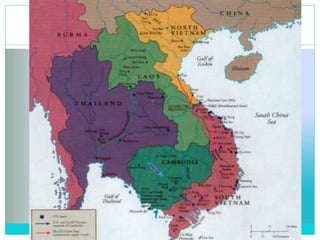
Indochina, today’s Laos, Cambodia and Vietnam
 China became a Communist country in 1949
 A nationalist leader, Ho Chi
Minh, declared Vietnam an independent country.
Soon afterwards a war between Ho Chi
Minh’s followers and the French began.
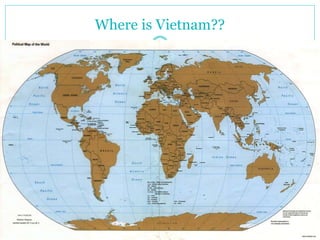
Where is Vietnam??
The results of the war…
 French were forced out of the country and Vietnam
was divided
 The Communists controlled the northern part and
those who supported the French had South
Vietnam. The government in the south
was weak and more people turned against it.
 The North vietnam was called the vietcog
 During the Cold War America fought Communism in
many places around the world. US presidents promised
to help countries that were threatened by Communism.
They thought that if they let Communists take over the
southern part of Vietnam other countries in the region
would become Communist too. This was called the
“Domino Theory ”.
President John F. Kennedy saw this danger and started
sending military advisersto help the South Vietnamese
army. After an American warship was attacked off the
coast of North Vietnam Kennedy’s successor , Lyndon
Johnson started sending ground troops to southeast
Asia.
 In the following years more American soldiers were sent to fight the Vietcong
and the North Vietnamese army. By 1968, the US had half a million troops in
the country.
The United States bombed highways, bridges, railroads and cities in North
Vietnam, also the Ho Chi Minh trail , a route that led from North Vietnam
through Laos and Cambodia to the south. Vietcong guerrillas received
supplies and weapons from the north along this route.
The Americans thought that they would win the war quickly because they had
modern weapons . They relied on their firepower and bombs to stop
Communist aggression. On the other side the North Vietnamese and Vietcong led
a completely different war. They could move faster than the Americans and
used guerrilla tactics , attacking American troops by surprise.
This was new to American soldiers because they never knew where the enemy
really was. The Vietcong also knew the jungle better and got used to moving
around in such a difficult terrain .
America protests against the war
 At first Americans at home thought it was a good idea to
stop Communism.
They supported American involvement . As time
went on and more and more American soldiers got killed
in Vietnam Americans changed their attitudes about
the war. People saw the brutal war on television. Anti-
war protests spread throughout the country.
Americans believed Vietnam was a place they did not
belong in.
American withdrawal
 Towards the end of the 1960s the Vietcong and North
Vietnam started attackingthe south on a larger scale .
Under pressure from the public at home the American
government changed its policy . President Lyndon
Johnson startedwithdrawing troops and peace talks
began in Paris.
When Richard Nixon became president American
bombing of Vietnamese hiding places in neighbouring
Laos and Cambodia become even more intense . On the
other side he continued bringing more and
more troops back home. By this time, Americans at
home mostly opposed the war .
End of the Vietnam war
 In 1973 North Vietnam, South Vietnam, the United
States and the Vietcong signed a peace agreement .
However it was not kept. The North Vietnamese army
and the Vietcong pushed further to the south. They met
little resistance because South Vietnam’s army was
tooweak and couldn't fight alone. Thousands
of civilians fled from the oncoming enemies. In 1975
Communist troops entered Saigon and the South
Vietnamese surrendered .
The war was officially over in 1976. North and South
Vietnam were reunited under a
Communist government . Saigon was renamed Ho Chi
Minh City.
IGCSE History-vietnam

IGCSE History-vietnam

  • 2.
    THE VIETNAM WAR The Vietnam War was a long-lasting conflict in Southeast Asia. It started after World War II and ended in 1975
  • 3.
     Before WorldWar II the French controlled most of Indochina, today’s Laos, Cambodia and Vietnam  China became a Communist country in 1949  A nationalist leader, Ho Chi Minh, declared Vietnam an independent country. Soon afterwards a war between Ho Chi Minh’s followers and the French began.
  • 4.
  • 6.
    The results ofthe war…  French were forced out of the country and Vietnam was divided  The Communists controlled the northern part and those who supported the French had South Vietnam. The government in the south was weak and more people turned against it.  The North vietnam was called the vietcog
  • 7.
     During theCold War America fought Communism in many places around the world. US presidents promised to help countries that were threatened by Communism. They thought that if they let Communists take over the southern part of Vietnam other countries in the region would become Communist too. This was called the “Domino Theory ”. President John F. Kennedy saw this danger and started sending military advisersto help the South Vietnamese army. After an American warship was attacked off the coast of North Vietnam Kennedy’s successor , Lyndon Johnson started sending ground troops to southeast Asia.
  • 8.
     In thefollowing years more American soldiers were sent to fight the Vietcong and the North Vietnamese army. By 1968, the US had half a million troops in the country. The United States bombed highways, bridges, railroads and cities in North Vietnam, also the Ho Chi Minh trail , a route that led from North Vietnam through Laos and Cambodia to the south. Vietcong guerrillas received supplies and weapons from the north along this route. The Americans thought that they would win the war quickly because they had modern weapons . They relied on their firepower and bombs to stop Communist aggression. On the other side the North Vietnamese and Vietcong led a completely different war. They could move faster than the Americans and used guerrilla tactics , attacking American troops by surprise. This was new to American soldiers because they never knew where the enemy really was. The Vietcong also knew the jungle better and got used to moving around in such a difficult terrain .
  • 9.
    America protests againstthe war  At first Americans at home thought it was a good idea to stop Communism. They supported American involvement . As time went on and more and more American soldiers got killed in Vietnam Americans changed their attitudes about the war. People saw the brutal war on television. Anti- war protests spread throughout the country. Americans believed Vietnam was a place they did not belong in.
  • 10.
    American withdrawal  Towardsthe end of the 1960s the Vietcong and North Vietnam started attackingthe south on a larger scale . Under pressure from the public at home the American government changed its policy . President Lyndon Johnson startedwithdrawing troops and peace talks began in Paris. When Richard Nixon became president American bombing of Vietnamese hiding places in neighbouring Laos and Cambodia become even more intense . On the other side he continued bringing more and more troops back home. By this time, Americans at home mostly opposed the war .
  • 11.
    End of theVietnam war  In 1973 North Vietnam, South Vietnam, the United States and the Vietcong signed a peace agreement . However it was not kept. The North Vietnamese army and the Vietcong pushed further to the south. They met little resistance because South Vietnam’s army was tooweak and couldn't fight alone. Thousands of civilians fled from the oncoming enemies. In 1975 Communist troops entered Saigon and the South Vietnamese surrendered . The war was officially over in 1976. North and South Vietnam were reunited under a Communist government . Saigon was renamed Ho Chi Minh City.