TYPES OF ORGANISATION STRUCTURES
GROUP MEMBERS
 BINCY JOY
 DEEPU ABRAHAM
 DIESH D
 RIBU JACOB MATHEW
DIFFERENT TYPES OF
   ÒRGANISATION STRUCTURES
 SIMPLE ORGANISATION
 FUNCTIONAL ORGANISATION
 DIVISIONAL ORGANISATION
 MATRIX ORGANISATION
SIMPLE ORGANISATION
ADVANTAGES            DISADVANTAGES


 SIMPLICITY           OVERALL LOAD ON TOP
 CLEAR DIVISION OF       EXECUTIVES IS MORE
  AUTHORITY&             LIMITED TO VERY SMALL
  RESPONSIBILITY          CONCERNS
 CLEAR CHANNEL OF       NEGLECTS SPECIALISTS
  COMMUNICATION          INDIVIDUAL EXECUTIVES
 FLEXIBLE                ARE SUPPOSED TO DO
 QUICK DECISIONS &       DIFFERENT DUTIES
  SPEEDY ACTION          DICTATORIAL WAY OF
                          WORKING
FUNCTIONAL ORGANISATION
ADVANTAGES               DISADVANTAGES


 USE SPECIALISTS         DIFFICULT TO MAINTAIN
 QUALITY OF WORK IS       DISCIPLINE
  IMPROVED                NUMBER OF EXECUTIVES
 WASTAGES CAN BE          OF SAME RANK
  REDUCED                 CO-ORDINATION IS
 RELIEVES PRESSURE OF     DIFFICULT
  TOP EXECUTIVES          HIGH SALARY TO EXPERTS
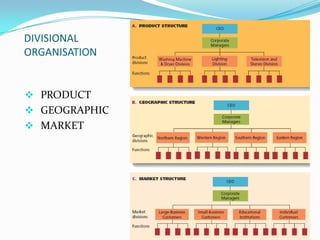
DIVISIONAL
ORGANISATION


 PRODUCT
 GEOGRAPHIC
 MARKET
1) PRODUCT STRUCTURE
• Allows functional managers to specialize
  in one product area
• Division managers become experts in their
  area
• Removes need for direct supervision of
  division by corporate managers
• Divisional management improves the use
  of resources
2) GEOGRAPHIC STRUCTURE
  Divisions are broken down by geographic
   location
  Managers locate different divisions in
   each of the world regions where the
   organization operates.
  Generally, occurs when managers are
   pursuing a multi-domestic strategy
3) MARKET STRUCTURE
  Groups divisions according to the
   particular kinds of customers they serve
  Allows managers to be responsive to the
   needs of their customers and act flexibly
   in making decisions in response to
   customers’ changing needs
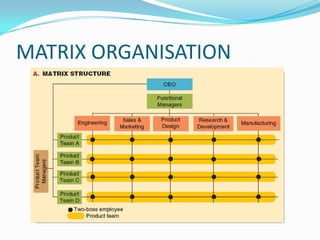
MATRIX ORGANISATION
ADVANTAGES                  DISADVANTAGES


 MORE FLEXIBLE THAN         VIOLATES UNITY OF
  TRADITIONAL                 COMMAND
  FUNCTIONAL                 CO-ORDINATION IS VERY
  ORGANISATION                DIFFICULT
 MORE STRESS IS GIVEN TO    PROJECT MANAGER
  AUTHORITY OF                DOESN`T HAVE LINE OF
  KNOWLEDGE THAN RANK         AUTHORITY
Iem organisation structures

Iem organisation structures

  • 2.
  • 3.
    GROUP MEMBERS  BINCYJOY  DEEPU ABRAHAM  DIESH D  RIBU JACOB MATHEW
  • 4.
    DIFFERENT TYPES OF ÒRGANISATION STRUCTURES  SIMPLE ORGANISATION  FUNCTIONAL ORGANISATION  DIVISIONAL ORGANISATION  MATRIX ORGANISATION
  • 5.
  • 6.
    ADVANTAGES DISADVANTAGES  SIMPLICITY  OVERALL LOAD ON TOP  CLEAR DIVISION OF EXECUTIVES IS MORE AUTHORITY&  LIMITED TO VERY SMALL RESPONSIBILITY CONCERNS  CLEAR CHANNEL OF  NEGLECTS SPECIALISTS COMMUNICATION  INDIVIDUAL EXECUTIVES  FLEXIBLE ARE SUPPOSED TO DO  QUICK DECISIONS & DIFFERENT DUTIES SPEEDY ACTION  DICTATORIAL WAY OF WORKING
  • 7.
  • 8.
    ADVANTAGES DISADVANTAGES  USE SPECIALISTS  DIFFICULT TO MAINTAIN  QUALITY OF WORK IS DISCIPLINE IMPROVED  NUMBER OF EXECUTIVES  WASTAGES CAN BE OF SAME RANK REDUCED  CO-ORDINATION IS  RELIEVES PRESSURE OF DIFFICULT TOP EXECUTIVES  HIGH SALARY TO EXPERTS
  • 9.
  • 10.
    1) PRODUCT STRUCTURE •Allows functional managers to specialize in one product area • Division managers become experts in their area • Removes need for direct supervision of division by corporate managers • Divisional management improves the use of resources
  • 11.
    2) GEOGRAPHIC STRUCTURE  Divisions are broken down by geographic location  Managers locate different divisions in each of the world regions where the organization operates.  Generally, occurs when managers are pursuing a multi-domestic strategy
  • 12.
    3) MARKET STRUCTURE  Groups divisions according to the particular kinds of customers they serve  Allows managers to be responsive to the needs of their customers and act flexibly in making decisions in response to customers’ changing needs
  • 13.
  • 14.
    ADVANTAGES DISADVANTAGES  MORE FLEXIBLE THAN  VIOLATES UNITY OF TRADITIONAL COMMAND FUNCTIONAL  CO-ORDINATION IS VERY ORGANISATION DIFFICULT  MORE STRESS IS GIVEN TO  PROJECT MANAGER AUTHORITY OF DOESN`T HAVE LINE OF KNOWLEDGE THAN RANK AUTHORITY