In the Name of Allah, The Most Beneficent, The Most Merciful
Welcome to
Chapter 10
Class Timings : 02:00 pm to 05:00 pm (Sharp)
By:
Khurram Khan
Designing Organizational
Structure
 Organizing - arranging and
structuring work to accomplish
an organization’s goals.
 Organizational Structure -
the formal arrangement of
jobs within an organization.
Designing Organizational Structure
 Organizational Design - a process
involving decisions about six key
elements:
1. Work specialization
2. Departmentalization
3. Chain of command
4. Span of control
5. Centralization and decentralization
6. Formalization
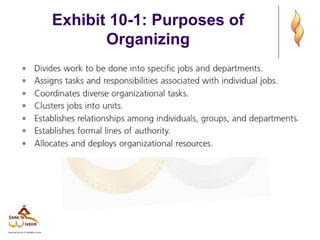
Exhibit 10-1: Purposes of
Organizing
Organizational Structure
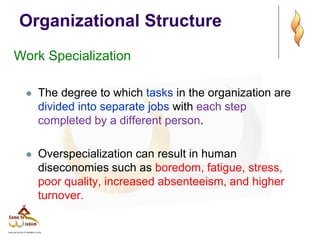
Work Specialization
 The degree to which tasks in the organization are
divided into separate jobs with each step
completed by a different person.
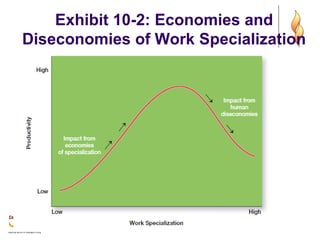
 Overspecialization can result in human
diseconomies such as boredom, fatigue, stress,
poor quality, increased absenteeism, and higher
turnover.
Exhibit 10-2: Economies and
Diseconomies of Work Specialization
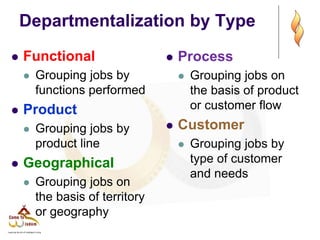
Departmentalization by Type
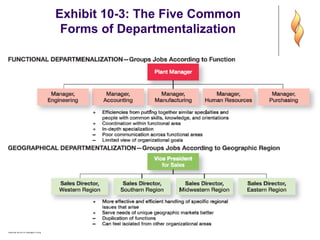
 Functional
 Grouping jobs by
functions performed
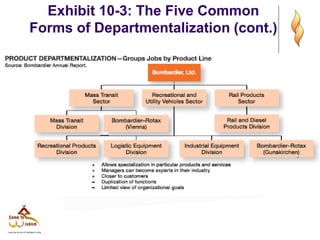
 Product
 Grouping jobs by
product line
 Geographical
 Grouping jobs on
the basis of territory
or geography
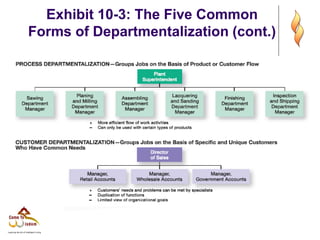
 Process
 Grouping jobs on
the basis of product
or customer flow
 Customer
 Grouping jobs by
type of customer
and needs
Organizational Structure (cont.)
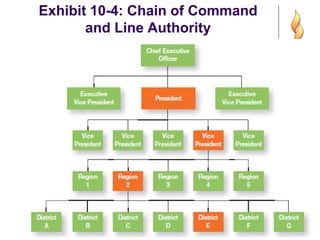
 Chain of Command - the
continuous line of authority that
extends from upper levels of an
organization to the lowest levels
of the organization—clarifies
who reports to whom.
Organizational Structure (cont.)
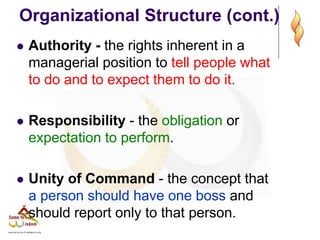
 Authority - the rights inherent in a
managerial position to tell people what
to do and to expect them to do it.
 Responsibility - the obligation or
expectation to perform.
 Unity of Command - the concept that
a person should have one boss and
should report only to that person.
Exhibit 10-3: The Five Common
Forms of Departmentalization
Exhibit 10-3: The Five Common
Forms of Departmentalization (cont.)
Exhibit 10-3: The Five Common
Forms of Departmentalization (cont.)
Exhibit 10-4: Chain of Command
and Line Authority
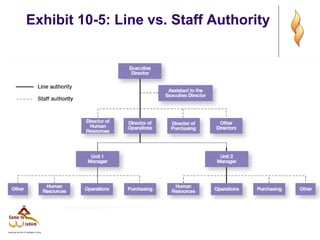
Exhibit 10-5: Line vs. Staff Authority
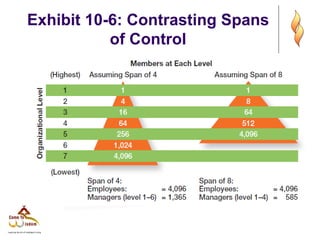
Span of Control
 It is the number of employees
who can be effectively and
efficiently supervised by a
manager.
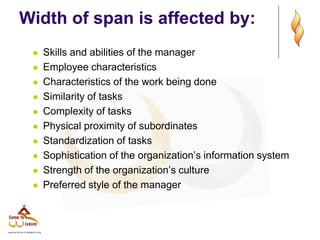
Width of span is affected by:
 Skills and abilities of the manager
 Employee characteristics
 Characteristics of the work being done
 Similarity of tasks
 Complexity of tasks
 Physical proximity of subordinates
 Standardization of tasks
 Sophistication of the organization’s information system
 Strength of the organization’s culture
 Preferred style of the manager
Exhibit 10-6: Contrasting Spans
of Control
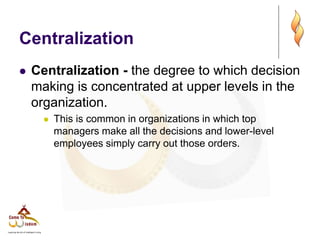
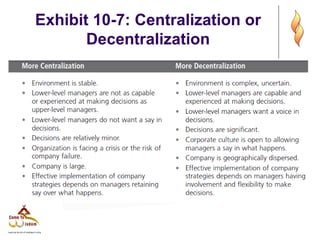
Centralization
 Centralization - the degree to which decision
making is concentrated at upper levels in the
organization.
 This is common in organizations in which top
managers make all the decisions and lower-level
employees simply carry out those orders.
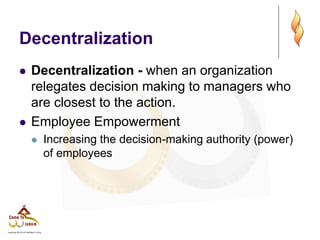
Decentralization
 Decentralization - when an organization
relegates decision making to managers who
are closest to the action.
 Employee Empowerment
 Increasing the decision-making authority (power)
of employees
Exhibit 10-7: Centralization or
Decentralization
Thank you for your Time & Patience
Please spread these words & do visit
My Company
Learning the Art of Intelligent Living
www.cometowisdom.com

Management-Chapter10-Students

  • 1.
    In the Nameof Allah, The Most Beneficent, The Most Merciful
  • 2.
    Welcome to Chapter 10 ClassTimings : 02:00 pm to 05:00 pm (Sharp) By: Khurram Khan
  • 3.
    Designing Organizational Structure  Organizing- arranging and structuring work to accomplish an organization’s goals.  Organizational Structure - the formal arrangement of jobs within an organization.
  • 4.
    Designing Organizational Structure Organizational Design - a process involving decisions about six key elements: 1. Work specialization 2. Departmentalization 3. Chain of command 4. Span of control 5. Centralization and decentralization 6. Formalization
  • 5.
  • 6.
    Organizational Structure Work Specialization The degree to which tasks in the organization are divided into separate jobs with each step completed by a different person.  Overspecialization can result in human diseconomies such as boredom, fatigue, stress, poor quality, increased absenteeism, and higher turnover.
  • 7.
    Exhibit 10-2: Economiesand Diseconomies of Work Specialization
  • 8.
    Departmentalization by Type Functional  Grouping jobs by functions performed  Product  Grouping jobs by product line  Geographical  Grouping jobs on the basis of territory or geography  Process  Grouping jobs on the basis of product or customer flow  Customer  Grouping jobs by type of customer and needs
  • 9.
    Organizational Structure (cont.) Chain of Command - the continuous line of authority that extends from upper levels of an organization to the lowest levels of the organization—clarifies who reports to whom.
  • 10.
    Organizational Structure (cont.) Authority - the rights inherent in a managerial position to tell people what to do and to expect them to do it.  Responsibility - the obligation or expectation to perform.  Unity of Command - the concept that a person should have one boss and should report only to that person.
  • 11.
    Exhibit 10-3: TheFive Common Forms of Departmentalization
  • 12.
    Exhibit 10-3: TheFive Common Forms of Departmentalization (cont.)
  • 13.
    Exhibit 10-3: TheFive Common Forms of Departmentalization (cont.)
  • 14.
    Exhibit 10-4: Chainof Command and Line Authority
  • 15.
    Exhibit 10-5: Linevs. Staff Authority
  • 16.
    Span of Control It is the number of employees who can be effectively and efficiently supervised by a manager.
  • 17.
    Width of spanis affected by:  Skills and abilities of the manager  Employee characteristics  Characteristics of the work being done  Similarity of tasks  Complexity of tasks  Physical proximity of subordinates  Standardization of tasks  Sophistication of the organization’s information system  Strength of the organization’s culture  Preferred style of the manager
  • 18.
    Exhibit 10-6: ContrastingSpans of Control
  • 19.
    Centralization  Centralization -the degree to which decision making is concentrated at upper levels in the organization.  This is common in organizations in which top managers make all the decisions and lower-level employees simply carry out those orders.
  • 20.
    Decentralization  Decentralization -when an organization relegates decision making to managers who are closest to the action.  Employee Empowerment  Increasing the decision-making authority (power) of employees
  • 21.
    Exhibit 10-7: Centralizationor Decentralization
  • 23.
    Thank you foryour Time & Patience Please spread these words & do visit
  • 24.
    My Company Learning theArt of Intelligent Living www.cometowisdom.com