Feedback
IDSP training module for state and
district surveillance officers
Module 10
Learning objectives
• Describe feedback in the context of IDSP
• Describe the need and importance of regular
feedback in disease surveillance
• List the information and frequency and types
of feedback submitted at selected levels
• List the actions expected based on the
feedback with regards to quality of data and
programme performance
Difficulties with surveillance system with
no feedback
• Lack of motivation
• Unreliability
• Sluggishness
• Data falsification
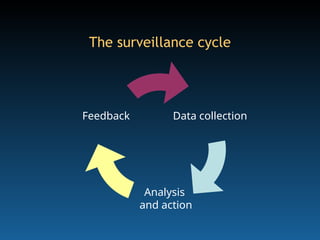
Data collection
Analysis
and action
Feedback
The surveillance cycle
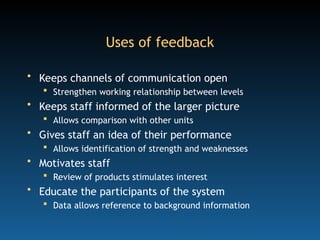
Uses of feedback
• Keeps channels of communication open
 Strengthen working relationship between levels
• Keeps staff informed of the larger picture
 Allows comparison with other units
• Gives staff an idea of their performance
 Allows identification of strength and weaknesses
• Motivates staff
 Review of products stimulates interest
• Educate the participants of the system
 Data allows reference to background information
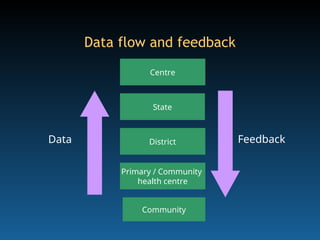
Data flow and feedback
Centre
State
District
Primary / Community
health centre
Data Feedback
Community
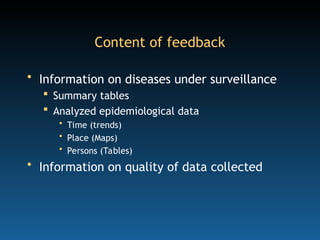
Content of feedback
• Information on diseases under surveillance
 Summary tables
 Analyzed epidemiological data
• Time (trends)
• Place (Maps)
• Persons (Tables)
• Information on quality of data collected
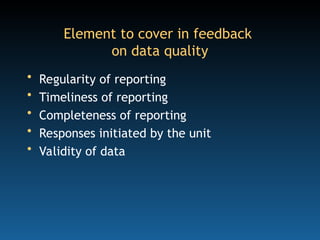
Element to cover in feedback
on data quality
• Regularity of reporting
• Timeliness of reporting
• Completeness of reporting
• Responses initiated by the unit
• Validity of data
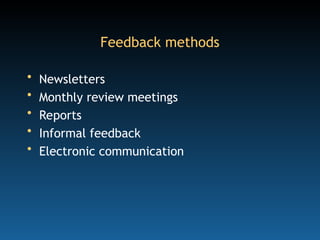
Feedback methods
• Newsletters
• Monthly review meetings
• Reports
• Informal feedback
• Electronic communication
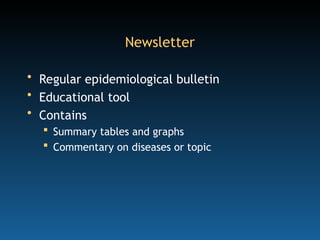
Newsletter
• Regular epidemiological bulletin
• Educational tool
• Contains
 Summary tables and graphs
 Commentary on diseases or topic
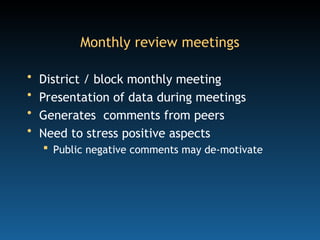
Monthly review meetings
• District / block monthly meeting
• Presentation of data during meetings
• Generates comments from peers
• Need to stress positive aspects
 Public negative comments may de-motivate
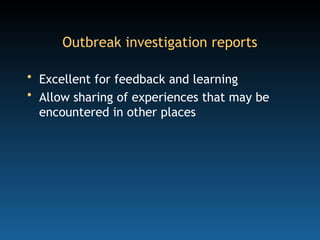
Outbreak investigation reports
• Excellent for feedback and learning
• Allow sharing of experiences that may be
encountered in other places
Informal feedback
• Oral feedback
• Useful for pointing out mistakes
Electronic methods
• Through email, websites
• Fast and efficient
• May be updated rapidly
• Allows
 Dynamic data presentation
 Queries
Completeness and timeliness
• Report on time
 Reaches the designated level in the prescribed
time period
• Report complete
 All reporting units have reported

idspandihippresentationpsmod10Feebac.ppt

  • 1.
    Feedback IDSP training modulefor state and district surveillance officers Module 10
  • 2.
    Learning objectives • Describefeedback in the context of IDSP • Describe the need and importance of regular feedback in disease surveillance • List the information and frequency and types of feedback submitted at selected levels • List the actions expected based on the feedback with regards to quality of data and programme performance
  • 3.
    Difficulties with surveillancesystem with no feedback • Lack of motivation • Unreliability • Sluggishness • Data falsification
  • 4.
  • 5.
    Uses of feedback •Keeps channels of communication open  Strengthen working relationship between levels • Keeps staff informed of the larger picture  Allows comparison with other units • Gives staff an idea of their performance  Allows identification of strength and weaknesses • Motivates staff  Review of products stimulates interest • Educate the participants of the system  Data allows reference to background information
  • 6.
    Data flow andfeedback Centre State District Primary / Community health centre Data Feedback Community
  • 7.
    Content of feedback •Information on diseases under surveillance  Summary tables  Analyzed epidemiological data • Time (trends) • Place (Maps) • Persons (Tables) • Information on quality of data collected
  • 8.
    Element to coverin feedback on data quality • Regularity of reporting • Timeliness of reporting • Completeness of reporting • Responses initiated by the unit • Validity of data
  • 9.
    Feedback methods • Newsletters •Monthly review meetings • Reports • Informal feedback • Electronic communication
  • 10.
    Newsletter • Regular epidemiologicalbulletin • Educational tool • Contains  Summary tables and graphs  Commentary on diseases or topic
  • 11.
    Monthly review meetings •District / block monthly meeting • Presentation of data during meetings • Generates comments from peers • Need to stress positive aspects  Public negative comments may de-motivate
  • 12.
    Outbreak investigation reports •Excellent for feedback and learning • Allow sharing of experiences that may be encountered in other places
  • 13.
    Informal feedback • Oralfeedback • Useful for pointing out mistakes
  • 14.
    Electronic methods • Throughemail, websites • Fast and efficient • May be updated rapidly • Allows  Dynamic data presentation  Queries
  • 15.
    Completeness and timeliness •Report on time  Reaches the designated level in the prescribed time period • Report complete  All reporting units have reported